Last updated: July 7, 2026
To choose the right wheelchair tire, copy the full ISO size from your current sidewall first. A code such as 25-540 means about 25 mm tire width and a 540 mm bead-seat diameter. Match the second number exactly before you compare tire type. Pick pneumatic tires if comfort and lower rolling effort matter most, choose foam-filled or solid tires if avoiding flats matters more, and use the pressure printed on your own tire sidewall instead of a generic PSI rule. Before you order, check tread wear, sidewall cracks, valve condition, rim strip condition, and whether your chair has enough frame and brake clearance for the same width.
Quick Answer
- Find your size: Read the ISO numbers on your tire’s sidewall, such as 25-540. The first number is tire width, and the second is the bead-seat diameter in millimeters.
- Match the diameter exactly: A 25-559 tire will not fit a 540 mm rim. Imperial labels like 24-inch can describe more than one rim size.
- Choose the right tire type: Pick pneumatic for cushioning, foam-filled for flat prevention with a heavier feel, or solid/urethane for low maintenance and a firmer ride.
- Check before buying: Confirm sidewall markings, valve type, tread wear, rim strip condition, and clearance around the frame and brakes.
- Maintain them: Check pneumatic tire pressure weekly, inspect tread and sidewall cracks, and carry a pump, spare tube, and patch kit when you travel.
Wheelchair Tire Choice at a Glance
| Tire Choice | Best For | Main Trade-Off |
|---|---|---|
| Pneumatic | Comfort, grip, outdoor paths, lower push effort | Needs pressure checks and can go flat |
| Foam-Filled | Flat prevention with a tire-like shape | Heavier feel and higher rolling resistance |
| Solid/Urethane | Low maintenance, indoor use, predictable flat-free use | Firmer ride and less shock absorption |
Quick Guide: Choose the Right ISO (mm) Tire Size
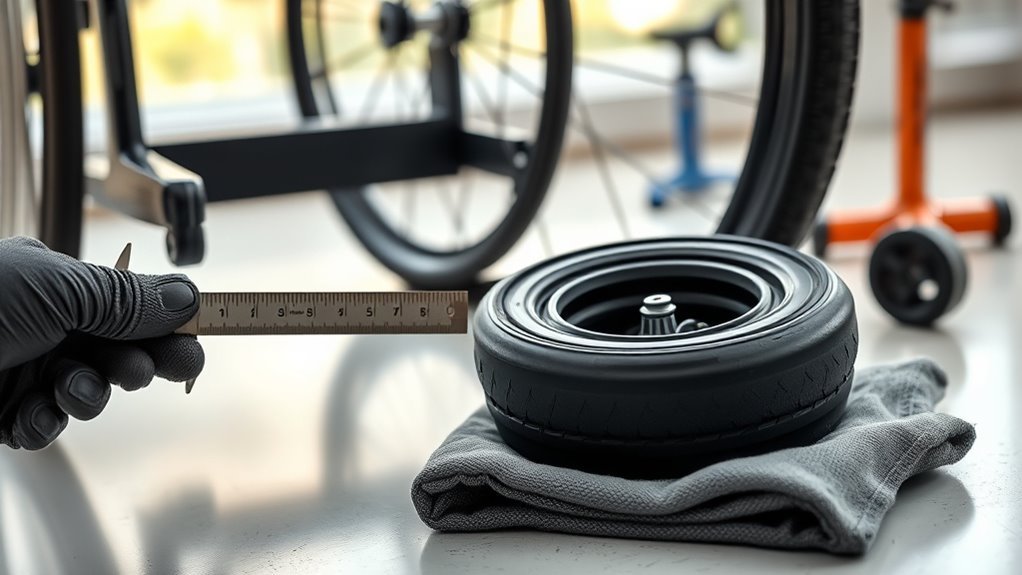
Start by reading the ISO marking on your current tire’s sidewall. An entry like 25-540 tells you the tire is about 25 mm wide and fits a 540 mm bead-seat diameter, a common wheelchair rim size. Write down both numbers before you shop.
Always match the second ISO number to your existing tire before buying. The ISO format uses millimeters, which helps you avoid sizing mismatches caused by imperial inch labels. Check these markings every time you replace your tires and keep the code in your phone for future orders.
Keep in mind that a generic “24-inch” label can point to different ISO diameters. Trust the ISO code first. Getting the right size helps the tire seat evenly, reduces rubbing risk, and keeps handling predictable.
How to Read Tyre Markings (Example: 25-540, 25-559)
Read the ISO numbers on the sidewall to decode the tire width and the rim’s bead-seat diameter. For example, 25-540 means the tire is about 25 mm wide and fits a 540 mm rim. Match both measurements to your wheel. A 25-559 tire will not fit a 540 mm rim, even though the widths are identical.
Decoding ISO Numbers
When you look at ISO markings like 25-540 or 25-559, the first number gives the tire width in millimeters. The second number provides the bead-seat diameter, which is the rim diameter the tire bead must lock onto.
Use the first number to confirm width, frame clearance, and ride feel. Use the second number to confirm the tire will mount safely. This standard removes the guesswork found in traditional inch labels.
What If the Label is Worn Off?
If you cannot read the sidewall, do not order from the inch label alone. Take a clear photo of the wheel, measure the existing tire width, and ask a mobility repair shop to measure the bead-seat diameter. Measuring bead-seat diameter accurately with the tire mounted can be difficult, so professional measurement is safer than guessing.
Matching Width And Diameter
Because tire markings list both width and rim diameter, you can quickly confirm a match. Width affects clearance and handling, while diameter determines whether the tire will mount onto the wheel. Check the sidewall of your existing tire for the exact figures.
Be careful with sizing discrepancies between wheelchair and bicycle listings. Two tires labeled “24-inch” can have different ISO diameters. Prioritize strict compatibility with your specific wheelchair rim.
Wheelchair vs Bicycle Labels: Common Mismatches to Watch
Wheelchair and bicycle labels often do not match cleanly, which can lead to buying the wrong size. Sellers may mix imperial inches, French labels, and ISO numbers in one listing. Always check the metric figures before you compare prices or tread patterns.
A marking like 25-559 confirms a width of about 25 mm and a bead-seat diameter of 559 mm. That does not equal every “26-inch” listing online. If a vendor does not list the ISO size or bead-seat diameter, ask for it before ordering.
Tire Types Explained: Pneumatic, Foam-Filled, Urethane (Pros & Cons)
Tire choice changes comfort, effort, maintenance, and flat risk. Match the type to your daily terrain, hand strength, transfer needs, and how much maintenance you want to manage.
Pneumatic tires use air pressure, so they usually cushion bumps better and roll more efficiently when inflated correctly. Foam-filled tires remove the flat-tire problem, but they often feel heavier to push. Solid or urethane tires also avoid flats and need little routine care, but they can feel firm on rough sidewalks.
| Tire Type | Quick Pros & Cons |
|---|---|
| Pneumatic | Best cushioning and efficient rolling; pressure checks and punctures possible |
| Foam-Filled | Flat-free and low maintenance; heavier feel and higher rolling resistance |
| Urethane | Air-free and durable; firm ride and less shock absorption |
[Products Worth Considering]

Replace worn tires quickly with this universal 4.80/4.00-8 tire and inner tube set designed for wheelbarrows and outdoor utility carts. The ribbed tread helps reduce turf damage while the natural rubber construction supports longer service life. Compatible with 15.5-inch outer diameter, 4-inch width, and 8-inch rim diameter wheels, it uses a straight TR-13 valve stem for easy installation. For best results, inflate with a manual pump and do not exceed 25 PSI.

Replace worn wheelchair rear tires with a universal 24x1 no-flat polyurethane foam option designed to mount tightly on 24-inch rims without the tire falling off. Installation is made easier with included tools and multiple methods, including using a pry bar or softening the tire in hot water to reduce resistance. The package includes two tires plus tie ropes for convenient fitting and handling.

This metal-free wheel and tire cleaning brush uses dense, fluffy synthetic wool to safely clean rims, spokes, fenders, and engine areas without worrying about damaging surfaces. Its flexible, comfortable design helps you reach detailed areas while maintaining durability, and the extra absorbent fibers work well with wheel spray cleaners for faster cleanup. Reusable and washable performance helps prevent grime and build-up for cleaner vehicles and easier maintenance at home.
Match Tire Type & Size to Your Wheelchair (What Matters)
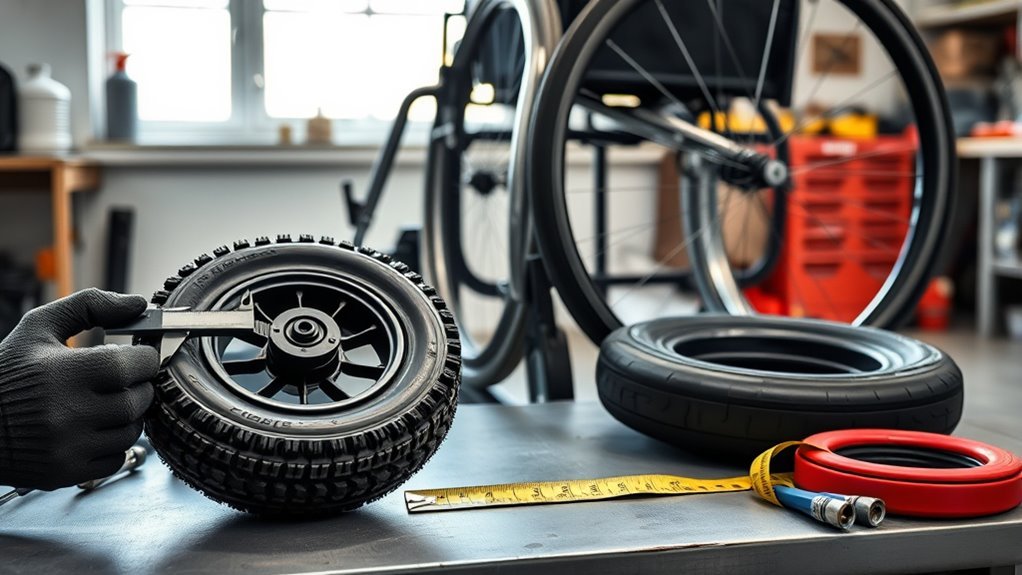
When selecting replacement tires, match the exact ISO size to your wheelchair rims. The metric code, such as 25-540, is the most reliable fit indicator. Then choose pneumatic, foam-filled, or solid tires based on your terrain and maintenance preference.
Never mix tire sizes on the same axle. Unequal sizes can make the chair pull, change seat angle, and create uneven wear. Keep a basic log of your tire type, ISO size, valve type, and preferred pressure so you can reorder the correct part quickly.
[Products Worth Considering]

This Hycline 2-pack mountain bike tire set delivers durable, puncture-resistant performance with a high-grip, aggressive tread designed for traction on hard surfaces and confident handling through mud and soil. Includes matching inner tubes and tire levers for easier everyday maintenance and quicker installation after folding storage. Built for a range of riding conditions with reinforced rubber and nylon cord for wear-resistant reliability.

This professional wheel and rim cleaning brush set lifts brake dust, grime, and dirt with soft, scratch-free microfiber and synthetic wool fibers. The rim brush bends up to 360 degrees for easy access to hard-to-reach areas around spokes, lips, and faces. Ideal for thorough cleaning of car, truck, motorcycle, bicycle, RV, and more wheel and tire surfaces.

This heavy-duty fat bike inner tube is built for secure fit on 20-inch wheels with 3.5 to 4.0 inch wide tires, including e-bikes and mountain bikes. It uses thick butyl rubber for improved durability, air tightness, and a smoother, more comfortable ride. A standard Schrader valve makes inflation easy and helps keep pressure stable for safer rides, with tire levers included for simpler installation.
How to Replace a Tire and Tube
Once you have the correct tire type and size, you can swap it out if your chair uses removable pneumatic wheels. Begin by setting the chair securely, loosening the axle hardware if needed, and sliding the wheel off the frame. Fully deflate the existing tire, then use plastic tire levers to lift one bead off the rim.
Remove the old inner tube and inspect the rim strip. Check spoke holes, sharp edges, glass, thorns, and metal fragments that could puncture the new tube. Slightly inflate the new tube just enough to give it shape, then seat it inside the tire. Refit the tire bead onto the rim, avoid pinching the tube, inflate gradually, check that the bead sits evenly, and securely reattach the wheel.
Simple Maintenance: Pressure, Cleaning, Inspection
Keep pneumatic tires at the manufacturer’s recommended PSI printed on the tire sidewall. Wipe tires and rims with a damp cloth to remove grit that can damage rubber or work into wheel bearings. Inspect the tread, sidewalls, valve stems, rim strip, and spoke area for cracks, cuts, thinning rubber, or debris.
Check And Adjust Pressure
Use a reliable gauge to check tire pressure weekly and before longer outings. Do not rely on a generic wheelchair PSI number. Use the pressure range printed on your own tire, and never exceed the sidewall maximum.
Adjust pressure only within the marked range. Slightly lower pressure can feel more comfortable on rough surfaces, while higher pressure within the safe range can roll more easily on smooth floors and pavement.
Clean Tires And Rims
Dirt and grit hide damage and wear down parts faster. Wipe tires and rims with a damp cloth weekly. Use a stiff-bristled brush to remove debris stuck in the tread, but avoid harsh chemical solvents. Keep the spokes and wheel hubs clean so moisture does not get trapped and cause rust.
Inspect For Damage
After cleaning, inspect each tire and rim. Look closely at the tread and sidewalls for cuts, glass shards, embedded metal, bulges, or thinning rubber. If the chair pulls to one side, check pressure first, then inspect for uneven wear or a wheel issue.
Replace a tire if the tread is badly worn, the casing shows through, the sidewall is cracked, or the tire no longer seats evenly on the rim. Do not patch a tire sidewall tear.
Troubleshooting Flats and Failures: Patch vs Replace
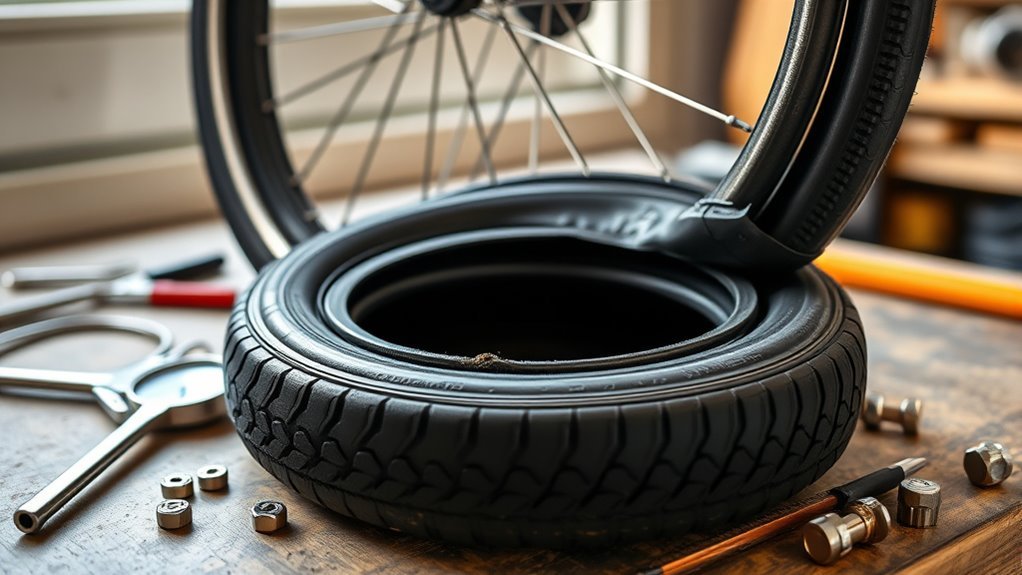
When you get a flat, find the cause before you install a new tube. A small clean puncture in the tube may be patchable. A large split, repeated punctures, visible tire damage, or a cracked sidewall usually means the tube, tire, or both need replacement.
| Situation | Action |
|---|---|
| Single clean tube puncture | Apply a patch kit, then check the tire and rim for the object that caused it |
| Multiple punctures | Replace the inner tube and inspect the rim strip |
| Sidewall tear/crack | Replace the tire and tube |
| Worn tread/thinning rubber | Replace the tire to restore grip and reduce failure risk |
Shopping Checklist: What to Tell the Shop or Order Online
When ordering parts, provide the exact metric tire size, such as 25-540, the tire type you want, and the valve type if you need a tube. Bring the old tire or take a clear photo of the sidewall so the shop can match the ISO size.
- Size: ISO code, such as 25-540, 37-540, or 25-559.
- Type: pneumatic, foam-filled, solid, or urethane.
- Tube details: valve style, tube size range, and whether your rim strip needs replacement.
- Use case: indoor floors, rough sidewalks, wet surfaces, outdoor paths, or travel.
- Fit policy: return or exchange option if the listing used unclear inch sizing.
Read product listings carefully for ISO numbers. If you want to switch to solid tires for fewer flats, tell the shop. Some solid tires need installation tools or exact wheel measurements, and they may not install like a standard pneumatic tire.
[Products Worth Considering]

Measure tire tread depth quickly and accurately with this LUMITECO dial gauge that reads in 1/32" increments up to 14/32". The color-coded green/yellow/red zones make it easy to judge tire wear and know when replacement is needed. A rugged, compact design with a protective pouch helps keep the gauge ready for use on cars, trucks, motorcycles, and more.

A concentrated tire and tube mounting compound designed to help simplify mounting rubber tires and tubes on passenger, semi truck, construction, and OTR applications. Its ultra-thick formula packs beads effectively and includes rust inhibitors to help protect against corrosion during use.

Monitor tire tread wear with a smart, color-coded depth gauge that shows clear condition ranges at a glance. The bar is range marked for fast, easy readings, helping you maintain safer traction and performance. Each gauge is portable with a pocket clip, and the set includes 20 units for daily use and sharing.
Frequently Asked Questions
What Size Wheelchair Tire Do I Need?
You need the ISO size printed on your existing sidewall. Match both numbers, such as 25-540 or 37-540. The first number is tire width in millimeters. The second number is the bead-seat diameter, and it must match your rim exactly.
Can I Use Bicycle Tires on a Wheelchair?
Sometimes, but only when the ISO size, width, clearance, and tire construction match your wheelchair rim and use case. Do not buy a bicycle tire based only on a 24-inch or 26-inch label, because the same inch label can describe different bead-seat diameters.
Are Solid Wheelchair Tires Better Than Pneumatic Tires?
Solid tires are better if flat prevention and low maintenance matter most. Pneumatic tires are better if you want more cushioning and easier rolling on uneven surfaces. Foam-filled tires sit between those options: flat-free, but usually heavier than air-filled tires.
How Often Should I Check Wheelchair Tire Pressure?
Check pneumatic wheelchair tire pressure weekly and before longer outings. Use the PSI range printed on your own tire sidewall. Also inspect the tread, sidewalls, valve stems, and rim area during the same check.
Can I Replace a Wheelchair Tire Myself?
You can replace many pneumatic wheelchair tires yourself with plastic tire levers, a pump, and the correct tube. Stop and use a repair shop if the tire is very tight, the rim is damaged, the axle hardware is unfamiliar, or the chair uses solid tires that need press-fit installation.
What Is the Best Lubricant for a Wheelchair?
Use a light silicone-based spray or dry PTFE lubricant only on suitable moving parts after cleaning. Keep lubricant away from tire tread, handrims, brakes, seat fabric, and floors. Check your wheelchair manual first, because some bearings are sealed and should not be lubricated by the user.
Final Tips
Choosing wheelchair tires comes down to three checks: exact ISO size, the right tire type, and regular inspection. Copy the sidewall code before shopping, match the bead-seat diameter exactly, and choose pneumatic, foam-filled, or solid tires based on how you use your chair.
Before longer outings, check pressure if your tires are pneumatic, look for embedded debris or sidewall damage, and carry a pump, spare tube, and patch kit. Replace worn tires before they fail so your chair stays stable, predictable, and easier to push.