
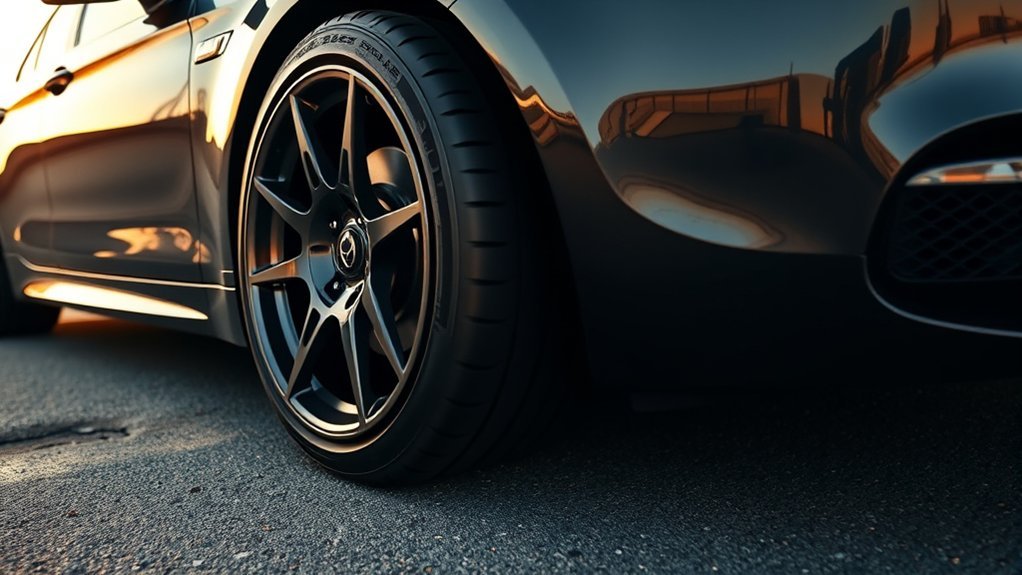
Low profile tires use shorter sidewalls relative to their width, which can make steering feel quicker and give a vehicle a sportier appearance. The tradeoff is less cushioning between the road and wheel, so rough pavement, potholes, noise, tire choice, wheel fitment, and replacement cost matter. Whether they are worth it depends on your vehicle, roads, climate, and priorities.
Quick Answer
Low profile tires can give you quicker steering response, firmer cornering feel, and a sportier look, but they usually provide less impact cushioning than taller-sidewall tires. They make the most sense when your vehicle is designed for them and you value responsive handling more than maximum ride comfort and pothole protection.
Key Takeaways
- Low profile tires have a shorter sidewall relative to their width; 50-series and below is a common rule of thumb, not a universal regulatory definition.
- A shorter, stiffer sidewall can make steering and cornering feel more responsive, especially when it is part of a properly engineered performance tire and wheel package.
- You usually give up some bump absorption, and the tire and wheel can be more vulnerable to severe pothole or curb impacts.
- Profile alone does not guarantee more grip, shorter braking, better fuel economy, poor winter traction, or a specific tread life.
- Before changing tire profile or wheel diameter, verify the vehicle manufacturer’s approved size, load capacity, speed rating, wheel fitment, clearance, and inflation requirements.
What Are Low Profile Tires?
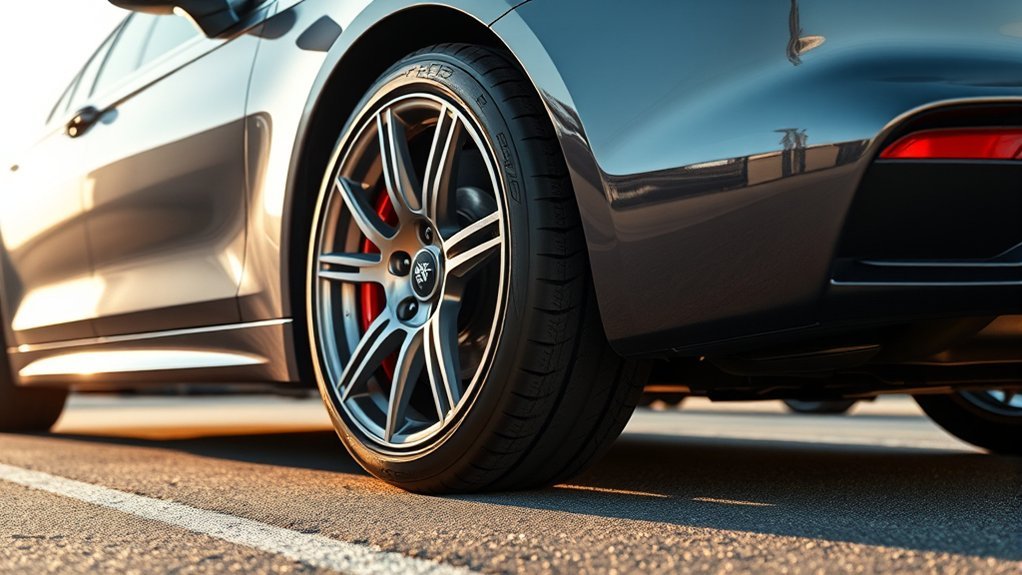
A low profile tire has a relatively short sidewall compared with its width. The measurement that describes this relationship is the aspect ratio. The National Highway Traffic Safety Administration identifies the aspect ratio as part of the standardized tire-size information shown on the sidewall.
For example, consider 225/45R18:
- 225 is the nominal tire width in millimeters.
- 45 is the aspect ratio, so the sidewall section height is approximately 45% of 225 mm.
- R indicates radial construction.
- 18 is the wheel diameter in inches.
In this example, the calculated section height is about 101 mm. A 225/35R18 tire would have a shorter sidewall than a 225/45R18 tire because its aspect ratio is lower.
You will often see tires with an aspect ratio of 50 or below described as low profile. That is a useful shopping convention, but it should not be treated as a universal safety cutoff. What matters most is whether the complete tire and wheel combination is approved for your vehicle.
Manufacturers frequently use lower-profile tires on sports cars, performance sedans, luxury vehicles, and other models where steering response is a priority. You can also find low-profile tires in summer, all-season, and other performance categories.
Manufacturers design low profile tires for sharper response, enhanced handling, and better cornering control in dynamic driving conditions.
Note: “Low profile” describes tire dimensions. It does not tell you whether a tire is a summer, all-season, winter, touring, or ultra-high-performance tire. Tread design and rubber compound still have a major effect on grip, noise, weather capability, wear, and rolling resistance.
Low Profile Tires Pros and Cons
Low profile tires can improve steering response and cornering feel because their shorter sidewalls generally flex less than taller sidewalls. However, the same reduction in sidewall height leaves less tire available to absorb sharp road impacts.
Bridgestone’s tire maintenance and safety guidance notes that high-performance and low-aspect-ratio tires can provide increased handling capability while bringing tradeoffs such as firmer ride, more noise, faster wear in some performance applications, and greater susceptibility to pothole or curb damage.
- Potential advantages: quicker steering feel, less sidewall flex, responsive cornering, sporty appearance, and compatibility with larger wheels on vehicles designed for them.
- Potential disadvantages: firmer ride, more impact harshness, greater pothole vulnerability, possible wheel damage, and potentially higher replacement cost depending on the size and tire category.
A shorter sidewall can sharpen steering response, but it also leaves less tire between the wheel and a pothole.
Performance Benefits
With a shorter sidewall, a low-profile tire can feel more immediate when you turn the steering wheel. Reduced sidewall flex can help the tire respond quickly during lane changes and cornering.
Low-profile performance setups are also commonly paired with wider tires. That can change the shape of the tire footprint, but it is misleading to say that a low aspect ratio by itself automatically creates a larger contact patch. Tire width, inflation pressure, vehicle load, construction, tread design, and compound all affect how the tire meets the road.
When the complete tire and wheel package is properly matched to the vehicle, potential benefits include:
- Quicker turn-in response
- Reduced sidewall movement during cornering
- More direct steering feedback
- Better support for performance-oriented suspension tuning
Do not assume that a lower profile automatically gives you shorter braking distances or higher maximum cornering grip. Those outcomes depend heavily on the actual tire model, tread compound, temperature, road surface, tire width, pressure, suspension, and vehicle setup.
Ride Quality Tradeoffs
Although low profile tires can sharpen handling and steering response, they usually provide less impact cushioning because there is less sidewall available to flex over bumps.
You may feel expansion joints, broken pavement, potholes, and other sharp impacts more clearly through the seat and steering wheel. The exact difference depends on the tire construction, vehicle suspension, wheel size, pressure, and road surface.
You also face a greater chance of tire or wheel damage from a severe pothole or curb impact. Bridgestone specifically warns that reduced-sidewall tires and their wheels may be more susceptible to this type of road-hazard damage.
Warning: After a hard pothole or curb impact, inspect the tire for cuts, bulges, pressure loss, vibration, or visible wheel damage. If you notice any of these signs, have the tire and wheel inspected by a qualified tire professional before continuing normal driving.
Low Profile Tires vs. Regular Tires
Compared with a higher-profile tire of an appropriate size, a low profile tire uses a shorter sidewall. Higher-profile tires have more sidewall height available to deform over bumps, while lower-profile setups typically emphasize steering response.
- Handling: Lower-profile designs can react more quickly to steering inputs when the tire and vehicle are properly matched.
- Comfort: A taller sidewall generally provides more impact cushioning on broken pavement.
- Road feedback: Low-profile setups tend to transmit more road texture and sharp impacts.
- Wheel protection: More sidewall height can provide additional cushioning between a pothole and the rim.
- Appearance: Low-profile tires are commonly paired with larger wheels for a sportier look.
- Cost: Price depends on the exact size, brand, performance category, wheel diameter, and availability rather than profile alone.
Less sidewall flex means sharper feedback, but also more road noise and a firmer ride.
If you drive frequently on rough pavement, a taller approved tire profile may offer a better comfort-and-durability balance. If your vehicle was engineered around low-profile tires and you value precise steering, keeping the original specification often makes sense.
[Products Worth Considering]

The Topeak SmartGauge D2 delivers precise digital tire pressure readings for bikes, motorcycles, and sports equipment up to 250 psi (17 bar). Its rotating SmartHead works with both Presta and Schrader valves, so you can check pressure quickly without adapters. The LCD display makes it easy to read results in psi, bar, or kg/cm² with an included CR2032 battery for immediate use.

Measure tire tread depth quickly and accurately with this LUMITECO dial gauge that reads in 1/32" increments up to 14/32". The color-coded green/yellow/red zones make it easy to judge tire wear and know when replacement is needed. A rugged, compact design with a protective pouch helps keep the gauge ready for use on cars, trucks, motorcycles, and more.

The SAFELIFE dial tire tread depth gauge measures tread depth in 1/32 inch increments with clear, easy-to-read 2-inch dial face. Color zones using a traffic light system help you quickly judge whether tread is low, marginal, or ample for safer driving. Built with a durable zinc cast body and a metal detect probe for precise, comfortable use across cars, motorcycles, trucks, and buses.
Who Low Profile Tires Suit Best
Low profile tires suit drivers who value steering response, cornering feel, and appearance more than maximum isolation from rough roads. They are especially common on vehicles whose suspension, wheels, and electronic systems were engineered around that type of tire.
Performance-Focused Drivers
If you prioritize sharp handling and steering precision, a low-profile performance tire can be a strong fit. The shorter sidewall can reduce flex and make steering inputs feel more immediate.
Performance-focused drivers may notice:
- Faster turn-in response
- More immediate steering feedback
- Less sidewall movement in corners
- A more connected road feel
The actual amount of grip still depends on the complete tire. A premium summer performance tire and an economy all-season tire can behave very differently even if both have the same aspect ratio.
Smooth-Road Commuters
For smooth-road commuters, low profile tires can work well when you enjoy responsive steering and your normal routes have relatively good pavement.
The tradeoff becomes more noticeable if your commute includes broken asphalt, deep potholes, rough construction zones, or sharp road edges. In those conditions, less sidewall height means less impact absorption.
If comfort is more important than steering sharpness, a manufacturer-approved higher-profile alternative may be more suitable.
Style-Driven Enthusiasts
Style-driven enthusiasts often choose low profile tires because the short sidewall visually emphasizes the wheel and creates a sporty, aggressive appearance.
You may also gain more responsive handling when the tire, wheel, and vehicle are properly matched. However, appearance should never be the only fitment criterion.
You still need the correct:
- Tire size
- Load capacity
- Speed rating
- Wheel width and diameter
- Wheel offset and vehicle clearance
- Inflation pressure
When Low Profile Tires Are a Good Choice
Low profile tires are a strong choice when your vehicle was designed for them or when you are using a properly engineered replacement package and want more responsive steering.
They make the most sense when:
- You drive primarily on well-maintained roads.
- You value handling response more than maximum ride softness.
- Your vehicle already uses low-profile tires from the factory.
- You want a larger-wheel appearance without compromising safe fitment.
- You choose a tire category appropriate for your climate and driving conditions.
They are less attractive when your daily routes have severe potholes, you prioritize a soft ride, or changing to a larger wheel would significantly increase your tire and wheel replacement expenses.
How to Choose the Right Low Profile Tire Size
Changing tire profile is not as simple as choosing a lower number after the slash. The tire, wheel, and vehicle have to work together.
Michelin’s replacement-size guidance recommends using the same size specified by the vehicle manufacturer or an approved alternative. Michelin also warns against installing a tire with less load-carrying capacity than the original specification.
Before changing sizes, check these items:
- Manufacturer-approved tire size: Start with the driver’s-door tire placard and owner’s manual. NHTSA also recommends using these sources when selecting replacement tires.
- Load index: The tire must safely support the vehicle’s required load. Do not choose a lower load capacity simply to obtain a desired profile.
- Speed rating: Follow your vehicle manufacturer’s specification. Michelin explains load and speed ratings as part of the tire’s service description.
- Wheel fit: Confirm wheel diameter, rim width, offset, bead-seat compatibility, and manufacturer requirements.
- Clearance: The tire and wheel must clear fenders, brakes, suspension components, and steering movement throughout the suspension’s range.
- Overall fitment: An approved alternative should preserve the vehicle’s intended operating characteristics rather than being selected only because it looks similar.
USTMA replacement guidance likewise recommends using tires with the size, load index, and speed rating specified by the vehicle or tire manufacturer.
Warning: Do not install a lower-profile tire on your existing wheel merely because the width looks correct. Changing the aspect ratio without using an approved overall tire-and-wheel combination can affect fitment, load capability, ground clearance, handling, and vehicle systems.
Pro Tip: Photograph the Tire and Loading Information label on the driver’s door jamb before shopping. It gives you a reliable reference for the factory tire size and recommended cold inflation pressure.
[Products Worth Considering]

Keep your tires properly inflated with this analog VONDIOR tire pressure gauge, designed for fast, easy readings without batteries. The swiveling, two-axis hose and large glow dial help you measure at any tire angle with instant visibility. Built with a protective rubber shield, it supports durable, low-maintenance use for cars and trucks.

Monitor tire tread wear with a smart, color-coded depth gauge that shows clear condition ranges at a glance. The bar is range marked for fast, easy readings, helping you maintain safer traction and performance. Each gauge is portable with a pocket clip, and the set includes 20 units for daily use and sharing.

The Continental Grand Prix 5000 is an allround road bike tire engineered for faster rolling, improved ride comfort, and enhanced puncture protection. It features a Vectran Breaker cut-protection layer, Lazer Grip micro-profile tread for confident cornering control, and Active Comfort Technology to damp vibration for smoother rides. BlackChili compound optimizes grip and speed for everyday performance and long-lasting confidence.
Low Profile Tires in Rain and Winter
A low aspect ratio does not tell you whether a tire is suitable for rain, cold temperatures, snow, or ice. The tire’s compound, tread pattern, tread depth, width, and seasonal category matter much more.
NHTSA distinguishes between all-season, winter, and summer tires based on their intended conditions. Summer tires are designed for warm-weather performance and are not intended for snow, ice, or below-freezing operation, while winter tires are designed to provide better capability in winter conditions.
Some low-profile tires are high-performance summer tires, so they may have limited cold-weather capability. Other low-profile sizes are available as all-season or winter tires.
For wet roads, choose a tire designed for strong wet traction and maintain adequate tread depth and correct pressure. Do not assume that a low profile alone improves or worsens rain performance.
Note: If your vehicle uses large summer performance tires from the factory, check the owner’s manual for cold-weather restrictions or recommendations before driving in freezing temperatures or snow.
[Products Worth Considering]

Upgrade your wheels with MIKKUPPA closed-end lug nuts designed for reliable fit and corrosion resistance. The one-piece, cold-forged and heat-treated steel construction helps resist rust and stripping, while the integrated finish delivers a durable black appearance. Built to OEM standards with a conical 60-degree seat, these nuts provide a secure solution for compatible Ford, Honda, Jeep, and Chevrolet models.

A concentrated tire and tube mounting compound designed to help simplify mounting rubber tires and tubes on passenger, semi truck, construction, and OTR applications. Its ultra-thick formula packs beads effectively and includes rust inhibitors to help protect against corrosion during use.

Accurately measure tire tread depth with a calibrated gauge marked from 0 to 1 inch in 1/32 inch increments. The color-coded bar helps you quickly identify tread condition ranges, supporting safe driving for trucks, motorcycles, automobiles, and passenger vehicles.
What Low Profile Tires Can Cost You
That sharper steering and sportier appearance can come with higher ownership costs, but there is no reliable universal percentage that tells you how much more a low-profile tire will cost.
Your actual cost depends on:
- Tire size: Some large-wheel sizes are substantially more expensive than common passenger-car sizes.
- Tire category: Ultra-high-performance summer tires may cost more than basic touring tires of another size.
- Brand and model: Two tires with the same dimensions can have very different prices, warranties, compounds, and performance.
- Installation: Mounting, balancing, disposal, TPMS service, alignment, and shop labor vary by location and wheel size.
- Road-hazard exposure: A severe pothole can damage both the tire and wheel, potentially increasing repair costs.
- Wheel upgrade: Moving to a different wheel diameter adds the cost of compatible wheels and may require additional fitment checks.
Do not assume that low-profile tires automatically increase your insurance premium. If you are installing expensive aftermarket wheels or materially modifying the vehicle, check your insurer’s rules about modifications and replacement-value coverage.
When comparing options, calculate the complete installed cost rather than tire price alone.
Low Profile Tire Maintenance and Lifespan
There is no dependable rule saying that all low-profile tires last 20,000, 30,000, or 40,000 miles. Tire life varies with compound, tread design, vehicle weight, alignment, inflation, rotation pattern, driving style, road conditions, climate, and maintenance.
NHTSA’s TireWise guidance recommends regular pressure and tread checks, proper rotation where applicable, and attention to alignment and damage. NHTSA states that tires should be replaced when tread reaches 2/32 inch and also advises drivers to consider tire age and physical condition.
To help your tires last:
- Check cold tire pressure regularly.
- Use the pressure specified on the vehicle placard or owner’s manual rather than the maximum pressure molded on the tire sidewall.
- Rotate tires according to the vehicle manufacturer’s schedule when the vehicle and tire layout allow rotation.
- Correct alignment problems that cause uneven shoulder or one-sided wear.
- Inspect tires after major pothole or curb impacts.
- Watch for cuts, bulges, cracking, vibration, pressure loss, and irregular tread wear.
Continental’s tire-pressure guidance explains that underinflation can increase sidewall flex, heat, rolling resistance, and irregular wear, while excessive pressure can reduce impact compliance and alter the contact patch.
If you are comparing tread-life expectations between specific tires, look at the manufacturer’s mileage warranty where offered, the tire’s intended performance category, and the UTQG treadwear grade where applicable rather than relying on the sidewall profile alone.
Are Low Profile Tires Worth It?
Are low profile tires worth it? They can be if you value responsive steering, a firmer cornering feel, and a sporty appearance and your vehicle and roads are well suited to them.
They are especially logical when your car came from the factory with low-profile tires. In that case, the suspension, steering, wheels, brakes, and electronic systems were designed around the original tire specification.
The decision is less convincing if your main priorities are:
- A soft, quiet ride
- Maximum pothole protection
- Low replacement cost
- Driving on consistently broken pavement
Low profile tires also do not automatically improve fuel economy. Rolling resistance depends on tire construction, compound, pressure, width, tread, and other design choices. A tire engineered specifically for low rolling resistance may outperform a performance tire regardless of profile.
In the end, low profile tires are worth it when the handling and appearance benefits match your priorities and you accept the comfort, damage-risk, and cost tradeoffs.
Frequently Asked Questions
What Are the Downsides of Low-Profile Tires?
The main downsides are a firmer ride, less impact cushioning, and greater vulnerability of the tire and wheel to severe pothole or curb impacts. Some performance-oriented low-profile tires may also be noisier or wear more quickly, but tread life depends on the specific tire rather than profile alone.
Is There Any Advantage to Low-Profile Tires?
Yes. A shorter sidewall can reduce flex and make steering response feel quicker and more precise. Low-profile tires are also popular for their sporty appearance. However, total grip and braking performance depend on the complete tire design, road conditions, pressure, and vehicle setup.
Can I Replace Low-Profile Tires With Regular Tires?
Possibly, but only with a manufacturer-approved size or properly engineered tire-and-wheel combination. Verify tire size, wheel diameter and width, load index, speed rating, clearance, and vehicle requirements. Do not simply install a taller tire on the same wheel without checking fitment.
What Is the Lifespan of Low-Profile Tires?
There is no universal mileage figure. Tire life depends on the tire model, compound, vehicle, alignment, pressure, rotation, road conditions, climate, driving style, and age. Use tread condition, manufacturer guidance, inspections, tire age, and any mileage warranty for that specific model instead of assuming a fixed lifespan.
Can I Put Lower-Profile Tires on the Same Wheels?
Not automatically. The new tire must be approved for the wheel diameter and rim width and must meet the vehicle’s load, speed, clearance, and overall fitment requirements. A lower aspect ratio can also change overall tire diameter if the width or wheel size is not adjusted correctly.
What Tire Pressure Should Low-Profile Tires Use?
Use the cold inflation pressure specified by the vehicle manufacturer for the approved tire setup, normally listed on the driver’s-door tire placard or in the owner’s manual. Do not use the maximum pressure molded on the tire sidewall as your normal target pressure unless the vehicle manufacturer specifically calls for it.
Do Low-Profile Tires Improve Gas Mileage?
Not necessarily. Fuel economy depends on rolling resistance, tire width, compound, tread design, inflation pressure, wheel-and-tire weight, and vehicle setup. A low aspect ratio by itself does not guarantee lower rolling resistance or better fuel economy.
Are Low-Profile Tires Bad in Winter?
Not simply because they are low profile. Winter performance depends mainly on the tire’s compound, tread pattern, tread depth, width, and seasonal design. Many sporty low-profile tires are summer tires, which can perform poorly in cold or snowy conditions, but winter and all-season tires are also sold in low-profile sizes.
Conclusion
Low profile tires can sharpen steering response and give your vehicle a sportier look, but the shorter sidewall also provides less cushioning against rough pavement and potholes. They are a strong fit when your vehicle is designed for them and you value handling response over maximum ride comfort. If comfort, pothole protection, and lower replacement costs matter more, a manufacturer-approved higher-profile setup may be the better choice. Whatever profile you choose, correct sizing, load capacity, inflation pressure, tire category, and maintenance matter more than the profile number alone.
Sources
- NHTSA TireWise: Tire Safety Ratings and Awareness — tire sizing, tread, inflation, replacement, maintenance, and seasonal tire guidance.
- Michelin: Changing Tire Size or Specifications — manufacturer-approved replacement sizing and load-capacity guidance.
- Michelin: Tire Load Rating and Speed Rating — how to interpret and match load and speed ratings.
- U.S. Tire Manufacturers Association: Replacing Tires — replacement size, load index, speed rating, and axle-placement guidance.
- Bridgestone Tire Maintenance, Safety and Warranty Manual — low-aspect-ratio handling tradeoffs, ride firmness, noise, wear, and pothole/wheel-damage risk.
- Continental: Tire Pressure — effects of underinflation and overinflation on handling, wear, rolling resistance, ride, and tire damage.
