
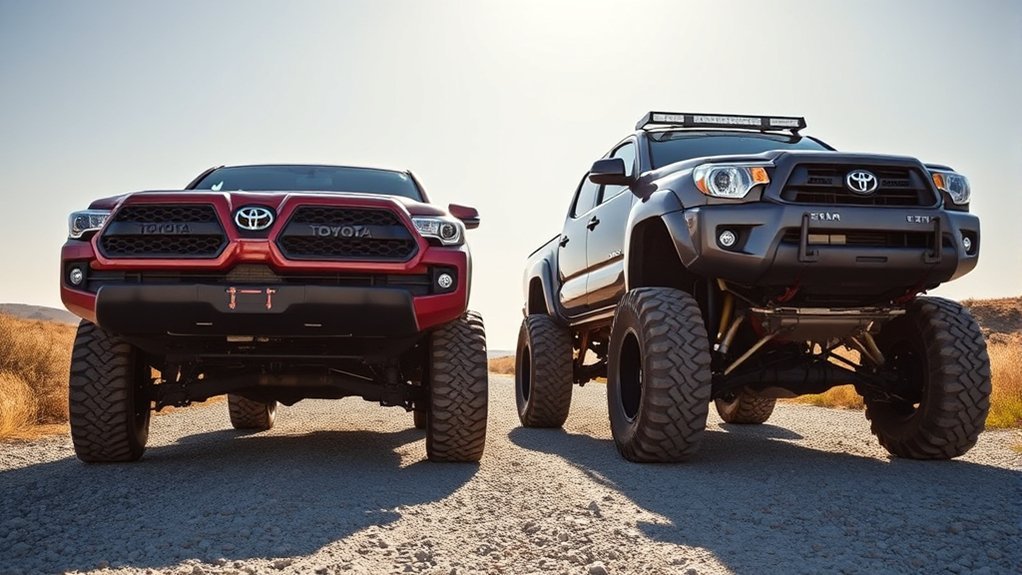
Choosing between a leveling kit and a lift kit for a Toyota Tacoma is not only about appearance. The right choice depends on how you use the truck, how much clearance you need, and which Tacoma year and trim you own. A modest front level can improve stance and tire room, while a complete suspension lift can add useful trail clearance at the cost of more parts, setup work, and changes to handling.
Quick Answer
Choose a leveling kit if you mainly want to reduce factory rake, gain modest front tire clearance, and limit the changes to your truck. Choose a suspension lift if you need more ground clearance and better off-road angles. Fitment depends on year, trim, suspension, wheel offset, and tire dimensions. Bigger tires are optional, not required.
Key Takeaways
- A leveling kit usually raises the front only; a suspension lift raises the truck more broadly and may replace or reposition several suspension parts.
- Tacoma fitment is generation- and trim-specific, especially on 2024-and-newer trucks with different rear suspension designs.
- Lift height alone does not guarantee tire clearance. Wheel width, offset, tire shape, alignment, and suspension travel also matter.
- Plan for an alignment plus checks of headlamp aim, driver-assistance sensors, brake and ABS wiring, and fastener torque.
- Bigger tires, higher ride height, and heavier components can change steering feel, braking, ride comfort, and fuel use.
At a Glance
| Time Required | About 3.5-6+ hours for many bolt-on kits, plus alignment and any tire, headlamp, or sensor work |
| Difficulty | Moderate for a basic level; advanced for a full suspension lift |
| Tools Needed | Model-specific instructions, floor jack, rated jack stands, hand tools, torque wrench, and any specialty tools required by the kit |
| Cost | Varies widely by generation, kit design, labor, alignment, tires, control arms, and calibration needs |
Leveling Kit vs. Lift Kit: Which Is Right for Your Tacoma?
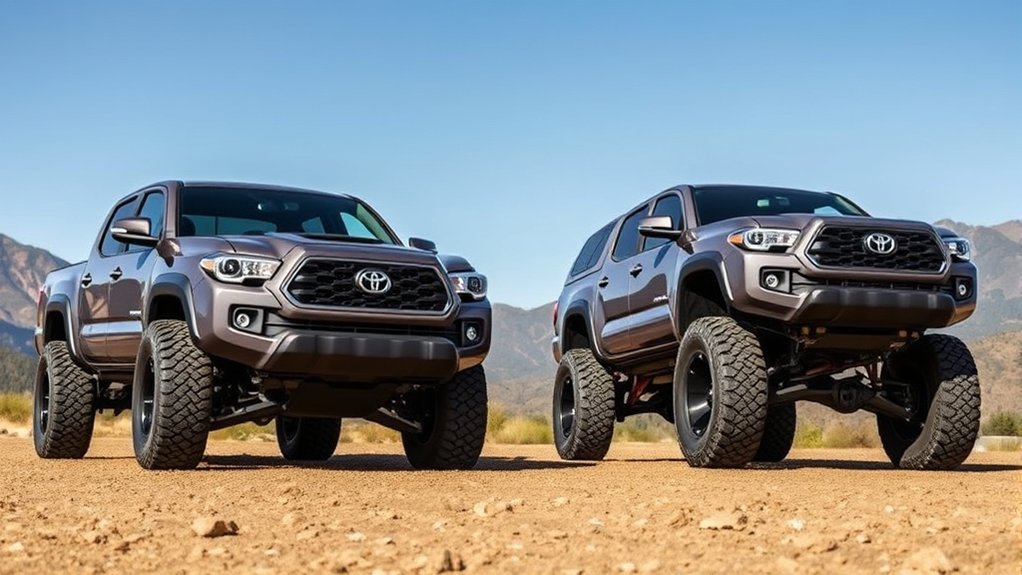
A leveling kit is usually the better fit for a daily-driven Tacoma when the main goals are a flatter stance and a small amount of extra front clearance. A full suspension lift is better suited to drivers who regularly need more clearance under the chassis, improved approach or breakover angles, or room for a carefully tested wheel-and-tire package.
| Factor | Leveling Kit | Suspension Lift |
| Typical change | Raises the front to reduce rake | Raises the front and rear or replaces major suspension components |
| Best use | Street use, appearance, modest tire clearance | Regular trail use, added chassis clearance, larger changes in stance |
| Complexity | Usually fewer parts, but alignment is still important | More parts and more checks for geometry, travel, wiring, and calibration |
| Main tradeoff | Less front droop or altered geometry with some spacer designs | Higher center of gravity, greater cost, and more handling changes |
Warning: Raising a Tacoma can change steering response, braking feel, emergency handling, and rollover behavior. Use a kit approved for the exact year, drivetrain, cab, bed, trim, and suspension. Follow the kit instructions and have the finished truck inspected and aligned before normal driving.
Start With Your Tacoma’s Year, Trim, and Suspension
Do not buy a kit based only on the word “Tacoma.” The 2005-2023 trucks use a different platform from the fourth-generation Tacoma introduced for 2024. Toyota also uses more than one rear suspension layout on newer trucks. Its official 2024 launch information states that a multi-link coil rear suspension is available, while leaf springs remain on certain grades. That difference changes the springs, spacers, shocks, brackets, and installation steps a kit may require. Check the exact application in the manufacturer’s fitment guide before ordering. Toyota explains the fourth-generation suspension differences in its 2024 Tacoma technical overview.
Also check for trim-specific equipment such as adaptive dampers, a stabilizer disconnect system, hybrid components, factory lift hardware, or special off-road shocks. A kit that fits an SR5 may not fit a TRD Pro, Trailhunter, Limited, or another trim with different suspension hardware.
Understanding Why Your Tacoma Sits Uneven
Many Tacomas sit higher at the rear when unloaded. This front-to-rear rake gives the truck room to settle when passengers, cargo, or trailer tongue weight load the rear suspension. The exact difference is not the same on every year, trim, spring package, accessory setup, or worn suspension.
Before leveling the truck, measure from the center of each wheel hub to the lower edge of the fender opening on level ground. Do not measure from the floor because tire pressure, tire diameter, and pavement slope can distort the result. Repeat the measurement with the normal cargo or accessories you carry. A heavy front bumper, winch, bed rack, camper, or constant cargo load can change the correct spring choice.
Pro Tip: Choose the kit for the truck’s normal operating weight, not its empty showroom stance. Constant added weight may call for matched springs rather than a simple spacer.
How Leveling Kits Work
A leveling kit raises the front of the Tacoma to reduce the factory rake. Depending on the product, it may use a top-out spacer, preload spacer, adjustable shock or coilover, or a replacement spring. These designs do not affect the suspension in exactly the same way.
- Top-out spacer: Mounts above the strut assembly. It can add ride height without increasing spring preload, but it may change available droop and operating angles.
- Preload spacer: Changes spring preload. It can affect ride feel and suspension travel differently from a top spacer.
- Adjustable shock or coilover: Uses a purpose-built ride-height setting and may offer better control than a basic spacer when correctly matched to the truck’s weight.
- Replacement spring: Can support added front weight when selected for the actual bumper, winch, armor, or accessory load.
A level does not “preserve suspension geometry” perfectly. Any ride-height change can affect caster, camber, toe, CV-joint angles, ball-joint angles, shock position, and available travel. The size of the effect depends on the kit and lift height.
[Products Worth Considering]

This 3-piece wheel brush set makes it easy to clean wheels and tires with soft, scratch-free brushes designed for lifting brake dust and grime. The flexible rim brush bends up to 360 degrees to reach hard-to-access areas for a thorough clean, while the comfortable grip helps control during detailing. A dedicated detailing brush supports gentle cleaning for sensitive surfaces, including interior use.

These aluminum alloy tire valve stem caps with an O-ring seal help protect valve stems from corrosion while adding a clean, stylish look to your vehicle. The universal fit works across cars, trucks, motorcycles, bicycles, and more, making them an easy upgrade for everyday driving and off-road use. Installation is quick, and the included four-pack keeps all your tires dressed and protected.

This professional wheel and rim cleaning brush set lifts brake dust, grime, and dirt with soft, scratch-free microfiber and synthetic wool fibers. The rim brush bends up to 360 degrees for easy access to hard-to-reach areas around spokes, lips, and faces. Ideal for thorough cleaning of car, truck, motorcycle, bicycle, RV, and more wheel and tire surfaces.
Financial and Performance Advantages of Leveling Kits
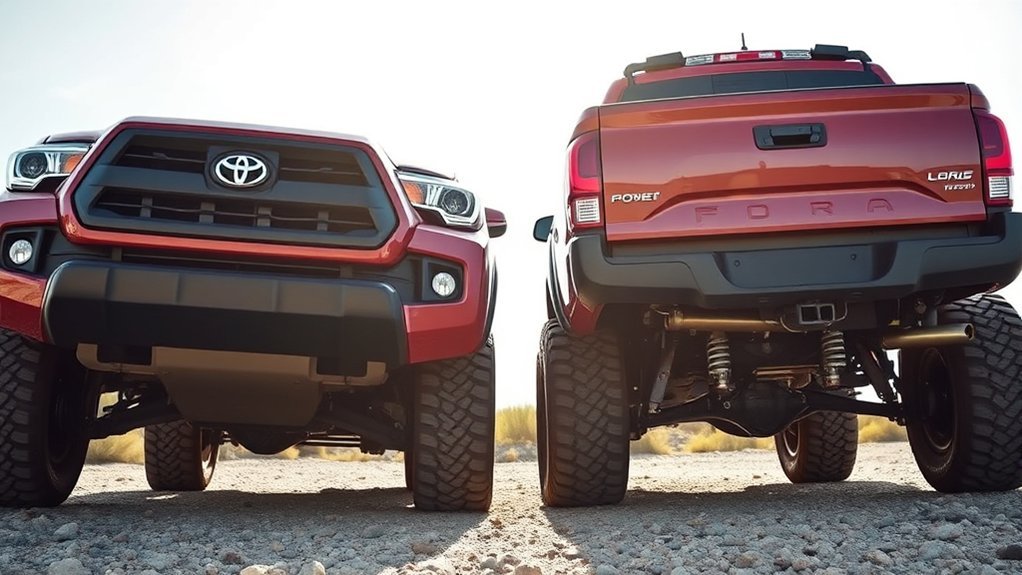
Financial savings potential: A basic leveling system often uses fewer parts and less labor than a complete suspension lift. That can make it the more practical choice when the goal is stance or modest tire clearance. The final bill still may include alignment, new fasteners, worn suspension parts, tire work, and calibration.
Fuel economy reality: A leveling kit should not be sold as a fuel-saving modification. Raising the front, adding weight, or fitting heavier and more aggressive tires can change aerodynamic drag and rolling resistance. The result depends more on the complete setup than on the spacer itself. NHTSA notes that tire design and rolling resistance influence fuel economy, and it recommends using the vehicle’s tire placard or owner’s manual when choosing replacement sizes in its TireWise guidance.
Installation simplicity: Some bolt-on leveling kits are less involved than full suspension systems, but they are not risk-free. Manufacturer estimates for Tacoma products commonly exclude alignment and wheel-and-tire work. Use rated jack stands, follow the supplied torque sequence, and never assume a universal torque value.
Understanding Lift Kits: Key Differences From Leveling Kits
“Lift kit” can describe more than one type of modification. A suspension lift changes springs, shocks, spacers, control arms, blocks, or related parts to raise the chassis and body. A body lift raises the body above the frame but does not add the same under-chassis clearance because the frame, suspension, and differentials remain at their original height.
For trail use, a properly engineered suspension lift is usually the more useful option. It can improve approach, breakover, and departure clearance, depending on where the truck contacts the terrain. It may also provide room for larger tires, but the tires themselves are what raise the axle differentials farther from the ground.
Toyota’s current genuine TRD lift is a useful example of a complete, model-specific system: it combines front and rear ride-height changes with tuned shocks and upper control arms. Toyota also states that the kit is designed for OEM wheel and tire sizes, proving that larger tires are not required after a lift. See the Toyota Genuine TRD Suspension Lift Kit information for its exact application and limits.
[Products Worth Considering]

Keep your RV, travel trailer, or fifth wheel securely in place with these heavy-duty X-shaped wheel chock stabilizers. Designed to clamp between tires, they reduce side-to-side movement for a steadier, level camping setup. The package includes a ratchet wrench, socket adapter, gloves, and a storage bag for easy installation and transport.

These universal tire valve stem caps help protect valve cores from dust, debris, and moisture while helping maintain stable tire pressure. The corrosion-resistant metal construction and sealed design provide reliable protection in road grime, mud, and winter conditions. Twist-on installation makes them quick to fit on cars, SUVs, trucks, and motorcycles.

The Ziopetru adjustable magnetic wheel alignment tool helps you check and restore camber and caster positioning after removing and reinstalling undercarriage components. With a clear leveling/bubble measurement system and an easy zeroing adjustment knob, it supports precise horizontal angle checking. The strong magnetic base mounts to metal surfaces for convenient use at home on cars, motorcycles, trucks, vans, and SUVs.
Financial and Performance Advantages of Lift Kits
Financial case: A lift can be worthwhile when it solves a real clearance or load-control need. It should not be treated as a guaranteed resale-value upgrade. Modified trucks appeal to some buyers and discourage others, and poor installation or missing records can reduce value.
Off-road performance: A matched suspension system can improve clearance, wheel control, damping, and the ability to carry constant accessory weight. Results depend on spring rate, shock tuning, travel, tire choice, alignment, and the terrain. More ride height alone does not guarantee better articulation or comfort.
Long-term value: Quality components can be rebuilt or serviced and may perform better than a cheap spacer setup under hard use. However, added joints, bushings, heavier tires, and steeper operating angles also create more inspection points. A lift is a long-term value only when it fits the truck’s actual use and is maintained correctly.
Lift height creates space, but safe tire fitment depends on the entire wheel-and-tire package and clearance through full steering and suspension travel.
Tire and Wheel Fitment After a Tacoma Lift
A lift does not automatically tell you which tire will fit. Two tires with the same printed size can have different measured widths and diameters. Wheel offset and width change where the tire sits in relation to the upper control arm, body mount, fender liner, mud flap, bumper, and cab mount.
- Year and trim: Brake size, suspension hardware, fender shape, and factory ride height can differ.
- Wheel width and offset: Moving the tire outward may clear a control arm but increase contact with the fender or body mount.
- Actual tire dimensions: Compare the manufacturer’s measured diameter and section width, not only the sidewall label.
- Alignment settings: Caster changes the front-to-rear position of the tire in the wheel opening.
- Dynamic clearance: Test at full steering lock and through compression and droop. A tire that clears while parked can rub off-road.
- Load rating and pressure: Replacement tires must support the truck’s load. Use the door-jamb Tire and Loading Information label as the starting point.
ReadyLIFT’s current Tacoma guidance illustrates why exact fitment matters: its 2024-2026 3-inch system lists specific wheel widths and offsets, while its 2005-2023 system has different limits and exclusions. Review the manufacturer pages for the 2024-2026 Tacoma kit and the 2005-2023 Tacoma kit as examples; always follow the instructions for the exact product you buy.
[Products Worth Considering]

Replace or upgrade your zero-turn lawn mower tires with a universal fit flat-free tire and wheel assembly in a convenient 2-pack. Smooth tread front-caster style helps turning with reduced turf damage, while flat-free design eliminates the maintenance and downtime of air-filled flats. The included adapter kit supports 5/8-inch axles and hub lengths from 3.4 to 5 inches for compatibility across most ZTR mowers.

This professional wheel and rim brush kit makes it easy to lift brake dust, grime, and dirt from wheels and tires without scratching finishes. The brushes feature soft, metal-free wool heads and a flexible 360-degree rim brush design for reaching hard-to-clean areas. Includes multiple brush types plus accessories for thorough car, motorcycle, and general vehicle detailing.

Upgrade your 2024-2026 Tesla Model 3 Highland with REEVAA all-weather mud flaps designed for seamless fit along the original body lines. The set of four delivers strong splash protection against mud, gravel, and road debris while using OEM-grade durable materials. Installation is non-destructive with original hole positions and snap-in clips, and the aerodynamic design helps minimize impact on efficiency.
Hidden Costs of Tacoma Suspension Upgrades
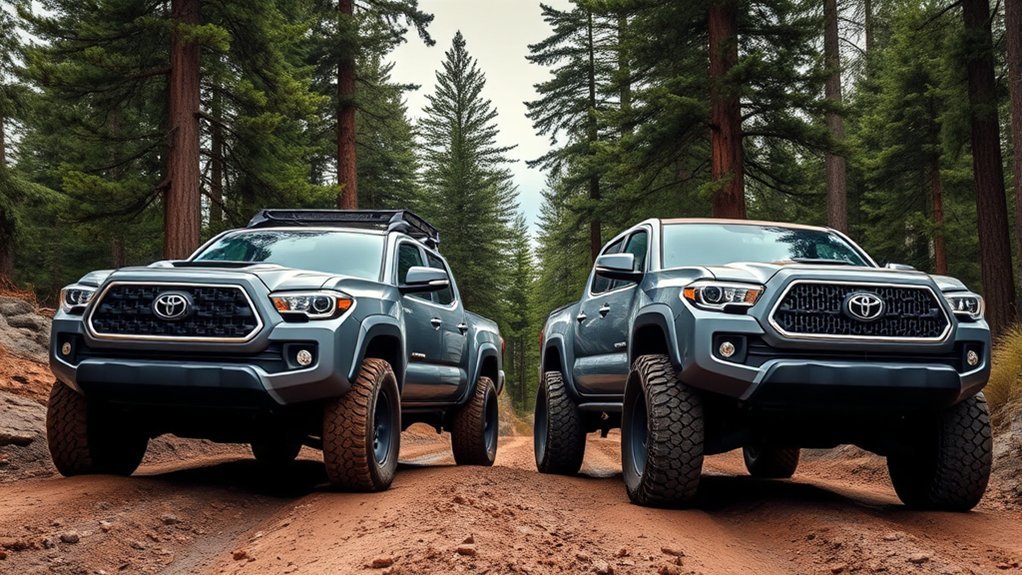
The kit price is only one part of the budget. Depending on the Tacoma and the amount of lift, the completed setup may require:
- A four-wheel alignment and a second alignment after the springs settle
- Upper control arms or other geometry-correction parts when the kit instructions call for them
- Longer or relocated brake, ABS, sensor, or differential-breather lines
- Rear shocks, bump-stop changes, carrier-bearing corrections, or driveline-angle work
- Headlamp aim adjustment and inspection of camera, radar, or sonar systems
- Speedometer or odometer correction when tire diameter changes enough to affect readings
- Trimming or relocation of liners, mud flaps, brackets, or body mounts for certain tire packages
- Higher tire, wheel, fuel, and replacement-part costs
Do not assume every truck needs a differential drop or aftermarket upper control arms at a fixed lift height. Those parts are kit-, generation-, and geometry-specific. Follow the manufacturer’s instructions and verify alignment results instead of buying correction parts by rule of thumb.
Safety, Alignment, and Calibration Checklist
Complete these checks before treating the installation as finished:
- Confirm fastener torque: Use the kit instructions and Toyota service information for the exact joint. Mark critical fasteners so movement is easy to spot.
- Get an alignment: Ask for the before-and-after printout. Verify caster, camber, and toe are within the appropriate specifications and reasonably balanced side to side.
- Check clearance: Turn lock to lock and inspect at normal ride height and through available suspension travel.
- Inspect hoses and wiring: Make sure brake hoses, ABS wiring, sensor leads, and breathers are not stretched, pinched, or rubbing.
- Check headlamp aim: Raising the front can point the beams higher and create glare.
- Verify driver-assistance systems: Follow Toyota and kit-maker procedures for any required inspection or calibration.
- Road-test carefully: Start at low speed. Listen for contact, clunks, vibration, steering pull, or stability-control warnings.
- Recheck the installation: Inspect and retorque where the manufacturer requires it after the initial break-in distance.
Note: Product fitment notes often call for alignment, headlamp checks, and inspection or calibration of advanced driver-assistance systems. These are part of the installation, not optional finishing touches.
Towing, Payload, and Daily-Driving Tradeoffs
A leveling or lift kit does not increase the payload, gross vehicle weight rating, axle ratings, or tow rating shown by Toyota for the truck. Keep using the certification label, Tire and Loading Information label, owner’s manual, and hitch limits when loading or towing.
Removing rearward rake can also reduce the visual reserve the truck has before it looks nose-high under cargo or trailer tongue weight. Drivers who tow or carry heavy loads may prefer to keep some rake or use load-appropriate rear springs. Air springs or helper springs can control sag, but they do not raise the truck’s legal weight ratings.
For daily use, expect possible changes in step-in height, parking-garage clearance, steering feel, crosswind response, ride firmness, braking feel, and fuel consumption. Larger, heavier all-terrain or mud-terrain tires often create more noticeable changes than a modest ride-height adjustment by itself.
Warranty and Legal Considerations
An aftermarket lift does not automatically erase the entire vehicle warranty. The Federal Trade Commission states that using aftermarket parts does not by itself cancel warranty coverage. However, a manufacturer or dealer may deny coverage for damage caused by a defective part or improper installation. Keep the invoice, part numbers, installation instructions, alignment sheets, and maintenance records. Read the FTC’s auto warranty guidance for the federal consumer-protection basics.
State rules can also limit bumper, frame, or headlamp height and may affect inspection requirements. Verify the current law where the truck is registered and where it will be driven. Insurance policies and service contracts may have separate notice or coverage terms.
Choosing Between Leveling Kits and Lift Kits: What to Consider
Use the truck’s real job to make the decision:
- Choose a leveling kit when you want a flatter stance, modest front clearance, mostly street driving, and the least complex change.
- Choose a suspension lift when you regularly need more trail clearance, better off-road angles, matched damping, or support for constant accessory weight.
- Keep the factory suspension when the current truck already clears the terrain and tires you use. Good tires, skid plates, recovery points, and driver training may provide more value than extra height.
Before buying, write down the model year, trim, cab, bed, drivetrain, engine, rear suspension type, current wheel size and offset, tire size, front and rear accessory weight, towing use, and target terrain. Then compare that list with the kit’s official fitment and exclusion notes.
Frequently Asked Questions
Do I need bigger tires if I lift my Tacoma?
No. A lift can create room for larger tires, but larger tires are optional. Toyota’s genuine TRD suspension lift is designed to work with OEM wheel and tire sizes. Keep the factory tires if they meet your needs and remain within the kit’s approved fitment.
Does a 3-inch Tacoma leveling kit always add exactly 3 inches?
No. “3-inch” usually describes the target ride-height change, not the physical thickness of every spacer. Actual lift can vary with the kit design, truck weight, spring condition, trim, and measurement method. Measure hub-to-fender height before and after installation.
Are leveling kits good for Tacomas?
They can be a practical choice for a street-driven Tacoma when the kit is designed for the exact truck, the lift is modest, and the installation includes alignment and clearance checks. They are less suitable when you need major ground-clearance gains, added suspension travel, or springs matched to heavy accessories.
Will a leveling kit hurt ride quality?
It depends on the design. Some spacer systems keep a similar spring rate but change droop or operating angles. Preload spacers and stiff springs can make the ride firmer. Adjustable shocks or matched coilovers may provide better control when correctly set for the truck’s weight.
Do I need upper control arms with a Tacoma lift?
Not for every kit. Upper control arms may be needed to restore alignment range, ball-joint angle, or tire clearance on certain lifts. Use the kit maker’s requirements and the alignment results rather than a universal lift-height rule.
Can I tow after leveling my Tacoma?
Yes, if the truck remains within all Toyota, axle, tire, wheel, and hitch ratings. A leveling kit does not increase tow or payload ratings. Because the truck starts with less rake, tongue weight may make it appear nose-high sooner, so check loaded headlamp aim, axle loads, and stability.
Conclusion
A leveling kit is the sensible choice for many Tacoma owners who want a flatter stance and modest front clearance without rebuilding the whole suspension. A complete suspension lift makes more sense when added chassis clearance, off-road geometry, damping, or accessory load support are real needs. In either case, match the kit to the exact truck, test the complete wheel-and-tire package, align it, inspect its safety systems, and keep the vehicle within Toyota’s load ratings.
Sources
- Toyota USA Newsroom: 2024 Toyota Tacoma technical overview — fourth-generation suspension layouts and trim differences
- Toyota Genuine TRD Suspension Lift Kit — model-specific lift design, components, tire guidance, and warranty notes
- ReadyLIFT 2024-2026 Tacoma 3-inch SST kit — current fitment, wheel offset, tire limits, installation time, and safety warnings
- ReadyLIFT 2005-2023 Tacoma SST kit — earlier-generation fitment, alignment, headlamp, and ADAS notes
- NHTSA TireWise — tire-size, load, inflation, alignment, and rolling-resistance guidance
- Federal Trade Commission: Auto Warranties and Auto Service Contracts — aftermarket-part warranty rights and limits

