
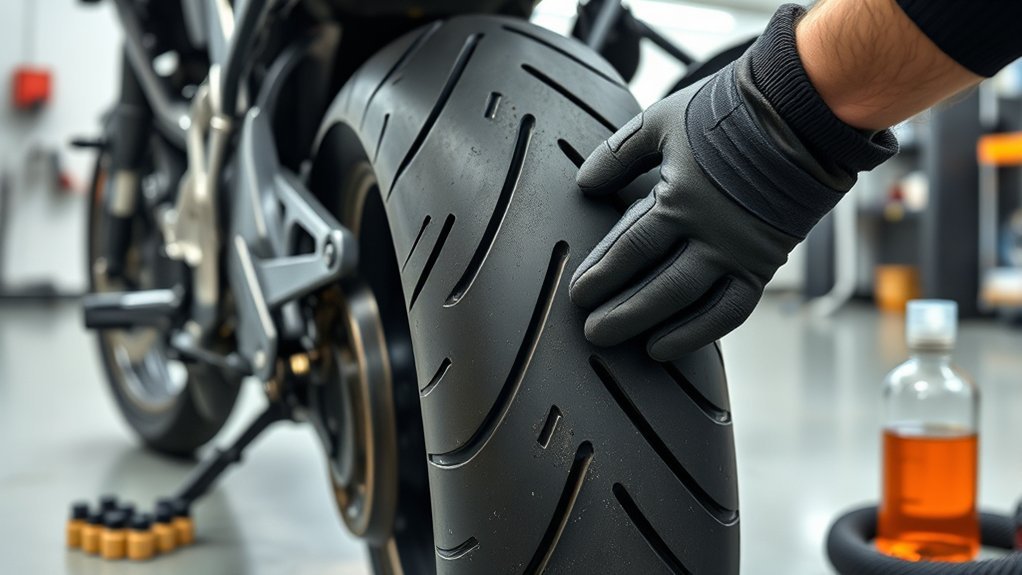
You may be able to plug a motorcycle tire as an emergency temporary repair, but only when the tire is tubeless and the damage is a small, straight puncture in the main tread area. Sidewall damage, shoulder damage, cuts, tears, worn tread, bulges, or signs of internal damage mean you should replace the tire instead. For the safest result, treat an outside plug as a short-term roadside fix and have the tire removed, inspected, and repaired with an internal plug-patch when the tire maker and repair shop allow it.
Quick Answer
You can plug a tubeless motorcycle tire only as a temporary roadside repair for a small tread puncture, usually up to 1/4 inch or about 6 mm. Do not plug the sidewall, shoulder, large holes, cuts, or a worn tire. A proper internal plug-patch and professional inspection are safer.
Key Takeaways
- Plug only a tubeless motorcycle tire, and only for a small puncture in the main tread area.
- Do not repair sidewall, shoulder, cut, torn, bulged, or badly worn tires.
- An outside plug is a temporary roadside repair, not the same as a proper internal plug-patch.
- Check pressure cold, test for leaks, and inspect the repair before every ride until a professional checks it.
- Replace the tire if you ride aggressively, carry heavy loads, ride two-up, use the bike on track, or find hidden damage.
At a Glance
| Time Required | 10 to 20 minutes for an emergency plug, plus time for pressure checks and leak testing |
| Difficulty | Moderate roadside task; professional inspection is still recommended |
| Tools Needed | Tubeless plug kit, pliers, reamer, insertion tool, rubber cement if your kit requires it, pressure gauge, air inflator, and soapy water |
| Cost | Low for a roadside kit; higher if you need an internal plug-patch or tire replacement |
Is It Safe to Plug a Motorcycle Tire?
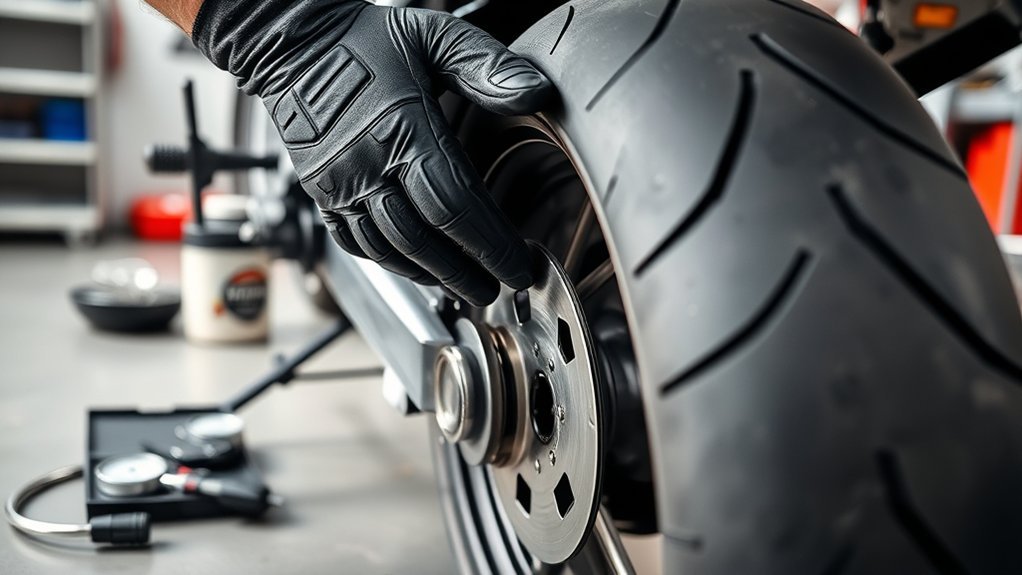
Plugging a motorcycle tire can be safe enough to get you out of a roadside problem, but only when the puncture fits strict repair limits. You need a tubeless tire, a small round hole, and damage located in the tread area away from the shoulder and sidewall. You also need enough tread, no bulges, no exposed cords, and no sign that the tire ran flat long enough to damage the casing.
Think of a plug as a temporary emergency repair. It can slow or stop air loss long enough to reach home or a tire shop, but it does not let you ignore hidden damage inside the tire. A proper repair usually means removing the tire from the wheel, inspecting the inner liner and casing, and using a combination plug-patch when the damage is repairable.
Warning: Do not plug a motorcycle tire with sidewall damage, shoulder damage, cuts, tears, exposed cords, bulges, multiple close punctures, or damage larger than about 1/4 inch. Replace the tire instead.
The National Highway Traffic Safety Administration tells riders to check tire pressure and tread depth before every ride. That advice matters even more after a puncture because a slow leak can affect handling, braking, cornering, and stability.
[Products Worth Considering]

This screw-in tire plug kit seals punctures fast using the included screwdriver, letting you repair tread damage without removing the tire or using messy glue. It includes two plug sizes for different puncture types and uses high-density rubber for an airtight, heat-resistant temporary seal that helps you reach a tire shop safely. Compact and universal, it works on tubeless tires across cars, trucks, motorcycles, tractors, and more.

Use this tire repair rubber screw kit for fast, self-service flat fixes on the road. Choose the matching short or long nail size and twist it into the puncture without removing the tire from the rim. Compact storage keeps the emergency set organized for cars, motorcycles, electric bikes, and bicycles, helping you seal tubeless leaks quickly and reliably.

This screw-in tire plug kit offers quick, DIY tire repairs for punctures from nails, screws, and sharp debris. Simply screw the vacuum tire mending nail into the puncture for a fast roadside fix, designed to create a strong, air-tight seal. It fits most tubeless tires for cars, trucks, motorcycles, and more, helping you avoid costly replacements until professional service is available.
When Can You Plug a Motorcycle Tire?
You can usually consider an emergency plug only when all repair conditions line up. The tire must be tubeless, the puncture must be in the main tread area, and the hole should be small, round, and caused by something like a nail or screw. Common repair guidance limits tread-area repairs to about 1/4 inch, or roughly 6 mm.
You should not plug a tube-type motorcycle tire from the outside. If your tire uses an inner tube, the tube is what holds air. In that case, you need to remove the wheel, inspect the tire casing, and repair or replace the tube. A plug in the outer tire will not properly fix the tube.
Safe Puncture Locations
The safest repairable area is the center tread zone, where the tire carries load more evenly and flexes less than the shoulder or sidewall. A small puncture here may accept a temporary plug if the tire has not been ridden flat and the casing still looks sound.
Keep repairs away from the sidewall and shoulder. Those areas flex heavily when you lean, brake, accelerate, and hit bumps. A plug in that zone can loosen, leak, or fail because the tire structure is already under more stress.
Repairable Hole Sizes
Small, straight punctures are the only damage worth considering. If the hole is larger than about 1/4 inch, jagged, angled, torn, or stretched, replace the tire. Do not try to force a plug into damage that no longer looks like a simple nail or screw puncture.
| Damage Type | Best Action | Why |
|---|---|---|
| Small round tread puncture up to about 6 mm | Temporary plug, then professional inspection | May seal long enough to reach service |
| Sidewall puncture | Replace the tire | Sidewalls flex too much for a safe repair |
| Shoulder puncture | Replace the tire | Lean angle and casing stress weaken repairs |
| Cut, tear, slash, or exposed cord | Replace the tire | The tire structure may be compromised |
| Tread at wear bars or below legal minimum | Replace the tire | Worn tread reduces grip and repair margin |
Plug or Plug-Patch: Which Is Better?
A plug and a plug-patch do different jobs. A plug inserted from the outside fills the puncture channel, but it does not let you inspect the tire’s inner liner or casing. A combination plug-patch repairs from inside the tire, seals the inner liner, fills the injury path, and gives a technician a chance to inspect for hidden damage.
For emergency roadside use, a plug can be useful. For a lasting repair, a plug-patch is usually the safer choice when the tire maker, tire condition, puncture location, and repair shop all allow the repair. Some motorcycle tire makers and shops may still recommend replacement, especially for high-performance tires.
[Products Worth Considering]
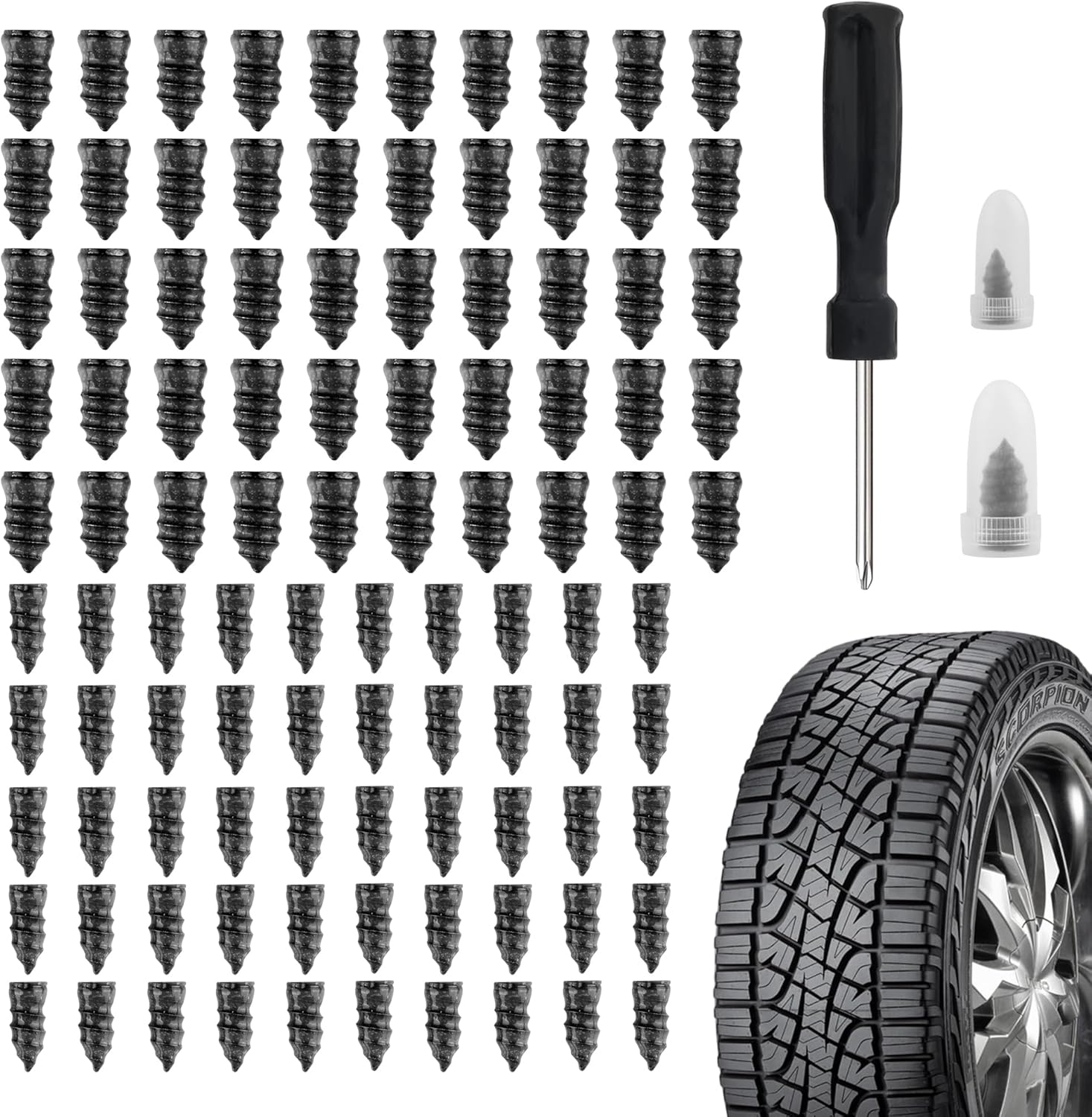
Salior’s tire plug kit provides a fast, reliable self-service fix for punctured or leaking tires without the need for flaring tools. Choose the correct plug size, then screw the nail into the puncture using the included screwdriver for an enhanced seal. The set is durable and convenient for on-the-go maintenance across multiple vehicle types.
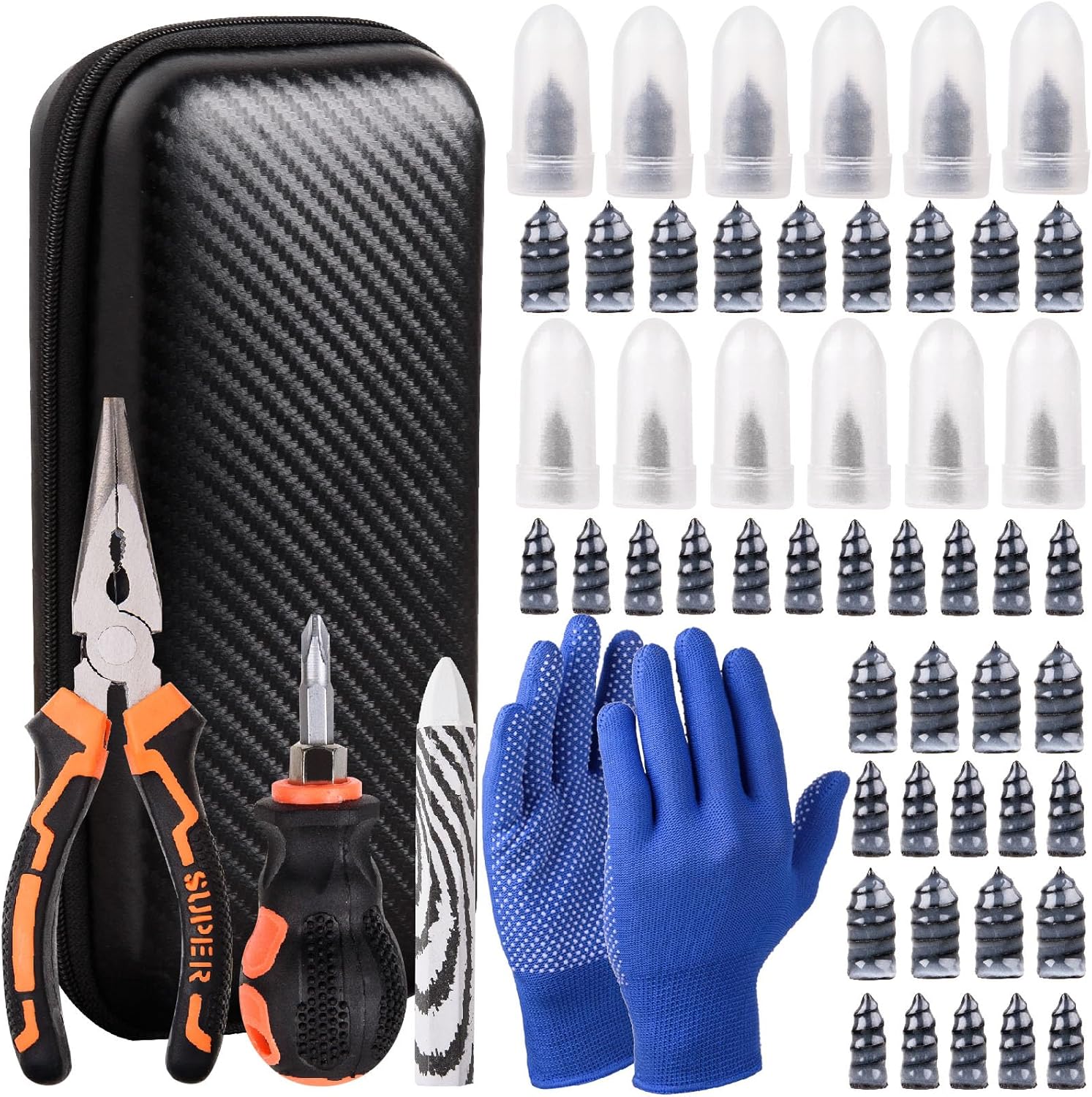
This tire sidewall puncture repair kit fixes flats fast without removing the tire, helping you get back on the road in minutes. It includes self-tapping repair nails, essential tools, gloves, and a portable storage bag for convenient roadside use. Designed for tubeless tires, it helps create a tight, leak-resistant seal for cars, motorcycles, trucks, SUVs, and ATVs.

This 60-piece tire repair nail kit provides a fast, do-it-yourself way to seal punctures on tubeless car, motorcycle, and SUV tires without removing the tire. Simply align, twist clockwise, and finish in seconds for a reliable sealing effect that helps prevent water intrusion. The kit includes tire glue and durable rubber-and-steel repair nails for strong adhesion and long-lasting repairs.
Plug Repair Limits
An outside plug should only be used when you need to restore air pressure long enough to reach a safer place or a service shop. Do not treat it as permission to ride normally, ride fast, carry heavy loads, or keep using the tire without inspection.
A plug-only repair also cannot reveal internal damage. If you rode on the tire while it was low or flat, the sidewall and casing may have overheated or weakened. You may not see that damage from the outside.
Plug-Patch Durability Benefits
A plug-patch repairs the tire from the inside. The patch seals the inner liner, while the stem fills the puncture channel. This helps reduce air loss and helps block moisture from entering the tire structure.
Because the tire has to come off the wheel, the technician can inspect the inside before deciding whether the tire is repairable. That inspection is the main reason a plug-patch is more trustworthy than a quick outside plug.
| Repair Type | Use Case | Main Limitation |
|---|---|---|
| Outside plug | Temporary roadside repair | Does not inspect or seal the tire from inside |
| Internal patch only | Inner-liner sealing in some repair systems | May not fill the full puncture channel |
| Combination plug-patch | Preferred professional repair when allowed | Requires tire removal and technician inspection |
How to Plug a Motorcycle Tire
Use these steps only for an emergency repair on a tubeless motorcycle tire. Follow the instructions included with your specific plug kit because mushroom plugs, rope plugs, and probe-style plugs can install differently.
- Move to a safe place. Get off the road, keep the bike stable, and avoid working near traffic.
- Find the puncture. Look for the nail, screw, or object. Do not remove it until you are ready to plug the hole.
- Inspect the tire first. Do not continue if the damage is in the sidewall or shoulder, larger than about 6 mm, jagged, or near another repair.
- Remove the object. Pull it straight out with pliers when possible.
- Prepare the hole. Use the reamer only as your kit directs. Do not enlarge the injury more than needed.
- Install the plug. Insert the plug with the supplied tool and seat it according to the kit instructions.
- Trim excess plug material. Trim it close to the tread surface if your kit requires trimming.
- Inflate the tire. Inflate to the motorcycle manufacturer’s recommended cold tire pressure, not the maximum pressure printed on the tire sidewall.
- Check for leaks. Apply soapy water to the repair and valve stem. Bubbles mean air is still escaping.
- Ride cautiously to service. Keep speed low, avoid hard cornering and braking, and get the tire inspected as soon as practical.
Pro Tip: After a roadside plug, write down the date, tire pressure, puncture location, and plug type. That record helps a tire shop judge what happened and helps you spot pressure loss early.
[Products Worth Considering]

ZEHXI’s 60 pack screw-in tire plug kit uses high-grade rubber plugs with sealing threads to help repair minor punctures quickly without removing the tire. The set includes two plug sizes, so you can match different puncture openings and keep repairs organized in a transparent case. A handy screwdriver is included for fast installation, helping drivers get more mileage from existing tires while being ready for flat-tire emergencies.

This 61-piece tire repair rubber nail kit provides a quick, self-service fix for punctured tubeless tires by simply inserting the rubber nail into the damage. The sealant-coated nails help form a strong bond to reduce air loss and prevent water intrusion, with no tire removal required. It includes two nail sizes for minor and larger punctures plus a screwdriver for easy installation across many vehicle types.

Vigorder rubber cement glue delivers superior adhesion and cures quickly within about 30 seconds for seamless rubber bonding. Once cured, it helps provide a strong, durable, waterproof seal that holds up to vehicle weight, pressure, and heat. Suitable for cars, motorcycles, trucks, bicycles, and off-road tires, it’s designed for emergency patch and maintenance repairs.
What to Check After Plugging a Tire
After plugging a tire, check pressure before the first ride, again after a short slow ride, and again when the tire is cold. Use an accurate gauge. Pressure that keeps dropping means the tire is not safe to keep riding.
Inspect the plug and the surrounding tread for seepage, cracking, loosening, cuts, bulges, vibration, or new handling changes. Use soapy water around the plug and valve stem if you suspect a leak. If bubbles appear, stop riding and replace or professionally repair the tire.
Pay close attention if the plugged tire is on the front wheel. A front tire failure can affect steering immediately, so many riders and shops prefer replacement over repair for front motorcycle tires. Replacement is also the safer choice for track days, aggressive sport riding, heavy touring loads, two-up riding, or long highway trips.
Note: Tire pressure should be checked cold. Heat from riding raises pressure and can hide a slow leak until the tire cools again.
When to Replace the Tire Instead
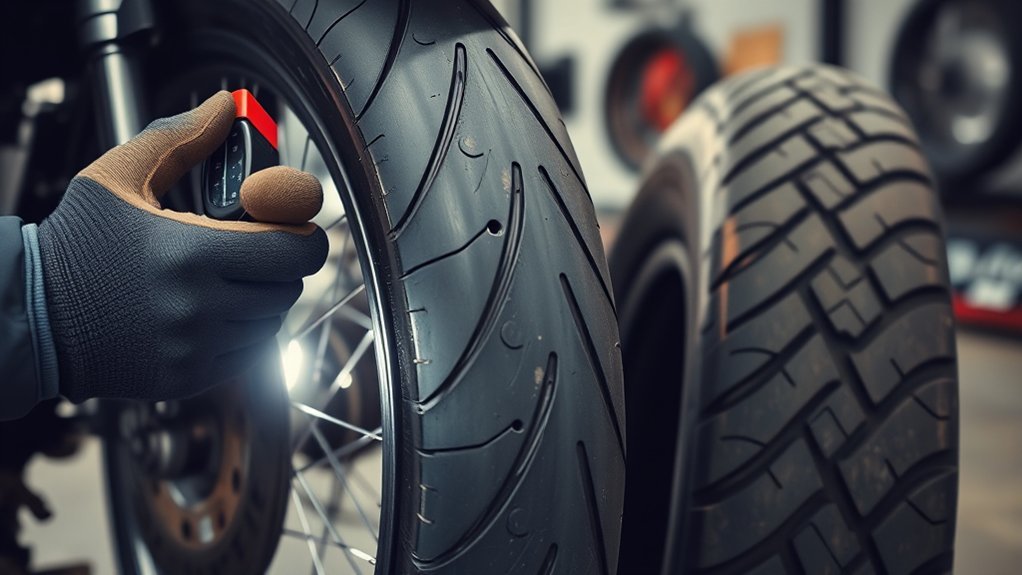
Replace the tire when the puncture falls outside the repairable tread area, the hole is too large, the tire is worn, or you see any sign of structural damage. Also replace it if the tire was ridden while flat or very low, because internal damage can develop before the outside looks serious.
| Condition | Action | Risk |
|---|---|---|
| Sidewall puncture | Replace the tire | Sudden air loss or casing failure |
| Shoulder puncture | Replace the tire | Weak repair under lean and load |
| Tread at wear bars or below local legal minimum | Replace the tire | Reduced grip and water evacuation |
| Multiple close punctures | Replace the tire | Weakened tread and casing area |
| Bulge, exposed cord, cracking, or delamination | Replace the tire immediately | Possible structural failure |
You should also replace the tire if a shop refuses to repair it. That refusal usually means the technician found a safety concern, the puncture is outside the repair zone, or the tire maker’s policy does not support repair for that tire.
Frequently Asked Questions
Is it okay to plug a motorcycle tire?
It can be okay as a temporary emergency repair if the tire is tubeless and the puncture is small, round, and located in the main tread area. It is not okay for sidewall damage, shoulder damage, tears, large holes, worn tread, or a tire that has been ridden flat. Have the tire professionally inspected before you return to normal riding.
How long will a tire plug last on a motorcycle?
A plug may hold air for a short ride or much longer, but you should not judge safety by time alone. Plug life depends on the puncture, tire condition, plug type, installation quality, load, speed, heat, and riding style. Treat an outside plug as temporary until a qualified technician inspects the tire.
What are the risks of plugging a tire?
The main risks are air loss, plug movement, hidden internal damage, weak casing structure, and reduced confidence at speed or lean angle. A poor repair can affect handling and may fail without much warning. That is why you should check pressure often and avoid hard riding after an emergency plug.
Can you plug a front motorcycle tire?
You can physically plug some front tubeless tires, but replacement is often the safer choice. The front tire controls steering, braking feel, and a large share of cornering feedback. If you plug a front tire in an emergency, ride slowly and have it inspected or replaced as soon as possible.
Is it illegal to plug a motorcycle tyre puncture?
In many places, the act of plugging a motorcycle tyre is not automatically illegal, but riding on an unsafe tyre can violate roadworthiness, inspection, or insurance rules. Laws vary by country, state, and province. Check your local rules, and replace the tyre if the repair does not meet safety standards.
Conclusion
Plugging a motorcycle tire is a way to buy time, not a way to erase damage. Use a plug only for a small tread puncture in a tubeless tire, and only when you need to reach a safe place or repair shop. If the damage sits near the sidewall, the tire is worn, the hole is large, or the bike will see hard riding, replace the tire.
Your motorcycle depends on two small contact patches. When one tire has already been punctured, caution is cheaper than a failure at speed. Check pressure, test for leaks, inspect the repair, and get a professional opinion before you trust the tire again.
Sources
- NHTSA TireWise — tire pressure, tread, blowout, tire safety, and maintenance guidance.
- NHTSA Motorcycle Safety — motorcycle pre-ride tire pressure and tread-depth checks.
- Tire Rack: Can Flat Tires Be Repaired? — tread puncture repair limits, plug-patch guidance, and why internal inspection matters.

