Choosing the right tires for your Toyota RAV4 is not just a winter chore. It affects braking, steering, fuel economy, tire life, and how confidently your RAV4 handles rain, snow, gravel, and hot pavement. The best setup depends on your local weather, the roads you drive, your trim’s required tire size, and whether you want one year-round set or a dedicated winter set.
Quick Answer
For most RAV4 owners, use quality all-season or all-weather tires in mild climates, dedicated winter tires when temperatures regularly stay near 45°F (7°C) or snow and ice are common, and crossover all-terrain tires only if you actually drive gravel, dirt, or light trails. Always match the Toyota-approved size, load rating, and pressure.
Key Takeaways
- Check your RAV4’s driver-door Tire and Loading Information Label or Toyota owner’s manual before buying tires.
- Install winter tires before regular cold, snow, ice, or mountain-pass driving—not after the first bad storm.
- Use four matching tires of the same size, type, load rating, and similar tread depth for predictable handling.
- Maintain pressure monthly, rotate on schedule, inspect tread, and store the off-season set away from heat and sunlight.
At a Glance
| Time Required | 10–20 minutes to choose a tire category; 60–90 minutes for a typical shop tire swap or installation. |
| Difficulty | Easy to plan; installation, balancing, TPMS work, and alignment checks should be handled by a qualified shop. |
| Tools Needed | Owner’s manual or door placard, tire pressure gauge, tread depth gauge or penny, and labels or chalk for marking tire positions. |
| Cost | Varies by RAV4 tire size, tire model, wheel set, TPMS sensors, and labor. Ask for an installed, out-the-door quote that includes mounting, balancing, valve stems or TPMS service, disposal, and taxes. |
Pick the Right RAV4 Tire This Season

Start with fitment, not the tire model. Your RAV4 may use a different tire size depending on model year, trim, wheel size, and package. Before buying, confirm the tire size, load index, speed rating, and recommended cold tire pressure on the driver-door Tire and Loading Information Label or in the Toyota owner’s manual. The NHTSA TireWise guide also recommends using the owner’s manual or door label when choosing replacement tire size.
Warning: Do not mix winter tires with all-season tires, different sizes, or very different tread depths on a RAV4. A matching set of four tires gives the AWD system, stability control, ABS, and steering the most predictable grip.
[Products Worth Considering]

The 22800 wheel stud installer makes replacing wheel studs quick and secure, saving time and effort during tire service. It uses a ratchet or impact wrench to pull new studs firmly into place, helping when existing studs are too long. Compatible with most automotive wheels and light-duty truck wheel studs, it’s designed for easy, tool-assisted installation.

Accurately measure tire tread depth with a calibrated gauge marked from 0 to 1 inch in 1/32 inch increments. The color-coded bar helps you quickly identify tread condition ranges, supporting safe driving for trucks, motorcycles, automobiles, and passenger vehicles.

The SAFELIFE dial tire tread depth gauge measures tread depth in 1/32 inch increments with clear, easy-to-read 2-inch dial face. Color zones using a traffic light system help you quickly judge whether tread is low, marginal, or ample for safer driving. Built with a durable zinc cast body and a metal detect probe for precise, comfortable use across cars, motorcycles, trucks, and buses.
RAV4 Tire Type Comparison
| Tire Type | Best For | Trade-Off |
| Touring all-season | Commuting, rain, mild winters, long tread life, quiet ride. | Not the best choice for frequent snow, ice, or steep winter roads. |
| All-weather / severe-snow-rated all-season | One-set convenience with better light-snow ability than a basic all-season tire. | Still not equal to a dedicated winter tire on ice or deep snow. |
| Dedicated winter tire | Cold climates, snow, ice, mountain passes, ski trips, and early-morning freezing roads. | Needs seasonal storage and should be removed when warm weather returns. |
| Crossover all-terrain | Gravel, forest roads, campsites, light trails, and mixed pavement/dirt use. | Can be noisier, heavier, and less efficient than a touring tire. |
| Performance all-season | Drivers who prioritize sharper dry and wet handling on pavement. | May ride firmer, wear faster, and offer less snow comfort than touring or all-weather tires. |
For a RAV4 that mostly sees city and highway driving, a quiet touring all-season or all-weather tire is usually the most practical choice. If your winters include regular snow, ice, freezing rain, or mountain travel, a dedicated winter tire set is the safer upgrade. If your RAV4 spends weekends on gravel roads or mild trails, choose a crossover-focused all-terrain tire rather than a heavy truck tire.
When to Put On RAV4 Winter Tires: Temp, Snow & Elevation Cues
Install winter tires before the conditions demand them. Waiting until the first major storm often means crowded tire shops, low inventory, and risky driving on tires that are not ideal for the weather.
Temperature Thresholds To Watch
A simple planning rule is to schedule your RAV4 winter tire change when daily temperatures are consistently near 45°F (7°C), especially if mornings are frosty or roads stay cold in shaded areas. The common “7/7 rule” means roughly 7°C for seven straight days—not “replace tires after seven years.” Use it as a planning cue, not a law.
Winter tires use cold-weather compounds and tread designs made for low temperatures, snow, slush, and ice. All-season tires can work in a wide range of conditions, but they are a compromise. NHTSA notes that winter tires are more effective than all-season tires in deep snow, while summer tires are not designed for freezing temperatures, snow, or ice.
Note: Temperature is only one cue. If your commute includes bridges, shaded roads, rural highways, or early-morning freezing rain, install winter tires sooner than a mild city driver would.
Snow, Ice, and Mountain Triggers
Put winter tires on your RAV4 before regular snow, ice, slush, or mountain-pass travel. Do not rely on an exact “one inch of snow” or “3,000 feet of elevation” rule, because road temperatures, sun exposure, plowing, and local traction laws vary widely. If your routes include ski areas, mountain passes, chain-control zones, or roads that freeze overnight, treat winter tires as seasonal safety equipment.
Look for tires with the Three-Peak Mountain Snowflake symbol when winter traction matters. That marking means the tire meets a severe-snow performance standard, but it does not automatically make every tire equal on ice, wet pavement, noise, wear, or comfort. Compare independent tests, shop recommendations, and current fitment for your RAV4 size before buying.
Best All-Season, All-Weather, Winter, and All-Terrain Tires for RAV4
The best RAV4 tire is the one that fits your size and matches your actual driving. Use model names as examples to compare, not as a shortcut around fitment. Availability changes by tire size and model year.
[Products Worth Considering]

Keep your tires properly inflated with this analog VONDIOR tire pressure gauge, designed for fast, easy readings without batteries. The swiveling, two-axis hose and large glow dial help you measure at any tire angle with instant visibility. Built with a protective rubber shield, it supports durable, low-maintenance use for cars and trucks.

Monitor tire tread wear with a smart, color-coded depth gauge that shows clear condition ranges at a glance. The bar is range marked for fast, easy readings, helping you maintain safer traction and performance. Each gauge is portable with a pocket clip, and the set includes 20 units for daily use and sharing.

Add style while helping protect your tire valve stems with handmade crystal rhinestone caps and a durable plastic insert. These caps resist corrosion and help keep out rain, snow, and muddy water, extending tire life. Textured non-slip design makes them easy to grip for quick install and removal when checking tire pressure.
Best for Mild Climates: Touring All-Season Tires
Choose a touring all-season tire if your RAV4 mostly sees warm or moderate weather, rain, and only occasional light snow. Good candidates often include models in the Michelin Defender, Continental CrossContact, Bridgestone Alenza, Pirelli Scorpion, or Goodyear Assurance families, depending on your exact size. Prioritize wet braking, ride comfort, treadwear warranty, and road noise.
Best One-Set Winter Compromise: All-Weather Tires
All-weather tires are useful if you want one set year-round but need more winter confidence than a basic all-season. Michelin CrossClimate-style tires and Goodyear Assurance WeatherReady-style tires belong in this category, not in the all-terrain category. They can be a smart fit for RAV4 owners in areas with cold rain, light snow, and occasional slush.
Best for Snow and Ice: Dedicated Winter Tires
Choose dedicated winter tires if you routinely drive in snow, ice, freezing rain, or mountain conditions. Compare current Bridgestone Blizzak, Michelin X-Ice, Nokian Hakkapeliitta, Continental VikingContact, and similar winter tire lines in your RAV4 size. As tire lines change, ask the retailer for the latest fitment and whether a newer model has replaced an older one.
Best for Gravel and Light Trails: Crossover All-Terrain Tires
Choose crossover all-terrain tires if you drive forest roads, gravel, dirt trailheads, campsites, or mild off-pavement routes. Look at options such as Falken Wildpeak A/T Trail, Yokohama Geolandar A/T, Toyo Open Country A/T, or similar crossover/SUV all-terrain tires in your exact RAV4 size. Avoid overbuying heavy-duty truck tires if your RAV4 mostly stays on pavement.
The right tire category matters more than the biggest tread blocks or the longest warranty. Match the tire to your weather, road surface, and RAV4 fitment first.
Where to Buy, Mount, and Store RAV4 Tires: Costs & Service Tips
Buy from a reputable tire retailer, Toyota dealer, warehouse club, or local shop that can confirm the correct size, load index, speed rating, and TPMS requirements for your RAV4. Online tire shopping is useful for comparing models and reviews, but the final quote should include installation details.
[Products Worth Considering]

Marsflex brand TPMS replacement sensors help restore tire pressure monitoring for compatible Toyota, Lexus, Scion, and Pontiac models. Each sensor is pre-programmed for the vehicle application and includes a long-life battery for up to 8 years of normal use. Designed to replace common OE numbers and requires relearning using a TPMS scan tool after installation.

Replace worn or missing TPMS sensors with a pre-programmed 4-pack designed for compatible GM vehicles. These 315MHz sensors provide real-time tire pressure monitoring and alert you if pressure is too high, too low, or if a rapid air leak occurs. Most installations are ready with minimal relearn effort after mounting, helping improve safety and driving confidence.

These universal tire valve stem caps help protect valve cores from dust, debris, and moisture while helping maintain stable tire pressure. The corrosion-resistant metal construction and sealed design provide reliable protection in road grime, mud, and winter conditions. Twist-on installation makes them quick to fit on cars, SUVs, trucks, and motorcycles.
Where To Buy
Ask for an installed, out-the-door quote that includes:
- Tires in the correct RAV4 size and load rating.
- Mounting and balancing.
- Valve stems or TPMS service kits, if needed.
- New TPMS sensors if you are buying a second wheel set.
- Disposal fees, taxes, and road-hazard coverage if offered.
- Alignment check only if uneven wear, steering pull, suspension work, or impact damage suggests it is needed.
A Toyota dealer can be convenient if you want factory fitment help, Toyota service records, and one-stop scheduling. Independent tire shops and warehouse clubs may offer competitive pricing, storage programs, or seasonal swap packages. Choose the shop that gives the clearest quote and stands behind its installation.
Mounting And Balancing
Professional mounting and balancing help prevent vibration, uneven wear, and steering shake. New tires should be balanced when installed, and the installer should set cold pressures to the door placard or Toyota manual—not to the maximum pressure stamped on the tire sidewall. After installation, check that the tire size, rotation direction if directional, and pressure are correct.
Pro Tip: If you plan to keep winter tires for several seasons, price a second wheel set. It costs more upfront, but future seasonal swaps are usually faster and may reduce repeated mounting stress on the tires.
Managing Two Tire Sets for Your RAV4: Rotation, Matching, Storage
A two-set system works well when your RAV4 sees real winters: one warm-season set and one winter set. The key is to keep each set matched, labeled, inspected, and rotated.
- Label positions before removal: Mark each tire as LF, RF, LR, or RR so the shop can rotate correctly next season.
- Track mileage: Record the mileage when each set comes off and goes back on.
- Keep sets matched: Use four tires from the same category, size, and similar tread depth.
- Check TPMS: A second wheel set may need compatible TPMS sensors and a relearn procedure.
- Inspect before storage: Look for nails, cuts, bulges, cracks, exposed cords, uneven wear, and low tread.
Store off-season tires in a cool, dry, dark place away from direct sun, motors, solvents, and heat sources. If the tires are mounted on wheels, store them stacked or hung. If they are unmounted, store them upright and rotate their position occasionally to reduce flat spotting.
RAV4 Tire Maintenance to Maximize Life Between Seasonal Swaps
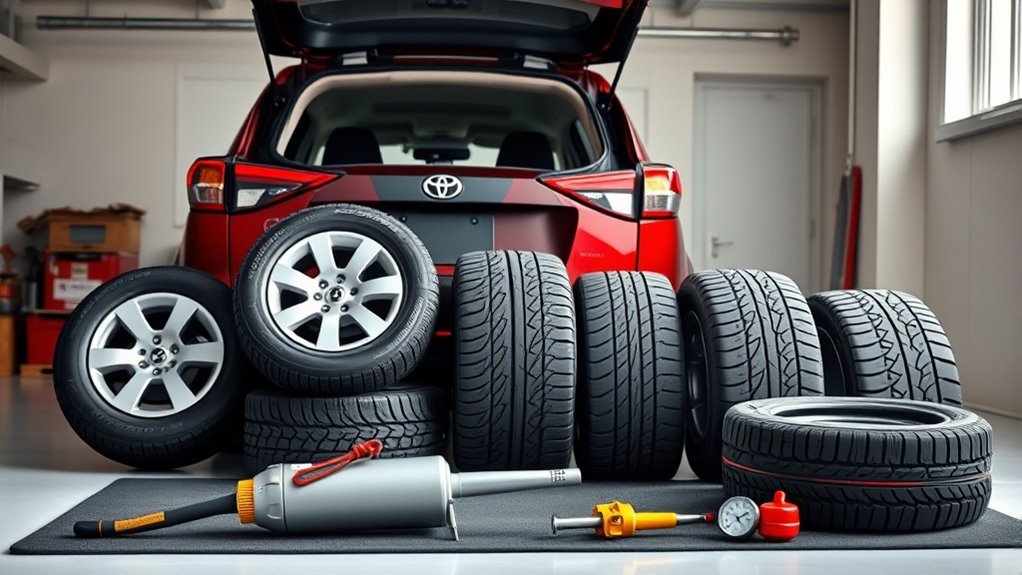
Good tire maintenance is simple, but it has a big effect on safety and tire life. Check pressure, tread, age, and wear patterns regularly instead of waiting for a warning light or a seasonal appointment.
Monthly Pressure Checks
Check all four tires, and the spare if equipped, at least once a month when the tires are cold. “Cold” means the RAV4 has been parked for at least three hours. Use the pressure on the driver-door placard or owner’s manual. Do not use the maximum pressure molded into the tire sidewall as your normal setting.
Tread Depth and Replacement
NHTSA says tires are not safe and should be replaced when tread reaches 2/32 inch. The penny test is a quick check: insert a penny with Lincoln’s head upside down; if you can see the top of his head, replace the tire. For winter driving, do not wait until the legal minimum if snow traction feels weak or the tire has lost its biting edges.
Rotation, Balance, and Alignment
Rotate your RAV4 tires according to the Toyota manual or shop recommendation. NHTSA notes that if the manufacturer recommends rotation, a 5,000–8,000 mile interval is common, or sooner if uneven wear appears. Balance tires when installed or if vibration develops. Get an alignment check if the RAV4 pulls, the steering wheel is off-center, or tread is wearing unevenly.
Tire Age and DOT Date Code
Tread is not the only replacement signal. Tires age from heat, sunlight, storage conditions, and time. NHTSA notes that some vehicle and tire manufacturers recommend replacing tires that are six to ten years old regardless of treadwear. Find the DOT Tire Identification Number on the sidewall; the last four digits show the week and year the tire was made.
Frequently Asked Questions
What are the best all-season tires for a Toyota RAV4?
Good RAV4 all-season choices usually come from touring SUV/crossover lines such as Michelin Defender, Continental CrossContact, Bridgestone Alenza, Pirelli Scorpion, and Goodyear Assurance families. The best pick depends on your exact tire size, budget, wet-road needs, snow exposure, road noise preference, and treadwear expectations.
What is the 7/7 rule for tires?
The 7/7 tire rule is a winter-change timing shortcut: when temperatures are around 7°C, or about 45°F, for seven straight days, it is time to consider installing winter tires. It is not the same as tire age replacement. Age-based replacement depends on tire condition and manufacturer guidance, often around six to ten years.
Is October too early for RAV4 winter tires?
October is not too early if your area already has cold mornings, mountain trips, frost, or early snow risk. In a warmer climate, October may be too soon because winter tires can wear faster on warm dry pavement. Use local forecasts, not the calendar alone.
Do I need winter tires if my RAV4 has AWD?
AWD helps a RAV4 accelerate, but tires provide the grip for braking and steering. In snow and ice, winter tires can matter more than AWD because every stop and turn depends on the tire’s contact with the road.
Can I use all-terrain tires year-round on a RAV4?
Yes, if they are the correct size and load rating, but they are not always the best everyday choice. Crossover all-terrain tires can add gravel and light-trail durability, but they may increase noise, weight, and fuel use compared with touring all-season tires.
Conclusion
Your RAV4 tire plan should start with the correct Toyota-approved size, load rating, and cold pressure. From there, match the tire category to your real driving: all-season or all-weather for mild climates, dedicated winter tires for snow and ice, and crossover all-terrain tires for gravel or light trails. Keep four matching tires on the vehicle, rotate and inspect them, store the off-season set properly, and replace tires when tread, age, damage, or performance says it is time.
Sources
- NHTSA TireWise — tire size, pressure, tread depth, rotation, TPMS, aging, and tire-safety guidance.
- Toyota Owners Manuals and Warranties — official Toyota owner-manual access for model-specific tire and maintenance details.
- Car and Driver: Bridgestone Blizzak IcePeak — current winter-tire model freshness and Blizzak line update context.
- U.S. Tire Manufacturers Association — tire industry information and standards context.