
How to Fix a Slow Tire Leak on a RAV4: Diagnosis and Repair
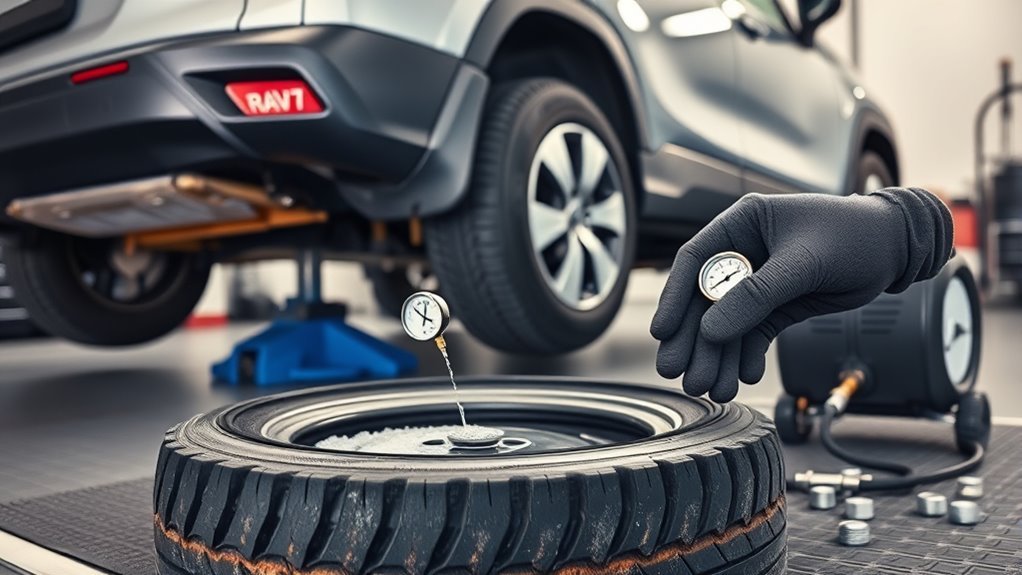
A slow tire leak on your RAV4 is usually fixable, but the safe fix depends on where the air is escaping. A nail in the tread, a loose valve core, a leaking valve stem, a dirty bead seal, or wheel corrosion can all cause gradual pressure loss. Start with a cold tire-pressure check, confirm the correct PSI from your RAV4’s driver-side doorjamb placard or owner’s manual, then locate the leak before choosing a repair.
Quick Answer
A slow RAV4 tire leak can often be fixed if the leak is from the tread area, valve core, valve stem, or bead seal. Do not permanently repair sidewall damage, shoulder damage, large punctures, or a tire that was driven while severely underinflated. Use a plug or sealant only as a temporary emergency fix.
Key Takeaways
- Check tire pressure when the tires are cold, and use the PSI listed on the RAV4 door placard or owner’s manual, not the maximum PSI molded into the tire sidewall.
- Use soapy water on the tread, valve stem, valve core, bead area, and wheel rim to find bubbles that reveal escaping air.
- A proper permanent puncture repair is usually limited to the tread area and should include internal inspection and a patch-plug style repair.
- If the leak is near the sidewall, shoulder, bead damage, cracked wheel, or the tire was driven flat, have the tire inspected by a professional.
At a Glance
| Time Required | 15–45 minutes to diagnose; repair time depends on the leak source. |
| Difficulty | Easy for diagnosis; moderate for valve-core replacement; professional help recommended for permanent puncture, bead, rim, or sidewall issues. |
| Tools Needed | Tire-pressure gauge, portable inflator, spray bottle with soapy water, flashlight, valve-core tool, gloves, and an emergency tire plug or sealant kit if needed. |
| Cost | Diagnosis can be free at home. DIY supplies are usually inexpensive. Professional repair, valve service, wheel service, or tire replacement varies by shop and damage type. |
Warning: Do not keep driving on a tire that is visibly flat, making noise, overheating, bulging, or losing pressure quickly. Pull over safely, install the spare if your RAV4 has one, use roadside assistance, or have the vehicle towed. Driving on a severely underinflated tire can damage the tire internally even if the outside still looks normal.
Identifying Slow Tire Leak Symptoms
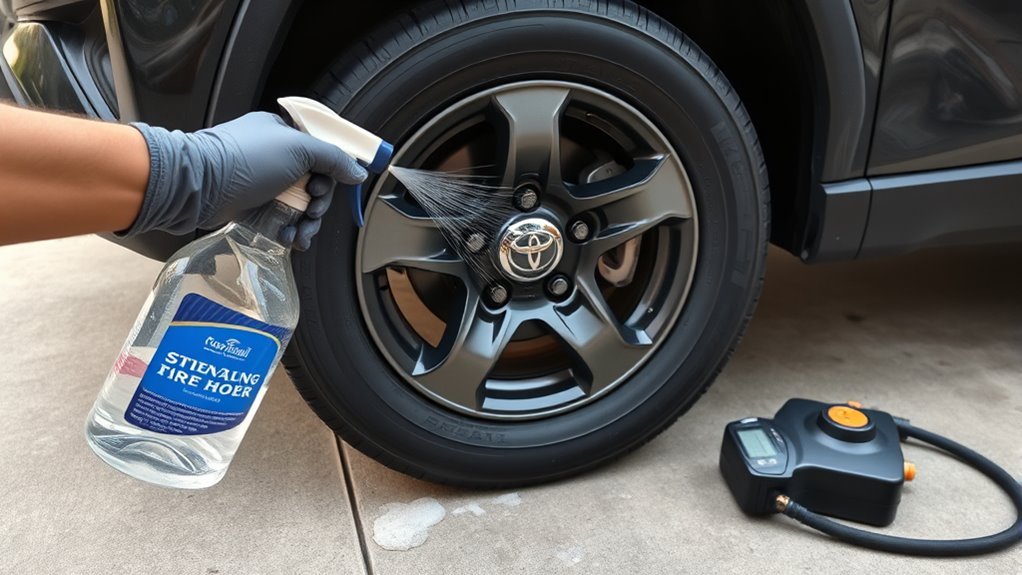
The most common sign of a slow tire leak is one RAV4 tire that keeps dropping below the other three. You may notice the tire pressure warning light, a soft-looking sidewall, steering pull, vibration, or the need to add air every few days.
Check the pressure with a gauge when the tires are cold. The National Highway Traffic Safety Administration recommends checking all tires, including the spare, at least once a month when cold. For the correct pressure, use the Tire and Loading Information label on the driver-side door edge or doorjamb, or your Toyota owner’s manual. Do not use the maximum PSI printed on the tire sidewall as your target pressure.
Your RAV4’s Tire Pressure Monitoring System can help, but it is not a substitute for a gauge. Under federal TPMS rules, the warning is designed around significant underinflation, so a small slow leak may begin before the dashboard light appears. If one tire consistently loses pressure faster than the others, inspect it even if the TPMS light is off.
[Products Worth Considering]

The JACO FlowPro Tire Inflator measures, inflates, and airs down tires up to 100 PSI with battery-free operation and ±2% accuracy after calibration. It features a glowing pressure dial for night visibility, a heavy-duty steel build with a hybrid hose, and a precision push-to-inflate thumb trigger. The patented Lightning Air Chuck locks on for a secure seal, and the kit includes quick-connect hardware for easy inline use with your air compressor.

This portable cordless tire inflator delivers up to 160 PSI with fast 17 L/min airflow to help you quickly top up tires and get back on the road. It features dual power mode, running on a 21V rechargeable battery or a 12V DC adapter for convenient roadside use. An automatic shut-off with digital pressure gauge helps prevent overinflation, and a built-in LED light improves visibility in low-light conditions.

This compact capsule-style tire repair kit helps you quickly fix punctures and plug flats with minimal effort. The rugged stainless steel shell protects the contents for reliable roadside use, while the simple plug assembly makes repairs fast and tool-free. Suitable for motorcycles, cars, ATVs, UTVs, and even mountain bikes.
How to Diagnose Tire Leaks on Your RAV4
Use this step-by-step process before adding sealant or plugging the tire. Finding the leak first prevents the wrong repair and helps you decide whether the tire is safe to keep using.
- Set a pressure baseline. Inflate the tire to the cold PSI listed on your RAV4 door placard. Write down the pressure for all four tires, then recheck the suspect tire after several hours and again the next morning.
- Inspect the tread. Look for nails, screws, glass, metal, stones wedged into grooves, or a small dark spot that may mark a puncture. Do not pull out an embedded nail unless you are ready to repair or replace the tire because it may be slowing the leak.
- Spray soapy water on the tread. Mix dish soap and water in a spray bottle. Coat the suspect area and watch for growing bubbles. Steady bubbles mean air is escaping.
- Check the valve core and valve stem. Spray the valve opening and the rubber stem. Bubbles at the valve opening often point to a loose or damaged valve core. Bubbles around the stem base may mean the valve stem is cracked or leaking where it passes through the wheel.
- Check the bead area. Spray the outer edge where the tire meets the wheel. Bubbles around the bead can come from dirt, corrosion, old rubber, or a bent rim.
- Inspect the sidewall and shoulder. Look for cuts, cracks, bulges, impact marks, or damage near the edge of the tread. These areas are usually not safe for permanent puncture repair.
- Confirm with a tire shop if needed. If you cannot find bubbles but pressure keeps dropping, ask a shop to remove the tire and inspect the inner liner, bead, wheel, and TPMS valve components.
Pro Tip: Check pressure at the same time of day and before driving. Heat from driving can raise tire pressure temporarily, which can hide a slow leak during diagnosis.
What Tire Leaks Can Be Repaired Safely?
A leak is usually repairable only when the damage is in the tread area and the puncture is small. The U.S. Tire Manufacturers Association recommends repair only when the puncture injury is in the tread area and no larger than 1/4 inch, or 6 mm, in diameter. The tire should also be removed from the wheel so the inside can be inspected for hidden damage.
| Leak Location or Condition | Likely Safe Fix | What to Avoid |
|---|---|---|
| Small puncture in the tread center | Professional internal inspection and patch-plug repair | Do not rely on a plug-only repair as a permanent fix. |
| Loose or leaking valve core | Tighten or replace the valve core, then recheck pressure | Do not overtighten and damage the valve. |
| Cracked valve stem or TPMS stem leak | Replace valve stem or service TPMS valve hardware | Do not smear sealant around the outside of the stem. |
| Bead leak where tire meets wheel | Remove tire, clean bead seat, inspect rim, remount and balance | Do not keep inflating without checking for corrosion or wheel damage. |
| Sidewall, shoulder, bulge, large cut, or internal damage | Replace the tire or get professional inspection | Do not plug, patch, or seal as a permanent repair. |
Effective DIY Repair Techniques for Small Leaks
DIY repair can help in limited situations, but the goal should be safety first. A roadside plug or sealant can help you reach a tire shop, but it should not replace a proper inspection if the tire will stay in service.
Common Repair Methods
Valve-core tightening or replacement: If bubbles appear from the valve opening, use a valve-core tool to gently snug the core. If bubbles continue, replace the core, inflate the tire, and recheck with soapy water.
Emergency tire plug: A plug kit can temporarily stop a small tread puncture so you can drive slowly to a safe place or tire shop. Follow the kit instructions exactly. Afterward, have the tire professionally inspected because the inner liner may have damage you cannot see from outside.
Tire sealant: Sealant can be useful in an emergency, especially if you do not have a spare. Use only a product compatible with TPMS if your RAV4 has TPMS sensors, and tell the tire shop you used sealant before they remove the tire.
Professional patch-plug repair: This is the preferred permanent repair for a repairable tread puncture. The technician removes the tire, checks for internal damage, fills the injury channel, and seals the inner liner.
Tools Required for Repairs
For home diagnosis and emergency preparation, keep a tire-pressure gauge, 12-volt inflator, flashlight, gloves, spray bottle, dish soap, valve-core tool, spare valve cores, and a tire plug kit in your RAV4. If you plan to remove a wheel, use the correct jack points, wheel chocks, and jack stands. Never work under a vehicle supported only by a jack.
Note: If your RAV4 has a temporary spare, it is meant for limited use. Follow the speed, distance, and pressure limits printed on the spare tire and in your owner’s manual.
When to Call in the Pros for Tire Repairs
Call a tire professional when you cannot clearly identify the leak, when the tire keeps losing pressure after a DIY attempt, or when the damage is near the sidewall or shoulder. You should also get professional help if the tire was driven while very low, because heat and sidewall flex can damage internal cords.
[Products Worth Considering]

This 4-in-1 tire valve core removal tool helps you deflate, unblock, and remove or install valve cores quickly for easier tire repair. The multifunction design also supports re-taping damaged threads and reaming inside the valve stem for smoother service. Included as a 2-pack, it’s compact for convenient carry and works for cars, bicycles, and motorcycles.

This AUTOWN flat tire repair kit is designed for quick, reliable puncture repairs using a plug kit and spiral probe tool to simplify installation. Built for durability and safe handling, it offers strong adhesion and flexibility to help maintain tire air tightness. With a portable storage case and a multi-vehicle approach, it’s suitable for cars, motorcycles, ATVs, tractors, lawn mowers, RVs, jeeps, and trucks.
When to Seek Expertise
Visit a tire shop if the puncture is larger than 1/4 inch, the object entered at an angle, the tire has more than one nearby puncture, or the tire already has an old repair near the new damage. Overlapping repairs and hidden liner damage can make a tire unsafe even if it still holds air.
Complex Damage Assessment
A bead leak, bent wheel, cracked rim, corroded wheel lip, or TPMS valve-stem leak usually needs professional equipment. The tire may need to be removed, the wheel cleaned or repaired, and the assembly rebalanced. If the wheel is bent or cracked, replacing or repairing the wheel may be necessary before the tire can seal correctly.
Safety Risk Evaluation
Do not judge safety by pressure alone. A tire with a bulge, cut, exposed cords, vibration, thumping noise, or sidewall damage should be removed from service until inspected. If the TPMS light is on, stop as soon as it is safe, check pressure with a gauge, and inflate to the correct cold pressure or use the spare/roadside assistance.
Understanding Common Causes of Tire Leaks
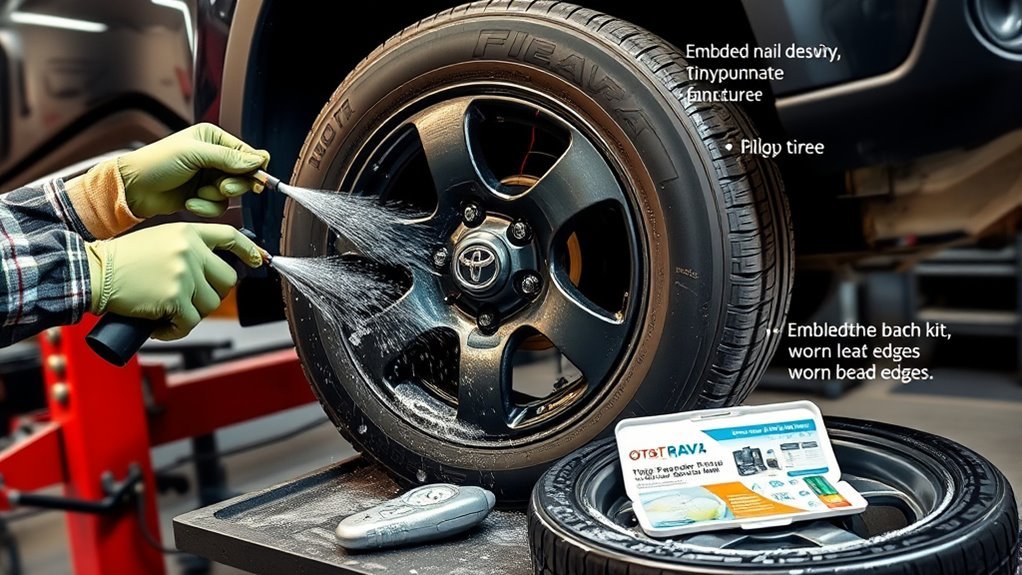
Slow tire leaks usually come from small damage or a weak seal. Finding the exact source helps you avoid replacing a tire that only needs valve service, while also preventing unsafe repairs on tires that should be replaced.
| Cause | What It Looks Like | Best Next Step |
|---|---|---|
| Tread puncture | Nail, screw, glass, or metal in the tread; bubbles from one spot | Have the tire inspected and repaired only if it meets repairable-area limits. |
| Valve core leak | Bubbles from the valve opening after removing the cap | Tighten or replace the valve core, then recheck pressure. |
| Valve stem or TPMS seal leak | Bubbles at the stem base or cracked rubber around the stem | Replace the stem or service the TPMS valve hardware. |
| Bead leak | Bubbles where the tire meets the wheel | Remove tire, clean bead seat, inspect rim, remount, and balance. |
| Wheel damage or corrosion | Bent rim, cracked wheel, corrosion on bead surface, or repeated bead leaks | Repair or replace the wheel before expecting the tire to hold air. |
| Aging or sidewall damage | Cracks, cuts, bulges, dry rubber, or visible cord | Replace the tire or get professional inspection immediately. |
Maintaining Tire Health to Prevent Future Leaks
Good maintenance helps prevent slow leaks and also makes them easier to catch early. Check your RAV4 tire pressure at least monthly when the tires are cold. Inspect the tread and sidewalls at the same time, and look for objects stuck in the grooves, uneven wear, cuts, cracks, and bulges.
Rotate your tires according to your Toyota maintenance schedule. Toyota’s scheduled-maintenance guidance commonly recommends tire rotation every 5,000 to 7,500 miles, depending on driving habits and road conditions. Regular rotation helps reduce irregular wear, which can make leaks and vibration easier to detect.
Do not ignore tire age. NHTSA notes that some vehicle and tire manufacturers recommend replacing tires that are six to 10 years old regardless of treadwear. Check the DOT Tire Identification Number on the sidewall to find the tire’s manufacturing week and year, and inspect older tires more carefully for cracking, pressure loss, and vibration.
Note: After fixing a leak or adjusting pressure, reset or initialize the RAV4 tire pressure warning system only after all tires are set to the correct cold pressure. Use the instructions for your exact model year in the Toyota owner’s manual.
Frequently Asked Questions
Can a very slow tire leak be fixed?
Yes, a very slow leak can often be fixed if the source is a repairable tread puncture, loose valve core, leaking valve stem, or bead seal problem. The tire should be replaced or professionally evaluated if the leak is in the sidewall or shoulder, if the puncture is large, or if the tire was driven while severely underinflated.
Can a slow leak be easily repaired?
Sometimes. A leaking valve core can be a quick fix, while a tread puncture usually needs tire removal and a proper internal repair. Bead leaks, rim damage, and TPMS valve leaks require shop equipment. A plug or sealant may help in an emergency, but it should not be treated as a full inspection.
How much does it cost to fix a slow leak in a tire?
The cost depends on the leak source. A valve core is usually inexpensive, a repairable tread puncture is typically less than a tire replacement, and some shops may inspect or repair certain flats at no charge. Sidewall damage, internal damage, bead corrosion, or wheel damage can cost more because the tire or wheel may need replacement.
Should I drive my RAV4 with a slow tire leak?
Only drive if the tire is holding the correct pressure, has no visible damage, and you are going directly to a safe repair location. Do not drive on a flat, bulging, cut, overheated, or rapidly deflating tire. Use the spare, inflator, roadside assistance, or a tow instead.
Why does my RAV4 tire keep losing air but I cannot find a nail?
The leak may be from the valve core, valve stem, TPMS seal, tire bead, wheel corrosion, a tiny tread puncture, or a cracked wheel. Spray soapy water on the valve and bead area, not just the tread. If bubbles do not appear but pressure keeps dropping, have the tire removed and inspected.
Conclusion
A slow tire leak on your RAV4 is not something to ignore, but it is also not always a reason to replace the tire. Start with a cold pressure check, locate the leak with soapy water, and match the repair to the leak source. Valve leaks and some tread punctures can be fixed, while sidewall damage, shoulder damage, internal damage, and wheel problems need professional attention. When in doubt, choose the safer option: stop driving, inflate only if safe, and have the tire inspected before it becomes a blowout risk.
Sources
- NHTSA TireWise: Tire Safety Ratings and Awareness — supports cold tire-pressure checks, TPMS limitations, tread checks, tire aging, and tire-safety guidance.
- U.S. Tire Manufacturers Association: Tire Repair Basics — supports repairable-area limits, 1/4-inch puncture guidance, tire removal, internal inspection, and patch-plug repair principles.
- 49 CFR § 571.138: Tire Pressure Monitoring Systems — supports TPMS warning-threshold context and why small leaks still require manual pressure checks.
- Toyota Scheduled Maintenance Guide — supports Toyota tire-rotation interval guidance and maintenance caveats.
- Toyota RAV4 Owner’s Manual: Tire Inflation Pressure — supports checking the model-specific Toyota owner’s manual and vehicle label for tire pressure.

Related Articles

Toyota RAV4 TPMS Reset: Easy Steps That Work
Unlock the secrets to resetting your Toyota RAV4's TPMS effortlessly—discover the essential steps to ensure your tires are always safe.
Read More
Toyota RAV4 Tire Rotation: DIY Steps & Pattern
Take control of your Toyota RAV4's tire maintenance with our simple DIY rotation guide—discover the best steps for optimal performance and longevity!
Read More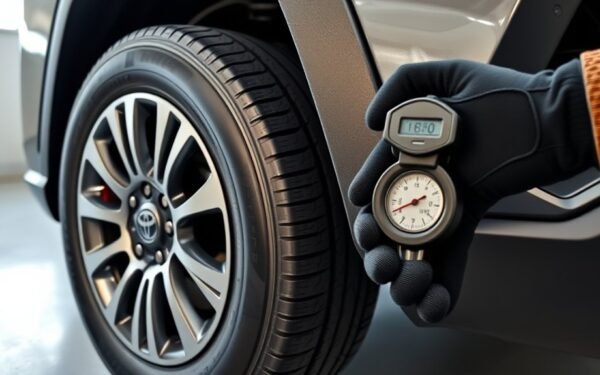
Mix Tire Brands on a Toyota RAV4? Expert Guide
Keeping your RAV4 safe? Learn when mixing tire brands risks traction, ABS/TCS and AWD damage — and what exact matches you must insist on.
Read More