To extend the life of your Toyota Hilux tires, focus on the basics that affect wear every week: correct cold tire pressure, regular rotation, tread-depth checks, wheel alignment, wheel balancing, and driving habits. Because the Hilux is often used for towing, hauling, gravel roads, and off-road tracks, tire care matters even more than it does on a light city car. Small checks can prevent uneven wear, poor fuel economy, vibration, and early tire replacement.
Quick Answer
To make Toyota Hilux tires last longer, check cold tire pressure monthly and before long trips, rotate tires about every 5,000 to 8,000 miles if your manual recommends it, inspect tread and sidewalls, fix alignment or vibration issues quickly, and choose tires that match your load, climate, and terrain.
Key Takeaways
- Use the tire pressure shown on your Hilux door placard or owner’s manual, not the maximum PSI printed on the tire sidewall.
- Check pressure when tires are cold, including the spare, because heat from driving raises the reading.
- Rotate tires on schedule to reduce irregular wear, especially on 4×4 and work-use Hilux models.
- Replace tires at 2/32 inch tread depth at the latest, or sooner if they show sidewall bulges, exposed cords, deep cuts, or poor wet-road grip.
- Fix pulling, steering-wheel vibration, cupping, and one-side tread wear before they ruin a good set of tires.
At a Glance
| Time Required | 5 minutes for a pressure check; 10 minutes for a visual tread and sidewall check; 30 to 60 minutes for professional rotation, balancing, or alignment inspection. |
| Difficulty | Easy for checks; professional service recommended for rotation, balancing, alignment, puncture inspection, and tire replacement. |
| Tools Needed | Accurate tire pressure gauge, air compressor or service-station air pump, tread depth gauge, flashlight, and your Hilux owner’s manual or tire placard. |
| Cost | Pressure and tread checks are usually free after buying a gauge; shop costs vary for rotation, balancing, alignment, and tire replacement. |
Why Regular Tire Pressure Checks Matter
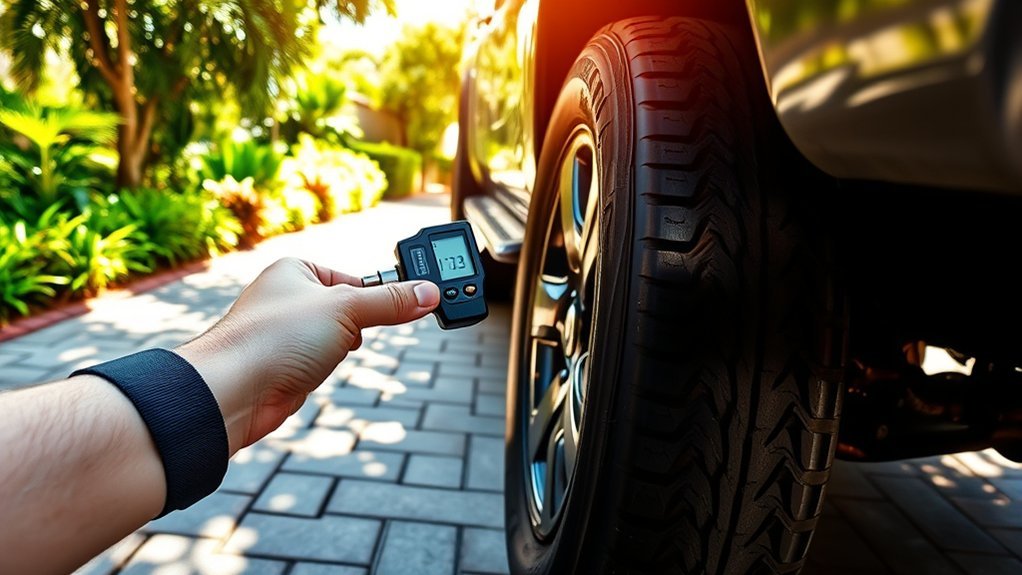
Checking tire pressure regularly is one of the easiest ways to protect your Toyota Hilux tires. Correct pressure helps the tread sit evenly on the road, reduces excess heat, improves handling, and supports better fuel economy. It also matters for safety because underinflated tires can overheat, wear faster, and increase the risk of tire failure.
Check all four tires at least once a month and before long trips. Also check the spare tire, especially before towing, remote driving, or off-road travel. Use the Tire and Loading Information Label or owner’s manual for the correct pressure. For many Hilux models, the label is on the driver-side door area, but location and pressure can vary by market, model year, tire size, and load rating.
Warning: Do not use the maximum PSI printed on the tire sidewall as your normal driving pressure. That number is a tire limit, not the Toyota-recommended pressure for your Hilux.
For the most accurate reading, check pressure when the tires are cold. That means before driving, or after the Hilux has been parked long enough for the tires to cool. If you have already driven, the pressure reading may be higher because tire heat increases pressure. Adjust it again later when the tires are cold.
Fuel economy is another reason pressure matters. FuelEconomy.gov says proper tire inflation can improve gas mileage by 0.6% on average, up to 3% in some cases, and underinflated tires can lower mileage by about 0.2% for every 1 psi drop in the average pressure of all tires.
Proper tire pressure does more than save fuel. NHTSA states that properly inflated tires can extend average tire life by about 4,700 miles.
How to Check Hilux Tire Pressure the Right Way
- Find the correct pressure: Use the Hilux tire placard or owner’s manual. Check whether different pressures apply for heavy loads, towing, or rear tires.
- Check when cold: Measure before driving or after the tires have cooled.
- Use a reliable gauge: A handheld digital or dial gauge is often more dependable than an old service-station gauge.
- Adjust each tire: Add or release air until each tire matches the recommended cold pressure.
- Recheck after filling: Confirm the pressure again after adding air.
- Replace valve caps: Caps help protect the valve from dirt, water, and slow leaks.
Note: A tire pressure monitoring system is helpful, but it is not a replacement for monthly gauge checks. TPMS warnings often appear only after a tire is already significantly underinflated.
Why Tire Rotation Matters for Longevity
Regular tire rotation helps your Toyota Hilux tires wear more evenly. Front tires handle steering and much of the braking load, while rear tires may carry more weight during hauling or towing. On 4×4 Hilux models, keeping tread depth even across all tires also helps maintain balanced traction.
Follow the rotation schedule in your owner’s manual first. As a general tire-care range, NHTSA recommends checking the vehicle manufacturer’s guidance and, if rotation is recommended, rotating tires every 5,000 to 8,000 miles or sooner if uneven wear appears. Michelin also recommends regular rotation while following the vehicle manufacturer’s schedule.
Rotation is not always the same for every Hilux. Directional tires usually rotate front-to-rear on the same side. Some tire patterns, wheel sizes, or full-size spare setups need a specific rotation pattern. If your Hilux uses aftermarket wheels, aggressive mud-terrain tires, or a tire-size change, ask a qualified tire shop for the correct pattern.
Pro Tip: Rotate tires when you already have the Hilux in for oil service or routine maintenance. Ask the shop to record tread depth at each position so you can spot wear problems early.
How to Measure and Maintain Tire Tread Depth
Tread depth affects braking, wet-road grip, off-road traction, and resistance to hydroplaning. Check tread depth at least monthly when you check tire pressure. Use a tread depth gauge for the most accurate result, or use the penny test as a quick backup.
For the penny test, place a penny into the tread groove with Lincoln’s head upside down and facing you. If you can see the top of Lincoln’s head, the tire is at or below about 2/32 inch and should be replaced. NHTSA states that tires are not safe and should be replaced when tread is worn to 2/32 of an inch.
| Tread Depth | What It Means for a Hilux |
|---|---|
| 6/32 inch or deeper | Usually good tread depth for normal road use, though condition, age, and tire type still matter. |
| 4/32 inch | Plan replacement soon if you drive in heavy rain, mud, gravel, or snow. |
| 2/32 inch | Replace the tire. This is the minimum safety limit used in NHTSA tire guidance. |
Also inspect the treadwear indicators built into the tire grooves. These raised bars become level with the tread surface when the tire is worn out. Look for one-side wear, center wear, edge wear, cupping, cracking, punctures, missing chunks, exposed cords, and sidewall bulges. These problems can make a tire unsafe even if some tread remains.
| Maintenance Action | Frequency |
|---|---|
| Visual pressure, tread, and sidewall inspection | Monthly and before long trips |
| Tread depth check with a gauge | Monthly or every 5,000 miles |
| Treadwear indicator check | Every tire rotation |
| Professional inspection | After pothole hits, curb impacts, punctures, vibration, or sudden pressure loss |
[Products Worth Considering]

Measure tire tread depth quickly and accurately with this LUMITECO dial gauge that reads in 1/32" increments up to 14/32". The color-coded green/yellow/red zones make it easy to judge tire wear and know when replacement is needed. A rugged, compact design with a protective pouch helps keep the gauge ready for use on cars, trucks, motorcycles, and more.

The SAFELIFE dial tire tread depth gauge measures tread depth in 1/32 inch increments with clear, easy-to-read 2-inch dial face. Color zones using a traffic light system help you quickly judge whether tread is low, marginal, or ample for safer driving. Built with a durable zinc cast body and a metal detect probe for precise, comfortable use across cars, motorcycles, trucks, and buses.

Accurately measure tire tread depth with a calibrated gauge marked from 0 to 1 inch in 1/32 inch increments. The color-coded bar helps you quickly identify tread condition ranges, supporting safe driving for trucks, motorcycles, automobiles, and passenger vehicles.
How to Spot Alignment and Wheel Balance Problems
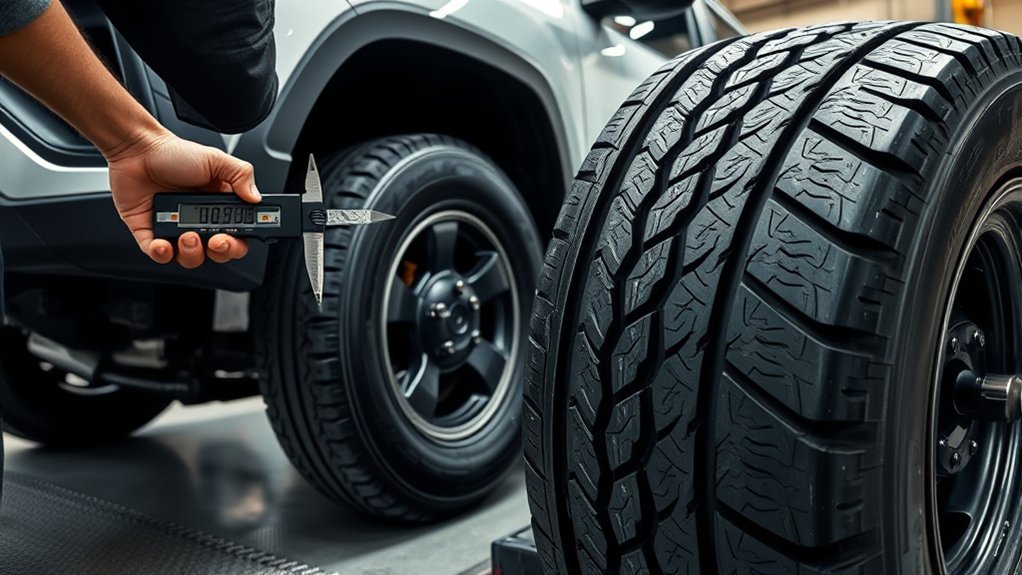
Alignment and balancing are different services, but both affect tire life. Wheel alignment controls the angle of the wheels and how the tire contacts the road. Wheel balancing controls how evenly the tire and wheel assembly spins at speed.
Your Hilux may need an alignment check if it pulls left or right on a straight, level road, if the steering wheel is off-center, or if one edge of a tire wears faster than the other. These symptoms can follow pothole hits, curb impacts, worn suspension parts, or heavy off-road use.
Your Hilux may need wheel balancing if the steering wheel shakes at highway speed, if the seat or floor vibrates, or if the tread develops cupped or patchy wear. Michelin notes that imbalance can create vibration and irregular tread wear, while misalignment can cause pulling, off-center steering, and rapid edge wear.
Note: Do not wait for severe vibration. A small balance or alignment issue can turn into uneven tread wear, steering wear, and suspension stress over thousands of miles.
How to Select Tires Based on Your Driving Environment
Selecting the right tires for your Toyota Hilux is essential because tire life depends on where and how you drive. A tire that works well on highways may wear quickly on rocky tracks. A mud-terrain tire may grip well off-road but create more road noise and faster highway wear. A highway tire may last longer on pavement but may not have enough bite for frequent gravel, mud, or jobsite use.
If you drive mostly on paved roads, choose highway-terrain or all-season tires with the correct size, load index, and speed rating for your Hilux. If you split time between pavement and trails, all-terrain tires are often the best balance. If you regularly drive in mud, ruts, or loose ground, mud-terrain tires may be suitable, but expect more noise and possible faster wear on asphalt. If you drive in snow and ice, winter tires usually provide better cold-weather grip than all-season tires.
Pay close attention to load capacity. A Hilux used for tools, payload, camping gear, trailers, or work equipment needs tires that can safely support the load. Check the tire load index and compare it with your vehicle placard, owner’s manual, and actual use. Do not fit a lower load-rated tire just because it is cheaper or available.
[Products Worth Considering]

Keep your tires properly inflated with this analog VONDIOR tire pressure gauge, designed for fast, easy readings without batteries. The swiveling, two-axis hose and large glow dial help you measure at any tire angle with instant visibility. Built with a protective rubber shield, it supports durable, low-maintenance use for cars and trucks.

Monitor tire tread wear with a smart, color-coded depth gauge that shows clear condition ranges at a glance. The bar is range marked for fast, easy readings, helping you maintain safer traction and performance. Each gauge is portable with a pocket clip, and the set includes 20 units for daily use and sharing.

The TYAMATE TM8 solar-powered wireless TPMS delivers real-time tire pressure and temperature monitoring with six alarm modes for safer driving. A vibrant color LCD display shows readings clearly while windshield mounting keeps it hands-free and easy to read. With a wide 0–87 PSI range, strong 433.92 MHz signal transmission, and quick sensor pairing, it’s ideal for RV, sedan, SUV, MPV, and truck use.
Towing and Heavy Load Tire Care
Heavy loads increase heat and stress in the tires. Before towing or hauling, check cold pressure, inspect tread and sidewalls, and confirm that the tires are rated for the load. If your owner’s manual lists a different pressure for heavy loads, use that value. After a long loaded trip, inspect for cuts, bulges, nails, uneven wear, and unusual heat or odor.
Off-Road Tire Care for a Hilux
Off-road driving can shorten tire life if you ignore pressure and damage checks. Some drivers reduce pressure off-road for traction, but low pressure at highway speed can overheat a tire. If you air down on trails, reinflate to the correct road pressure before returning to normal speed. After driving through rocks, mud, sand, or construction sites, inspect the tread blocks and sidewalls for embedded stones, cuts, punctures, and missing chunks.
Warning: Do not keep driving on a tire with a sidewall bulge, exposed cord, deep sidewall cut, repeated pressure loss, or severe vibration. Install the spare safely or call roadside help.
Smart Driving Tips for Longer-Lasting Tires
Smart driving habits can reduce tread wear and help your Toyota Hilux tires last longer. This is especially important if your truck carries cargo, tows trailers, or spends time on rough roads.
- Use smooth acceleration: Hard launches increase tread scrub, especially on loose surfaces or when the truck is loaded.
- Brake early and evenly: Harsh braking can create heat and uneven wear.
- Slow down for corners: Fast cornering pushes the tread sideways and wears the tire shoulders.
- Avoid potholes when safe: Hard impacts can damage belts, bend wheels, and knock alignment out.
- Keep loads within limits: Overloading creates extra heat and sidewall stress.
- Clean tires after rough use: Remove stones, mud, and debris lodged in the tread.
- Track pressure changes: Repeated pressure loss in the same tire often means a puncture, valve problem, rim leak, or damaged bead.
When to Replace Toyota Hilux Tires
Replace Hilux tires when tread reaches 2/32 inch, when the treadwear bars are level with the tread, or when traction becomes poor in rain, snow, mud, or gravel. Also replace a tire if it has a sidewall bulge, exposed cords, major cracking, deep cuts, severe cupping, impact damage, or a puncture that cannot be repaired safely.
Tire age matters too. Even tires with good-looking tread can harden and crack over time, especially if the Hilux sits outside, carries heavy loads, or works in hot climates. Check the DOT date code or local equivalent on the sidewall, inspect for age cracks, and ask a tire professional if you are unsure.
[Products Worth Considering]

This ALL-TOP auto-stop tire deflator valve kit lets you air down off-road tires quickly without watching pressure, automatically stopping when your preset PSI is reached. Each valve is individually calibrated for reliable performance with an acceptable +/- 2 PSI tolerance. The adjustable deflator range covers 10 to 30 PSI and includes four valves plus valve caps and a zipper pouch for easy setup on trucks, SUVs, RVs, UTVs, and powersports.
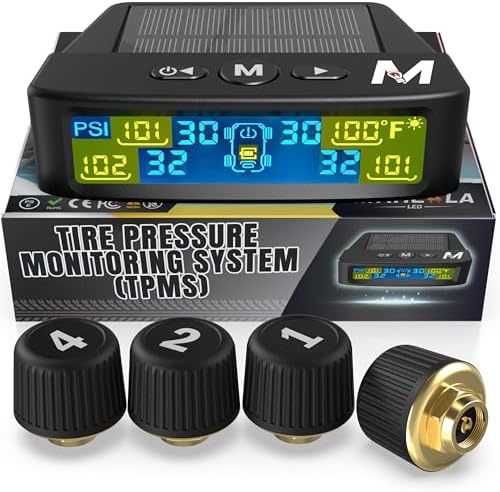
Marcala’s TPMS set of four sensors helps you monitor tire pressure and temperature in real time while driving, with updates every second. The bright color LCD uses auto-dimming for easy viewing, powered by dual solar and USB charging, and offers six alarm modes. Built for trailers, RVs, campers, trucks, and towing setups, the sensors support monitoring 1-4 wheels up to 98 PSI with IP67 waterproof protection.
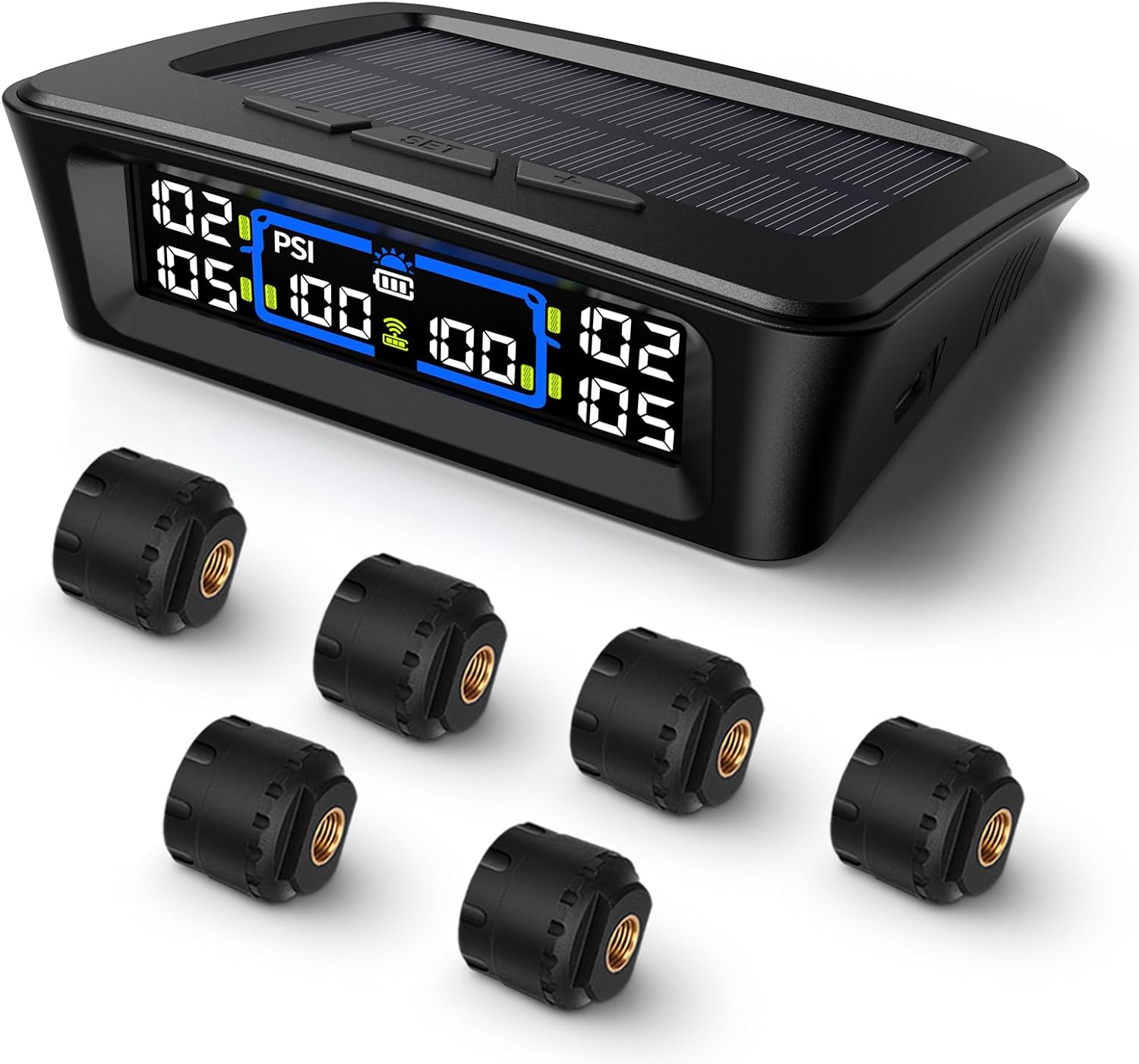
The Tymate TM12 RV TPMS delivers real-time tire pressure and temperature monitoring with a stable 433Hz display for safer long-distance driving. It supports simultaneous monitoring across vehicle and trailer zones, includes six alarm modes for pressure, temperature, leakage, battery, and signal loss, and features easy DIY installation with auto calibration. Power is supplied via USB-C charging or solar recharging, with a wide 0–144 PSI range and up to 50 ft signal coverage for RVs and towable trailers.
Frequently Asked Questions
How do you increase the longevity of Toyota Hilux tires?
Check cold tire pressure monthly, rotate tires on schedule, keep the wheels aligned and balanced, inspect tread and sidewalls, avoid overloading, and drive smoothly. For a Hilux used for towing or off-road work, inspect tires more often because heat, weight, rocks, and gravel can speed up wear.
How often should Toyota Hilux tires be rotated?
Follow your Hilux owner’s manual first. As a general range, many tire-care guides use about 5,000 to 8,000 miles, or sooner if uneven wear appears. The right pattern depends on tire type, drivetrain, spare-tire setup, and whether the tires are directional.
Should I use the PSI printed on the tire sidewall?
No. The sidewall shows the tire’s maximum pressure limit, not the normal pressure Toyota recommends for your Hilux. Use the pressure on the vehicle placard or in the owner’s manual, and check it when the tires are cold.
Can fast driving wear out Hilux tires faster?
Yes. High speed, hard acceleration, sharp cornering, and heavy braking increase heat and scrub the tread. Smooth acceleration, steady speed, early braking, and slower cornering help reduce wear and keep the tires cooler.
What causes uneven wear on Toyota Hilux tires?
Common causes include low pressure, overinflation, poor alignment, wheel imbalance, worn suspension parts, overloading, missed rotations, aggressive driving, and rough-road impacts. The wear pattern often gives clues: edge wear can point to low pressure or alignment issues, center wear can point to overinflation, and cupping often suggests balance or suspension problems.
Are all-terrain tires best for a Toyota Hilux?
All-terrain tires are a good choice if your Hilux splits time between pavement, gravel, job sites, and mild trails. If you drive almost only on highways, highway-terrain tires may last longer and ride quieter. If you drive in deep mud or harsh off-road conditions, mud-terrain tires may grip better but can wear faster on pavement.
Conclusion
You can make Toyota Hilux tires last longer by treating tire care as a routine, not a once-a-year task. Check cold pressure, rotate tires on schedule, measure tread depth, inspect for damage, and fix alignment or balance problems as soon as they appear. Choose tires that match your climate, load, towing needs, and terrain. With steady maintenance and smoother driving, your Hilux tires can wear more evenly, handle better, and deliver safer performance across daily roads, work routes, and off-road trips.
Sources
- NHTSA TireWise: Tire Safety Ratings and Awareness — tire pressure, tread depth, treadwear indicators, rotation, alignment, balancing, TPMS, tire size, and tire safety guidance.
- FuelEconomy.gov: Keeping Your Vehicle in Shape — official fuel-economy impact of proper tire inflation and underinflation.
- Michelin: How to Properly Inflate Your Car Tires — pressure-check timing, underinflation effects, overinflation effects, and cold/warm pressure guidance.
- Michelin: Tire Rotation Guide — rotation benefits, interval guidance, drivetrain patterns, directional tire notes, and 4WD/AWD tread-depth considerations.
- Michelin: Wheel Alignment and Balancing — alignment symptoms, balancing symptoms, vibration, cupping, and uneven wear guidance.