The rubber compound in your Toyota Tacoma’s tires affects how the truck grips, stops, wears, and responds on pavement, gravel, mud, rain, and snow. Compound matters, but it never works alone. Tread pattern, tire pressure, load rating, tread depth, temperature, alignment, and driving style all decide how much traction your Tacoma can actually use.
Quick Answer
A Toyota Tacoma gets the best traction when the tire compound matches the climate and terrain. Softer or cold-flexible compounds improve grip in their intended temperature range, while harder compounds often last longer. For real-world safety, pair the right compound with proper tread design, tire pressure, load rating, and regular inspections.
Key Takeaways
- Tire compound affects grip, wear, rolling resistance, and cold-weather flexibility, but tread design and pressure are just as important.
- Silica-rich tread compounds can help wet grip and rolling resistance, while winter traction also depends on sipes, tread depth, and severe-snow-rated design.
- For a Tacoma, choose tires by real use: daily highway driving, towing, gravel, rocks, mud, snow, or mixed all-terrain use.
- Always follow your Tacoma’s door-jamb tire placard and owner/maintenance guide for size, pressure, load, rotation, and replacement guidance.
The Role of Tire Rubber in Tacoma Traction Performance
Tire rubber compounds are blends of natural rubber, synthetic rubber, fillers, processing oils, resins, and curing ingredients. The tread compound is designed to balance grip, heat resistance, tread life, rolling resistance, and cut or chip resistance.
On a Toyota Tacoma, that balance matters because the truck may see very different jobs in the same week: commuting on dry pavement, hauling gear, towing, driving on wet roads, and crawling over gravel or rocky trails. A tire that feels great on the highway may not be the best tire for mud, and a heavy-duty off-road tire may not stop as quietly or efficiently on pavement.
NHTSA’s TireWise guidance emphasizes that tires are central to safe driving, but tire safety depends on buying the right tire and maintaining it correctly. For Tacoma owners, that means checking compound and tread category, but also confirming the correct size, load index, cold tire pressure, tread condition, and rotation schedule.
What You Need to Know About Different Tire Rubber Compounds
There is no single “best” tire compound for every Tacoma. The right choice depends on how the compound behaves in your normal temperature range and on the surfaces you drive most often.
- Natural rubber helps with elasticity and strength, which can support durability and flex.
- Synthetic rubber such as SBR or butadiene rubber helps manufacturers tune tread wear, heat resistance, and performance consistency.
- Silica is a filler used in many modern compounds to help wet-road grip and reduce rolling resistance. Continental notes that silica changed tire tread-compound design by improving wet braking and lowering rolling resistance, while Michelin describes silica-rich tread rubber as a way to reduce energy loss without sacrificing longevity.
- Carbon black helps reinforce the tread and improve wear resistance.
- Oils and resins help tune flexibility, wet grip, winter grip, and processing behavior.
Note: A softer compound is not automatically “better.” It may grip well in the right conditions, but it can also wear faster, squirm more under load, or cut more easily on sharp rock depending on the tire design.
[Products Worth Considering]

These aluminum alloy tire valve stem caps with an O-ring seal help protect valve stems from corrosion while adding a clean, stylish look to your vehicle. The universal fit works across cars, trucks, motorcycles, bicycles, and more, making them an easy upgrade for everyday driving and off-road use. Installation is quick, and the included four-pack keeps all your tires dressed and protected.

Monitor tire tread wear with a smart, color-coded depth gauge that shows clear condition ranges at a glance. The bar is range marked for fast, easy readings, helping you maintain safer traction and performance. Each gauge is portable with a pocket clip, and the set includes 20 units for daily use and sharing.

Keep your tires properly inflated with this analog VONDIOR tire pressure gauge, designed for fast, easy readings without batteries. The swiveling, two-axis hose and large glow dial help you measure at any tire angle with instant visibility. Built with a protective rubber shield, it supports durable, low-maintenance use for cars and trucks.
How Soft Compounds Enhance Grip on Dry Surfaces
Soft or more flexible compounds can improve road contact because the tread can conform to small surface imperfections. In the right temperature range, that can help acceleration, braking, and cornering grip.
Enhanced Road Contact
- More contact with pavement: A flexible tread can better follow surface texture.
- Improved braking feel: The tire can generate more usable friction when the compound is operating in its designed heat range.
- Sharper response in performance tires: Some summer or performance compounds are built for warm, dry grip.
- Better cold grip in winter tires: Winter compounds are designed to stay flexible when ordinary all-season or summer compounds stiffen.
Increased Flexibility Benefits
For a Tacoma, flexibility is useful when the tire has to stay planted over broken pavement, wet roads, hard-packed dirt, or cold morning starts. But flexibility must be balanced with tread-block stability. A tire that is too soft for heavy hauling, towing, or hot highway use can wear quickly or feel less stable.
This is why dedicated winter tires, all-terrain tires, mud-terrain tires, and highway all-season tires feel different. They are not just different tread patterns; they are different compound and construction packages.
How Specialized Rubber Enhances Traction in Wet and Snowy Conditions
Wet traction and snow traction are related, but they are not the same problem. Rain requires water evacuation and a compound that can grip a wet surface. Snow requires biting edges, cold flexibility, enough tread depth, and a tread pattern that can pack and release snow effectively.
[Products Worth Considering]

The SAFELIFE dial tire tread depth gauge measures tread depth in 1/32 inch increments with clear, easy-to-read 2-inch dial face. Color zones using a traffic light system help you quickly judge whether tread is low, marginal, or ample for safer driving. Built with a durable zinc cast body and a metal detect probe for precise, comfortable use across cars, motorcycles, trucks, and buses.

Vigorder rubber cement glue delivers superior adhesion and cures quickly within about 30 seconds for seamless rubber bonding. Once cured, it helps provide a strong, durable, waterproof seal that holds up to vehicle weight, pressure, and heat. Suitable for cars, motorcycles, trucks, bicycles, and off-road tires, it’s designed for emergency patch and maintenance repairs.

The Continental Grand Prix 5000 is an allround road bike tire engineered for faster rolling, improved ride comfort, and enhanced puncture protection. It features a Vectran Breaker cut-protection layer, Lazer Grip micro-profile tread for confident cornering control, and Active Comfort Technology to damp vibration for smoother rides. BlackChili compound optimizes grip and speed for everyday performance and long-lasting confidence.
Tread Patterns for Traction
Tread pattern controls how the tire manages water, slush, mud, and loose surfaces. Bridgestone explains that directional tread patterns can move water from under the contact patch to help hydroplaning resistance at higher speeds.
- Circumferential grooves help move water around the tire.
- Lateral grooves help move water and slush out from under the tread.
- Sipes add small biting edges for wet, icy, or snowy surfaces.
- Large tread blocks can help off-road bite, but may increase road noise or reduce wet-road refinement.
- Asymmetric patterns often use different inner and outer tread zones to balance wet grip, dry stability, and handling.
Rubber Flexibility and Grip
Silica can help wet-road performance and rolling resistance, but snow performance needs more than silica. If you drive your Tacoma in serious winter weather, look for a tire that is designed for cold temperatures and, when appropriate, carries the Three-Peak Mountain Snowflake severe-snow symbol. USTMA guidance explains that severe-snow-use tires meeting the performance criteria can carry the mountain-and-snowflake pictograph.
Warning: Do not rely on tread appearance alone for winter safety. A chunky all-terrain tire without the right compound and severe-snow capability may look aggressive but still perform poorly on ice or packed snow.
Impact of Tread Design on Tacoma Stability and Response
Tread design affects how your Tacoma steers, brakes, resists hydroplaning, and stays stable under load. Compound determines how the rubber behaves; tread design determines how that rubber meets the road.
| Tread feature | How it affects Tacoma traction |
| Deep grooves | Help clear water, slush, and loose debris, especially in rain or trail use. |
| Sipes | Create extra biting edges for wet roads, snow, and light ice. |
| Large tread blocks | Improve bite on dirt, gravel, and mud, but can add noise and reduce smoothness. |
| Continuous center ribs | Help straight-line stability and highway steering feel. |
| Open shoulder lugs | Help off-road traction and mud evacuation, but may wear unevenly if not rotated. |
For daily driving, a balanced all-season or highway all-terrain tire may feel more stable and quiet. For trails, mud, or loose gravel, deeper voids and stronger shoulder lugs may matter more than quietness or fuel economy.
Balancing Durability and Flexibility in Tires
The best Tacoma tire compound is usually a compromise. Highway tires often favor long tread life, low noise, and lower rolling resistance. All-terrain tires add toughness and loose-surface bite. Mud-terrain tires trade even more road comfort for off-road traction. Winter tires use cold-flexible compounds and dense siping for snow and ice.
Here is how the common categories compare:
| Tire type | Best for | Main trade-off |
| Highway all-season | Commuting, light hauling, wet roads, long tread life | Limited mud, rock, and severe snow capability |
| All-terrain | Mixed pavement, gravel, dirt, camping, light trails | More noise and weight than highway tires |
| Mud-terrain | Mud, ruts, rocks, loose terrain | Road noise, wet braking compromise, faster uneven wear |
| Winter / severe-snow-rated | Cold weather, snow, slush, ice-prone roads | Faster wear and softer handling in warm weather |
| Performance / summer | Warm-weather dry and wet pavement response | Poor cold-weather and off-road suitability |
Why Proper Tire Maintenance Matters for Performance
Even the best tire compound cannot work well if the tire is underinflated, overloaded, worn out, damaged, or misaligned. NHTSA recommends checking tire pressure at least once a month, including the spare, and checking pressure before long trips. It also advises using the vehicle tire information placard or owner’s manual for the correct cold tire pressure and load limit.
- Check pressure cold: Measure pressure when the truck has been parked for at least three hours, or before driving far enough to heat the tires.
- Use the placard, not the sidewall maximum: The sidewall lists a maximum pressure, not the normal recommended pressure for your Tacoma.
- Inspect tread depth: Federal vehicle inspection standards list 2/32 inch as the minimum tread depth for vehicles under 10,000 pounds GVWR, but wet and snow traction can decline before that point.
- Look for treadwear indicators: Toyota’s Tacoma tire guidance says to check whether treadwear indicators are showing and to inspect for uneven wear.
- Rotate on schedule: Follow your Tacoma maintenance guide and tire manufacturer guidance. Rotation helps even out wear and preserve predictable traction.
- Check alignment and balance: Uneven shoulder wear, vibration, or a steering pull can reduce the benefit of a good compound.
- Inspect for damage: Cuts, bulges, cracks, exposed cords, punctures, or chunking are safety concerns, especially after trail use.
- Respect load limits: Towing and hauling add heat and stress. Use tires with the correct size and load rating for your Tacoma.
Pro Tip: After off-road driving, wash mud and stones out of the tread, inspect sidewalls, and recheck pressure when the tires are cold. Trail damage can hide between tread blocks and on the inner sidewall.
How the Seasons Impact Your Tire Compound’s Performance
Temperature changes how rubber behaves. In cold weather, some compounds stiffen and lose grip. Winter tires use special compounds that remain more flexible in low temperatures, plus tread designs with extra sipes and biting edges. In hot weather, very soft compounds can wear faster or feel less stable under a loaded Tacoma.
For mild climates, a quality all-season or all-terrain tire may be enough. For regular snow, mountain passes, icy roads, or winter work sites, a dedicated winter tire or severe-snow-rated all-terrain can be a safer choice. For desert heat, rocky terrain, or towing, prioritize heat resistance, cut/chip resistance, correct load rating, and proper inflation.
Choosing the Right Tire Compound for Your Tacoma
Start with your actual driving, not the most aggressive tread you can find. A tire that matches your use will be safer, quieter, and longer-lasting than a tire chosen only for looks.
- Mostly highway and commuting: Choose a highway all-season or mild all-terrain with good wet braking, low noise, and long treadwear.
- Weekend trails and camping: Choose an all-terrain tire with reinforced construction, good cut resistance, and a compound that handles gravel and heat.
- Mud and deep ruts: Choose a mud-terrain tire, but expect more road noise and more attention to rotation and wet-road braking.
- Snow country: Look for a winter tire or severe-snow-rated all-terrain with the Three-Peak Mountain Snowflake symbol.
- Towing and hauling: Prioritize correct load index, heat resistance, pressure maintenance, and tread stability.
The right Tacoma tire is not simply the softest, hardest, or most aggressive tire. It is the tire whose compound, tread, load rating, and maintenance needs match your climate, payload, and terrain.
[Products Worth Considering]

Measure tire tread depth quickly and accurately with this LUMITECO dial gauge that reads in 1/32" increments up to 14/32". The color-coded green/yellow/red zones make it easy to judge tire wear and know when replacement is needed. A rugged, compact design with a protective pouch helps keep the gauge ready for use on cars, trucks, motorcycles, and more.
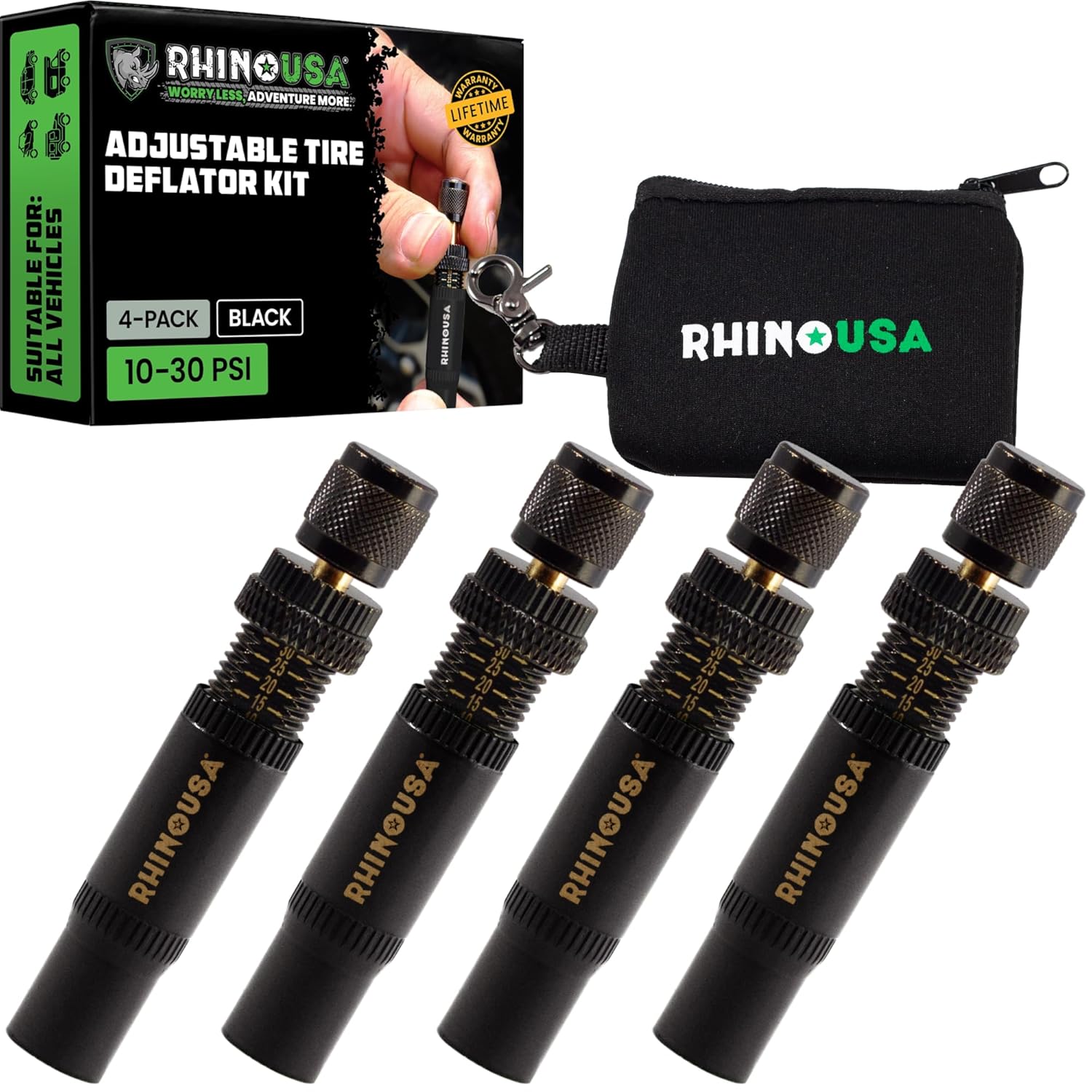
Use the Rhino USA adjustable tire deflators to air down all four tires at once by screwing one deflator onto each valve stem, letting you step away while the tires reach your preset pressure. Each deflator independently adjusts across a 10–30 PSI range with laser-etched indicators for quick setup and verification, making it ideal for beach, sand, and rocky off-road trails.

Upgrade your ride with a 2-pack set of 26x1.95 folding mountain bike tires built for dependable traction on mud, rocks, and trail surfaces. A reinforced puncture-resistant layer helps protect against sharp debris, while included butyl inner tubes provide strong sealing and shock absorption. Ready for fast swaps with included tire levers and universal sizing for most bikes.
Common Tire Compound Mistakes to Avoid
- Buying for tread appearance only: Aggressive tread does not guarantee better wet braking, winter grip, or highway stability.
- Ignoring tire weight: Heavier off-road tires can affect acceleration, braking feel, fuel economy, and ride quality.
- Using winter tires in hot weather: Cold-weather compounds can wear quickly in warm conditions.
- Using summer/performance tires in cold weather: Some compounds become too stiff for safe cold-weather traction.
- Skipping pressure checks: Underinflation increases heat, wear, and rolling resistance.
- Mixing tire types on the same axle: Different sizes, constructions, or wear levels can create unpredictable handling.
Frequently Asked Questions
How does temperature affect tire rubber performance?
Temperature changes rubber flexibility. Cold weather can make many compounds stiffer, reducing grip, while high heat can increase wear or tread squirm in softer compounds. That is why winter, all-season, all-terrain, and summer tires use different compound designs.
Can tire rubber compound impact fuel efficiency?
Yes. Rolling resistance is affected by tire design, compound, tread pattern, pressure, and weight. FuelEconomy.gov says proper inflation can improve gas mileage by 0.6% on average and up to 3% in some cases, so compound choice and pressure maintenance both matter.
What is the lifespan of different tire rubber compounds?
There is no universal mileage number. Softer performance or winter compounds may wear faster in the wrong conditions, while harder touring compounds may last longer. Replace tires based on treadwear indicators, tread depth, age, damage, uneven wear, and the tire manufacturer’s guidance.
Are all tire compounds suitable for off-road driving?
No. Off-road driving needs more than soft rubber. A Tacoma trail tire should also have the right tread pattern, casing strength, cut and chip resistance, sidewall protection, and load rating. Highway compounds may chunk or puncture more easily on sharp rock.
How do tire pressure and rubber compound interact?
Pressure changes the contact patch, heat buildup, sidewall flex, and tread wear. Too little pressure can overheat the tire and wear the shoulders; too much pressure can reduce ride comfort and change the contact patch. Use your Tacoma’s cold tire pressure placard and adjust only within safe manufacturer guidance.
Do I need Three-Peak Mountain Snowflake tires on a Tacoma?
If you regularly drive in snow, mountain passes, freezing slush, or icy winter conditions, a severe-snow-rated tire is worth considering. The Three-Peak Mountain Snowflake symbol shows the tire meets a defined snow-traction performance standard, but ice performance still depends on tire design and driving conditions.
Conclusion
The tire rubber compound you choose for your Toyota Tacoma can strongly affect traction, braking, tread life, fuel efficiency, and off-road durability. But compound is only one part of the system. Match the tire to your climate and terrain, verify the correct size and load rating, follow the Tacoma maintenance guide, check cold pressure monthly, and replace tires when tread, age, or damage makes them unsafe. That balanced approach gives your Tacoma the best chance of staying planted in dry, wet, snowy, and off-road conditions.
Sources
- NHTSA TireWise — tire safety, buying, maintenance, aging, labeling, and fuel-efficiency guidance.
- NHTSA Tire Safety Checklist — monthly pressure checks, cold-pressure guidance, load limits, tread checks, and spare-tire checks.
- 49 CFR 570.9 Tires — federal in-use vehicle inspection standard for 2/32-inch minimum tread depth and tire condition.
- Toyota Tacoma Owner’s Manual: Tires — Tacoma tire inspection, treadwear indicators, uneven wear, rotation, and replacement guidance.
- Continental: Silica in Tires — silica’s role in wet braking, rolling resistance, and tread-compound technology.
- FuelEconomy.gov: Gas Mileage Tips — proper tire inflation and its effect on fuel economy.