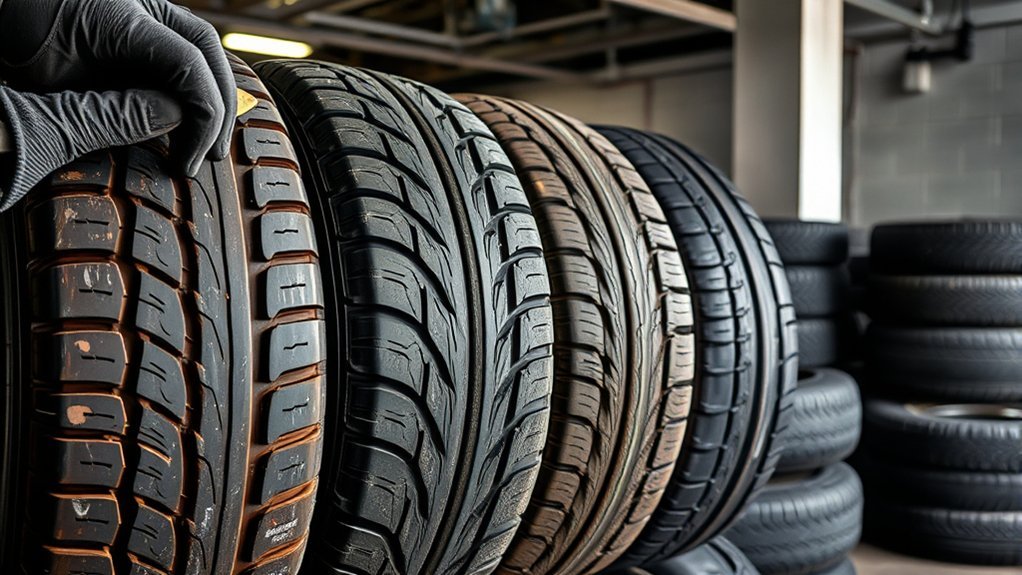
Used tires can sell for roughly $25 to $160 each in many common U.S. passenger-car and light-truck sizes, while larger, premium, performance, or specialty tires can sell for more. Your actual price depends on the exact size and model, remaining tread, DOT date code, condition, repairs, local demand, and whether you sell privately or to a shop.
Quick Answer
A practical 2026 starting range for many used tires is about $25 to $160 each. Worn budget tires sit near the low end, while newer premium tires with strong tread can bring more. For an accurate price, compare the exact size, brand, model, tread depth, age, and condition with current local listings.
Key Takeaways
- Many common used passenger and light-truck tires fall somewhere around $25 to $160 each, but there is no official national resale price.
- Tread depth matters, but size, model, age, condition, repairs, and local demand can change the price just as much.
- Premium and sought-after models can sell for more, but there is no reliable rule that every premium brand adds a fixed percentage.
- A tire at 2/32″ of tread has reached the common treadwear-indicator threshold. Wet-weather performance can become a concern before that point.
- Do not sell a tire for road use if it has serious sidewall damage, exposed cords, a bulge, major bead damage, an improper repair, or another condition that makes it unserviceable.
How Much Used Tires Sell For by Condition?

Condition is one of the first things a buyer will examine. A clean tire with even tread, no visible damage, a recent DOT date, and a desirable size normally has more resale potential than a tire with the same tread depth but uneven wear or repair concerns.
For many common U.S. passenger and light-truck tires, these ranges can work as a rough 2026 starting point:
| Typical Tire Profile | Rough Asking Range | What Usually Matters Most |
|---|---|---|
| Budget/common tire with moderate wear | About $25–$50 | Usable tread, common size, even wear |
| Midrange tire in good condition | About $40–$90 | Model demand, tread, age, condition |
| Premium or high-tread tire | About $60–$160+ | Exact model, size, new replacement price, tread |
| Large LT, all-terrain, winter, performance, or specialty tire | Often $50–$160+, sometimes higher | Fitment, season, original price, local demand |
These are broad asking-price benchmarks, not guaranteed completed-sale prices. A common 16-inch passenger tire and a large premium LT tire can have completely different values even when both measure 7/32″.
Commercial truck, bus, off-road, agricultural, and industrial tires also belong to different resale markets. Their prices can fall well outside passenger-tire ranges, so compare them with the same application, size, load rating, and model instead of using a passenger-tire chart.
The best used-tire price comes from an exact comparable: same size, model, similar tread, similar age, and similar condition in your local market.
[Products Worth Considering]

TireJect Off-Road Tire Sealant Kit provides 5-in-1 sealing to help fix tread punctures up to 3/8", sidewall punctures up to 3/8", bead leaks, slow leaks, and minor dry rot on low-speed tires. It permanently seals with liquid rubber, recycled tire particles, and Aramid fibers, making it ideal for flats caused by thorns, nails, and screws. The included dispensing cap attaches to the valve stem for a no-mess installation, along with a metal valve core remover tool and valve stem cap. This kit is for off-road use only.

Measure tire tread depth quickly and accurately with this LUMITECO dial gauge that reads in 1/32" increments up to 14/32". The color-coded green/yellow/red zones make it easy to judge tire wear and know when replacement is needed. A rugged, compact design with a protective pouch helps keep the gauge ready for use on cars, trucks, motorcycles, and more.

Steelman white tire marking crayons provide high-contrast, semi-permanent marks for repairing and inspecting tires and equipment. They write on wet or dry, smooth or coarse surfaces including rubber, metal, glass, and wood, making them ideal for puncture location and damage outlining. The lead- and zinc-free crayons resist weather and fading yet wipe away when you no longer need the marks.
How to Price a Used Tire Step by Step
A simple pricing process gives you a better answer than assigning a dollar amount from tread depth alone.
- Record the full tire size. Copy the size from the sidewall, such as 225/65R17. Also record the load index and speed rating when shown.
- Record the brand and exact model. Two tires from the same manufacturer can have very different new prices and used demand.
- Measure the tread. Use a tread-depth gauge and measure several places across the tire instead of relying on one groove.
- Read the DOT date code. The final four digits identify the manufacturing week and year. For example, 2524 means the 25th week of 2024.
- Inspect the tire’s condition. Look for uneven wear, cuts, cracks, bulges, exposed cords, bead damage, punctures, and previous repairs.
- Check the current new price. Find the same model and size, if it is still sold. This gives you a useful ceiling.
- Find current used comparables. Search local marketplaces and used-tire sellers for the same or very similar tire.
- Set an asking price. Use several comparable listings rather than the highest one you can find, and leave reasonable room for negotiation if that is normal in your local market.
Pro Tip: Search using the complete size, brand, and model together. “Michelin 225/65R17 7/32 used” gives you far better comparables than simply searching for “used SUV tire.”
Used Tire Prices by Tread Depth
Tread depth is one of the clearest indicators of remaining wear, but it should adjust your price rather than determine it by itself.
When comparing used tires cost, a tire with 8/32″ or 9/32″ remaining will normally attract more interest than the identical tire at 4/32″ because the buyer receives more usable tread.
| Remaining Tread | Typical Pricing Effect | Seller Consideration |
|---|---|---|
| 8/32″ or more | Stronger resale potential | Show clear gauge photos and DOT date |
| 6/32″–7/32″ | Moderate to strong | Exact model and local demand become important |
| 4/32″–5/32″ | Usually discounted | Less remaining tread and reduced wet-weather margin can limit demand |
| Around 2/32″ | Little or no road-use resale value | NHTSA says it is time to replace the tire at this tread level |
NHTSA advises replacing tires when tread reaches 2/32″. Tire-use laws are enforced at the state level, so check your local requirements rather than assuming one legal rule applies everywhere.
Tread depth also does not tell you everything about wet-weather performance. Michelin’s tread-depth guidance notes that wet-road performance can decline noticeably as tread approaches 4/32″, especially where standing water or heavy rain is common.
Note: A tire can have deep tread and still be unsuitable for use because of age, impact damage, improper repairs, internal damage, bead damage, or other defects.
[Products Worth Considering]

Monitor tire tread wear with a smart, color-coded depth gauge that shows clear condition ranges at a glance. The bar is range marked for fast, easy readings, helping you maintain safer traction and performance. Each gauge is portable with a pocket clip, and the set includes 20 units for daily use and sharing.

The SAFELIFE dial tire tread depth gauge measures tread depth in 1/32 inch increments with clear, easy-to-read 2-inch dial face. Color zones using a traffic light system help you quickly judge whether tread is low, marginal, or ample for safer driving. Built with a durable zinc cast body and a metal detect probe for precise, comfortable use across cars, motorcycles, trucks, and buses.

Accurately measure tire tread depth with a calibrated gauge marked from 0 to 1 inch in 1/32 inch increments. The color-coded bar helps you quickly identify tread condition ranges, supporting safe driving for trucks, motorcycles, automobiles, and passenger vehicles.
How Brand and Model Affect Value
Brand reputation can affect used-tire value, but the exact model is often more useful than the logo by itself. A popular premium touring, winter, all-terrain, or performance model may have a higher new replacement price and stronger buyer demand than an economy model.
That does not mean every Michelin, Bridgestone, Pirelli, Continental, Goodyear, or other premium-brand tire automatically deserves a fixed percentage premium. Condition, age, size, tread, and market demand still decide whether buyers will pay more.
[Products Worth Considering]

Slip the Powerbuilt tire step over your vehicle’s tire to reach roof racks, engine bays, truck boxes, and more without overreaching. Its adjustable, universal design fits tires with a cross tread width up to 13 inches, including car, truck, RV, and semi tires. The non-slip cheesegrater surface and anti-slip tape provide secure grip while the open design lets mud and debris pass through. Fold-flat storage with rubber bumpers helps keep your tire and the step protected between uses.

This tire inflator with pressure gauge delivers long-lasting performance with a durable rubber-protected gauge and sturdy build. The longer hose and 360 swivel air chuck help you seal the valve securely and keep your hands free while measuring, inflating, or deflating. It’s battery-free for reliable use and provides ±2 PSI accuracy in the mid-range for most typical tires, with universal compatibility for 1/4 NPT compressor outputs.

This AUTOWN flat tire repair kit is designed for quick, reliable puncture repairs using a plug kit and spiral probe tool to simplify installation. Built for durability and safe handling, it offers strong adhesion and flexibility to help maintain tire air tightness. With a portable storage case and a multi-vehicle approach, it’s suitable for cars, motorcycles, ATVs, tractors, lawn mowers, RVs, jeeps, and trucks.
Brand Reputation Premium
Well-known brands can make a listing easier for buyers to evaluate because they can search the model’s specifications, new price, reviews, and replacement availability.
Instead of adding 20%, 30%, or 40% simply because of the badge, compare the current new price of the exact tire with current used examples. A premium tire with severe wear or questionable history can be worth less than a clean midrange tire with substantially more usable tread.
| Factor | Possible Effect | Best Way to Verify It |
|---|---|---|
| Recognized brand | May improve demand | Compare the exact model |
| High new retail price | Can support a higher used price | Check current replacement cost |
| Rare or specialty model | Can raise or lower value | Check local fitment demand |
Model Demand Differences
Model demand changes by tire size, vehicle population, season, and region. A winter tire may receive more attention before snow season, while an all-terrain light-truck tire can be easier to sell where pickups and SUVs are common.
A discontinued or unusual size can work either way. Scarcity may help if someone needs that exact tire, but a small pool of compatible vehicles can also make the tire harder to sell.
For that reason, use completed or active comparable listings for the exact size and model whenever possible instead of applying a universal 10%–30% model premium.
Performance And Specialty Value
Performance, winter, run-flat, all-terrain, mud-terrain, and other specialty tires can sell at higher prices than basic used passenger tires when their original replacement cost is high and local buyers need that exact fitment.
They can also be harder to sell. A high-performance tire in an uncommon size may have a smaller buyer pool, and some special tire constructions have additional inspection or repair restrictions.
Price specialty tires from the exact model and size rather than assuming they retain a fixed share of their original MSRP.
How Tire Age Affects Price
Tire age matters because rubber and other tire components change over time due to service, storage, heat, sunlight, and environmental conditions. Buyers should therefore look at the DOT Tire Identification Number as well as tread depth.
Two tires can have the same tread depth but very different resale appeal if one is much older or has an uncertain service history.
The final four digits of the DOT code show the week and year of manufacture. For example, a code ending in 2524 indicates manufacture in the 25th week of 2024.
NHTSA says some vehicle and tire manufacturers recommend replacing tires that are six to ten years old regardless of treadwear. That is not the same as saying every tire becomes unsafe on its sixth birthday.
Michelin recommends annual professional inspection after five years of service and replacement by ten years from the manufacture date as a precaution, even if tread remains.
For resale, newer date codes often make a tire easier to market because the buyer has more potential service time before age becomes a concern. However, there is no reliable national rule saying that every six-year-old tire loses a particular percentage of its value or that every eight-year-old tire has the same resale value.
What Costs Lower Your Used Tire Price?
Low tread, age, uneven wear, repair history, damaged beads, cracks, sidewall damage, bulges, exposed cords, and an uncertain service history can all reduce demand for a used tire.
Some defects should do more than lower your price. They can make a tire unsuitable for road use.
Warning: Do not sell a tire for road use simply because it still has tread. A tire with a bulge, exposed cords, serious sidewall or bead damage, structural damage, severe cracking, or an improper repair may be unserviceable. Have questionable used tires inspected by a qualified tire professional and recycle tires that are not safe to return to service.
USTMA warns that some used-tire damage is hidden. Damage or improper repairs to the inner liner may only become visible after the tire is demounted from the wheel and inspected.
A previous puncture does not automatically make a tire worthless, but the repair needs to be suitable. USTMA’s tire-repair guidance says repairable punctures are limited to the tread area, generally no larger than 1/4 inch (6 mm), and the tire must be removed from the wheel for inspection. A plug by itself is not considered an acceptable complete repair.
Inspection records, receipts, and clear photographs can help buyers understand a tire’s history, but documentation cannot replace a proper condition inspection.
How to Inspect Used Tires Before Selling
Before setting your price, record enough information for a buyer to judge the tire accurately.
- Tread depth: Measure several grooves and several points around the tire.
- Wear pattern: Look for cupping, flat spots, one-sided wear, or major differences across the tread.
- DOT date: Photograph the complete Tire Identification Number and the four-digit date code.
- Sidewalls: Check both sides for cuts, cracking, bulges, exposed material, or impact damage.
- Bead: Check the area that seals against the wheel for cuts, deformation, or mounting damage.
- Repairs: Disclose known plugs, patches, punctures, or other repair work.
- Inner liner: If there is any doubt about damage or repair quality, have the tire demounted and professionally inspected.
Are Matching Sets Worth More Than Single Used Tires?
A matching pair or set of four can be easier to sell because the buyer may be able to replace several tires at once. The set is especially attractive when all tires share the same brand, model, size, similar DOT dates, and similar tread measurements.
That does not guarantee a higher price per tire. Buyers often expect a package discount when purchasing four at once. Compare both complete sets and individual tires before deciding whether to list yours separately or together.
If the tread depths vary significantly, state each measurement rather than advertising the entire set using only the deepest tire.
Where to Sell Used Tires for the Best Price?
Where you sell used tires changes both the price and the amount of work involved.
- Local tire shops: Some shops buy used tires, but their offers can be lower because they must inspect, store, service, and resell the tire.
- Facebook Marketplace: Useful for local private sales where buyers can inspect the tires before purchasing.
- Craigslist: Another local option that lets you set the asking price and negotiate directly.
- OfferUp and similar local marketplaces: Helpful for reaching nearby buyers without arranging shipping.
- Tire enthusiast or vehicle groups: Useful for uncommon performance, winter, off-road, or enthusiast fitments where buyers recognize the exact model.
- Online tire resale channels: Can reach more buyers, but shipping cost and seller fees may reduce your return.
Private selling can produce a higher gross price than accepting a shop’s immediate offer, but it also requires photos, messages, buyer screening, negotiation, and possibly several weeks of waiting.
How to Create a Used Tire Listing That Buyers Can Trust
A strong listing removes uncertainty. Include:
- Brand and exact model
- Complete tire size
- Load index and speed rating when available
- Tread depth measured in 32nds of an inch
- DOT date code
- Quantity: single, pair, or set of four
- Known repair history
- Any uneven wear or cosmetic issue
- Clear photographs of the tread, both sidewalls, DOT code, and any repair
- Your asking price and whether it is firm or negotiable
Never hide damage or use vague descriptions such as “almost new” when you can provide the actual tread measurement and manufacturing date.
Frequently Asked Questions
How Much Should I Sell My Used Tires For?
Many common used passenger and light-truck tires can start around $25 to $160 each, but do not price yours from that range alone. Compare the exact size and model with current local listings, then adjust for tread depth, DOT date, condition, repairs, and whether you are selling a single tire or matching set.
What Is the 3% Rule for Tires?
The commonly cited 3% rule is an aftermarket tire-sizing rule of thumb about keeping replacement tire overall diameter close to the factory specification. It is not a rule saying tread must stay above 3/32″. For alternate tire sizes, follow your vehicle manufacturer’s approved sizes and have fitment checked by a qualified tire professional. Michelin also recommends following manufacturer-approved sizing guidance.
Is $50 Too Much for a Used Tire?
No. $50 can be reasonable for a common used tire with useful tread, a recent enough DOT date, even wear, and no unsafe damage. It could also be too expensive for a worn budget tire. Compare the exact brand, model, size, tread measurement, and local market before deciding.
Is $60 Too Much for a Used Tire?
Not necessarily. A $60 price can make sense for a good midrange or premium tire with healthy tread and a clean condition history. For a tire close to its replacement threshold, unusually old, badly worn, or damaged, $60 may be poor value.
How Much Tread Should a Used Tire Have?
More tread generally improves resale value, but tread alone does not prove a tire is safe. NHTSA advises replacement at 2/32″. If you drive in frequent rain, shallower tread can also reduce wet-weather performance before the tire reaches that point. Measure several locations because wear may not be even.
How Old Is Too Old for a Used Tire?
There is no single age at which every tire instantly becomes unsafe. NHTSA says some manufacturers recommend replacement between six and ten years. Michelin recommends annual professional inspection after five years and replacement by ten years from manufacture as a precaution. Always follow the vehicle and tire manufacturer’s guidance.
Sources
- National Highway Traffic Safety Administration — TireWise — treadwear indicators, DOT date codes, tire aging, and replacement guidance.
- U.S. Tire Manufacturers Association — Used Tires — hidden damage and professional inspection guidance for used tires.
- U.S. Tire Manufacturers Association — Tire Repair Basics — puncture location, inspection, and proper repair requirements.
- Michelin — Tire Tread Depth — tread measurement and wet-weather considerations.
- Michelin — When to Replace Tires — age, inspection after five years, and ten-year replacement guidance.
- Michelin — Choosing the Right Tire Size — replacement sizing and vehicle-manufacturer fitment guidance.
Conclusion
If you’re pricing used tires, start with the exact size, brand, model, tread depth, DOT date, and condition instead of relying on one universal price chart. Many common used passenger and light-truck tires fall roughly in the $25 to $160 range, while premium, large, or specialty fitments can sell for more.
Most importantly, price only tires that are suitable for continued road use. Measure tread at several points, disclose repairs and wear, photograph the DOT code, and have questionable tires professionally inspected. Then compare several current local listings for the closest match. That approach gives you a far more defensible asking price than a fixed tread-depth or brand-percentage formula.