
The current CR-V uses three tire sizes, and Honda gives each one its own front and rear pressure. The differences are small but they matter for wear, handling and the indirect TPMS. Here are the figures from Honda’s specifications.
Quick Answer
Honda’s specifications for the sixth-generation CR-V list 33 psi front / 32 psi rear for 235/65R17 tires, 35 psi front / 32 psi rear for 235/60R18 tires and 33 psi front and rear for 235/55R19 tires. The T155/90D17 compact spare takes 60 psi. Check the label on your driver’s door jamb to confirm.
Key Takeaways
- 17-inch: 33 psi front, 32 psi rear.
- 18-inch: 35 psi front, 32 psi rear (most common size).
- 19-inch (Sport Touring Hybrid): 33 psi front and rear.
- Calibrate the TPMS after adjusting pressures.
CR-V Tire Pressure by Size (2023-2026)
| Tire size | Front | Rear | Typical trims |
|---|---|---|---|
| 235/65R17 104H | 33 psi (230 kPa) | 32 psi (220 kPa) | LX (17-inch) |
| 235/60R18 103H | 35 psi (240 kPa) | 32 psi (220 kPa) | LX (18-inch), EX, EX-L, Sport Hybrid, Sport-L Hybrid |
| 235/55R19 101H | 33 psi (230 kPa) | 33 psi (230 kPa) | Sport Touring Hybrid |
| T155/90D17 compact spare | 60 psi (420 kPa) | 60 psi | Spare |
These figures come from Honda’s vehicle specification pages. Older CR-Vs use different numbers, commonly in the 32-33 psi range, so always go by the label on your own vehicle. Sizes by trim are in our 2026 CR-V tire size guide.
Products Worth Considering

AstroAI’s tire pressure gauge with inflator helps you check and adjust car tire pressure accurately for safer, smoother driving. It offers 3-in-1 operation to inflate, deflate, or measure pressure, with an easy-to-read 2.5-inch glow dial and a heavy-duty air chuck for convenient use. Universal compatibility supports Schrader-valve tires and quick-connect 1/4" NPT air compressors for quick maintenance.

AstroAI’s calibrated digital tire pressure gauge delivers precise readings across a 0–150 PSI range, with high clarity from a backlit LCD. Built for everyday road use, it features one-button operation, an anti-slip ergonomic grip, and support for multiple pressure units plus auto shutoff. Powered by AAA batteries, it’s an all-weather essential for checking tire health and TPMS warnings.

AstroAI’s digital tire pressure gauge with inflator helps you quickly check, inflate, and deflate tires with an easy lock-on chuck and integrated bleed valve. It delivers calibrated accuracy within 1% for a clear PSI readout from 3 to 250 PSI, supporting dependable tire maintenance. Designed for many vehicle types, it connects to common compressor outputs and standard Schrader valves.
How to Check CR-V Tire Pressure
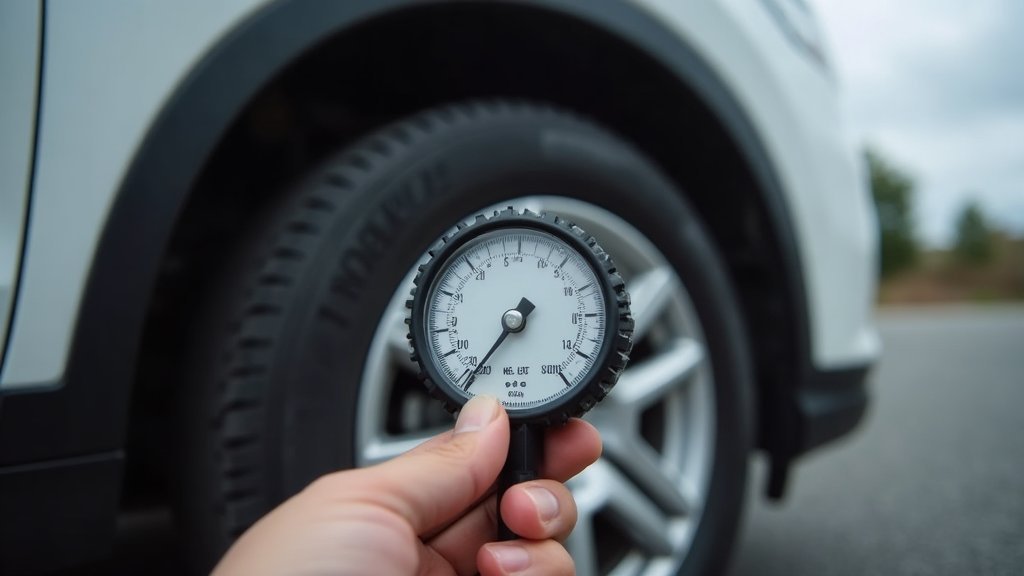
- Check the tires cold, before driving.
- Use a reliable gauge on each valve, including the spare.
- Set front and rear tires to their own values; on 18-inch tires the front is 3 psi higher.
- Refit valve caps.
- Calibrate the TPMS so it learns the new baseline; see CR-V TPMS reset.
Pro tip: The CR-V’s TPMS is indirect and will not show individual tire pressures. A monthly gauge check is still essential.
Loads, Towing and Winter
Honda’s placard figures cover normal loads up to the vehicle’s rated capacity. If you load the CR-V heavily or tow, check the owner’s manual for any load-related guidance and keep pressures at the placard values measured cold. In winter, pressure drops as temperatures fall, so check more often; see winter tire pressure.
Products Worth Considering

AstroAI’s heavy-duty digital tire pressure gauge delivers quick, accurate readings with 0.1 increments and a secure valve-stem seal. It features a green backlit LCD and built-in flashlight for easy use in low light, plus an ergonomic non-slip stainless-steel design. The wide 0–230 PSI range works across common vehicle tires, with unit selection and an auto shut-off to save battery.
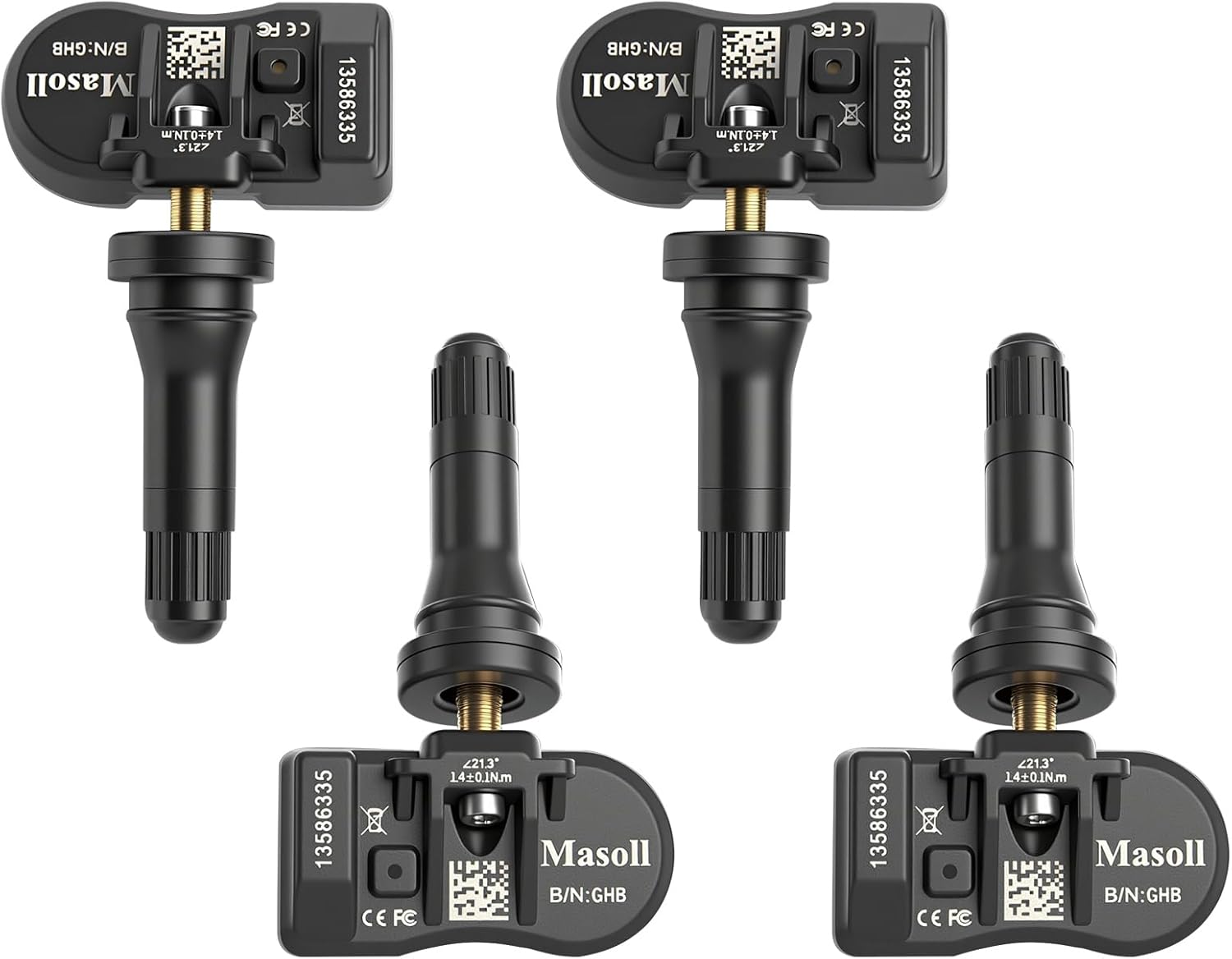
Masoll TPMS sensors are designed for most GM vehicles after 2006, helping you clear tire pressure warnings with OEM-level 315/433MHz compatibility. The 4-pack includes pre-programmed sensors, but re-learning is required after installation using a GM TPMS relearn tool or scan tool. Built with a dual-antenna design and a long-life CR2050 battery, these sensors deliver reliable performance in extreme temperatures with corrosion-resistant valve construction.

This Rhino USA tire pressure gauge with inflator combines an analog dial, locking chuck, and bleed valve in one no-battery tool for inflating, checking, and bleeding in a single connection. It fits standard 1/4" NPT air compressor fittings and is built for reliable shop, roadside, and fleet use on cars, trucks, motorcycles, SUVs, RVs, and trailers. A lifetime replacement helps keep your tire maintenance routine covered.
Signs of Incorrect Pressure
- Shoulder wear on both edges: underinflation.
- Center wear: overinflation.
- Low tire pressure/TPMS indicator on: at least one tire significantly low, or calibration needed.
- Pull to one side: uneven pressure side to side.
Frequently Asked Questions
What should the tire pressure be on a 2025 Honda CR-V?
Honda lists 35 psi front and 32 psi rear for 235/60R18 tires, 33/32 psi for 235/65R17 and 33/33 psi for 235/55R19. Check your door label.
Why is the CR-V front pressure higher than the rear?
On the 17- and 18-inch sizes Honda specifies a little more air up front, where the engine’s weight sits, to balance handling and wear.
What is the CR-V spare tire pressure?
Honda lists 60 psi for the T155/90D17 compact spare.
Do I need to reset the CR-V TPMS after adding air?
Yes. Calibrate the TPMS after adjusting pressures, rotating tires or replacing tires.
Sources
- Honda owner’s information: CR-V vehicle specifications (18/19-inch)
- Honda owner’s information: CR-V vehicle specifications (17/18-inch)
- TirePressure.com: 2025 Honda CR-V tire pressure
Products Worth Considering

This heavy-duty tire pressure gauge with inflator helps you measure and inflate tires accurately without frequent trips to a gas station. The dual head chuck and 10–120 PSI range make it easier to reach inner and outer valves, while the calibrated accuracy supports dependable readings. Designed for cars, trucks, RVs, SUVs, motorcycles, bicycles, and shop use.

This digital tire pressure gauge with built-in inflator helps you accurately check and adjust tire pressure for safer driving and better fuel efficiency. It supports multiple units (PSI, KPA, BAR, KG/CM²) and reads within 1% for reliable results. The 3-in-1 design inflates, deflates, and measures, with a quick-connect air chuck and compatible hose setup for cars, trucks, SUVs, RVs, and motorcycles.

AstroAI’s digital tire pressure gauge inflates and measures with high accuracy, reading within 1% and supporting four pressure units from 3 to 250 PSI. The heavy-duty brass air chuck locks securely on valve stems, while the 19.7-inch stainless braided hose and 360° rotatable dial improve comfort and control for faster single-hand operation. Battery-saver behavior and an integrated flashlight add convenience and safety for everyday roadside and garage use.