Disclosure: As an Amazon Associate, we earn from qualifying purchases. If you click a link on this page and make a purchase, we may receive a small commission at no extra cost to you.
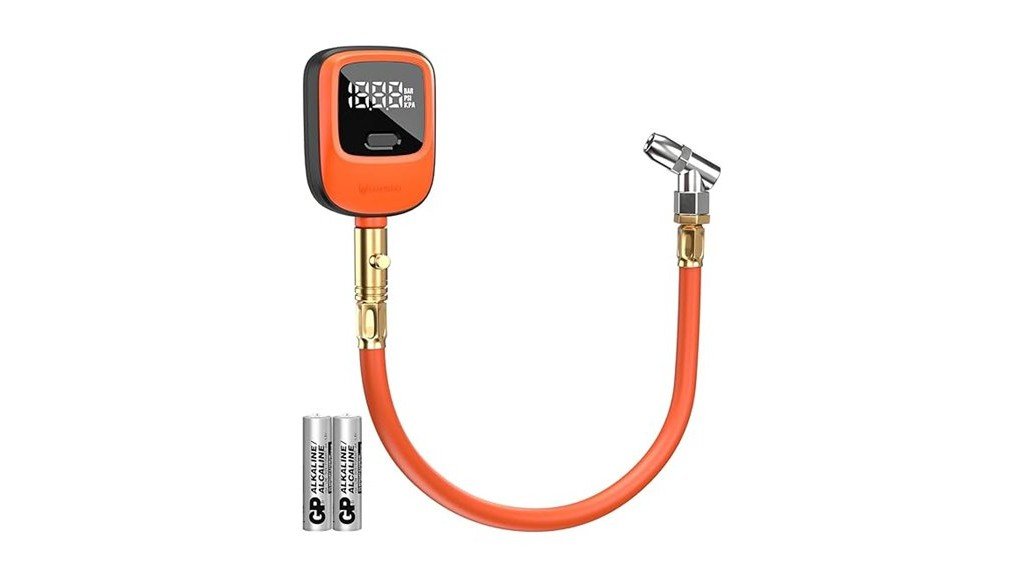
Getting tire pressure right is simple in theory, but cramped valve stems, changing temperatures, and hard-to-read gauges can make routine checks frustrating. The ETENWOLF T600 digital tire pressure gauge addresses those problems with a flexible hose, a 360-degree rotating angled chuck, a locked digital reading, and a built-in bleed valve. Its broad 0 to 250 PSI range makes it useful for passenger vehicles, motorcycles, bicycles, RVs, and higher-pressure truck tires. It is a strong choice for buyers who want one accurate gauge for several vehicles, though it measures and releases pressure only, it does not inflate a tire.
Quick Verdict
Rating: 8.7/10
Best For: Drivers, riders, RV owners, and home garages that need one wide-range digital gauge with controlled air release.
Bottom Line: The T600 combines a wide pressure range, flexible valve access, replaceable batteries, and a live bleed function in a sturdy handheld design. Its main tradeoffs are that it cannot add air and the current accuracy wording differs between the manufacturer page and Amazon listing.
ETENWOLF T600 Specifications
| Specification | Detail |
|---|---|
| Brand | ETENWOLF |
| Model | T600 |
| Product type | Digital tire pressure gauge with air bleeder |
| Measurement range | 0 to 250 PSI |
| Pressure units | PSI, BAR, and KPA |
| Accuracy standard | Manually calibrated to ANSI B40.7 Grade 2A; ETENWOLF states ±1% PSI, while the current Amazon listing states ±0.5% PSI |
| Chuck | 360-degree rotating angled air chuck, replaceable with a standard 1/4-inch NPT chuck |
| Hose | Flexible rubber hose |
| Pressure adjustment | Built-in bleed button for releasing air while connected |
| Power | Two replaceable AA batteries, included |
| Materials | Metal, plastic, and rubber |
| Dimensions | 1.77 x 5.51 x 7.48 inches |
| Weight | 0.6 pounds |
| Operating temperature | -14°F to 140°F (-10°C to 60°C), according to ETENWOLF |
| Compatibility | Pickups, motorcycles, trucks, bicycles, SUVs, RVs, ATVs, and passenger cars with compatible tire valves |
| Included items | T600 gauge and two AA batteries |
| Warranty note | Amazon lists a two-year warranty; ETENWOLF says registration may be required for maximum 24-month coverage |
Before You Buy: ETENWOLF’s product page states ±1% PSI accuracy, while the current Amazon listing states ±0.5% PSI. Both identify ANSI B40.7 Grade 2A calibration, but you should check the current package and listing if the exact tolerance matters for professional work.
What Is the ETENWOLF T600?
The ETENWOLF T600 is a handheld digital gauge made to measure tire pressure and release small amounts of air. It is not an air compressor or an inflator. You connect its angled chuck to a valve stem, read the locked result, and press the bleed button when the tire is above the target pressure.
The model is designed for buyers who maintain several types of tires. Its 0 to 250 PSI range covers common passenger-car pressures as well as many higher-pressure bicycle, RV, and truck applications. The replaceable 1/4-inch NPT chuck also gives you a serviceable connection point rather than a permanently fixed tip.
Key Takeaways
- The T600 measures from 0 to 250 PSI and displays PSI, BAR, or KPA.
- A flexible hose and 360-degree rotating angled chuck help you reach recessed or awkward valve stems.
- The screen locks each reading until you reset it, which makes the number easier to inspect away from the wheel.
- The bleed button releases air while the gauge remains connected, so you can approach the target pressure in controlled steps.
- Two included AA batteries are replaceable, which is more practical for long-term garage use than a sealed battery.
- The gauge does not inflate tires, and the exact advertised accuracy percentage currently differs by source.
Who Should Buy It?
Best For
- Households that check cars, motorcycles, bicycles, trailers, or RVs with one gauge
- Drivers who want a hose-mounted chuck for easier access to tight valve locations
- Users who frequently fine-tune pressure and value a built-in air-release button
Skip If
- You need a tool that adds air as well as measures pressure
- You want a tiny pencil gauge that fits in a glove-box corner or jersey pocket
- You require a certified tolerance document for commercial calibration records
[Products Worth Considering]

ETENWOLF T300 is a calibrated digital tire pressure gauge for accurate readings from 3 to 200 PSI across light and heavy-duty vehicles. It includes thermal compensation for reliable performance in extreme cold or heat, with an auto shut-off to extend battery life and an LED for easier reading. The sturdy design supports rugged everyday use, making it ideal for pickups, RVs, and industrial applications.

The ETENWOLF T600 digital tire pressure gauge delivers precise, manually calibrated readings to ANSI B40.7 Grade 2A standards with ±0.5% PSI accuracy. Its 360° rotating nozzle and display hold make it easy to check pressures from any angle, while a bleed button helps dial tires to the perfect level. With a 0–250 PSI range and support for PSI, BAR, and KPA, it’s a convenient tool for maintaining tire performance across many vehicles and seasons.

The ETENWOLF T500 digital tire pressure gauge with inflator delivers accurate readings across a wide 0–250 PSI range, calibrated to ANSI B40.7 Grade 2A. An all-in-one tool combines gauge, air chuck, hose, inflating and controlled bleed for checking, inflating, and deflating tires on many vehicle types. It’s built for reliable use in extreme temperatures and features an illuminated backlit display with replaceable AAA batteries for convenient operation.
Accuracy, Range, and Measurement Units
The T600’s main advantage is range. A 0 to 250 PSI scale gives you room to check everyday passenger tires, compact spares, motorcycles, many bicycle tires, RVs, and commercial-style tires without switching tools. You can view pressure in PSI, BAR, or KPA, which is useful when a vehicle placard, bicycle tire, or service document uses a different unit.
ETENWOLF says the gauge is manually calibrated to ANSI B40.7 Grade 2A. The brand’s product page lists ±1% PSI, while Amazon currently describes ±0.5% PSI. Using the more conservative ±1% figure is sensible until you confirm the exact label supplied with your unit.
The display holds the reading after you disconnect the chuck. That feature is useful when the valve sits low, behind a wheel cover, or in a position where you cannot easily read the screen while maintaining a seal.
Design, Build, and Valve Access
The gauge combines metal, plastic, and rubber parts and weighs 0.6 pounds. It is larger than a compact stick gauge, but the size gives you a separate display body, a flexible hose, and a full angled chuck. The vivid orange housing is also easier to spot in a dark toolbox or crowded garage shelf.
The 360-degree rotating chuck reduces the need to twist your wrist or bend the hose sharply. This matters on dual-wheel setups, motorcycle wheels, bicycle rims, and vehicles with recessed valve stems. ETENWOLF also states that the chuck can be replaced with a standard 1/4-inch NPT chuck, which adds flexibility if the original tip wears or you prefer another chuck style.
The hose still needs reasonable care. Do not fold it tightly, crush it beneath heavier tools, or store it under tension, because damaged hose connections can cause leaks and unstable readings.
Controls, Display, and Bleed Function
A single button handles power, zero reset, and unit changes. This keeps the face uncluttered, but it also means you need to learn the difference between a press and a press-and-hold action. Readings remain on the screen until you press the button to reset the gauge.
The bleed valve is the most useful control after the display. When a tire is slightly overinflated, you can keep the chuck connected and release air in short bursts. The pressure updates while you adjust it, which is faster than removing the gauge, pressing the valve core with another tool, and checking again.
Use the bleed button only to reduce pressure. If the reading is below the vehicle target, disconnect the T600 and use a suitable air source before checking again.
Pro Tip: Approach the target pressure slowly. Release air in short taps, pause for the display to settle, and stop at the cold pressure listed on the vehicle placard rather than the maximum pressure molded on the tire sidewall.
How It Performs in Real Use
Daily Car and SUV Checks
For routine passenger-vehicle checks, the locked display and bleed button reduce repeated steps. You can measure each cold tire, note the value after disconnecting, and make small downward corrections without reaching for a separate valve tool. The gauge is larger than a pocket model, but it is still compact enough for a trunk organizer or garage drawer.
Motorcycles and Bicycles
Motorcycle brake rotors and bicycle spokes can make straight gauges awkward to position. The flexible hose and rotating chuck give you more freedom to form a clean connection. The 250 PSI ceiling also covers many high-pressure cycling applications, though you should confirm that the tire uses a compatible valve or add the correct adapter when needed.
RV, Truck, and Trailer Use
The wide range is especially useful when your garage includes higher-pressure tires. The hose makes it easier to work near large wheels, but dual rear wheels may still require a specialized extended or dual-head chuck. The replaceable 1/4-inch NPT connection is helpful if you need to adapt the tool for that setup.
Seasonal and Roadside Checks
ETENWOLF lists an operating range of -14°F to 140°F, so the gauge is intended for hot and cold conditions. Temperature still changes tire pressure, so compare readings with the vehicle’s cold-pressure specification and recheck after major weather changes. Replaceable AA batteries are convenient on trips because spares are easy to find.
How to Use the T600 Correctly
- Find the recommended cold tire pressure on the vehicle placard or in the owner’s manual.
- Check the tires before driving, or after the vehicle has been parked long enough for the tires to cool.
- Turn on the T600 and select PSI, BAR, or KPA.
- Press the angled chuck squarely onto the valve stem until air leakage stops.
- Wait for the reading to stabilize, then remove the chuck and read the locked display.
- If pressure is too high, reconnect the chuck and tap the bleed button in short bursts.
- If pressure is too low, use an inflator, then measure again.
- Reset the display before moving to the next tire.
The National Highway Traffic Safety Administration recommends checking tires when cold and using the vehicle manufacturer’s placard pressure. The number on the tire sidewall is not the normal vehicle target.
Compatibility and Safety
The T600 is intended for common tire-pressure checks on pickups, motorcycles, trucks, bicycles, SUVs, RVs, ATVs, and passenger cars. Compatibility depends on the valve and your ability to seat the chuck without leaking air. Presta bicycle valves require a suitable adapter, and some dual-wheel vehicles may need a longer or dual-head chuck.
Never use the gauge on a visibly damaged valve stem, hose, or chuck. Keep your face away from the valve while connecting, and do not exceed the pressure limits of the tire, wheel, valve, or service equipment. A pressure gauge can help you identify an incorrect reading, but it cannot diagnose a puncture, damaged tire, failed TPMS sensor, or unsafe wheel assembly.
When a tire repeatedly loses pressure, has sidewall damage, or will not hold the recommended pressure, have it inspected by a qualified tire professional instead of relying on repeated top-offs.
Battery, Hose, and Maintenance Tips
| Item | Care Tip | Why It Helps |
|---|---|---|
| Batteries | Replace both AA cells together and remove them before very long storage | Reduces weak-display issues and battery leakage risk |
| Hose | Store in a loose curve without sharp folds | Protects the hose and end connections |
| Chuck | Keep the opening clean and confirm a firm seal | Limits air loss during measurement |
| Housing | Wipe with a dry or lightly damp cloth | Keeps dirt away from the controls and battery area |
| Storage | Keep it dry and protected from impacts | Helps preserve calibration and the display |
Pros and Cons
Pros
- Wide 0 to 250 PSI range covers many vehicle and bicycle applications
- 360-degree chuck and flexible hose improve access around wheels and spokes
- Locked digital reading is easier to inspect after disconnecting
- Built-in bleed valve supports controlled pressure reduction
- Replaceable AA batteries and a replaceable 1/4-inch NPT chuck support long-term use
Cons
- Measures and bleeds pressure but cannot inflate a tire
- Larger than a pencil gauge and not supplied with a listed carrying case
- Manufacturer and Amazon accuracy percentages are not currently identical
Is It Worth the Price?
The T600 sits in the practical mid-range for digital tire gauges. Its value comes from combining a broad pressure range, hose-mounted access, a rotating chuck, locked readings, a bleed valve, and replaceable batteries in one tool. Buyers who maintain several vehicles or frequently adjust pressure will use those features more than someone who checks one passenger car a few times per year.
It is worth considering if you care more about reach and controlled adjustment than minimum size. It is not the best fit when you need an all-in-one inflator or a certified shop instrument with documented calibration records for regulated work.
[Products Worth Considering]

This solid brass tire inflation hose adapter screws into your inflator and uses a locking press clip to securely clamp onto the tire valve stem. It helps reduce air leakage for fast, efficient pumping and is designed for reliable performance with a wide range of vehicles and inflator setups.

Milton S-921 pencil tire pressure gauge helps you maintain optimal tire pressure for passenger cars with accurate readings in PSI and kPa. It features a built-in deflator valve for convenient pressure adjustments, plus a single chuck head and nylon indicator bar for easy use on the go. Built from durable plated brass and designed for reliable performance, it’s a practical road trip and cold-weather maintenance tool.

AstroAI’s digital tire pressure gauge inflates and measures with high accuracy, reading within 1% and supporting four pressure units from 3 to 250 PSI. The heavy-duty brass air chuck locks securely on valve stems, while the 19.7-inch stainless braided hose and 360° rotatable dial improve comfort and control for faster single-hand operation. Battery-saver behavior and an integrated flashlight add convenience and safety for everyday roadside and garage use.
How It Compares to Alternatives
The ETENWOLF T300 is a smaller model worth comparing if you mainly need a direct handheld gauge and do not need the T600’s 250 PSI ceiling, hose, or replaceable NPT chuck. A compressor-connected inflator gauge such as the Milton 507KIT makes more sense when you want to add and release air through one shop-air tool.
The T600 makes the most sense between those options. It is easier to position than a rigid pocket gauge and more portable than a compressor-dependent inflator gauge, but you still need a separate air source when pressure is low.
[Products Worth Considering]
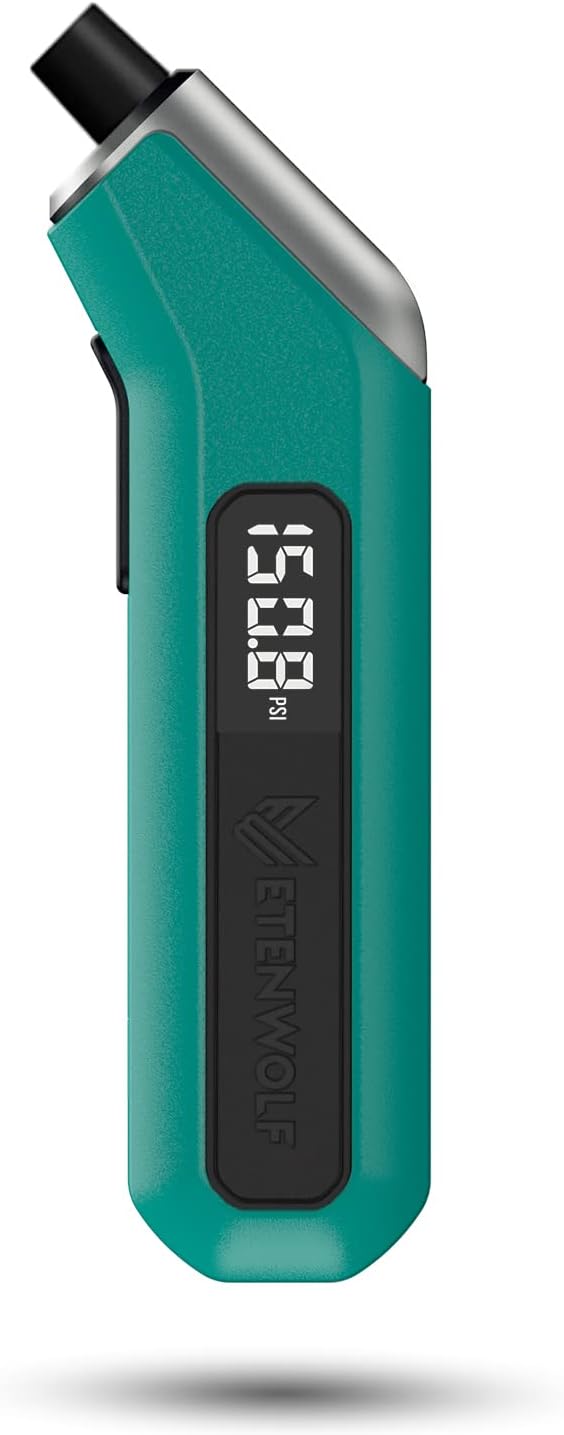
ETENWOLF T300 is a calibrated digital tire pressure gauge designed for reliable readings across low and high pressure ranges. It includes thermal compensation for stable performance in extreme cold or heat, an LED light for visibility, and an auto shut-off to help preserve battery life. Ideal for pickups, RVs, and heavy-duty vehicles, it delivers accurate PSI measurements with sturdy durability.

This digital tire pressure gauge with built-in inflator helps you accurately check and adjust tire pressure for safer driving and better fuel efficiency. It supports multiple units (PSI, KPA, BAR, KG/CM²) and reads within 1% for reliable results. The 3-in-1 design inflates, deflates, and measures, with a quick-connect air chuck and compatible hose setup for cars, trucks, SUVs, RVs, and motorcycles.

This 2-pack closed-flow locking air chuck set delivers controlled airflow only when the valve stem is held in place, helping prevent leaks during inflation. Made for heavy-duty use with a 300 PSI maximum rating, it features a brass body for corrosion resistance and long service life. The 1/4" FNPT connection and quick-plug compatibility make it convenient for use with Schrader valve systems and common truck, RV, and auto air compressors.
Frequently Asked Questions
Does the ETENWOLF T600 inflate tires?
No. The T600 measures pressure and can release excess air through its bleed button. You need a separate compressor, pump, or inflator when a tire is below the target pressure.
What pressure units does the T600 display?
It displays PSI, BAR, and KPA. The single control button changes units, powers the gauge, and resets a locked reading to zero.
Is the T600 suitable for bicycles and motorcycles?
Yes, its 0 to 250 PSI range and flexible hose suit many bicycle and motorcycle tires. Confirm valve compatibility first, because Presta bicycle valves need an appropriate adapter.
Can the air chuck be replaced?
ETENWOLF states that the angled chuck can be replaced with a standard 1/4-inch NPT chuck. That is useful if the original chuck wears or your wheel setup needs a different compatible tip.
What batteries does the gauge use?
The T600 uses two replaceable AA batteries, and the current listing includes them. Replace both cells together when the display becomes weak or operation becomes inconsistent.
Should tire pressure be checked when the tires are cold?
Yes. Use the cold pressure shown on the vehicle placard or in the owner’s manual. Pressure rises as tires warm, so a reading after driving may be higher than the cold specification.
Does the T600 store several readings?
No multi-reading memory is listed. The display holds one measurement until you reset it, which helps you read the value after removing the chuck from the valve.
Who should skip the ETENWOLF T600?
Skip it if you need a built-in air pump, an ultra-small pocket gauge, or a documented calibration certificate for regulated commercial work. It is designed mainly for practical tire checks and pressure reduction.
The Bottom Line
The ETENWOLF T600 is recommended for drivers, riders, and RV or truck owners who want a wide-range digital gauge with easier valve access and controlled air release. Its strongest features are the 0 to 250 PSI range, rotating hose-mounted chuck, locked display, and replaceable batteries. Buyers who need inflation in the same tool or formal calibration paperwork should choose a different setup.
Ready to Buy?
Check the latest price, seller, warranty details, and accuracy wording before you decide.