

Costco tire air is available through self-inflation stations at Costco locations, according to the company’s Tire Center FAQ. The station follows the same hours as the warehouse’s gas station, which can differ from Tire Center hours. Costco also offers nitrogen inflation through its Tire Centers, so it helps to know whether you need a quick self-service top-off or staffed tire service.
Quick Answer
Yes. Costco says its locations have a self-inflation station that is open during gas-station hours. Costco’s public FAQ does not state a nationwide fee or nonmember-access rule for those stations. For Costco-purchased tires, inflation checks and nitrogen inflation are included with the tire installation package.
Key Takeaways
- The self-inflation station follows Costco gas-station hours, not necessarily Tire Center hours.
- Costco Tire Centers list nitrogen inflation and nitrogen conversion among their services.
- Use the cold-tire pressure on your vehicle’s door placard or owner’s manual, not the maximum pressure molded into the tire sidewall.
- A tire that is visibly damaged, repeatedly losing pressure, or nearly flat needs inspection rather than repeated top-offs.
Does Costco Have Air for Tires?

Yes. Costco’s Tire Center FAQ says there is a self-inflation station at its locations and that it is open during the same hours as the gas station. That is the clearest current answer to the main question.
Costco separately lists nitrogen inflation and nitrogen conversion as Tire Center services. However, its public FAQ does not say that every self-inflation station dispenses nitrogen, so follow the labeling on the machine at your warehouse rather than assuming.
Use the vehicle manufacturer’s recommended cold-tire pressure, not the maximum pressure shown on the tire sidewall.
If a tire keeps losing pressure after you fill it, the problem may be a puncture, leaking valve, wheel issue, or other damage. Air or nitrogen can restore pressure temporarily, but it does not repair the cause of a recurring leak.
Where Costco’s Tire Air Stations Are
Costco confirms the self-inflation station but does not publish one universal parking-lot position for every warehouse. The practical place to start is the Tire Center and nearby service area, then follow the warehouse’s posted tire-inflation signs.
Because warehouse layouts differ, the exact position can change from one Costco to another. If you cannot spot the station safely from the parking lanes, ask an employee rather than circling through service traffic.
Air Station Locations
The original article listed several common places to look around the Tire Center area. Treat these as layout clues rather than a guaranteed national setup, because Costco’s official FAQ does not specify an exact physical location.
| Area | What you’ll see | Tip |
|---|---|---|
| Near Tire Center | Air hose station | Look for inflation signage |
| Parking lot edge | Accessible pump | Park safely before filling |
| Service lane | Shared tire-service area | Do not block service bays |
| Store perimeter | Location varies by layout | Follow posted signs |
| Club locations | Setup varies by site | Ask an associate if unsure |
The station is meant for a quick pressure adjustment, so pull completely out of traffic before you start. Keep the hose clear of moving vehicles and return it neatly when you finish.
Tire Center Access
You do not need to confuse the self-inflation station with a staffed Tire Center appointment. Costco’s FAQ treats “put air in my tires” as a separate self-service question, while appointments apply to Tire Center work such as installation, rotation, balancing, and repair.
If you need a simple top-off, use the self-inflation station during its available hours. If you need a flat repaired, a tire installed, or a wheel balanced, that becomes a Tire Center service and Costco’s service rules apply.
In-Store Availability
There is no single nationwide schedule for Costco tire air. Costco says the self-inflation station follows gas-station hours, and warehouse service hours can vary by location and holiday.
The fastest way to confirm the schedule before a special trip is Costco’s Find a Warehouse page, which lists local gas and Tire Center hours. This matters because the inflation station may be available when the Tire Center itself is closed.
How Costco’s Self-Serve Tire Air Works
The Costco self-inflation station is designed for routine tire-pressure adjustments. The exact controls can vary by station, so follow the instructions printed on the machine and use your vehicle’s specified cold-tire pressure as the target.
Do not use the number molded on the tire sidewall as your normal inflation target. That sidewall figure is a tire limit, while your vehicle placard gives the pressure selected for the vehicle’s load, handling, and ride requirements.
[Products Worth Considering]

The Milton S-693 straight foot dual head air chuck is designed for accurate tire pressure checks and quick, secure valve-core engagement with lock-on threads on both ends. With a 1/4" FNPT connection and a maximum 150 PSI rating, it’s built for use on inner duals and common vehicle tires, including trucks and RVs.

This tire inflator with pressure gauge delivers long-lasting performance with a durable rubber-protected gauge and sturdy build. The longer hose and 360 swivel air chuck help you seal the valve securely and keep your hands free while measuring, inflating, or deflating. It’s battery-free for reliable use and provides ±2 PSI accuracy in the mid-range for most typical tires, with universal compatibility for 1/4 NPT compressor outputs.

TireJect Off-Road Tire Sealant Kit provides 5-in-1 sealing to help fix tread punctures up to 3/8", sidewall punctures up to 3/8", bead leaks, slow leaks, and minor dry rot on low-speed tires. It permanently seals with liquid rubber, recycled tire particles, and Aramid fibers, making it ideal for flats caused by thorns, nails, and screws. The included dispensing cap attaches to the valve stem for a no-mess installation, along with a metal valve core remover tool and valve stem cap. This kit is for off-road use only.
Tire Air Kiosk
At the kiosk, park so the hose reaches the tires without stretching across a traffic lane. Remove the valve cap, connect the hose securely, and add pressure only as needed.
If the station has a gauge or pressure-setting control, use it as directed. A separate handheld gauge is still useful for confirming the final reading, especially if you are unsure whether the machine has finished or the hose connection is sealing correctly.
Check the front and rear placard values before assuming all four tires use the same pressure. Some vehicles specify different front and rear pressures.
Using Air Services
For the most accurate result, check and adjust pressure when the tires are cold. NHTSA defines cold tires as tires on a vehicle that has not been driven for at least three hours, and its TireWise guidance says to use the pressure on the driver-side label or in the owner’s manual.
- Read the recommended cold pressure on the driver-side tire placard or in the owner’s manual.
- Measure the current pressure before adding air or nitrogen.
- Connect the hose and add pressure until you reach the vehicle manufacturer’s target.
- Recheck the reading, remove the hose, and reinstall the valve cap.
- Repeat for the other tires and check the spare if your vehicle has an accessible inflatable spare.
Warning: Do not treat inflation as a repair for a tire with a bulge, exposed cords, major sidewall damage, rapid pressure loss, or a visibly flat condition. Avoid driving on a severely underinflated tire and get tire or roadside help instead.
If you had to add pressure after driving, recheck the tire when it is cold. NHTSA notes that warm tires can read higher, so a cold recheck gives you the correct baseline.
What Costco Checks When You Visit
What Costco checks depends on the service you request. For tire installation, Costco verifies that the tire is an authorized fitment for the vehicle, including the manufacturer-approved size, appropriate load index, and applicable speed-rating requirements.
For Costco-purchased tires, the Costco tire installation package includes lifetime inflation-pressure checks, balancing, rotations, and eligible flat repairs, plus nitrogen inflation. Restrictions can apply, so those benefits should not be treated as a promise that every tire problem can be repaired.
A quick self-service inflation stop is different from a full inspection. Do not assume a technician has checked tread, sidewalls, valves, or wheel condition unless your vehicle is actually being serviced and those items are part of the work.
[Products Worth Considering]

This AUTOWN flat tire repair kit is designed for quick, reliable puncture repairs using a plug kit and spiral probe tool to simplify installation. Built for durability and safe handling, it offers strong adhesion and flexibility to help maintain tire air tightness. With a portable storage case and a multi-vehicle approach, it’s suitable for cars, motorcycles, ATVs, tractors, lawn mowers, RVs, jeeps, and trucks.
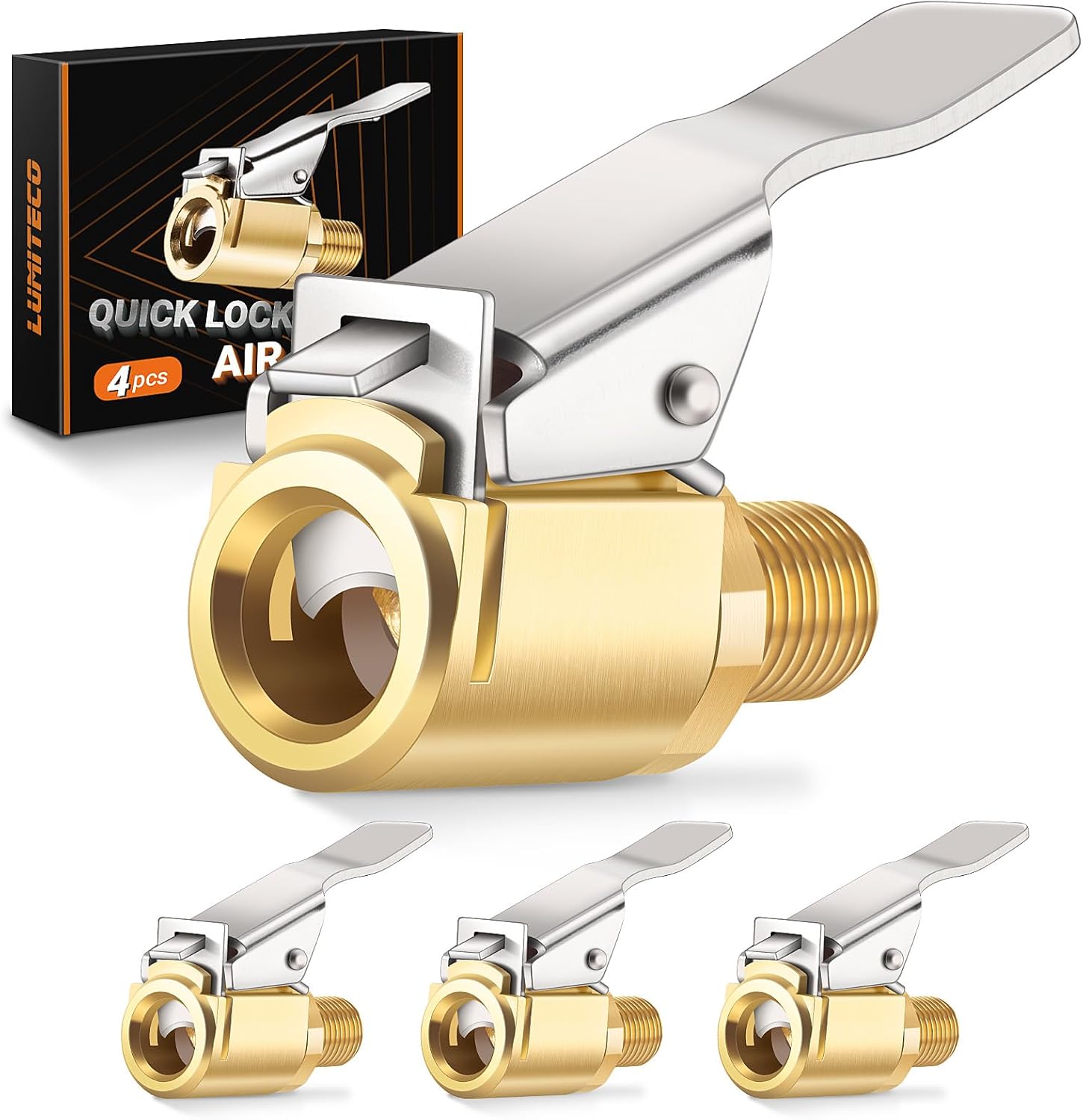
This brass air chuck adapter converts a screw-on inflator connection into a lock-on quick connect for hands-free, no-leak tire inflation. Clip the chuck onto Schrader valve stems and lock it in place to simplify inflating car, bike, and motorcycle tires. Built for durability with a corrosion-resistant brass body and strong quick operation.

This dual head and ball air chuck set provides closed-flow tire inflation that routes air only through the chuck engaged with the valve. It includes both dual-head and ball-head chucks plus quick plug fittings for easy, fast connections to air lines and compressors. Built for reliable, leak-resistant operation, it’s ideal for filling Schrader valves on bikes, motorcycles, cars, trucks, and more.
Costco Tire Air Rules, Hours, and Limits
The clearest nationwide rule Costco publishes is the schedule: the self-inflation station is open during the same hours as the gas station. Costco does not publish one national opening and closing time because warehouse hours vary.
- The self-inflation station is not described by Costco as a 24-hour service.
- Gas-station and Tire Center hours may be different, so do not use Tire Center closing time as your only guide.
- Costco’s public tire FAQ does not state a nationwide membership requirement for using the self-inflation station.
- Costco does state that Tire Center installation and maintenance services are for members and that it installs Costco-purchased tires.
- Local signs and staff instructions still apply to parking, access, and safe use of the station.
The original article called the kiosk “free tire air.” Costco’s current FAQ confirms the self-inflation station but does not explicitly state a nationwide price or nonmember-access policy for the kiosk. If your local station has posted eligibility or access instructions, follow those posted rules.
When Costco Tire Air Is Unavailable
If the Costco station is closed, blocked, or out of service, use another safe inflation option rather than driving a long distance on a low tire. A nearby service station, tire shop, or portable inflator can handle a routine top-off.
Before driving, look for obvious damage and compare the tire with the others. If it is only slightly low and holds pressure after inflation, recheck it soon. If it drops again, treat that as a leak that needs inspection.
If the tire is very low, repeatedly triggers the pressure warning, or will not hold air, skip repeated refills. A repair shop can check for punctures, valve leaks, bead leaks, or wheel damage that a pressure top-off cannot fix.
Costco Tire Services Beyond Air
Costco’s Tire Center provides more than inflation. Its official FAQ lists rotation, balancing, nitrogen inflation, nitrogen conversion, and flat repair, while the tire installation package also includes a road-hazard warranty for eligible Costco-purchased tires.
- Rotation to help distribute tread wear.
- Balancing to address wheel-and-tire imbalance.
- Inflation-pressure checks for Costco-purchased tires.
- Nitrogen tire inflation and nitrogen conversion.
- Flat repair when the damage meets Costco’s repair requirements.
- Installation of Costco-purchased tires that meet authorized fitment rules.
Costco also publishes special installation rules for some vehicles and tires. For example, its FAQ has separate conditions for trailer tires and says it will not install golf-cart or ATV tires.
[Products Worth Considering]

This manual duck head tire changer kit makes tire installation and removal simpler by letting you embed the duck head into the tire with applied pressure. The integrated design and durable steel construction help reduce friction and improve efficiency and safety during use. Suitable for 16–21 inch wheels, it’s convenient for cars, trucks, SUVs, and ATV tires, with 24-hour after-sales support.
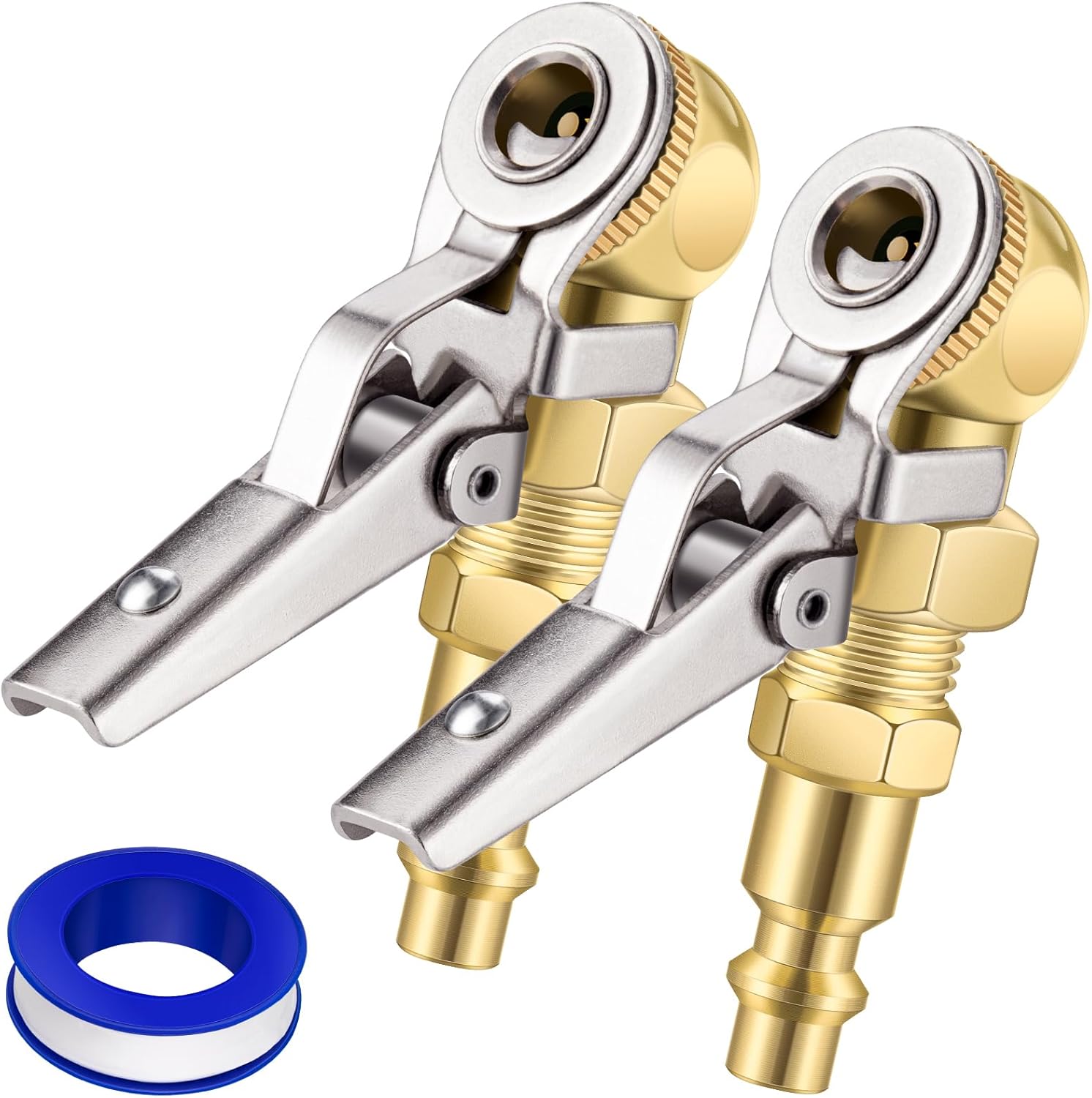
EVOULTES 2-pack closed ball tire chucks lock onto Schrader valves to help you inflate tires hands-free. The set includes both chucks with quick plug compatibility and a 2-way connection approach for easy setup to your air line or compressor. Durable metal construction supports reliable use for cars, trucks, RVs, bikes, and other Schrader-valve tires up to 250 PSI.

Vigorder rubber cement glue delivers superior adhesion and cures quickly within about 30 seconds for seamless rubber bonding. Once cured, it helps provide a strong, durable, waterproof seal that holds up to vehicle weight, pressure, and heat. Suitable for cars, motorcycles, trucks, bicycles, and off-road tires, it’s designed for emergency patch and maintenance repairs.
Safe Tips for Using Costco Tire Air
Safe inflation starts with the correct pressure, not with adding as much air as the tire can hold. Check the driver-side placard first, measure when the tires are cold, and use a reliable gauge if the kiosk reading is unclear.
Temperature changes also affect pressure. Continental’s tire-pressure guidance notes that tire pressure rises as temperature rises and can fall in winter, which is why seasonal pressure checks matter.
- Check every tire, because one low tire can point to a leak rather than a weather-related change.
- Do not bleed pressure from a warm tire just to match the cold placard number.
- Inspect the tread and sidewall for cuts, punctures, bulges, or other visible damage.
- Replace the valve cap after filling to help keep dirt and moisture away from the valve core.
- If the pressure warning returns soon after inflation, have the tire inspected.
Pro Tip: Save the front and rear cold-pressure values from your door placard in your phone. You can then set the correct target at an inflation station without guessing or relying on the tire sidewall.
Is Costco Tire Air Worth the Trip?
Costco tire air is worth using if a warehouse is already on your route and the self-inflation station is open. It gives you a convenient place to correct routine pressure without waiting for a full Tire Center appointment.
It is less practical if the warehouse is far away, the tire is losing air quickly, or you already have a portable inflator. In those cases, the safest and fastest option is the one that lets you restore pressure or get a repair before unnecessary driving.
The bigger value for Costco tire buyers is the maintenance package. Inflation checks, nitrogen inflation, rotation, balancing, and eligible flat repair are bundled with Costco-purchased tire installation, subject to Costco’s terms and limitations.
Frequently Asked Questions
Does Costco Offer Nitrogen Instead of Regular Air?
Yes. Costco lists nitrogen inflation and nitrogen conversion among its Tire Center services, and nitrogen inflation is included with Costco-purchased tire installation. Costco’s public FAQ does not specify whether every self-inflation station dispenses nitrogen, so use the labeling on your local machine.
Can Non-Members Use Costco Tire Air Stations?
Costco’s public Tire Center FAQ does not state a nationwide membership rule for the self-inflation station. It does describe Tire Center installation and maintenance services as member services. If the self-service station at your warehouse has posted membership or access rules, follow those local instructions.
Do Costco Air Stations Work in Freezing Weather?
They may be available in freezing weather as long as the station is operating during the local gas-station hours. Cold temperatures can lower tire pressure, so check the tires cold and inflate to the vehicle placard value. Do not warm the tires first for a more accurate reading.
Are Costco Tire Air Stations Open 24 Hours?
No nationwide 24-hour access is promised. Costco says the self-inflation station is open during the same hours as the gas station, and those hours vary by warehouse. Local holiday schedules can also change normal service hours.
Can Costco Fill Tires on Trailers or Motorcycles?
Costco publishes specific staffed-installation rules for trailer tires, including requirements for matching loose trailer tires and wheel-torque documentation when installing on a trailer. Its public FAQ does not state a motorcycle tire-service policy or vehicle-type limits for the self-inflation station, so do not assume staffed motorcycle service is available.
Is Costco Tire Air Free?
Costco’s public FAQ confirms a self-inflation station but does not explicitly publish a nationwide kiosk fee. For tires purchased and installed through Costco, inflation-pressure checks and nitrogen inflation are included in the installation package. Follow any posted instructions at the self-service station for local access details.
Conclusion
Costco does provide a self-inflation option for tires, and the station follows local gas-station hours. Use your vehicle’s cold-pressure specification, treat repeated pressure loss as a repair issue, and use the Tire Center when you need more than a routine top-off.
Sources
- Costco Tire Center FAQs: Self-inflation station availability, gas-station-hour rule, Tire Center services, fitment rules, and trailer-tire policies.
- Costco Advantage: Included inflation checks, rotations, balancing, flat repairs, and nitrogen inflation for Costco-purchased tires.
- Costco Find a Warehouse: Local warehouse, gas-station, and Tire Center hours.
- NHTSA TireWise: Cold-tire pressure, door-placard guidance, tire-pressure checks, and tire safety.
- Continental Tire Pressure Guide: Temperature effects on tire pressure and cold-pressure checking.

![[2026NEW] 5000A Jump Starter with Air Compressor (150PSI)](https://m.media-amazon.com/images/I/71oG4PFNsmL._AC_SL1500_.jpg)