
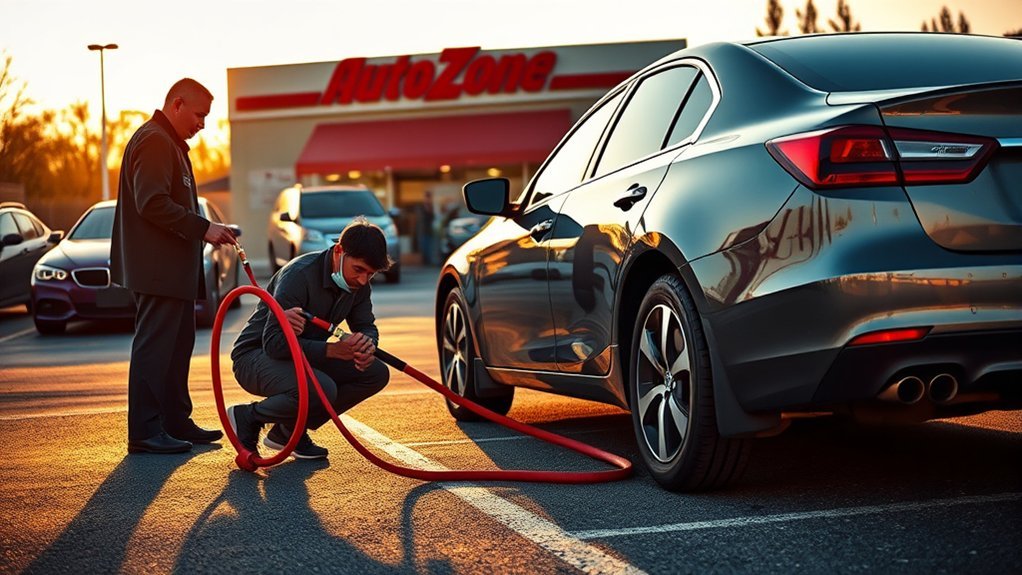
If you are wondering does AutoZone fill tires for free, don’t assume every store will provide that service. AutoZone’s published nationwide services focus on parts, diagnostics, battery help, tools, and DIY guidance rather than guaranteed tire inflation. A specific location may still be able to help, so local availability is worth confirming before you drive there.
Quick Answer
AutoZone does not advertise free tire inflation as a standard nationwide store service. Some individual stores may be able to help, but availability is not guaranteed. AutoZone does sell tire gauges and portable inflators. For a published free-air service, Discount Tire and Firestone are clearer options.
Key Takeaways
- AutoZone does not list free tire inflation among its standard nationwide store services.
- Service can vary by location, so a local AutoZone may be able to offer additional help.
- AutoZone sells tire pressure gauges, portable inflators, TPMS parts, and other tire-maintenance supplies.
- Use the vehicle manufacturer’s recommended cold tire pressure, not the maximum pressure printed on the tire sidewall.
- Discount Tire and Firestone publish free tire-pressure services, while some gas-station rules depend on state law.
Does AutoZone Fill Tires for Free?
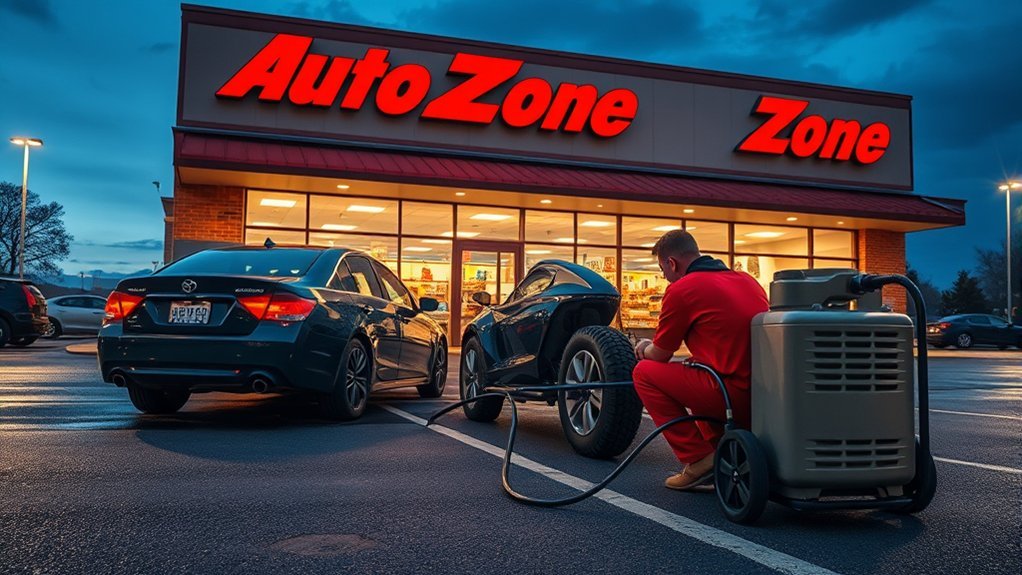
AutoZone does not currently advertise free tire filling as a standard nationwide service. Its published AutoZone Store Services page lists services such as Fix Finder diagnostics, battery help, electrical-component testing, Loan-A-Tool, repair guidance, and recycling, but tire inflation is not included.
That distinction matters because AutoZone is primarily an auto-parts retailer, not a tire-service chain. You should therefore avoid planning a trip on the assumption that an employee will inflate your tires or that every location has a public compressor.
AutoZone also says that in-store services can vary by location, vehicle, and available personnel. Because of that variation, an individual store may sometimes be able to provide additional assistance that is not advertised as a nationwide service.
If your tire only needs a routine pressure adjustment, calling the specific store first is the fastest way to avoid an unnecessary stop. If you need a guaranteed staffed tire-pressure service, a tire shop that publicly advertises free inflation is a better choice.
What Tire Inflation Help AutoZone Offers
Even without a guaranteed free-air service, AutoZone can help you handle tire pressure yourself. The company sells tire-pressure gauges, portable compressors, valve-related supplies, TPMS parts, and other tire-maintenance products.
AutoZone also publishes a portable tire inflator guide explaining how to inspect a tire, connect an inflator, set the recommended pressure, and add air. A portable inflator can be useful at home or on the road when the tire is otherwise safe to inflate.
The most important number is your vehicle manufacturer’s recommended pressure. Do not automatically inflate a tire to the maximum PSI molded into its sidewall. That sidewall figure is not normally the pressure your vehicle manufacturer wants you to use for everyday driving.
A gauge is also useful even when an air machine has its own display. It lets you confirm the pressure before and after inflation instead of relying entirely on unfamiliar equipment.
How to Find AutoZone Stores With Air
Because tire inflation is not listed as a standard AutoZone service, the best approach is to identify your nearest store and ask that location directly. This avoids treating a courtesy offered by one store as a company-wide policy.
Use the official AutoZone Store Locator to find nearby locations and their contact details. Then ask whether the store has an air compressor customers can use or whether an employee can assist with a low tire.
Also confirm when that help is available. Store hours and staffing differ, and even a location that has suitable equipment may not provide tire inflation at all times.
If the answer is no, ask where the nearest tire shop or air station is rather than driving around on an underinflated tire.
What to Do If AutoZone Can’t Help
If AutoZone cannot provide air, go to a tire shop, automotive service center, or gas station with a working compressor. The best option depends on whether you simply need a small pressure adjustment or suspect an actual leak or damaged tire.
| Option | Best For | What to Check |
|---|---|---|
| Gas station | Quick self-service top-off | Pump fee, gauge accuracy, hose reach |
| Tire shop | Staffed inflation and tire inspection | Whether pressure checks are free |
| Service center | Low pressure plus possible tire problem | Inspection and repair availability |
If you only need air, Discount Tire says every location offers free tire-pressure checks and adjustments during store hours. Its staff checks the pressure and sets the tires to the vehicle-recommended PSI.
Firestone Complete Auto Care also advertises free tire inspection and inflation. These published services make both companies more predictable choices when you specifically need someone to add air.
Warning: Do not keep driving on a visibly flat tire or try to inflate a tire with cuts, bulges, severe sidewall damage, wheel damage, or other obvious problems. Use a suitable spare or arrange professional assistance instead.
If a tire repeatedly loses pressure after you refill it, adding more air is not a permanent fix. A puncture, leaking valve, wheel problem, or other air leak may need inspection and repair.
[Products Worth Considering]

Steelman white tire marking crayons provide high-contrast, semi-permanent marks for repairing and inspecting tires and equipment. They write on wet or dry, smooth or coarse surfaces including rubber, metal, glass, and wood, making them ideal for puncture location and damage outlining. The lead- and zinc-free crayons resist weather and fading yet wipe away when you no longer need the marks.

This tire valve adapter kit lets you connect a 3/4-inch garden hose to tire valves to fill tires with air or liquid. It includes two adapters for standard bore and large bore valves plus a convenient bleeder valve to release trapped air. Designed for tractor tire tubes and compatible air/water valves and extensions, it’s a practical repair tool for getting back on the road or field quickly.

The AstroAI L7 Air Tire Inflator refills car tires quickly with up to 150PSI max pressure and a fast 1-minute inflation claim. It includes 5 preset modes for car, motorcycle, bicycle, balls, and manual use, along with an auto shutoff to help prevent overinflation. Designed for convenience, it features a digital gauge with unit switching, a top LED light with multiple modes, and USB-C/USB ports for backup power.
Free Tire Inflation Alternatives Nearby
You have several possible alternatives if AutoZone cannot help, but “free air” is not a universal policy at every gas station or service business. Tire shops with a published nationwide policy are usually easier to rely on than an unfamiliar air machine.
- Discount Tire: publishes free tire-pressure checks and pressure adjustments at every store during normal operating hours.
- Firestone Complete Auto Care: advertises free tire-pressure checks and tire inflation.
- Gas stations: some provide free air, while others charge for compressor use. Availability and local rules vary.
- Local tire shops: many will check tire pressure as a courtesy, but confirm their policy before making a special trip.
California has a specific rule worth knowing. Under California Business and Professions Code Section 13651, service stations must make compressed air, water, and an air-pressure gauge available at no cost during operating hours to customers who purchase motor-vehicle fuel and meet the law’s vehicle requirements.
That California requirement should not be treated as a nationwide rule. In other states, whether a gas station charges for air depends on local law and the station’s policy.
[Products Worth Considering]

AUXITO’s portable tire inflator delivers up to 150PSI with fast 26L/min airflow to inflate car, motorcycle, bike, and ball tires quickly. Set your target pressure, and the auto-shutoff stops inflation when you reach the preset value. A dual-screen display shows real-time and preset pressure with ±1 PSI accuracy, while an LED flashlight and USB port add emergency and everyday utility.
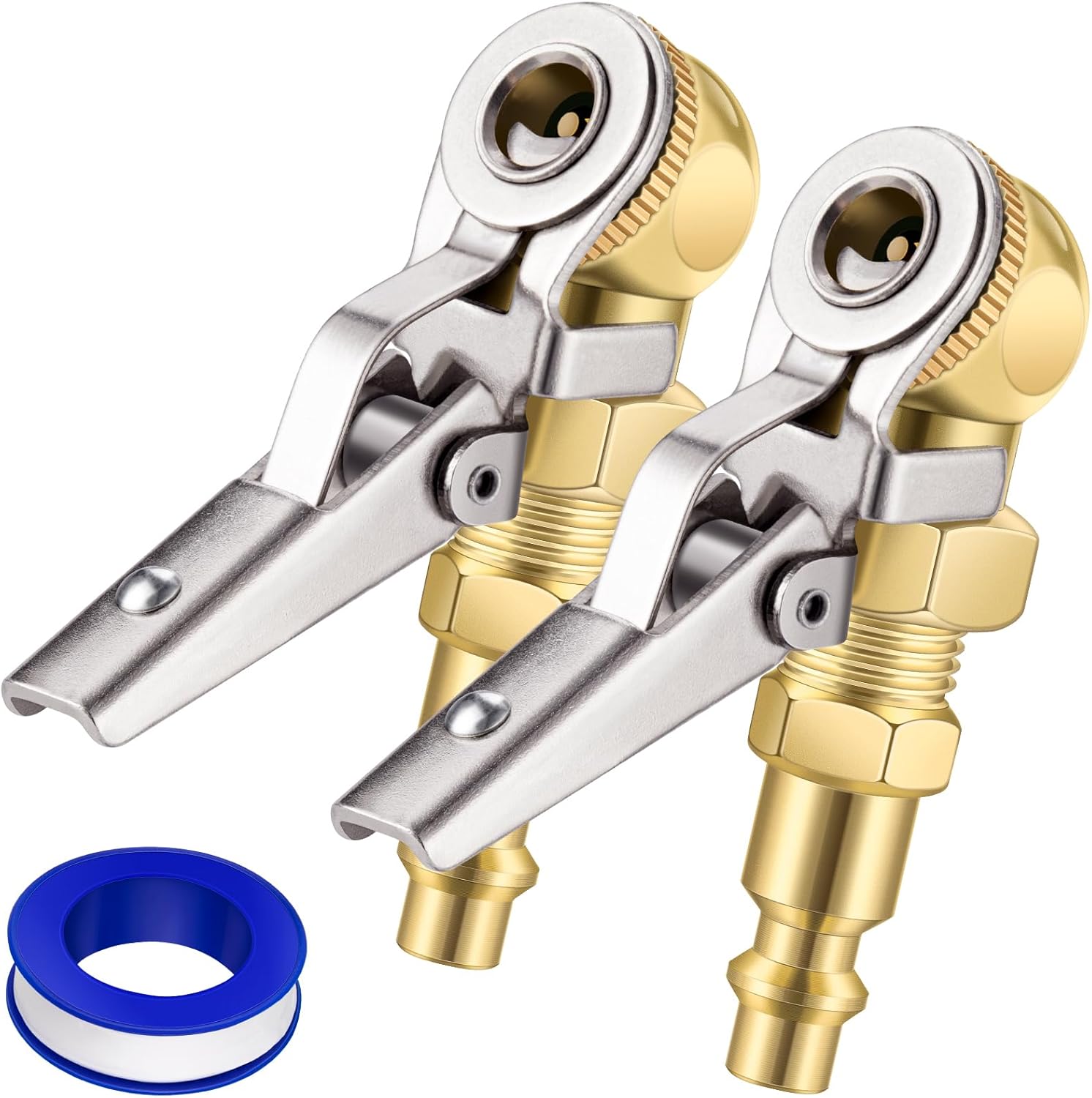
EVOULTES 2-pack closed ball tire chucks lock onto Schrader valves to help you inflate tires hands-free. The set includes both chucks with quick plug compatibility and a 2-way connection approach for easy setup to your air line or compressor. Durable metal construction supports reliable use for cars, trucks, RVs, bikes, and other Schrader-valve tires up to 250 PSI.

Malco tire mounting and demounting lubricant is a ready-to-use tire lube formulated to reduce friction during tire installation for passenger cars, light trucks, farm tires, and heavy-duty equipment. It provides rust-inhibiting protection to help reduce corrosion on rims and wheels, and helps support proper tire bead seating during inflation to reduce air leakage. The silicone-free, soap-free formula is whitewall safe to help prevent discoloration on whitewall tires and sensitive sidewall markings.
How to Add Air to Your Tires Safely
Use the pressure specified by your vehicle manufacturer and check the tire before connecting a compressor. Correct inflation helps with handling, tire durability, tread wear, and fuel use.
The National Highway Traffic Safety Administration recommends checking all tires, including the spare, at least once a month when they are cold. NHTSA defines a cold tire as one that has not been driven for at least three hours.
- Find the correct PSI. Read the Tire and Loading Information label on the driver-side door area or check the owner’s manual.
- Inspect the tire. Look for cuts, bulges, punctures, wheel damage, or other obvious problems before adding air.
- Measure the pressure. Press a reliable tire-pressure gauge firmly onto the valve stem and note the reading.
- Add air gradually. Connect the compressor securely and add enough air to reach the vehicle manufacturer’s recommended cold pressure.
- Recheck the pressure. Use the gauge again after adding air. Release a small amount if you went too high.
- Replace the valve cap. Then repeat the process for the remaining tires and the spare, when applicable.
Do not use the sidewall maximum pressure as your normal target. NHTSA specifically advises using the vehicle manufacturer’s recommended pressure instead.
If you had to add air after driving because the tire was significantly low, treat the result as temporary. Recheck and adjust the pressure when the tire is cold.
[Products Worth Considering]
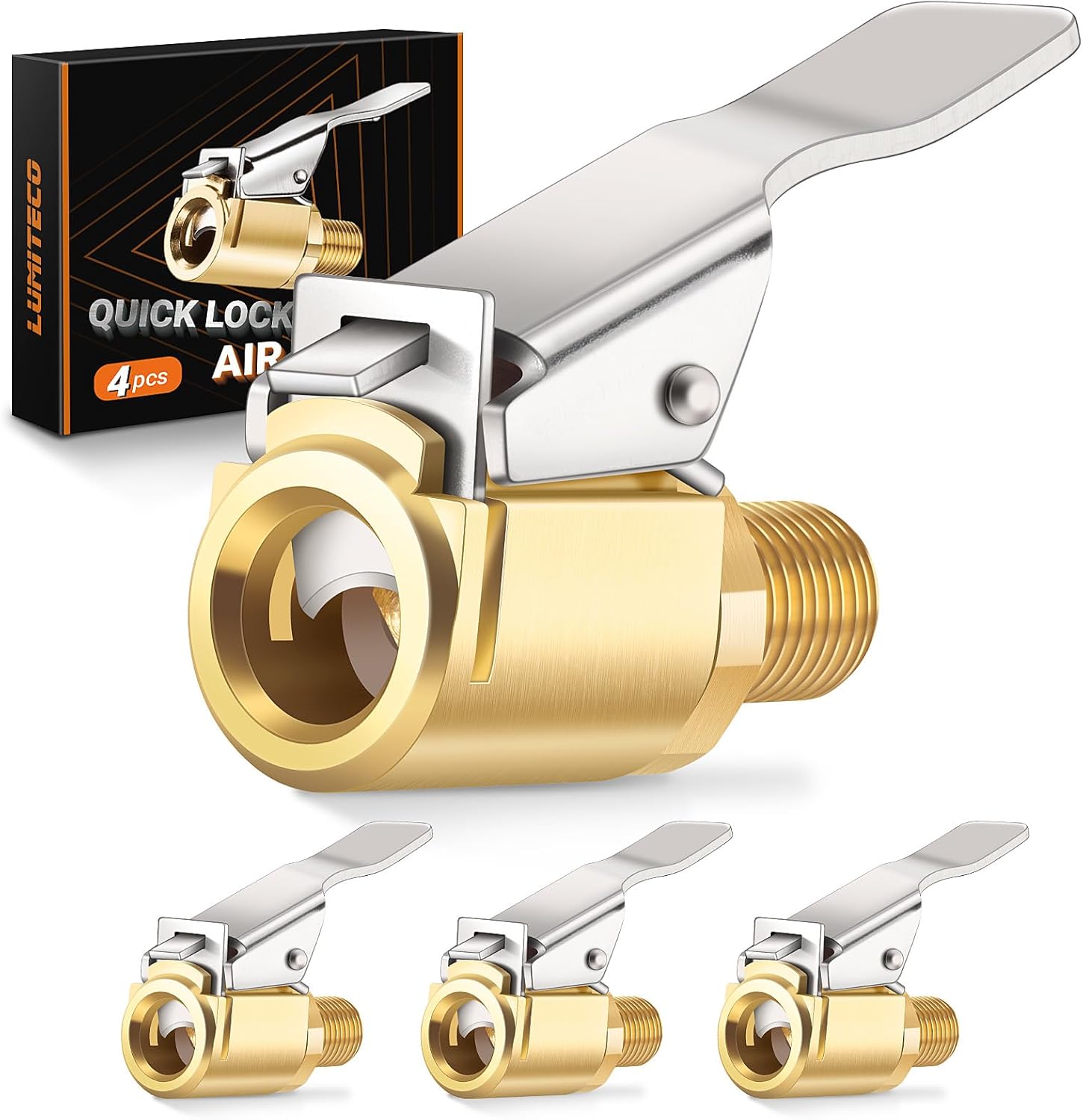
This brass air chuck adapter converts a screw-on inflator connection into a lock-on quick connect for hands-free, no-leak tire inflation. Clip the chuck onto Schrader valve stems and lock it in place to simplify inflating car, bike, and motorcycle tires. Built for durability with a corrosion-resistant brass body and strong quick operation.

AstroAI’s 12V tire inflator delivers fast inflation with a 25L/min flow rate and a digital gauge for real-time pressure monitoring. It features an auto shut-off that stops when the preset pressure is reached, plus a built-in storage compartment for easier portability. An LED light and easy-to-use controls help you inflate safely at night, while multifunction nozzles make it useful for cars, motorcycles, bikes, and inflatables.
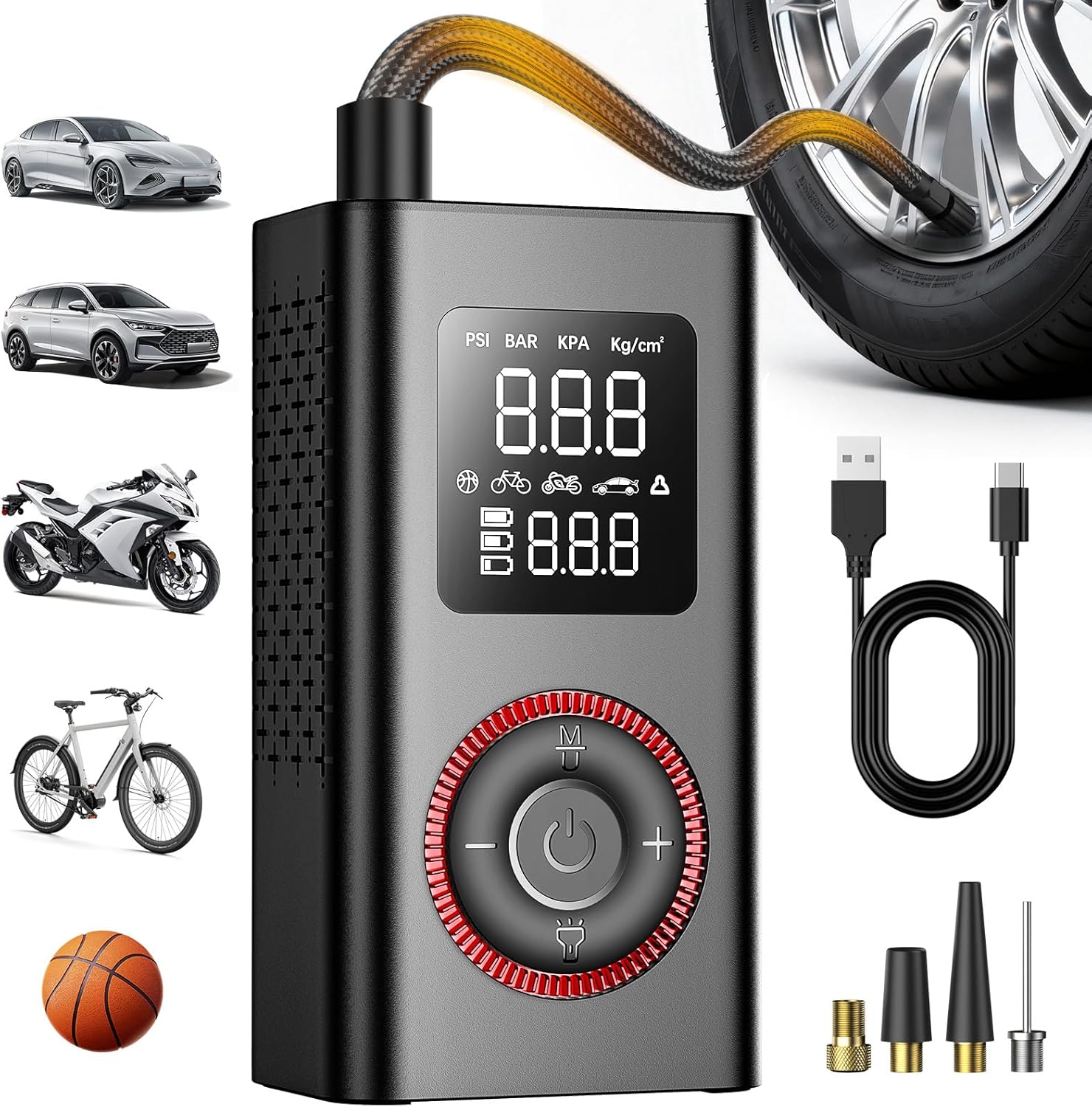
This portable tire inflator delivers fast, efficient inflation with a maximum 150 PSI rating and accurate pressure control for cars, motorcycles, bikes, and more. It features preset modes with automatic shutoff to help prevent overinflation, plus a real-time digital gauge and bright LED light for roadside use. Powered by a rechargeable 6000mAh battery with Type-C charging and a USB output, it’s also useful as an emergency power source for devices.
When a Low Tire Needs More Than Air
A tire that repeatedly loses pressure needs an inspection, not an endless series of top-offs. Slow pressure loss can come from a puncture, valve or valve-stem problem, tire-to-wheel sealing issue, damaged wheel, or tire damage.
Pay particular attention if the tire becomes low again soon after inflation, the TPMS warning returns repeatedly, the vehicle starts pulling or vibrating, or you can see a foreign object or physical damage.
If a tire is completely flat, do not assume a portable compressor will make it roadworthy. The tire may have been damaged while underinflated, the bead may no longer be seated correctly, or the leak may be too large for inflation to help. A tire professional can determine whether repair is appropriate.
For nitrogen-filled tires, you do not need to leave a tire dangerously underinflated while searching for nitrogen. Michelin states that nitrogen and compressed air can be mixed when needed, as long as the tire is kept at the recommended pressure.
Frequently Asked Questions
Can AutoZone Check Tire Pressure Sensors?
AutoZone sells TPMS sensors and related parts, but its nationwide Store Services page does not list TPMS diagnosis as a standard free service. If your TPMS warning remains on after the tires are correctly inflated, a tire shop or repair facility can check the system and determine whether a sensor needs service.
Do AutoZone Air Pumps Work for Bike Tires?
Do not assume an AutoZone store has a public air pump. However, many portable inflators sold for vehicle use can also inflate bicycle tires when the hose or adapter is compatible with the bicycle’s valve. Always follow the inflator’s instructions and the bicycle tire’s pressure requirements.
Are AutoZone Air Services Available 24/7?
No nationwide AutoZone policy promises 24/7 tire-air service. Tire inflation is not listed as a standard nationwide AutoZone service, and store hours vary by location. If a local store says it has an air source available, confirm its hours and access before relying on it.
Does AutoZone Help With Nitrogen-Filled Tires?
Do not rely on AutoZone for a standard nitrogen-inflation service. If a nitrogen-filled tire is low, regular compressed air can be added when necessary. Maintaining the vehicle manufacturer’s correct pressure is more important than leaving the tire underinflated while searching for nitrogen.
Can AutoZone Inflate a Completely Flat Tire?
Do not assume AutoZone can inflate a completely flat tire. A portable inflator may add air only when the tire and wheel are undamaged and the tire can hold pressure. If the tire is damaged, unseated, or immediately loses air, use a spare or arrange professional tire service.
Conclusion
AutoZone is useful for tire gauges, portable inflators, TPMS parts, and DIY guidance, but free tire inflation is not advertised as a standard nationwide AutoZone service. Call the individual store if it is your closest option. For a clearly published free-air service, Discount Tire or Firestone may be the more dependable stop, and any tire that repeatedly loses pressure should be inspected rather than continually refilled.
Sources
- AutoZone Store Services: AutoZone’s published nationwide services and service-availability disclaimer.
- AutoZone Store Locator: finding individual AutoZone locations and local store information.
- AutoZone Portable Tire Inflator Guide: portable inflator use and tire inspection guidance.
- National Highway Traffic Safety Administration TireWise: recommended tire pressure, cold-tire checks, TPMS, and tire safety.
- Discount Tire Tire Pressure Check: complimentary pressure checks and inflation service.
- Firestone Complete Auto Care Tire Inflation Guide: free tire inspections and inflation.
- California Business and Professions Code Section 13651: California requirements for free compressed air and water for qualifying fuel customers.
- Michelin Tire Pressure Guide: recommended pressure and mixing compressed air with nitrogen.

