Can a Toyota Camry Tire Sidewall Be Repaired? What Experts Say
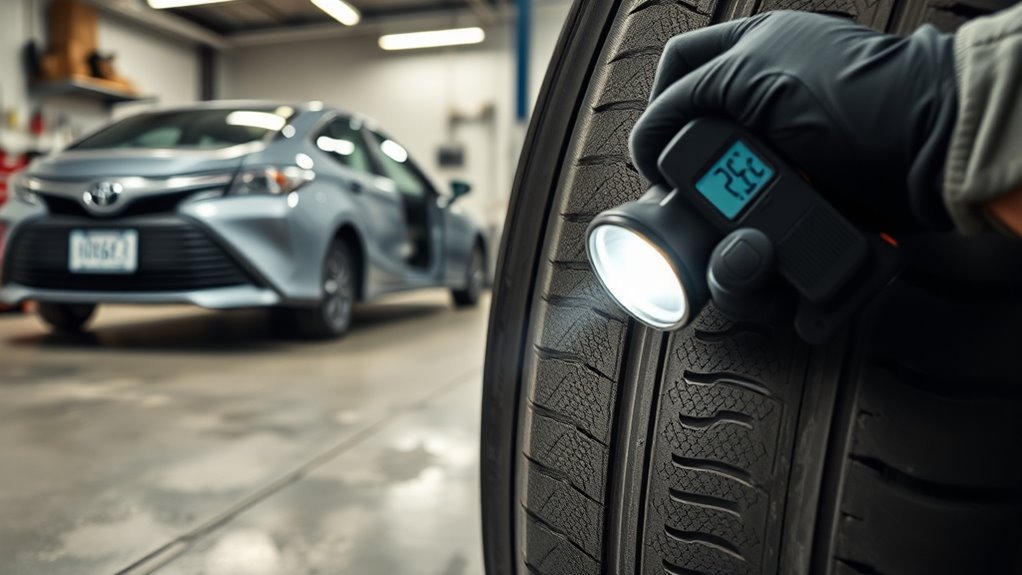
You generally can’t safely repair a Toyota Camry tire sidewall. If you see a puncture, deep cut, bulge, bubble, exposed cord, air leak, or damage near the shoulder or bead, treat the tire as unsafe and plan on replacing the tire. A qualified tire shop or Toyota dealer can inspect it, but industry repair guidance limits proper puncture repairs to the tread area—not the sidewall.
Quick Answer
A Toyota Camry tire sidewall should usually be replaced, not patched. Proper tire repairs are limited to the tread area, and sidewall or shoulder damage can weaken the tire structure. If there is a bulge, exposed cords, air loss, or a deep cut, stop driving and use a spare or tow service.
Key Takeaways
- A puncture or cut in the sidewall or shoulder is not a standard repair candidate.
- A bulge, bubble, exposed cord, bead damage, or active leak means the tire should be replaced immediately.
- A proper repair for an eligible tread puncture requires demounting the tire and inspecting the inside.
- When replacing a Camry tire, match the size, load index, speed rating, and ideally the same tire model on the same axle.
At a Glance
| Time Required | 5–10 minutes for a visual check; 20–60 minutes for professional inspection or replacement service |
| Difficulty | Easy to spot obvious damage; professional help required to confirm hidden internal damage |
| Tools Needed | Flashlight, tire pressure gauge, tread depth gauge or penny, and your Camry’s Tire and Loading Information label |
| Cost | Sidewall damage usually means replacement: expect the tire price plus mounting, balancing, disposal, taxes, and possible TPMS service |
Can a Toyota Camry Tire Sidewall Be Repaired?
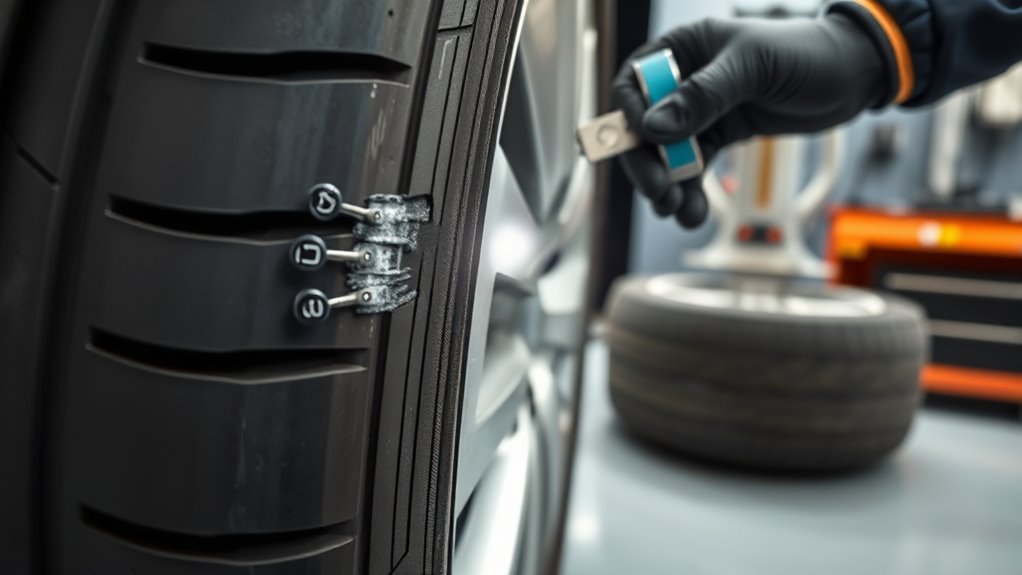
In normal passenger-car service, the safe answer is no. A Toyota Camry tire sidewall is not repaired the way a small nail puncture in the center tread may be repaired. The U.S. Tire Manufacturers Association says tire repairs should be considered only when the injury is in the tread area and no larger than 1/4 inch, or 6 mm. The Tire Industry Association also states that puncture repairs are limited to the center tread area and that shoulder or sidewall damage is not repairable.
The reason is simple: the sidewall flexes constantly as the tire rolls, turns, brakes, and carries vehicle load. A patch that might hold in the tread area cannot reliably restore damaged sidewall cords or rubber. If the tire loses shape, leaks air, or shows internal separation, it can fail suddenly.
Warning: Do not drive at highway speed on a Camry tire with a sidewall bulge, bubble, exposed cords, deep cut, or active air leak. Use the spare tire if your vehicle has one, call roadside assistance, or have the car towed.
[Products Worth Considering]

This tire repair kit provides fast emergency puncture repair without removing the tire from the rim, helping you get back on the road quickly. Its screw plug system is designed for punctures in both tread and sidewall and includes a complete patch plug tool set with essential accessories. A portable storage bag makes it easy to carry for cars, trucks, SUVs, motorcycles, and heavy-duty applications.

This VEVOR tire bead breaker uses a slide-hammer impact and wedge tip to separate tire beads from rims quickly and efficiently without damaging hub surfaces. The long handle and sturdy steel construction help reduce user strain while providing reliable, portable tire changing for cars, trucks, and more. Ideal for home mechanics and repair shops handling multiple vehicle tire sizes.

This compact capsule-style tire repair kit helps you quickly fix punctures and plug flats with minimal effort. The rugged stainless steel shell protects the contents for reliable roadside use, while the simple plug assembly makes repairs fast and tool-free. Suitable for motorcycles, cars, ATVs, UTVs, and even mountain bikes.
Why Sidewall Damage Is Different From a Tread Puncture
A proper repair for an eligible tread puncture is more than an outside patch or a quick plug. The tire should be removed from the wheel, inspected inside and outside, filled through the injury channel, and sealed at the inner liner. That process can work only when the injury is in the repairable tread zone and within the tire maker’s limits.
A sidewall injury is different because it affects the tire’s flexible support area. The sidewall contains structural cords that help the tire carry weight and hold its shape. Once those cords are cut, stretched, separated, or exposed, a patch does not restore the tire to its original strength.
NHTSA reports that tire maintenance matters for safety, noting that 511 people died in tire-related crashes in 2024. Sidewall damage is one of the tire conditions drivers should not ignore.
When a Camry Tire Sidewall Needs Replacement
Replace the tire if you see any sign that the sidewall structure is compromised. Do not wait for the damage to get worse, and do not keep driving to “test” it.
- Bulge, bubble, or blister: This often points to internal separation or impact damage.
- Exposed cords or fabric: The tire’s structure is open to moisture, heat, and further tearing.
- Deep cut or puncture: A true sidewall cut is outside the standard repair zone.
- Air leak from the sidewall: A leaking sidewall is not a normal patch repair.
- Damage near the shoulder or bead: These areas are highly stressed and are not safe repair zones.
- Damage after driving underinflated: Low pressure can over-flex the sidewall and create hidden internal damage.
If the tire is only lightly scuffed with no cut, no bulge, no cords, no air loss, and no change in handling, it may be cosmetic. Even then, have a tire professional inspect it if you are unsure.
How to Tell If the Sidewall Cut Is Serious
Start with a careful visual check while the car is parked in a safe, level place. Use a flashlight and avoid putting your fingers into a cut, because exposed steel or fabric cords can be sharp.
- Look for cords. If you can see threads, fabric, or wire, replace the tire.
- Check for shape changes. A bump, bubble, flat spot, or wavy sidewall is a serious warning sign.
- Check pressure. Use a tire pressure gauge. If pressure is dropping, do not keep driving on that tire.
- Check the shoulder. Damage where the tread curves into the sidewall is not a safe repair candidate.
- Think about the event. If you hit a curb, pothole, road debris, or drove on a flat tire, hidden internal damage is possible even if the outside looks minor.
The 1/4-inch rule you may hear about applies to certain tread punctures, not sidewall cuts. A small sidewall puncture can still be unsafe because the sidewall flexes with every wheel rotation.
Note: Your Camry’s TPMS light warns when a tire is significantly underinflated, but it does not prove the tire is safe. Check pressure with a gauge and inspect the tire for damage.
What to Do Right Now If You See Sidewall Damage
If you notice sidewall damage before driving, leave the car parked until the tire is inspected or replaced. If you notice it while driving, slow down gently and move to a safe location.
- Do not slam on the brakes. If the tire is failing, sudden braking or steering can make the car harder to control.
- Pull over safely. Choose a flat area away from traffic if possible.
- Use the spare if available. Follow the owner’s manual and the speed/distance limits printed on compact spare tires.
- Call roadside assistance if needed. Towing is safer than driving on a tire with a bulge, exposed cords, or rapid air loss.
- Have the tire demounted for inspection. Some impact damage is visible only from inside the tire.
When a Temporary Sidewall Fix Makes Sense
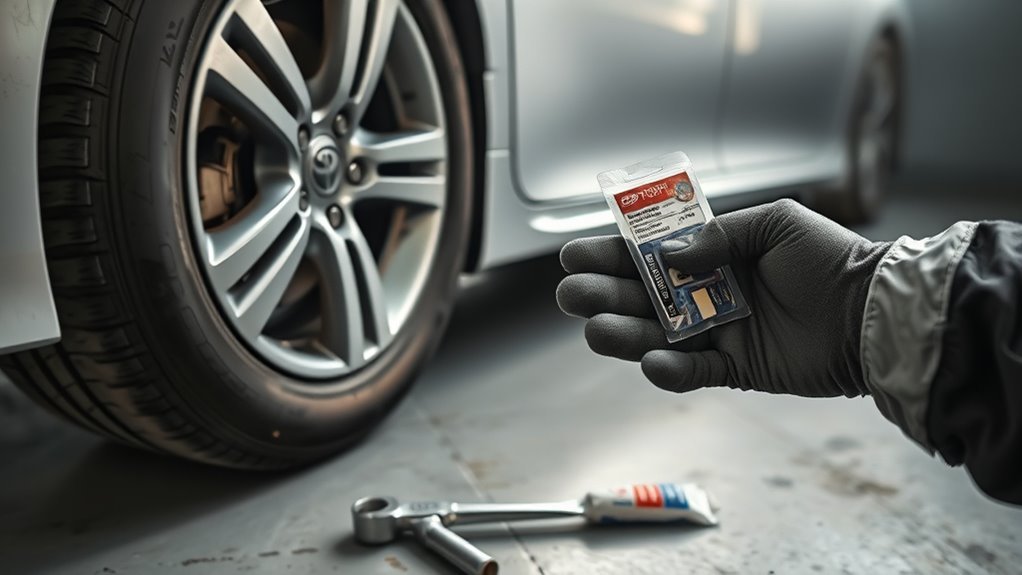
A temporary sidewall fix is not a real repair. At most, a temporary patch or sealant may help in a limited emergency where you are stranded, have no usable spare, cannot get towing, and need to move the vehicle only a very short distance to safety. It should not be used for highway driving, commuting, road trips, or normal service.
Before relying on any emergency product, read the product instructions and your vehicle information. Some sealants can affect TPMS sensors, and some tire manufacturers treat sealant use as a reason the tire must be replaced soon afterward.
- Use a spare tire or tow service first if available.
- Do not use temporary products on a bulge, exposed cords, bead damage, or a large cut.
- Keep speed low and distance short if you must move the vehicle.
- Drive only to the nearest safe service location.
- Tell the tire shop exactly what product was used.
[Products Worth Considering]
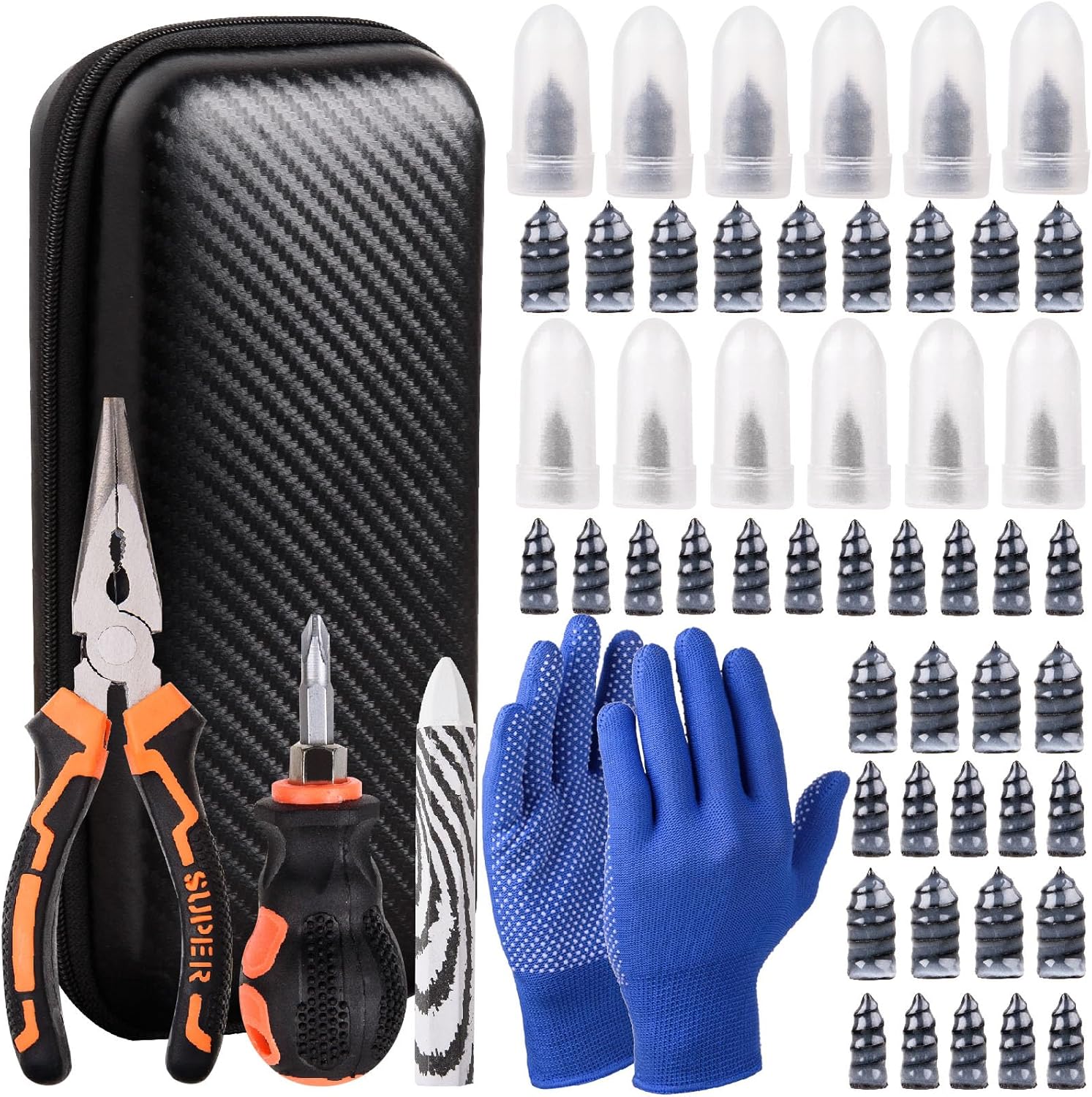
This tire sidewall puncture repair kit fixes flats fast without removing the tire, helping you get back on the road in minutes. It includes self-tapping repair nails, essential tools, gloves, and a portable storage bag for convenient roadside use. Designed for tubeless tires, it helps create a tight, leak-resistant seal for cars, motorcycles, trucks, SUVs, and ATVs.

This roadside assistance kit helps drivers and passengers in urgent situations after an accident or breakdown, providing practical support while waiting for help. It includes a lightweight, compact tire inflator for fast inflation of standard vehicle tires, plus reinforced jumper cable protection for safer handling. Ideal for winter weather, road trips, camping, and travel, with everything stowed neatly in a trunk bag.
Where to Replace Your Camry Tire
Replace the tire at a reputable local tire shop, Toyota dealership, or qualified service center. The shop should match the specifications shown on your Camry’s Tire and Loading Information label and owner’s manual. The NHTSA TireWise guide advises using the owner’s manual or the Tire and Loading Information Label on the driver’s side door edge or post to confirm the correct size.
Do not assume your Camry needs a Michelin tire unless that is what is currently installed and appropriate for your vehicle. Camrys can use different tire brands and sizes depending on model year, trim, wheel size, and prior replacements.
Pro Tip: If you replace only one tire, ask the shop to compare tread depth with the tire on the same axle. For best stability, many tire makers recommend matching tires by size, load index, speed rating, construction, and tread pattern.
What to Ask the Tire Shop
A good shop should explain the damage and the replacement options clearly. Ask these questions before approving the work:
- Is the damage in the tread, shoulder, sidewall, or bead area?
- Was the tire removed from the wheel for internal inspection?
- Is the wheel bent, cracked, or leaking at the bead?
- Does the replacement match the required size, load index, and speed rating?
- Should one tire, two tires, or all four tires be replaced based on tread depth and wear?
- Will the new tire be balanced and installed with proper lug nut torque?
- Does my tire warranty or road-hazard plan cover any part of the replacement?
Can You Replace Just One Camry Tire?
Sometimes, yes, but it depends on tread depth, tire age, tire model, and axle matching. If the other three tires are nearly new and the same tire model is still available, replacing one may be acceptable. If the remaining tires are worn, mismatched, old, or uneven, replacing two tires on the same axle may be safer.
The USTMA replacement guidance says replacement tires should match the size, load index, and speed rating recommended by the vehicle or tire manufacturer. If replacing two tires, the newer pair is commonly installed on the rear axle to improve wet-road stability.
Frequently Asked Questions
How much does it cost to fix a tire sidewall?
A damaged sidewall is usually replaced, not fixed. Your total cost depends on the tire size, brand, speed rating, mounting, balancing, valve or TPMS service, disposal fees, taxes, and any road-hazard coverage. Ask for an itemized quote before approving the work.
Are damaged tire sidewalls repairable?
No, not as a standard passenger tire repair. Industry repair guidance limits proper puncture repairs to the tread area. Sidewall or shoulder damage affects a high-flex structural area, so replacement is the safe answer in most cases.
What does “unrepairable sidewall” mean?
It means the damage is in a part of the tire where a normal repair cannot safely restore the tire’s strength or air-holding ability. A shop may use that phrase for sidewall cuts, punctures, bubbles, exposed cords, shoulder damage, or internal separation.
Can a tire shop fix the sidewall of a tire?
A responsible tire shop usually will not patch a damaged sidewall for normal road use. The shop can inspect the tire, confirm whether the damage is truly in the sidewall or shoulder, and recommend a matching replacement.
Can I drive on a Toyota Camry tire with a sidewall bubble?
You should avoid driving on it. A sidewall bubble can mean the tire’s internal structure has separated after impact or underinflation. Use a spare, call roadside assistance, or tow the vehicle to a tire shop.
Is a small sidewall scrape always dangerous?
A shallow surface scuff may be cosmetic if there is no cut, no cord showing, no bulge, no leak, and no handling change. If the rubber is sliced, the tire loses pressure, or the sidewall shape changes, treat it as unsafe until inspected.
Conclusion
A Toyota Camry tire sidewall should normally be replaced, not repaired. Tread punctures may be repairable when they meet strict limits, but sidewall and shoulder damage are different because they affect the tire’s flexible structure. If you see a cut, puncture, bulge, bubble, exposed cords, or air leak, stop driving on that tire and arrange a professional inspection or replacement. Match the replacement tire to your Camry’s required size, load index, and speed rating so the car stays stable, predictable, and roadworthy.
Sources
- U.S. Tire Manufacturers Association — Tire Repair Basics — backs up tread-only repair limits, 1/4-inch/6 mm puncture guidance, and inside/outside inspection requirements.
- Tire Industry Association — Tire Repair — backs up that shoulder or sidewall damage is not repairable and that plug-only or patch-only repairs are not proper repairs.
- NHTSA TireWise — backs up tire pressure, TPMS, tire damage, tire size label, and tire-related crash safety information.
- U.S. Tire Manufacturers Association — Replacing Tires — backs up matching tire size, load index, speed rating, and guidance when replacing fewer than four tires.
- Bridgestone Americas — Tire Repair — backs up tread-area repair limits and the warning that sidewall or shoulder damage cannot be repaired.
- Michelin USA — Warranty Information — backs up that warranty and service coverage depends on the specific tire and plan and may not cover repair or replacement.

Related Articles

Toyota Camry All-Season Tires Explained: What They Can and Can’t Do
In exploring Toyota Camry all-season tires, discover their benefits and limitations—are they really the right choice for your driving needs?
Read More
Toyota Camry Tire Traction in Ice and Snow: A Practical Winter Driving Guide
Learn essential tips for maximizing tire traction on ice and snow in your Toyota Camry, ensuring your winter driving is safe and confident. Discover more now!
Read More
Do Toyota Camry Tires Need Snow Chains? When They Help and When They Don’t
How do snow chains enhance your Toyota Camry's winter driving safety, and when should you avoid using them? Discover the essential details inside!
Read More