
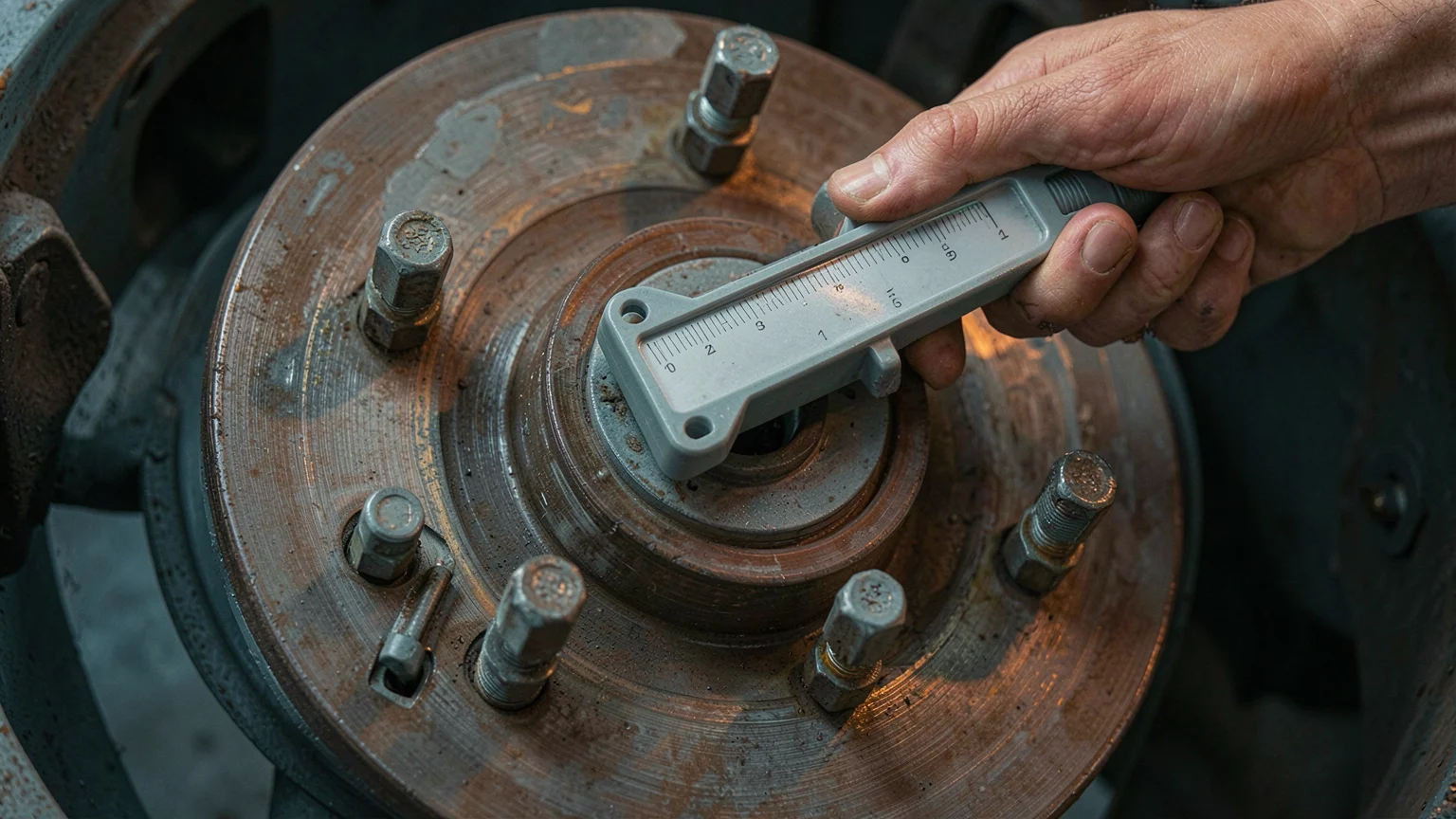
A bolt pattern gauge is a small sliding or template-style tool that measures a wheel’s lug pattern in seconds. You place it over the studs or lug holes, line up the marks for your lug count, and read the pattern in inches and millimeters. Most gauges cover 4-, 5-, 6- and 8-lug patterns and cost about $15 to $30.
Measuring with a tape works for some patterns, but close sizes like 5×4.75 and 5×120 differ by less than a millimeter. That is where a gauge, or calipers, pays for itself.
This guide explains the types of bolt pattern tools, how to use a gauge step by step, how to read 5-lug patterns, the most common mistakes and a quick reference chart.
Key Takeaways
- A bolt pattern gauge measures lug patterns on wheels, hubs and axles.
- Most cover 4-, 5-, 6- and 8-lug patterns in inches and metric.
- Even-lug patterns are measured center to center across opposite studs.
- Five-lug patterns need a special scale or method, which gauges build in.
- For near-identical patterns, confirm with calipers or the vehicle’s spec.
In this guide:
- What Is a Bolt Pattern Gauge?
- Types of Bolt Pattern Tools
- How to Use a Bolt Pattern Gauge
- Measuring 5-Lug Patterns
- Common Measuring Mistakes
- Common Bolt Pattern Chart
- FAQ
What Is a Bolt Pattern Gauge?
A bolt pattern gauge is a measuring tool marked with scales for different lug counts. Instead of doing math or guessing where the center of a hole is, you slide the gauge until its pins or marks sit over the studs, then read the pattern from the scale.
Gauges from brands sold at Tire Rack, JEGS and Speedway Motors measure most 4-, 5-, 6- and 8-lug patterns on wheels, hubs and axles, with readings in both inches and millimeters. If you are new to the topic, start with our guide on what a wheel bolt pattern is.
Products Worth Considering

The SEESII cordless impact wrench delivers high tightening and loosening power for fast wheel bolt and industrial bolt work. Its brushless motor and variable-speed 3 forward/2 reverse modes help you control precision installs and stubborn nut removal. A dual-battery system with rapid charging and an included storage case make it ready for home, car, and jobsite use.

The 22800 wheel stud installer makes replacing wheel studs quick and secure, saving time and effort during tire service. It uses a ratchet or impact wrench to pull new studs firmly into place, helping when existing studs are too long. Compatible with most automotive wheels and light-duty truck wheel studs, it’s designed for easy, tool-assisted installation.

These M14x1.5 closed-end chrome lug nuts are a one-piece replacement designed for secure fitment on compatible GM, Ford, and select Chrysler/Dodge models. Featuring a 60-degree conical seat and anti-rust chrome plating, they help resist corrosion and maintain a bright look for everyday driving. Built for long-term durability, they include OEM-style part references and are backed by 12 months of support.
Types of Bolt Pattern Tools
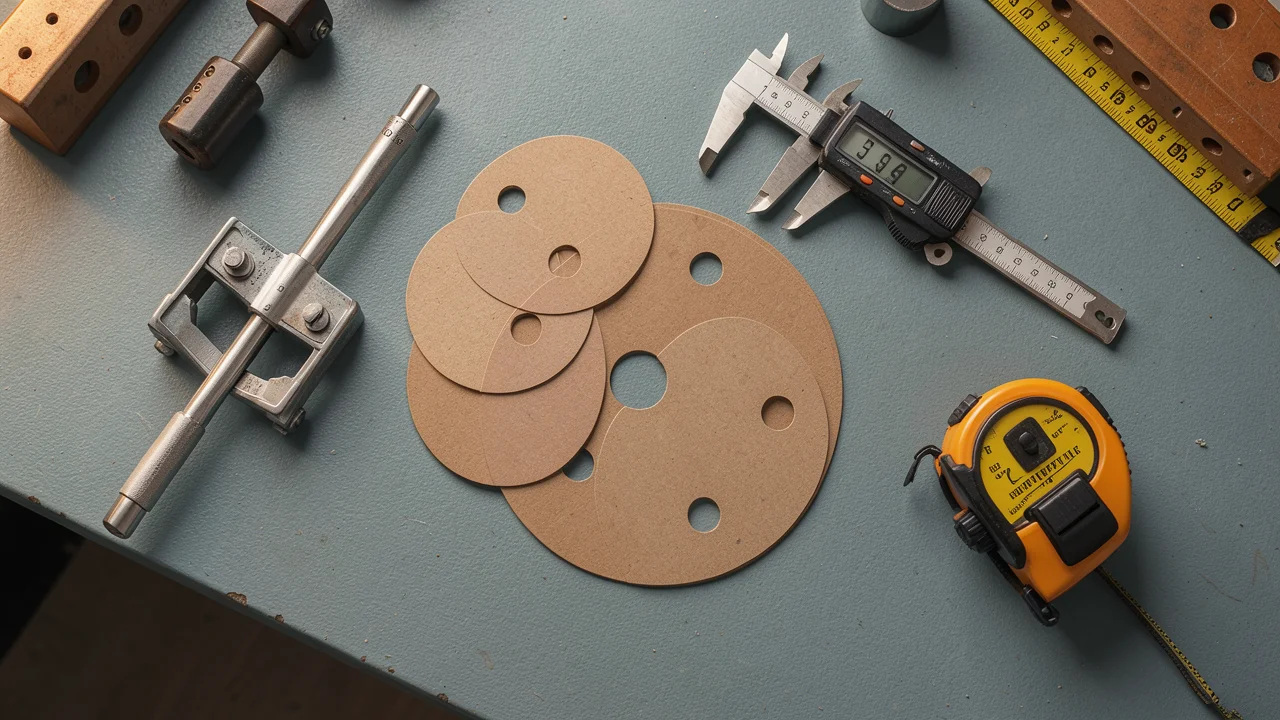
| Tool | Typical Cost | Accuracy | Best For |
|---|---|---|---|
| Sliding bolt pattern gauge | $15-$30 | Good | Fast checks on cars, trucks and trailers |
| Fixed templates (plastic or metal) | $10-$40 per set | Good for listed sizes | Quickly confirming common patterns |
| Printable paper template | Free | Fair | One-time checks |
| Digital calipers | $20-$60 | Excellent | Telling close patterns apart |
| Tape measure or ruler | Already owned | Fair | Rough checks on 4-, 6- and 8-lug |
How to Use a Bolt Pattern Gauge
The process takes under a minute. Here is how to measure on a vehicle or a loose wheel:
- Remove the wheel so the studs are exposed, or lay a loose wheel face down.
- Count the lugs. Choose the matching scale on the gauge (4, 5, 6 or 8).
- Place the gauge so its reference pin or mark sits on one stud or hole.
- Slide it until the other mark lines up with the correct opposite stud for that lug count.
- Read the pattern from the scale in inches or millimeters.
- Double-check by measuring a second pair of studs.
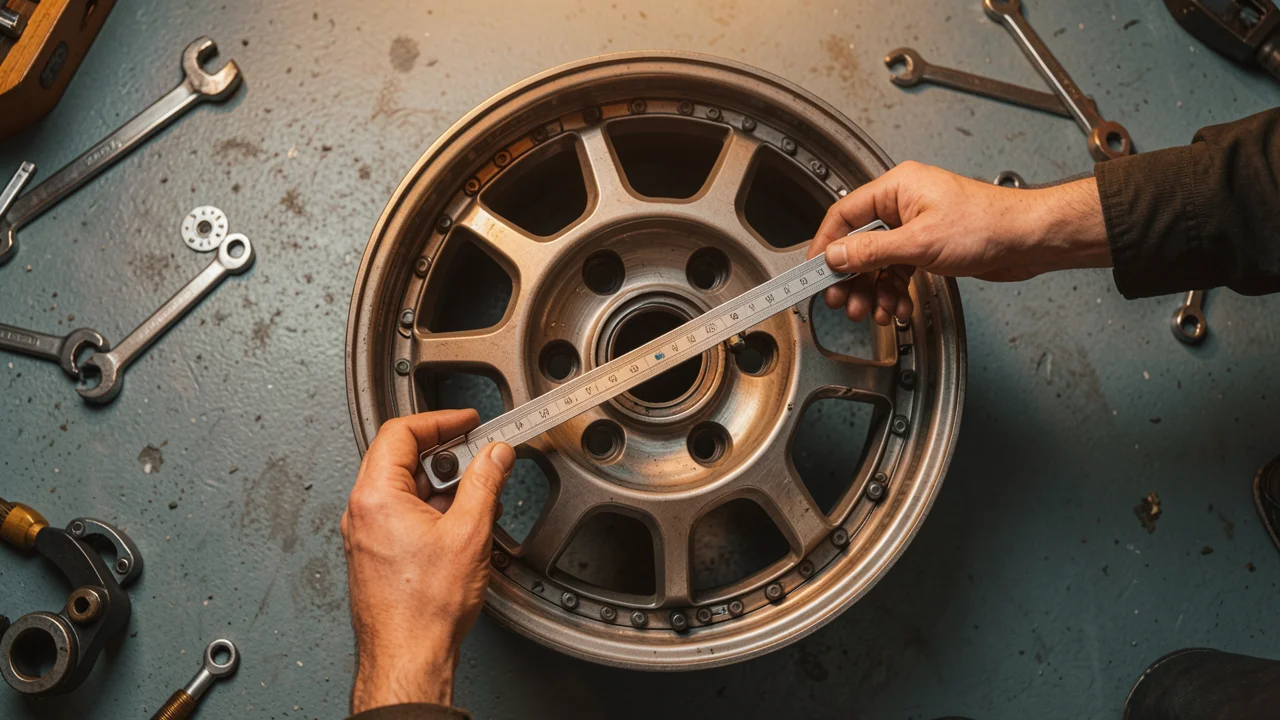
For even-lug patterns (4, 6 and 8), the measurement is simply center to center across two opposite studs. For a full walkthrough without a gauge, see our guide on how to measure a tire lug pattern.
Measuring 5-Lug Patterns
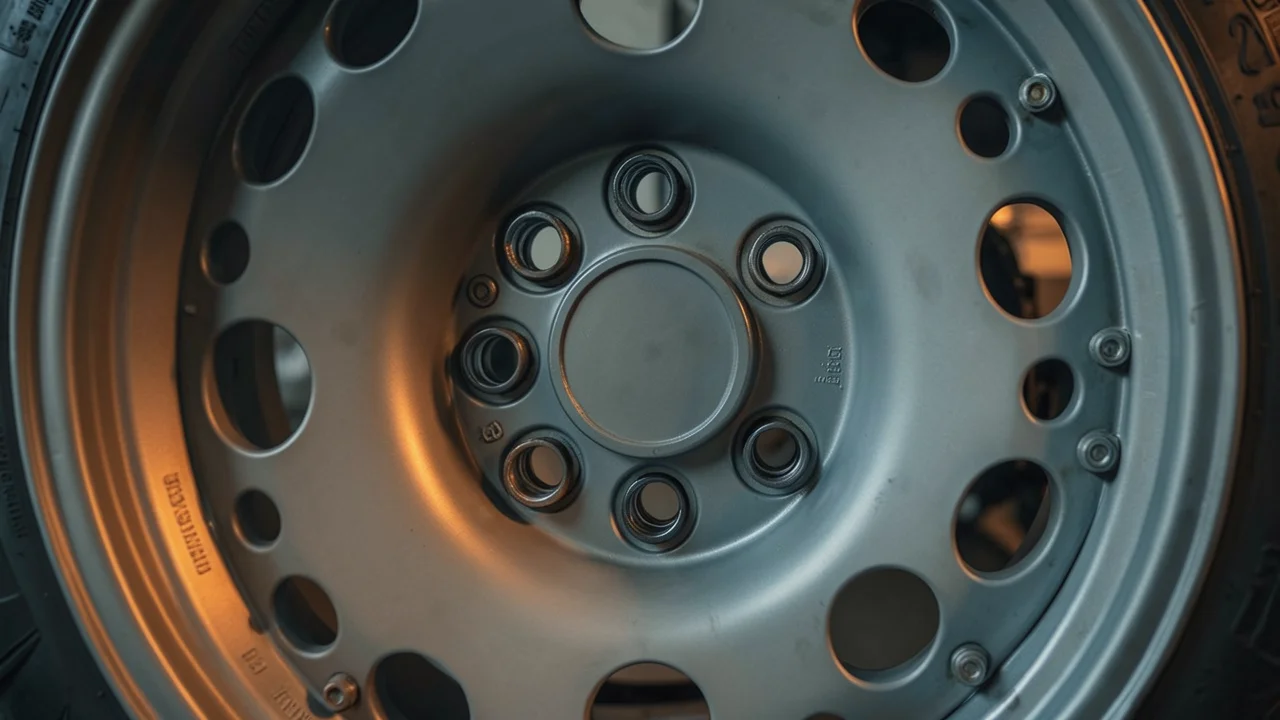
Five-lug patterns are tricky because no two studs sit directly opposite each other. Without a gauge, the common method is to measure from the back edge of one stud to the center of the stud farthest away (skipping one).
A bolt pattern gauge solves this with a dedicated 5-lug scale that accounts for the geometry. Just set it over two non-adjacent studs as the instructions show and read the result.
Pro Tip: 5×4.75 (5×120.65) and 5×120 are only 0.65 mm apart. Many gauges cannot show that difference clearly. Confirm with digital calipers or your vehicle’s factory spec. Our guides to the 5×4.75 bolt pattern and 5×120 bolt pattern explain the difference.
Common Bolt Pattern Measuring Mistakes
- Using the wrong scale. Reading a 5-lug wheel on the 4- or 6-lug scale gives a false number.
- Measuring to hole edges. For even-lug patterns, always measure center to center.
- Trusting near matches. 6×135 and 6×139.7 differ by under 5 mm. See our 6×135 guide.
- Missing dual-drilled wheels. Some wheels have two sets of holes. Measure each set separately.
- Ignoring hub bore and lug thread. The pattern is only one part of fitment. Center bore and stud size must match too.
Products Worth Considering

This spare tire tool kit is designed for the 2004 to 2018 Ford F-150 to help you loosen and tighten wheel lug nuts and manage the spare tire and provided jack functions from underneath the vehicle. It includes the lug nut wrench and extension pieces plus a convenient storage carrying case for organized transport. The jack itself is not included.

This professional wheel and tire cleaning brush kit helps you scrub rims, hubs, spokes, and tires with scratch-free, ultra-fine bristles. The brushes can bend 360 degrees for deep reach into crevices, bolts, and intricate wheel details, while the kit supports both wet washing with cleaners and dry dust removal. Easy to rinse, quick to air-dry, and designed for convenient maintenance with hanging holes.

This car D-wheel lock nut key provides an anti-theft solution for D-shaped wheel lock bolts, helping keep your wheels secure. It features a flower-shaped internal pattern that resists micro-adjustment theft while allowing removal and mounting of compatible locking nuts. Made for reliable performance under high torque, it’s easy to use with standard socket wrench turning for quick tire maintenance and emergency repairs.
Common Bolt Pattern Chart
| Lugs | Common Patterns (mm / in) | Example Vehicles |
|---|---|---|
| 4 | 4×100, 4×10⁸ (4×4.25), 4×114.3 (4×4.5) | Older Honda and VW, Fox body Mustang |
| 5 | 5×100, 5×10⁸, 5×112, 5×114.3 (5×4.5), 5×115, 5×120, 5×120.65 (5×4.75), 5×127 (5×5), 5×139.7 (5×5.5) | Most cars, crossovers, Jeeps and older trucks |
| 6 | 6×120, 6×135, 6×139.7 (6×5.5) | Colorado, F-150, Silverado, Tacoma |
| 8 | 8×165.1 (8×6.5), 8×170, 8×180 | Heavy-duty pickups |
Popular guides: 5×114.3, 6×5.5 and 5×127.

Bolt Pattern Gauge FAQ
How does a bolt pattern gauge work?
A bolt pattern gauge has scales for each lug count. You place one reference point over a stud, slide the tool to line up with the correct opposite stud, and read the bolt circle diameter in inches or millimeters. Five-lug scales handle the offset geometry for you.
Do I need a bolt pattern gauge?
Not always. If you know your vehicle’s year and model, you can look up the factory pattern. A gauge is most useful when buying used wheels, working on modified vehicles, or checking trailers and older cars with unknown parts.
Can I use a tape measure instead?
For 4-, 6- and 8-lug patterns, a tape measure works for rough checks by measuring center to center across opposite studs. For close patterns and five-lug wheels, a gauge or calipers is far more reliable.
How much does a bolt pattern gauge cost?
Most sliding bolt pattern gauges cost about $15 to $30. Template sets range from $10 to $40, and printable paper templates are free but less precise.
Can a bolt pattern gauge measure trailer hubs?
Yes. Most gauges work on trailer hubs and axles as well as car and truck wheels. Common trailer patterns include 4×4, 5×4.5 and 6×5.5, so check that your gauge covers them.
Is a bolt pattern gauge accurate?
Good gauges are accurate enough to identify standard patterns. They may struggle to separate patterns less than a millimeter apart, such as 5×4.75 and 5×120, so confirm those with calipers.
Bottom Line
A bolt pattern gauge is one of the cheapest and most useful tools for anyone buying wheels. In under a minute, it tells you the lug pattern of a wheel, hub or axle without guesswork, especially on tricky five-lug patterns.
Keep one in your toolbox or glovebox, double-check close patterns with calipers, and always confirm center bore and lug thread too. That combination will save you from buying wheels that do not fit.
Sources
Products Worth Considering

The Dr.Roc spare tire tool kit helps you release, lower, or raise your spare tire with reliable extension tools and a lug nut wrench. It is made from rustproof automotive-grade steel and includes an organized carry case for convenient storage. Designed for compatibility with select GM models from the late 1990s through 2019, it uses upgraded extension components to install and remove spare tires with less hassle.

Upgrade your wheels with MIKKUPPA M12x1.5 mag seat lug nuts built for secure, corrosion-resistant performance. These closed-end chrome lug nuts are a direct replacement for select Toyota models, including Camry, Corolla, RAV4, Sienna, Avalon, Highlander, Matrix, Venza, and Prius. Triple-chromium plating and cold-forged, heat-treated steel help deliver strength for daily driving and replacement needs.

Replace worn wheelchair rear tires with a universal 24x1 no-flat polyurethane foam option designed to mount tightly on 24-inch rims without the tire falling off. Installation is made easier with included tools and multiple methods, including using a pry bar or softening the tire in hot water to reduce resistance. The package includes two tires plus tie ropes for convenient fitting and handling.