
Beanewone Tire Repair Kit with Plugs Review: 16-Piece Heavy-Duty Flat Tire Repair Set
Disclosure: As an Amazon Associate, we earn from qualifying purchases. If you click a link on this page and make a purchase, we may receive a small commission at no extra cost to you.
A nail or screw in a tubeless tire can leave you choosing between a tow, a spare-tire change, or an emergency plug. The Beanewone 16-Piece Tire Repair Kit gives you a compact set of T-handle tools, plug strings, glue, a cutter, instructions, and a boxed case for handling a small tread puncture when roadside conditions allow. It is easy to store and more substantial than a bare-bones plug set, but it is not a substitute for an internal tire inspection and an industry-approved patch-and-plug repair. This review explains what the kit includes, where it fits, how to use it cautiously, and when you should skip the repair attempt.
Quick Verdict
Editorial Rating: 7.8/10, recommended with caveats
Best For: Drivers and riders who want a compact emergency kit for small punctures in the tread area of compatible tubeless tires.
Bottom Line: The steel T-handle tools, ten plug strings, glue, and compact case make this a useful emergency backup. The main tradeoff is that an outside-in plug should not be treated as a complete permanent repair for a passenger-car or light-truck tire.
Key Specifications
| Specification | Detail |
|---|---|
| Brand | Beanewone |
| Model | BEA2025-CTRK |
| Product type | Outside-in tire plug kit |
| Style | Boxed Type, 16 pieces |
| Package dimensions | About 7.83 x 4.84 x 1.14 inches |
| Package weight | About 13.7 ounces |
| Included components | 10 plug strings, T-handle probe, T-handle insertion tool, knife, glue, instruction manual, and storage case |
| Tool construction | Steel T-handle tools |
| Compatibility | Compatible tubeless tires on cars, ATVs, motorcycles, light trucks, RVs, and lawn equipment, subject to the tire maker’s repair policy |
| Best use | Emergency response to a small, straight-through tread puncture |
| Warranty | Two years, according to current third-party product listings |
| Safety limit | Do not use on sidewall, shoulder, large, angled, or visibly structural damage |
TL;DR
|
Feature |
Verdict |
|---|---|
|
Ease of Use |
The T-handle probe and insertion tool provide better leverage than small screwdriver-style tools, although inserting a plug still takes force. |
|
Build Quality |
Steel tools and a hard case suit occasional emergency use and protect the kit better than loose tools stored in a bag. |
|
Portability |
The roughly 13.7-ounce boxed kit is easy to keep in a trunk, under a seat, or with off-road recovery gear. |
|
Contents |
Ten strings support multiple puncture events, while the probe, insertion tool, knife, glue, instructions, and case cover the basic plugging process. |
|
Reliability |
Useful as an emergency air-loss response, but the tire still needs professional inspection and a proper internal repair or replacement decision. |
Beanewone 16-Piece Tire Repair Kit
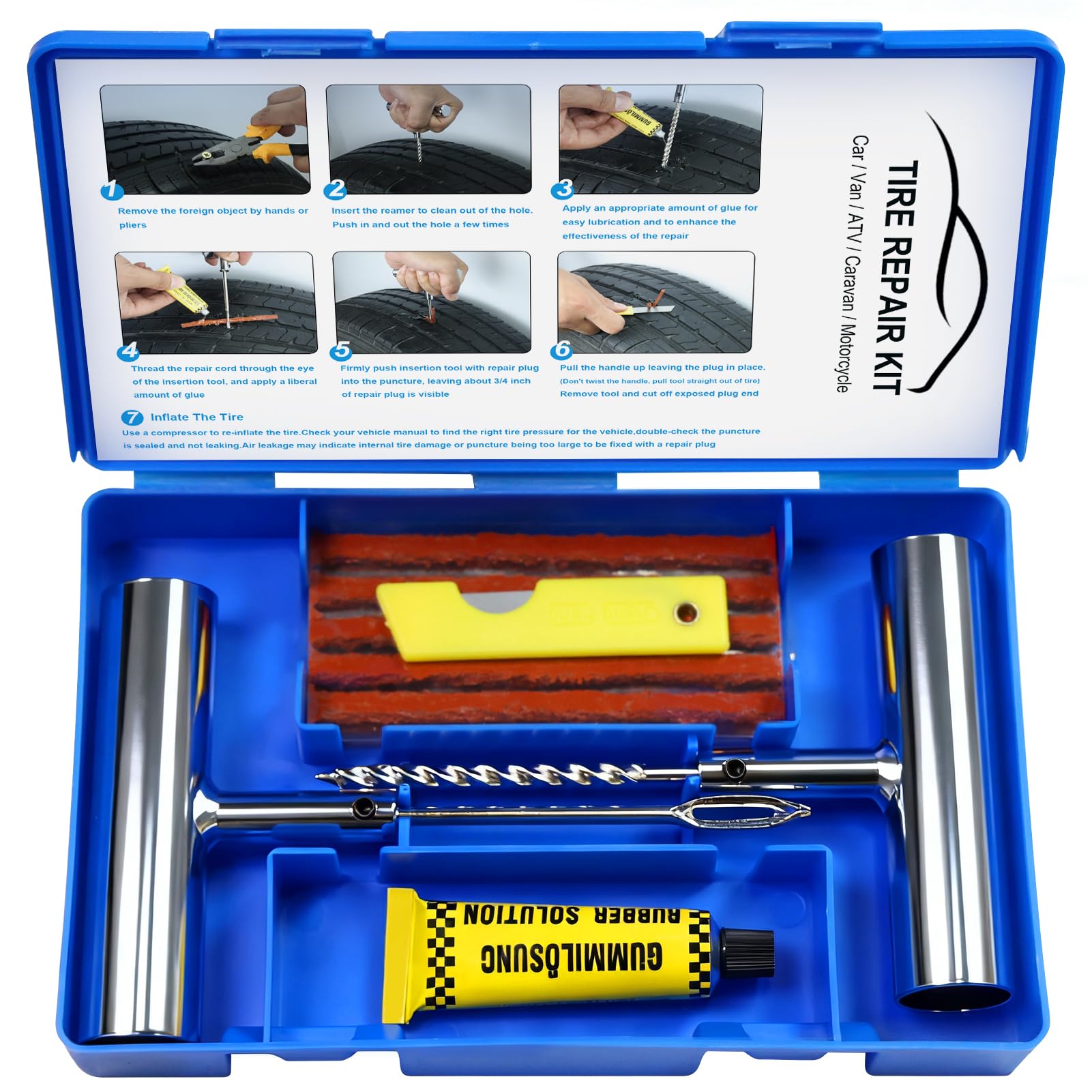
Heavy-duty boxed plug kit for compatible tubeless tires on cars, ATVs, motorcycles, light trucks, RVs, and lawn equipment.
View Product on Amazon →What Is the Beanewone 16-Piece Tire Repair Kit?
The Beanewone BEA2025-CTRK is a compact outside-in plug kit for common punctures in compatible tubeless tires. Its main tools are a steel T-handle probe for preparing the puncture channel and a steel T-handle insertion tool for placing a sticky repair string. The boxed set also includes ten plug strings, glue, a knife, a printed instruction guide, and the storage case.
The kit suits drivers and riders who want more control than aerosol sealant provides. It still requires an inflator, pressure gauge, and professional tire inspection, so treat it as one part of an emergency kit.
Before You Buy: Industry repair guidance does not accept an on-the-wheel, plug-only repair as a complete permanent repair for passenger-car and light-truck tires. Damage must be limited to the tread area, and the tire should be removed and inspected internally before a trained technician installs an approved combination patch-and-plug repair.
[Products Worth Considering]

This screw-in tire plug kit provides a fast, efficient way to repair punctures without flaring tools. Choose the correct plug size, then screw the rubber nail plug into the tire hole for a secure, sealed connection that helps prevent water intrusion. The 70-piece set is designed for universal emergency roadside use across cars, motorcycles, trucks, ATVs, bicycles, and more.

The AUTOWN tire repair kit is designed to quickly fix punctures and plug flats with professional-quality steel components. It includes a T-handle and spiral probe tool for easy tire access, plus a compact storage case for convenient carry. Suitable for many vehicles including cars, motorcycles, ATVs, RVs, trailers, and trucks, it helps restore airtight performance for reliable roadside repairs.

Replace worn pool cleaner tires with this all-purpose C10 tire set made to fit compatible Polaris automatic pool cleaners. The tires are designed for maximum traction while helping protect your pool finish, and they match Polaris OEM size and material. Each pack includes three new tires in sealed bags.
Who Should Buy It?
Best For
- Drivers who want a compact backup for nail or screw punctures in a tubeless tire’s tread area.
- ATV, motorcycle, RV, lawn-equipment, and light-truck owners who already carry an inflator and pressure gauge.
- People who prefer steel T-handle tools and an organized case over a loose, minimal plug set.
Skip If
- You need a repair for sidewall, shoulder, large, angled, or impact-related tire damage.
- Your tire uses an inner tube, has been driven while flat, or has a manufacturer repair restriction.
- You do not also carry a way to reinflate the tire and verify pressure after plugging it.
Materials and Build Quality
The two main tools use steel shafts and T-shaped handles. That layout gives you a broad grip and more leverage when the probe must pass through a tight puncture channel or when a loaded plug string must be pushed into the tread. The hard case keeps the sharp tools and sticky strings together, which matters when the kit spends months in a trunk or storage compartment.
Ten plug strings allow repeat emergency use, while the remaining items cover preparation, insertion, trimming, bonding, instructions, and storage. Pliers, an inflator, a gauge, valve tools, and protective gear are not included.
Fit and Compatibility
The kit is intended for compatible tubeless tires on cars, ATVs, motorcycles, light trucks, RVs, and lawn equipment. Compatibility depends more on the tire construction and damage location than on the vehicle label. A small, straight-through puncture in the central tread area is different from damage at the shoulder, sidewall, bead, or belt edge.
Run-flat and specialty tires may have repair restrictions, and driving with very low pressure can cause hidden damage. Check the vehicle manual, tire maker’s policy, and damage location first.
What People Say
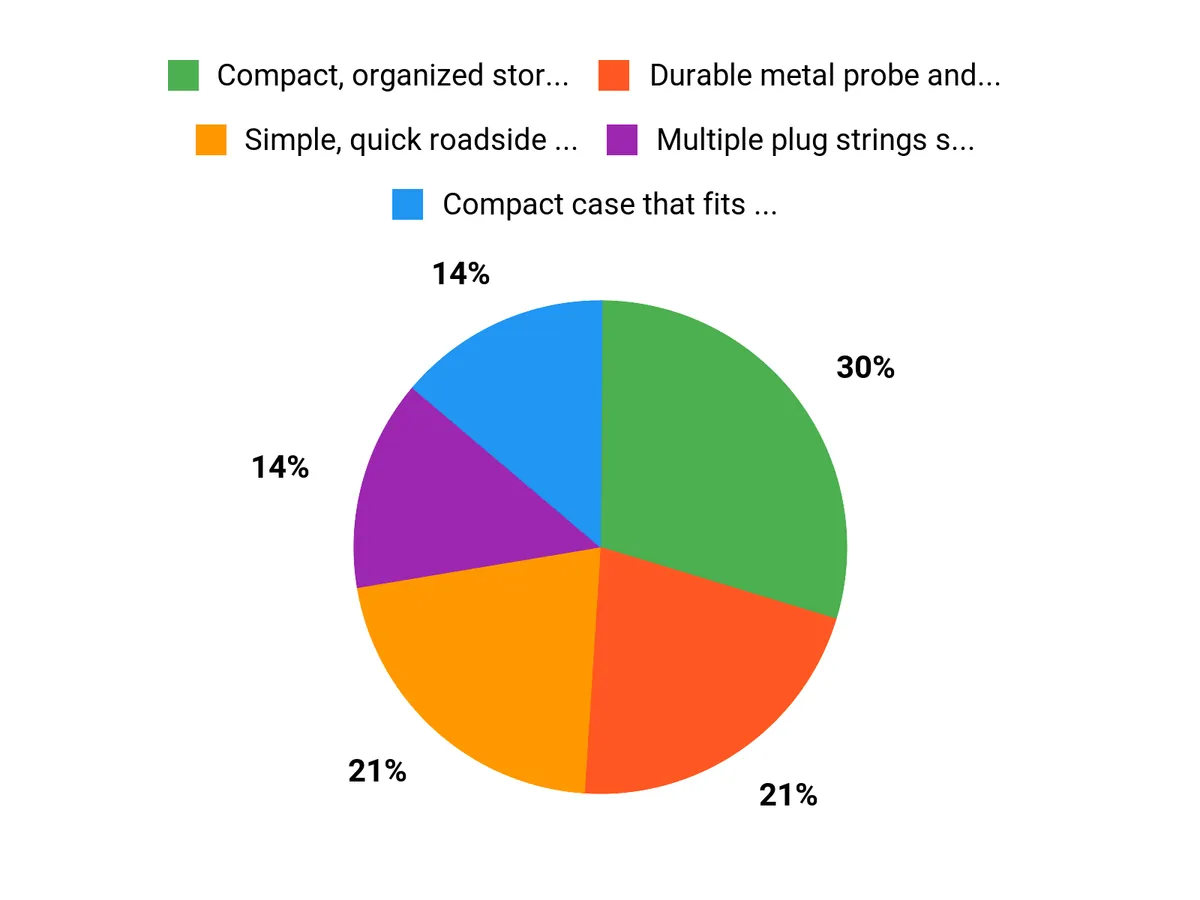
The source article’s feedback summary emphasizes the compact case, simple process, and sturdy T-handle tools. The live Amazon rating and review count could not be independently confirmed, so the preserved chart below is not presented as a current marketplace rating.
Overall Sentiment: Positive in the source article, current marketplace totals not independently verified.

Pros and Cons
|
Pros |
Cons |
|---|---|
|
✅ Steel T-handle tools provide useful leverage and control |
❌ Not suitable for sidewall, shoulder, large, or structural tire damage |
|
✅ Ten plug strings support more than one emergency repair event |
❌ An outside-in plug does not replace an off-wheel internal inspection and approved repair |
|
✅ Compact hard case keeps sharp and sticky parts organized |
❌ No inflator, pressure gauge, or nail-removal pliers are included |
|
✅ Includes glue, knife, and instructions instead of only the two main tools |
|
|
✅ Small enough to store with a jack, spare, or recovery bag |
How to Use It Correctly
First, stop in a safe location away from moving traffic and set the parking brake. Inspect the tire before removing the object. Do not attempt a plug if the damage is in the sidewall or shoulder, the tire has a bulge or exposed cords, the puncture is large or angled, or the tire was driven while flat. Roadside safety takes priority, so call for assistance when the work area is unstable, dark, narrow, or exposed to traffic.
For a suitable small tread puncture, follow the product instructions. Remove the nail or screw with separate pliers, prepare the channel with the probe, coat or load the repair string as directed, and push it into the puncture with the insertion tool. Withdraw the tool so the string remains in place, trim the excess with the included knife, reinflate the tire to the vehicle’s specified cold pressure, and check for continued leakage.
Monitor pressure closely and arrange a professional inspection as soon as possible. The technician should remove the tire from the wheel, inspect the inner liner and carcass, and decide whether the tire qualifies for an approved repair or must be replaced.
Pro Tip: Store the kit beside locking pliers, nitrile gloves, a compact inflator, a pressure gauge, a flashlight, and reflective roadside gear. A plug kit cannot restore pressure or make an unsafe work area safe by itself.
How It Performs in Real Use
Daily Commuting
For a slow leak from a nail in the central tread, the compact case and T-handles support the basic plugging steps. It works best when the vehicle is parked safely and an inflator is available, not on an exposed highway shoulder.
Road Trips
On a road trip, the small case takes little space and ten strings support more than one emergency. Carry a charged inflator and gauge, then plan a tire-shop stop instead of treating the plug as a complete permanent repair.
ATV and Lawn Equipment Use
For compatible tubeless ATV and lawn-equipment tread punctures, the broad handles can be useful where towing is inconvenient. Bead leaks, torn lugs, sidewall cuts, and tube-type tires need another solution.
Motorcycle and Light-Truck Use
Pressure loss on motorcycles and light trucks has serious consequences. Follow the tire maker’s policy, verify pressure before moving, and obtain prompt professional inspection.
Compatibility and Safety
The U.S. Tire Manufacturers Association recommends repair only when damage is limited to the tread area and no greater than 1/4 inch, or 6 mm, in diameter. It also states that the tire must be removed for internal inspection and that a plug alone is not an acceptable complete repair. A proper repair fills the injury and seals the inner liner with a patch or combination unit.
Michelin likewise warns against repairing sidewall punctures and notes that driving flat can cause hidden damage. Use this kit as an emergency response while arranging professional evaluation.
- Never plug sidewall or shoulder damage.
- Do not work on a tire showing a bulge, exposed cords, severe cracking, bead damage, or a large cut.
- Do not crawl under a vehicle supported only by a jack.
- Use the vehicle maker’s specified cold tire pressure, not the maximum pressure molded on the tire sidewall.
- Stop driving if pressure drops again, vibration develops, or the tire looks distorted.
Durability and Storage
The steel T-handle tools are the strongest part of the set and should tolerate occasional emergency use when kept clean and dry. The hard case limits contact with other cargo and keeps the plug strings from becoming contaminated. The knife and probe are sharp, so return them to the case immediately after use.
Heat, dirt, fuel, and time can affect the strings and glue. Inspect them during routine maintenance, replace dried supplies, and confirm the kit is complete before a trip. The listed two-year warranty does not prevent consumables from aging.
Why Customers Choose
The main appeal is preparedness without a large case. You get steel T-handle tools, ten plug strings, glue, a cutter, instructions, and organized storage in a package that weighs under a pound. Buyers who already carry inflation equipment can add the kit without taking much trunk or under-seat space.
The original feedback summary also highlights ease of use and sturdy tools. Those strengths do not make every puncture repairable or turn an outside-in plug into a complete repair.
Is It Worth the Price?
This is a budget emergency tool set rather than a professional tire-repair system. Its value comes from combining ten strings, steel T-handles, glue, a knife, instructions, and a hard case in one compact package. It makes the most sense for someone who wants a prepared roadside kit and already owns an inflator, gauge, and basic hand tools.
The set is less compelling if you expect a permanent, standards-compliant repair or need a complete roadside system. A larger kit may add pliers, valve tools, spare valve cores, a pressure gauge, and more repair strings. The Beanewone model is worth considering for compact storage, but its low piece count and missing inflation equipment are real limits.
[Products Worth Considering]

This compact tire repair kit includes a heavy-duty universal plug kit for fast roadside puncture repairs in most tubeless tires. It comes with a durable MOLLE storage pouch so you can keep the tools organized and easily store them in your UTV, ATV, truck, motorcycle, RV, or overlanding gear. Ideal for getting back on the road, trail, or job site with confidence.

Rhino USA’s 86-piece tire repair kit provides everything you need for quick, emergency flat repairs, including a reamer and plug insertion tool plus 60 reusable tire plugs. The heavy-duty, metal-handled design helps you fix punctures from nails and screws on tubeless tires for cars, trucks, motorcycles, ATVs, UTVs, and more. A high-visibility compact case stores easily for on-the-go use, with illustrated instructions to help you complete repairs with confidence.
How It Compares to Alternatives
AUTOWN’s 68-piece and Rhino USA’s 86-piece kits offer more strings, valve accessories, and tools for frequent off-road, farm, trailer, or fleet use. Safety Seal is a pricier alternative from a more established repair-tool brand.
Beanewone is the compact choice when a hard case and core T-handle tools matter more than accessory count. Every option still requires you to follow the tire maker’s repair policy and obtain an internal inspection.
Frequently Asked Questions
Can this kit permanently fix a puncture?
Do not treat an outside-in string plug as a complete permanent repair for a passenger-car or light-truck tire. Industry guidance calls for removing the tire, inspecting it internally, filling the puncture channel, and sealing the inner liner with an approved patch or combination unit.
What vehicles and tires are compatible?
The kit is marketed for compatible tubeless tires on cars, ATVs, motorcycles, light trucks, RVs, and lawn equipment. It is not intended for tube-type tires, and run-flat or specialty tires may have manufacturer-specific repair restrictions.
Can it repair a sidewall or shoulder puncture?
No. Sidewall, shoulder, bead, belt-edge, large, or angled damage should not be plugged with this kit. Fit the spare or arrange roadside assistance and have the tire inspected for replacement.
Does the 16-piece kit include an inflator?
No. The listed contents include ten plug strings, two T-handle tools, a knife, glue, instructions, and the storage case. Carry a separate inflator and pressure gauge so you can restore and verify tire pressure.
How large a puncture can be repaired?
For passenger and light-truck tires, industry guidance limits repairable tread punctures to no more than 1/4 inch, or 6 mm, and requires internal inspection. The tire maker may apply stricter limits, so do not rely on size alone.
What common mistakes should you avoid?
Do not plug the wrong damage area, work beside moving traffic, skip reinflation and leak checks, or continue driving after pressure drops again. You should also avoid treating a sealed leak as proof that the tire has no hidden internal damage.
How should you store and maintain the kit?
Keep the case closed in a dry location away from fuel spills and loose cargo. Inspect the strings and glue periodically, replace dried or contaminated consumables, and confirm that the knife and both T-handle tools are present before a trip.
The Bottom Line
The Beanewone 16-Piece Tire Repair Kit is a sensible compact backup for drivers and riders who understand its limits and already carry an inflator and pressure gauge. Its steel T-handles, ten strings, glue, knife, instructions, and hard case offer strong basic value, but you should skip it for sidewall damage, tube-type tires, or any situation where you need a complete permanent repair.
Ready to Buy?
Check the latest price, package contents, and product details before you decide.

Related Articles
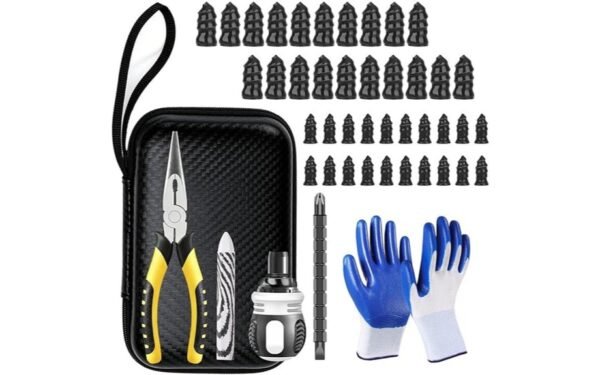
Tire Screw Plug Repair Kit Review
Compact tire screw plug repair kit review reveals fast roadside fixes, but which punctures are truly safe enough to trust?
Read More
Socpuro Tire Repair Patch Tool Kit Review
Great for quick DIY puncture fixes, the Socpuro Tire Repair Patch Tool Kit has limits and surprises you’ll want to know before buying.
Read More
VEVOR Tire Bead Breaker Slide Hammer Review
Why choose the VEVOR Tire Bead Breaker Slide Hammer for tough tire jobs?
Read More