
BriskMore CO2 Inflator Kit Review
Disclosure: As an Amazon Associate, we earn from qualifying purchases. If you click a link on this page and make a purchase, we may receive a small commission at no extra cost to you.
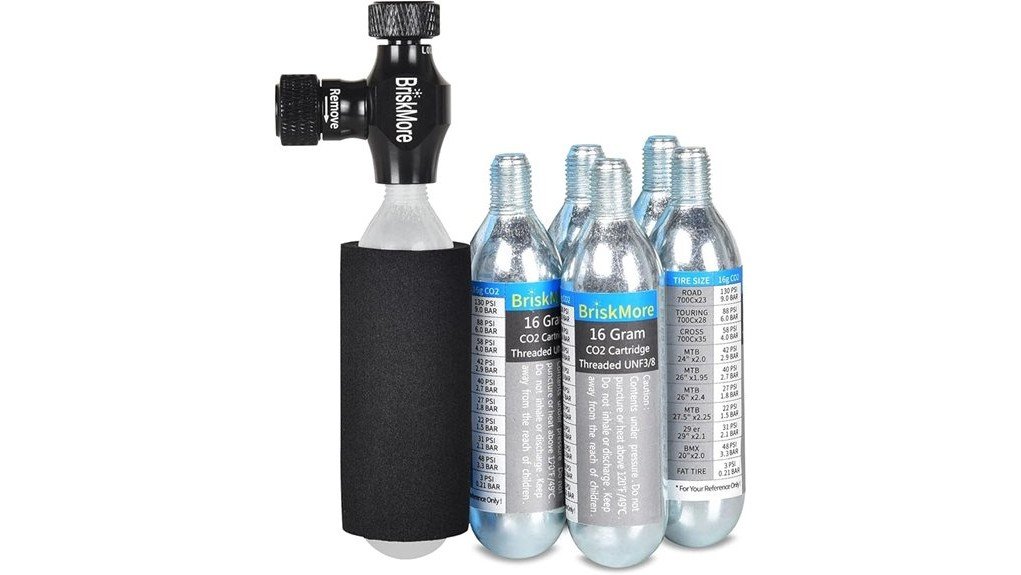
A flat tire can turn a good ride into a long walk, so the inflator in your repair kit needs to be compact, compatible, and easy to control when you are working beside the road or trail. The BriskMore CO2 Inflator Kit, model BT-009A, combines a metal inflator head with five threaded 16g cartridges, an insulated sleeve, and three spare sealing washers. It works with Presta and Schrader valves and gives you adjustable gas flow instead of forcing you to discharge the cartridge in one uncontrolled burst. The main limitation is just as important: CO2 is fast, but each cartridge provides a finite supply of gas and this kit does not repair the puncture itself.
Quick Verdict
Rating: 8.3/10, Recommended with caveats
Best For: Cyclists who want a compact, controllable backup inflator for roadside or trail-side flats.
Bottom Line: The dual-valve head, metal construction, adjustable control valve, five cartridges, and spare washers make this a practical ready-to-pack inflation bundle. You still need a tube, patch, or tubeless plug to repair the puncture, and one 16g cartridge may not provide enough gas for every high-volume tire.
| Specification | Detail |
|---|---|
| Brand | BriskMore |
| Model / part number | BT-009A |
| Product type | Threaded bicycle CO2 inflator kit |
| Included items | Inflator head, five 16g cartridges, one insulated sleeve, and three spare washers |
| Included CO2 | Five threaded cartridges, 16g of CO2 per cartridge |
| Valve compatibility | Presta and Schrader |
| Cartridge compatibility | UNF 3/8 threaded 12g, 16g, 20g, and 25g cartridges |
| Inflator materials | CNC-machined aluminum alloy and alloy steel |
| Cartridge construction | Steel shell with zinc coating |
| Approx. cartridge weight | About 2 oz / 58 g each |
| Flow control | Adjustable control valve for gradual gas release |
| Sleeve fit | Designed for the included 16g cartridge size |
| Repair tools included | No tire levers, patches, plugs, spare tube, or pressure gauge listed |
| Best use | Emergency inflation after a tube, patch, or tubeless repair |
Key Takeaways
- The kit includes one inflator head, five 16g threaded CO2 cartridges, an insulated sleeve, and three spare washers.
- The same head works with Presta and Schrader valves, so you do not need a separate valve adapter.
- The adjustable control valve lets you release gas in smaller bursts rather than emptying the cartridge immediately.
- The head accepts UNF 3/8 threaded 12g, 16g, 20g, and 25g cartridges, but the supplied sleeve is sized for 16g cartridges.
- This is an inflation kit, not a complete puncture-repair kit. Carry tire levers plus a tube, patch, or tubeless plug that matches your bike.
[Products Worth Considering]

This 4-pack kit converts Presta bike valves to standard Schrader valves so you can inflate with any regular pump or air compressor. The solid brass adapters include an O-ring for a tight, leak-proof seal and provide a simple screw-on setup. Compatible with road bikes, mountain bikes, e-bikes, and e-scooters, it’s designed for convenient, everyday carry readiness.

Convert Presta bicycle valves to accept standard Schrader pump nozzles for fast, hassle-free inflation. This kit includes durable brass adapters with leak-resistant connections, plus sports inflation needles and protective valve caps for convenient use on bikes and ball sports equipment.

Tiakia’s mini high-pressure frame pump delivers up to 260 PSI for faster, more efficient inflations with an optimized intake volume. It features a double-head valve design compatible with Schrader and Presta, plus a conversion for Donlop, making it versatile for bikes and many inflatables. The lightweight anodized aluminum build includes a mounting bracket for convenient carry, while the flexible high-pressure hose and IPX4 waterproof body support outdoor use.
What Is the BriskMore CO2 Inflator Kit?
The BriskMore BT-009A is a portable bicycle inflator that uses threaded CO2 cartridges instead of manual pumping. You screw a compatible cartridge into the metal head, connect the head to your tire valve, and use the control valve to meter compressed CO2 into the tire.
The kit is designed for riders who want a small emergency inflation system that can work across bikes with either Presta or Schrader valves. Its head also accepts several threaded cartridge sizes, which gives you more flexibility than a head designed around only one cartridge capacity.
Treat the BT-009A as one part of your flat-tire kit. It can refill a tire quickly after a successful repair, but it cannot remove a tire, replace a tube, patch a puncture, plug a tubeless hole, or repair a damaged tire casing.
Who Should Buy It?
Best For
- Road, gravel, mountain, and commuter riders who want faster emergency inflation than repeated mini-pump strokes.
- Cyclists who own bikes with both Presta and Schrader valves and want one compatible inflator head.
- Riders building a compact saddle-bag, frame-bag, or jersey-pocket repair setup.
Skip If
- You want a reusable inflation source that gives you repeated attempts without consuming cartridges.
- You expect one included 16g cartridge to reach your target pressure in every large mountain or fat-bike tire.
- You want a complete puncture kit with tire levers, patches, plugs, a spare tube, or a pressure gauge included.
Before You Buy: Check that replacement cartridges use the UNF 3/8 threaded format. The included insulated sleeve is intended for 16g cartridges, so a compatible 20g or 25g cartridge may not fit inside the supplied sleeve.
What’s Included in the BriskMore Kit?
The bundle contains one BriskMore inflator head, five 16g threaded CO2 cartridges, one insulated sleeve, and three spare sealing washers. Each included cartridge carries 16g of CO2 and is listed at about 2 ounces, or 58 grams, with a zinc-coated steel shell.
The three spare washers are small but useful parts. The washer helps seal the threaded connection between the cartridge and inflator head, so a damaged or poorly seated washer can allow CO2 to escape before enough gas reaches your tire.
The package does not list tire levers, patches, a tubeless plug, a replacement tube, or a pressure gauge. Add the repair supplies that match your tire system before depending on the inflator during a ride.
Fit and Compatibility
The inflator head supports both Presta and Schrader valves without a separate adapter. That broad valve fit is useful if you own several bicycles or want one emergency inflator that can move between a road bike, gravel bike, mountain bike, and commuter.
On the cartridge side, the head accepts UNF 3/8 threaded cartridges in 12g, 16g, 20g, and 25g sizes. The supplied bundle uses 16g cartridges. Larger compatible cartridges contain more CO2, which can be useful for higher-volume tires, but the correct amount of gas still depends on tire volume, starting pressure, and your target pressure.
Choosing a Cartridge Size
A narrow road tire and a large mountain-bike tire do not need the same volume of gas. The included 16g cartridges are compact and convenient, but you should not assume one cartridge will bring every tire to its normal riding pressure. If your bike uses a high-volume tire, a compatible larger cartridge or a compact hand pump can give you more margin.
Remember that cartridge compatibility and sleeve compatibility are different. The head can accept 20g and 25g threaded cartridges, but the supplied insulating sleeve is designed around the included 16g size.
Pro Tip: Practice fitting the inflator head to your bike’s valve before your next ride, without discharging a cartridge. Knowing how the valve connection and control knob work reduces fumbling when you need to use your limited CO2 supply beside the road or trail.
How the CO2 Inflator Works
A threaded cartridge screws into the inflator head until the cartridge seal is pierced. After you secure the head to the tire valve, the adjustable control valve regulates the release of compressed CO2 into the tire.
The adjustable valve is the main usability advantage over a simple inflator that dumps gas as soon as it is connected. You can begin with a short burst, check the tire and bead, then add more gas rather than committing the entire cartridge at once.
The tradeoff is limited capacity. A leaking repair, poor valve connection, accidental discharge, or high-volume tire can use much of a cartridge before you reach the pressure you need.
Build Quality and Control
The inflator head uses CNC-machined aluminum alloy and alloy steel instead of an all-plastic body. That gives the threaded connection and control assembly a metal structure while keeping the head small enough for a compact bicycle repair pouch.
The sealing washers and control valve are also important to day-to-day reliability. The washer seals the cartridge connection, while the valve lets you start with a short discharge and add gas in stages. Inspect a washer if you notice damage, flattening, cuts, or unexpected leakage.
The included CO2 cartridges use zinc-coated steel shells. They are still pressurized containers, so inspect them for corrosion, deep dents, punctures, or damaged threads before putting them into service.
Storage and Carrying
Keep the inflator head clean and dry inside your saddle bag or repair pouch. Dirt around the valve interface, cartridge threads, or sealing washer can make a roadside setup harder and may interfere with a good seal.
Store unused cartridges away from excessive heat and direct flame. Do not leave damaged or badly corroded cartridges in your repair kit, and keep the insulating sleeve with the cartridges so it is available when you need to discharge one.
If you carry the kit for long periods, check it during normal bike maintenance. Confirm that you still have a fresh cartridge, the sleeve, the inflator head, and the puncture-repair supplies needed for your specific tire system.
[Products Worth Considering]

This PXZBLG bike repair kit helps you tackle common tire and on-the-ride issues with a compact, ride-ready tool collection. It includes a mini tire pump supporting both Presta and Schrader valves, a 16-in-1 bike multitool, tire levers, glueless patches with a plastic box, plus 4mm and 5mm Allen wrenches. A convenient bike bag stores everything so you can mount it on your road bike or mountain bike for lightweight, portable preparedness.
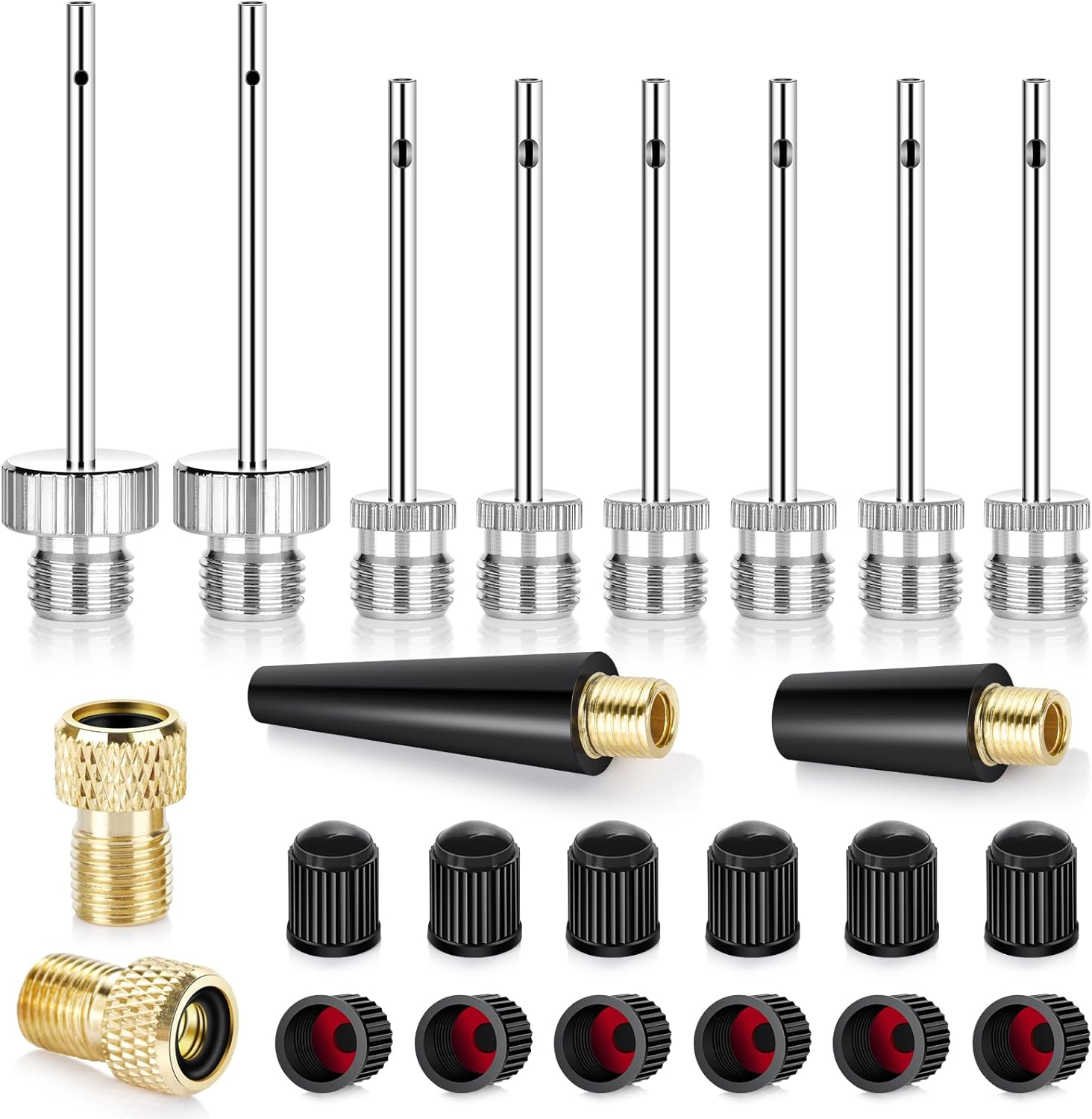
This ball pump needles kit includes brass ball needles for inflating footballs, soccer balls, basketballs, and volleyballs, plus conical nozzles for air mattresses, exercise balls, balloons, and swim rings. It also offers Presta to Schrader valve adapters for easy use with compatible bikes and rideables. The set includes sealed valve caps and a storage case, helping keep your equipment organized and ready to inflate quickly.
How It Performs in Real Use
Roadside Tube Replacement
After you install a replacement tube, the BriskMore head gives you a fast way to restore pressure without dozens of mini-pump strokes. Start with a small amount of CO2 so the tube takes shape, check that the tube is not trapped beneath the tire bead, then continue gradually within the tire and rim pressure limits.
Gravel and Commuter Rides
The Presta and Schrader compatibility is useful when one inflator needs to cover different bikes. The five-cartridge bundle also gives you several separate emergency charges, although each discharged cartridge is a consumable and should not be treated like a reusable pump.
Mountain Bike and High-Volume Tires
One 16g cartridge may produce a lower final pressure in a large-volume tire than it does in a narrower road tire. The head accepts compatible 20g and 25g threaded cartridges, so you can choose more CO2 for a larger tire, or pair the inflator with a mini pump for additional inflation after the initial burst.
Emergency Backup Use
The BT-009A makes the most sense as the fast-inflation part of a complete repair setup. It is less reassuring as your only inflation method because a second puncture, leaking repair, or accidental discharge can reduce the number of attempts you have left.
How to Use It Correctly
- Repair the puncture first. Install a replacement tube, apply an appropriate patch, or plug a tubeless puncture according to the repair product’s instructions.
- Inspect the inflator. Check the sealing washer, cartridge threads, valve connection, and control valve for dirt or visible damage.
- Close the control valve lightly. Do not force the knob beyond its normal stop.
- Install the sleeve and cartridge. Put the insulated sleeve over an included 16g cartridge, then screw the cartridge into the head until it is seated and pierced.
- Connect the tire valve. If you use a Presta valve, open its small valve nut first. Secure the inflator without bending the valve stem.
- Release a short burst. Add a small amount of gas and check that the tube, tire bead, and repair are behaving normally.
- Inflate gradually. Add more CO2 in controlled bursts while staying within the pressure limits printed on your tire and rim.
- Remove it carefully. Close the control valve, disconnect the head, and avoid touching exposed cartridge metal until it has warmed.
Common Mistakes to Avoid
- Inflating before fixing the leak: CO2 cannot compensate for an unrepaired puncture or badly leaking tubeless plug.
- Opening the valve too quickly: A large first burst gives you less opportunity to check tube seating or stop a leak.
- Forgetting the sleeve: The cartridge becomes very cold during discharge, so keep the 16g sleeve with your emergency kit.
- Assuming one cartridge is always enough: Tire volume and desired pressure affect how far a single 16g charge can take you.
- Relying on CO2 for routine pressure adjustment: A reusable hand or floor pump is more practical when speed and compactness are not the priority.
Compatibility and Safety
CO2 cartridges become very cold while gas is discharging. Keep the insulated sleeve on the included 16g cartridge and avoid gripping exposed cartridge metal during or immediately after use. Direct contact with extremely cold metal can injure your skin.
Keep cartridges away from excessive heat, flames, children, and deliberate puncture. Do not use a cartridge that is badly dented, rusted, leaking, punctured, or damaged around its threads. Point the inflator outlet away from your face and other people while handling the system.
Always follow the pressure limits marked on your tire and rim. The BriskMore kit does not include a pressure gauge, so use controlled bursts and check pressure with a separate gauge when accurate pressure matters.
For tubeless tires, follow the instructions from your tire and sealant manufacturer. Some sealant systems have specific guidance about CO2 exposure, so replace the CO2 with normal air after the emergency repair if your tire or sealant instructions call for it.
Pros and Cons
Pros
- Works with both Presta and Schrader bicycle valves without a separate adapter.
- Includes five threaded 16g cartridges instead of only an inflator head or single starter cartridge.
- Adjustable control valve gives you more control over gas release.
- Inflator head uses CNC-machined aluminum alloy and alloy steel.
- Three spare sealing washers are included for maintaining the threaded cartridge connection.
Cons
- CO2 cartridges are consumables, so each discharge reduces your remaining emergency supply.
- The bundle does not include puncture-repair tools or a pressure gauge.
- One 16g cartridge may not provide enough gas for every high-volume tire or every failed first attempt.
Is It Worth the Price?
The value of the BriskMore kit comes mainly from its bundle format. Instead of receiving only an inflator head, you get five 16g cartridges, the insulated sleeve, and three spare sealing washers along with the dual-valve inflator.
You get the most value if you ride regularly, already carry the tools required to fix a puncture, and want a compact way to reinflate a repaired tire quickly. Having several cartridges in the original bundle also means you can pack a fresh spare after using one rather than immediately needing a refill pack.
The tradeoff is ongoing consumable cost. Every discharged cartridge eventually needs replacement, so a reusable mini pump is a better choice for routine pressure adjustments, training rides where weight matters less, or situations where you want unlimited inflation attempts.
How It Compares to Alternatives
The Lezyne Control Drive CO2 is a strong alternative if you want a CNC-machined aluminum inflator with a twist control knob, Presta/Schrader compatibility, and options sold with 16g or 25g cartridges or as a head only. The BriskMore package puts more emphasis on starter-bundle quantity because it includes five 16g cartridges plus spare washers.
Genuine Innovations offers different control styles. The AirChuck uses push-to-inflate operation and accepts 16g, 20g, and 25g threaded cartridges, while the HammerHead uses a push-control design with an automatic Presta/Schrader valve head. Choose BriskMore if the five-cartridge bundle and simple adjustable valve appeal to you; choose a competing design if you prefer a different valve connection or activation method.
Frequently Asked Questions
Does the BriskMore inflator work with Presta and Schrader valves?
Yes. The BT-009A inflator head supports both common bicycle valve types without a separate adapter. If your bike uses a Presta valve, open the small valve nut before attaching the inflator.
Which CO2 cartridges fit the inflator head?
The head accepts UNF 3/8 threaded cartridges in 12g, 16g, 20g, and 25g sizes. The kit includes five 16g cartridges, and its insulating sleeve is designed for the 16g cartridge size.
Is one 16g cartridge enough for every bicycle tire?
No. Tire volume, starting pressure, target pressure, and gas lost during connection all affect the result. A large mountain or fat-bike tire may need a larger compatible cartridge, more than one cartridge, or additional inflation from a hand pump.
Does the kit repair a puncture?
No. The BriskMore kit supplies inflation after you have repaired the tire. Carry tire levers plus a spare tube, patch, or tubeless plug that matches your setup.
Why is the insulated sleeve important?
A CO2 cartridge becomes very cold during rapid discharge. The sleeve provides a barrier between your hand and the included 16g cartridge, although you should still avoid touching exposed cartridge metal until it warms.
Can you use the BriskMore inflator with tubeless tires?
The inflator can add CO2 through a compatible tire valve after you have repaired the puncture. Follow the instructions from your tire and sealant manufacturer because some tubeless systems have specific guidance about CO2 exposure.
Can a partially used cartridge be saved for another ride?
The control valve may retain some gas when fully closed, but a pierced cartridge is not the best choice for dependable long-term emergency storage. Treat an opened cartridge as limited-use and pack a fresh spare before your next ride.
How should you store the inflator and cartridges?
Keep the inflator head clean and dry, protect the cartridge threads from damage, and store unused cartridges away from excessive heat or flames. Inspect the cartridges periodically and replace any that show serious rust, dents, punctures, leaks, or damaged threads.
The Bottom Line
The BriskMore CO2 Inflator Kit is recommended with caveats for cyclists who want fast, controlled emergency inflation across Presta and Schrader bikes. Its five-cartridge bundle, adjustable valve, metal head, sleeve, and spare washers are practical strengths, while the limited gas supply, lack of a pressure gauge, and absence of puncture-repair tools remain the main drawbacks. Choose it as the inflation part of a complete roadside kit, not as your only flat-tire solution.
Ready to Buy?
Check the latest price and product details before you decide.

Related Articles
GOOLOO A6 Gear Tire Inflator Review: 160 PSI Cordless Portable Air Compressor
You want a compact, reliable way to keep your tires at the right pressure without dragging an air hose around or waiting for service.…
Read More
BLACK+DECKER BDINF20C Tire Inflator Review: 20V MAX Cordless and Corded Air Pump
You rely on a compact, reliable inflator when a tire goes low or an air mattress needs a quick top‑up, and the BLACK+DECKER BDINF20C…
Read More
150 PSI Cordless Tire Inflator Review: 5X Faster Portable Air Compressor with Digital Gauge
You do not want to be stuck with underinflated tires when safety, fuel economy, and tire life are on the line. A compact cordless…
Read More