Disclosure: As an Amazon Associate, we earn from qualifying purchases. If you click a link on this page and make a purchase, we may receive a small commission at no extra cost to you.
A tire gauge is only useful when it is easy to find, simple to operate, and suitable for your tire’s pressure range. The AstroAI Pencil Tire Pressure Gauge offers a battery-free way to check tires without relying on an illuminated screen or electronic sensor. This two-gauge set covers 10–75 PSI and includes a built-in deflator, making it practical for many passenger cars, SUVs, bicycles, and small equipment. Its main tradeoffs are a less detailed display than a digital gauge and a pressure range that will not suit every low-pressure bicycle or high-pressure truck tire.
Quick Verdict
Rating: 8.3/10
Best For: Drivers who want an inexpensive, battery-free gauge for routine checks between 10 and 75 PSI.
Bottom Line: The AstroAI Pencil Tire Pressure Gauge 2 Pack is compact, easy to store, and gives you a spare gauge for another vehicle or toolbox. Its analog scale is not as easy to read in poor light as a digital display, and you must stay within its stated pressure range.
| Specification | Detail |
|---|---|
| Brand | AstroAI |
| Model | ASITIREGAP-2PACK |
| Product type | Analog pencil tire pressure gauge |
| Package quantity | Two gauges |
| Measurement range | 10–75 PSI, 70–550 kPa, or 0.7–5.5 BAR |
| Calibration claim | ANSI B40.1 Grade B, listed at ±2% of span |
| Body and nozzle | Stainless steel components with metal nozzle |
| Indicator | Four-sided pop-out ABS indicator bar |
| Listed dimensions | Approximately 6.89 × 1.18 × 0.71 inches |
| Power source | None required |
| Pressure adjustment | Integrated deflator valve |
| Included accessories | Four replacement valve stem caps |
| Best use | Routine checks on compatible tires operating between 10 and 75 PSI |
Key Takeaways
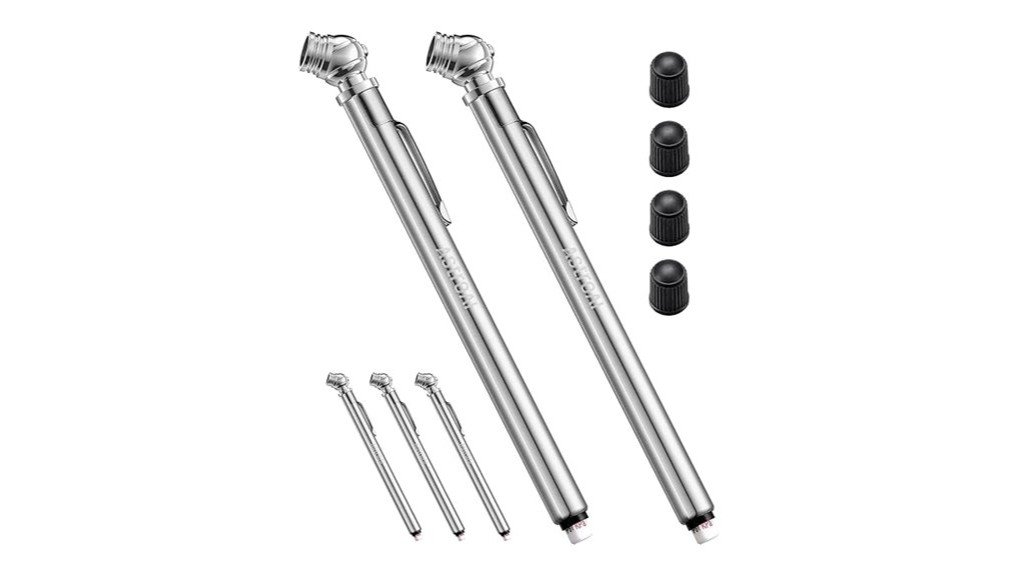
- The package includes two stainless steel pencil gauges and four replacement valve stem caps.
- Each gauge reads 10–75 PSI, 70–550 kPa, or 0.7–5.5 BAR.
- The manufacturer lists ANSI B40.1 Grade B calibration and an accuracy claim of ±2% of span.
- The pop-out indicator requires no batteries and remains readable after you remove the gauge from the valve.
- An integrated deflator lets you release small amounts of air, although you must measure again after each adjustment.
- The range is suitable for many cars and SUVs but may exclude low-pressure tires below 10 PSI and tires requiring more than 75 PSI.
What Is the AstroAI Pencil Tire Pressure Gauge?
The AstroAI ASITIREGAP-2PACK is a pair of mechanical pencil-style tire gauges. Air pressure pushes an internal indicator bar out of the stainless steel body, and you read the result from the printed PSI, kPa, or BAR scale.
Unlike a digital gauge, it has no display, battery, backlight, or electronic controls. That makes it a simple choice for a glove box, emergency kit, workbench, or bicycle tool bag, provided the tires you check use compatible valve stems and stay within the gauge’s 10–75 PSI range.
The two-pack format is useful when you want one gauge in your main vehicle and another in a second vehicle, garage, or portable air-compressor kit.
What Comes in the Box
The package contains two matching AstroAI pencil tire pressure gauges and four replacement valve stem caps. You do not need to install batteries, connect an app, or assemble any parts before taking a reading.
The spare caps are a small but useful addition because valve caps help keep dirt and moisture away from the valve core. They do not seal a damaged valve, so a leaking stem or valve core still requires proper repair.
How the AstroAI Pencil Tire Gauge Measures Pressure
When you press the nozzle squarely onto a tire valve, air enters the gauge and moves the calibrated indicator bar. The bar stays extended after you remove the gauge, allowing you to read the marked scale without remaining bent beside the wheel.
The indicator has markings for PSI, kPa, and BAR. Most North American vehicle placards use PSI, while the other scales can help with equipment or manuals that list metric pressure units.
The small button near the head acts as a deflator. Pressing it while the gauge is connected releases air from the tire. Because the gauge does not continuously display pressure during adjustment, release only a small amount and take another measurement before letting out more.
Accuracy and Reading Consistency
AstroAI lists this gauge as calibrated to ANSI B40.1 Grade B with an accuracy claim of ±2% of span. That wording matters because ±2% of the full measuring span is not the same as guaranteeing that every reading will be within 2% of the displayed value.
For routine tire maintenance, your technique can affect consistency as much as the printed calibration. Hold the nozzle straight against the valve and press firmly enough to stop the hissing sound. A partial seal can produce a low or inconsistent result.
Because the package includes two gauges, you can occasionally compare them on the same cold tire. Similar readings help identify obvious sticking or damage, although agreement between two gauges is not a substitute for professional calibration.
Before You Buy: The gauge must not be used above 75 PSI. AstroAI warns that exceeding its maximum pressure can permanently damage the mechanism. It is also unsuitable for tires that need readings below 10 PSI.
Build Quality and Portability
The narrow stainless steel body is the main reason this gauge travels well. At about 6.9 inches long, it fits easily in many glove boxes, center consoles, tool rolls, and small equipment bags.
A pocket clip helps keep the gauge from rolling around a drawer or falling deeper into a tool bag. The stainless steel components also provide better resistance to ordinary corrosion than an unfinished steel body, but you should still keep the gauge clean and dry.
The four-sided indicator bar is made from ABS plastic. It provides several measurement scales without adding an electronic screen, but its small markings can be harder to read in poor light or for anyone who prefers large numbers.
Pressure Range and Compatibility
The 10–75 PSI range covers many passenger-car, crossover, SUV, motorcycle, lawn-equipment, and recreational bicycle applications. Compatibility still depends on the required pressure and valve type, not simply the kind of vehicle.
The metal chuck is intended for standard automotive-style Schrader valves. Many road bicycles use narrower Presta valves, which require a suitable adapter. Some high-pressure road-bike tires, truck tires, trailer tires, and RV tires also operate above 75 PSI and need a higher-range gauge.
At the other end of the scale, fat-bike tires, off-road equipment, and some lawn or utility tires may run below 10 PSI. This gauge cannot provide a useful reading beneath its minimum range.
[Products Worth Considering]

Milton S-921 pencil tire pressure gauge helps you maintain optimal tire pressure for passenger cars with accurate readings in PSI and kPa. It features a built-in deflator valve for convenient pressure adjustments, plus a single chuck head and nylon indicator bar for easy use on the go. Built from durable plated brass and designed for reliable performance, it’s a practical road trip and cold-weather maintenance tool.

This AstroAI 2-pack pencil tire pressure gauge delivers accurate tire readings across common vehicle types, with a precision nozzle that seals on valve stems for reliable results. It measures PSI, kPa, and BAR within a 10–75 PSI range, includes an integrated deflator valve, and features an ABS indicator bar for easier pressure checks. A compact, pocket-friendly design and battery-free operation make it ideal for road trips and everyday maintenance.

Check tire pressure with the Milton S-925 pencil gauge built for trucks, RVs, and bicycles. It features a single-head chuck with a built-in deflator valve, and it displays readings in both PSI and kPa for convenient use. The gauge is designed for accurate, repeatable pressure checks within its working range.
Who Should Buy It?
Best For
- Drivers who want a simple gauge for a glove box or roadside kit.
- Households that can use one gauge in each of two vehicles.
- Buyers who prefer a battery-free tool over a digital display.
Skip If
- Your tires require less than 10 PSI or more than 75 PSI.
- You need a backlit display or very fine decimal readings.
- Your bicycle has Presta valves and you do not want to use an adapter.
How It Performs in Real Use
Routine Car and SUV Checks
For common passenger-vehicle pressures, the gauge provides a quick reading without menus or controls. Remove the valve cap, press the nozzle onto the stem, and read the extended bar. Its compact shape is especially useful when you want to keep a dedicated gauge in the car rather than relying on the gauge attached to a public air pump.
Road Trips and Emergency Kits
The lack of a battery is valuable in a kit that may sit unused for months. You do not have to discover a dead coin cell when a tire-pressure warning appears. The second gauge can remain with a portable inflator or another vehicle.
Bicycles and Small Equipment
The gauge can work with compatible Schrader-valve bicycle and equipment tires between 10 and 75 PSI. Check the required pressure before use because many low-pressure off-road tires and high-pressure road-bike tires fall outside that range.
Adjusting an Overinflated Tire
The integrated deflator allows controlled pressure release without a separate valve tool. It works best for small corrections: release air briefly, measure again, and repeat until you reach the vehicle manufacturer’s recommended cold pressure.
How to Use It Correctly
- Check the recommended cold tire pressure on the vehicle placard or in the owner’s manual.
- Measure before driving or after the tires have had time to cool.
- Remove the valve cap and keep it somewhere clean.
- Press the gauge nozzle straight and firmly onto the valve stem.
- Stop and reseat the gauge if you hear continuous air leakage.
- Remove the gauge and read the extended indicator bar.
- Add air or use the deflator for a brief pressure release, then measure again.
- Replace the valve cap when finished.
Pro Tip: Take two readings when the first result seems unusual. A square seal should produce repeatable readings, while hissing or a tilted nozzle often causes an inaccurate low result.
Compatibility and Safety
Use the cold inflation pressure listed by the vehicle manufacturer, usually found on the driver-side door placard or in the owner’s manual. The maximum pressure printed on a tire sidewall is not automatically the correct everyday target for your vehicle.
A pressure gauge only measures inflation. It cannot identify tread damage, sidewall cuts, a puncture, a bent wheel, or a faulty valve stem. If a tire repeatedly loses pressure, have the tire and wheel inspected rather than continuing to add air.
Do not expose this gauge to pressure above 75 PSI. Keep the nozzle and indicator bar free from grit, and avoid forcing the bar back into the body at an angle. Replace the gauge if it sticks, shows visible damage, or produces readings that remain inconsistent after careful reseating.
Pros and Cons
Pros
- Battery-free mechanical operation.
- Two gauges provide a spare or cover two vehicles.
- Reads PSI, kPa, and BAR.
- Built-in deflator supports small pressure corrections.
- Compact stainless steel body fits easily in a vehicle or tool kit.
Cons
- The 10–75 PSI range excludes some specialized tires.
- Small scale markings are harder to read than a backlit digital display.
- The deflator does not show pressure continuously while air is released.
Is It Worth the Price?
This is a budget-oriented set built for basic pressure checks rather than workshop-level diagnostics. You receive two gauges, four valve caps, three measurement scales, and a deflator without paying for displays, batteries, lights, or electronic controls.
It offers strong value when you need a gauge for each of two vehicles or want a spare beside your tire inflator. The value is lower if you need readings outside 10–75 PSI, larger markings, a backlight, or decimal-level resolution.
[Products Worth Considering]

The Milton S-693 straight foot dual head air chuck is designed for accurate tire pressure checks and quick, secure valve-core engagement with lock-on threads on both ends. With a 1/4" FNPT connection and a maximum 150 PSI rating, it’s built for use on inner duals and common vehicle tires, including trucks and RVs.

Inflate Presta and Schrader bike and car tires with one compressor attachment, including tubeless setups. The digital gauge lets you monitor 2–200 PSI readings in 0.1 PSI increments with ±2 PSI accuracy, while the adjustable lever and built-in bleed button help you dial in precise pressure. Quick-connect coupler, hose, and a complete Presta service kit with spare cores and caps make it ready for fast maintenance.

This 12-inch LUMITECO dual head tire pressure gauge features an integrated straight-on chuck and a 30° reverse chuck to reach hard-to-access dual wheel valves. Its 10–150 PSI / 1–10 BAR range with a clear, two-sided scale helps you quickly check tire pressure for safer, smoother driving. Heavy-duty construction and a simple no-battery design make it a reliable tool for trucks, cars, RVs, and motorcycles.
How It Compares to Alternatives
AstroAI’s 0–150 PSI digital gauge offers a backlit display and finer displayed increments, so it may be easier to use at night or with a wider range of tires. The tradeoff is dependence on batteries and electronic components.
An ETENWOLF dual-range pencil-gauge set is worth comparing when you need separate low-range and higher-range tools, including coverage above 75 PSI. The AstroAI 10–75 PSI set makes more sense when you want two identical, simple gauges for common passenger-vehicle pressures.
[Products Worth Considering]
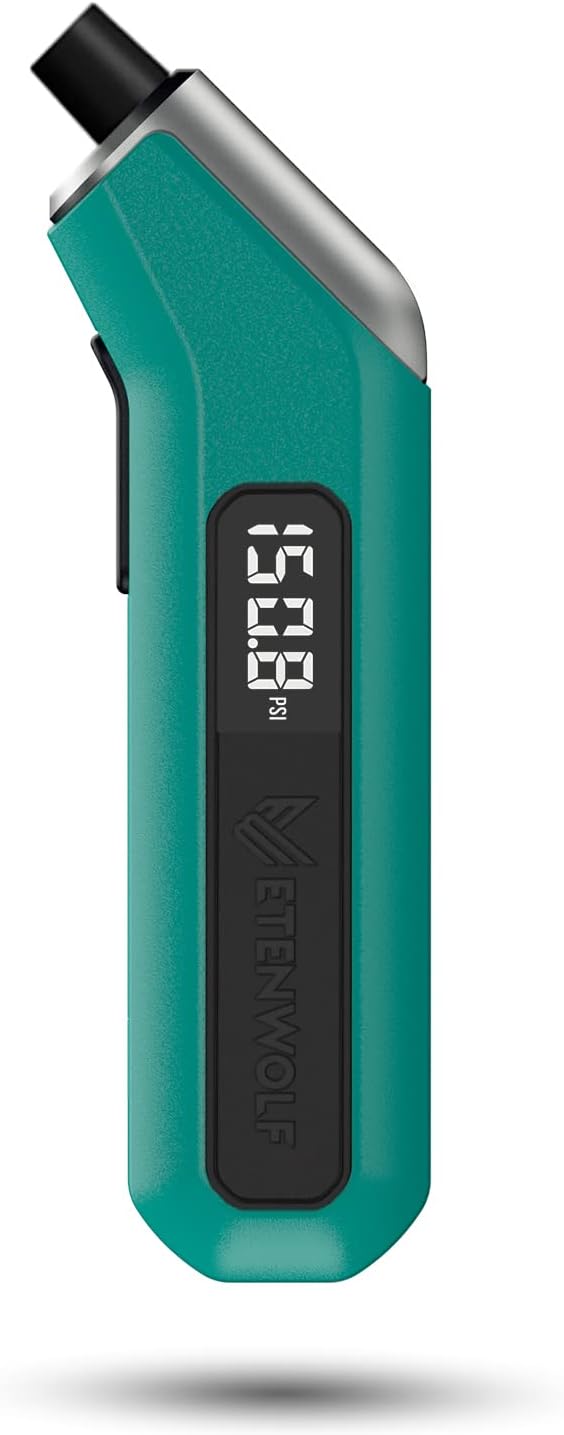
ETENWOLF T300 is a calibrated digital tire pressure gauge designed for reliable readings across low and high pressure ranges. It includes thermal compensation for stable performance in extreme cold or heat, an LED light for visibility, and an auto shut-off to help preserve battery life. Ideal for pickups, RVs, and heavy-duty vehicles, it delivers accurate PSI measurements with sturdy durability.

The ETENWOLF T500 digital tire pressure gauge with inflator delivers accurate readings across a wide 0–250 PSI range, calibrated to ANSI B40.7 Grade 2A. An all-in-one tool combines gauge, air chuck, hose, inflating and controlled bleed for checking, inflating, and deflating tires on many vehicle types. It’s built for reliable use in extreme temperatures and features an illuminated backlit display with replaceable AAA batteries for convenient operation.

ETENWOLF’s tire pressure gauge helps you quickly and accurately check tire PSI across cars, trucks, motorcycles, bikes, and more. It’s manually calibrated to ANSI B40.1 Grade A for reliable readings, includes a large glow dial for easy nighttime viewing, and features a 360-degree swivel chuck for use at any valve angle. The gauge also works consistently in extreme hot or cold weather.
Frequently Asked Questions
Does the AstroAI pencil gauge require batteries?
No. Air pressure mechanically moves the indicator bar, so there is no battery, charging cable, screen, or power button to maintain.
What pressure units can it display?
The four-sided indicator bar displays 10–75 PSI, 70–550 kPa, and 0.7–5.5 BAR. Choose the scale that matches your vehicle placard, equipment label, or owner’s manual.
How accurate is the AstroAI pencil tire gauge?
AstroAI lists ANSI B40.1 Grade B calibration and an accuracy claim of ±2% of span. Properly seating the nozzle is essential because escaping air can create a low or inconsistent reading.
Can it measure bicycle tires?
It can measure compatible Schrader-valve bicycle tires between 10 and 75 PSI. A Presta valve requires an adapter, while tires below 10 PSI or above 75 PSI require a different gauge.
Is it suitable for trucks, trailers, and RVs?
Only when the required cold pressure stays within 10–75 PSI. Many heavy-duty truck, trailer, and RV tires require pressures above 75 PSI, so check the placard or manual before using this model.
How does the built-in deflator work?
Press the deflator while the nozzle is seated on the valve to release a small amount of air. Stop and measure again after each brief release because the gauge does not provide a continuous live reading.
Should tire pressure be checked when tires are hot or cold?
Use the vehicle manufacturer’s recommended cold pressure and measure before driving when possible. Tire pressure normally rises as the tire warms, so do not release air from a warm tire simply to match a cold specification.
What should you do if the indicator bar sticks?
Check for grit or visible damage and make sure the bar moves straight into the body. Replace the gauge if it continues to stick or gives inconsistent readings, since a damaged pressure gauge should not be trusted for tire maintenance.
The Bottom Line
The AstroAI Pencil Tire Pressure Gauge 2 Pack is a practical choice for drivers who want two compact, battery-free gauges for routine 10–75 PSI checks. Its main strengths are simple operation, easy storage, and an integrated deflator, while its smaller analog markings and limited pressure range make a digital or higher-range gauge better for some buyers.
You should consider it for passenger vehicles and compatible bicycles or equipment. Skip it when your required pressure falls outside its stated range or you need a large illuminated display.
Ready to Buy?
Check the latest price, seller, and product details before you decide.