Disclosure: As an Amazon Associate, we earn from qualifying purchases. If you click a link on this page and make a purchase, we may receive a small commission at no extra cost to you.
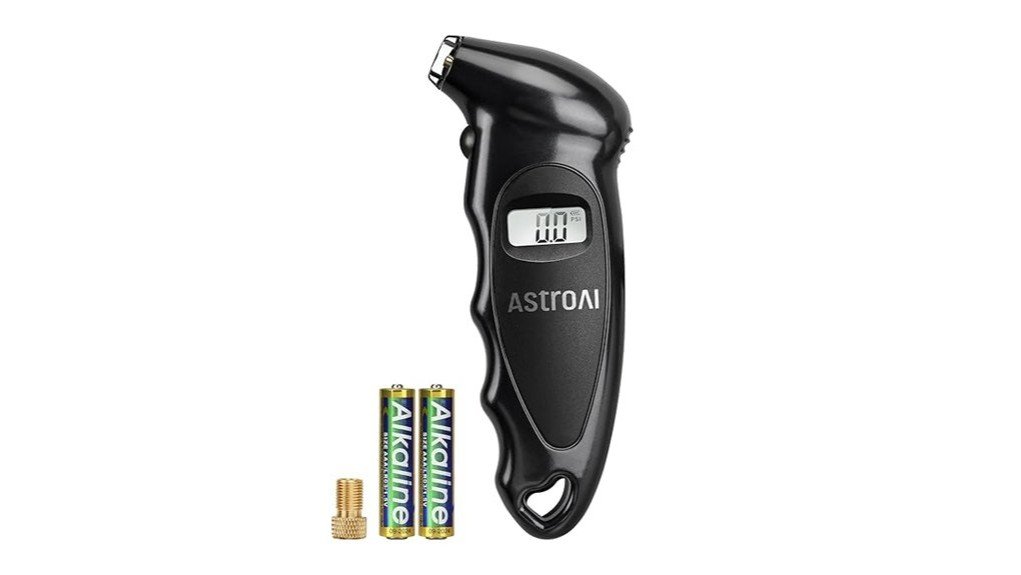
Checking tire pressure should take less than a minute, but dim lighting, awkward valve stems, and hard-to-read analog gauges can make the job frustrating. The AstroAI Digital Tire Pressure Gauge is a compact 0-150 PSI tool with a backlit display, an illuminated nozzle, four measurement units, and replaceable AAA batteries. This review explains how well those features suit routine car, motorcycle, and bicycle checks. It is a practical budget gauge, but it only measures pressure and its plastic body is better suited to glove-box use than heavy shop abuse.
Quick Verdict
Rating: 8.5/10, Recommended with caveats
Best For: Drivers and cyclists who want a small, easy-to-read gauge for routine cold-tire checks.
Bottom Line: The 0.1-unit display, lighted nozzle, and replaceable AAA batteries make pressure checks quick and clear. It is not an inflator, and buyers who need a rugged professional gauge or pressures above 150 PSI should choose another model.
| Specification | Detail |
|---|---|
| Brand | AstroAI |
| Product | Digital Tire Pressure Gauge with replaceable AAA batteries |
| Amazon ASIN | B07Y9HS7GT |
| Pressure range | 0-150 PSI |
| Display resolution | 0.1-unit increments |
| Measurement units | PSI, kPa, bar, and kgf/cm² |
| Display | Backlit LCD with illuminated nozzle |
| Power | 2 AAA batteries, listed as included |
| Body material | ABS plastic with a non-slip texture |
| Listed dimensions | 5.51 x 2.36 x 1.18 inches |
| Listed weight | About 3.1 ounces, or 87-90 grams |
| Valve compatibility | Schrader valves; listing also shows a Presta-to-Schrader adapter |
| Best use | Routine pressure checks for cars, SUVs, light trucks, motorcycles, scooters, and bicycles within the gauge range |
Key Takeaways
- The 0-150 PSI range covers most passenger vehicles, motorcycles, and many bicycle tires.
- The backlit LCD and illuminated nozzle make it easier to find the valve and read the result in low light.
- Four selectable units let you match the pressure format printed on a vehicle label, tire guide, or bicycle specification.
- Replaceable AAA batteries are easier to find and change than small coin cells.
- The gauge is compact and simple, but it does not add or release air automatically and is not built like a metal shop gauge.
What Is the AstroAI Digital Tire Pressure Gauge?
This AstroAI model is a handheld electronic gauge designed to measure air pressure through a tire valve stem. You press the nozzle squarely onto the valve, wait for the reading to stabilize, and view the result on the backlit LCD. A single ON/UNIT/OFF control changes among PSI, kPa, bar, and kgf/cm².
The main selling point is convenience. The light at the nozzle helps you line up the valve in a dark garage, while the digital display removes the need to interpret a small dial or sliding stick. Its small ABS body is easy to store in a glove box, motorcycle luggage, tool bag, or bicycle repair kit.
This is a measuring tool, not a tire inflator. You still need a compressor, pump, or air station to correct low pressure, and you must use the pressure listed by the vehicle or equipment manufacturer rather than the maximum number molded into the tire sidewall.
Who Should Buy It?
Best For
- Drivers who want a compact gauge for monthly cold-tire checks.
- Households that check cars, motorcycles, scooters, and bicycles with one tool.
- Users who prefer a bright numerical display over a pencil or dial gauge.
Skip If
- You need to inflate tires or bleed pressure with the same tool.
- You regularly measure above 150 PSI or work on heavy commercial equipment.
- You want an all-metal, serviceable gauge for frequent professional shop use.
Before You Buy: Check the current listing photos and package description. Seller bundles can change, so confirm that the Presta adapter and batteries are included if you need them.
[Products Worth Considering]

Stay on top of tire pressure with a factory-calibrated digital gauge accurate to ±1 PSI and readable in 0.1 increments. It features a bright backlit LCD plus a illuminated nozzle for easy readings in low light, with auto-off power saving for longer battery life. Switch quickly between PSI, Bar, Kgf/cm², and KPA using a single button, and cover most everyday vehicles with a 0–150 PSI range.

AstroAI’s calibrated digital tire pressure gauge delivers precise readings across a 0–150 PSI range, with high clarity from a backlit LCD. Built for everyday road use, it features one-button operation, an anti-slip ergonomic grip, and support for multiple pressure units plus auto shutoff. Powered by AAA batteries, it’s an all-weather essential for checking tire health and TPMS warnings.

Get quick, reliable tire readings with a backlit digital gauge that seals easily to valve stems for accurate 0.1 increments. Switch units on demand and check pressure on cars, trucks, motorcycles, and bicycles using the included Presta-to-Schrader adapter. The gauge powers with AAA batteries and automatically shuts off to help save battery life.
Accuracy and Readability
The display reports pressure in 0.1-unit steps, which makes small differences easy to see. That level of display resolution is useful when you are comparing all four tires or adjusting a bicycle tire to a narrow target range. It does not mean the gauge is a laboratory instrument. AstroAI lists a measurement tolerance of about plus or minus 1 PSI for this product family, so minor differences from a vehicle TPMS or another handheld gauge can be normal.
For routine maintenance, consistency matters as much as the last decimal place. Press the nozzle straight onto the valve and hold it firmly long enough to form a seal. A crooked connection can leak air and produce an unstable or unexpectedly low result.
The LCD is clearer than a small mechanical scale in dim conditions. The illuminated nozzle also reduces the chance of missing a recessed valve stem, especially on dark wheels or when checking pressure before sunrise.
Design, Controls, and Battery Use
The ergonomic body has a curved shape and a textured grip. At roughly 5.5 inches long and about 3.1 ounces, it is large enough to hold securely but small enough to keep in a door pocket or glove box. The ABS shell keeps weight down, although it will not tolerate drops and shop-floor abuse as well as a heavy metal gauge.
Operation is simple. Turn the gauge on, select the desired unit, then press the nozzle onto the valve. The display holds the result long enough to read it, and the gauge shuts itself off after a period of inactivity to save power. Published timing differs among current product pages, so you should treat auto-off as a battery-saving feature rather than rely on an exact number of seconds.
Two replaceable AAA batteries are a practical advantage. They are widely available, simple to swap, and easier to handle than multiple small button cells. Remove the batteries before very long storage periods to reduce the risk of leakage inside the compartment.
Fit and Compatibility
The built-in nozzle is made for Schrader valves, the standard valve type used on most cars, SUVs, light trucks, motorcycles, scooters, and many bicycles. The linked listing also describes a Presta-to-Schrader adapter for bicycles with narrower Presta valves. Attach the adapter carefully and avoid overtightening it.
The 150 PSI ceiling is more than enough for normal passenger-car pressures and many road or recreational bicycle setups. It may not suit specialized high-pressure systems or commercial equipment. Always confirm the required pressure and valve type before relying on one gauge for every vehicle in a household.
Wheel design also matters. The straight, short nozzle is easy to use on exposed valve stems, but deeply recessed stems, dual rear wheels, or crowded motorcycle wheels may be easier to reach with an angled or hose-style gauge.
How It Performs in Real Use
For Monthly Car Checks
The gauge works best as a routine maintenance tool. Check the tires before driving or after the vehicle has been parked long enough for the tires to cool. Read each tire in the same unit, compare the result with the driver-door pressure label, and add air with a separate inflator when needed.
For Low-Light Checks
The backlight and nozzle light are genuinely useful in a dark driveway or garage. You can locate the valve, make a cleaner connection, and read the result without holding a phone flashlight in your other hand. The light is for alignment, not for roadside illumination around the vehicle.
For Motorcycles and Bicycles
The compact body fits easily into a small tool kit. It can handle common motorcycle and bicycle pressures within its range, but access may be tight around brake discs, spokes, or small wheels. A valve extension or angled adapter may be more convenient for difficult stem positions.
For Travel and Emergency Kits
Its light weight and replaceable batteries make it easy to leave in a vehicle. Pair it with a portable compressor or compact pump, because the gauge can diagnose low pressure but cannot correct it. Check the batteries a few times each year so the display is ready when you need it.
How to Use It Correctly
- Find the recommended cold pressure on the vehicle placard, owner information, or equipment label.
- Check pressure before driving, not immediately after a long trip when heat has raised the reading.
- Turn on the gauge and select PSI, kPa, bar, or kgf/cm².
- Remove the valve cap and press the nozzle straight onto the valve stem.
- Hold steady until the reading settles, then remove the gauge and replace the cap.
- If a reading looks wrong, reseat the nozzle and repeat the check before adding or releasing air.
Pro Tip: Keep one trusted gauge in the vehicle and use the same tool for repeat checks. This makes it easier to spot meaningful changes instead of comparing small differences between several gauges.
Compatibility and Safety
Correct tire pressure affects handling, tire wear, and heat buildup, but the right target comes from the vehicle or equipment manufacturer. The maximum pressure printed on a tire sidewall is not automatically the recommended operating pressure for your car.
Do not check or adjust a tire that is visibly damaged, separating, smoking, or unusually hot. Move away from the tire and seek professional help. When working beside a road, prioritize a safe location and avoid standing in traffic to take a reading.
The gauge is an electronic tool. Keep it away from prolonged water exposure, corrosive chemicals, and extreme heat. Cold weather can slow LCD response or weaken batteries, so store it in a dry place and verify unusual readings with a second trusted gauge or a tire professional.
Pros and Cons
Pros
- Wide 0-150 PSI range for many common vehicles and bicycles.
- Backlit LCD shows a direct numerical reading in four units.
- Illuminated nozzle helps with alignment in dim conditions.
- Replaceable AAA batteries are easy to find and change.
- Compact, lightweight body stores easily in a vehicle or tool kit.
Cons
- Measures pressure only, so you still need a pump or compressor.
- Short straight nozzle can be awkward on recessed or crowded valve stems.
- ABS construction is less rugged than a professional metal gauge.
Is It Worth the Price?
The AstroAI gauge sits in the budget end of the digital-gauge market. Its value comes from useful everyday features rather than heavy-duty construction: a clear display, four units, a nozzle light, and standard AAA power in a small body.
It is a smart buy for everyday use when you want a dedicated pressure checker that is easier to read than a pencil gauge. The main tradeoff is specialization. A portable inflator with a built-in gauge can both read and correct pressure, while a higher-priced metal gauge may be better for frequent workshop use.
Buy this model for quick checks and portability. Skip it if you need a combined inflator, a hose-style chuck for hard-to-reach stems, or verified calibration for professional testing.
[Products Worth Considering]

AstroAI’s digital tire pressure gauge with inflator helps you quickly check, inflate, and deflate tires with an easy lock-on chuck and integrated bleed valve. It delivers calibrated accuracy within 1% for a clear PSI readout from 3 to 250 PSI, supporting dependable tire maintenance. Designed for many vehicle types, it connects to common compressor outputs and standard Schrader valves.

This calibrated digital tire pressure gauge delivers accurate readings within plus-minus 1 PSI for reliable tire maintenance. It features an illuminated nozzle and backlit LCD display to measure easily in dim areas, and offers four selectable units for versatile use. Automatic shutdown after 30 seconds helps conserve battery life for everyday convenience.

AstroAI’s digital tire pressure gauge inflates and measures with high accuracy, reading within 1% and supporting four pressure units from 3 to 250 PSI. The heavy-duty brass air chuck locks securely on valve stems, while the 19.7-inch stainless braided hose and 360° rotatable dial improve comfort and control for faster single-hand operation. Battery-saver behavior and an integrated flashlight add convenience and safety for everyday roadside and garage use.
How It Compares to Alternatives
A basic Milton pencil gauge is battery-free and often more tolerant of long storage, but its sliding scale is harder to read precisely in dim light. A JACO ElitePro digital gauge typically offers a more substantial body and may include features such as a hose or pressure-release control, but it costs more and takes up more space.
AstroAI also sells higher-range truck gauges for users who need more than 150 PSI or a dual-head chuck. This compact model makes the most sense when low cost, simple controls, and glove-box storage matter more than shop-grade construction.
[Products Worth Considering]

The ETENWOLF T500 digital tire pressure gauge with inflator delivers accurate readings across a wide 0–250 PSI range, calibrated to ANSI B40.7 Grade 2A. An all-in-one tool combines gauge, air chuck, hose, inflating and controlled bleed for checking, inflating, and deflating tires on many vehicle types. It’s built for reliable use in extreme temperatures and features an illuminated backlit display with replaceable AAA batteries for convenient operation.

This tire inflator with pressure gauge delivers long-lasting performance with a durable rubber-protected gauge and sturdy build. The longer hose and 360 swivel air chuck help you seal the valve securely and keep your hands free while measuring, inflating, or deflating. It’s battery-free for reliable use and provides ±2 PSI accuracy in the mid-range for most typical tires, with universal compatibility for 1/4 NPT compressor outputs.

Milton S-921 pencil tire pressure gauge helps you maintain optimal tire pressure for passenger cars with accurate readings in PSI and kPa. It features a built-in deflator valve for convenient pressure adjustments, plus a single chuck head and nylon indicator bar for easy use on the go. Built from durable plated brass and designed for reliable performance, it’s a practical road trip and cold-weather maintenance tool.
Frequently Asked Questions
Does the AstroAI gauge inflate tires?
No. It only measures pressure. You need a separate air compressor, tire inflator, hand pump, or service-station air source to add air.
How accurate is the reading?
The display changes in 0.1-unit increments, while AstroAI lists about a plus or minus 1 PSI measurement tolerance for this gauge family. Reseat the nozzle and repeat any reading that looks unusual.
Can it measure bicycle tires with Presta valves?
The gauge nozzle fits Schrader valves directly. The linked listing describes a Presta-to-Schrader adapter, but package contents can change, so confirm that the adapter is included before ordering.
When should you check tire pressure?
Check when the tires are cold, ideally before driving or after the vehicle has been parked. Warm tires normally show a higher reading, which can lead you to remove too much air.
Why does air leak while taking a reading?
The nozzle may be sitting at an angle or only partly covering the valve. Press it straight onto the stem with steady pressure, then repeat the measurement if the result seems low.
How long do the AAA batteries last?
Battery life depends on check frequency, temperature, and battery quality. Auto shut-off limits wasted power, and standard AAA cells are easy to replace when the screen dims or flashes.
Does it come with a warranty?
AstroAI advertises warranty support for its products, but the exact term for this ASIN is not stated consistently across the available pages. Check the current Amazon listing and seller policy before purchase.
Who should choose a different gauge?
Choose another model if you need pressures above 150 PSI, a dual-head chuck for truck wheels, a built-in bleed valve, or rugged metal construction for daily professional use.
The Bottom Line
The AstroAI Digital Tire Pressure Gauge is a good fit for drivers and cyclists who want a compact, readable tool for routine pressure checks. Its strongest features are the lighted nozzle, four-unit LCD, and replaceable AAA batteries, while its main limits are the measure-only design and lightweight plastic construction. Buyers who need higher pressure, hard-to-reach valve access, or shop-grade durability should choose a more specialized gauge.
Ready to Buy?
Check the latest price, included accessories, and product details before you decide.