Disclosure: As an Amazon Associate, we earn from qualifying purchases. If you click a link on this page and make a purchase, we may receive a small commission at no extra cost to you.
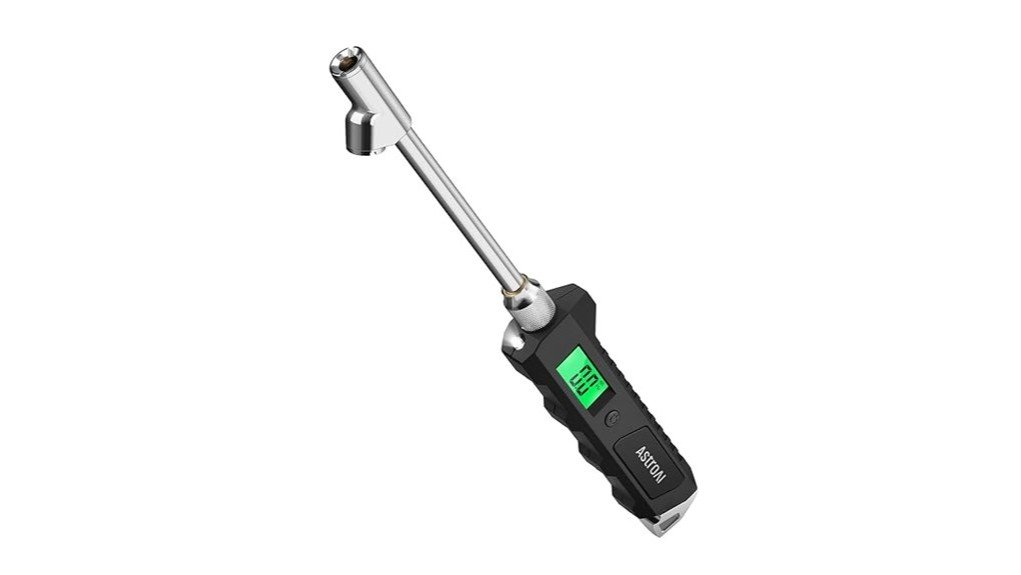
Checking a truck, RV, or dual-rear-wheel tire can be frustrating when a short gauge cannot reach the valve or the display is difficult to read. The AstroAI Heavy Duty Digital Tire Pressure Gauge is designed to solve those problems with a long stainless steel body, dual-head chuck, illuminated display, and pressure range up to 230 PSI. It is especially useful for larger vehicles, but its size and battery dependence make it less convenient than a compact mechanical gauge for some drivers. This review explains its verified specifications, practical strengths, compatibility limits, and the accuracy claim you should examine before buying.
Quick Verdict
Rating: 8.6/10, recommended with caveats
Best For: Truck, RV, pickup, trailer, and mixed-fleet owners who need a long-reach digital gauge
Bottom Line: The 230 PSI range, dual-head chuck, backlit LCD, and stainless steel body make this a practical choice for hard-to-reach Schrader valves. Its main tradeoffs are a larger form factor, reliance on batteries, and conflicting accuracy wording across current and older product documents.
Key Specifications
| Specification | Detail |
|---|---|
| Brand | AstroAI |
| Model | ATG180 |
| ASIN | B01NCX3H1G |
| Product type | Heavy-duty digital tire pressure gauge |
| Pressure range | 0-230 PSI |
| Measurement units | PSI, bar, kPa, and kg/cm² |
| Chuck design | Long-reach dual-head chuck for Schrader valves |
| Material | Stainless steel body with a non-slip handle |
| Display | Backlit digital LCD with an integrated flashlight |
| Dimensions | Approximately 12.6 × 2.2 × 1.4 inches |
| Power | Two AAA batteries |
| Power saving | Automatic shutoff after a short period of inactivity |
| Package contents | Digital gauge and two AAA batteries |
| Best use | Trucks, RVs, trailers, pickups, cars, motorcycles, and Schrader-equipped bicycles |
| Warranty note | Terms can vary by model and seller, so confirm the warranty shown with your order |
Key Takeaways
- The AstroAI ATG180 measures tire pressure from 0 to 230 PSI, giving it enough range for passenger vehicles, pickups, RVs, trailers, and many commercial applications.
- Its long stainless steel body and dual-head chuck are more useful for truck wheels and inner dual-wheel valves than a short angled gauge.
- The backlit LCD and built-in flashlight make nighttime and dim-garage checks easier.
- One control handles power and unit selection, while automatic shutoff helps conserve the two AAA batteries.
- The gauge measures pressure only. It does not inflate tires or release air through a bleed valve.
- It fits standard Schrader valves directly. A separate adapter is normally required for a bicycle with Presta valves.
- The current product listing advertises high-precision calibration, but older documentation uses different accuracy wording.
What Is the AstroAI ATG180?
The AstroAI ATG180 is a handheld digital tire pressure gauge made for vehicles that need more reach than a compact pocket gauge provides. Its straight, elongated body measures about 12.6 inches long, which helps you reach valves positioned inside deep truck wheels or behind wheel covers.
A dual-head chuck gives you two approach angles when connecting to a Schrader valve. That design is especially useful on trucks and RVs with dual rear wheels, where the inner tire valve can be difficult to reach with a short single-head tool.
The digital display shows pressure in PSI, bar, kPa, or kg/cm². A backlight illuminates the reading, while a small flashlight helps you locate the valve stem in a dark garage, parking area, or roadside setting.
Who Should Buy It?
Best For
- Truck and RV owners who need to reach recessed or inner-wheel valves
- Drivers maintaining vehicles with very different recommended pressure levels
- Anyone who prefers a large illuminated digital reading over a pencil gauge
Skip If
- You want a very small gauge for a crowded glove compartment
- You prefer a battery-free mechanical tool
- Your bicycle uses Presta valves and you do not want to carry an adapter
Before You Buy: This is a pressure-checking tool, not an inflator. You still need an air compressor or pump to add air, and the gauge does not provide a built-in bleed valve for lowering pressure.
[Products Worth Considering]

AstroAI’s calibrated digital tire pressure gauge delivers precise readings across a 0–150 PSI range, with high clarity from a backlit LCD. Built for everyday road use, it features one-button operation, an anti-slip ergonomic grip, and support for multiple pressure units plus auto shutoff. Powered by AAA batteries, it’s an all-weather essential for checking tire health and TPMS warnings.

AstroAI’s heavy-duty digital tire pressure gauge delivers quick, accurate readings with 0.1 increments and a secure valve-stem seal. It features a green backlit LCD and built-in flashlight for easy use in low light, plus an ergonomic non-slip stainless-steel design. The wide 0–230 PSI range works across common vehicle tires, with unit selection and an auto shut-off to save battery.
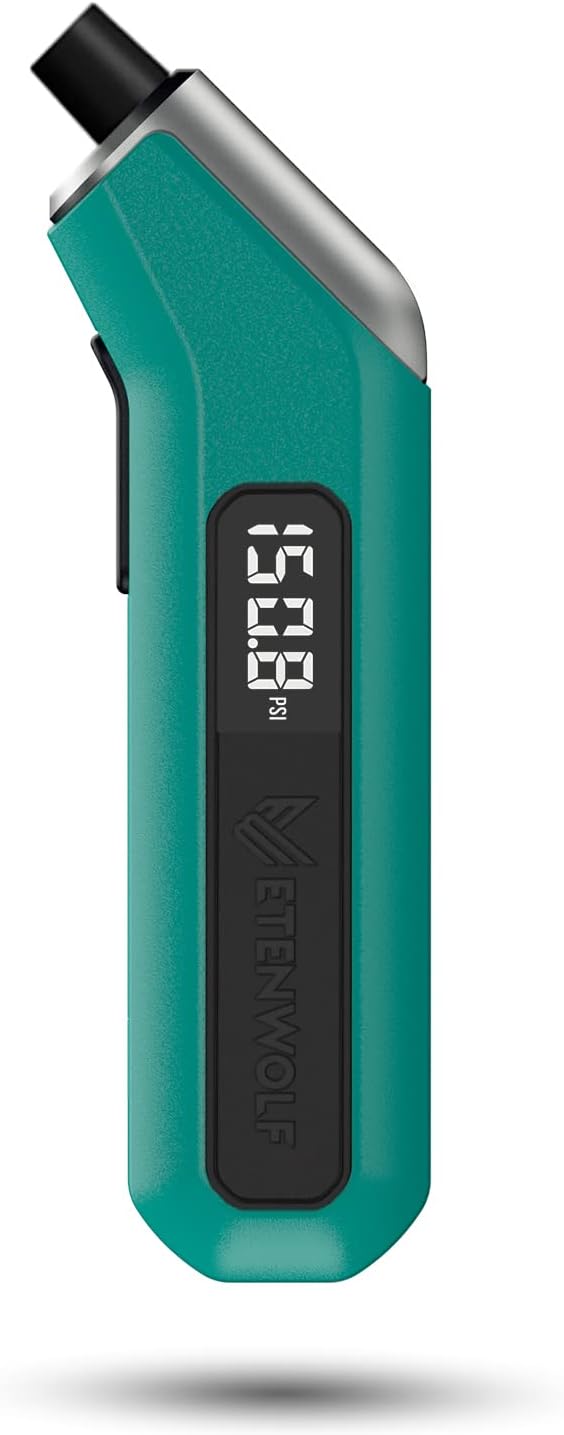
ETENWOLF T300 is a calibrated digital tire pressure gauge designed for reliable readings across low and high pressure ranges. It includes thermal compensation for stable performance in extreme cold or heat, an LED light for visibility, and an auto shut-off to help preserve battery life. Ideal for pickups, RVs, and heavy-duty vehicles, it delivers accurate PSI measurements with sturdy durability.
Accuracy and Pressure Range
The 0-230 PSI range is one of this gauge’s clearest advantages. A typical passenger car may need pressure in the 30 to 40 PSI range, while some truck, trailer, and RV tires require much higher pressures. Using one gauge for several vehicle types can simplify your maintenance kit.
The current product title for this ASIN advertises calibration to ANSI B40.7 Grade 2A with a stated 0.5% accuracy figure. However, older manual copies associated with the product use different tolerance wording. That conflict does not automatically mean the current gauge is inaccurate, but it makes the included manual and seller listing important references for the exact version you receive.
For routine maintenance, repeatability is often as important as a single claimed percentage. Take two readings without changing the tire pressure. If the numbers differ noticeably, check the chuck angle, reseat the nozzle, and inspect the valve for dirt or damage.
Pro Tip: Check tire pressure when the tires are cold, preferably before driving or after the vehicle has been parked for several hours. Compare the reading with the pressure listed on the driver-door placard or vehicle documentation, not the maximum pressure molded into the tire sidewall.
Backlight, Flashlight, and One-Button Control
The backlit LCD is easier to read than the narrow scale on a pencil gauge, especially when you are checking several tires. The display supports four units, so you can work in PSI or switch to bar, kPa, or kg/cm² when your vehicle documentation uses a different measurement.
The integrated flashlight is aimed near the chuck area. It is not meant to replace a full work light, but it can help you find the valve stem, remove its cap, and align the chuck after dark.
One control turns the unit on, cycles through measurement units, and allows manual shutdown. The gauge also turns itself off after a short period of inactivity. Product documentation lists slightly different auto-off times for different versions, but the function is intended to prevent accidental battery drain.
Fit and Compatibility
The ATG180 connects directly to standard Schrader valve stems. These valves are common on cars, SUVs, pickups, trucks, RVs, trailers, motorcycles, and many recreational vehicles.
Many mountain bikes and casual bicycles also use Schrader valves. Road bikes and some higher-end bicycles often use narrower Presta valves. The AstroAI gauge will not connect directly to a Presta valve unless you install a suitable adapter first.
The long body and dual-head chuck provide the most value on large wheels and dual-rear-wheel setups. On a small passenger car, the gauge still works, but its length can feel less convenient than a short angled digital model.
Materials and Build Quality
The main tube is stainless steel, which gives the tool more structure than a small all-plastic gauge. A textured, non-slip grip helps you control the body while pressing the chuck against a valve stem.
The tool is still an electronic measuring device. Dropping it, allowing water into the display area, or storing it loose with heavy tools can damage the sensor or screen. Keep it in a dry compartment or protective tool pouch when it is not in use.
The two AAA batteries are easier to replace than uncommon button cells. Battery power is still a limitation, so carrying a spare pair makes sense when the gauge is part of an RV, trailer, or roadside emergency kit.
How It Performs in Real Use
For Trucks and RVs
This is the situation where the ATG180 makes the most sense. Its length reduces the need to reach deep between wheel components, and the second chuck angle can help you connect to an inner dual-wheel valve. The 230 PSI ceiling also leaves more measurement headroom than a basic 60 PSI passenger-car gauge.
For Daily Car Maintenance
The illuminated display is clear and the operation is simple, but the long body takes more storage space than a compact gauge. It works well in a garage toolbox or trunk organizer. Drivers who only maintain one passenger car may prefer a smaller model.
For Nighttime Roadside Checks
The flashlight and backlight help you work without holding a phone in your other hand. You should still move the vehicle to a safe, level location, turn on hazard lights when appropriate, and avoid checking a roadside tire where traffic creates a danger.
For Motorcycles and Bicycles
The gauge can measure a motorcycle or Schrader-equipped bicycle tire, but the long straight body may be awkward around tight brake, chain, or wheel components. Check the available approach angle before buying it mainly for a motorcycle or bicycle. Presta-equipped bicycles need an adapter.
How to Use It Correctly
- Park the vehicle on a stable surface and allow the tires to cool.
- Find the recommended cold-tire pressure on the vehicle placard or in the owner’s manual.
- Remove the valve cap and inspect the valve stem for dirt, moisture, or visible damage.
- Turn on the gauge and select the required measurement unit.
- Place the suitable chuck head squarely over the Schrader valve.
- Press firmly until you have an airtight seal and the display locks on a reading.
- Remove the gauge and repeat the measurement to confirm consistency.
- Add or release air with a separate pump, compressor, or approved tool as needed.
- Recheck the pressure and reinstall the valve cap.
Common Mistakes to Avoid
- Do not use the tire sidewall’s maximum pressure as the normal inflation target.
- Do not take only one reading if air escaped around the chuck.
- Do not measure immediately after a long drive and compare the result with a cold-pressure specification.
- Do not force the chuck onto an incompatible Presta valve.
- Do not assume the gauge can add or remove air by itself.
Compatibility and Safety
Use the gauge only for its intended pressure-measurement purpose and within its stated range. Inspect the housing, display, chuck, and battery compartment before use. Stop using the tool if the body is bent, the screen is damaged, or the readings become erratic.
Keep your hands, clothing, and the gauge away from moving vehicle parts. The vehicle should be parked before you check pressure. For heavy trucks, commercial fleets, or specialized tires, follow the vehicle, tire, and fleet-maintenance procedures provided by the manufacturer or a qualified technician.
A pressure gauge helps you monitor inflation, but it cannot diagnose internal tire damage, sidewall separation, punctures, wheel damage, or valve failure. Have the tire inspected professionally if it loses pressure repeatedly or shows visible damage.
Pros and Cons
Pros
- Wide 0-230 PSI range covers passenger and heavy-duty applications
- Long dual-head chuck helps reach truck and dual-wheel valves
- Backlit LCD is easy to read in dim conditions
- Built-in flashlight helps you locate valve stems after dark
- Stainless steel body and replaceable AAA batteries suit regular garage use
Cons
- Larger and less pocket-friendly than a compact digital gauge
- Requires batteries and has no mechanical backup display
- Accuracy and warranty wording vary across current and older documentation
Is It Worth the Price?
The AstroAI ATG180 offers strong value for drivers who will use its long reach and high pressure range. A truck, RV, trailer, or mixed-vehicle household gets more benefit from it than someone who checks only one compact car.
Its value comes from combining a digital display, low-light features, four measurement units, a dual-head chuck, and a stainless steel body in one tool. You would otherwise need to compromise on reach, display visibility, or measurement range with many smaller gauges.
It is not the best fit if portability and battery-free operation matter more than reach. A simple mechanical gauge may cost less and remain ready after years in storage, although it will not provide the same illuminated digital reading.
[Products Worth Considering]

Get quick, reliable tire readings with a backlit digital gauge that seals easily to valve stems for accurate 0.1 increments. Switch units on demand and check pressure on cars, trucks, motorcycles, and bicycles using the included Presta-to-Schrader adapter. The gauge powers with AAA batteries and automatically shuts off to help save battery life.

Stay on top of tire pressure with a factory-calibrated digital gauge accurate to ±1 PSI and readable in 0.1 increments. It features a bright backlit LCD plus a illuminated nozzle for easy readings in low light, with auto-off power saving for longer battery life. Switch quickly between PSI, Bar, Kgf/cm², and KPA using a single button, and cover most everyday vehicles with a 0–150 PSI range.

Check tire pressure with the Milton S-925 pencil gauge built for trucks, RVs, and bicycles. It features a single-head chuck with a built-in deflator valve, and it displays readings in both PSI and kPa for convenient use. The gauge is designed for accurate, repeatable pressure checks within its working range.
How It Compares to Alternatives
The compact AstroAI 230 PSI digital gauge is easier to store and may feel more natural around passenger-car or bicycle wheels. The ATG180 is better when you need its long body and dual-head access for truck, RV, or inner-wheel valves.
AstroAI’s 150 PSI mechanical dual-head gauge removes the need for batteries and offers similar long-reach access, but it has a lower maximum range and lacks the backlit digital display and flashlight. The ATG180 makes the most sense when visibility, multiple units, and a 230 PSI range matter more than compactness or battery-free simplicity.
[Products Worth Considering]

This all-in-one air compressor accessory kit combines a digital tire pressure gauge with an inflator and blow gun in a single easy-to-use unit. The heavy duty, corrosion-resistant construction helps you quickly set and read tire PSI up to 200, and the vent valve releases excess air without removing the chuck. It connects to any 1/4 inch NPT air compressor output and includes multiple nozzles, adaptors, and stem caps for versatile inflating and blowing tasks.

AstroAI’s digital tire pressure gauge with inflator helps you quickly check, inflate, and deflate tires with an easy lock-on chuck and integrated bleed valve. It delivers calibrated accuracy within 1% for a clear PSI readout from 3 to 250 PSI, supporting dependable tire maintenance. Designed for many vehicle types, it connects to common compressor outputs and standard Schrader valves.

AstroAI’s tire pressure gauge with inflator helps you check and adjust car tire pressure accurately for safer, smoother driving. It offers 3-in-1 operation to inflate, deflate, or measure pressure, with an easy-to-read 2.5-inch glow dial and a heavy-duty air chuck for convenient use. Universal compatibility supports Schrader-valve tires and quick-connect 1/4" NPT air compressors for quick maintenance.
Frequently Asked Questions
Does the AstroAI ATG180 work on regular cars?
Yes. It connects to standard Schrader valves used on most passenger cars, SUVs, and pickups. Its long body is more than most car owners need, but the digital display and 230 PSI range still work for normal passenger-car pressures.
Can it reach the inner tire on a dual-rear-wheel truck?
That is one of its main intended uses. The long body and dual-head chuck provide more reach and more than one approach angle, although access still depends on the wheel and valve-stem position.
Does it work on bicycle tires?
It works directly on a bicycle with Schrader valves. A Presta valve normally requires a separate Presta-to-Schrader adapter, and the gauge’s long body may be awkward on tightly spaced wheels.
What pressure units can the display show?
The display supports PSI, bar, kPa, and kg/cm². You can cycle through the units with the gauge’s control button.
How accurate is the AstroAI Heavy Duty gauge?
The current listing advertises ANSI B40.7 Grade 2A calibration with a 0.5% accuracy figure. Older documentation lists different tolerance wording, so check the manual included with your unit and confirm repeatability with two consecutive readings.
Are batteries included?
The product manual lists two included AAA batteries. Package contents can change, so confirm the current seller description before ordering and keep a spare pair in your vehicle kit.
Can this gauge inflate or deflate a tire?
No. It measures pressure only and does not connect to an air compressor as an inflator. You need a separate pump, compressor, or valve tool to add or release air.
What warranty does it include?
An older manual associated with the model states a one-year limited warranty, while AstroAI’s current general policy lists different periods for different tire-gauge models. Use the warranty terms shown on your seller page, order confirmation, and included documentation.
The Bottom Line
The AstroAI ATG180 is a strong choice for truck, RV, trailer, and mixed-vehicle owners who need a long-reach digital gauge with a broad 0-230 PSI range. Its main strengths are the dual-head chuck, illuminated display, flashlight, and stainless steel body, while its size, battery dependence, and inconsistent legacy specification records are the main limitations.
Choose it when access and display visibility matter more than pocket-sized storage. Skip it if you want a compact passenger-car gauge, a battery-free tool, or a direct connection to Presta bicycle valves.
Ready to Buy?
Check the latest product details, included accessories, and warranty terms before you decide.