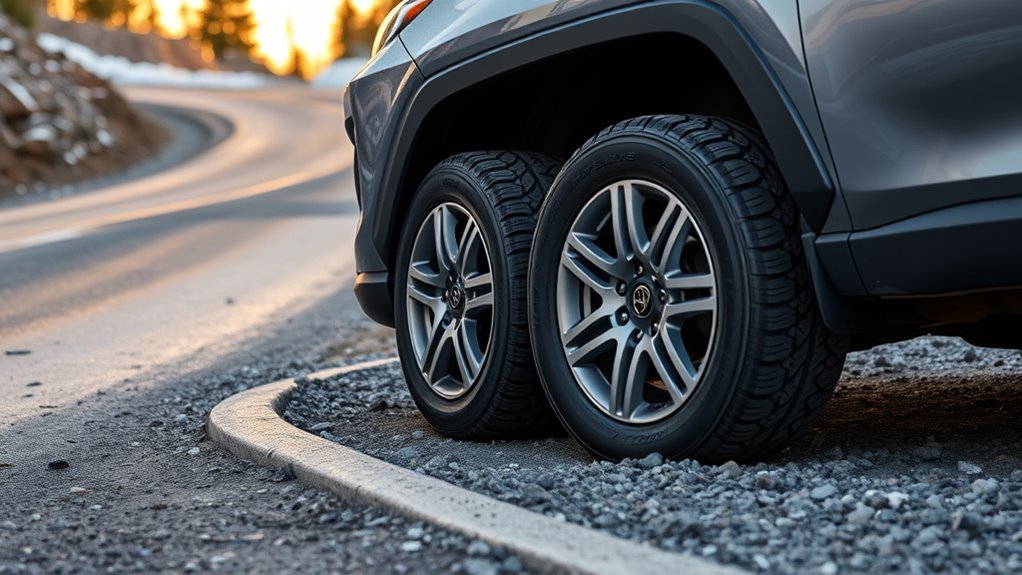
Choosing tires for your Toyota RAV4 is not just about picking the most rugged tread or the longest mileage warranty. The best choice depends on where you drive, how often you leave pavement, what winter weather you face, and whether the tire matches your exact RAV4 size, load rating, and speed rating.
Quick Answer
For most Toyota RAV4 drivers who stay on paved roads, quality all-season tires are the better daily choice because they are usually quieter, smoother, and longer-lasting. Choose all-terrain tires if you regularly drive gravel roads, light trails, campsites, mud, or rough job sites and can accept more road noise and possible efficiency loss.
Key Takeaways
- All-season tires are best for commuting, highway driving, rain, dry roads, and mild winter weather.
- All-terrain tires make sense if your RAV4 often sees gravel, dirt, muddy access roads, campsites, or rough surfaces.
- Do not buy by tread style alone. Match your RAV4’s tire size, load index, speed rating, and inflation guidance from the door placard or owner’s manual.
- For serious winter driving, look for the Three-Peak Mountain Snowflake symbol, but remember that even 3PMSF-rated tires are not always a substitute for dedicated winter tires on ice.
At a Glance
| Time Required | 10–20 minutes to compare your driving needs, check your tire placard, and review tire ratings |
| Difficulty | Easy for choosing a category; professional installation is recommended |
| Tools Needed | Tire placard, owner’s manual, tread-depth gauge, tire-pressure gauge, and tire sidewall information |
| Cost | Varies by size, brand, warranty, rebates, installation, balancing, alignment, and road-hazard coverage |
Start With RAV4 Tire Fitment Before Choosing a Tread Type
Before comparing all-season and all-terrain tires, confirm what your RAV4 actually needs. Check the tire placard on the driver-side door jamb and your model-year owner’s manual for the correct tire size, cold inflation pressure, load rating, and speed rating. Toyota RAV4 tire sizes can vary by year, trim, wheel size, Hybrid, Prime, and package.
The NHTSA TireWise guide explains that tire ratings and sidewall information help drivers choose and maintain tires correctly. Toyota’s owner information also tells RAV4 owners to inspect treadwear indicators, uneven wear, and tire condition as part of tire care.
Warning: Do not install a tire with a lower load index, lower speed rating, wrong size, or incompatible diameter just because the tread looks better. If you want to change wheel size or tire size, ask a qualified tire professional to confirm fitment, clearance, speedometer impact, and AWD compatibility.
What Are All-Season Tires and Their Benefits?

All-season tires are built for everyday driving on pavement. For most RAV4 owners, they deliver the best mix of comfort, quietness, wet-road grip, light-snow capability, and tread life. They are a practical choice if your week mostly includes commuting, school runs, errands, highway trips, and city driving.
They are not all identical, though. A touring all-season tire may focus on comfort and long treadwear, while a performance all-season tire may focus more on handling. For example, the Michelin Defender2 is listed by Michelin with an 80,000-mile treadwear warranty, but that does not mean every all-season tire will last that long. Tire life depends on alignment, inflation pressure, rotation, road surface, climate, driving style, and the exact tire model.
Choose all-season tires for your RAV4 if you want:
- Comfortable and quiet highway manners
- Good wet and dry pavement performance
- Light-snow capability in mild winter areas
- Long treadwear from many touring-style models
- Better efficiency than many aggressive all-terrain tires
Note: All-season does not mean “best for every season.” If you regularly drive through packed snow, ice, mountain passes, or long subfreezing winters, compare all-weather or winter tires before assuming a standard all-season tire is enough.
What Makes All-Terrain Tires Stand Out?
All-terrain tires use a more open, aggressive tread pattern than standard all-season tires. That design helps the tire bite into gravel, dirt, grass, mud, and uneven surfaces. For a Toyota RAV4 used for camping, fishing access roads, trailheads, rural gravel, or light overlanding, an all-terrain tire can add confidence and durability.
Many all-terrain tires also use tougher shoulder blocks or reinforced construction to handle rougher surfaces. The trade-off is that they can be louder on the highway, feel heavier, cost more, and reduce fuel economy or EV range compared with road-focused all-season tires. This matters more on a RAV4 Hybrid or RAV4 Prime, where efficiency is often a major reason people bought the vehicle.
Here’s a quick comparison of key features:
| Feature | All-Terrain Tires | All-Season Tires |
|---|---|---|
| Tread Design | Rugged, open tread with larger voids | Smoother, road-focused tread |
| Off-Road Capability | Better for gravel, dirt, mud, and rough access roads | Limited beyond maintained dirt or gravel |
| Road Noise | Usually higher, especially as tread wears | Usually lower and smoother |
| Efficiency | May reduce MPG or electric range | Often better for fuel economy and range |
Some crossover-focused all-terrain tires are designed specifically for SUVs like the RAV4. For example, the Falken Wildpeak A/T Trail is listed with a 65,000-mile limited tread life warranty and has earned the Three-Peak Mountain Snowflake symbol. That makes it a stronger winter-capable option than many basic all-terrain tires, but you still need to match the exact size and rating for your RAV4.
[Products Worth Considering]

These universal tire valve stem caps help protect valve cores from dust, debris, and moisture while helping maintain stable tire pressure. The corrosion-resistant metal construction and sealed design provide reliable protection in road grime, mud, and winter conditions. Twist-on installation makes them quick to fit on cars, SUVs, trucks, and motorcycles.

Monitor tire tread wear with a smart, color-coded depth gauge that shows clear condition ranges at a glance. The bar is range marked for fast, easy readings, helping you maintain safer traction and performance. Each gauge is portable with a pocket clip, and the set includes 20 units for daily use and sharing.

Measure tire tread depth quickly and accurately with this LUMITECO dial gauge that reads in 1/32" increments up to 14/32". The color-coded green/yellow/red zones make it easy to judge tire wear and know when replacement is needed. A rugged, compact design with a protective pouch helps keep the gauge ready for use on cars, trucks, motorcycles, and more.
All-Season vs All-Terrain Tires for a Toyota RAV4
The easiest way to choose is to be honest about where your RAV4 spends most of its miles. A rugged tire may look better, but if 95% of your driving is pavement, an all-season tire is often the smarter buy. If your RAV4 frequently leaves pavement, an all-terrain tire earns its keep.
| Category | Choose All-Season | Choose All-Terrain |
|---|---|---|
| Daily commute | Best choice for smooth, quiet pavement driving | Only worth it if your commute includes rough or unpaved roads |
| Rain and wet roads | Often stronger for paved wet-road comfort and braking, depending on model | Can perform well, but aggressive tread is not automatically better on wet pavement |
| Light snow | Good enough for mild winter areas if the tire has strong snow ratings | Better if the tire has the 3PMSF symbol and you also need trail traction |
| Ice and deep winter | Not ideal; consider winter or all-weather tires | Not automatically ideal; 3PMSF helps with snow, not all ice conditions |
| Gravel and dirt roads | Acceptable for occasional maintained roads | Better grip and durability for frequent unpaved use |
| Noise and comfort | Usually quieter and more comfortable | Often louder and firmer |
| Tread life | Many touring models offer long treadwear warranties | Varies widely; rough-road use can wear tires faster |
| Best RAV4 owner | City, suburban, highway, family, and efficiency-focused drivers | Outdoor, rural, camping, trailhead, gravel-road, and light off-road drivers |
[Products Worth Considering]

Keep your tires properly inflated with this analog VONDIOR tire pressure gauge, designed for fast, easy readings without batteries. The swiveling, two-axis hose and large glow dial help you measure at any tire angle with instant visibility. Built with a protective rubber shield, it supports durable, low-maintenance use for cars and trucks.

Steelman white tire marking crayons provide high-contrast, semi-permanent marks for repairing and inspecting tires and equipment. They write on wet or dry, smooth or coarse surfaces including rubber, metal, glass, and wood, making them ideal for puncture location and damage outlining. The lead- and zinc-free crayons resist weather and fading yet wipe away when you no longer need the marks.

These aluminum alloy tire valve stem caps with an O-ring seal help protect valve stems from corrosion while adding a clean, stylish look to your vehicle. The universal fit works across cars, trucks, motorcycles, bicycles, and more, making them an easy upgrade for everyday driving and off-road use. Installation is quick, and the included four-pack keeps all your tires dressed and protected.
How to Choose the Right Tires for Your Needs?
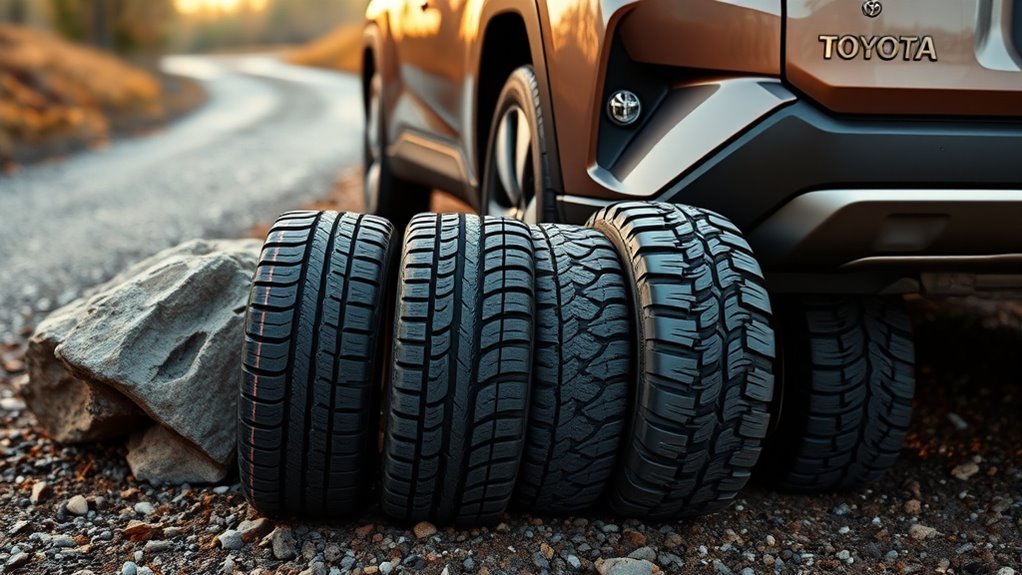
Start with your real driving pattern, not the tire’s appearance. If your RAV4 is a commuter, road-trip vehicle, or family SUV, a high-quality all-season tire will usually feel better every day. If your RAV4 regularly reaches trailheads, cabins, farms, muddy parking areas, or gravel construction sites, all-terrain tires may be worth the trade-offs.
[Products Worth Considering]

The SAFELIFE dial tire tread depth gauge measures tread depth in 1/32 inch increments with clear, easy-to-read 2-inch dial face. Color zones using a traffic light system help you quickly judge whether tread is low, marginal, or ample for safer driving. Built with a durable zinc cast body and a metal detect probe for precise, comfortable use across cars, motorcycles, trucks, and buses.

TIRESHIELD PRO RV tire covers in a set of four deliver year-round protection against UV rays, cracking, fading, water, and snow. The StormLock-System helps keep the covers securely fastened through high wind, while heavy-duty, double-stitched construction supports long-lasting performance. Designed for universal fit, they’re intended for RV, camper, truck, car, and trailer tires within the 26–28.75 inch diameter range, with easy wipe-clean care and storage in the included bag.

Milton S-921 pencil tire pressure gauge helps you maintain optimal tire pressure for passenger cars with accurate readings in PSI and kPa. It features a built-in deflator valve for convenient pressure adjustments, plus a single chuck head and nylon indicator bar for easy use on the go. Built from durable plated brass and designed for reliable performance, it’s a practical road trip and cold-weather maintenance tool.
Choose All-Season Tires If:
- You drive mostly on pavement.
- You want the quietest and smoothest ride.
- You care about fuel economy or RAV4 Hybrid/Prime range.
- You only see occasional light snow.
- You want long treadwear from a touring-style tire.
- You do not need extra bite on dirt, mud, or rocks.
Choose All-Terrain Tires If:
- You regularly drive gravel, dirt, muddy access roads, campsites, or trailheads.
- You want a tougher-looking tire with more shoulder grip.
- You accept more road noise and a firmer ride.
- You are willing to monitor treadwear and rotations closely.
- You choose a RAV4-compatible size, load index, and speed rating.
Consider All-Weather or Winter Tires If:
- You drive in frequent snow, freezing rain, or icy conditions.
- You live in a mountain area or snowbelt climate.
- You want the Three-Peak Mountain Snowflake symbol but do not need off-road tread.
- Your current all-season tires feel weak in cold weather or slush.
The USTMA severe snow tire definition explains the Three-Peak Mountain Snowflake performance mark. In simple terms, 3PMSF means the tire meets a defined snow-traction threshold. It does not mean the tire will stop like a dedicated winter tire on glare ice.
Pro Tip: If you are deciding between two tires, compare the installed price, treadwear warranty, 3PMSF rating, road-noise reviews, wet-braking reputation, and weight. A lighter, road-focused tire may be better for a RAV4 Hybrid, while a tougher all-terrain tire may be better for frequent gravel and trail use.
Maintenance Tips for All-Season and All-Terrain Tires
Good tire maintenance matters no matter which tire type you choose. It helps your RAV4 ride better, stop more predictably, and avoid uneven wear. All-terrain tires can need extra attention because rough roads, mud, rocks, and heavier tread blocks can speed up wear if pressure, rotation, or alignment is ignored.
Toyota maintenance guidance recommends rotating tires every 5,000 to 7,500 miles to help equalize wear and extend tire life.
- Check cold tire pressure monthly. Use the RAV4’s door placard pressure, not the maximum pressure printed on the tire sidewall.
- Rotate on schedule. Follow your model-year maintenance guide, especially on AWD models where uneven tire wear can become a bigger issue.
- Inspect tread depth. Replace tires when treadwear indicators show or when tread is too low for your driving conditions.
- Look for sidewall damage. Cuts, bulges, cracking, punctures, and exposed cords need immediate attention.
- Clean all-terrain tread blocks. Remove packed mud, stones, and debris after trail or gravel use.
- Check alignment if wear looks uneven. Feathering, cupping, one-sided wear, or steering pull can shorten tire life.
- Keep tires matched. On AWD RAV4 models, avoid mixing tire types, sizes, or tread depths unless a tire professional confirms it is safe.
Toyota’s tire guidance says to inspect for treadwear indicators, uneven wear, and tire condition, while NHTSA tire safety guidance emphasizes proper tire pressure, load limits, tread checks, and tire condition. Those basics matter more than the tire category itself.
Frequently Asked Questions
Can I switch between all-season and all-terrain tires seasonally?
Yes, you can switch seasonally if both sets are the correct size, load rating, and speed rating for your RAV4. Use proper mounting, balancing, and rotation records. If each set has its own wheels, seasonal swaps are easier and may reduce mounting costs over time.
How do tire warranties differ between all-season and all-terrain options?
Warranties depend on the exact tire model, not only the category. Many touring all-season tires offer long treadwear warranties, while many all-terrain tires focus more on durability and rough-road traction. Always read the manufacturer’s warranty terms because mileage coverage, exclusions, rotation requirements, and road-hazard protection vary.
What is the average lifespan of all-season vs. all-terrain tires?
A quality all-season tire often lasts longer in normal pavement use, but there is no universal mileage number. Some touring all-season models list warranties up to 80,000 miles, while some crossover all-terrain models list warranties around 60,000 to 65,000 miles. Real life depends on rotation, alignment, pressure, road surface, tire compound, and driving style.
Are all-terrain tires louder on highways compared to all-season tires?
Usually, yes. All-terrain tires have larger tread blocks and wider voids, which can create more road noise, especially at highway speeds or as the tread wears. Some crossover all-terrain tires are quieter than truck-style all-terrain tires, so compare owner reviews and professional road tests before buying.
How do tire prices compare between all-season and all-terrain options?
All-terrain tires often cost more, but prices change by size, brand, sale, warranty, and installation package. Compare the total installed price, including mounting, balancing, valve stems, alignment, road-hazard coverage, and taxes. A cheaper tire is not always cheaper long term if it wears faster or hurts fuel economy.
Will all-terrain tires reduce my RAV4’s fuel economy?
They can. All-terrain tires may be heavier and have more rolling resistance than road-focused all-season tires. The difference varies by tire model, size, tread depth, inflation pressure, and driving speed. RAV4 Hybrid and RAV4 Prime owners should pay extra attention because tire weight and rolling resistance can affect MPG or electric range.
What does the Three-Peak Mountain Snowflake symbol mean?
The Three-Peak Mountain Snowflake symbol means the tire meets a defined snow-traction performance standard. It is more meaningful than a basic M+S marking, but it is not a guarantee of excellent ice braking. If you drive in harsh winter conditions, compare 3PMSF-rated all-weather, all-terrain, and dedicated winter tires.
What tire size does my Toyota RAV4 need?
Check the tire placard on the driver-side door jamb and your model-year owner’s manual. RAV4 tire size can vary by year, trim, wheel size, Hybrid, Prime, and package. When replacing tires, match the correct size, load index, speed rating, and inflation pressure guidance unless a qualified tire professional confirms an alternative is safe.
Conclusion
For most Toyota RAV4 owners, all-season tires are the best everyday choice because they fit the way the vehicle is usually driven: pavement, errands, commuting, rain, highway trips, and mild winter weather. All-terrain tires are worth considering when your RAV4 regularly sees gravel, dirt, muddy access roads, campsites, or light trails.
The right answer is not just “all-season” or “all-terrain.” It is the tire that matches your RAV4’s size and ratings, your local weather, your road surfaces, and your comfort expectations. Check fitment first, compare real warranty terms, look for 3PMSF if snow matters, and keep up with pressure checks, rotations, and tread inspections after installation.
Sources
- NHTSA TireWise — tire safety, tire ratings, treadwear, inflation, and maintenance guidance
- Toyota RAV4 Owner Information: Tires — RAV4 tire inspection, treadwear indicators, rotation, and tire condition guidance
- Michelin Defender2 — example of an all-season tire with an 80,000-mile treadwear warranty
- Falken Wildpeak A/T Trail — example of a crossover all-terrain tire with a 65,000-mile limited tread life warranty and 3PMSF rating
- U.S. Tire Manufacturers Association: Severe Snow Conditions Definition — Three-Peak Mountain Snowflake snow-traction performance definition