
Tire Traction Ratings on the Honda Accord Explained
Tire traction ratings help you compare how well replacement tires for your Honda Accord can stop on wet pavement. The letters matter most when you drive in rain, deal with sudden braking, or want a safer daily commute. But the rating is only one part of the tire decision. You still need the correct Accord tire size, load index, speed rating, cold tire pressure, tread depth, and tire type for your climate.
Quick Answer
For a Honda Accord, an A traction rating is a strong everyday choice, while AA gives the highest UTQG wet-braking grade. The grades run from AA to C and compare straight-line stopping ability on wet pavement under controlled tests, not total tire quality, snow grip, cornering, or worn-tire performance.
Key Takeaways
- UTQG traction grades rank wet-pavement stopping performance from AA as the highest to C as the lowest.
- The rating does not measure snow traction, hydroplaning resistance, dry handling, ride comfort, tread life, or cornering grip.
- Most Accord drivers should look for at least an A traction grade, then confirm the tire size, load index, speed symbol, and cold PSI on the driver’s doorjamb label.
- Even an AA tire can lose wet grip if it is underinflated, worn to 2/32 inch, damaged, overloaded, or poorly aligned.
At a Glance
| Time Required | 5–10 minutes to check a sidewall or tire listing |
| Difficulty | Easy |
| Tools Needed | Tire pressure gauge, tread depth gauge or penny, and the tire sidewall or product page |
| Cost | $0 if you already have a gauge; about $5–$15 for a basic tread or pressure gauge |
What Are Tire Traction Ratings and Why Do They Matter?
Tire traction ratings are part of the Uniform Tire Quality Grading System, often shortened to UTQG. On most passenger-car tires sold in the United States, the sidewall shows three pieces of information: treadwear, traction, and temperature. A typical sidewall line may look like this: TREADWEAR 500 TRACTION A TEMPERATURE A.
The traction letter tells you how the tire performed in a controlled wet-braking test. The grades run from highest to lowest as AA, A, B, and C. A higher grade should give a shorter straight-line stop on wet pavement than a lower grade, assuming the tires are new, properly inflated, and used under similar conditions.
NHTSA currently lists 15% of tires as AA traction, 77% as A, 7% as B, and only four tire lines as C.
For Honda Accord owners, this matters because the Accord is often used as a daily commuter, family sedan, highway car, or rideshare vehicle. Wet braking is one of the moments when tire choice can make a real difference. Still, the traction letter should never be your only buying filter. You also need the right tire size, load rating, speed rating, season category, tread life, and pressure for your exact Accord.
[Products Worth Considering]

Keep your tires properly inflated with this analog VONDIOR tire pressure gauge, designed for fast, easy readings without batteries. The swiveling, two-axis hose and large glow dial help you measure at any tire angle with instant visibility. Built with a protective rubber shield, it supports durable, low-maintenance use for cars and trucks.

Accurately measure tire tread depth with a calibrated gauge marked from 0 to 1 inch in 1/32 inch increments. The color-coded bar helps you quickly identify tread condition ranges, supporting safe driving for trucks, motorcycles, automobiles, and passenger vehicles.

Monitor tire tread wear with a smart, color-coded depth gauge that shows clear condition ranges at a glance. The bar is range marked for fast, easy readings, helping you maintain safer traction and performance. Each gauge is portable with a pocket clip, and the set includes 20 units for daily use and sharing.
Understanding AA, A, B, and C Traction Grades
Here is the practical meaning of each grade when you are comparing tires for a Honda Accord:
| Traction Grade | Wet-Braking Meaning | Best Fit for an Accord |
|---|---|---|
| AA | Highest UTQG traction grade for wet-pavement stopping. | Rainy climates, performance-focused driving, frequent highway use, or drivers who want the strongest wet-braking margin. |
| A | Strong wet-braking performance and the most common traction grade. | Best all-around target for most Honda Accord commuters and family drivers. |
| B | Lower wet-braking grade than A or AA. | Only consider if the tire otherwise fits your budget and use case, and you do not drive often in heavy rain. |
| C | Lowest UTQG traction grade. | Usually not the best choice for an Accord used in wet conditions when A-rated options are available. |
The federal UTQG rule also defines coefficient thresholds for the grades on wet asphalt and wet concrete. In simple terms, AA requires the highest measured wet-friction performance, A is next, then B, then C. You do not need to memorize the test numbers to shop well, but you should understand that these grades are comparative, standardized wet-braking grades.
Note: UTQG rules apply to many new passenger-car tires, but not every tire type is covered. Some deep-tread winter-type snow tires, temporary spares, limited-production tires, and certain small-rim tires may not carry the same UTQG information.
What Tire Traction Grades Do Not Measure
This is the part many tire shoppers miss. A traction grade is useful, but it is narrow. It does not tell you everything about how a tire will behave on your Honda Accord.
- Not snow or ice traction: Winter grip depends on winter compounds, siping, tread design, and whether the tire carries winter-specific markings.
- Not hydroplaning resistance: Hydroplaning depends heavily on tread depth, tread pattern, water depth, speed, and tire width.
- Not dry handling: A tire can have a high wet-braking grade and still feel different in dry cornering, steering response, and ride comfort.
- Not tread life: Treadwear is a separate UTQG number. A sticky tire may stop well in the wet but wear faster than a touring tire.
- Not worn-tire performance: The grade is based on a controlled test, not on how the tire performs after years of wear, poor inflation, or alignment problems.
That is why the best tire for a Honda Accord is not always the tire with the highest single letter. The right choice balances traction grade, treadwear, temperature rating, comfort, road noise, warranty, price, and the weather where you drive.
How Tire Grades Impact Safety and Performance
On wet roads, your Accord’s tires must push water away and maintain contact with the pavement. A higher traction grade can help with wet stopping, but it works best when the tire is properly maintained. An underinflated or worn AA tire can perform worse in real life than a properly inflated A tire with healthy tread.
For everyday Honda Accord driving, an A traction grade is usually a smart minimum target. It gives good wet-braking performance while leaving you plenty of choices across touring, grand-touring, performance, and all-season tire categories. An AA traction grade can be worth the upgrade if you drive in frequent rain, carry family often, drive at highway speeds, or own a sportier Accord trim and want sharper wet-road confidence.
Warning: Do not use traction grade as a substitute for tire condition. Honda warns that excessively worn or improperly inflated tires can cause a crash, and TPMS is not a replacement for regular pressure checks.
What Affects Tire Traction on Wet Roads?

Wet-road traction is affected by more than the letter printed on the sidewall. These factors can change how your Honda Accord feels and stops in rain:
- Tread depth: Tires become less effective at moving water as tread wears down. Replace tires when the tread reaches 2/32 inch, and consider replacing earlier if you drive often in heavy rain.
- Tread design: Grooves and channels help move water away from the contact patch. A tire with strong wet-weather design may feel more secure in storms.
- Rubber compound: Softer or wet-focused compounds can improve grip, but may trade off tread life or rolling resistance.
- Correct inflation: Underinflation can increase heat, uneven wear, and poor handling. Overinflation can reduce ride comfort and change contact with the road.
- Alignment and rotation: Uneven wear can reduce traction even when the tire still has tread left.
- Speed and standing water: No traction rating can overcome driving too fast for deep water, worn tread, or poor road drainage.
Pro Tip: Check pressure when the tires are cold. Honda defines cold tire pressure as pressure measured after the vehicle has been parked for at least three hours or driven less than 1 mile.
Choosing the Right Tires for Your Honda Accord
When choosing tires for your Accord, start with fitment before performance claims. A tire with a great traction grade is still the wrong tire if it does not match your vehicle’s required size, load capacity, or speed rating.
[Products Worth Considering]

Measure tire tread depth quickly and accurately with this LUMITECO dial gauge that reads in 1/32" increments up to 14/32". The color-coded green/yellow/red zones make it easy to judge tire wear and know when replacement is needed. A rugged, compact design with a protective pouch helps keep the gauge ready for use on cars, trucks, motorcycles, and more.

The SAFELIFE dial tire tread depth gauge measures tread depth in 1/32 inch increments with clear, easy-to-read 2-inch dial face. Color zones using a traffic light system help you quickly judge whether tread is low, marginal, or ample for safer driving. Built with a durable zinc cast body and a metal detect probe for precise, comfortable use across cars, motorcycles, trucks, and buses.

Measure tyre tread depth precisely with a digital gauge that reads in both MM and inches, helping you monitor safe driving conditions. The large LCD screen is easy to operate, and the compact tool fits for cars, trucks, and motorcycles. It provides high accuracy with a 0-25.4mm range and includes a 1-year warranty for added peace of mind.
1. Check the Driver’s Doorjamb Label
Your Honda Accord’s tire and loading information label is attached to the driver’s doorjamb. It lists the original tire sizes for the front, rear, and spare, plus the proper cold tire pressure. Use that label as your first reference, especially if you are unsure which tire size your trim uses.
2. Match the Tire Size, Load Index, and Speed Symbol
Accord tire sizes vary by model year and trim. The sidewall may show a code such as 225/50R17 94V. In that example, 225 is tire width, 50 is aspect ratio, R means radial construction, 17 is wheel diameter, 94 is load index, and V is the speed symbol. Replacement tires should match the size and meet or exceed the required load and speed specifications unless a qualified tire professional confirms an approved alternative.
3. Pick a Traction Grade That Matches Your Driving
For most Accord owners, A is the practical target. Choose AA if wet braking is a top priority and the tire also meets your needs for comfort, tread life, price, and fuel economy. Be cautious with B or C traction grades if you drive in frequent rain or carry passengers often.
4. Choose the Right Tire Type
All-season touring tires are common for the Accord because they balance comfort, tread life, and year-round use. Performance all-season tires may offer sharper handling and stronger wet grip, often with a tradeoff in tread life or ride softness. If you drive in snow or ice, consider dedicated winter tires instead of relying on a UTQG traction grade.
Maintaining Tire Traction: Tips for Your Honda Accord
Good tire traction starts with maintenance. A high-rated tire can only do its job if it is inflated, rotated, inspected, and replaced on time.
- Check tire pressure monthly: Use a gauge when the tires are cold. Do not rely only on TPMS; it may not warn you until a tire is already significantly underinflated.
- Inspect tread monthly: Use a tread depth gauge or the penny test. Replace tires when they reach 2/32 inch.
- Rotate as recommended: If your Accord’s tire setup allows rotation, follow the owner’s manual. NHTSA notes that many vehicles use a 5,000–8,000 mile rotation interval when recommended by the manufacturer.
- Watch for uneven wear: Feathering, cupping, or one-sided wear can point to alignment, suspension, or pressure problems.
- Rebalance when needed: If you feel vibration at highway speed, have the tires and wheels checked.
- Replace damaged tires: Bulges, exposed cords, deep cuts, and sidewall cracks are safety issues, not cosmetic problems.
Note: Cold weather can lower tire pressure, and pressure can also change after altitude shifts or long drives. Check pressure more often when seasons change.
Where to Find Accurate Tire Ratings for Your Model
You can find tire traction ratings in three reliable places:
Sidewall Markings
Look on the tire sidewall for the UTQG line. It usually appears near the tread shoulder and may read something like TREADWEAR 640 TRACTION A TEMPERATURE A. The traction letter is the middle performance grade.
NHTSA Tire Rating Lookup
The NHTSA UTQG tire rating lookup lets you compare treadwear, traction, and temperature ratings across thousands of tire lines. This is useful if the tire listing is incomplete or you want to verify a grade before buying.
Manufacturer and Retailer Specifications
Tire manufacturer pages and major retailer listings usually show UTQG ratings under “specifications” or “sizes.” Confirm the rating for your exact size, because one tire model can have different specifications across sizes.
Honda Owner Information
Use Honda’s official Accord owner information for tire size, cold pressure, tire labeling, and checking guidance. The tire rating helps you compare replacement options, but Honda’s label tells you what fits your specific car.
Frequently Asked Questions
Is traction A or AA better?
AA is better than A in the UTQG traction system because it is the highest wet-braking grade. However, A is still a strong grade and is often the practical choice for everyday Honda Accord driving.
Which tires are best for a Honda Accord?
The best tires for a Honda Accord are tires that match the doorjamb label size and pressure, meet the required load index and speed symbol, and fit your climate. For most drivers, an all-season touring or grand-touring tire with an A or AA traction grade is a good starting point.
Should I get H or T rated tires for my Accord?
H and T are speed ratings, not traction grades. Use the speed symbol listed for your Accord’s original tire size or choose a replacement that meets or exceeds the required rating. Do not downgrade speed rating unless Honda guidance or a qualified tire professional confirms it is appropriate.
What is a good traction rating for tires?
A good traction rating is A, and the highest rating is AA. For a Honda Accord used in rain, A is a strong minimum target, while AA may be worth choosing if wet braking is your top priority.
Do traction ratings measure hydroplaning resistance?
No. UTQG traction ratings compare wet stopping ability under controlled conditions. Hydroplaning resistance depends on tread depth, tread pattern, tire width, vehicle speed, water depth, and road surface.
Do winter tires have UTQG traction ratings?
Some tire types are excluded from UTQG requirements, including deep-tread winter-type snow tires. If you need snow or ice performance, look for a true winter tire and do not rely only on the UTQG traction letter.
Conclusion
Tire traction ratings are useful when choosing replacement tires for your Honda Accord, but they are not the whole story. Use A as a strong everyday target and AA when you want the highest UTQG wet-braking grade. Then confirm the tire size, load index, speed rating, cold pressure, treadwear rating, and tire type for your exact Accord. The safest tire is not just the highest-rated tire on paper; it is the right tire, in good condition, maintained at the correct pressure, and replaced before the tread is worn out.
Sources
- NHTSA TireWise — UTQG traction grades, tire maintenance, tread depth, rotation, and pressure guidance.
- 49 CFR § 575.104 Uniform Tire Quality Grading Standards — federal UTQG scope, grade categories, and traction testing thresholds.
- NHTSA UTQG Tire Rating Lookup — official tire rating lookup database.
- Honda 2025 Accord Tire and Loading Information Label — location and contents of the Accord doorjamb tire label.
- Honda 2025 Accord Checking Tires — cold tire pressure, inspection, and tire condition guidance.
- Honda 2025 Accord Tire Labeling — tire size, load index, speed symbol, TIN, and tire terminology.
[Products Worth Considering]

Milton S-921 pencil tire pressure gauge helps you maintain optimal tire pressure for passenger cars with accurate readings in PSI and kPa. It features a built-in deflator valve for convenient pressure adjustments, plus a single chuck head and nylon indicator bar for easy use on the go. Built from durable plated brass and designed for reliable performance, it’s a practical road trip and cold-weather maintenance tool.
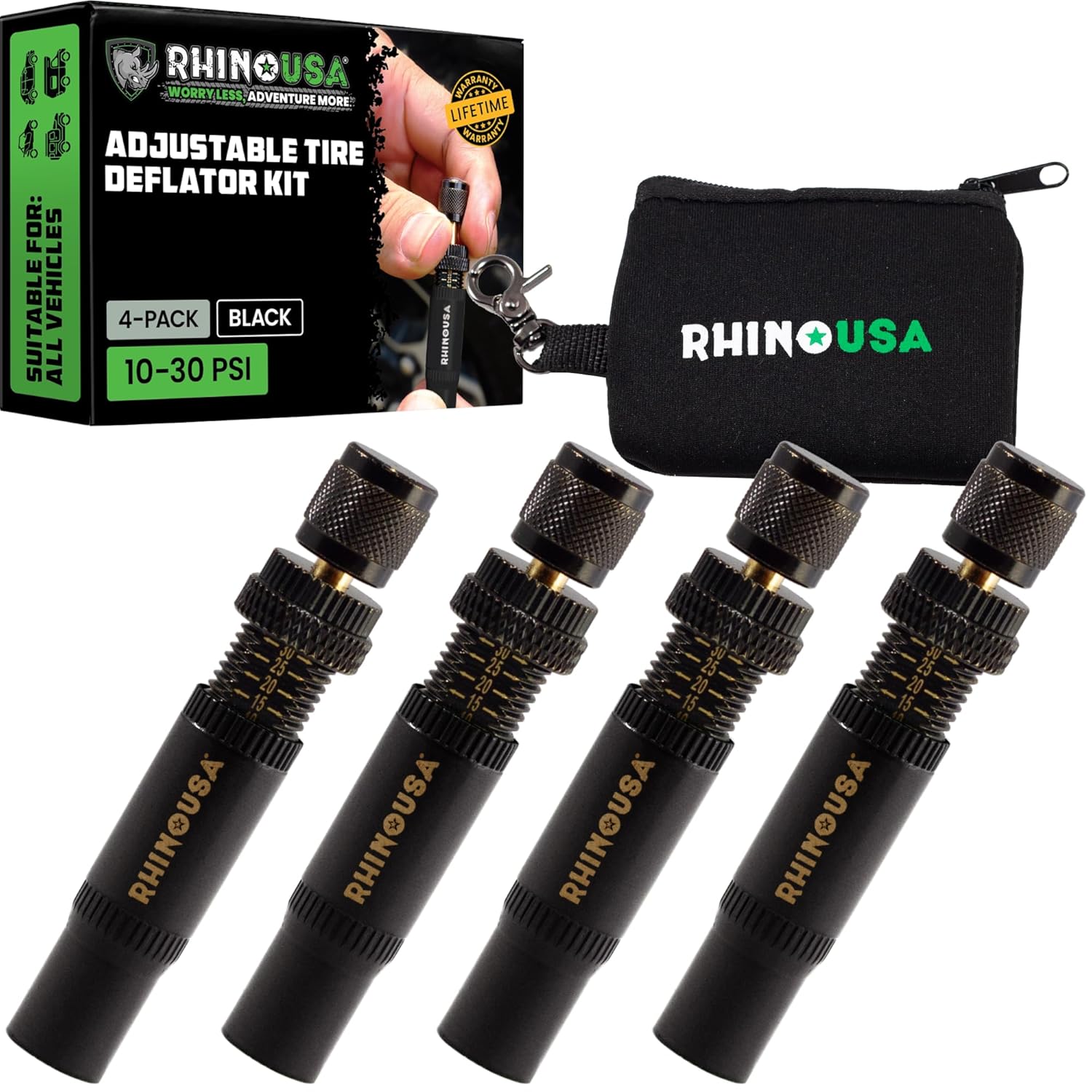
Use the Rhino USA adjustable tire deflators to air down all four tires at once by screwing one deflator onto each valve stem, letting you step away while the tires reach your preset pressure. Each deflator independently adjusts across a 10–30 PSI range with laser-etched indicators for quick setup and verification, making it ideal for beach, sand, and rocky off-road trails.

Vigorder rubber cement glue delivers superior adhesion and cures quickly within about 30 seconds for seamless rubber bonding. Once cured, it helps provide a strong, durable, waterproof seal that holds up to vehicle weight, pressure, and heat. Suitable for cars, motorcycles, trucks, bicycles, and off-road tires, it’s designed for emergency patch and maintenance repairs.

Related Articles
How Tall Is a 305 70 R17 Tire? Exact Height, Width & Dimensions
Curious how tall a 305 70 R17 tire really is—and whether it fits your truck?
Read More
Can-Am Defender Tire Size Guide: Stock Specs & Upgrade Options
Just how big can you go on a Can-Am Defender before mods become necessary?
Read More
How Tall Is a 275 65 20 Tire? Exact Height, Width & Dimensions
Check the exact height, width, and hidden fitment effects of a 275/65R20 tire before you buy or upgrade.
Read More