
Effect of Tire Size on Toyota Tacoma Gear Ratio
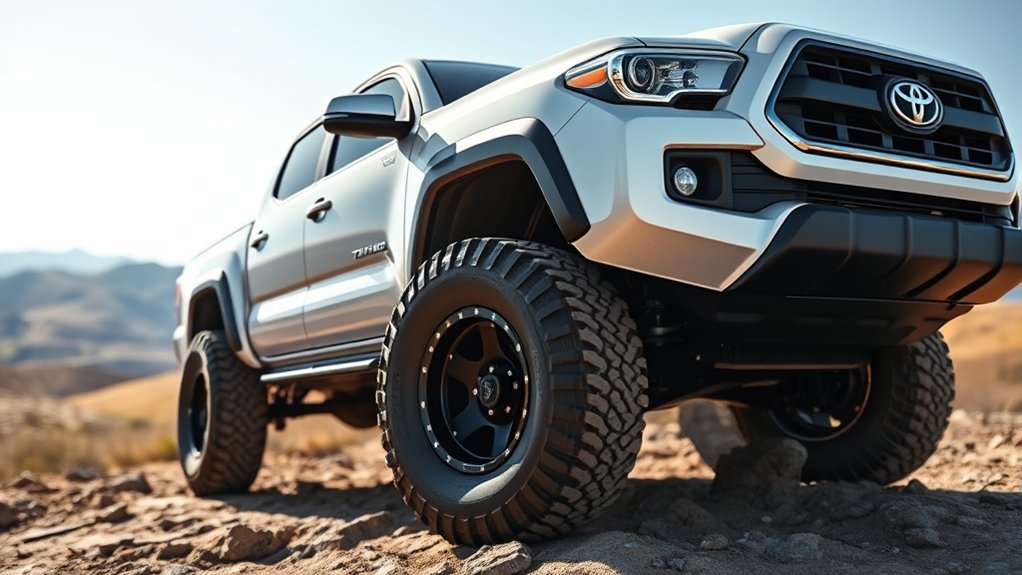
Changing tire size on a Toyota Tacoma changes more than ground clearance. A taller, heavier tire makes the truck’s effective gearing taller, reduces torque multiplication at the contact patch, changes indicated speed, and may increase transmission downshifting. Regearing can restore drivability, but the correct ratio depends on your Tacoma’s model year, engine, transmission, axle, actual tire diameter, added weight, and intended use.
Quick Answer
Larger tires make your Tacoma’s effective axle ratio numerically lower, so the engine turns fewer RPM in the same transmission gear at the same true road speed. Acceleration may feel weaker, and an automatic may hunt between gears. Use the tire-diameter formula as a starting point, then confirm the final ratio with a Tacoma drivetrain specialist.
Key Takeaways
- A taller tire makes the existing axle ratio feel taller, not shorter.
- In the same transmission gear, larger tires lower engine RPM at a given true speed. Extra downshifts can still make RPM flare during hills, towing, or acceleration.
- No single gear ratio is correct for every Tacoma or every 33-, 34-, or 35-inch tire setup.
- Recalibrate supported vehicle settings and initialize the tire-pressure warning system after a tire-size change.
- Keep tire load capacity, clearance, braking, payload, axle limits, and 4WD compatibility in the decision.
Understanding Tire Size and Gear Ratio in Your Tacoma
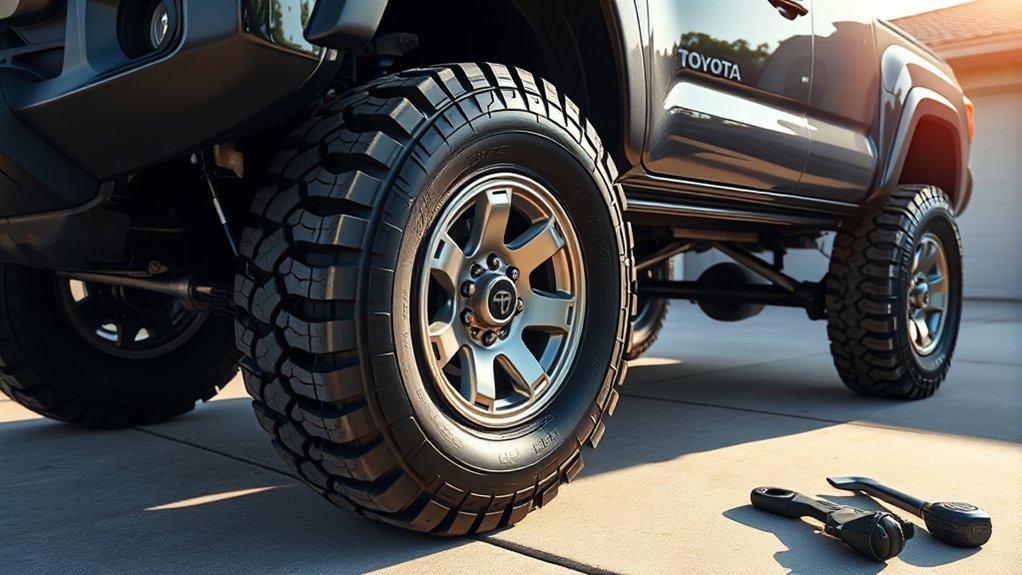
Your Tacoma’s axle ratio describes how many times the driveshaft turns for one wheel revolution. A 3.91:1 ratio, for example, turns the driveshaft about 3.91 times for each axle revolution. A numerically higher ratio, such as 4.88:1, provides more torque multiplication but also raises engine RPM compared with 3.91:1 when every other factor stays the same.
A taller tire travels farther with each revolution. Keeping the same axle and transmission gears therefore makes the overall gearing effectively taller. The truck may feel slower off the line because the engine has less mechanical advantage at the tire.
Note: “Lower gears” usually means a numerically higher axle ratio. For example, 4.88 is lower gearing than 3.91, even though 4.88 is the larger number.
[Products Worth Considering]

This 100-piece tire repair screw plug kit provides a fast, self-service solution for punctures on the road. Choose the correct plug size, insert it into the break, and screw it in to help seal the puncture and temporarily restore tire pressure. Thickened threads and rubber-wrapped plugs improve bite and sealing while remaining compact and easy to carry.

Camco Trailer Aid Plus tandem tire ramp lifts your trailer for quick, safe tire changes with ample clearance from its 5 1/2-inch lift. It helps you change a flat tire without unloading cargo, making roadside and routine maintenance more efficient. The heavy-duty, waterproof and rustproof polymer design supports up to 15,000 lb and is built for easy portability and storage.

This portable cordless tire inflator delivers fast, efficient inflation for cars, motorcycles, bikes, and sports balls with a digital pressure gauge. Use the one-click PSI preset with auto shut-off for accurate, hands-free topping to your target pressure up to 150 PSI. It’s compact and rechargeable with a built-in emergency LED light plus valve adapters and accessories for quick, ready-to-go use.
How to Calculate the Effective Gear Ratio
Use this formula to estimate how a tire change alters the gearing:
Effective ratio with new tires = current axle ratio × old tire diameter ÷ new tire diameter
For a hypothetical Tacoma with a 3.91 axle ratio, a measured 30.6-inch old tire, and a measured 33-inch new tire:
3.91 × 30.6 ÷ 33 = 3.63
The unchanged 3.91 axle now feels close to a 3.63 ratio. To estimate a ratio that restores the original relationship, reverse the diameter fraction:
Starting-point replacement ratio = current axle ratio × new tire diameter ÷ old tire diameter
In the same example, 3.91 × 33 ÷ 30.6 = 4.22. That number is only a mathematical baseline. Available gear sets, transmission ratios, engine power band, vehicle weight, towing, altitude, and off-road goals may justify choosing a different available ratio. Dana’s Transmission Ratio RPM Calculator can help compare RPM scenarios, while a qualified installer should confirm parts and fitment.
A tire-size chart is a starting point, not a universal prescription. Your Tacoma’s generation, transmission, axle, weight, and use matter as much as the tire’s advertised size.
Stock Tire Size Varies by Year and Trim
Do not assume every Tacoma starts with a 30.5- to 30.7-inch tire. Toyota lists multiple factory tire sizes across trims and model years, and fourth-generation Trailhunter and TRD Pro models use factory 33-inch tires. Check the tire-and-loading label, owner’s manual, axle identification, and the tire’s measured loaded diameter before calculating a ratio. Toyota’s 2024 Tacoma maintenance data shows how factory tire and pressure specifications vary by configuration.
How Larger Tires Impact Performance and Drivability
Tire diameter changes the gearing relationship, while tire construction, tread, width, wheel weight, and inflation pressure change the energy needed to move the truck. Two tires labeled “33-inch” can have different actual diameters and weights, so compare manufacturer specifications and measure when possible.
| Change | What You May Notice | What Helps |
|---|---|---|
| Taller diameter | Lower RPM in the same gear at the same true speed, weaker torque multiplication, and speedometer error if not corrected | Calibration and, when needed, a numerically higher axle ratio |
| More rotating mass | Slower acceleration, more braking effort, and more work for the drivetrain | Lighter wheel-and-tire choices, correct gearing, and brake evaluation |
| More aggressive tread or width | More noise, rolling resistance, and possible fuel-economy loss | Choose a tread and load range that match actual use |
| Different offset or overall package size | Rubbing, altered steering feel, bearing load, or reduced suspension clearance | Verify wheel offset, suspension travel, alignment, and full-lock clearance |
Increased Weight and Drag
A larger wheel-and-tire package often weighs more than the factory setup. Because that mass rotates, the engine must supply extra energy during acceleration and the brakes must manage extra energy during deceleration. An aggressive all-terrain or mud-terrain tread can also increase rolling resistance and noise.
Fuel economy does not depend on diameter alone. Tread design, tire compound, pressure, aerodynamics, vehicle weight, driving speed, and transmission behavior all matter. The U.S. EPA explains that tire construction and tread influence rolling resistance and fuel efficiency. Keep pressure at the value appropriate for your vehicle and approved setup, not the maximum molded into the tire sidewall.
Altered Acceleration and Torque
Taller tires reduce the torque delivered at the contact patch for a given engine torque and axle ratio. You may notice a softer launch, slower hill climbing, or weaker response with cargo. A numerically higher axle ratio can restore some of that mechanical advantage.
Regearing does not create engine horsepower. It changes how engine torque and RPM are used. A ratio that is too aggressive for a lightly loaded highway truck may add noise and fuel use, while a ratio that is too tall for a heavy overland build may cause frequent downshifts.
Reduced Fuel Efficiency
Larger tires can reduce fuel economy, but the result is not guaranteed and the dashboard average may be misleading until the odometer is corrected. Added mass, rolling resistance, lift height, accessories, speed, and transmission gear hunting can all contribute.
- Calculate fuel economy with corrected distance after recalibration.
- Use cold inflation pressure based on the vehicle and tire setup.
- Check alignment after suspension, wheel, or tire changes.
- Compare actual tire weight and diameter, not only the size printed on the sidewall.
- Do not assume regearing will automatically recover every lost mile per gallon.
Speedometer, Odometer, and True Speed
If the vehicle is not recalibrated, a taller tire usually makes the speedometer and odometer under-report. A simple estimate is:
Estimated true speed = indicated speed × new tire diameter ÷ old tire diameter
Using the earlier 30.6- to 33-inch example, an indicated 60 mph is about 64.7 mph before calibration. Actual results can differ because advertised diameter, loaded radius, wear, and factory speedometer bias vary.
Warning: Tire and wheel changes must preserve adequate load capacity, speed rating, brake and suspension clearance, and safe handling. Follow the tire-and-loading label and owner’s manual, and have a qualified shop inspect the complete setup. NHTSA advises using the owner’s manual or door label to identify the correct tire specification.
Signs You May Need to Regear After Upgrading Tires
A tire-size increase does not create an automatic “regear required” threshold. Some Tacoma setups remain acceptable with a modest change, while heavy builds, towing, mountain driving, or larger jumps in diameter can expose gearing problems quickly.
Frequent Downshifts or Gear Hunting at Highway Speeds
Larger tires do not directly raise cruising RPM when the transmission stays in the same gear. They lower RPM at the same true speed. However, the taller effective gearing can pull the engine out of a useful torque range, causing an automatic transmission to downshift more often. Those downshifts can create repeated RPM increases and make the truck feel busy on grades or in headwinds.
- Repeated downshifts on mild hills
- Difficulty holding the highest transmission gear
- More throttle needed to maintain speed
- Noticeable performance loss with cargo or a trailer
- Poor low-speed control off-road
Sluggish Acceleration and Performance
Slow takeoff, weak passing response, and reduced hill-climbing performance are stronger signs than tire diameter alone. Before choosing gears, rule out low tire pressure, excessive tire weight, alignment problems, engine faults, transmission issues, and an overloaded vehicle.
Decreased Fuel Economy Observed
A meaningful drop in corrected fuel economy may support a regear decision, especially when it appears with gear hunting and poor response. Correct the odometer or calculate the distance error first. Otherwise, the truck may appear to use more fuel partly because it is recording fewer miles than it actually travels.
When You May Not Need to Regear
You may decide against regearing when the tire increase is small, the truck is lightly loaded, acceleration remains acceptable, the transmission holds gears normally, and corrected fuel use meets your expectations. A fourth-generation Tacoma equipped from the factory with 33-inch tires is also different from an older Tacoma converted to 33s because Toyota matched the factory vehicle’s powertrain, software, brakes, suspension, and tires as a system.
Why You Need to Recalibrate After Changing Tires
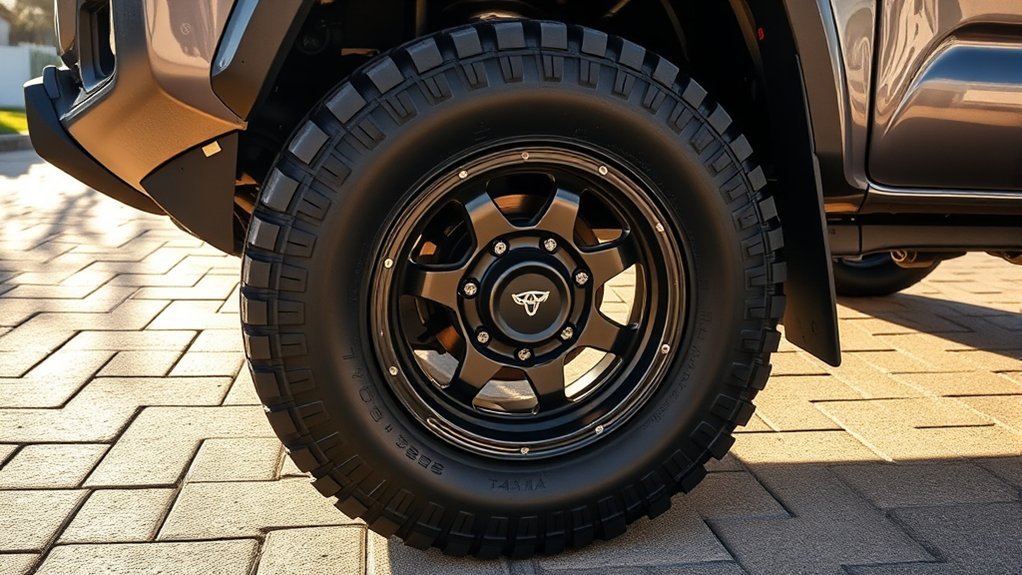
A tire-diameter change can affect displayed speed, recorded distance, transmission strategy, and settings that rely on wheel information. The available calibration method depends on the Tacoma generation and equipment. Some changes may require a compatible scan tool or aftermarket calibrator, while others should be handled by a dealer or specialist.
Toyota’s 2024 Tacoma manual specifically lists tire-pressure warning system initialization when tire size or inflation pressure changes. Follow the exact procedure for your model year after setting the correct cold pressure. If new sensors are installed, their ID codes may also need registration.
Pro Tip: Record GPS-verified speed, indicated speed, transmission behavior, and corrected fuel economy before and after the tire change. That comparison gives an installer better evidence than tire size alone.
Post-Installation Calibration and Safety Checklist
- Confirm the installed tire’s actual diameter, load index, and pressure requirements.
- Correct the speedometer and odometer when a supported method is available.
- Initialize the tire-pressure warning system according to the owner’s manual.
- Register new TPMS sensor IDs when required.
- Check full-lock steering and full suspension travel for rubbing.
- Verify alignment, wheel-nut torque, brake clearance, and spare-tire compatibility.
- Road-test at low speed before highway, towing, or off-road use.
Regearing Costs and Time Estimates
A professional regear is a precision differential job, not a simple bolt-on change. The technician must set pinion depth, bearing preload, backlash, and the ring-and-pinion contact pattern correctly. Poor setup can cause noise, heat, rapid wear, or gear failure.
Budget several thousand dollars for many 4WD front-and-rear Tacoma regears, but do not rely on a universal online price. Your total depends on model year, axle type, parts availability, local labor rates, bearings and seals, differential removal, lockers, taxes, shipping, and follow-up fluid service. A 2WD rear-only job may cost less.
- Shop time: Often at least a full working day, with total turnaround depending on scheduling and parts.
- 4WD requirement: The front and rear axle ratios must match before four-wheel drive is used.
- Optional lockers: Installing a locker while the differential is already open can change both cost and labor.
- Break-in: Follow the gear manufacturer’s and installer’s heat-cycle, towing, and fluid-change instructions.
- Warranty: Ask for written coverage on parts and workmanship.
Warning: Do not engage 4WD if the front and rear differentials have different ratios. The speed mismatch can bind and damage the driveline.
[Products Worth Considering]
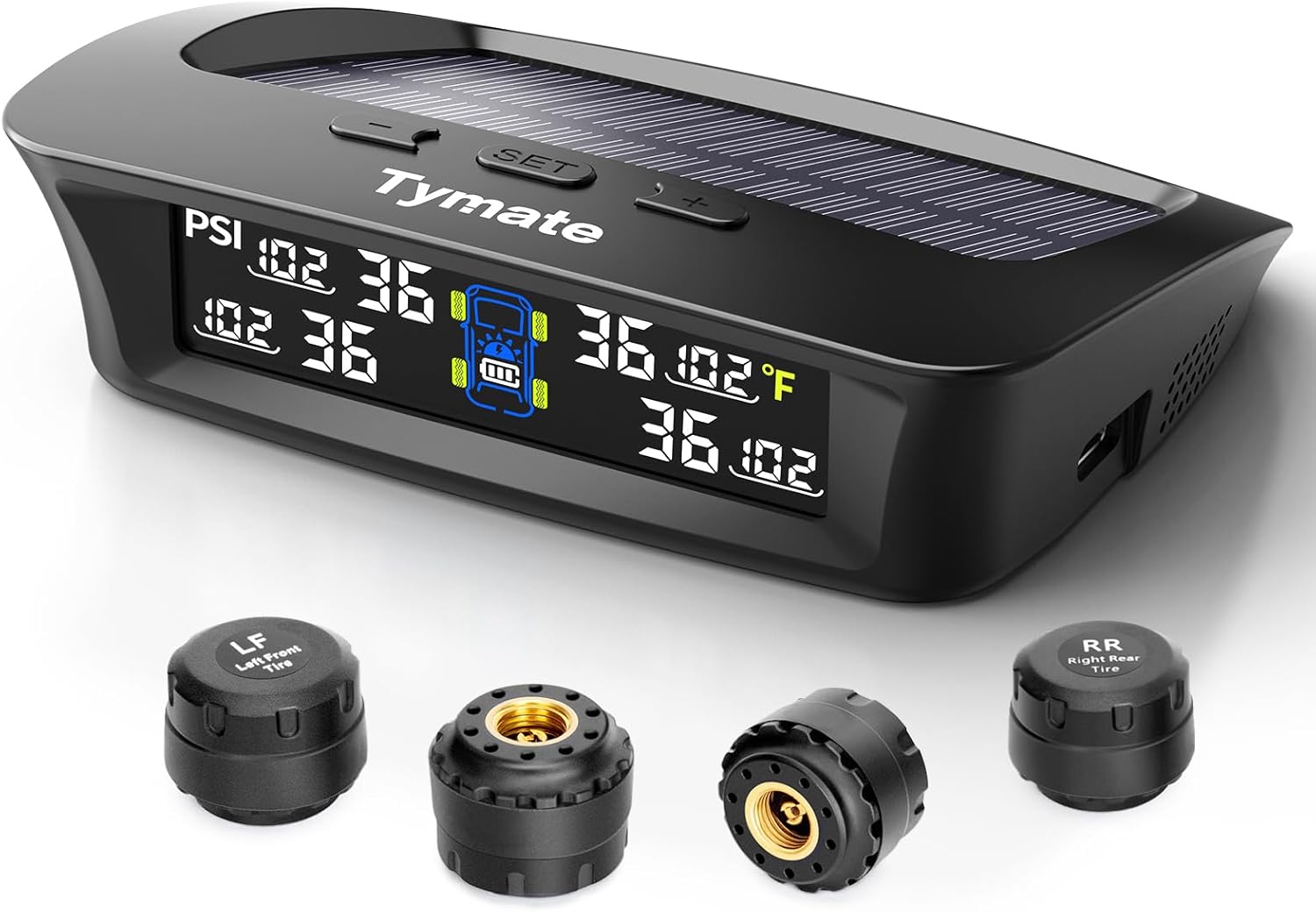
The Tymate TM3 RV TPMS delivers real-time tire pressure monitoring from 0 to 144 PSI with accurate readings and dependable wireless communication. It includes four external sensors with pre-pairing, six alarm modes for rapid leak, pressure extremes, temperature, and signal loss, plus an easy-reference setup for alert thresholds. Solar and USB-C charging help keep the display powered, while the color LCD and adaptive backlight improve visibility for safer driving and towing.
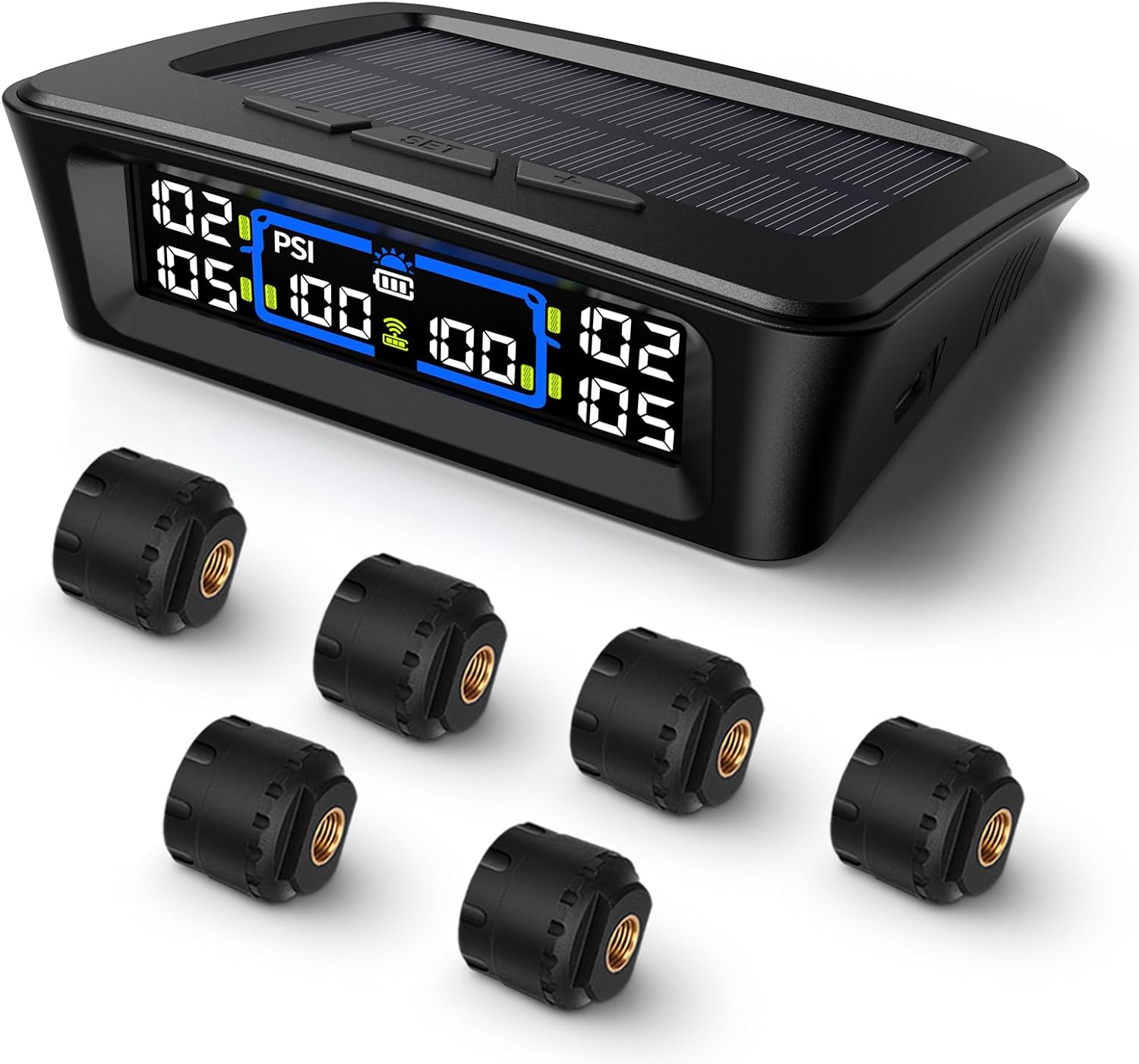
The Tymate TM12 RV TPMS delivers real-time tire pressure and temperature monitoring with a stable 433Hz display for safer long-distance driving. It supports simultaneous monitoring across vehicle and trailer zones, includes six alarm modes for pressure, temperature, leakage, battery, and signal loss, and features easy DIY installation with auto calibration. Power is supplied via USB-C charging or solar recharging, with a wide 0–144 PSI range and up to 50 ft signal coverage for RVs and towable trailers.
How to Choose the Right Gear Ratio for Your Tacoma’s Tire Upgrade
Start with your actual vehicle, not a generic tire-size chart. Yukon Gear & Axle’s current selection guidance says the correct choice depends on the starting configuration and the intended result, including engine, transmission, axle, tire size, vehicle weight, modifications, and use. The company also recommends treating calculators as a guide rather than a final answer.
1. Collect the Correct Baseline
- Model year, generation, trim, engine, and transmission
- 2WD, part-time 4WD, or full-time 4WD configuration
- Front and rear axle model and current ratio
- Factory tire size and measured current tire diameter
- New tire’s measured diameter and weight
- Added bumpers, armor, camper, racks, tools, or recovery gear
- Normal payload, trailer weight, terrain, elevation, and highway speed
2. Calculate a Stock-Equivalent Starting Point
Use the ratio formula to estimate the gear that returns the engine-to-wheel relationship near stock. Then compare the result with gear sets actually available for your exact axles. Do not round automatically to the most aggressive ratio.
| Goal | Ratio Direction | Trade-Off |
|---|---|---|
| Return close to stock RPM and feel | Choose an available ratio near the formula result | May not fully address heavy added weight or towing |
| Heavy overland build, hills, or frequent towing | A somewhat more aggressive numerically higher ratio may help | Higher cruising RPM, noise, and possible fuel-use increase |
| Mostly unloaded highway driving | Stay closer to the stock-equivalent calculation | Less low-speed torque multiplication than an off-road-focused setup |
| Technical crawling | Numerically higher axle gearing may improve control | Must still suit transmission, transfer-case, axle-strength, and highway needs |
3. Confirm Fitment With a Specialist
Ask the installer to confirm axle compatibility, carrier or locker requirements, front-and-rear matching ratios, bearing kits, calibration options, expected highway RPM, and warranty. Request examples from the same Tacoma generation and transmission rather than relying on a recommendation for a different truck.
4. Do Not Ignore Vehicle Limits
Regearing can improve drivability, but it does not increase the certified GVWR, GAWR, payload, tire load limit, or tow rating. Stay within the labels and manual for your Tacoma. Recheck braking, cooling, stability, and clearance before towing or carrying heavy loads with modified tires.
Frequently Asked Questions
How do tire sizes affect fuel efficiency in my Tacoma?
A larger tire can lower fuel economy because of extra weight, rolling resistance, tread, aerodynamic changes from a lift, and more transmission shifting. The result varies by setup. Recalibrate the odometer before comparing hand-calculated MPG.
Can I regear without changing my tires?
Yes. A numerically higher axle ratio can improve acceleration, towing response, or low-speed control with the same tires. It also raises engine RPM at a given speed and may increase noise or fuel use, so the ratio should match your goal.
What tools do I need for a regear job?
A proper setup can require a press, bearing pullers and installers, dial indicator, inch-pound and foot-pound torque wrenches, micrometers or calipers, pinion-depth tools, setup bearings, marking compound, seal tools, and the exact repair specifications. Because small setup errors can destroy a gear set, most owners should use an experienced differential specialist.
Will larger tires void my Tacoma’s warranty?
Aftermarket tires do not automatically cancel the entire warranty. However, a warranty claim may be denied when the manufacturer or dealer determines that the modification caused the failure. Keep receipts, use correctly rated parts, document calibration, and discuss coverage with the dealer before major changes. FTC guidance says warranty coverage generally cannot be conditioned on using only specified branded parts or services.
How often should I check my gear ratio after upgrading tires?
The mechanical gear ratio does not drift with use, so you do not need to recheck the ratio every few months. After installation, follow the gear maker’s break-in and fluid instructions, then watch for leaks, overheating odor, vibration, whining, clunking, or metal in the lubricant.
Do 33-inch tires always require a Tacoma regear?
No. The answer depends on the starting tire size, Tacoma generation, engine, transmission, axle ratio, tire weight, added vehicle weight, terrain, towing, and your expectations. Some fourth-generation Tacomas have factory 33-inch tires, while an older or heavily loaded Tacoma may benefit from different gearing.
Will larger tires raise or lower highway RPM?
In the same transmission gear at the same true road speed, a taller tire lowers engine RPM. If the engine cannot hold that gear, an automatic transmission may downshift and temporarily run at higher RPM. Regearing with a numerically higher axle ratio raises RPM relative to the unregeared larger-tire setup.
Do I need to regear both axles on a 4WD Tacoma?
Yes. The front and rear final-drive ratios must match before four-wheel drive is used. A 2WD Tacoma normally requires only the driven rear axle to be considered.
Conclusion
Tire diameter and axle gearing work as one system. Larger tires make your Tacoma’s existing ratio effectively taller, reduce torque multiplication, and can change speedometer accuracy and transmission behavior. Start with measured tire diameter and the ratio formula, then choose gears based on the exact Tacoma, vehicle weight, terrain, towing, and highway use.
Regear only after checking calibration, pressure, alignment, tire weight, and the truck’s condition. When a regear is justified, use an experienced differential specialist, match both axles on 4WD models, follow break-in instructions, and stay within Toyota’s load and towing limits.
Sources
- Toyota 2024 Tacoma Maintenance Data: factory tire sizes, pressures, wheel specifications, and torque data by configuration.
- Toyota 2024 Tacoma Items to Initialize: TPWS initialization requirements after tire-size or pressure changes.
- NHTSA TireWise: tire sizing, load-label, inflation, maintenance, and safety guidance.
- Dana Spicer Transmission Ratio RPM Calculator: relationship among transmission ratio, axle ratio, tire height, speed, and engine RPM.
- Yukon Gear & Axle Gear-Ratio Selection Guide: factors that determine the appropriate ratio and limits of calculator-only recommendations.
- Federal Trade Commission Warranty Guidance: limits on tying warranty coverage to specified parts or services.

Related Articles
How Tire Weight Affects Toyota Tacoma Performance
How does tire weight influence your Toyota Tacoma's performance and efficiency? Discover the surprising effects that could change your driving experience.
Read More
Tire Noise Levels by Tire Type on a Toyota Tacoma
A comprehensive look at how tire types affect noise levels in your Toyota Tacoma reveals surprising insights that could enhance your driving experience.
Read More
How To Choose Tires for a Dual Use Toyota Tacoma
Unlock the secrets to selecting the perfect tires for your dual-use Toyota Tacoma, ensuring optimal performance and comfort on every adventure. Discover more inside!
Read More