
What PSI for Towing With a Toyota Tacoma
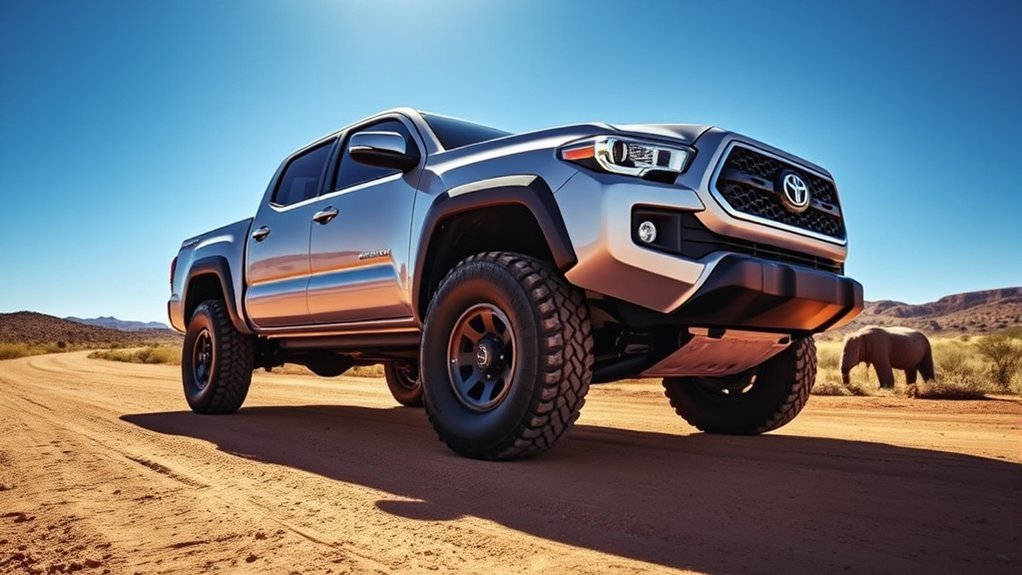
There is no single “best” Toyota Tacoma tire pressure for towing that works for every truck, tire, and trailer. The safe PSI depends on your Tacoma’s door-jamb tire placard, tire size, tire type, loaded axle weight, wheel rating, and trailer tongue weight. For stock tires, start with Toyota’s recommended cold pressure. For aftermarket LT or E-rated tires, use the tire maker’s load-inflation table instead of guessing.
Quick Answer
For towing with a Toyota Tacoma, use the cold tire pressure on the driver-door Tire and Loading Information label for stock-size tires. Do not use 60–65 PSI as a blanket rule. If you have LT or E-rated replacement tires, weigh the loaded truck and use the tire manufacturer’s load-inflation table without exceeding the tire or wheel maximum.
Key Takeaways
- The Tacoma’s door-jamb tire placard is the starting point for stock tires.
- The PSI molded on the tire sidewall is a maximum limit, not the recommended towing pressure.
- LT and E-rated tires may need different pressure, but the right number comes from axle weight and a load-inflation table.
- Check pressure cold, before driving, and do not bleed air from hot tires after highway towing.
- Tow-vehicle tire pressure does not replace payload, tongue-weight, GVWR, GAWR, GCWR, or trailer-tire checks.
At a Glance
| Time Required | 10–20 minutes before a trip; longer if you visit a public scale |
| Difficulty | Easy for stock tires; moderate for LT tires because axle weight matters |
| Tools Needed | Accurate tire gauge, air compressor, Toyota owner’s manual, door-jamb placard, and optional public scale ticket |
| Cost | Usually $0–$30, depending on whether you need a gauge or scale ticket |
Understand Tire Pressure Requirements for Towing
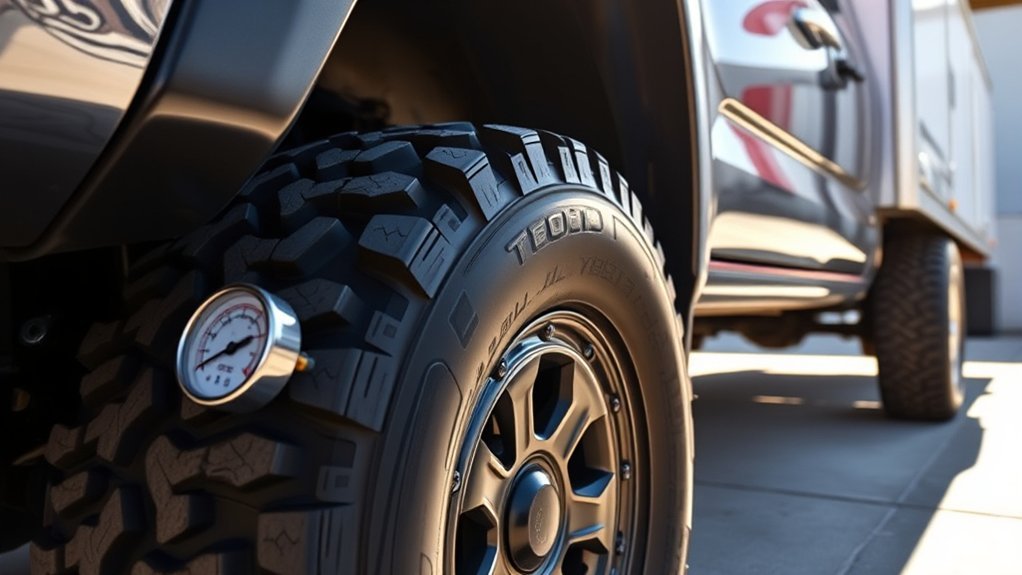
When you tow with a Toyota Tacoma, the safest starting point is the recommended cold inflation pressure on the vehicle’s Tire and Loading Information label. On most Tacomas, that label is on the driver-side door jamb. Toyota also provides model-year-specific owner’s manuals through Toyota Owners.
The number on the tire sidewall is different. That sidewall number is the tire’s maximum permissible cold pressure for its rated load. It is not automatically the pressure you should run while towing. Running a Tacoma tire at 60, 65, 70, or 75 PSI just because the tire can hold it can reduce ride quality, change traction, create uneven wear, and exceed the wheel’s pressure rating.
Warning: Never choose Tacoma towing PSI from a forum number alone. Stay within the vehicle placard, tire manufacturer data, tire sidewall maximum, wheel maximum, GVWR, GAWR, GCWR, payload, and trailer ratings.
[Products Worth Considering]

EVOULTES heavy duty tire inflator with an integrated gauge delivers accurate pressure readings from 10–120 PSI, helping you inflate, deflate, and check tires in one tool. The 16.5-inch extended dual-head air chuck with swivel base reaches hard-to-access dual wheel valves on trucks and RVs. A brass trigger core and side-mounted air release valve make operation smooth, with standard 1/4" NPT threading and quick-connect compatibility for easy setup.

This portable cordless tire inflator delivers up to 160 PSI with fast 17 L/min airflow to help you quickly top up tires and get back on the road. It features dual power mode, running on a 21V rechargeable battery or a 12V DC adapter for convenient roadside use. An automatic shut-off with digital pressure gauge helps prevent overinflation, and a built-in LED light improves visibility in low-light conditions.

The JACO FlowPro Tire Inflator measures, inflates, and airs down tires up to 100 PSI with battery-free operation and ±2% accuracy after calibration. It features a glowing pressure dial for night visibility, a heavy-duty steel build with a hybrid hose, and a precision push-to-inflate thumb trigger. The patented Lightning Air Chuck locks on for a secure seal, and the kit includes quick-connect hardware for easy inline use with your air compressor.
How to Determine the Best PSI for Towing With Your Tacoma
Use this order of priority instead of guessing:
- Find the Tacoma door-jamb placard. For stock-size tires, use the cold PSI listed there unless Toyota gives a different model-specific instruction in your owner’s manual.
- Confirm your tire type. Stock P-metric or OE-size tires are handled differently from LT, C-load, D-load, or E-load replacement tires.
- Check the tire and wheel limits. The tire sidewall gives the tire’s maximum cold PSI. The wheel also has a maximum pressure rating. Do not exceed either one.
- Load the truck as you tow it. Include passengers, cargo, hitch equipment, bed gear, and the trailer’s tongue weight.
- Weigh the loaded axles if you run LT tires or tow near capacity. A public CAT scale or similar platform scale can show front and rear axle weights.
- Use a load-inflation table for non-OE tire setups. Tire makers such as Toyo Tires publish load-inflation guidance for replacement sizes and LT tires.
- Set pressure cold. Cold means before driving or after the tires have sat long enough to cool, because pressure rises while driving.
Pro Tip: If your Tacoma has aftermarket LT tires, calculate pressure by axle load. For example, if the loaded rear axle weighs 3,600 lb, each rear tire carries about 1,800 lb. Match that load to your exact tire size in the tire maker’s table, then use the same cold PSI on both tires on that axle.
Stock Tires vs. LT or E-Rated Tires
The biggest mistake is treating every Tacoma tire the same. A stock Tacoma tire, an LT all-terrain tire, and an E-rated tire can need different pressures for the same load.
| Tire Setup | Best PSI Method |
| Original stock-size Tacoma tires | Use the driver-door placard and Toyota owner’s manual cold PSI. |
| Aftermarket P-metric replacement tires | Use the placard as the minimum starting point and confirm the replacement tire meets or exceeds the original load capacity. |
| LT, C-load, D-load, or E-load tires | Use loaded axle weights and the tire manufacturer’s load-inflation table. Do not assume the tire’s maximum PSI is correct. |
| Trailer tires | Use the trailer placard and trailer tire sidewall/load rating. Trailer tire PSI is separate from Tacoma tire PSI. |
How Load Weight Affects Tire Pressure
Towing adds weight to the Tacoma through tongue weight, hitch hardware, cargo, passengers, and gear in the bed. That added weight usually affects the rear axle most, which is why rear-tire pressure deserves attention. But “more weight” does not automatically mean “inflate to 65 PSI.” The correct pressure depends on how much load is actually on the axle and what tire is carrying it.
Towing Weight Considerations
Before focusing on tire PSI, confirm that the towing setup is within the Tacoma’s limits. Toyota’s towing guidance uses several ratings, including trailer weight rating, gross combined weight rating, gross vehicle weight rating, gross axle weight rating, and tongue weight. The exact limits vary by Tacoma model year, trim, drivetrain, bed, cab, and tow package.
- TWR: Maximum trailer weight for your Tacoma configuration.
- GCWR: Maximum combined weight of the loaded truck and loaded trailer.
- GVWR: Maximum loaded weight of the Tacoma itself.
- GAWR: Maximum weight allowed on each axle.
- Payload: Passengers, cargo, hitch equipment, accessories, and trailer tongue weight all count against it.
- Tongue weight: The downward load the trailer places on the hitch ball.
Some current Tacoma configurations are rated to tow up to 6,500 lb when properly equipped, but that “up to” number is not universal. Verify your truck’s rating in the owner’s manual, certification label, and towing documentation before you hitch up.
Tire Pressure Adjustments
For stock tires, do not lower pressure below the placard setting to improve comfort while towing. Underinflation builds heat, hurts handling, and can damage tires. If you have LT tires, the correct pressure may be higher than the stock placard, but it should be based on load data, not a fixed number copied from another truck.
A good practical method is:
- Set tires cold before loading or driving.
- Load the Tacoma and trailer the way you will travel.
- Measure front axle, rear axle, and trailer axle weights if you are near capacity.
- Use the heaviest side or axle-end guidance when your tire manufacturer recommends it.
- Run equal pressure on both tires on the same axle.
- Recheck pressure the next morning when the tires are cold again.
Note: Tire pressure normally rises after driving. Do not bleed air from a hot tire just because the PSI is higher than it was when cold. Recheck and adjust when cold.
Maximum Load Ratings
Maximum load ratings matter because a tire can be overloaded even when it “looks fine.” Check the load index on each tire, the maximum load on the sidewall, and the wheel pressure rating. If the tires or wheels cannot support the loaded axle weight at a safe pressure, pressure alone will not fix the setup. You need less load, different tires, different wheels, or a different towing combination.
The tire sidewall tells you a maximum. The door placard, owner’s manual, loaded axle weight, and tire maker’s load table tell you what to use.
Essential Techniques for Monitoring and Adjusting Tire Pressure
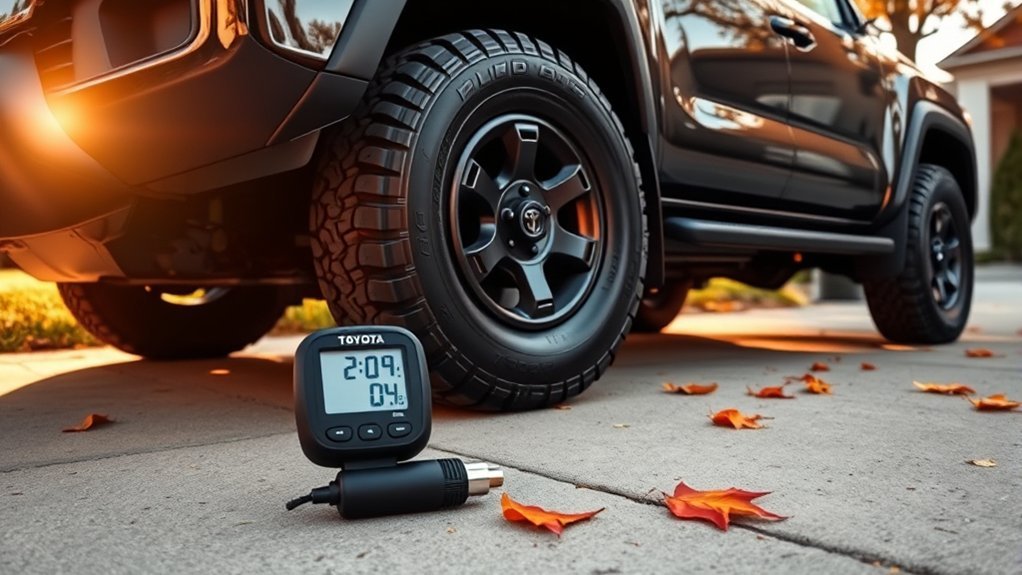
Use a quality tire gauge instead of relying only on the Tacoma’s Tire Pressure Monitoring System. TPMS is helpful, but it usually warns after a tire is already significantly underinflated. For towing, check pressure manually before departure, during fuel stops if something feels wrong, and the next morning when tires are cold.
Follow these tire-pressure habits when towing:
- Check all four Tacoma tires and the spare before a long trip.
- Check trailer tires separately using the trailer manufacturer’s guidance.
- Inspect valve stems, tread, sidewalls, and uneven wear.
- Use metal valve caps or quality caps to keep dirt out of the valve core.
- Carry a portable compressor rated for truck and trailer tire pressures.
- Replace damaged, cracked, bulging, or severely aged tires before towing.
[Products Worth Considering]

This portable cordless tire inflator delivers fast, efficient inflation for cars, motorcycles, bikes, and sports balls with a digital pressure gauge. Use the one-click PSI preset with auto shut-off for accurate, hands-free topping to your target pressure up to 150 PSI. It’s compact and rechargeable with a built-in emergency LED light plus valve adapters and accessories for quick, ready-to-go use.

Upgrade your air tools with this 18-piece air compressor accessory kit featuring a 25ft recoil poly hose, 1/4" NPT quick connect fittings, and a 100 PSI tire inflator gauge. The set also includes a heavy-duty blow gun with safety and tapered nozzles, plus couplers, inflation needles, plugs, and other essentials for everyday mechanic and workshop tasks. Corrosion-resistant steel and brass components help keep connections reliable for inflating, blowing out, and general pneumatic use.
How to Balance Comfort and Stability When Towing
Higher PSI can make a tire feel firmer, but firmer is not always safer. Too little pressure creates heat and soft handling. Too much pressure can reduce the contact patch, make the truck ride harshly, and cause center tread wear. The goal is not maximum PSI. The goal is enough cold pressure to carry the real load while staying inside tire, wheel, and vehicle limits.
If the rear of your Tacoma sags or the trailer sways, do not try to solve the whole problem with tire pressure. Check tongue weight, cargo placement, trailer level, hitch setup, suspension condition, and whether a weight-distributing hitch or sway-control device is required for your trailer weight.
Common Tire Pressure Mistakes to Avoid When Towing
- Using 60–65 PSI as a universal Tacoma towing number: This can be too high for some tires and not enough for others.
- Using the sidewall maximum as the target: The sidewall maximum is a limit, not a recommendation.
- Ignoring the wheel’s pressure rating: A tire may allow more pressure than the wheel does.
- Bleeding hot tires: Pressure rises during driving. Adjust cold whenever possible.
- Forgetting trailer tires: Trailer tires have their own placard, load rating, and pressure requirements.
- Overlooking payload: Tongue weight, passengers, bed cargo, accessories, and hitch parts all use payload.
- Trusting TPMS alone: TPMS is a warning system, not a replacement for a tire gauge.
Frequently Asked Questions
Is 35 PSI too high or too low for a Tacoma?
It depends on your Tacoma’s placard and tire setup. If the driver-door placard lists 35 PSI for your stock tires, then 35 PSI cold is the correct starting point. If you have LT or E-rated tires, 35 PSI may be too low for a heavy tow load, but you need a load-inflation table and axle weight to know for sure.
Is 40 PSI too high for a Tacoma 4WD?
Not automatically, but it is not automatically correct either. If 40 PSI is above your stock tire placard, confirm that Toyota or the tire manufacturer supports that pressure for your load. For LT replacement tires, 40 PSI may be reasonable in some setups and too low in others.
Should I run 60 PSI when towing with a Toyota Tacoma?
Only if your tire size, tire type, loaded axle weight, tire load table, and wheel rating support it. Do not run 60 PSI on stock Tacoma tires just because you are towing. Many Tacoma owners do not need that much pressure, while some LT tire setups may need a calculated pressure near that range.
Should rear tires have more PSI than front tires when towing?
Sometimes, but only when the rear axle load and tire data call for it. Towing often adds more weight to the rear axle through tongue weight, so rear tires may need more pressure on LT setups. For stock tires, follow the Tacoma placard unless Toyota gives different guidance for your model.
What should you not tow with a Tacoma?
Do not tow any trailer that exceeds your Tacoma’s trailer weight rating, payload rating, gross vehicle weight rating, gross axle weight rating, gross combined weight rating, hitch rating, or tongue-weight limit. Also avoid fifth-wheel or gooseneck-style loads unless Toyota specifically rates your Tacoma and hitch setup for that use.
Is 40 PSI good for towing?
It can be, but only for the right tire and load. For stock tires, compare 40 PSI to the driver-door placard. For LT tires, weigh the loaded axle and check the tire maker’s load-inflation table. The correct answer is based on load capacity, not a generic PSI number.
Conclusion
The right Toyota Tacoma tire pressure for towing is not a fixed 60, 65, or 70 PSI. For stock tires, use the cold PSI on the driver-door placard and confirm details in your Toyota owner’s manual. For LT or E-rated replacement tires, use actual loaded axle weights and the tire manufacturer’s load-inflation table. Always stay within tire, wheel, payload, axle, hitch, and trailer limits before you tow.
Sources
- NHTSA TireWise — cold tire pressure, placard guidance, TPMS limits, and tire-safety basics.
- Toyota Owners Manuals and Warranties — model-year-specific Tacoma owner’s manuals and towing information.
- Toyota 2024 Tacoma eBrochure — Tacoma towing capability and configuration context.
- Toyo Tires Load and Inflation Tables — replacement tire and optional-size pressure guidance.
- Michelin Load and Inflation Tables — axle-end load method and pressure-limit cautions.

Related Articles
How Tire Weight Affects Toyota Tacoma Performance
How does tire weight influence your Toyota Tacoma's performance and efficiency? Discover the surprising effects that could change your driving experience.
Read More
Tire Noise Levels by Tire Type on a Toyota Tacoma
A comprehensive look at how tire types affect noise levels in your Toyota Tacoma reveals surprising insights that could enhance your driving experience.
Read More
How To Choose Tires for a Dual Use Toyota Tacoma
Unlock the secrets to selecting the perfect tires for your dual-use Toyota Tacoma, ensuring optimal performance and comfort on every adventure. Discover more inside!
Read More