
Tire Chains vs Cables for a Tundra in Snow: Which Grips Better?
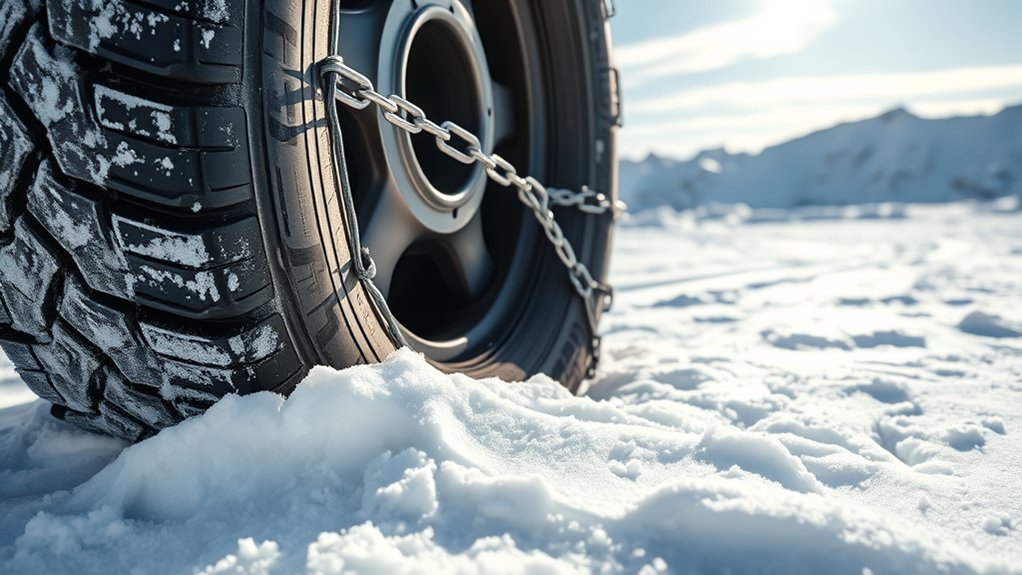
Tire chains usually provide the strongest bite for a Toyota Tundra in deep snow, packed snow, and severe ice. Tire cables are lighter, quieter, and easier to fit when clearance is limited. However, the correct choice depends on your Tundra’s model year, tire size, wheel-well clearance, local chain rules, and the instructions in your owner’s manual.
Quick Answer
Choose link-style tire chains for frequent travel through deep snow, steep grades, or severe ice when your Tundra has enough clearance. Choose cables for occasional use, easier installation, and lower-clearance applications. Before buying either one, confirm the exact tire size and traction-device restrictions in your Tundra owner’s manual.
Key Takeaways
- Link chains generally provide the strongest traction in severe snow and ice, but they need more wheel-well clearance.
- Cables are lighter and easier to install, but they may provide less bite and durability in demanding conditions.
- Toyota generally directs applicable Tundra owners to fit traction devices to the rear tires, but your exact model-year manual takes priority.
- Never assume a chain or cable fits based only on wheel diameter. Match the complete tire size and confirm body clearance.
- State laws differ. A cable may legally count as a chain or approved traction device in one location but not under every restriction.
Tundra Tire Chains vs. Cables: The Practical Difference
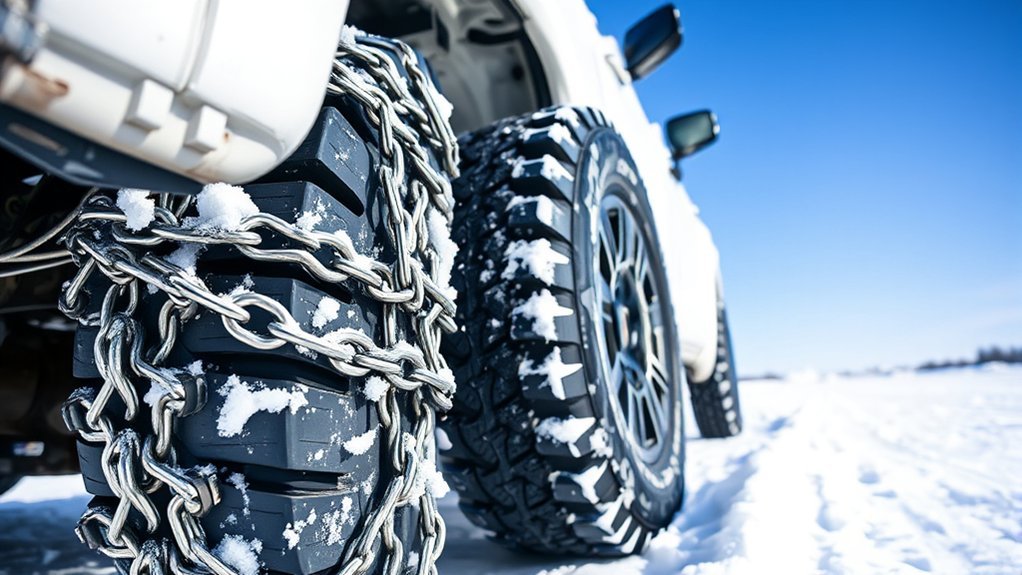
Both devices place a traction surface between your tires and the road. The main difference is construction. Link chains use connected metal links, while tire cables typically use steel aircraft cable wrapped with traction rollers or coils.
Link chains usually dig farther into packed snow and ice. Cables have a lower profile, which can make them more suitable when space between the tire, suspension, brake components, and body is limited.
| Feature | Link Chains | Tire Cables |
|---|---|---|
| Best conditions | Deep snow, packed snow, severe ice, and steep grades | Light or moderate snow and occasional emergency use |
| Traction potential | Generally higher in demanding conditions | Adequate for many maintained roads but typically less aggressive |
| Clearance required | More clearance | Less clearance |
| Installation | Heavier and often more physically demanding | Lighter and usually easier to handle |
| Ride and noise | Rougher and louder | Usually smoother and quieter |
| Durability | Generally better for repeated severe use | Best suited to lighter or less frequent use |
| Legal acceptance | Widely recognized, subject to local rules | Often accepted, but restrictions can vary |
No comparison applies to every product. A well-fitted, high-quality cable can work better than a poorly fitted chain. Correct sizing and tension are more important than choosing a device based only on its name.
[Products Worth Considering]

These universal tire valve stem caps help protect valve cores from dust, debris, and moisture while helping maintain stable tire pressure. The corrosion-resistant metal construction and sealed design provide reliable protection in road grime, mud, and winter conditions. Twist-on installation makes them quick to fit on cars, SUVs, trucks, and motorcycles.

This roadside assistance kit helps drivers and passengers in urgent situations after an accident or breakdown, providing practical support while waiting for help. It includes a lightweight, compact tire inflator for fast inflation of standard vehicle tires, plus reinforced jumper cable protection for safer handling. Ideal for winter weather, road trips, camping, and travel, with everything stowed neatly in a trunk bag.
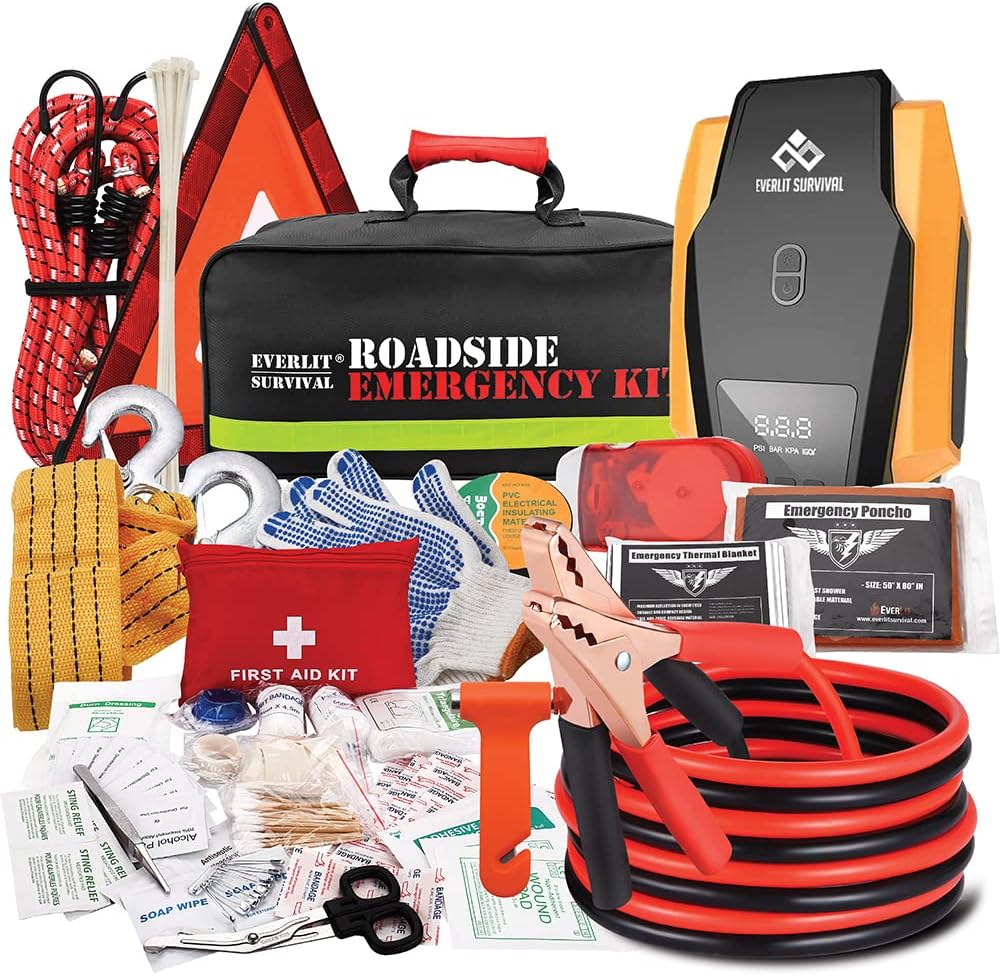
The Everlit Road Guardian emergency kit is designed for roadside breakdowns, combining essential safety gear and roadside tools in one compact bag. It includes a digital 12V auto tire inflator with preset and auto shutoff, plus 12-foot 8-gauge jumper cables to get you moving again. You also get a full 108-piece first aid kit, reflective warning tools, safety gloves, and emergency convenience items for safer travel.
Check Your Tundra Before Buying Any Traction Device
Do not buy chains or cables from the wheel diameter alone. A Tundra with 18-inch wheels can use several different tire sizes, and each size creates a different amount of clearance.
- Find your complete tire size. Read the sidewall code, such as 265/70R18, and confirm it against the driver-door label.
- Open the correct owner’s manual. Use Toyota’s official manuals and warranties page and select your exact model year.
- Read the winter-driving section. Check which tire sizes accept chains, which axle Toyota specifies, and whether a low-clearance device is required.
- Inspect the wheel well. Look behind the tire for brake hoses, wiring, suspension parts, liners, and other components that a loose device could strike.
- Account for modifications. Aftermarket wheels, different offsets, oversized tires, spacers, lifts, and suspension changes can alter clearance.
- Check the device label. The package or manufacturer fit guide must list your complete tire size.
Warning: An incompatible or loose traction device can damage a tire, wheel, brake hose, suspension component, fender liner, or vehicle body. Stop immediately if you hear repeated striking, scraping, or heavy vibration.
How to Choose Between Cables and Chains for Your Tundra
Choose Link Chains When
- You regularly travel through deep or packed snow.
- Your route includes steep, icy grades.
- You expect repeated winter use.
- Your Tundra has sufficient manufacturer-approved clearance.
- Local restrictions require conventional link-type chains for your vehicle class or road condition.
Choose Tire Cables When
- You need a lighter device for emergency or occasional use.
- You mainly travel on maintained roads with light or moderate snow.
- Your owner’s manual allows cables or another low-clearance traction device.
- You need a device that is easier to handle while wearing winter gloves.
- The applicable road authority accepts cables under the current restriction.
Choose Neither When
Do not install a traction device if your exact owner’s manual prohibits it for your tire size. Use suitable winter tires, an approved alternative device, a different vehicle, or another route instead. Postpone the trip when the road authority advises against travel.
What Tundra Owners Can Expect From Each Option
Driving With Tire Cables
Cables are easier to lift, untangle, and store behind a seat or in a winter emergency kit. Their lower profile can reduce clearance concerns, and they often create less vibration than link chains.
The tradeoff is a less aggressive contact surface. Cables may struggle sooner in deep snow, rutted roads, prolonged wheelspin, or steep icy conditions. They also need correct tension because a loose cable can whip against the wheel well.
Driving With Link Chains
Link chains place larger metal contact points against the road. This generally gives a heavy pickup more dependable bite when starting, climbing, or maintaining low-speed control in difficult conditions.
Chains are heavier and need more clearance. They also produce more noise and vibration. You must install them evenly, secure every fastener, and avoid excessive speed or sudden control inputs.
Installation Effort
Neither option is difficult after practice, but both become harder beside a snowy road in darkness. Cables usually require less lifting and hand strength. Traditional chains can require more positioning, tensioning, and adjustment.
Pro Tip: Test-fit the complete pair at home before winter. Keep waterproof gloves, a kneeling pad, a flashlight, reflective clothing, and the manufacturer’s instructions in the same storage bag.
Why Link Chains Usually Perform Better in Heavy Snow
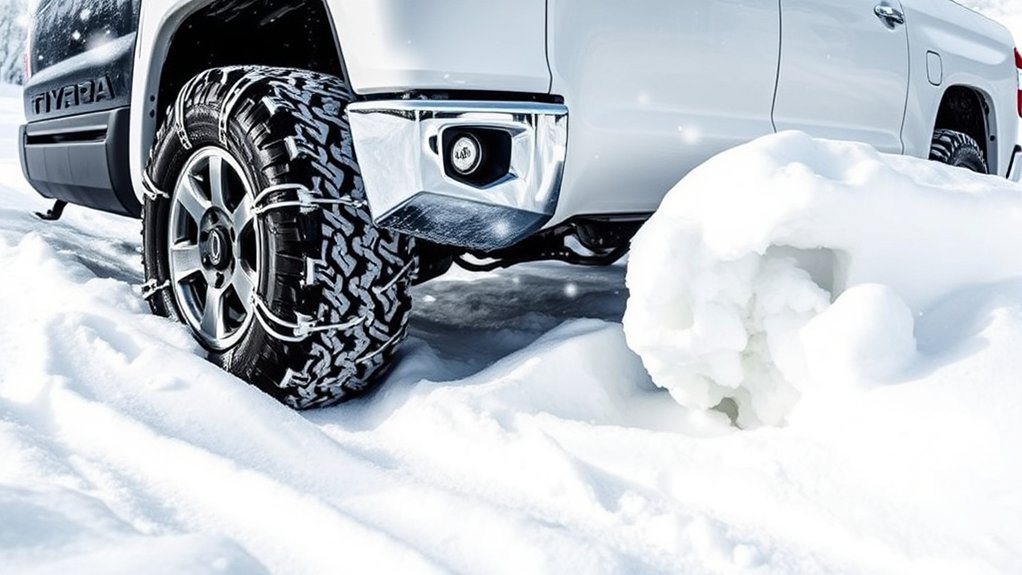
Stronger Bite on Packed Snow and Ice
The raised links create concentrated contact points that can press through loose snow and bite into a firmer surface below. This helps during low-speed starts and climbs where a smoother cable design may spin sooner.
Chains do not create unlimited grip. Your stopping distance can still increase sharply on snow and ice, and four-wheel drive does not improve the tire-to-road friction available during braking.
Durability for Repeated Use
A properly sized link chain is generally better suited to repeated severe-duty use. However, chains can still break from excessive speed, spinning the tires, driving on bare pavement, striking potholes, incorrect tension, or normal wear.
The safest traction device is the one your Tundra can accommodate, your local road authority accepts, and you can install correctly before conditions become dangerous.
How to Install and Maintain Tire Chains or Cables
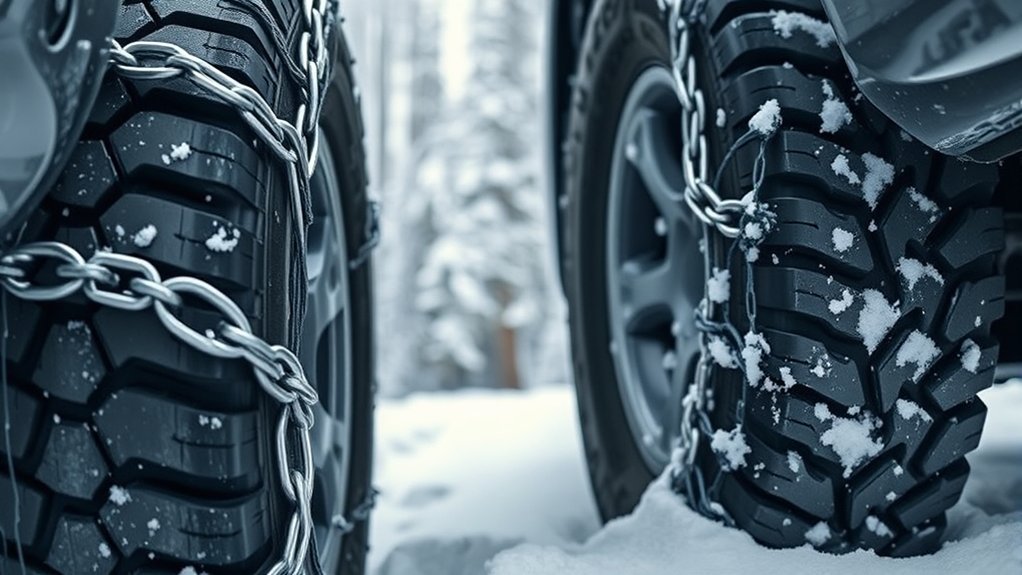
At a Glance
| Time Required | Varies by device and experience; allow extra time in darkness or severe weather |
| Difficulty | Moderate for a first installation; easier after a practice fitting |
| Tools Needed | Traction-device pair, instructions, waterproof gloves, flashlight, kneeling pad, and reflective clothing |
| Cost | Varies by tire size, chain design, material, tensioning system, and brand |
Installation Steps
- Move completely off the roadway. Choose a flat, stable, visible location away from moving traffic. Turn on the hazard lights.
- Secure the truck. Shift to Park, apply the parking brake when appropriate, and follow the device manufacturer’s safety instructions.
- Confirm the correct axle. Toyota generally specifies the rear tires for applicable Tundras. Follow your exact owner’s manual if it gives different or additional instructions.
- Untangle and inspect the devices. Remove twists and check for broken links, damaged rollers, bent fasteners, or worn cables.
- Position each device evenly. Center it across the tire tread with no fastener or tensioner trapped beneath the tire.
- Connect the inner fastener. Keep the device away from brake hoses and suspension parts.
- Connect the outer fastener. Tighten both sides according to the manufacturer’s sequence.
- Center and tension the device. Confirm that the side components sit evenly and the cross sections cover the tread.
- Move the truck a short distance. Stop safely and recheck the fit.
- Retighten after initial travel. Toyota guidance commonly instructs rechecking after approximately 1/4 to 1/2 mile.
Warning: Do not exceed the traction-device manufacturer’s speed limit, the posted chain-control speed, or 30 mph, whichever is lower. Avoid sudden acceleration, hard braking, abrupt steering, potholes, and high-speed tire spin.
When to Stop and Check the Fit
Pull over safely if you hear striking, scraping, slapping, or a sudden change in vibration. Check for a loose fastener, broken cross chain, displaced cable, or contact with the wheel well. Do not continue driving with a damaged device.
Removal, Cleaning, and Storage
- Remove the device when the road authority ends the requirement and the road is clear of snow or ice.
- Avoid extended driving on bare pavement because it rapidly wears the device and can damage the tire or road surface.
- Rinse away salt and road chemicals after use.
- Dry the chains or cables completely before storage.
- Inspect all links, rollers, cables, hooks, tensioners, and fasteners.
- Store the clean pair with its instructions and installation equipment.
What You Should Know About Tire Chain Laws
Chain requirements are not uniform across the United States. The posted restriction, road, weather, vehicle weight, drivetrain, towing status, and approved-device list can all affect what you must carry or install.
California defines tire traction devices broadly enough to include conventional link chains and cable chains. However, officials may impose different requirements when conditions become more severe. Caltrans also advises four-wheel-drive drivers to carry chains when entering chain-control areas. Review the current Caltrans chain requirements before traveling.
Oregon’s official definition of “chains” includes link chains, cable chains, and other devices designed to improve traction on snow and ice. Requirements can still change with the restriction level, vehicle weight, and towing status. See the current Oregon chain law.
Colorado can activate a Passenger Vehicle Traction Law or a stricter Passenger Vehicle Chain Law. When the chain law is active, vehicles need chains or an approved alternative traction device. Check the current Colorado traction and chain requirements.
Note: Roadside signs, law-enforcement directions, and current road restrictions take priority over general online guidance. Check conditions shortly before departure because chain controls can change quickly.
[Products Worth Considering]

This car emergency kit keeps essential roadside tools organized in a durable, portable bag so you can respond quickly during common driving emergencies. It includes battery jumper cables, a bright LED headlight, first aid supplies, a tire pressure gauge, and safety essentials like gloves and an emergency poncho. Designed for trunk or storage use, it helps you be prepared for dead batteries, minor malfunctions, and unexpected roadside issues.

The Continental Grand Prix 5000 is an allround road bike tire engineered for faster rolling, improved ride comfort, and enhanced puncture protection. It features a Vectran Breaker cut-protection layer, Lazer Grip micro-profile tread for confident cornering control, and Active Comfort Technology to damp vibration for smoother rides. BlackChili compound optimizes grip and speed for everyday performance and long-lasting confidence.
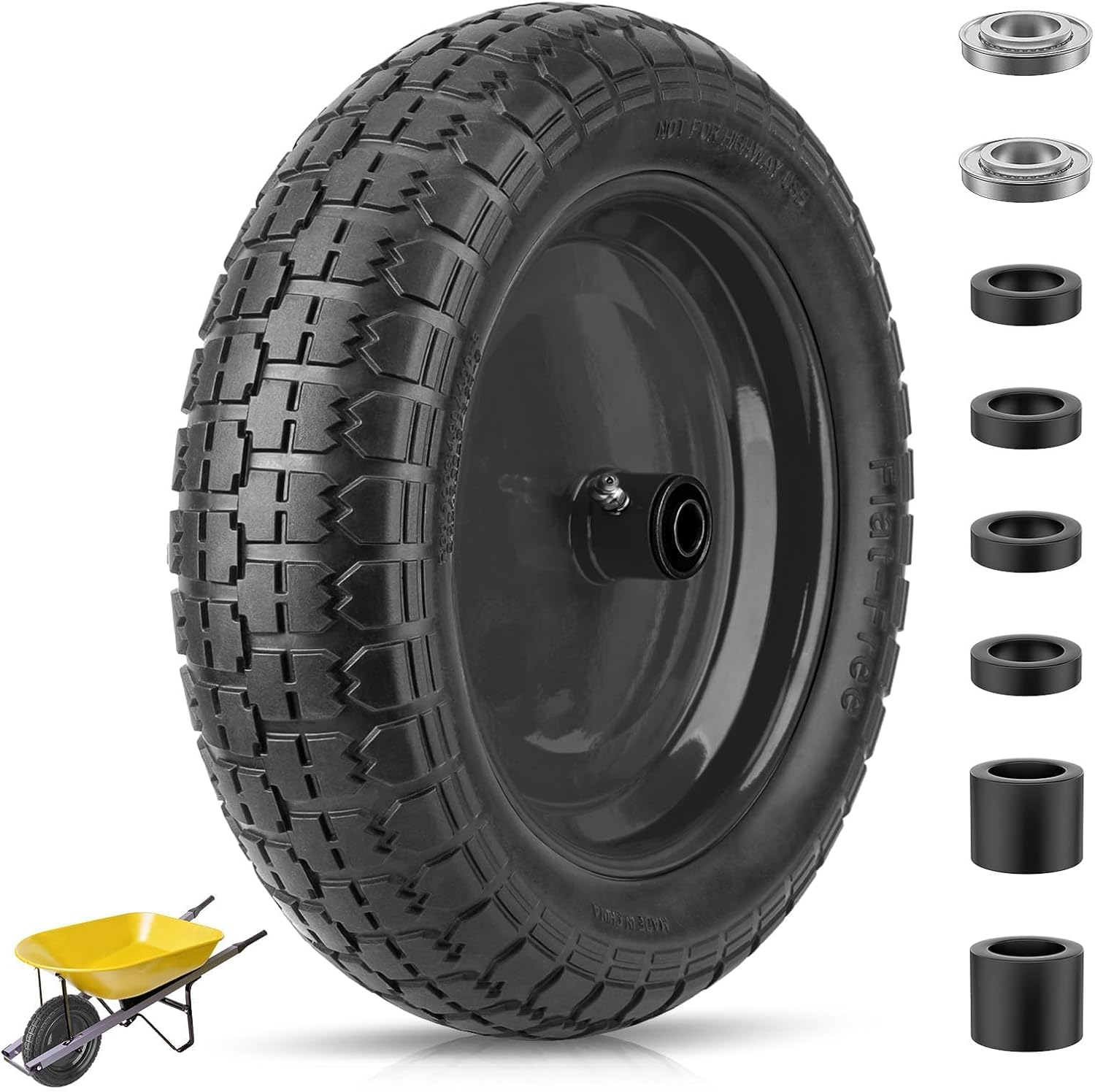
This flat-free TICONN wheelbarrow tire features durable polyurethane foam construction that never needs inflation, helping prevent punctures and reducing maintenance on rough outdoor terrain. With a 300 lb max load capacity and stable steel rim design, it supports safer transport for yard work and hauling tasks. An adapter kit with ball bearings and nylon spacers is included for easier fit and customization across common wheelbarrow and cart axle setups.
Winter Tires vs. Chains and Cables
Winter tires and temporary traction devices are not direct substitutes in every situation. Winter tires improve cold-weather performance during normal winter driving. Chains and cables provide temporary extra traction when snow, ice, grades, or posted restrictions demand it.
The National Highway Traffic Safety Administration recommends choosing tires suited to your climate and checking inflation, tread, damage, and the spare before winter travel. Review its winter-driving guidance before a mountain trip.
Even with winter tires and 4WD, you may still need to carry or install a traction device under local rules. Four-wheel drive can help your Tundra accelerate, but it does not remove the need for adequate braking and cornering grip.
Real-World Performance: Which Option Fits Your Trip?
| Your Situation | Better Starting Point | Reason |
|---|---|---|
| Occasional light snow on maintained roads | Cables | Easy storage and installation with adequate light-duty traction |
| Deep snow or packed mountain roads | Link chains | More aggressive contact with snow and ice |
| Limited wheel-well clearance | Manual-approved low-clearance device | Reduces the risk of contact with nearby components |
| Frequent steep winter travel | Link chains plus suitable winter tires | Provides stronger temporary traction while winter tires support regular cold-weather driving |
| Owner’s manual prohibits chains for the tire size | Approved alternative, different tires, or another route | Avoids unsafe clearance and vehicle damage |
| Towing in a chain-control area | Follow the route’s towing-specific rules | The tow vehicle and braked trailer may have separate chain requirements |
Making the Best Choice for Your Tundra
Start with compatibility rather than traction claims. Find your exact tire size, read the correct Toyota manual, and determine how much clearance the truck has. Then compare the conditions you expect to face.
Link chains are usually the stronger choice for repeated severe snow, packed ice, and steep routes. Cables make more sense for occasional use, lighter conditions, easier handling, or a manual-approved low-clearance application.
Whichever option you choose, buy a correctly sized pair, practice the installation, carry the required safety equipment, and check current restrictions before leaving.
Frequently Asked Questions
Do snow cables legally count as chains?
Sometimes. Oregon includes cable chains in its legal definition of chains, and California generally recognizes them as tire traction devices. However, severe restrictions, commercial-vehicle rules, or specific routes may require another device. Check the current local rule and posted signs.
Which Tundra tires should receive chains or cables?
Toyota generally directs applicable Tundra owners to install traction devices on the rear tires. Follow the winter-driving section of the owner’s manual for your exact model year, tire size, and configuration before installation.
Can tire chains damage a Toyota Tundra?
Yes. An incorrect size, inadequate clearance, loose tension, broken component, excessive speed, or use on bare pavement can damage the tire, wheel, suspension, brake hose, fender liner, or body. Stop immediately if you hear repeated contact.
Can you drive a Tundra with chains on dry pavement?
Avoid it. Bare pavement quickly wears chains and cables, increases vibration, and can damage the device, tire, or road. Remove the device when the requirement ends and the road no longer has enough snow or ice to justify its use.
Does a 4WD Tundra still need chains?
It may. Four-wheel drive can improve acceleration, but it does not guarantee short braking distances or exemption from chain controls. Some jurisdictions require 4WD vehicles to carry chains and may require installation when restrictions become severe.
Conclusion
Link chains are generally the better Toyota Tundra option for severe snow, packed ice, steep grades, and repeated winter use. Cables are easier to handle and may be preferable for occasional driving or a lower-clearance setup.
Do not choose solely by traction potential. Confirm the exact tire size, model-year restrictions, rear-axle instructions, device clearance, and current local laws. A correctly fitted cable is safer than an incompatible chain, and postponing a trip is safer than entering conditions your truck and equipment cannot handle.
Sources
- Toyota Manuals and Warranties — model-year-specific owner-manual and winter-driving instructions.
- National Highway Traffic Safety Administration: Winter Driving Tips — winter tire, tire-pressure, vehicle-preparation, and safe-driving guidance.
- California Department of Transportation: Chain Requirements — cable-chain acceptance, chain-control levels, 4WD requirements, axle placement, and towing rules.
- Oregon Department of Transportation: Oregon Chain Law — legal definitions of link chains, cable chains, and traction devices.
- Colorado Department of Transportation: Passenger Vehicle Traction and Chain Laws — current traction requirements and approved alternative devices.
[Products Worth Considering]

Protect your spare wheel with a waterproof, dustproof tire cover made to resist sun and harsh weather. The elastic band design makes it easy to install and remove without tools, while reinforced stitching helps it keep its shape. Available in multiple sizes, it fits common RV, trailer, Jeep, SUV, and truck spare tires.

MORNYRAY universal tire covers help protect RV, truck, SUV, trailer, and camper tires from sun, rain, and snow with waterproof, anti-UV fabric and a soft inner lining. Elasticized bands and windproof buckle design help keep covers securely in place for easy on and off use. The set includes a storage bag for convenient handling when not in use.

Monitor tire tread wear with a smart, color-coded depth gauge that shows clear condition ranges at a glance. The bar is range marked for fast, easy readings, helping you maintain safer traction and performance. Each gauge is portable with a pocket clip, and the set includes 20 units for daily use and sharing.

Related Articles
Toyota Tundra Tire and Wheel Package: What to Consider Before Buying
Unlock the secrets to choosing the perfect tire and wheel package for your Toyota Tundra—essential tips await to enhance your ride.
Read More
Do Bigger Tires Void a Toyota Tundra Warranty? Magnuson-Moss Act Explained
Bigger tires might not void your Toyota Tundra warranty, but understanding the Magnuson-Moss Act is crucial—discover how to protect your investment effectively.
Read More
Toyota Tundra Tire Rack Setup: Garage Storage Ideas for Seasonal Sets
Better tire storage for your Toyota Tundra awaits—discover essential tips to maximize space and protect your seasonal sets in the garage!
Read More