Can You Repair a Sidewall Puncture on a Truck Tire? Safety Rules Explained
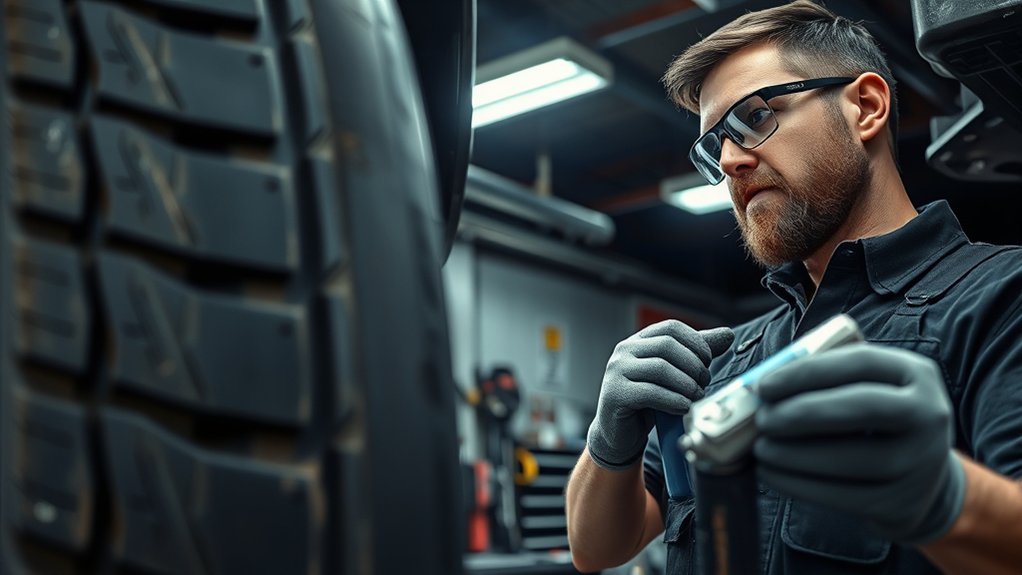
You can’t repair a sidewall puncture on a truck tire. Sidewalls support the tire’s structural integrity, and any damage increases the risk of blowouts. Non-repairable punctures compromise safety, as they lead to sudden tire failures. If you notice visible cracks or bulges, it’s time for a replacement. Always consult a professional for proper assessments and installation. Understanding the nuances of tire maintenance can greatly enhance your driving safety and performance.
The Risks of Driving on a Damaged Tire
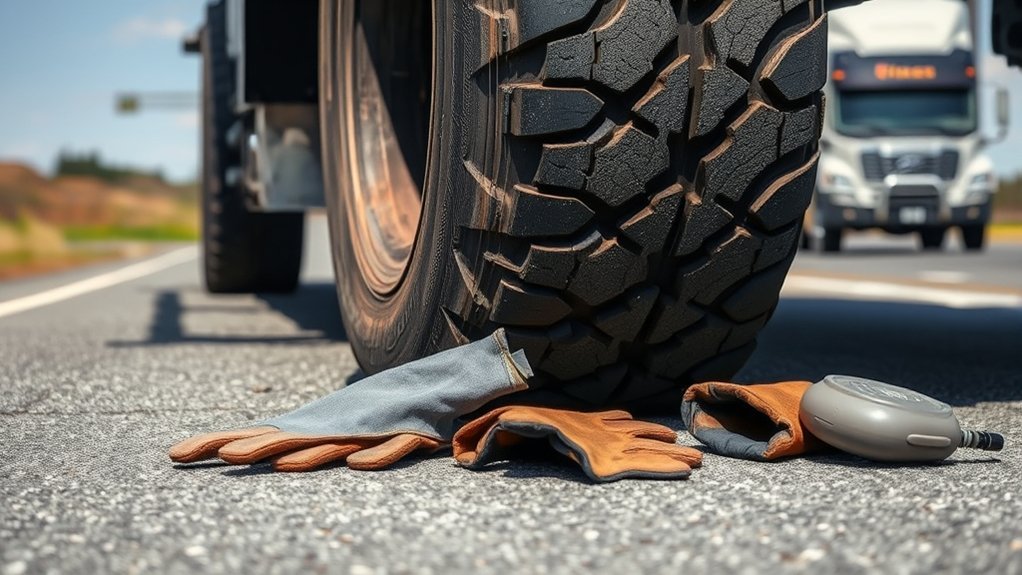
Driving on a damaged tire can be extremely risky, especially when it comes to sidewall punctures. These injuries compromise the tire’s structural integrity and are considered non-repairable. Continuing to drive under these conditions heightens the chances of sudden tire blowouts, creating significant safety hazards for you and others on the road.
Moreover, operating a vehicle on a flat or severely damaged tire doesn’t just endanger your immediate safety; it can also lead to further damage to your wheel, brake system, and suspension, resulting in costly repairs down the line. Tires that fall below the legal tread depth of 2/32-inch are particularly unsafe, causing poor traction and increasing the risk of losing control. Regular inspections and immediate tire replacements are essential in maintaining safety and ensuring a liberated driving experience. Don’t underestimate the importance of proper tire care; your safety depends on it.
Understanding Tire Structural Integrity and Its Importance
While tires may seem like simple rubber components, their structural integrity is essential for safe vehicle operation. The sidewall, constructed from robust materials, plays an important role, supporting the vehicle’s weight and absorbing shocks. Understanding this can prevent dangerous situations. Here are three key points to reflect on:
- Weight Support: The sidewall carries the load and must remain intact for stability.
- Shock Absorption: It absorbs road imperfections, ensuring a smooth ride.
- Safety Regulations: Industry standards deem sidewall punctures non-repairable, as damage here compromises strength and can lead to catastrophic failure.
Regular inspections for sidewall wear or deterioration are critical. Any visible damage can greatly elevate the risk of tire blowouts, making it imperative to prioritize your tire’s structural integrity. Remember, compromised sidewall materials mean it’s time for a replacement, not a repair. Your safety depends on it.
How to Safely Replace a Damaged Tire
Replacing a damaged tire is essential for maintaining your vehicle’s safety and performance. Follow these steps to guarantee a safe tire replacement.
| Step | Action |
|---|---|
| Inspect | Check for visible damage before replacing. |
| Match Specifications | Confirm the new tire matches size, load, and speed ratings. |
| Replace in Pairs | Change tires in pairs or sets on the same axle for balance. |
| Professional Help | Use a trained technician for proper installation. |
| Dispose Responsibly | Recycle the damaged tire through your dealer. |
Adhering to these safety precautions not only enhances vehicle stability but also promotes environmental sustainability. Always prioritize safety during tire replacement to guarantee your journey remains smooth and secure.
Signs You Need a Professional for Tire Repair?
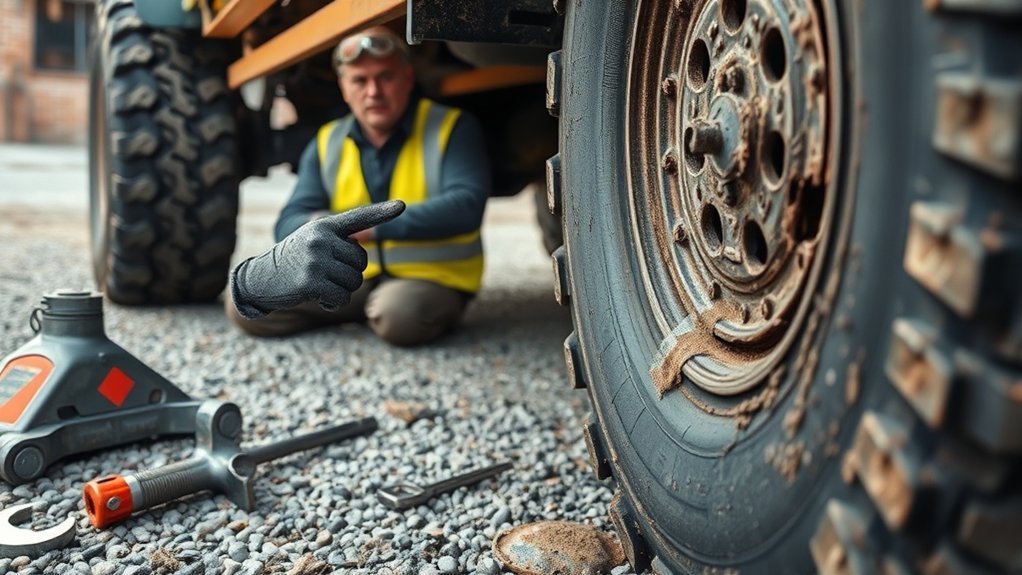
How can you tell when it’s time to call in a professional for tire repair? Recognizing the signs of sidewall damage is vital for your safety and liberation on the road. Here are three key indicators:
- Visible Bulges or Cracks: Any deformity in the sidewall indicates structural compromise.
- Slow Leaks: If you’re experiencing air loss, it could signal deeper issues needing immediate tire inspection.
- Previous Repairs: If your tire’s already been repaired and shows further damage, replacement is necessary.
When you notice any of these signs, don’t hesitate. A professional assessment is essential to guarantee your tires are safe for travel. Remember, tires with tread depth below 2/32 inches should also be replaced. Prioritizing your safety is the first step toward driving confidently and freely.
Best Practices for Tire Maintenance and Replacement
Maintaining your truck tires effectively is vital for guaranteeing safety and performance on the road. Regularly inspect your tires for wear and damage, focusing on tread depth—keep it above the legal limit of 2/32 inches (1.6 mm). Proper tire pressure monitoring is essential; adhere to the manufacturer’s recommendations to enhance performance and prolong tire life, minimizing the risk of flats and blowouts.
Don’t forget to rotate your tires periodically, as outlined in the manufacturer’s guidelines, to promote even wear and maximize lifespan. If you notice any structural damage, such as sidewall punctures or cuts, replace those tires immediately, as they’re unsafe and often unrepairable. Finally, always consult trained technicians for any repairs, guaranteeing they’re limited to eligible tread areas only. Following these best practices will help you maintain tire integrity and ensure a safer driving experience.
Frequently Asked Questions
Is It Legal to Patch a Sidewall on a Tire?
No, it’s illegal to patch a sidewall on a tire due to safety regulations. Compromising sidewall integrity can lead to tire failure, jeopardizing your safety and that of others on the road.
Why Can’t You Repair a Sidewall Puncture?
You can’t repair a sidewall puncture due to repair limitations that compromise sidewall integrity. Repairs fail to guarantee safety, risking blowouts or tire failure, which makes replacement the only viable option for maintaining reliable performance.
Conclusion
In summary, driving on a damaged tire can be dangerous, with studies showing that nearly 30% of tire-related accidents stem from improper repairs. If you suspect a sidewall puncture, it’s essential to understand the risks and consider replacing the tire rather than attempting a repair. Prioritizing safety and maintaining your tires not only enhances your vehicle’s performance but also protects you and your passengers on the road. Always consult a professional when in doubt.

Related Articles
Recommended Tire Pressure for Tundra Under Payload: Adjusting for Weight
Unlock optimal performance for your Toyota Tundra under heavy loads—discover essential tire pressure adjustments for safety and efficiency that you won't want to miss.
Read More
How to Protect Tires From UV and Sun Damage: Simple Prevention Methods
Get essential tips to shield your tires from UV damage and extend their lifespan—discover the simple prevention methods that every vehicle owner should know!
Read More
Tire Storage Tips for Winter or Summer Sets: Temperature, Position, and More
Begin your journey to optimal tire storage with essential tips on temperature, position, and maintenance—discover how to protect your investment today!
Read More