Do You Need Winter Tires for a Toyota Tundra? Honest Answer by Climate
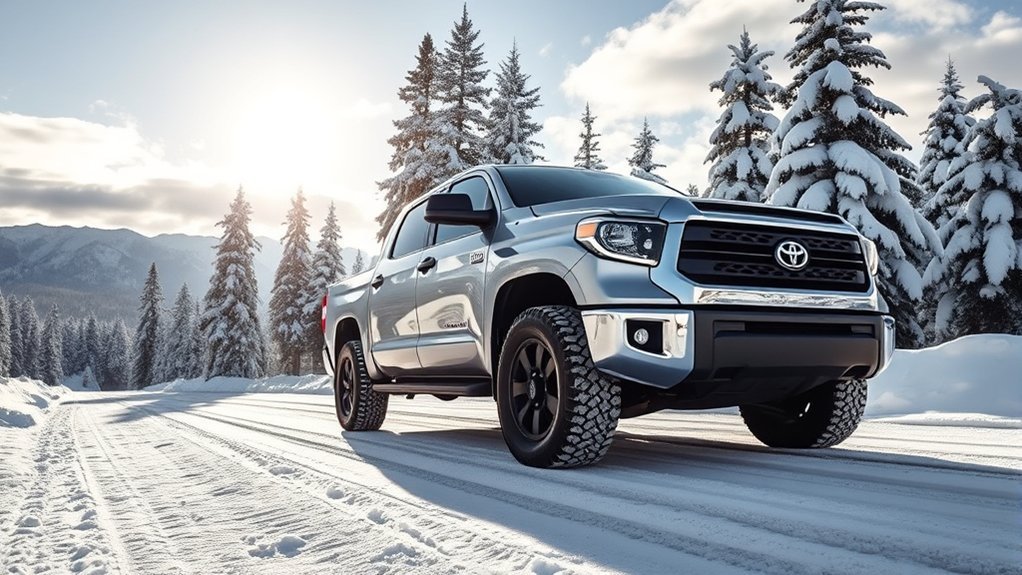
If you drive a Toyota Tundra in winter climates where temperatures dip below 45°F (7°C), you definitely need winter tires. They provide enhanced traction and control on icy roads, thanks to their specialized rubber and tread designs. Even if your truck has all-wheel drive, winter tires can greatly reduce stopping distances. Plus, they keep your all-season tires from wearing out too soon. Want to know more about choosing the right winter tires for your Tundra?
Why Your Tundra Might Need Winter Tires?
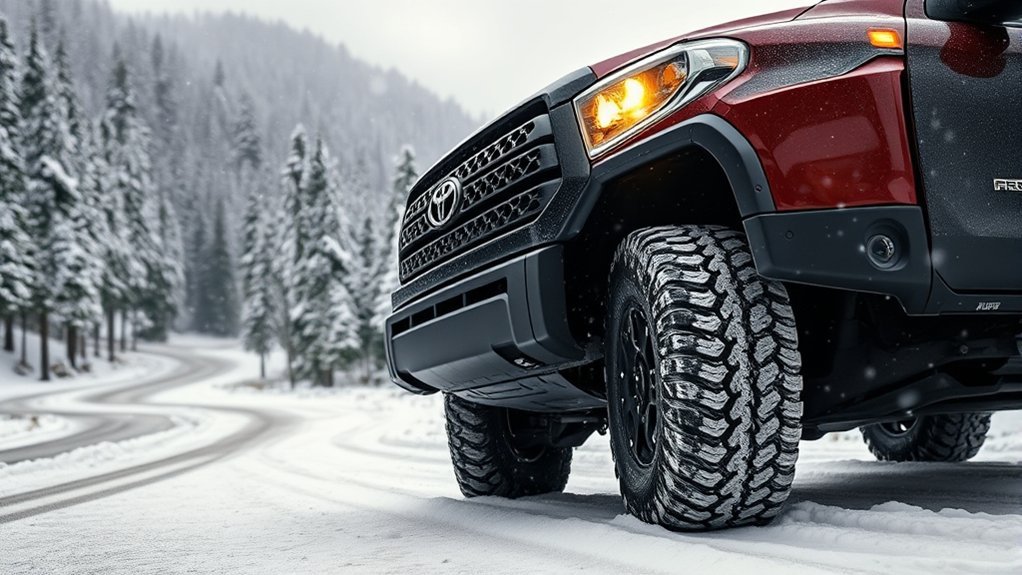
When winter hits and temperatures drop, you might wonder why your Toyota Tundra needs winter tires. While your truck comes equipped with all-season tires, those aren’t always enough in regions with heavy snowfall and icy roads. Winter tires are crafted with softer rubber compounds that maintain flexibility in cold temperatures, enhancing tire performance and grip. The deep grooves and specialized tread patterns on winter tires greatly improve traction, reducing your stopping distances by up to 30%. This isn’t just about convenience; it’s about safety. Even with all-wheel drive, your Tundra can struggle in severe weather without the right tires. If you live in areas where temperatures consistently dip below 45°F (7°C), winter tires become essential for ideal handling and control. Embracing winter tires means embracing freedom and confidence in your vehicle, no matter the weather.
Top Reasons to Choose Winter Tires for Your Toyota Tundra
Choosing winter tires for your Toyota Tundra isn’t just a matter of preference; it’s a smart decision that can greatly enhance your driving experience during harsh winter months. Winter tires provide better traction on icy roads, improving your driving safety considerably. Their specialized rubber compounds stay flexible in cold temperatures, ensuring peak grip where all-season tires fail. Plus, deep treads effectively channel snow and slush, giving you better control.
| Benefit | Description | Impact on Driving Safety |
|---|---|---|
| Enhanced Traction | Improves grip on icy/snowy roads | Reduces stopping distances |
| Flexible Rubber Compounds | Stays pliable in cold temperatures | Increases overall stability |
| Extended Tire Lifespan | Reduces wear on all-season tires | Lowers maintenance costs |
How Climate Affects Winter Tire Performance
Understanding how climate influences winter tire performance can be the key to making the right choice for your Toyota Tundra. In colder regions where temperatures drop below 45°F (7°C), winter tires excel due to their specialized tire composition, which remains flexible and provides enhanced traction. This is essential because all-season tires harden, losing grip and increasing your risk on icy roads.
In areas with heavy snowfall, winter tires’ deeper treads and softer rubber are important for maintaining control, reducing stopping distances by up to 30%. If you live where lake effect snow is common, these tires become even more critical, ensuring safety whether you’re in a 2WD or 4WD vehicle. Conversely, in warmer climates, all-season tires may suffice, but having dedicated winter tires on hand gives you a safety net for unexpected winter weather. Knowing these temperature effects helps you make an informed decision for your driving needs.
When to Make the Switch to Winter Tires?
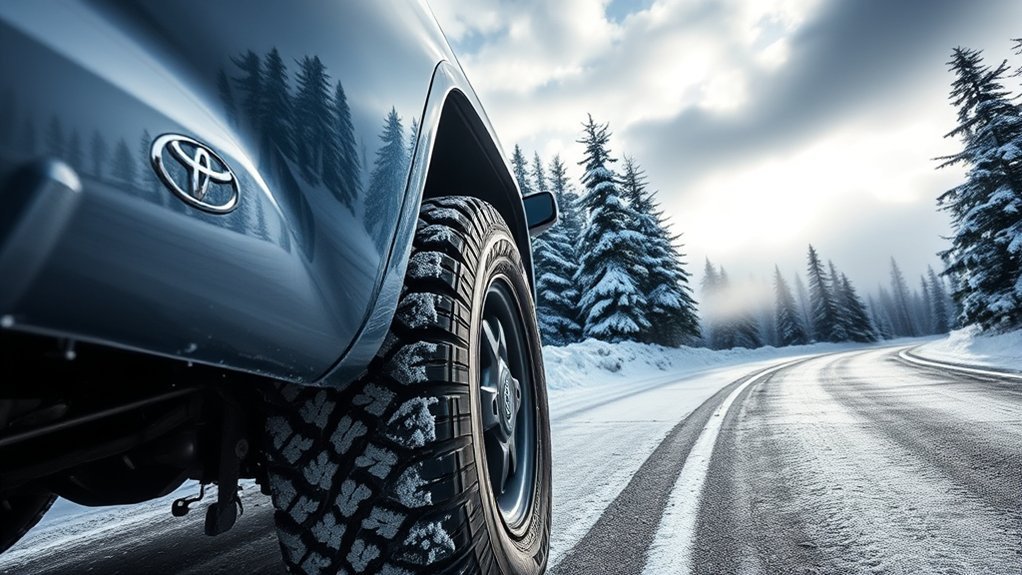
As temperatures begin to dip, how do you know when it’s time to make the change to winter tires for your Toyota Tundra? The general rule is to change when temperatures consistently drop below 45°F (7°C). This guarantees you’ll have ideal grip and handling as road conditions change. Installing winter tires before the first major snowstorm is essential for driving safety, helping you stay prepared for icy surfaces.
Dedicated winter tires can reduce braking distances by up to 30% compared to all-season tires, enhancing your control on slippery roads. Don’t forget about tire maintenance; regularly monitor your winter tires’ condition and tread depth, as they wear faster due to softer rubber compounds. Making this change not only improves your safety but also extends the lifespan of your all-season or summer tires by minimizing their wear during harsh winter conditions.
How to Choose the Best Winter Tires for Your Tundra
Finding the right winter tires for your Toyota Tundra can make a significant difference in your driving experience during harsh weather. Start by looking for tires with deep tire treads and multiple sipes; these features are vital for maximizing grip on icy and snowy roads. Choose dedicated winter tires made from softer rubber compounds that stay flexible in temperatures below 45°F (7°C). This flexibility enhances traction, helping you navigate those tricky winter conditions.
Reputable brands like Nokian Hakkapeliitta and Bridgestone Blizzak consistently deliver superior performance, so consider them when making your choice. Confirm the tires fit your Tundra’s size specifications—matching the OEM tire size is important for ideal handling and safety. Finally, don’t forget to evaluate user reviews and performance tests, focusing on braking distances and acceleration on snow and ice. This way, you can drive confidently through winter’s challenges.
Frequently Asked Questions
What Are the Best Tires to Put on a Toyota Tundra?
For your Toyota Tundra, choose dedicated winter tires like the Nokian Hakkapeliitta or Bridgestone Blizzak. Their superior tread patterns enhance tire performance, giving you better traction and control on icy, snow-covered roads. Stay safe!
Is October Too Early for Winter Tires?
No, October’s not too early for winter tires. Embracing seasonal tire shifts maximizes winter tire benefits, enhancing traction and safety. Getting ahead of the rush guarantees you’re ready for unpredictable weather and winter driving challenges.
Can I Drive My Tundra in 4H in the Snow?
When it comes to snow driving, you can definitely use your Tundra in 4H. It enhances traction and stability, helping you navigate tricky conditions, but remember, it won’t shorten your stopping distance. Drive safely!
Conclusion
In the end, whether you need winter tires for your Toyota Tundra really boils down to where you live and how you drive. If you’re facing icy roads or heavy snow, investing in winter tires can make a world of difference, keeping you safe and confident behind the wheel. Don’t let harsh weather turn your truck into a risk; embrace the season with the right tires, and enjoy every drive, no matter the conditions.

Related Articles

Toyota Tundra Tire Performance in Rain: What Affects Wet-Road Grip
Wonder how tire composition, tread design, and pressure impact your Toyota Tundra's wet-road grip? Discover the secrets to safer driving in the rain.
Read More
Why Are My Tires So Loud? How Tread Design Affects Road Noise
Learn why loud tires disrupt your drive and discover how tread design influences road noise—your quiet ride awaits just ahead.
Read More
How Tire Width Affects Traction and Fuel Economy on a Truck
Get ready to explore how tire width influences your truck's traction and fuel economy, and discover the crucial trade-offs you need to consider.
Read More