Winter Tire Compound vs All-Season: Why Cold Weather Changes Everything
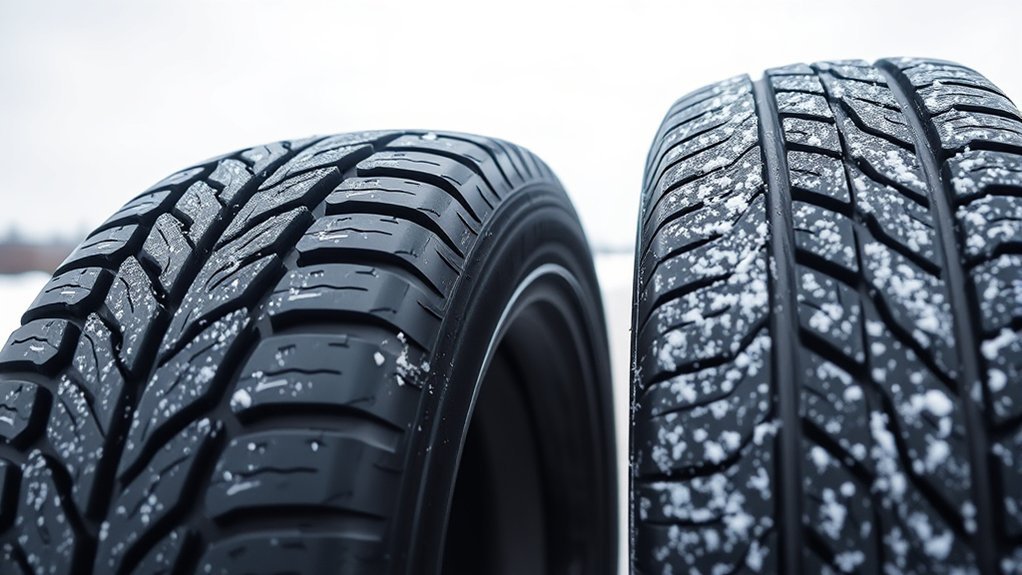
When temperatures drop below 45°F, cold weather hardens the rubber in all-season tires, reducing grip and traction. Winter tires, made from softer compounds, remain flexible and provide better performance on icy and snowy roads. Their deeper treads and specialized patterns enhance traction and shorten stopping distances considerably. If you find your all-season tires struggling in winter conditions, it might be time to evaluate a switch. Explore what more you can learn about maximizing your safety on the road.
Key Differences Between Winter and All-Season Tires
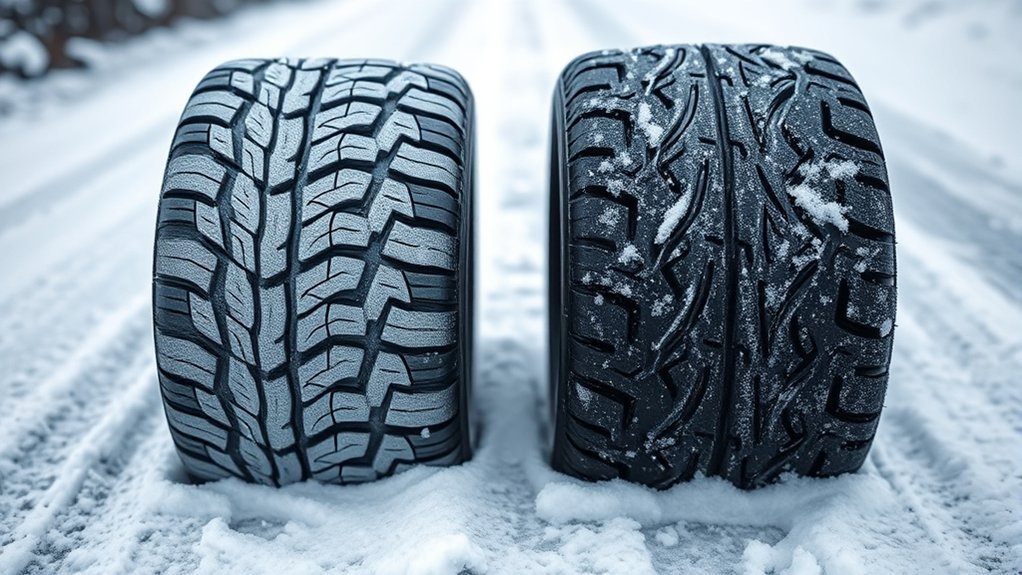
When it comes to choosing the right tires for your vehicle, understanding the key differences between winter and all-season tires can make all the difference in your safety and driving experience. Winter tires use a softer rubber compound that remains flexible in temperatures below 45°F, optimizing tire performance on icy and snowy surfaces. Their deeper grooves and specialized tread patterns effectively channel snow and slush, enhancing traction where all-season tires struggle with shallower treads. This means that on ice, winter tires can stop in just 34 feet, compared to 57 feet for all-season options. While all-season tires offer versatility for various conditions, their effectiveness diminishes in extreme cold and heavy snow. If you live in an area with frequent snow and ice, investing in winter tires is essential for superior control and stability, ensuring your safety and liberation on the road during harsh weather.
How Cold Temperatures Affect All-Season Tires
Cold temperatures greatly impact the performance of all-season tires, limiting their effectiveness in winter conditions. When the mercury dips below 7°C (45°F), the medium rubber compound in these tires hardens, reducing traction and grip on cold, icy roads. You might find that while all-season tires perform adequately in mild winter conditions, they struggle considerably as temperatures plummet. Their tread depth and design simply aren’t optimized for snow and ice, which means longer stopping distances—up to 23 feet more on icy surfaces compared to winter tires. This cold weather impact can lead to increased wear and a shorter lifespan for your tires. If you’re traversing harsh winter conditions, reconsider relying solely on all-season tires. Making a switch could liberate you from the risks associated with compromised tire performance and enhance your safety on the road.
Tread Design Differences Between Winter and All-Season Tires
While you might think all tires are created equal, the tread design differences between winter and all-season tires play a fundamental role in their performance. Winter tires boast deeper tread depths and specialized patterns that channel snow and slush away, enhancing grip and minimizing hydroplaning risk. Their numerous biting edges provide superior traction performance on icy roads, something all-season tires struggle with due to their shallower tread designs.
In contrast, all-season tires feature a more uniform tread optimized for mild conditions, sacrificing aggressive patterns that can tackle harsh winter weather. As temperatures plunge, the tread compounds in winter tires remain flexible, ensuring better contact with cold surfaces. This flexibility allows for maximized stopping power on slippery roads, greatly outperforming all-season options. If you’re steering through winter conditions, understanding these tread design differences is essential for ensuring your safety and performance on the road.
How to Choose the Right Tire for Safety
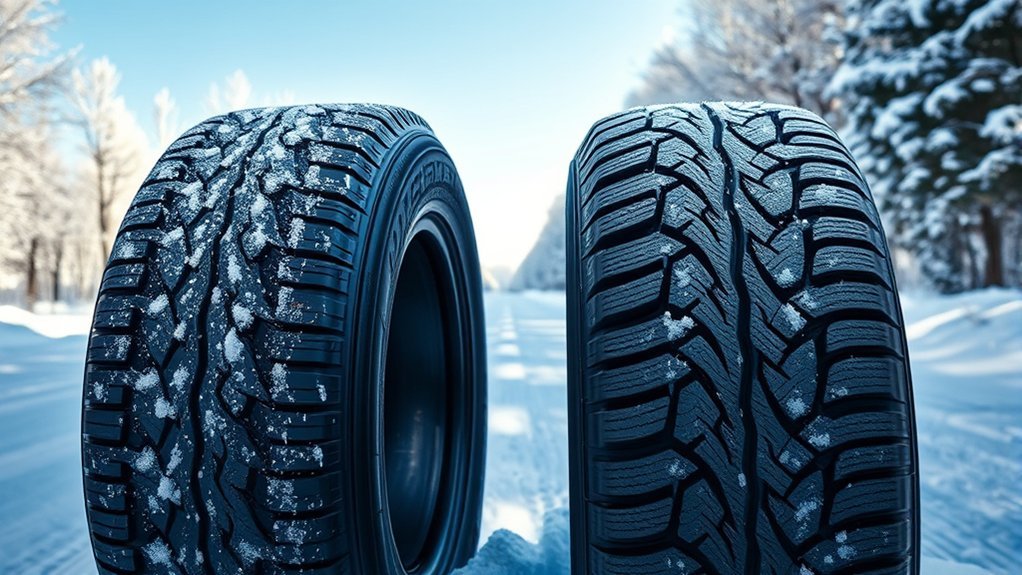
Choosing the right tire for safety isn’t just about brand preference; it’s essential to evaluate your local climate and driving conditions. Understanding how tire performance varies can make a significant difference in your safety on the road. Here are four key factors to regard:
- Temperature: If you regularly face temperatures below 45°F, winter tires are a must for better grip.
- Driving Conditions: Assess whether you navigate through deep snow or icy roads; winter tires excel in these environments.
- Braking Distance: Remember, winter tires can reduce stopping distances by up to 23 feet on icy surfaces.
- Versatility Needs: While all-season tires offer some flexibility, they fall short in severe winter conditions.
Signs You Need to Switch to Winter Tires?
As winter approaches, you’ll want to be proactive about your tire choices to guarantee safety on the road. If temperatures consistently drop below 45°F (7°C), it’s time to contemplate winter tires. Their softer rubber compounds retain flexibility, enhancing tire performance in cold conditions.
Noticeable reduced traction on icy or snowy roads is another clear sign. If you find your vehicle struggling to maintain control, all-season tires likely aren’t cutting it for harsh winter conditions. Remember, stopping distances can be up to 23 feet longer on ice with all-season tires compared to winter options.
Increased skidding or longer braking distances indicate that your current tires may not provide the stability and control you need. Shifting to winter tires isn’t just a choice; it’s a vital step to guarantee your safety during the cold months. Don’t compromise—invest in the right tires for the season.
Frequently Asked Questions
Are All-Weather Tires Better Than All-Season Tires in the Winter?
Yes, all-weather tires outperform all-season tires in winter performance. They’re designed for cold conditions, offering enhanced grip and better tire durability, ensuring you stay safe and confident on slippery roads during winter months.
What Is the Best Winter Tire for a Honda CRV?
When traversing a snow-covered trail, the Michelin X-Ice Snow gives your Honda CR-V unmatched cold traction. Its tire performance shines, ensuring you conquer icy roads confidently, while enhancing safety and control during winter’s grip.
Conclusion
As winter blankets the world in white, your tires become the sled dogs guiding your journey. All-season tires may struggle through the icy terrain, while winter tires grip the road like a seasoned traveler. Choosing the right tire is like selecting the right path in a snowy wilderness—one leads to safety, the other to uncertainty. Don’t let the cold catch you off guard; equip your vehicle wisely and guarantee your travels are smooth and secure this winter.

Related Articles
Steel-Belted vs Kevlar-Reinforced Sidewalls: Puncture Resistance Compared
Pitting steel-belted durability against Kevlar-reinforced puncture resistance reveals crucial insights; find out which tire best suits your needs.
Read More
What Makes a Tire Good for Snow and Ice? Compound, Tread, and Sipes
Unlock the secrets to optimal winter tires with the perfect blend of compound, tread design, and sipes for unparalleled performance on snow and ice.
Read More
How Tire Rubber Compound Affects Tread Life: Soft vs Hard Explained
Practical insights into tire rubber compounds reveal how softness enhances grip but shortens life—discover which option suits your driving style best.
Read More