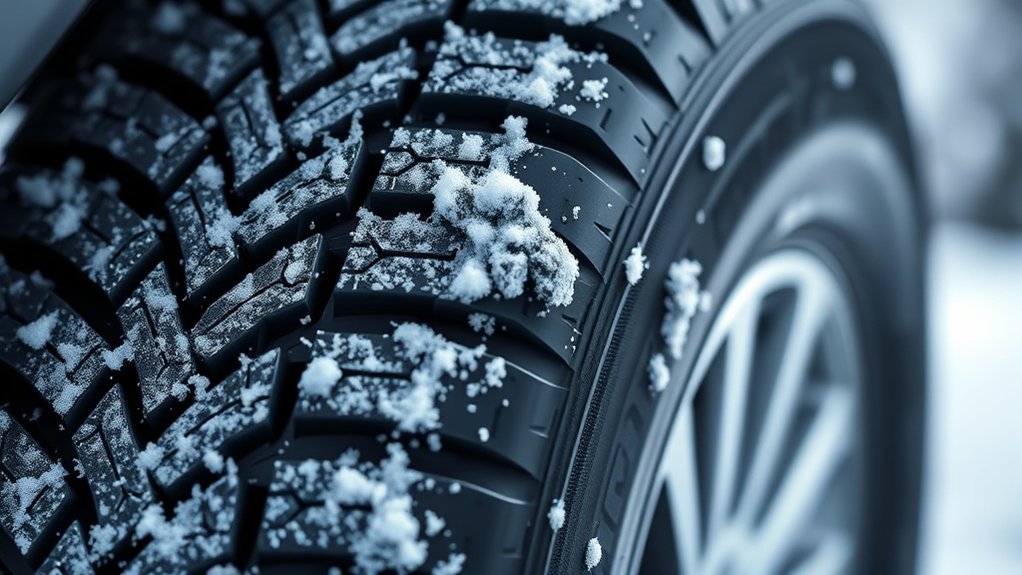
A tire performs well on snow and ice when its rubber stays flexible, its tread moves snow and slush out of the contact patch, and its sipes create many small biting edges. The right choice also depends on how often you drive on packed snow, glare ice, slush, plowed city roads, or mountain passes.
Quick Answer
A tire performs well on snow and ice when it has a cold-flexible winter compound, deep grooves for snow and slush, dense sipes for ice grip, and the Three-Peak Mountain Snowflake symbol. For severe winter driving, dedicated winter tires usually outperform all-season and all-weather tires.
Key Takeaways
- The rubber compound matters most below about 45°F / 7°C because ordinary all-season rubber begins losing elasticity in cold weather.
- Deep grooves and open tread blocks help clear snow, slush, and water, while sipes add biting edges for ice and packed snow.
- Look for the Three-Peak Mountain Snowflake symbol, not just “M+S,” if you need verified severe-snow performance.
- Install winter tires in a matching set of four and replace them before tread gets too shallow for snow-covered roads.
Why Tire Compound Matters in Winter Conditions
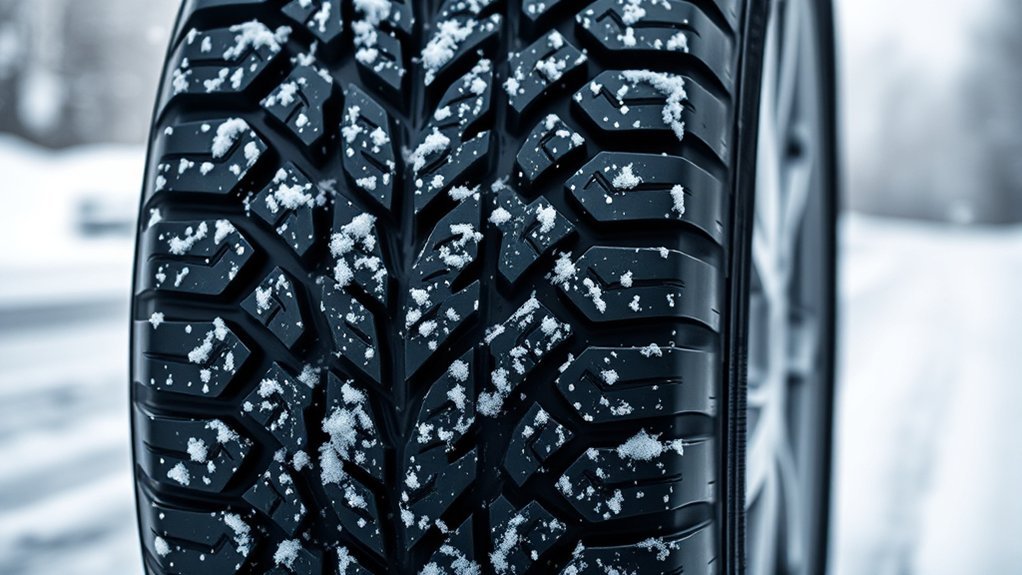
When temperatures drop, the tire compound you choose can greatly affect control, braking, and steering. Transport Canada notes that below 7°C, all-season and summer tires begin to lose elasticity, while winter tires keep their elasticity and grip at much lower temperatures.
This flexibility helps the tread conform to rough, frozen pavement instead of skating over it. It also helps the tire maintain more usable contact with snow and ice during braking, acceleration, and cornering. In some cold-weather tests summarized by the Tire and Rubber Association of Canada, winter tires have stopped as much as 30% shorter than all-season tires in conditions just below freezing.
Warning: Winter tires improve grip, but they do not make ice safe at normal dry-road speeds. Slow down, leave extra following distance, and avoid sudden braking or steering.
How Tread Design Affects Your Winter Grip
Tread design is the second major factor in snow and ice performance. Deep grooves, open channels, and blocky tread elements help the tire bite into loose snow and push slush away from the contact patch. This is important because packed snow, slush, and meltwater can form a slippery layer between the tread and the road.
Good winter tread design is a balance. Deep lugs help in loose snow, but too much open space can reduce the amount of rubber touching hard ice. A strong winter tire combines snow-clearing grooves with enough tread stability to stay predictable on cold, dry, wet, and icy roads.
Snow traction can also improve when the tread packs and releases snow correctly. Snow can grip snow better than rubber grips a polished icy surface, so winter tread blocks are designed to collect, compress, and eject snow as the tire rolls.
How Sipes Improve Grip
Sipes are the thin slits cut into tread blocks. They look small, but they are one of the main reasons winter tires grip packed snow and ice better than standard all-season tires. As the tread touches the road, sipes open slightly and create extra biting edges.
Sipe Functionality Explained
On icy roads, a tire needs more than deep grooves. It needs many tiny edges that can grip small surface irregularities and help move the thin film of water that often forms on ice. Sipes increase the number of contact edges, helping the tire hold the road during braking and cornering.
| Sipe Design | Effect on Winter Grip |
|---|---|
| Too few or shallow | Limited biting edges, weaker packed-snow and ice grip |
| Moderate to dense | Better surface conformity and improved braking traction |
| Excessive or poorly supported | Can make tread blocks feel squirmy on dry pavement |
Types of Siping Patterns
Zigzag sipes create many angled biting edges, which can help a tire grip packed snow and uneven icy surfaces. Straight sipes can feel more stable because they allow less tread-block movement. Many modern winter tires use 3D or interlocking sipes that open for grip but support the tread block under braking and cornering.
Impact on Traction Levels
More siping usually improves snow and ice traction, but siping alone does not make a tire winter-ready. The compound, tread depth, groove shape, block stiffness, and tire age all work together. A worn winter tire with many sipes may still perform poorly if the rubber has hardened or the tread is too shallow.
What the Three-Peak Mountain Snowflake Symbol Means
The Three-Peak Mountain Snowflake symbol, often shortened to 3PMSF, is one of the easiest ways to identify a tire designed for severe snow conditions. USTMA/RMA severe-snow guidance defines these tires by snow-traction testing and the mountain/snowflake sidewall pictograph.
Do not confuse 3PMSF with “M+S” alone. M+S means mud and snow, but it does not prove the same severe-snow test performance. If you drive in regular snow, freezing rain, mountain conditions, or long stretches below 45°F / 7°C, prioritize 3PMSF-marked winter tires.
Note: Some all-weather tires also carry the 3PMSF symbol. They can be useful for mild to moderate winters, but they are still a compromise compared with dedicated winter tires in severe snow and ice.
Snow Tires vs. All-Weather Tires: What’s Best for Winter?
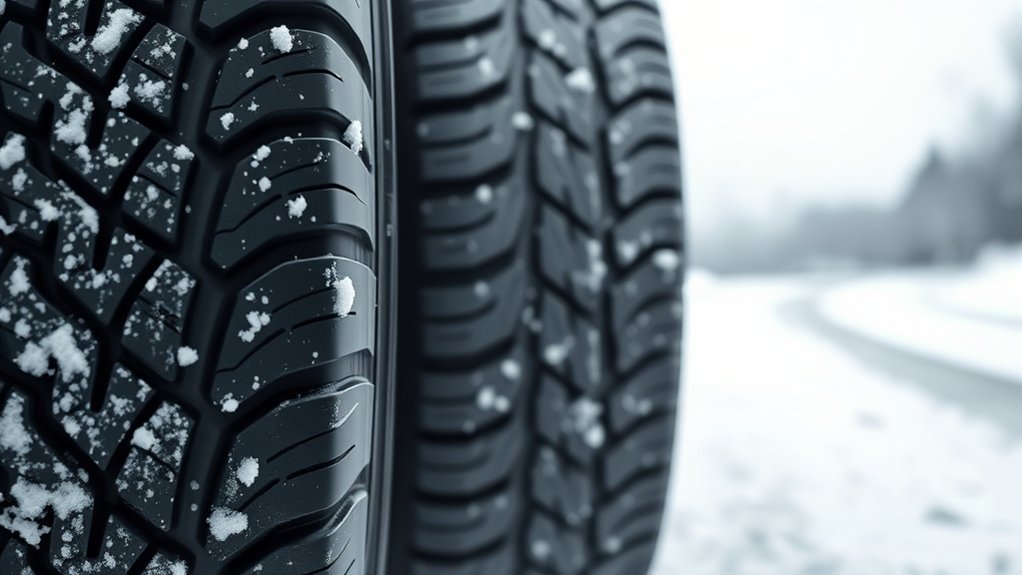
For harsh winters, dedicated winter tires are usually the safest choice. They use softer cold-weather compounds, deeper winter-focused tread patterns, and high siping density to improve grip on snow, slush, and ice.
All-weather tires are a middle-ground option. They are designed for year-round use and many carry the 3PMSF symbol, but they are best for drivers who see cold temperatures and occasional snow rather than long periods of packed snow, ice, or mountain driving.
| Tire Type | Best For | Winter Limitation |
|---|---|---|
| Dedicated winter tire | Frequent snow, ice, freezing rain, mountain roads, and long cold seasons | Wears faster in warm weather and should be swapped seasonally |
| All-weather tire | Milder four-season climates with light to moderate snow | Not as strong as dedicated winter tires on severe ice and packed snow |
| All-season tire | Warm, wet, and mild conditions with only occasional light snow | Loses grip as temperatures fall and is not ideal for real winter roads |
| Studded winter tire | Persistent ice where studs are legal and useful | Can be noisy, may damage roads, and is restricted by local laws |
[Products Worth Considering]

Accurately measure tire tread depth with a calibrated gauge marked from 0 to 1 inch in 1/32 inch increments. The color-coded bar helps you quickly identify tread condition ranges, supporting safe driving for trucks, motorcycles, automobiles, and passenger vehicles.

Monitor tire tread wear with a smart, color-coded depth gauge that shows clear condition ranges at a glance. The bar is range marked for fast, easy readings, helping you maintain safer traction and performance. Each gauge is portable with a pocket clip, and the set includes 20 units for daily use and sharing.

The SAFELIFE dial tire tread depth gauge measures tread depth in 1/32 inch increments with clear, easy-to-read 2-inch dial face. Color zones using a traffic light system help you quickly judge whether tread is low, marginal, or ample for safer driving. Built with a durable zinc cast body and a metal detect probe for precise, comfortable use across cars, motorcycles, trucks, and buses.
Essential Features for Optimal Winter Tire Performance
When comparing winter tires, focus on the features that affect real traction rather than only the brand name or tread appearance.
- Cold-flexible compound: Choose a compound designed to stay pliable below about 45°F / 7°C.
- 3PMSF rating: Look for the mountain snowflake symbol for verified severe-snow capability.
- Deep grooves: Grooves and channels help evacuate snow, water, and slush.
- Dense siping: More biting edges improve grip on packed snow and ice.
- Stable tread blocks: Tread blocks should grip without feeling unstable on cold dry roads.
- Correct size and load rating: Follow your vehicle’s tire placard or owner’s manual.
The best winter tire is not just the one with the deepest tread. It is the tire that combines cold-flexible rubber, snow-clearing channels, supported tread blocks, and enough siping to grip ice without making the tire unstable.
[Products Worth Considering]

The 22800 wheel stud installer makes replacing wheel studs quick and secure, saving time and effort during tire service. It uses a ratchet or impact wrench to pull new studs firmly into place, helping when existing studs are too long. Compatible with most automotive wheels and light-duty truck wheel studs, it’s designed for easy, tool-assisted installation.

Milton S-921 pencil tire pressure gauge helps you maintain optimal tire pressure for passenger cars with accurate readings in PSI and kPa. It features a built-in deflator valve for convenient pressure adjustments, plus a single chuck head and nylon indicator bar for easy use on the go. Built from durable plated brass and designed for reliable performance, it’s a practical road trip and cold-weather maintenance tool.

Measure tire tread depth quickly and accurately with this LUMITECO dial gauge that reads in 1/32" increments up to 14/32". The color-coded green/yellow/red zones make it easy to judge tire wear and know when replacement is needed. A rugged, compact design with a protective pouch helps keep the gauge ready for use on cars, trucks, motorcycles, and more.
Tips for Choosing the Right Tires for Your Winter Driving Needs
Start with your actual winter conditions. A driver in a mild city with occasional flurries does not need the same tire as someone who commutes through lake-effect snow, mountain passes, or rural icy roads.
- Check your average winter temperature. If temperatures regularly stay below 45°F / 7°C, winter or all-weather tires make more sense than standard all-season tires.
- Match the tire to the worst road you regularly drive. If you often see packed snow or ice, choose dedicated winter tires.
- Look for 3PMSF. This is especially important if your area has winter tire laws, mountain-road requirements, or insurance rules.
- Install a full set of four. Mixing winter and non-winter tires can reduce stability, especially during braking and cornering.
- Check tread depth before winter starts. For snow-covered roads, avoid using tires worn close to 4 mm / 5/32 inch tread depth. The general replacement minimum is 2/32 inch, but winter performance drops before that.
- Ask about stud legality. Studded tires can help on ice, but they are restricted or banned in some areas.
Pro Tip: Buy winter tires before the first storm. Waiting until snow is in the forecast often means limited stock, longer appointment times, and fewer choices in your size.
[Products Worth Considering]

Measure tyre tread depth precisely with a digital gauge that reads in both MM and inches, helping you monitor safe driving conditions. The large LCD screen is easy to operate, and the compact tool fits for cars, trucks, and motorcycles. It provides high accuracy with a 0-25.4mm range and includes a 1-year warranty for added peace of mind.

Cool Coolers by Fit & Fresh provides reusable XL slim ice blocks designed for strong, long-lasting cooling in coolers and cooler bags. The break-resistant, BPA-free packs are leak-proof and easy to clean, helping keep food and beverages cold without a messy melt. A space-saving slim shape fits top or side placements, and the tire-pattern design boosts cooling surface area for next-day use.

Vigorder rubber cement glue delivers superior adhesion and cures quickly within about 30 seconds for seamless rubber bonding. Once cured, it helps provide a strong, durable, waterproof seal that holds up to vehicle weight, pressure, and heat. Suitable for cars, motorcycles, trucks, bicycles, and off-road tires, it’s designed for emergency patch and maintenance repairs.
Winter Tire Maintenance That Protects Snow and Ice Grip
Even the best winter tire loses performance if it is underinflated, worn unevenly, or too old. NHTSA recommends checking tire pressure at least once a month when tires are cold and checking tread when you check pressure.
- Check pressure cold: Use the pressure listed on the vehicle placard or owner’s manual, not the maximum pressure on the tire sidewall.
- Rotate on schedule: Follow the vehicle or tire manufacturer’s rotation interval to reduce uneven wear.
- Inspect for damage: Look for cracks, bulges, cuts, missing tread chunks, and uneven wear.
- Store off-season tires correctly: Keep them clean, cool, dry, and away from direct sunlight and ozone sources.
- Replace aging tires: Rubber hardens over time, so old winter tires can lose grip even if tread remains.
Frequently Asked Questions
What are the downsides of siping tires?
Siping improves snow and ice grip, but too much siping or poorly supported siping can make tread blocks move more. That can reduce steering response, increase tread squirm, and sometimes speed up irregular wear. Factory-designed winter tire siping is usually safer and more balanced than aggressive aftermarket siping.
What tread pattern is best for snow and ice?
For loose snow, look for deep grooves, open channels, and blocky tread elements that move snow and slush. For ice, look for a flexible compound and many sipes that create biting edges. The best winter tires balance both instead of focusing only on aggressive-looking tread.
Are all-weather tires good enough for winter?
All-weather tires can work well in mild to moderate winter conditions, especially if they carry the 3PMSF symbol. For frequent ice, packed snow, steep roads, or long freezing seasons, dedicated winter tires usually provide better braking, cornering, and control.
Do I need four winter tires, or can I install two?
Use four matching winter tires. Installing only two can create uneven grip between the front and rear axle, which may make the vehicle harder to control during braking, turning, or emergency maneuvers.
When should winter tires be replaced?
Replace tires immediately at 2/32 inch tread depth, but do not wait that long for serious winter use. For snow-covered roads, tires worn close to 4 mm / 5/32 inch can lose too much winter traction. Also replace tires with cracking, bulges, damage, or hardened rubber.
Conclusion
Choosing a winter tire is like choosing the right tool for a difficult job. A safe snow-and-ice tire needs a cold-flexible compound, deep snow-clearing grooves, dense but stable siping, and a verified winter rating such as the Three-Peak Mountain Snowflake symbol. Match the tire to your worst regular winter road, install four matching tires, maintain pressure and tread depth, and you will have a much better chance of staying in control when roads turn slick.
Sources
- Transport Canada — Using Winter Tires — supports the 7°C guidance, 3PMSF symbol, four-tire installation advice, tire pressure checks, and 4 mm / 5/32 inch snow-road tread warning.
- NHTSA TireWise — supports tire pressure, tread inspection, cold-pressure checks, and the 2/32 inch replacement minimum.
- USTMA/RMA Severe Snow Tire Definition — supports 3PMSF severe-snow sidewall marking and traction-test criteria.
- Tire and Rubber Association of Canada — Why Winter Tires Are the Right Choice — supports winter tire braking, traction, and 3PMSF performance context.
- Traffic Injury Research Foundation — Winter Tires: A Review of Research on Effectiveness and Use — supports the broader evidence base on winter tire acceleration, handling, and braking performance.