How Much Tire Rubbing Is Acceptable on a Tundra? When to Worry
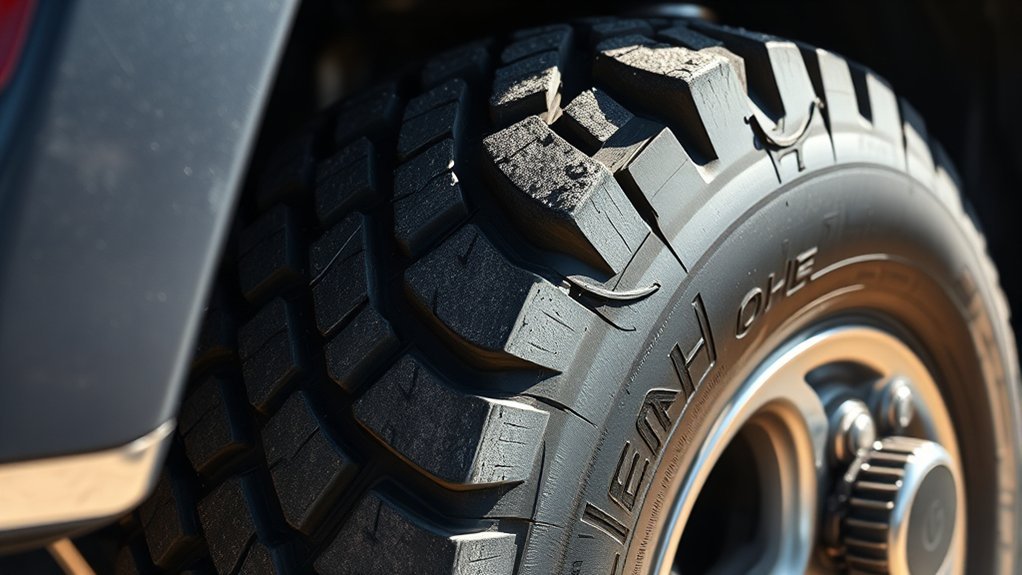
When it comes to tire rubbing on your Tundra, occasional contact—especially during tight turns—can be acceptable. You should worry if you hear rubbing sounds or notice uneven tire wear. A gap of less than 1/4 inch between tires and control arms is concerning, while an 1/8 inch gap is usually safe. If you see visible damage or frequent rubbing, it’s time to take action. Discover more about how to tackle these issues effectively.
What Causes Tire Rubbing on a Tundra?
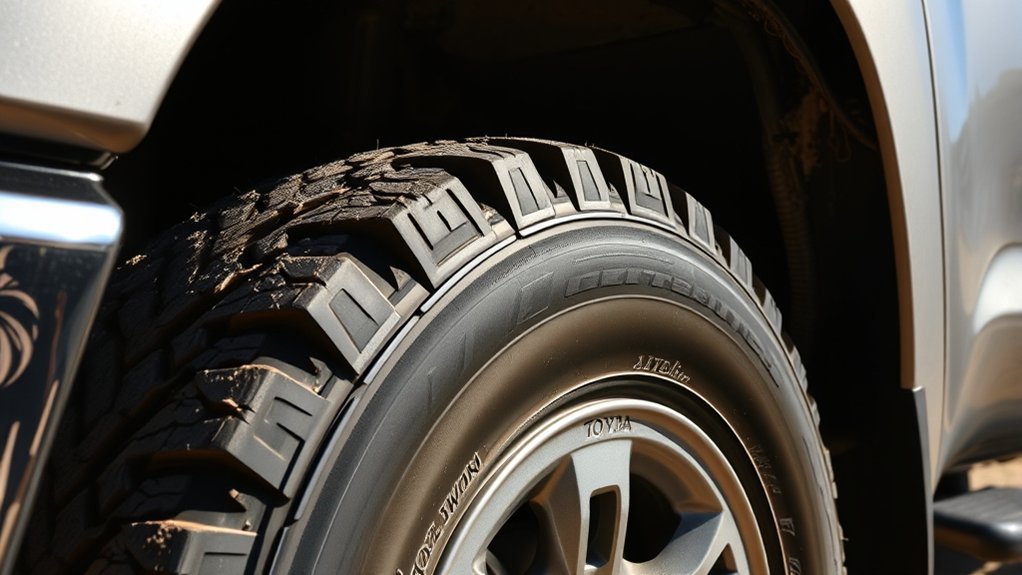
When you take your Tundra off the beaten path or tackle tight turns, you might notice tire rubbing, which can be frustrating. This usually happens at full lock, especially if you’ve upgraded to larger tires like 295/65R18. The main culprits? Inadequate clearance due to tire size, suspension modifications, and improper wheel offset or backspacing. If your Tundra’s lifted without proper adjustments, frame rubbing can also occur during off-road adventures or sharp turns.
Check your tire alignment; even a tiny 1/8 inch of clearance between control arms and tires can lead to issues over time. Aggressive driving or heavy loads can make rubbing worse, pushing you to contemplate adjustments like trimming fender liners or adding spacers. By addressing these factors, you can enhance your Tundra’s performance and keep rubbing to a minimum, ensuring a smoother ride on any terrain.
Signs of Excessive Tire Rubbing
Excessive tire rubbing can manifest in several noticeable ways, and recognizing these signs early can save you from costly repairs. Pay attention to any rubbing sounds, especially over bumps or during tight turns; these indicate contact with components. Uneven tire wear, particularly on the inner or outer edges, suggests excessive rubbing and warrants immediate inspection.
Additionally, if you find a gap of less than 1/4 inch between the tire and control arms, it’s a red flag for premature wear on both tires and suspension setup. Visible damage to the tire sidewall or tread means your current setup isn’t ideal.
| Sign of Rubbing | Implication | Action Required |
|---|---|---|
| Rubbing sounds | Contact with components | Check suspension setup |
| Uneven tire wear | Excessive rubbing | Inspect tires urgently |
| Less than 1/4 inch gap | Potential for damage | Adjust suspension |
| Visible tire damage | Setup issues | Immediate replacement |
How Much Rubbing Is Considered Normal?
How do you know if the tire rubbing on your Tundra is within acceptable limits? A small amount of rubbing can be normal, particularly during full lock steering or extreme turns. Here’s what to look out for:
- Occasional contact during tight maneuvers
- Rubs only against fender wells or plastic liners
- No visible wear on tires
- An 1/8 inch gap between tires and control arms
- No impact on driving stability
However, if you notice persistent rubbing on the upper control arms or frame while driving regularly, it’s time to worry. This could signal structural damage or alignment issues that compromise your vehicle’s tire alignment and driving stability. Keep an eye on any visible tire wear. Addressing these concerns early can save you from costly repairs and guarantee your Tundra performs at its best.
How Tire Size Affects Rubbing
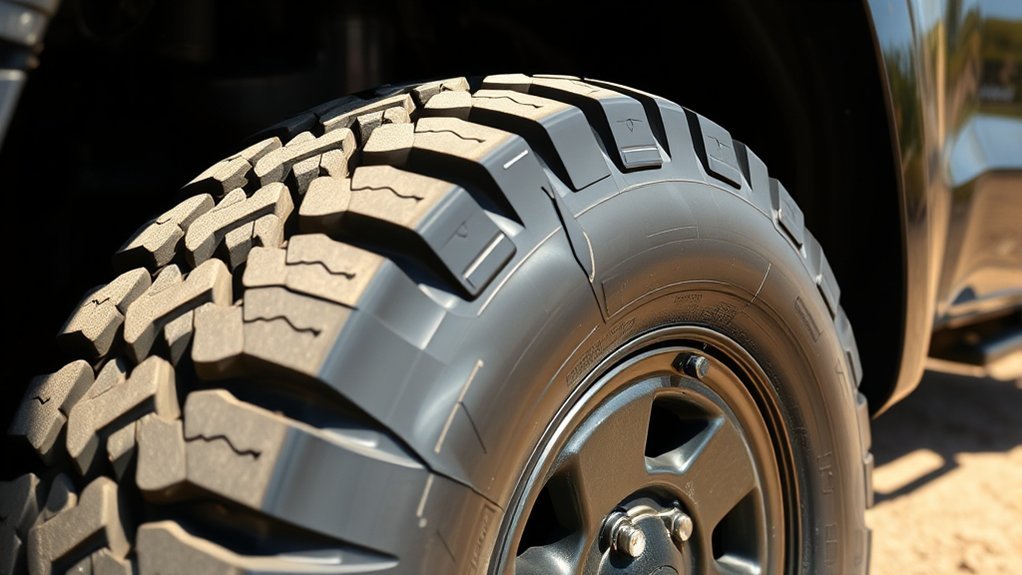
When it comes to tire size, both height and width play vital roles in rubbing issues on your Tundra. Taller tires can easily interfere with fender liners, while wider options may rub against suspension components and fender wells. Plus, if you’ve added a lift or other modifications, you’ll need to guarantee everything’s aligned properly to avoid new rubbing problems.
Tire Height Impacts Rubbing
Tire size plays a critical role in determining whether your Tundra will experience rubbing issues, especially as you venture beyond stock dimensions. Larger tire diameters, like 295/65R18, can greatly increase rubbing severity against the frame and upper control arms (UCAs), particularly during full turns or off-road adventures. Here’s what you need to ponder:
- Increased likelihood of structural damage
- Need for modifications like grinding UCAs
- Potential use of wheel spacers, which come with risks
- Heightened contact points with fender wells
- Importance of regular alignment checks
Choosing the right tire height is essential for a smooth ride and avoiding costly repairs. Stay informed and make adjustments wisely to maintain your Tundra’s performance and reliability.
Width Considerations for Clearance
Upgrading to wider tires on your Tundra can considerably impact clearance and rubbing issues. Wider tires increase the chance of rubbing against control arms and fender wells, especially during full lock turns or off-road adventures. For instance, if you’re moving from a 265/70/17 to a 285/75 R18, you might need to trim or adjust components to avoid interference. An essential rule is maintaining at least a 1/4-inch gap between the tire and suspension parts; anything less could lead to damage. To help alleviate these clearance issues, consider installing wheels with less backspacing, which push the tires outward. Don’t forget to schedule regular alignment checks after changing tire sizes to prevent misalignment and uneven wear.
Suspension Lift and Modifications
If you’re planning to lift your Tundra’s suspension, understanding how this affects tire size and rubbing is fundamental. A lift kit can open up options for larger tires, but it also requires careful consideration to avoid issues. Here are some key points to keep in mind:
- Larger tires (like 285/75 R18) may need trimming.
- Rubbing often occurs at full turns or bumps.
- Only 1/8 inch clearance can be concerning.
- Aftermarket wheels with less backspacing reduce rubbing.
- Regular wheel alignment checks are essential post-modification.
These lift kit benefits can enhance your off-road experience, but proper adjustments and alignment are crucial to maintain performance and avoid uneven tire wear. Embrace the freedom of exploration, but keep your Tundra in check!
Suspension Modifications and Their Effects
When you modify your Tundra’s suspension, the geometry of the vehicle changes, often leading to increased tire rubbing, especially with larger tires like 295/65R18s. This rubbing typically occurs on the upper control arms (UCAs) and the frame during turns or over bumps. To counteract these issues, precise alignment adjustments are vital post-installation.
Grinding down UCAs to fit larger tires may seem tempting but can compromise structural integrity, raising safety concerns. Instead, consider upgrading to aftermarket options like Camburg uniball UCAs. These not only reduce rubbing but also enhance off-road performance while keeping suspension angles in check.
Regular inspections and adjustments of caster angles are important to prevent excessive tire wear and maintain stability. By staying proactive about your suspension modifications, you can enjoy the freedom of larger tires without compromising safety or performance.
How to Check Your Tire Clearance
To check your tire clearance effectively, start by inspecting the wheel arch space to guarantee there’s enough room for your tires during turns. Evaluate your turning radius and how the tires interact with the suspension travel, especially at full lock. Keeping these factors in mind will help you maintain ideal clearance and avoid rubbing issues.
Inspecting Wheel Arch Space
How do you guarantee your Tundra’s tires have enough clearance? Start with a thorough inspection of the wheel arch space. Measure the gap between the tire and fender well at full lock and during compression, aiming for at least 1 inch. Here’s what you should check:
- Turn the steering wheel fully and observe for rubs against control arms.
- Inspect tire wear patterns for alignment issues.
- Use a straight edge to confirm at least 1/4 inch clearance from suspension components.
- Regularly examine fender liners for signs of damage.
- Monitor the undercarriage for consistent contact.
Evaluating Turning Radius
Ever wondered how to accurately evaluate your Tundra’s turning radius for tire clearance? Start by measuring the distance between your tire and control arms; aim for at least 1/4 inch to prevent rubbing. Next, perform a full lock turn while stationary and observe any contact points between the tire and inner fender or control arm. If you’ve got larger tires, like 295/65R18, check for contact with the frame during off-road maneuvers. Uneven tire wear can indicate clearance issues needing attention. Regular alignment checks are essential after modifications, as proper alignment enhances turning clearance and minimizes rubbing. By monitoring these aspects, you can guarantee a smoother, worry-free ride in your Tundra.
Measuring Suspension Travel
After evaluating your Tundra’s turning radius, the next step is measuring suspension travel to confirm adequate tire clearance. This confirms your adventure isn’t cut short by rubbing tires. Here’s how to effectively check your suspension dynamics:
- Use a level surface and jack to fully extend the suspension.
- Measure clearance at full lock steering to spot potential rubbing.
- A ruler or caliper helps gauge distances between tires and components.
- Perform measurements while the vehicle is loaded for realistic results.
- Regularly inspect after modifications to prevent new rubbing issues.
Practical Solutions for Minor Tire Rubbing Issues
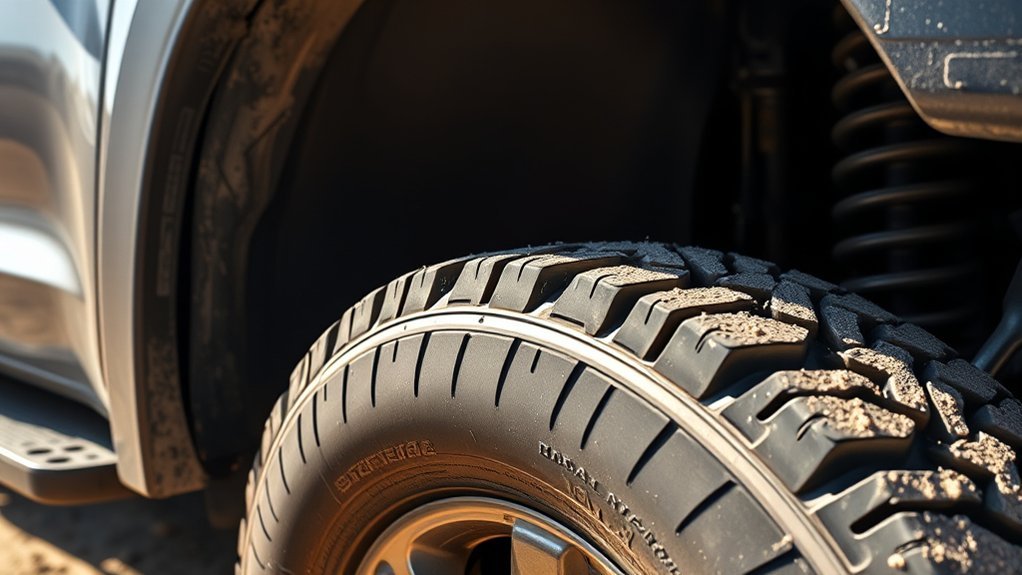
While minor tire rubbing on your Tundra can be concerning, it’s often manageable with a few practical solutions. First, consider adjusting your steering stops to limit the wheel’s turn. This simple modification can greatly reduce rubbing at full lock. Next, check your fender liners; trimming or reshaping them with a heat gun can create vital clearance adjustments. Aim for at least 1/8 inch between your tires and components like upper control arms to prevent excessive wear.
Regular tire maintenance is important here—perform alignment checks after any modifications to guarantee your handling remains ideal and to avoid uneven tire wear. If you still experience rubbing despite these adjustments, it might be time to explore lift kits or aftermarket UCAs for better clearance and performance, especially in off-road situations. By taking these steps, you can enjoy your Tundra while minimizing the risks associated with minor tire rubbing.
Signs It’s Time to Upgrade Your Tires or Suspension
If you’re noticing frequent tire rubbing during turns or over bumps, it’s a clear sign your setup might need an upgrade. Uneven tire wear and reduced ride comfort also indicate that your current tires or suspension aren’t cutting it. Addressing these issues now can save you from more costly repairs down the road.
Frequent Tire Rubbing
Tire rubbing can be a frustrating issue for Tundra owners, and it often signals that your current setup isn’t ideal for your driving needs. If you’re experiencing frequent rubbing, it’s essential to assess your tires and suspension. Here are some signs that it’s time for an upgrade:
- Rubbing against control arms with just an 1/8 inch clearance.
- Grinding down components like upper control arms.
- Rubbing at full lock against the frame or inner fender.
- Consistent wear patterns, indicating misalignment.
- Difficulty maintaining proper tire pressure due to frequent contact.
Ignoring these signs can lead to severe damage. Consider a suspension lift or narrower tires to guarantee a smoother, safer ride. Don’t compromise on your Tundra’s performance!
Uneven Tire Wear
Frequent tire rubbing can often lead to uneven tire wear, which is another pressing issue Tundra owners should address promptly. Look out for bald spots, cupping, or excessive wear on one edge—these signs indicate misalignment or insufficient suspension support. If you notice pronounced wear patterns after just a few thousand miles, it’s time to contemplate upgrading your suspension components.
To help you understand the impact of uneven wear, here’s a quick reference:
| Tire Condition | Possible Cause | Action Needed |
|---|---|---|
| Bald spots | Misalignment | Alignment checks |
| Cupping | Worn shocks | Suspension upgrade |
| One-edge wear | Insufficient support | Tire maintenance review |
| General wear | Poor tire pressure | Regular inspections |
Stay proactive, and keep your ride smooth!
Reduced Ride Comfort
While you might enjoy the rugged capabilities of your Tundra, constant tire rubbing can greatly diminish ride comfort. If you’re sensing vibrations or harshness during turns, it’s a clear sign that something’s off. Here are some indicators that it’s time to upgrade:
- Frequent tire rubbing on control arms
- An 1/8 inch gap causing increased wear
- Vibrations during full lock steering
- Noises post-modifications
- Alignment issues affecting ride quality
Addressing these concerns isn’t just about comfort; it’s about ensuring your Tundra performs at its best. Regular alignment checks and maintaining proper tire pressure can notably enhance your driving experience, so don’t hesitate to reassess your setup for a smoother, liberated ride.
Why Regular Inspections Matter
Regular inspections play an essential role in maintaining your Tundra’s performance and longevity. By regularly checking your tires, you can identify early signs of tire rubbing, preventing excessive wear on both tires and suspension components. Pay close attention to the clearance between your tires and control arms; just 1/8 inch can lead to significant rubbing during turns or bumps.
Don’t forget to monitor your alignment after any tire or wheel changes, as misalignment can exacerbate rubbing and lead to uneven tire wear. Inspections should also include checking for frame or fender contact, especially if you’ve installed larger tires, to avoid potential structural damage.
Documenting rubbing patterns over time helps you determine if adjustments, like trimming or lift modifications, are necessary for peak performance. Regular tire maintenance and proper inspection frequency empower you to keep your Tundra in top shape and ready for any adventure.
Real-World Experiences With Tire Rubbing
Have you ever wondered how common tire rubbing issues really are among Tundra owners? Many drivers share their experiences, revealing a mix of frustration and triumph. Here’s what you might encounter:
- Rubbing at full lock or during off-road maneuvers
- Clearance as little as 1/8 inch causing issues
- Successful fixes like adjusting steering stops
- Risks of grinding down upper control arms
- Community-recommended aftermarket solutions
Driver testimonials highlight the importance of addressing these challenges. Some owners have found relief by opting for smaller tire sizes or investing in aftermarket upper control arms, which can maintain off-road performance while reducing rubbing. Remember, while it’s common to experience some rubbing, knowing when to take action can save you from larger problems down the road. Embrace the journey of customizing your Tundra while keeping an eye on those clearance levels!
Frequently Asked Questions
Is Slight Tire Rubbing Bad?
Slight tire rubbing isn’t ideal; it can lead to tire wear and suspension issues. Keep an eye on it, as persistent rubbing could compromise handling and performance. Regular checks help you maintain your truck’s integrity.
What’s the Worst Year for a Toyota Tundra?
The worst year for a Toyota Tundra is 2007, often criticized for its poor reliability. Common issues include engine failure and excessive oil consumption, leading to significant owner dissatisfaction and costly repairs. Stay informed!
Conclusion
In conclusion, understanding tire rubbing on your Tundra is essential for safe driving. Recognizing signs of excessive rubbing, knowing what’s normal, and being aware of how tire size and suspension modifications impact performance can save you time and money. Regular inspections are your best defense against issues. If you notice persistent rubbing or hear unusual noises, it’s time to take action. Stay proactive, stay informed, and keep your ride smooth and safe on every journey.

Related Articles
Toyota Tundra Wheel Width Requirements for Different Tire Sizes
Get the perfect wheel width for your Toyota Tundra's tires to enhance performance; discover the ideal fitment to avoid costly mistakes.
Read More
Toyota Tundra Wheel Spacer Sizing Guide: Safe Thicknesses and Risks
Stay informed on safe wheel spacer thicknesses for your Toyota Tundra and discover essential tips to enhance performance and safety. What are the risks?
Read More
265/70R18 vs 275/70R18 on a Tundra: Which Fits Without Modifications?
Not sure which tire size is right for your Tundra? Discover the key differences between the 265/70R18 and 275/70R18 options!
Read More