
4Runner Speedometer Calibration After a Tire Size Change
Installing taller tires changes how far your Toyota 4Runner travels with each wheel revolution. Unless the vehicle or an aftermarket device is recalibrated, your speedometer, odometer, trip distance, and fuel-economy calculations may no longer match the distance traveled. The size of the error depends on the original tire diameter, the new tire’s actual rolling diameter, and your 4Runner’s model year and speed-signal system.
Quick Answer
Larger-diameter tires normally make your 4Runner travel faster and farther than its uncorrected speedometer and odometer indicate. Measure the difference with GPS, calculate the percentage change, and use only a correction method confirmed for your exact model year, drivetrain, tire size, and speed-signal system.
Key Takeaways
- A taller tire usually makes actual road speed higher than the uncorrected dashboard reading.
- The uncorrected odometer normally records fewer miles than the vehicle actually travels.
- Use overall tire diameter or manufacturer-listed revolutions per mile—not wheel diameter alone—to calculate the change.
- Correction options vary by generation and model year; ABS status alone does not determine compatibility.
- Verify the result with GPS after installation and check for ABS, stability-control, cruise-control, or transmission warning symptoms.
At a Glance
| Time Required | 15–30 minutes to test and calculate; approximately 30–120 minutes for many device installations |
| Difficulty | Easy for testing and calculations; intermediate to professional for wiring or module installation |
| Tools Needed | Door-jamb tire placard, new-tire specifications, calculator, GPS speed display, and model-specific installation instructions |
| Cost | Free to test and calculate; correction hardware and professional installation vary by model and product |
Why Larger Tires Change Your 4Runner’s Speedometer Reading
Your 4Runner estimates speed and distance from a rotating drivetrain or wheel-speed signal. The factory system expects a particular number of tire revolutions per mile. A taller tire makes fewer revolutions while covering the same road distance, so the vehicle travels farther during each measured revolution.
Assuming the speedometer was accurate before the tire change, a larger tire normally produces these results:
- Actual speed is higher than the indicated speed.
- Actual distance is greater than the odometer or trip meter indicates.
- Hand-calculated fuel economy appears lower than it really is because the trip meter records too little distance.
- Maintenance based only on displayed mileage may occur late when measured by true road distance.
Michelin advises that changing overall tire diameter affects speedometer accuracy and can also affect clearance and the behavior of systems such as ABS and stability control. Toyota likewise notes that its navigation system uses tire-turning data and that tires larger or smaller than the original diameter can cause inaccurate position calculations.
With taller tires, the dashboard usually understates speed and distance: when the speedometer shows 60 mph, the 4Runner may actually be traveling faster than 60 mph.
[Products Worth Considering]

Universal magnetic jack pad with aluminum grooved design to protect vehicle pinch welds during lifting. Durable nylon pad inserts are upgraded and secured with screws to resist damage and keep in place. Designed to fit most single vehicle pinpoint welds for safer, stable jacking when changing tires, repairs, or performing oil changes.

This portable cordless tire inflator delivers fast, efficient inflation for cars, motorcycles, bikes, and sports balls with a digital pressure gauge. Use the one-click PSI preset with auto shut-off for accurate, hands-free topping to your target pressure up to 150 PSI. It’s compact and rechargeable with a built-in emergency LED light plus valve adapters and accessories for quick, ready-to-go use.

The JACO FlowPro Tire Inflator measures, inflates, and airs down tires up to 100 PSI with battery-free operation and ±2% accuracy after calibration. It features a glowing pressure dial for night visibility, a heavy-duty steel build with a hybrid hose, and a precision push-to-inflate thumb trigger. The patented Lightning Air Chuck locks on for a secure seal, and the kit includes quick-connect hardware for easy inline use with your air compressor.
Identify the Original and New Tire Sizes First
Do not assume every 4Runner started with the same tire size. Toyota has used different sizes across generations, trims, wheel packages, and model years. Check these sources before calculating anything:
- Driver-door tire placard: This is the primary reference for the original tire size and recommended cold pressure.
- Owner’s manual: Confirm the specifications for your model year and trim.
- Current tire sidewall: Verify what is actually installed rather than relying on a previous owner’s description.
- New-tire manufacturer specifications: Use the listed overall diameter or revolutions per mile when available.
A wheel change by itself does not necessarily alter speedometer accuracy. A 17-inch wheel and a 20-inch wheel can use different sidewall heights while maintaining nearly the same overall tire diameter. The rolling circumference of the complete tire-and-wheel assembly is what matters.
Warning: Speedometer accuracy is only one part of a safe tire upgrade. Confirm load capacity, speed rating, approved rim width, cold inflation pressure, suspension and body clearance, and full-lock clearance. Check for rubbing with the suspension compressed, and do not mix substantially different tire sizes or constructions on a 4WD vehicle.
How to Calculate Your 4Runner’s Speedometer Error
For a metric tire size such as 265/70R17, estimate unloaded diameter with this formula:
Tire diameter in inches = wheel diameter + 2 × (section width × aspect ratio ÷ 25.4)
For a 265/70R17 tire:
17 + 2 × (265 × 0.70 ÷ 25.4) = approximately 31.61 inches
After finding both diameters, calculate the ratio:
Correction ratio = new tire diameter ÷ original tire diameter
Then calculate speed or distance:
- Actual speed = indicated speed × correction ratio
- Actual distance = indicated distance × correction ratio
- Percentage change = (correction ratio − 1) × 100
Worked Example: 265/70R17 to 285/70R17
A nominal 265/70R17 is approximately 31.61 inches tall, while a nominal 285/70R17 is approximately 32.71 inches tall.
32.71 ÷ 31.61 = 1.0349, or about a 3.5% increase.
| Dashboard Reading | Estimated Actual Result |
|---|---|
| 30 mph | About 31.0 mph |
| 50 mph | About 51.7 mph |
| 60 mph | About 62.1 mph |
| 70 mph | About 72.4 mph |
| 100 indicated miles | About 103.5 actual miles |
A nominal 33-inch tire replacing a 31.61-inch tire represents roughly a 4.4% increase. At an indicated 60 mph, the estimated actual speed would be about 62.6 mph. A 6–8 mph difference at ordinary highway speeds generally requires a larger percentage change, a substantial pre-existing factory offset, or a comparison based on inaccurate nominal dimensions.
Note: Sidewall-size calculations are estimates. Two tires marked with the same size can have different measured diameters and revolutions per mile. Manufacturer specifications or a GPS road test provide a better final correction value.
The Free GPS Test for Your 4Runner Speedometer
A GPS speed display provides a practical comparison because it does not calculate speed from your 4Runner’s tire revolutions. Use it to measure the error before buying a correction device and again after any correction is installed.
Safe Testing Steps
- Set all four road tires to the correct cold pressure.
- Use a securely mounted phone or have a passenger record the readings.
- Choose a straight, level, dry road with light traffic and a clear view of the sky.
- Obey the posted speed limit and maintain a steady speed.
- Compare the dashboard and GPS readings near 30 mph, 50 mph, and a legal highway speed.
- Repeat each comparison to rule out a temporary GPS fluctuation.
- Record the readings and calculate the measured percentage difference.
Use this formula when GPS shows the actual speed:
Measured error percentage = (GPS speed − indicated speed) ÷ indicated speed × 100
For example, if the dashboard shows 60 mph and GPS shows 62.1 mph:
(62.1 − 60) ÷ 60 × 100 = 3.5%
Warning: Do not hold, operate, or repeatedly look down at a phone while driving. Do not accelerate beyond the posted limit to reach a suggested test speed. Abandon the test when traffic, weather, visibility, or road conditions are unsuitable.
Pro Tip: Compare the calculated diameter ratio with the GPS ratio. If the two are noticeably different, check tire pressure, confirm the exact tire model, and look for manufacturer-listed revolutions per mile rather than relying only on nominal sidewall dimensions.
How Larger Tires Affect the Odometer and Fuel Economy
The speedometer and odometer usually rely on related rotation data, but an aftermarket correction does not always alter every system in the same way. Test both speed and distance after installation.
With larger tires and no correction:
- The odometer and trip meter normally underreport distance.
- A maintenance interval reached at 5,000 indicated miles may represent more than 5,000 actual miles.
- Hand-calculated fuel economy using the trip meter normally appears lower than the true result.
- Dashboard fuel-economy calculations may also be affected, although the exact behavior varies by vehicle system.
Using the 3.5% example, an indicated 5,000-mile interval represents approximately 5,175 actual miles. You can compensate temporarily by shortening displayed-mileage intervals, but a proper compatible correction is easier to manage over the long term.
Keep receipts showing the tire size, installation date, correction settings, and any return-to-stock changes. NHTSA explains that intentionally altering an odometer to misrepresent mileage is illegal and that known mileage inaccuracies can affect disclosure when a vehicle is sold. A legitimate calibration should make the odometer more accurate, not block or reduce mileage for financial gain.
What a Toyota Dealer May Be Able to Do
There is no single verified Toyota rule stating that every dealer can—or cannot—reprogram every 4Runner for every tire size. Capability can vary with the model year, factory software, approved wheel packages, available calibration files, and the dealer’s service procedures.
Give the service department your VIN, original tire size, new tire size, drivetrain, and measured GPS error. Ask these specific questions:
| Question for the Dealer | Why It Matters |
|---|---|
| Is a factory tire-size calibration available for this VIN? | Availability may be tied to the exact model and factory configuration. |
| Which modules would the calibration update? | A cluster-only change is different from a vehicle-speed update shared with other systems. |
| Is the new tire size within a Toyota-approved range? | The dealer may not support an untested diameter or wheel package. |
| Will the work affect warranty coverage or future software updates? | You need written, vehicle-specific information rather than a general assumption. |
Do not rely on bulletin MC-10227674-9999 as Toyota guidance. That document concerns General Motors vehicles, not the Toyota 4Runner.
Aftermarket Speedometer Correction Options
The best correction method depends on your 4Runner’s year and signal architecture. Confirm exact fitment with the correction-device manufacturer before ordering.
[Products Worth Considering]

Camco Trailer Aid Plus tandem tire ramp lifts your trailer for quick, safe tire changes with ample clearance from its 5 1/2-inch lift. It helps you change a flat tire without unloading cargo, making roadside and routine maintenance more efficient. The heavy-duty, waterproof and rustproof polymer design supports up to 15,000 lb and is built for easy portability and storage.
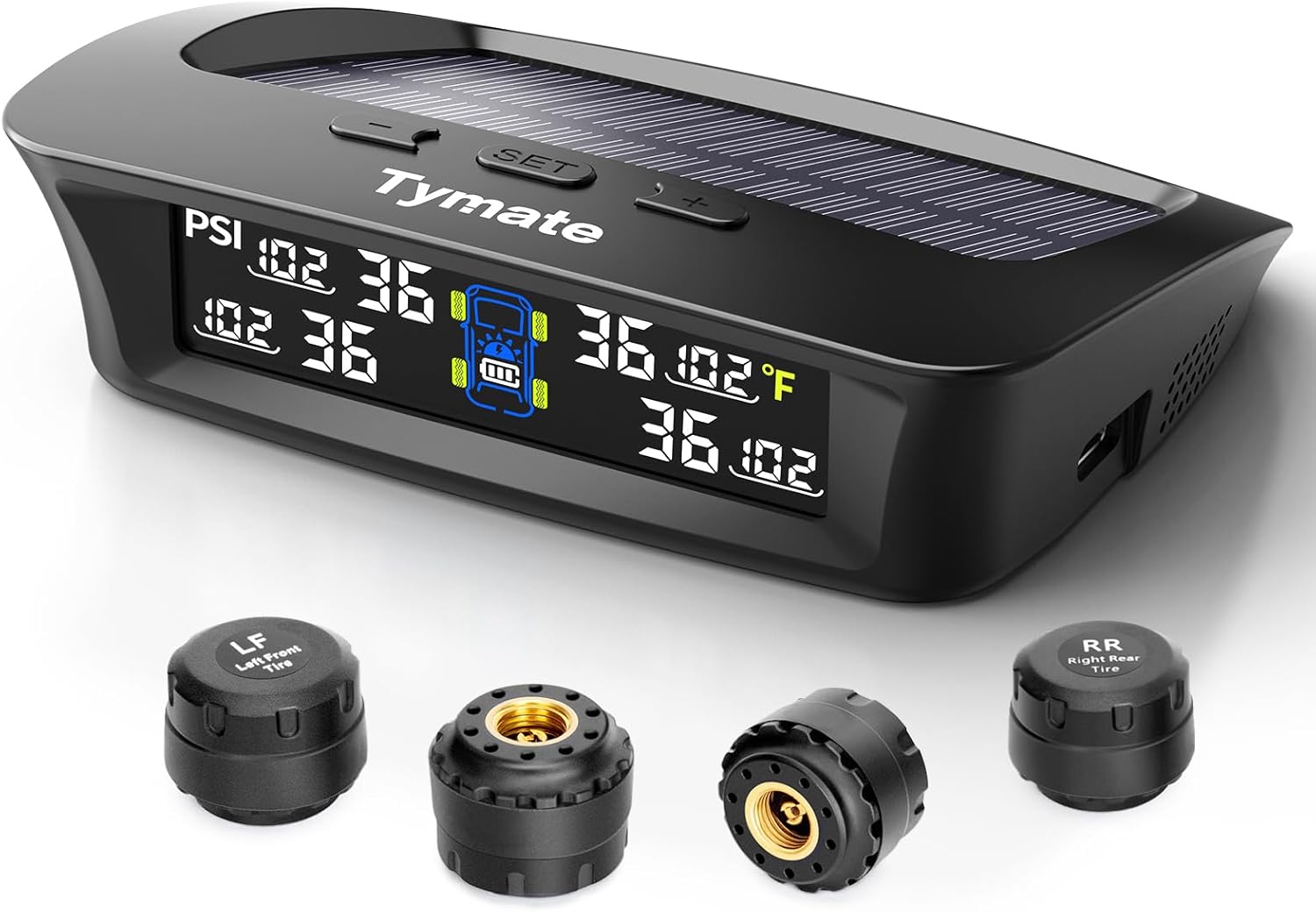
The Tymate TM3 RV TPMS delivers real-time tire pressure monitoring from 0 to 144 PSI with accurate readings and dependable wireless communication. It includes four external sensors with pre-pairing, six alarm modes for rapid leak, pressure extremes, temperature, and signal loss, plus an easy-reference setup for alert thresholds. Solar and USB-C charging help keep the display powered, while the color LCD and adaptive backlight improve visibility for safer driving and towing.
Vehicle-Specific Inline Calibrator
A vehicle-specific module is usually the most straightforward aftermarket option because its connectors, signal path, and software are designed for a defined application.
For example, Rough Country currently lists separate inline calibrators for:
The manufacturer states that these products correct speedometer readings and update related settings for their listed applications. That fitment does not automatically extend to 2WD models, 2024 models, or sixth-generation 2025–2026 4Runners. Check current compatibility, emissions restrictions, software requirements, and return policies before purchasing.
Universal Electronic Signal Interface
A universal interface can work when the vehicle provides a compatible electronic speed signal that can be safely intercepted. This approach requires a wiring diagram, electrical skill, and confirmation that changing the selected signal will not interfere with safety systems.
The Dakota Digital SGI-100BT, for example, can recalibrate an electronic speed signal from 25% to 400%. However, Dakota Digital explicitly states that the unit is not for use with ABS sensors or systems. It should not be connected directly to an ABS wheel-speed circuit.
Mechanical or Cable-Driven Systems on Older 4Runners
Some older vehicles use a mechanical cable, replaceable driven gear, or standalone vehicle-speed sensor. A gear change may be possible on certain configurations, but age alone or the absence of ABS does not prove compatibility.
Before buying a gear or sensor:
- Confirm the model year, transmission, transfer case, and drivetrain.
- Check the Toyota service information or a reliable model-specific wiring diagram.
- Verify the available tooth counts and the correction range.
- Confirm whether the signal also feeds cruise control, engine controls, or other modules.
Do Not Assume a Generic Product Fits
SpeedoHealer is often mentioned in generic calibration discussions, but the manufacturer markets it as a motorcycle speedometer and odometer calibrator. Do not purchase one for a 4Runner without explicit written confirmation of an automotive application and a compatible harness.
Why Model Year Matters More Than ABS Alone
ABS status can be relevant, but it does not provide a complete answer. Across 4Runner generations, the speed information may originate from or pass through a cable, transmission or transfer-case sensor, wheel-speed sensors, a skid-control computer, the instrument cluster, or a networked control module.
Before selecting a correction method, document:
- Model year and generation.
- 2WD or 4WD configuration.
- Engine and transmission.
- Whether ABS and stability control are installed.
- Original and new tire sizes.
- Measured GPS error.
- The correction device’s exact published fitment.
- Whether the device corrects the cluster only or the shared vehicle-speed signal.
- Whether the product is legal for sale and use in your state.
Do not choose a module solely because an online post identifies a sensor near the rear differential or transfer case. A sensor’s physical location does not establish where a safe, compatible correction should be applied.
Note: Sixth-generation 2025–2026 4Runners use a newer electrical and powertrain architecture. Do not assume that a fifth-generation calibrator, harness, or procedure will work. Obtain current written fitment confirmation for the exact model year.
How to Install and Verify a Correction Safely
Installation steps differ by product, so follow the device manufacturer’s current instructions rather than a universal wire-color guide.
- Record the baseline. Save the original tire size, GPS readings, odometer reading, and any device settings.
- Update the device first when required. Some modules require current computer software or firmware before installation.
- Use the specified connection point. Do not splice into an ABS circuit unless the product is expressly designed and approved for that circuit.
- Enter the original and new sizes accurately. Use measured diameter or revolutions per mile when the software supports it.
- Inspect the installation. Secure wiring away from pedals, steering parts, sharp edges, heat, and water.
- Start the vehicle and inspect warning lights. ABS, brake, stability-control, 4WD, check-engine, or transmission warnings require immediate diagnosis.
- Repeat the GPS test. Check several steady speeds without exceeding posted limits.
- Check distance. Compare the trip meter with a known route or reliable GPS distance.
- Test normal functions. Confirm cruise-control engagement, shifting, 4WD operation, and driver-assistance behavior where equipped.
- Save the final correction factor. Keep it with your tire and maintenance records.
If the speedometer is correct but the odometer remains wrong, the device may be altering only the display path. Contact the manufacturer rather than increasing the correction blindly.
Fix It or Compensate Mentally?
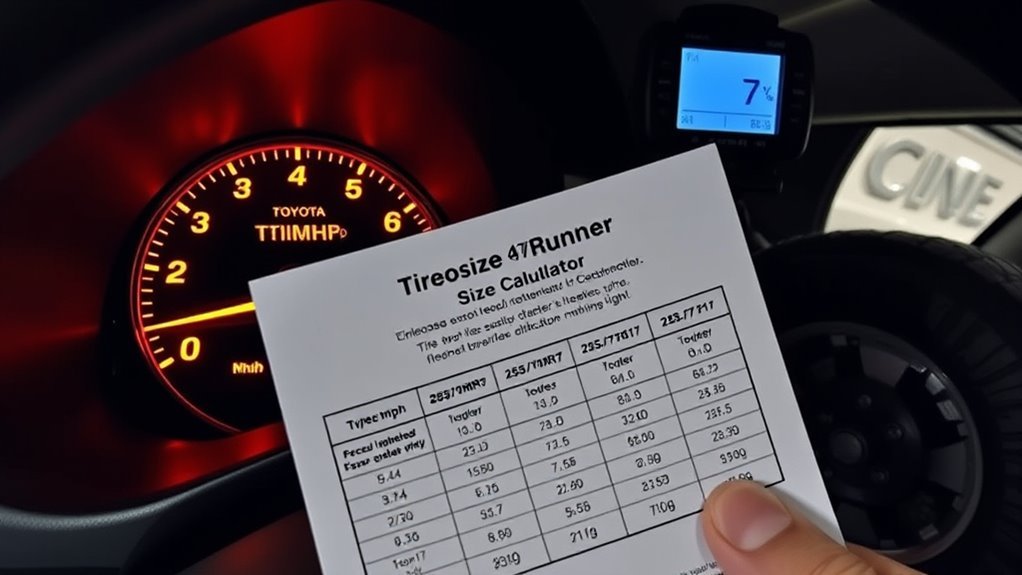
Whether you need hardware depends on the measured error and how you use the vehicle. The ranges below are practical guidance, not Toyota specifications or legal tolerances:
- Less than about 2%: You may decide that awareness and periodic GPS checks are sufficient.
- About 2%–4%: Correction becomes more useful for frequent highway travel, long trips, maintenance tracking, and fuel-economy records.
- More than about 4%: A compatible correction is usually worthwhile because the difference becomes significant at highway speeds and over long maintenance intervals.
Also consider correction when you tow, drive commercially, share the vehicle with another driver, depend on accurate maintenance mileage, or regularly switch between tire sets.
If you keep the error uncorrected, place a small reference card where it will not obstruct your view. For example, a 3.5% increase means an indicated 60 mph is about 62 mph and an indicated 70 mph is about 72.4 mph. Treat this only as a temporary aid because tire wear, pressure, and tire-model changes can alter the exact ratio.
Frequently Asked Questions
Will recalibration affect my cruise control?
It depends on where the correction is applied. A vehicle-specific module that changes the shared vehicle-speed signal may affect the speed used by cruise control. A correction applied only to the instrument display may not. Confirm this capability with the product manufacturer and test cruise control only under safe road conditions.
Can the tire-pressure monitoring system detect a tire-size change?
A direct TPMS measures tire pressure through sensors in the wheels. It does not normally identify the tire’s overall diameter or correct the speedometer. New wheel sensors may need to be registered or initialized according to the owner’s manual.
Does speedometer error affect fuel-economy calculations?
Yes. Larger uncorrected tires usually make the trip meter underreport distance, so miles-per-gallon calculated from the trip meter appears lower than the true value. Multiply the indicated distance by the tire-diameter ratio before dividing by gallons used.
Is recalibration required for an inspection or emissions test?
Requirements vary by state and inspection program. Some inspections may focus on warning lights, emissions readiness, tire condition, or equipment safety rather than measuring speedometer accuracy. Check the official rules for your jurisdiction and correct any ABS, brake, stability-control, or check-engine warning before inspection.
Can I switch back to stock tires without recalibrating again?
If no correction was installed, returning to the original tire diameter should restore the original behavior. If a module or software setting is correcting for larger tires, return it to the stock setting before installing stock-diameter tires. Otherwise, the correction will create an error in the opposite direction.
Does changing the differential gear ratio change the speedometer?
It depends on where your model obtains its speed signal. A wheel-speed-based system may be unaffected by differential gearing, while a transmission- or driveshaft-based system may respond differently. Verify the signal architecture for the exact model year before entering a gear-ratio correction.
Can a 2025 or 2026 4Runner be recalibrated for larger tires?
A correction may become available, but fifth-generation products should not be assumed compatible with the sixth-generation platform. Ask Toyota and the device manufacturer for written confirmation covering the exact year, drivetrain, trim, tire size, and software version.
Conclusion
Larger tires normally make your 4Runner travel faster and farther than the uncorrected speedometer and odometer indicate. Start with the original placard size, calculate the expected diameter change, and verify it with a safe GPS test. If the error is significant, choose a correction device only after confirming the exact model year, drivetrain, speed-signal system, and published fitment.
After correction, test both speed and distance and check that no ABS, stability-control, 4WD, transmission, or engine warning appears. Keep the tire specifications and calibration record with your maintenance documents, and return the system to its stock setting whenever you reinstall stock-diameter tires.
Sources
- Toyota 2022 4Runner Owner’s Manual: GPS and Tire Change Calibration — confirms that the system uses tire-turning data and that different tire diameters can affect accuracy.
- Michelin: Choosing the Right Tire Size — supports placard verification and the effects of altered overall diameter.
- Rough Country 2010–2018 4Runner Speedometer Calibrator — provides manufacturer-listed fitment and capabilities for those model years.
- Rough Country 2019–2023 4Runner Speedometer Calibrator — provides manufacturer-listed fitment and capabilities for those model years.
- Dakota Digital SGI-100BT — documents universal electronic-signal correction and the restriction against use with ABS sensors or systems.
- NHTSA: Odometer Fraud — explains federal odometer-tampering and mileage-disclosure concerns.

Related Articles

When to Switch From All-Season to Winter Tires on a 4Runner
Ineffective all-season tires in cold weather can jeopardize your safety—discover when to make the crucial switch for better traction and handling.
Read More
4Runner Tire Mileage: How Many Miles Should They Last
Curious about how long your 4Runner tires should last? Discover essential tips and factors that influence tire longevity.
Read More
How Long Do Toyota 4Runner Tires Typically Last
How long do Toyota 4Runner tires typically last? Discover the factors that influence tire longevity and essential tips for maintenance.
Read More