
How Upsizing Tires Affects Braking Distance on a 4Runner
Bigger tires can make your 4Runner look more capable, but they also change how the truck stops. A taller and heavier tire-and-wheel package can increase brake torque demand, add rotating energy, change speedometer readings, and make ABS or stability-control systems work with different wheel-speed signals. The exact result depends on tire diameter, tire weight, tread compound, inflation pressure, load, road surface, and brake condition.
Quick Answer
Yes, bigger tires can make a 4Runner harder to stop when they are taller, heavier, or more aggressive than stock. The larger radius asks for more brake torque, and extra rotating weight turns into more heat during braking. Tire grip, pressure, load, and brake condition still decide the real-world result.
Key Takeaways
- A taller tire increases the brake torque needed at the hub for the same tire-road braking force.
- A heavier tire-and-wheel package adds rotating energy, which can increase brake heat and fade during repeated stops.
- Tire compound, tread depth, road surface, and pressure can matter as much as size when you measure actual stopping distance.
- Do not use a fixed PSI drop after upsizing. Start with the door placard, then get a load-based pressure recommendation if the tire size or load range changed.
- Brake upgrades make the most sense when you run heavy 33-inch or larger tires, tow, carry armor, drive mountain roads, or feel fade during repeated stops.
At a Glance
| Time Required | 15–30 minutes for a basic size, weight, pressure, and brake-condition check |
| Difficulty | Easy for measurement; professional inspection recommended for brake service, calibration questions, and hardware upgrades |
| Tools Needed | Tire size data, tire-pressure gauge, tread-depth gauge, wheel/tire weight specs, brake inspection records, and a safe shop inspection if braking feel changed |
| Cost | Free for basic checks; brake service, alignment, recalibration, or upgrades vary by parts, labor, and wheel fitment |
Why Bigger Tires Can Make Your 4Runner Take Longer to Stop
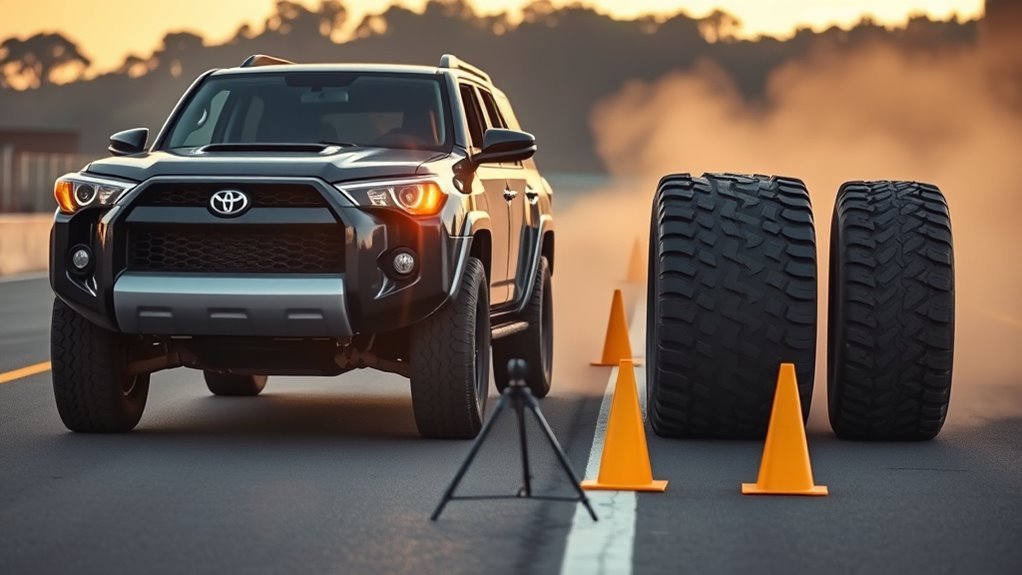
When you upsize your 4Runner’s tires, you usually change two important things at the same time: rolling radius and rotating mass. A taller tire places the road contact patch farther from the wheel hub. That gives the tire more leverage against the brake system, so the brakes must create more torque at the hub to deliver the same braking force at the ground.
Weight matters too. A heavier tire and wheel assembly stores more energy while it spins. During braking, your pads and rotors must turn that energy into heat. More heat can mean faster pad wear, more rotor stress, and a higher chance of brake fade during repeated stops.
This does not mean every larger tire stops worse in every situation. A fresh, high-quality tire with strong wet-road grip may brake better than an old stock tire. But when you compare similar tire designs, the taller and heavier setup usually asks more from the brakes.
A bigger tire changes braking in two ways: it increases the leverage the road has against your brakes, and it can add rotating weight that your brakes must turn into heat.
[Products Worth Considering]

EVOULTES heavy duty tire inflator with an integrated gauge delivers accurate pressure readings from 10–120 PSI, helping you inflate, deflate, and check tires in one tool. The 16.5-inch extended dual-head air chuck with swivel base reaches hard-to-access dual wheel valves on trucks and RVs. A brass trigger core and side-mounted air release valve make operation smooth, with standard 1/4" NPT threading and quick-connect compatibility for easy setup.

This VEVOR tire bead breaker uses a slide-hammer impact and wedge tip to separate tire beads from rims quickly and efficiently without damaging hub surfaces. The long handle and sturdy steel construction help reduce user strain while providing reliable, portable tire changing for cars, trucks, and more. Ideal for home mechanics and repair shops handling multiple vehicle tire sizes.

Universal magnetic jack pad with aluminum grooved design to protect vehicle pinch welds during lifting. Durable nylon pad inserts are upgraded and secured with screws to resist damage and keep in place. Designed to fit most single vehicle pinpoint welds for safer, stable jacking when changing tires, repairs, or performing oil changes.
How to Estimate Your 4Runner’s Braking Impact After Bigger Tires
You cannot calculate your exact new stopping distance from tire size alone. Real stopping distance depends on speed, road surface, tire grip, brake temperature, ABS behavior, load, and driver reaction. Still, you can estimate how much extra brake torque demand the tire size creates.
Start with tire diameter. For a metric tire size, use this simple estimate: overall diameter equals wheel diameter plus two sidewalls. Each sidewall is the section width multiplied by the aspect ratio. Convert millimeters to inches by dividing by 25.4.
For example, a common 265/70R17 tire is about 31.6 inches tall. A 285/70R17 tire is about 32.7 inches tall. That is about a 3.5% increase in diameter. In simple terms, your brakes need about 3.5% more hub torque to create the same braking force at the contact patch, before you account for added tire weight.
Next, compare tire-and-wheel weight. If your new setup adds 10, 15, or 20 pounds per corner, the brakes must manage more rotating mass and more heat. The exact effect depends on where the weight sits in the tire and wheel, so treat weight-based formulas as estimates, not guaranteed stopping-distance numbers.
Note: Federal brake rules define stopping distance as the distance a vehicle travels from brake-control application to a full stop. Your real-world result can change with tire grip, brake condition, road surface, speed, and load, so use calculations as a planning tool rather than a promise.
| Variable | Example Stock Setup | Example Bigger Setup | What It Means |
|---|---|---|---|
| Tire Diameter | 265/70R17, about 31.6″ | 285/70R17, about 32.7″ | About 3.5% more brake torque demand for the same ground force |
| Tire/Wheel Weight | Check your actual wheel and tire specs | Often heavier with LT all-terrain or mud-terrain tires | More rotating mass can increase heat and fade risk |
| Tread Compound | Touring or highway tread may grip well on pavement | Aggressive tread may trade wet-road braking for off-road bite | Grip can matter as much as size |
| Brake Temperature | Lower heat load with lighter stock-size tires | Higher heat load during repeated stops | Fade becomes more likely on grades, trails, or when towing |
How to Check Your 4Runner After Installing Bigger Tires
The safest way to compare braking after a tire upgrade is not to run panic stops on public roads. Instead, inspect the setup, confirm tire pressure, check brake condition, and have a qualified shop perform any controlled testing in a safe area.
What to Check Before You Blame the Tires
Before you decide that bigger tires caused every braking change, inspect the basics. Worn pads, glazed rotors, old brake fluid, uneven tire pressure, or overloaded cargo can make braking feel worse even on stock tires.
- Check pad thickness and rotor condition.
- Confirm brake fluid condition and service history.
- Set cold tire pressure using the driver’s door placard, owner’s manual, or a professional load-based recommendation.
- Confirm the new tire load rating is suitable for your 4Runner.
- Compare the new tire-and-wheel weight against the old setup.
- Check tread depth, tire age, and wet-traction rating.
- Confirm whether the tire size affects speedometer accuracy, ABS behavior, or stability-control calibration.
Warning: Do not perform hard braking tests on public roads. If you need measured before-and-after stopping data, use a closed course or a qualified shop that can test safely.
How 33-Inch Tires Can Change the Feel
With 33-inch tires, many drivers notice more pedal effort, more nose dive, or less sharp initial bite. That does not prove a specific stopping-distance increase, but it does tell you the brake system is working with a different tire package than Toyota originally tuned.
You may feel the difference most during repeated stops, downhill braking, trail descents, towing, or loaded camping trips. In those conditions, brake heat matters more than one short stop from low speed.
Why Tire Grip Still Matters
A larger tire does not work alone. Tire compound, tread design, age, tread depth, inflation pressure, and road temperature all affect braking. NHTSA explains that tire traction grades indicate a tire’s ability to stop on wet pavement, and higher grades should allow shorter wet-road stops than lower grades.
That is why a fresh, high-quality all-terrain tire may brake better than an old, hardened highway tire in some conditions, even if the new tire is larger. Size adds demand, but grip decides how much braking force the road can actually accept.
How Unsprung Weight Hurts 4Runner Braking
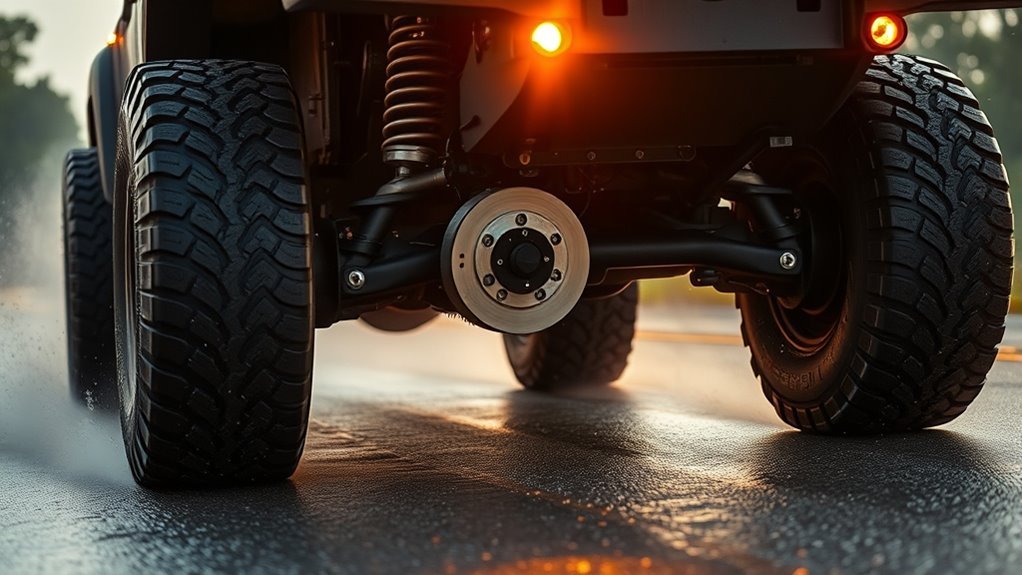
Unsprung weight is the weight not supported by the suspension springs. Your tires, wheels, rotors, calipers, and part of the suspension count toward it. When you install heavier tires and wheels, you add mass that the suspension must control and the brakes must slow.
The braking concern is not just the scale weight. A tire is a rotating object, and rotational kinetic energy depends on moment of inertia and angular speed. More mass near the outer edge of the tire can have a bigger effect than the same mass near the hub because it sits farther from the rotation axis.
That extra rotating energy becomes heat during braking. On one stop, you may only feel a small change. On a long downhill road or a repeated trail descent, heat builds and the pedal can feel longer, softer, or less confident.
How to Set Tire Pressure After Upsizing
Tire pressure can change braking feel, tread contact, heat buildup, and TPMS behavior. Do not set pressure by guessing, copying a forum number, or using the tire sidewall maximum as your street-driving target. The sidewall number is a maximum limit, not the recommended daily pressure for your 4Runner.
For street driving, start with the Tire and Loading Information Label or owner’s manual. NHTSA says the vehicle manufacturer’s recommended cold inflation pressure is the proper pressure reference. If your new tire size, load range, or load capacity changed, ask a qualified tire professional for a load-based pressure recommendation.
- Check pressure cold, before driving or after the tires have been parked long enough to cool.
- Use the same accurate gauge each time.
- Record pressure, tread wear, and ride feel after the first few hundred miles.
- Watch for center wear, shoulder wear, pulling, vibration, or TPMS warnings.
- Recheck pressure before towing, mountain driving, long highway trips, or loaded overland travel.
Off-road pressure is a separate decision. Lower pressure can improve traction and comfort on trails, but it also increases heat at speed and raises the chance of debeading if you go too low. Air back up before highway driving.
Can Bigger Tires Affect ABS, TPMS, and Speedometer Accuracy?
Yes, they can. A taller tire travels farther per revolution, so the speedometer and odometer may read differently unless the vehicle is recalibrated. The bigger the diameter change, the more noticeable the error can become.
ABS, traction control, and stability control use wheel-speed information to make decisions. A mild, matched tire-size change may not create a noticeable issue, but large changes, mismatched tire sizes, uneven pressure, or uneven tread depth can make those systems work harder. If warning lights appear after a tire change, stop guessing and have the system scanned.
TPMS also deserves attention. NHTSA notes that TPMS warns when pressure is significantly underinflated, but it is not a substitute for monthly pressure checks with a gauge. If your 4Runner uses new wheels or relocated sensors, confirm that the sensors are compatible and registered correctly.
[Products Worth Considering]
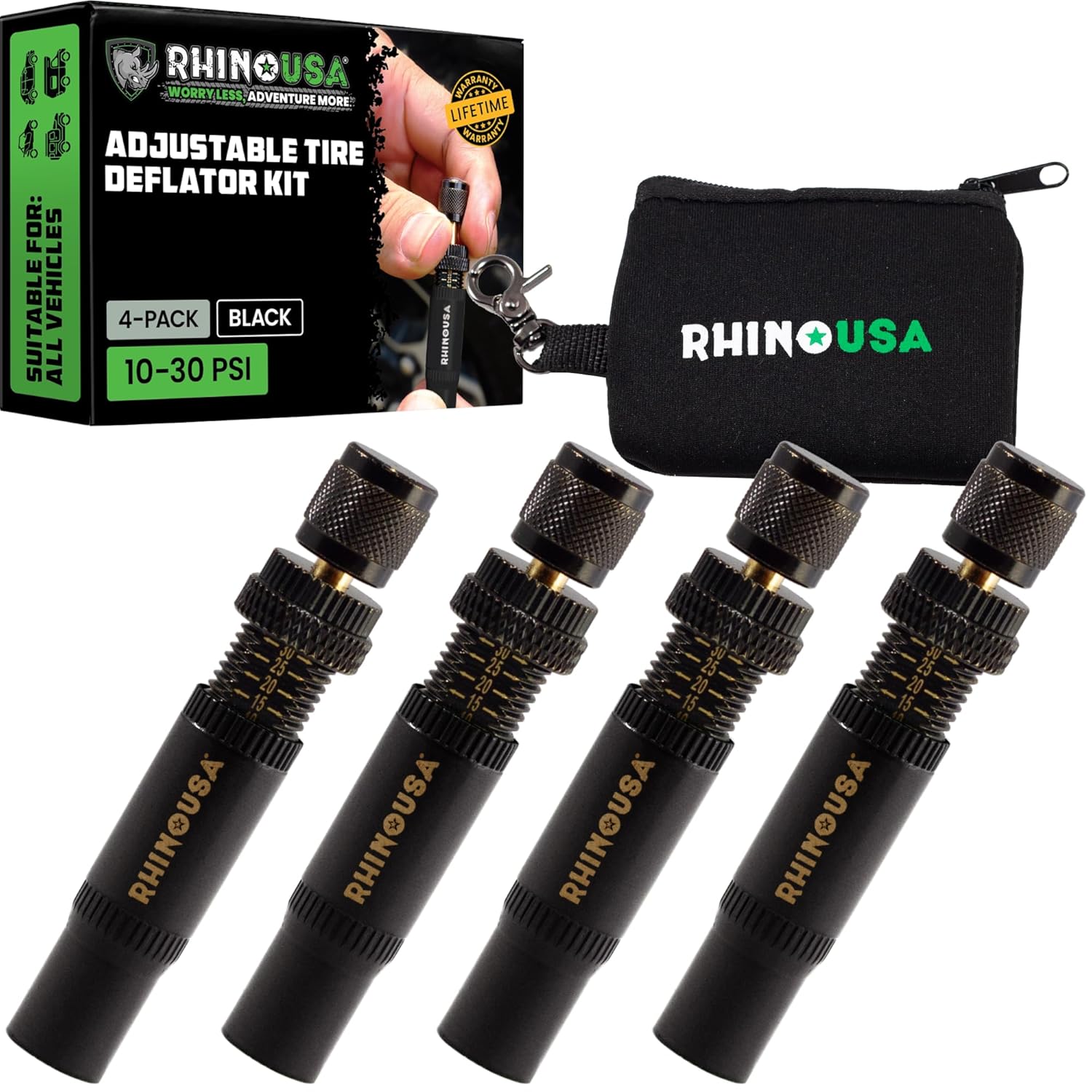
Use the Rhino USA adjustable tire deflators to air down all four tires at once by screwing one deflator onto each valve stem, letting you step away while the tires reach your preset pressure. Each deflator independently adjusts across a 10–30 PSI range with laser-etched indicators for quick setup and verification, making it ideal for beach, sand, and rocky off-road trails.

Keep RV, trailer, or truck dual-axle tires protected with waterproof, UV-resistant covers that help guard against sunlight, snow, rust, and dirt. The dual tire covers are easy to install with a rope/bungee fastener for a stable fit that won’t easily slip. Designed for 27–30 inch diameter wheels, they help maintain tire condition through harsh weather.
When Bigger Tires Make a 4Runner Brake Upgrade Worth Considering
You do not need a big brake kit just because you moved one tire size up. Many mild 4Runner builds work well with healthy factory brakes, good pads, clean fluid, and properly matched tires. The need changes when tire size, tire weight, vehicle load, and driving style all increase together.
Brake Torque Demands
A taller tire increases the leverage between the road and the hub. For the same braking force at the ground, the brake system must create more torque. That difference may feel small with a modest tire increase, but it becomes more noticeable when you add heavy LT tires, steel wheels, armor, camping gear, or towing weight.
If your 4Runner feels stable in one stop but weak during repeated stops, the problem may be heat capacity rather than basic brake force. In that case, pads, rotors, fluid, and cooling matter.
Rotational Inertia Increase
Rotational inertia describes how hard it is to change the speed of a spinning object. Bigger and heavier tires can increase that resistance, especially when more weight sits near the outside of the tire. OpenStax explains that moment of inertia depends on how mass is distributed around the rotation axis, which is why tire weight near the tread matters.
Your brakes may face three added demands after upsizing:
- More brake torque demand from the larger rolling radius
- More heat from heavier rotating tire-and-wheel assemblies
- More ABS and stability-control workload if tire grip, diameter, pressure, or tread depth changes significantly
Stopping Power Loss
Stopping power loss usually shows up as longer pedal travel, a hot-brake smell, vibration, reduced bite, pulling, or fading confidence during repeated stops. If you feel any of those signs after installing larger tires, inspect the brake system before adding more speed, load, or trail difficulty.
Start with maintenance. Fresh quality pads, smooth rotors, proper bedding, and clean brake fluid can restore a lot of confidence. If your build still overwhelms the brakes, then consider larger brake hardware.
Tundra Calipers vs. Big Brake Kits: Best 4Runner Upgrade Paths
You have four practical upgrade levels: restore the stock system, improve pads and fluid, use a known larger factory-style swap where it fits, or move to a matched big brake kit. The right choice depends on your tire size, tire weight, load, wheel clearance, budget, and how hard you use the truck.
| Upgrade Path | Best For | Main Caution |
|---|---|---|
| Stock brake refresh | Mild tire upsizes, daily driving, and trucks with worn brake parts | It will not add much heat capacity if the truck is heavily loaded |
| Better pads, rotors, and fluid | Drivers who feel fade, tow lightly, or run heavier all-terrain tires | Aggressive pads may create more dust, noise, or rotor wear |
| Tundra-style caliper swap | Older 4Runner builds where the swap is known to fit and wheel clearance is confirmed | Fitment varies by generation, wheels, rotor choice, brake lines, and parts selection |
| Full big brake kit | Heavy builds, frequent mountain driving, repeated descents, towing, or 33-inch-plus tire setups | Higher cost and possible wheel-clearance limits |
A Tundra-style caliper swap can be a cost-conscious factory-parts route on compatible 4Runner generations. A dedicated big brake kit usually costs more, but it gives you matched calipers, rotors, brackets, and pads designed to work together. Either path should be checked for wheel clearance, brake balance, pedal feel, and safe installation.
Pro Tip: If your 4Runner already needs pads, rotors, or fluid, refresh those parts before judging the tire upgrade. Worn brakes can make a tire change seem worse than it really is.
Frequently Asked Questions
Do bigger tires make braking harder?
Yes, they can. A taller tire increases brake torque demand, and a heavier tire-and-wheel package adds rotating energy that your brakes must slow. The exact effect depends on the tire, wheel, road surface, vehicle load, tire pressure, and brake condition.
How much does 285/70R17 change braking demand compared with 265/70R17?
A 265/70R17 tire is about 31.6 inches tall, while a 285/70R17 tire is about 32.7 inches tall. That is roughly a 3.5% diameter increase, so the brakes need about 3.5% more hub torque for the same ground-level braking force before weight and grip are considered.
What is the best wheel size for a 4Runner?
For many 4Runner owners, a 17-inch wheel is the most practical choice because it allows more sidewall, broad tire availability, and common off-road fitment. The best size still depends on your 4Runner generation, trim, brake clearance, suspension setup, and tire goals.
Do tires affect braking distance?
Yes. Tire grip, tread depth, tread design, temperature, pressure, and age all affect braking distance. A larger tire can increase brake demand, but a better tire compound can also improve grip compared with a worn or low-quality tire.
Do I need bigger brakes for 33-inch tires on a 4Runner?
Not always. If your 33-inch tires are not extremely heavy and your brakes are fresh, the stock system may feel acceptable for normal driving. Consider upgraded pads, fluid, rotors, or larger brake hardware if you tow, carry heavy gear, drive steep grades, or feel brake fade.
Should I lower tire pressure after installing bigger tires?
Do not use a generic pressure drop as a rule. For street driving, start with the vehicle placard or owner’s manual, then ask a qualified tire professional for a load-based pressure if your tire size or load rating changed. Off-road pressures are different and should be adjusted carefully for speed, load, terrain, and bead retention.
Can bigger tires affect ABS or traction control?
Yes, especially if the diameter change is large, tire sizes are mismatched, pressures are uneven, or tread depths vary. ABS and stability systems use wheel-speed information, so any warning light after a tire change should be scanned and diagnosed instead of ignored.
Do LT all-terrain tires brake differently than P-metric tires?
They can. LT all-terrain tires often use stronger construction and may weigh more than P-metric tires in a similar size. That added rotating weight can increase brake heat, while the tread compound and pattern decide how much grip the tire has on pavement.
Conclusion
Bigger 4Runner tires can improve clearance, trail grip, and stance, but they also change the braking equation. A taller tire asks for more brake torque, and a heavier tire-and-wheel package adds rotating energy that turns into heat during every stop.
The smart move is not to guess. Measure the tire size change, compare wheel-and-tire weight, set pressure correctly, inspect the brake system, and watch for fade during repeated stops. If your build is mild, a healthy stock brake system may be enough. If your 4Runner is heavy, runs 33-inch-plus tires, tows, or sees steep terrain, stronger pads, better fluid, larger rotors, or a full brake upgrade can be a safety-focused investment.
Sources
- NHTSA TireWise — tire pressure, tire size, tread, traction grades, TPMS, and tire-maintenance safety guidance
- eCFR 49 CFR 571.135, Standard No. 135 — light vehicle brake-system purpose and stopping-distance definition
- OpenStax College Physics 2e: Rotational Kinetic Energy — rotational work, torque, and kinetic-energy principles
- OpenStax University Physics Volume 1: Moments of Inertia — how mass distribution affects rotational inertia

Related Articles
When to Switch From All-Season to Winter Tires on a 4Runner
Ineffective all-season tires in cold weather can jeopardize your safety—discover when to make the crucial switch for better traction and handling.
Read More
4Runner Tire Mileage: How Many Miles Should They Last
Curious about how long your 4Runner tires should last? Discover essential tips and factors that influence tire longevity.
Read More
How Long Do Toyota 4Runner Tires Typically Last
How long do Toyota 4Runner tires typically last? Discover the factors that influence tire longevity and essential tips for maintenance.
Read More