
Can You Run 33 Inch Tires on a 4Runner Without Issues
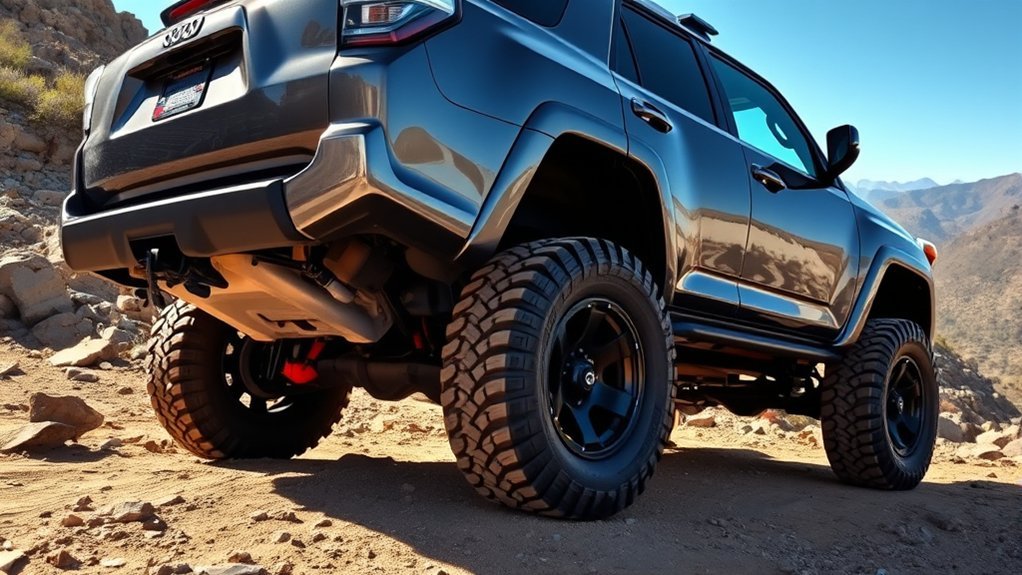
You can run 33-inch tires on a 4Runner, but it requires some modifications to avoid issues. A lift of at least 3 inches is necessary to prevent rubbing, along with trimming fenders and relocating fender liners. You’ll also want to check your alignment post-modifications to guarantee safe handling. Keep in mind that larger tires can affect fuel efficiency and add strain to the drivetrain. Want to know more about the right wheel selection and maintenance tips?
Understanding Compatibility of 33-Inch Tires on a 4Runner
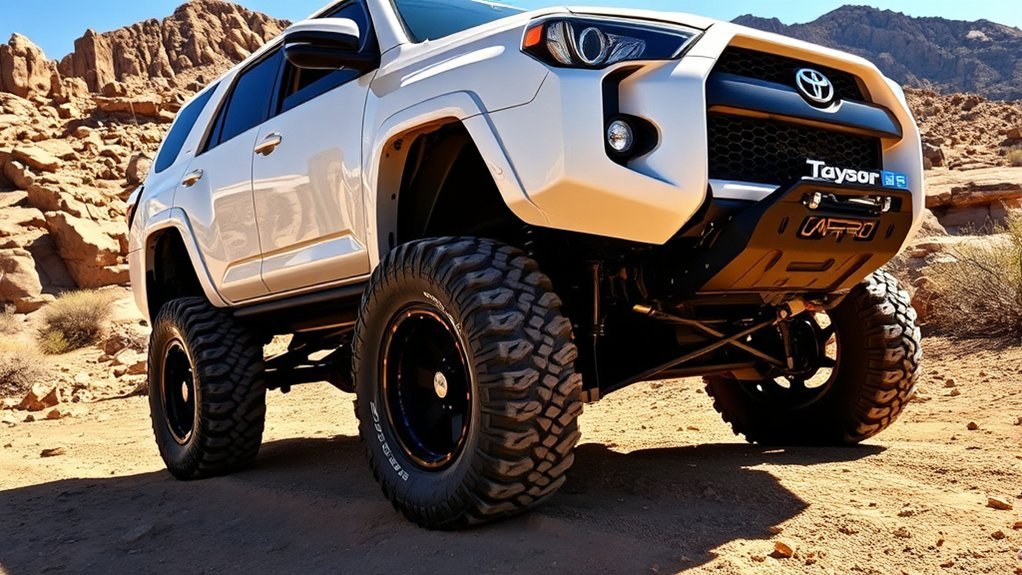
When considering 33-inch tires for your 4Runner, it’s vital to understand the compatibility factors involved. While it’s technically possible to fit these larger tires without modifications, you might encounter issues like rubbing during full turns and articulation, especially under varying driving conditions. Aim for a minimum lift of about three inches to guarantee adequate clearance and minimize these issues.
Keep in mind that stock suspension typically accommodates tires up to 31.5 inches. If you opt for 33s, you may need body modifications such as fender trimming. Tire weight also plays a role; heavier tires can impact your vehicle’s handling and fuel efficiency. Additionally, achieving the right wheel offset and alignment is essential to optimize performance and reduce rubbing. Many users find that aftermarket upper control arms enhance fitment, creating a smoother, more liberated driving experience.
Step-by-Step Modifications for Fitting 33-Inch Tires
To fit 33-inch tires on your 4Runner, you’ll need to make some critical modifications, starting with trimming the front fenders and relocating fender liners to avoid rubbing. A suspension lift of about 3 inches in the front and 2 inches in the rear is also crucial for maximum clearance and performance. Getting the alignment right after these changes guarantees your tires fit correctly, enhancing safety and handling.
Required Trimming Modifications
Fitting 33-inch tires on your 4Runner requires some essential trimming modifications to guarantee a proper fit and avoid rubbing. Start with fender liner trimming; relocating the front fender liners can add over 4 inches of clearance. Next, tackle bumper cutting by carefully removing the bottom corner of the front bumper. Focus on trimming the plastic fenders rather than metal to maintain aesthetics while enhancing clearance. If you’re using stock suspension, a body mount chop may be necessary to prevent rubbing behind the front wheels. Use side cutters or a Dremel tool for fender trimming, and file the edges for a smooth finish. Finally, consider removing or trimming mud flaps to ensure no restrictions in your wheel well space.
Suspension Lift Recommendations
While enhancing your 4Runner’s suspension is crucial for fitting 33-inch tires, it’s important to follow a structured approach to achieve the best results. Here’s a step-by-step guide:
- Choose Your Lift Kit: Aim for a minimum of 3 inches in the front and 2 inches in the rear. Consider suspension types that suit your driving style, like coilovers or spacer lifts.
- Upgrade Control Arms: Installing aftermarket upper control arms (UCAs) can greatly improve droop capability, reducing the risk of rubbing during articulation.
- Modify for Clearance: You might need to trim front fenders, relocate fender liners, and possibly chop body mounts to guarantee ample space for those larger tires.
Don’t forget to schedule regular alignment checks post-lift for ideal handling!
Handling Rubbing and Clearance Issues
When you fit 33-inch tires on your 4Runner, rubbing issues often crop up, especially at full steering lock or during articulation. To tackle these problems, you might need to take into account clearance modifications like relocating fender liners and possibly trimming bumpers. Keep in mind that your steering angle and tire offset play vital roles in minimizing rubbing, so it’s essential to plan your setup carefully.
Common Rubbing Locations
Many owners of 4Runners with 33-inch tires encounter common rubbing issues that can affect both performance and aesthetics. Understanding these locations can help with rubbing prevention and guarantee proper tire alignment. Here are the main areas to watch out for:
- Front Fenders: Rubbing often occurs during full steering lock and articulation, making contact with the inner fender and bumper.
- Bumper Corners: Sharp turns or reversing can lead to minor rubbing at the bottom corners of the front bumper and mud flaps.
- Body Mount Area: Located behind the front wheels, this area frequently needs a body mount chop to prevent tire contact.
Addressing these issues early can enhance your 4Runner’s performance and aesthetics!
Clearance Modifications Required
To successfully fit 33-inch tires on your 4Runner, you’ll likely need to make several clearance modifications. First, cutting and trimming the fender liners is essential to prevent rubbing at full lock or during articulation. You might also need to contemplate a body mount chop, especially if you’re sticking with the stock suspension; this modification provides the necessary clearance for larger tires. Relocating the fender liners can give you over 4 inches of additional space in the wheel well, helping mitigate rubbing issues. Don’t forget about your mud flaps—they may need removal or trimming, as they can interfere with your new setup. Proper alignment can help, but a body mount chop is often unavoidable for effective tire fitment.
Steering Angle Considerations
After addressing clearance modifications, it’s important to contemplate how steering angle impacts the fitment of 33-inch tires on your 4Runner. Steering dynamics play a vital role here, especially when considering the turning radius. A narrower turning radius can lead to increased rubbing against wheel wells and fenders, causing potential issues.
To navigate these challenges, consider the following:
- Alignment Adjustments: Proper alignment and caster angle tweaks can help minimize rubbing.
- Fender Modifications: Relocating fender liners and trimming bumpers may be necessary to enhance clearance.
- Driving Style: Adapting your driving habits, especially during tight turns, can greatly reduce rubbing incidents.
How 33-Inch Tires Affect Performance and Fuel Economy
Upgrading to 33-inch tires on your 4Runner can greatly impact both performance and fuel economy. You might notice a decrease in fuel efficiency by about 3 MPG, especially with V8 models in mixed driving conditions. The added weight from larger tires can stress your drivetrain, leading to a sluggish feel during acceleration. While these tires boost off-road traction, they can compromise on-road comfort and handling, making cornering feel less stable.
Here’s a quick overview of the effects:
| Aspect | Impact |
|---|---|
| Fuel Economy | Decreases by ~3 MPG |
| Weight Distribution | Heavier, affects handling |
| Acceleration | Feels sluggish in certain conditions |
| Tire Pressure | Needs adjustment for best performance |
Adjusting tire pressure is essential to maintain proper weight distribution and maximize your 4Runner’s capabilities.
How Much Should You Lift Your Suspension for 33s?
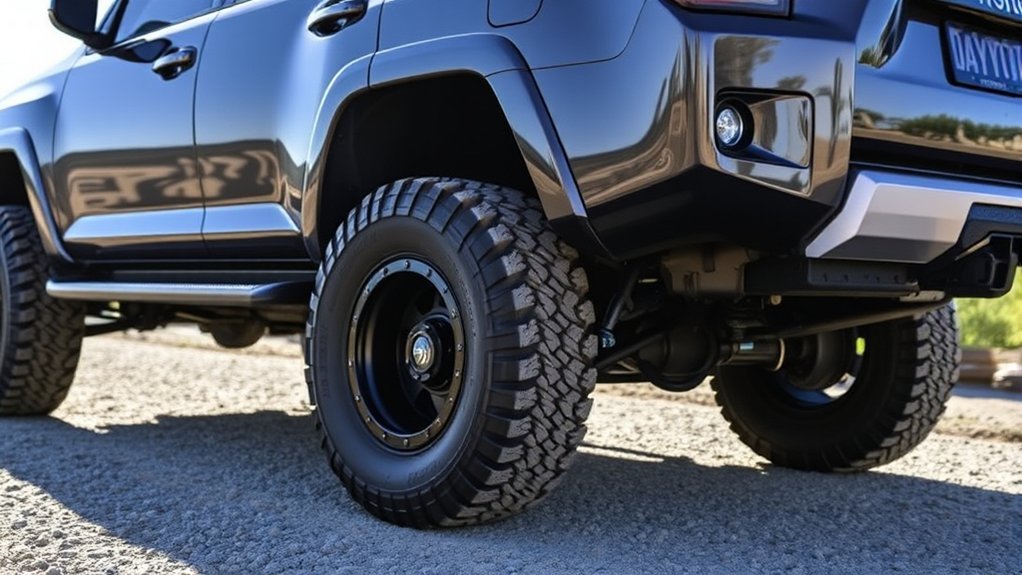
Fitting 33-inch tires on your 4Runner requires careful evaluation of your suspension lift. To guarantee a smooth ride and avoid rubbing, you’ll want to lift your suspension adequately. Here are some key lift kit options to take into account:
- 3-inch Front, 2-inch Rear Lift: This is the most recommended setup for ideal clearance and performance.
- 1.5-inch Lift: While some find this sufficient, it often results in more rubbing and limited articulation.
- Aftermarket Upper Control Arms (UCAs): Essential for lifts of 1 inch or more, these help maintain proper suspension geometry and alignment.
Selecting Optimal Wheels and Offsets for Enhanced Tire Fitment
When you’re gearing up to fit 33-inch tires on your 4Runner, selecting the right wheels and offsets can make all the difference in ensuring a smooth, trouble-free ride. Wheel selection is vital, as stock wheels often lack the necessary clearance. Opting for aftermarket wheels with a positive offset—typically between +10 and +15—helps minimize rubbing, offering better spacing between the tire and fender.
Don’t overlook width; an 8-9 inch width is generally recommended for 33s to maintain ideal performance and clearance. Always test fit your new wheels and tires before purchase. Different manufacturers can have varying dimensions that impact fitment considerably. By prioritizing proper wheel selection and understanding offset importance, you’ll enhance your 4Runner’s compatibility with larger tires and improve your overall driving experience. Enjoy the liberation of conquering new terrains without the hassle of rubbing or clearance issues!
What to Watch For: Maintenance and Downsides of Larger Tires
While larger tires can enhance your 4Runner’s off-road capabilities, it’s vital to be aware of the maintenance challenges and potential downsides that come with this upgrade. Here’s what to watch for:
- Fuel Economy: Upgrading to 33-inch tires can decrease your fuel efficiency by around 3 MPG, especially in V8 models, due to increased weight and rolling resistance.
- Drivetrain Stress: Larger tires can strain your drivetrain, leading to premature wear on the transmission and differential. Keep an eye on these components.
- Rubbing and Alignment: Even with modifications, larger tires may rub during turns. A proper alignment is important to prevent uneven tire wear and guarantee ideal handling.
Regular inspections are crucial after installation, especially for suspension components affected by trimming. Staying proactive can help you enjoy the freedom of larger tires without the headaches.
Frequently Asked Questions
What’s Better, 33S or 35S?
When considering 33s versus 35s, 33s offer a great balance of off-road performance and everyday drivability. If you’re seeking maximum traction and clearance, 35s might suit you better, but they come with trade-offs.
Can I Put 33 Inch Tires on My 4th Gen 4runner Without Rubbing?
You can fit 33-inch tires on your 4th Gen 4Runner, but you’ll likely need suspension upgrades for ideal tire clearance. Many owners report trimming fender liners to avoid rubbing during tight turns or articulation.
Conclusion
To sum up, running 33-inch tires on your 4Runner can elevate both its aesthetics and off-road performance, but it’s not without its challenges. With the right modifications and careful attention to clearance, you can transform your ride into a beast ready to tackle any terrain. Just remember, larger tires can feel like adding a cherry on top—it enhances the experience, but it also comes with a few extra responsibilities. Happy off-roading!

Related Articles
What Is a Body Mount Chop on a 4Runner for Bigger Tires
Body mount chop: the irreversible 4Runner mod that unlocks massive tire clearance, but are you ready for what's hidden beneath?
Read More
4Runner Speedometer Wrong After Bigger Tires: How to Fix It
Tired of your 4Runner's speedometer lying after upgrading to bigger tires?
Read More
285/70R17 on a 4Runner: Fitment and What to Expect
Fit your 4Runner with 285/70R17 tires for enhanced off-road prowess, but what modifications are essential for the perfect fit? Discover the details inside.
Read More