How to Calculate Correct Tire Pressure After Upsizing
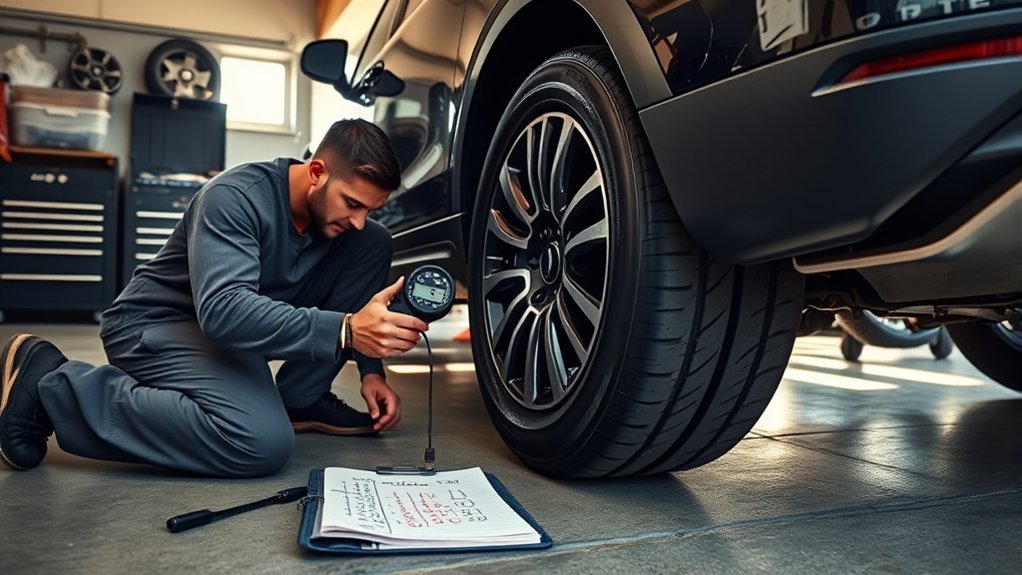
To calculate the correct tire pressure after upsizing, start by checking your vehicle’s placard for original specifications and load indices. Measure the new tire dimensions, focusing on width and sidewall height. Use load inflation charts to adjust the recommended PSI based on weight changes. Remember that neglecting the load index or relying on maximum sidewall pressure can lead to unsafe handling. Explore more strategies to guarantee your tires perform at their best for safety and efficiency.
Why Correct Tire Pressure Matters After Upsizing
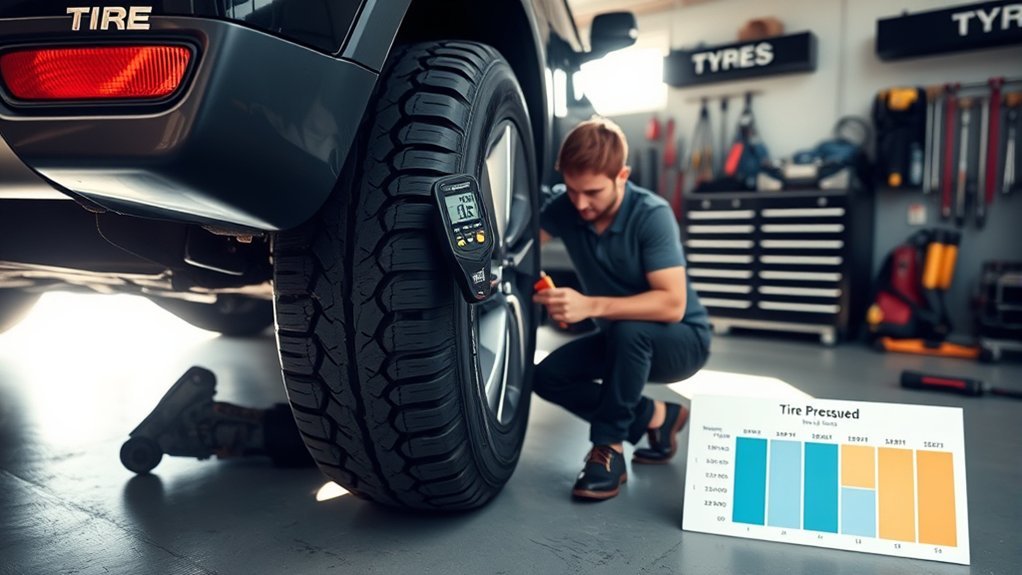
When you upsize your tires, understanding the importance of correct tire pressure becomes fundamental for your vehicle’s performance and safety. Incorrect pressure can greatly affect your vehicle’s load capacity, leading to potential safety implications like tire blowouts. By adhering to the recommended pressure, you enhance the effectiveness of safety systems such as ABS and traction control, which improves overall handling.
Moreover, maintaining ideal tire pressure is essential for extending tire life. Premature wear can result from improper inflation levels, which not only increases costs but also compromises safety. Proper pressure guarantees a solid contact patch with the road, enhancing vehicle stability during braking and cornering. Adjusting tire pressure according to your new tire size is critical, as changes in load index can necessitate different inflation levels to safely support your vehicle’s weight. Prioritizing correct tire pressure maximizes both safety and performance benefits, empowering you on the road.
How to Gather Necessary Tire and Vehicle Information for Tire Pressure
To calculate the correct tire pressure after upsizing, start by noting your original tire specifications, including size and recommended PSI from the vehicle’s placard. Next, identify your vehicle type, as this influences load and pressure relationships. Finally, document the new tire details, focusing on width, aspect ratio, and diameter for accurate pressure adjustments.
Original Tire Specifications
Gathering the necessary tire and vehicle information is essential for accurately calculating tire pressure after upsizing. Start by checking the vehicle’s placard located on the door jamb; it lists the original tire dimensions, load ratings, and recommended pressure (PSI). Note the original tire size, including width, aspect ratio, and diameter, as these details are vital for your calculations. Record the manufacturer’s suggested PSI to establish a baseline for comparison with your new tires. Additionally, use the load indices from both the original and new tires to determine if pressure adjustments are necessary, given any changes in load capacity associated with the upsized tires. This foundational knowledge guarantees your safety and performance on the road.
Vehicle Type Selection
Choosing the right vehicle type is essential for determining the appropriate tire pressure after upsizing. Each category—Passenger Car, Light Truck/SUV, or Commercial Vehicle—has unique load and pressure requirements. Start by locating your vehicle’s original tire specifications on the placard and note the load index. This data guides necessary adjustments for vehicle compatibility with your tire upgrades.
| Vehicle Type | Load Index Example | Recommended Action |
|---|---|---|
| Passenger Car | 91 | Adjust PSI accordingly |
| Light Truck/SUV | 109 | Refer to load charts |
| Commercial Vehicle | 121 | Consult weight limits |
Utilizing this information guarantees peak performance and safety for your new tires.
New Tire Details
Understanding your new tires’ specifications is key to calculating the correct pressure after upsizing. Start by gathering essential information to guarantee peak performance and safety:
- Original tire size and recommended pressure (PSI)
- New tire dimensions, including width and sidewall height
- Vehicle placard or owner’s manual for load capacity
- Weight distribution of the vehicle’s front and rear axles
- Load index chart to correlate tire size with necessary pressure adjustments
These details will help you make informed decisions regarding tire pressure adjustments. Be mindful that significant changes in tire dimensions can affect air volume and peak pressure. Accurate data guarantees that your new tires can support your vehicle effectively, enhancing both performance and safety.
Step-by-Step Guide for Calculating New Tire Pressure Based on Load Capacity
When upsizing your tires, accurately calculating the new tire pressure is essential for maintaining safety and performance. Start by checking the load index on the tire sidewall; this number indicates the maximum weight capacity. Since upsized tires often change the air volume, calculate the percentage increase in width and sidewall height to identify necessary pressure adjustments. Consult load inflation charts tailored to your new tire size to determine the ideal pressure that guarantees the tire can safely support your vehicle’s weight.
Using the Chalk Test and Other Methods for Fine-Tuning Tire Pressure
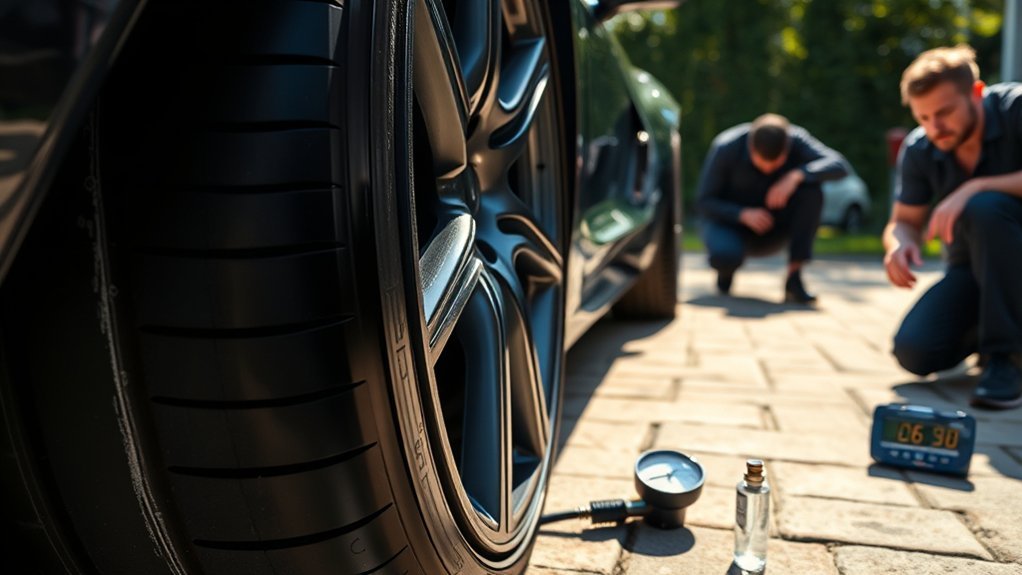
To guarantee your upsized tires perform at their best, using methods like the chalk test can help you fine-tune tire pressure effectively. This simple yet insightful approach allows you to visually assess tire wear, ensuring ideal contact.
Here’s how to perform the chalk test:
- Chalk Application: Mark the tread with chalk before your test drive.
- Flat Surface: Conduct the test on concrete for accurate results.
- Drive Forward: Go forward a short distance to let the tires make contact.
- Check for Wear: Look for even chalk wear across the tread.
- Adjust Pressure: Uneven wear indicates you need to adjust the pressure.
Additionally, remember to measure tire pressure after a short drive to account for heat buildup, as this can raise pressure by about 10%. Regular pressure testing is essential, especially since tires lose about 1 psi per month and 1 psi for every 10°F drop in temperature.
Avoid These Common Mistakes in Tire Pressure Adjustment
Fine-tuning tire pressure after upsizing isn’t just about achieving the right numbers; it’s also about avoiding common pitfalls that can compromise performance and safety. First, don’t neglect the load index of your new tires. Adjusting pressure without considering the new load capacity can lead to unsafe handling and uneven tire wear. Avoid relying solely on the maximum pressure listed on the tire sidewall; this figure isn’t a recommended operating pressure. Instead, prioritize your vehicle manufacturer’s specifications. Ignoring tire type variations is another common adjustment mistake; different types have distinct pressure requirements that must be understood. Additionally, remember that temperature affects tire pressure—expect a drop of about 1 psi for every 10°F decrease. Finally, always test tire pressure when cold since it can increase by up to 10% after driving. By steering clear of these mistakes, you’ll enhance both safety and performance.
Impact of Different Tire Types on Pressure Needs and Vehicle Performance
When you upsize your tires, understanding the impact of different tire types on pressure needs is essential. Tire construction variations and load capacities greatly influence how much pressure is required for ideal performance. Adjusting pressure based on these factors guarantees safe handling and minimizes performance trade-offs.
Tire Construction Variations
Understanding tire construction variations is essential, as different tire types can greatly impact pressure requirements and overall vehicle performance. Here’s how tire characteristics play a role:
- Tire Ply: More plies can enhance load capacity, but may necessitate higher pressure.
- Sidewall Stiffness: Stiffer sidewalls often require less air volume to maintain performance.
- Pressure Needs: Passenger tires typically function at 35-36 psi, while Extra Load tires operate at 41-42 psi.
- LT Tires: Designed for light trucks, they require higher inflation pressures for similar load capacities.
- Ride Quality: Tire stiffness affects handling; stiffer tires might compromise comfort for better control.
Load Capacity Considerations
Load capacity plays an essential role in determining the appropriate tire pressure after upsizing. When selecting tires, consult load index tables to guarantee each tire meets your vehicle’s needs. For instance, an XL tire with a load index of 99 supports up to 1,709 lbs at recommended pressures, typically ranging from 41-42 psi. In contrast, Standard Load (SL) tires max out at 35-36 psi. Remember, the relationship between tire pressure and load capacity is direct; higher pressures increase load capabilities, but exceeding recommended levels can lead to uneven wear and handling issues. Additionally, Light Truck (LT) tires require higher pressures than passenger tires to maintain performance under heavy loads, emphasizing the importance of precision in your tire pressure calculations.
Performance Trade-Offs
While upsizing tires can enhance your vehicle’s performance, it also necessitates careful consideration of how different tire types affect pressure requirements and overall handling. Here are key performance trade-offs to keep in mind:
- Load Capacity: Larger tires often require lower pressure for ideal load distribution.
- Construction Variances: Extra Load (XL) tires can handle higher pressures compared to Standard Load (SL) tires.
- Wider Tires: They may need pressure adjustments to prevent uneven wear, impacting handling dynamics.
- High-Performance Tires: Stiffer sidewalls allow for higher inflation pressures, enhancing responsiveness but possibly sacrificing comfort.
- Tire Brand Influence: Different brands and types can greatly alter pressure needs, affecting grip and stability.
Navigating these factors is essential for performance enhancement and achieving the desired handling dynamics.
Top Tips for Keeping Tire Pressure Optimal
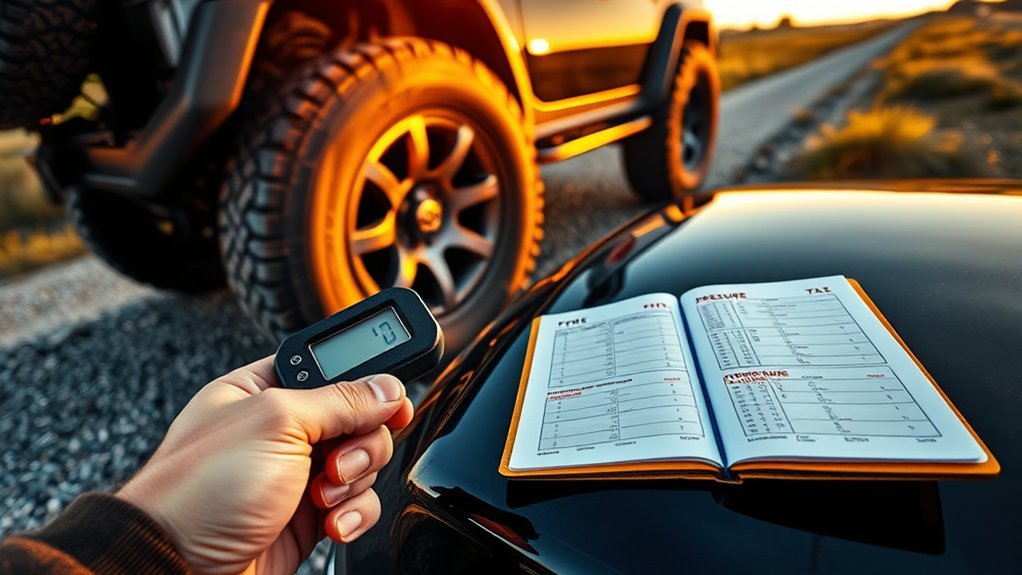
To keep your tire pressure ideal, regularly checking it is essential; aim for at least once a month and before any long trips. Tires can lose about 1 psi for every 10-degree temperature drop, affecting performance and safety. Use the chalk method on a flat surface to evaluate even tire contact; adjust pressure until the chalk wears uniformly across the tread for best contact patch.
When upsizing, consult load inflation charts to find the right pressure—larger tires might need lower pressure for maintaining load capacity and ride quality. Monitor tire temperature post-drive; a rise of less than 10% from cold pressure indicates proper inflation, while excessive heat suggests under-inflation. Always refer to your vehicle’s placard for original tire specifications and adjust new tire pressures accordingly. Remember, maximum sidewall pressure isn’t a daily recommendation. Consistent tire maintenance and pressure monitoring are key to ensuring safety and performance.
Frequently Asked Questions
How Often Should I Check My Tire Pressure After Upsizing?
You should check your tire pressure at least once a month after upsizing. Regular tire pressure maintenance is essential, as upsizing implications can affect handling and fuel efficiency, ensuring peak performance and safety.
Can I Use the Same Pressure for All Four Tires?
When it comes to tire pressure consistency, you should maintain the same pressure for all four tires for peak handling characteristics. This guarantees balanced performance, preventing any surprises on the road ahead.
Will Upsizing Affect My Vehicle’s Fuel Efficiency?
Yes, upsizing can negatively impact your vehicle’s fuel efficiency. Larger tires may increase rolling resistance, affecting fuel economy. Additionally, improper pressure can lead to uneven tire wear and compromise handling stability, further reducing efficiency.
What Tools Do I Need to Measure Tire Pressure Accurately?
You need a reliable digital gauge for precise measurements and a manual pump for adjustments. These tools guarantee you accurately monitor and maintain ideal tire pressure, enhancing your vehicle’s performance and efficiency.
How Does Temperature Change Impact Tire Pressure?
Temperature changes greatly affect tire pressure. As temperatures rise, pressure increases; when temperatures drop, pressure decreases. You must make pressure adjustments accordingly to maintain ideal performance and safety, ensuring your tires operate efficiently in varying conditions.
Conclusion
In summary, keeping your tire pressure accurate after upsizing is essential for safety and performance. Did you know that under-inflated tires can reduce fuel efficiency by up to 3% for every 1 PSI drop below the recommended level? By following the outlined steps and regularly checking your tire pressure, you guarantee ideal handling, improved fuel economy, and extended tire life. Stay proactive, and your vehicle will thank you with better performance and safety on the road.

Related Articles
4Runner TPMS Sensor Replacement: When and How to Do It
A 4Runner's TPMS sensors demand replacement when warning lights appear or batteries expire—but the critical steps to avoid costly mistakes remain untold.
Read More
How to Use a Portable Air Compressor for 4Runner Tires
Breathe new life into your 4Runner tires with a portable air compressor; discover essential tips for efficient use and maintenance that you can't afford to miss.
Read More
When Is a Tire Too Old to Safely Use on a 4Runner
Find out why your 4Runner's tires expire at six years—and the hidden danger that could strike without warning.
Read More