
How All-Season Tires Perform in Snow on a Toyota Camry: What to Expect
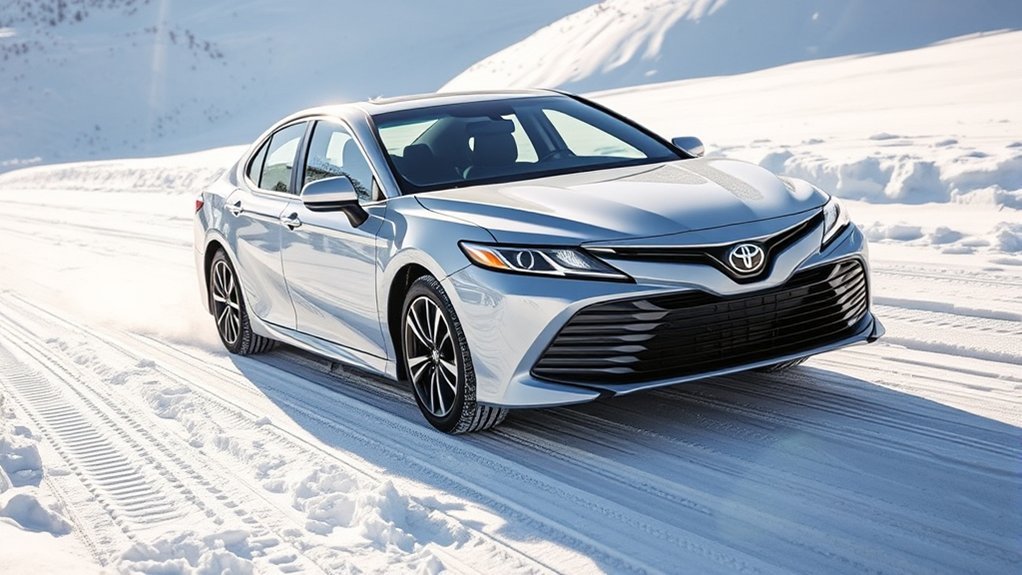
All-season tires on your Toyota Camry offer moderate traction in light snow, but they really struggle when conditions worsen. You’ll notice longer stopping distances in heavy snowfall, and their tread design makes them prone to slippage in slush. While they perform better than summer tires, they can’t match the grip of dedicated winter tires. So, if you’re considering winter driving safety, you’ll want to understand your options for tire performance this season.
What You Should Know About All-Season Tires
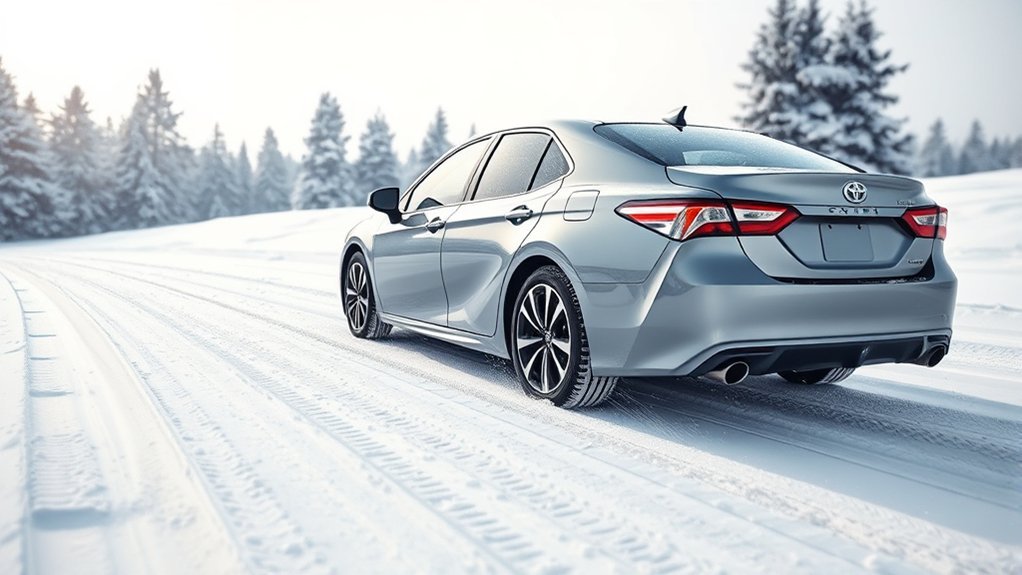
When considering all-season tires for your Toyota Camry, it’s essential to understand their limitations. While these tires are designed to perform adequately in various conditions, their tread patterns often feature shallower grooves and fewer biting edges, which can hinder traction on snow-covered roads. The temperature effects also play a significant role; as it drops, all-season tires can become less effective, making winter driving a challenge.
You might find that while all-season tires handle light snow reasonably well, they struggle in heavy snowfall or icy conditions, where dedicated winter tires truly shine. This could lead to longer stopping distances, compromising your safety. In regions with frequent heavy snowfall, relying solely on all-season tires may not provide the performance you need. Understanding these factors empowers you to make an informed choice, ensuring your Toyota Camry remains safe and reliable throughout the seasons.
How All-Season Tires Perform in Light Snow?
When it comes to light snow, all-season tires on your Toyota Camry can provide some traction, but they aren’t a perfect solution. Their tread design may struggle in slushy conditions, affecting your handling and braking distances. If you often drive in winter weather, you might want to contemplate dedicated snow tires for better safety and performance.
Traction Characteristics
Although all-season tires on your Toyota Camry can handle light snow reasonably well, their performance might not match that of dedicated winter tires. These tires offer decent traction performance thanks to their tread design, but you may find them lacking in deeper snow or icy conditions. The tread depth plays a significant role; shallower treads can diminish snow grip, increasing the risk of sliding. While your Camry’s enhanced all-wheel drive can boost stability and handling on light snow, it can’t fully compensate for the limitations of all-season tires. To maximize traction, verify your tire pressure is ideal, as higher PSI in rear tires might aid handling but could compromise your grip on slippery surfaces.
Handling in Slush
While all-season tires can tackle light snow adequately, their performance in slush often reveals significant limitations. On your Toyota Camry, you might notice reduced grip, longer stopping distances, and an increased risk of hydroplaning. This is mainly due to the tread design, which struggles to channel slush effectively.
| Aspect | All-Season Tires |
|---|---|
| Slush Performance | Moderate, prone to slippage |
| Hydroplaning Risk | Higher in slushy conditions |
| Tire Maintenance | Essential for peak performance |
Although all-season tires can handle occasional light snow, you’ll find dedicated winter tires offer superior control and safety in slush. Prioritizing tire maintenance can help mitigate some of these issues but won’t replace the benefits of winter-specific options.
Understanding the Need for Specialized Tires in Deeper Snow
In contrast, winter tires feature deeper treads and softer rubber compounds that enhance grip and handling in icy environments. This is essential for ideal tire performance when maneuvering through deeper snow. In areas like Upstate NY or Upper Michigan, the difference becomes even more pronounced; all-season tires may leave you feeling less in control. By investing in winter tires, you can guarantee your Camry performs safely and effectively, allowing you to conquer winter roads with confidence. Choosing the right tires isn’t just about convenience; it’s about making sure your freedom to drive safely through any snowstorm.
All-Season vs. Winter Tires: Key Differences
When choosing between all-season and winter tires for your Toyota Camry, understanding their key differences can greatly impact your driving experience, especially in harsh winter conditions. All-season tires are designed to handle various conditions but often lack the deep tread and specialized tire composition required for ideal grip in heavy snow and ice. In light snowfall, they may perform adequately, but on packed snow or ice, you’ll notice reduced traction and longer stopping distances.
Winter tires, like Michelin X ICE or Blizzaks, feature unique tread patterns and softer rubber compounds that enhance grip and flexibility in low temperatures. Studies reveal that vehicles equipped with winter tires can stop up to 30% shorter on icy roads compared to those with all-season tires. While all-season tires are better than summer tires in winter, they can’t match the safety and handling capabilities of winter tires when traversing severe weather conditions.
Essential Winter Driving Tips for Your Toyota Camry
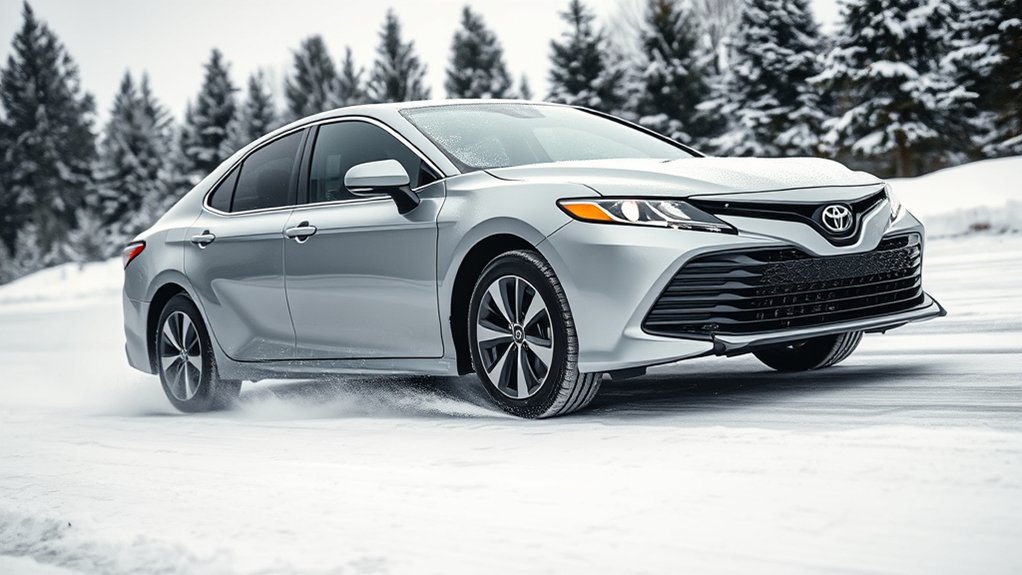
When winter hits, knowing how to handle your Toyota Camry is vital for safety. The right tire selection and safe driving techniques can make a significant difference in traction and control. Let’s explore some essential tips to keep you confident and secure on icy roads.
Tire Selection Importance
Choosing the right tires for your Toyota Camry is vital, especially as winter weather can turn treacherous in a heartbeat. While all-season tires offer convenience, they generally lack the traction needed for heavy snow and icy roads. In regions with severe winter conditions, investing in dedicated winter tires is a smart choice. These tires feature deeper treads that outperform all-season options, providing better grip on slush and snow. Don’t forget tire maintenance, too; maintaining proper tire pressure is essential for peak handling. Higher PSI in rear tires can lead to sliding, increasing your risk on slippery surfaces. Consider your local climate and make informed seasonal considerations to guarantee safe and confident driving this winter.
Safe Driving Techniques
Driving a Toyota Camry in winter conditions requires a heightened awareness of your surroundings and the way your vehicle responds. To navigate snowy roads safely, maintain a greater following distance to allow for the longer stopping time that all-season tires demand. Use gentle braking techniques—avoid hard braking to prevent skidding. If you start to slide, practice counter-steering to regain control. On icy surfaces, pump the brakes lightly rather than applying steady pressure, which can lead to losing traction. Also, check your tire pressure; higher PSI in rear tires can reduce plowing. Finally, regularly inspect your tire tread depth—worn all-season tires can greatly impact your Camry’s traction and overall safety. Stay informed and drive smart!
Know When to Switch to Winter Tires
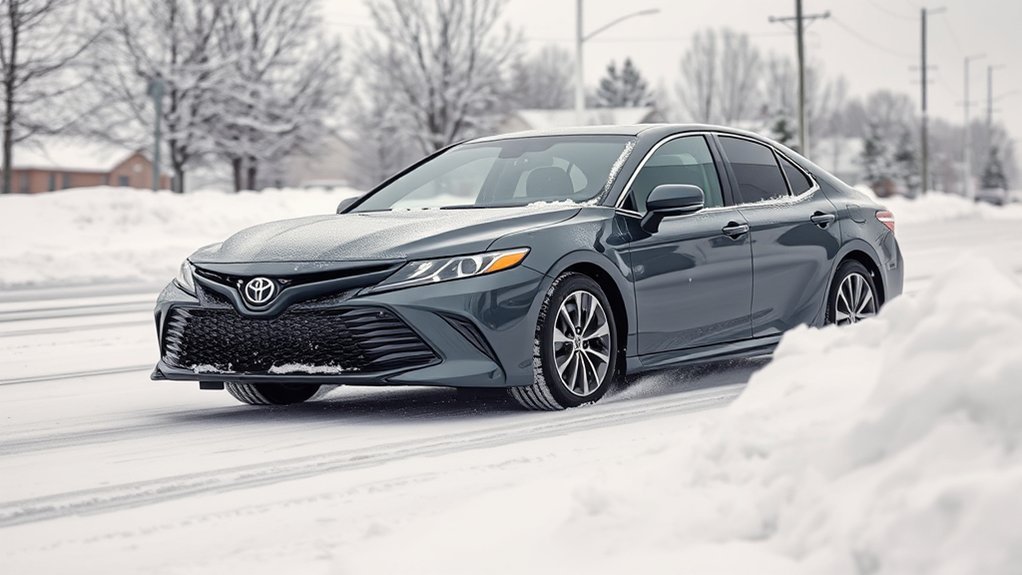
As winter weather approaches, knowing when to switch to winter tires becomes vital for maintaining safety on the road. If you live in an area with frequent snowfall, it’s time to think seriously about your tire maintenance. All-season tires on your Toyota Camry may not provide the grip and traction you need during severe conditions. When temperatures consistently drop below 45°F, all-season tires begin to lose effectiveness, struggling with handling and stopping on icy roads.
Winter tires, with their deeper treads and specialized rubber compounds, outperform all-season tires in snow and ice. If you regularly face snowy conditions, shifting to winter tires is an important part of your winter preparation. Don’t wait until the first snowfall; plan your switch early to guarantee peak safety and performance throughout the winter months. Your peace of mind and safety depend on making this significant change.
Where to Get Snow Tire Services Near You
Wondering where to get reliable snow tire services for your Toyota Camry? Start at authorized Toyota service centers like Smart Toyota in Madison, WI, where you can find extensive tire maintenance, including installation and consultations on the best snow tire options for your model. Ordering OEM Toyota snow tires directly guarantees compatibility and performance.
Don’t wait until the first snowfall; service scheduling is essential as demand spikes in winter. Local tire shops often offer budget-friendly options, like Firestone and Altimax, perfect for cost-conscious drivers. By planning ahead, you can secure the right tires and avoid the last-minute rush.
Frequently Asked Questions
How Is the Toyota Camry AWD in Snow?
The Toyota Camry’s AWD excels in snow, enhancing handling and stability. You’ll appreciate how it distributes power to all wheels, offering better control in slippery conditions than front-wheel drive, making winter driving safer and more enjoyable.
How Well Do All-Season Tires Perform in Snow?
All-season tires offer limited winter performance in snow, mainly due to their tread design. You’ll find they handle light snow reasonably well, but deeper tread patterns found in winter tires provide considerably better grip and control.
How to Put a Toyota Camry in Snow Mode?
Did you know that activating “Snow Mode” can improve traction by up to 30%? To engage it, just switch the drive mode selector to the snowflake icon—essential for winter safety tips and effective snow driving techniques.
What Is the Weakness of the Toyota Camry?
The Camry’s reliability issues emerge in winter driving; its all-season tires struggle on snow and ice. For safer winter trips, consider specialized tires, enhancing grip and control while maneuvering slippery conditions. Stay informed and prepared.
Conclusion
In snowy conditions, all-season tires can feel like trying to walk on ice in flip-flops—possible, but risky. While they offer decent performance in light snow, they fall short when faced with deeper, harsher conditions. If you want to guarantee your safety and confidence behind the wheel of your Toyota Camry, consider switching to winter tires when the temperatures drop. Stay proactive, and don’t hesitate to seek specialized tire services to keep your winter driving smooth and secure.

Related Articles
Toyota Camry Tire Aquaplaning: What Causes It and How to Prevent It
Beneath the surface of wet roads lies the danger of aquaplaning; discover how to keep your Toyota Camry safe and secure while driving in the rain.
Read More
Toyota Camry Tire Wet Traction Explained: What Affects Grip in Rain
Learn how tire tread design, pressure, and composition influence your Toyota Camry's wet traction—key factors that could keep you safe on rainy roads.
Read More
Toyota Camry Rim Material Guide: Aluminum vs. Steel Wheels Compared
Choosing Camry rims? Compare aluminum and steel wheels to uncover which material fits your driving needs best.
Read More