
Why Does Toyota Camry Alignment Keep Going Out? Common Root Causes

Your Toyota Camry’s alignment keeps going out when worn tie rods, ball joints, bushings, struts, or wheel bearings let suspension geometry shift under load. Potholes, curb strikes, and rough roads can also bend or loosen parts and change toe, camber, or steering center. Tire defects and uneven pressure can mimic a pull, too. Because Camry front-end caster and camber adjustability is limited, a dealer printout can look fine while a hidden fault keeps returning, and the causes get more specific from there.
Why Camry Alignment Keeps Going Out
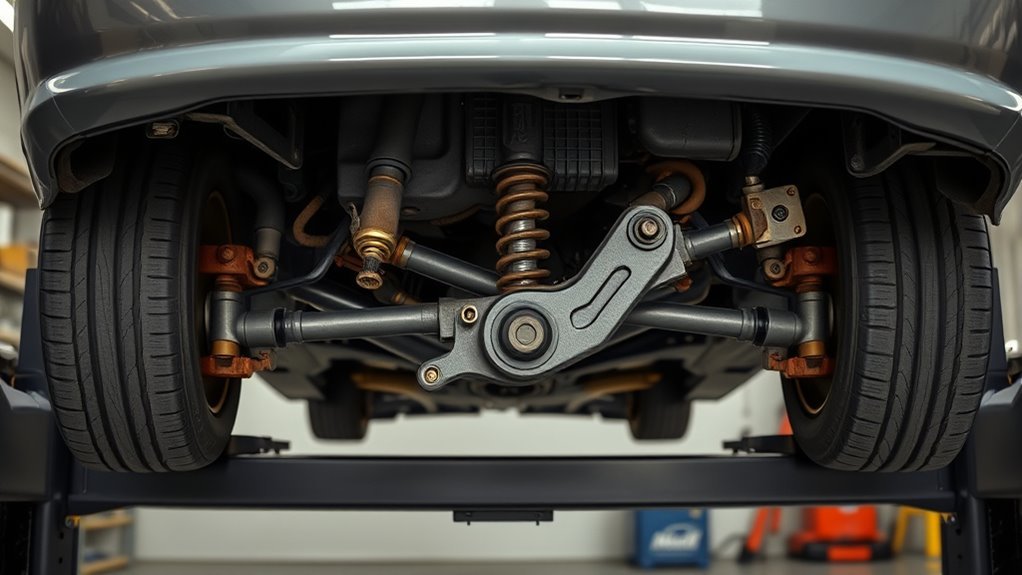
Your Camry’s alignment can keep drifting because the late-model front suspension has limited caster and camber adjustability, so even a correctly set alignment may not fully correct a built-in pull. You may measure it to spec and still feel a steady left drift through the wheel. That usually means the chassis geometry itself is constraining correction, not that the technician missed the mark. Inspect steering feedback for asymmetry, because a persistent bias often shows up as subtle wheel-centering resistance. Your driving habits can also mask or amplify the condition, especially if you hold constant road crown compensation or overcorrect to stay straight. On high-mileage cars, worn bushings, struts, and mounts can add compliance that lets angles wander under load. TSBs such as ST005-01 show Toyota has seen repeated complaints, so you shouldn’t dismiss a recurring pull as normal. Choose tires carefully, because tire construction can change tracking and stability.
Hitting Potholes or Curbs
Potholes and curb strikes are common reasons a Camry’s alignment suddenly changes, even when the car was tracking straight before. When you take pothole impacts at speed, the suspension can shift enough to alter toe, camber, or steering wheel center. Curb collisions are even more direct; one side may take the hit, and you’ll feel pull or drift right away. Speed and angle decide how much damage occurs, so a shallow brush may be minor while a hard, square strike can knock settings far out.
| Impact type | Typical effect |
|---|---|
| Pothole impacts | Suspension deflection |
| Fast impact | Greater misalignment |
| Curb collisions | One-sided pull |
| Rough roads | Repeated stress |
| Inspection need | Early diagnosis |
If you drive rough routes often, inspect alignment sooner. Watch your turning radius in tight spaces, slow down near hazards, and keep your driving precise so you protect your Camry’s freedom to track true.
Tire Wear That Mimics Camry Alignment Trouble
Uneven tread wear can make your Camry pull or drift even when the alignment is within spec. You should inspect both shoulders and the center of each tire for irregular depth or feathering, because those patterns can signal misalignment or another fault. If you’re running OEM Firestone tires, radial pull can also mimic alignment trouble and skew your diagnosis.
Uneven Tread Wear
When tire tread wears faster on the inner or outer edges, it often points to a Camry alignment problem rather than normal use. You should inspect tread patterns closely, because uneven wear creates alignment symptoms you can measure, not guess. Misalignment increases friction on one side of the tire, and that shortens tire life fast.
- Check the front tires after pothole hits.
- Compare left and right tread depth for asymmetry.
- Rotate tires and verify pressure, but don’t ignore persistent edge wear.
If your Camry drifts right, the left front tire may wear faster; a left pull can do the opposite. When the pattern repeats after service, you need a precise alignment correction to regain control and protect your tires.
Radial Pull Symptoms
Radial pull can make your Camry feel misaligned even when the alignment specs are correct, because one tire may steer the car through uneven wear, improper inflation, or an internal construction defect. You may notice a steady drift to one side, plus a steering wheel that feels inconsistent or unsettled. Check tire pressure on both sides of the axle; even small differences can intensify the pull and hide the real fault. Inspect for radial wear, which often shows up as an imbalance in the tire’s rolling force rather than obvious tread damage. If rotations and balancing were skipped, that neglect can worsen the symptoms. A defective tire can also tug the car off line. Diagnose the tire before you surrender to a false alignment diagnosis.
Bad Tie Rods, Bearings, and Ball Joints
Bad tie rods, wheel bearings, and ball joints can all create alignment problems in a Toyota Camry by introducing play into the suspension and steering system. When you chase tie rod issues, start with the outer ends, because wear here shifts toe and keeps your Camry out of spec. Bearing wear adds looseness at the hub, which can mimic alignment drift and accelerate uneven tire wear. Ball joint failure changes suspension geometry under load, causing suspension instability, steering pull, and vague response.
- Check for steering play with the front wheels lifted.
- Listen for noises when turning; they often point to bearing wear or joint damage.
- Inspect each joint and boot for looseness, torn seals, or excess movement.
For effective alignment troubleshooting, you need a careful component inspection before any new alignment is set. On a high-mileage Camry, don’t delay replacement; worn parts won’t hold settings, and you deserve a car that tracks straight and responds cleanly.
Suspension Damage That Throws Off Camry Alignment
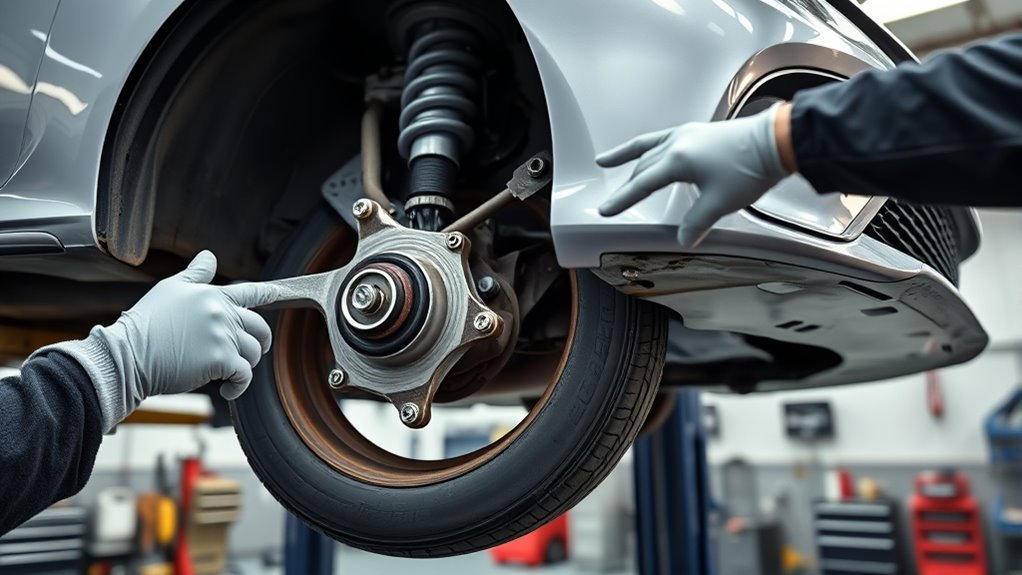
Suspension damage can throw your Camry’s alignment off because worn struts, shocks, ball joints, or tie rods change the car’s geometry and shift caster, camber, and toe out of spec. When you ignore suspension wear, the tires start to scrub unevenly, and that wear pattern can worsen pull, drift, and steering instability. You may notice the wheel sits off-center or the car won’t track straight after a pothole strike or curb impact. Loose joints create play, so the alignment can’t stay consistent under load. On a Camry, the front suspension’s limited adjustability means damaged parts leave you fewer correction options, so alignment checks alone won’t solve the problem unless you repair the source first. Inspect struts, shocks, control arms, ball joints, and tie rods for looseness, leakage, or binding, then replace what’s compromised before you pay for another alignment.
Why Camry Caster and Camber Are Hard to Adjust
On late-model Camrys, caster and camber are largely fixed because the front suspension isn’t designed for routine adjustment, so if those angles drift out of spec, you’ve got limited correction options. That means you’re dealing with caster limitations and camber constraints built into the chassis, not sloppy technician work. Even when the printout looks “green,” you can still feel a left pull because factory-defined geometry leaves little room for correction.
Late-model Camrys have fixed caster and camber, so even “green” specs can still leave a subtle pull.
- Upper spring seats can bind and shift load paths.
- Road crown and temperature changes can expose small deviations.
- Fixed mounts prevent dialing in a stable cross-caster or cross-camber balance.
When a Dealer Alignment Still Won’t Fix It
If your Camry still pulls after a dealer alignment, you likely have hidden front-end wear that’s changing the geometry under load. Even when the rack shows alignment within spec, worn struts, coil spring seats, or other suspension parts can shift camber and caster enough to cause a real-world drift. In that case, you need a diagnostic inspection, not another spec-sheet adjustment.
Hidden Front-End Wear
Even after a dealer alignment, hidden front-end wear can keep your Camry pulling because worn tie rod ends, loose wheel bearings, and other play in the suspension change toe and undermine steering stability. You need a suspension inspection and a targeted wear assessment, not another quick rack adjustment.
- Check tie rod ends for lash and torn boots.
- Verify wheel bearing preload and hub play.
- Inspect spring seats, control arms, and bushings for shift.
Late-model Camrys can also resist correction when caster and camber aren’t adjustable, so worn parts keep forcing a left pull. Technical service bulletins even flag upper spring seating as a culprit. If you want real control, replace the worn component first, then realign. That’s how you break the cycle and drive free.
Alignment Specs vs. Reality
A dealer printout that shows your Camry “within spec” doesn’t necessarily mean the car is actually tracking straight, because some angles—especially caster and camber on certain models like the 2017 Camry LE—aren’t truly adjustable, and a left pull can persist despite repeated alignments. You need to treat alignment settings as a diagnosis, not a verdict. If the wheel still drifts, inspect rear tire alignment, SAI, tire conicity, and suspension symmetry. Repeated “fixes” that fail quickly usually point to mechanical deficiencies, not bad luck. Late-model Camrys have multiple TSBs because this issue isn’t isolated; it’s often systemic. Don’t let a spec sheet mask reality. Demand a road test, angle comparison side to side, and a deeper inspection until the car tracks free and true.
How Tire Swaps Isolate a Pull
Tire swaps help isolate a pull by moving tires from one position to another so you can see whether the Camry’s handling changes and determine whether the problem is tire-related or tied to the suspension or alignment. This tire rotation test supports pull diagnosis without guesswork, so you can free yourself from costly trial and error.
- If the pull reverses after a swap, suspect one tire.
- Cross-swapping front and rear tires can expose a defective carcass or belt issue.
- Keep matched tire sets; mixed brands or tread patterns distort the result.
You should compare the before-and-after feel on a level road and note steering drift, not just wheel position. If the pull stays constant, the tires probably aren’t the root cause. Record each swap outcome, since clean notes give you a repeatable baseline for future checks and help you move toward a precise repair path.
How To Get a Reliable Camry Alignment Check
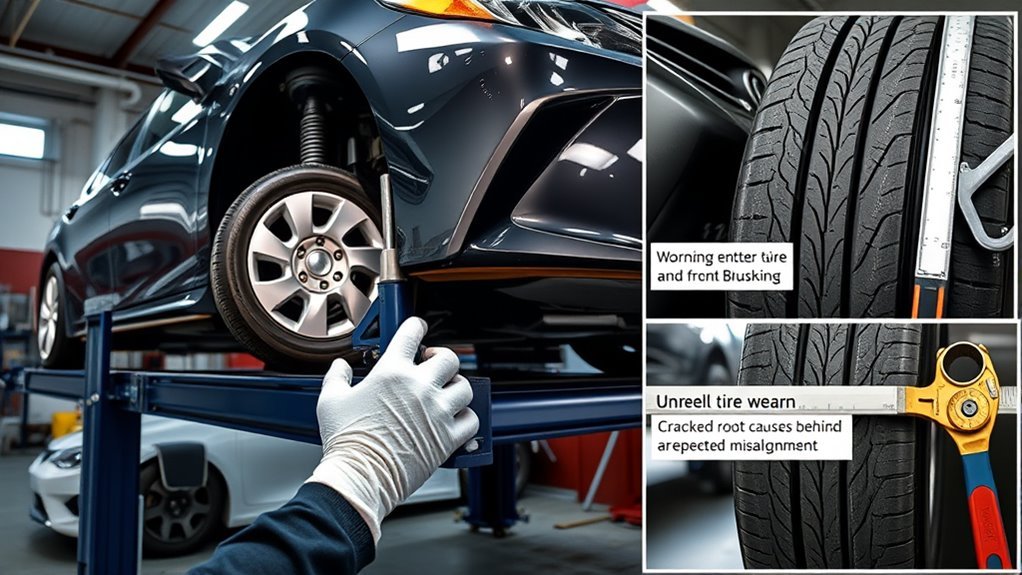
To get a reliable Camry alignment check, you should start with a shop that offers a complimentary alignment assessment and can verify toe, camber, and caster on a calibrated rack, because a quick visual estimate won’t catch subtle drift. Ask for documented readings before and after adjustment, and insist they use precise alignment tools, not guesswork. A competent tech should inspect tie rods, wheel bearings, bushings, and struts, since worn parts can mask or recreate misalignment. Bring your repair history so they can connect repeat drift to prior damage or component replacement. If the car still pulls, cross-swap the tires to separate tire bias from chassis error. Use local community forums to identify shops with proven assessment techniques and honest results. You want measurements that free you from recurring corrections, not another temporary reset. A transparent diagnostic process helps you reclaim stable tracking and steer with confidence.
Frequently Asked Questions
What Is the Biggest Problem With a Toyota Camry?
Your biggest Toyota Camry problem is suspension wear, especially front-end geometry that won’t stay set; engine issues matter less. You’ll feel pull, uneven tires, and repeated alignment drift unless you inspect components, tires, and impacts immediately.
How Often Should You Get a Wheel Alignment on a Toyota Camry?
You should check your Toyota Camry wheel alignment every 6,000 miles, or at tire rotations, to optimize alignment frequency and tire wear. Get it checked after potholes, curb strikes, suspension repairs, or if you notice pulling.
Conclusion
If your Camry alignment keeps going out, you’re usually dealing with a root cause, not a one-time adjustment. You need to check for pothole damage, uneven tire wear, worn tie rods, ball joints, bearings, or bent suspension parts before you blame the alignment rack. Caster and camber issues can be stubborn, and a dealer setting won’t fix bad hardware. Diagnose it methodically, or the steering will wander like a ship in a storm.

Related Articles

Toyota Camry Front Tires Wearing on Inside Edge: Causes and Fixes
Stopping your Camry’s inside-edge tire wear could save your tires, but the hidden cause may surprise you.
Read More
Why Are Toyota Camry Rear Tires Wearing Faster Than the Front?
Behind uneven Toyota Camry tire wear lies a hidden rear-alignment or suspension issue that could be quietly ruining your tires.
Read More
How to Replace a Toyota Camry TPMS Sensor: What the Process Involves
Prepare to master the process of replacing a Toyota Camry TPMS sensor and discover essential tips that can save you time and hassle.
Read More