
How to Maintain Toyota Camry Tire Pressure Year-Round: Seasonal PSI Tips
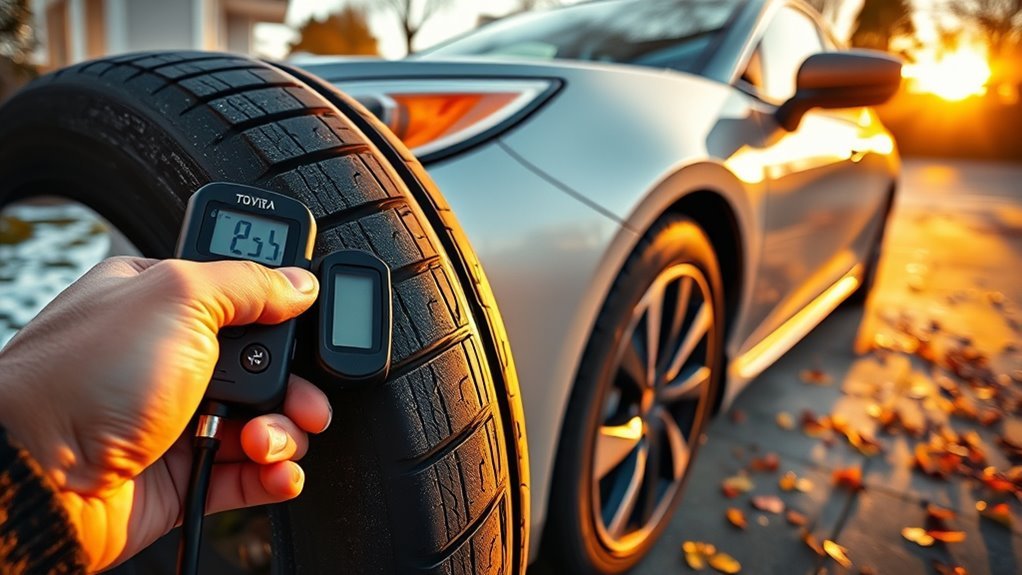
To maintain your Toyota Camry tire pressure year-round, start with the Tire Information placard on the driver’s door jamb or the Toyota owner’s manual guidance. Many Camry models are commonly near the low-to-mid 30s PSI range, but the exact number depends on model year, tire size, trim, and load. Check pressure when the tires are cold, adjust as temperatures change, and use a reliable gauge instead of guessing.
Quick Answer
The right Toyota Camry tire pressure is the cold PSI listed on your driver’s door placard or in your owner’s manual. Many Camrys are around 32–35 PSI, but do not treat that as universal. Check tires cold, recheck monthly, and adjust after major temperature changes.
Key Takeaways
- Use the driver-door Tire Information placard as the authority for your Camry’s exact cold PSI.
- Check tire pressure before driving or after the car has been parked for at least 3 hours.
- Expect roughly 1 PSI of change for every 10°F temperature swing, so recheck during winter cold snaps and summer heat.
- Do not use the maximum PSI on the tire sidewall as your target pressure.
- Do not rely only on TPMS; it warns when pressure is low, but a gauge gives the reading you need.
At a Glance
| Time Required | 5–10 minutes |
| Difficulty | Easy |
| Tools Needed | Tire pressure gauge, air compressor or gas-station air pump, valve caps |
| Cost | Usually free to a few dollars for air; about $10–$25 for a basic gauge |
Toyota Camry Tire Pressure Basics
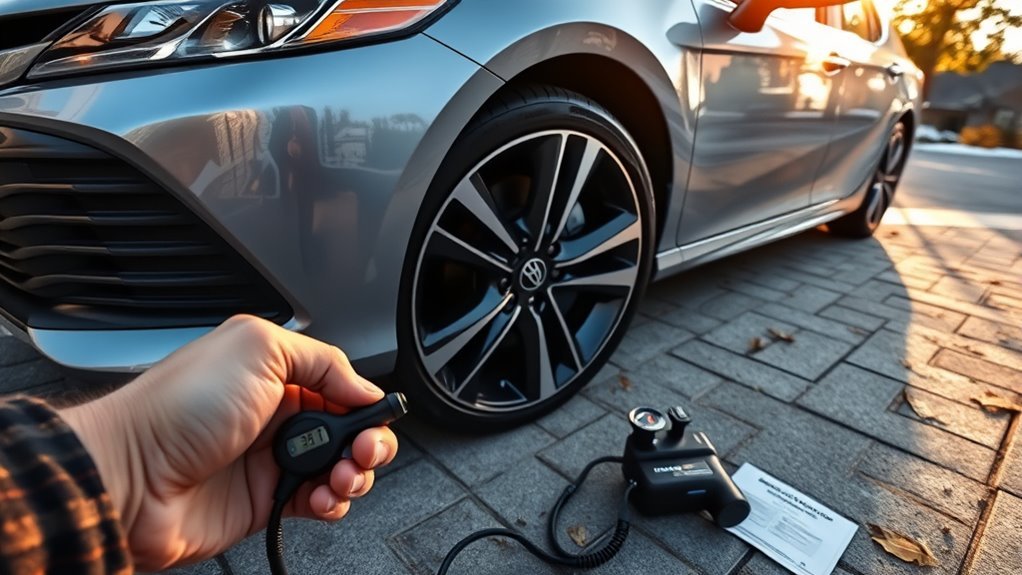
Your Camry’s tire pressure should match the recommended cold tire inflation pressure printed on the Tire Information placard, usually on the driver’s door jamb. Many Camry placards are in the 32–35 PSI range, but the exact number can vary by model year, wheel size, tire size, and trim.
That placard should be your baseline for tire maintenance. The National Highway Traffic Safety Administration also advises drivers to use the vehicle manufacturer’s listed pressure, not the number printed on the tire sidewall. The sidewall number is usually a tire maximum, not the best pressure for your specific Camry.
Warning: Do not inflate your Camry tires to the maximum PSI printed on the tire sidewall unless the vehicle placard or owner’s manual specifically calls for it. The placard PSI is the target for normal driving.
[Products Worth Considering]

This portable cordless tire inflator delivers fast, efficient inflation for cars, motorcycles, bikes, and sports balls with a digital pressure gauge. Use the one-click PSI preset with auto shut-off for accurate, hands-free topping to your target pressure up to 150 PSI. It’s compact and rechargeable with a built-in emergency LED light plus valve adapters and accessories for quick, ready-to-go use.
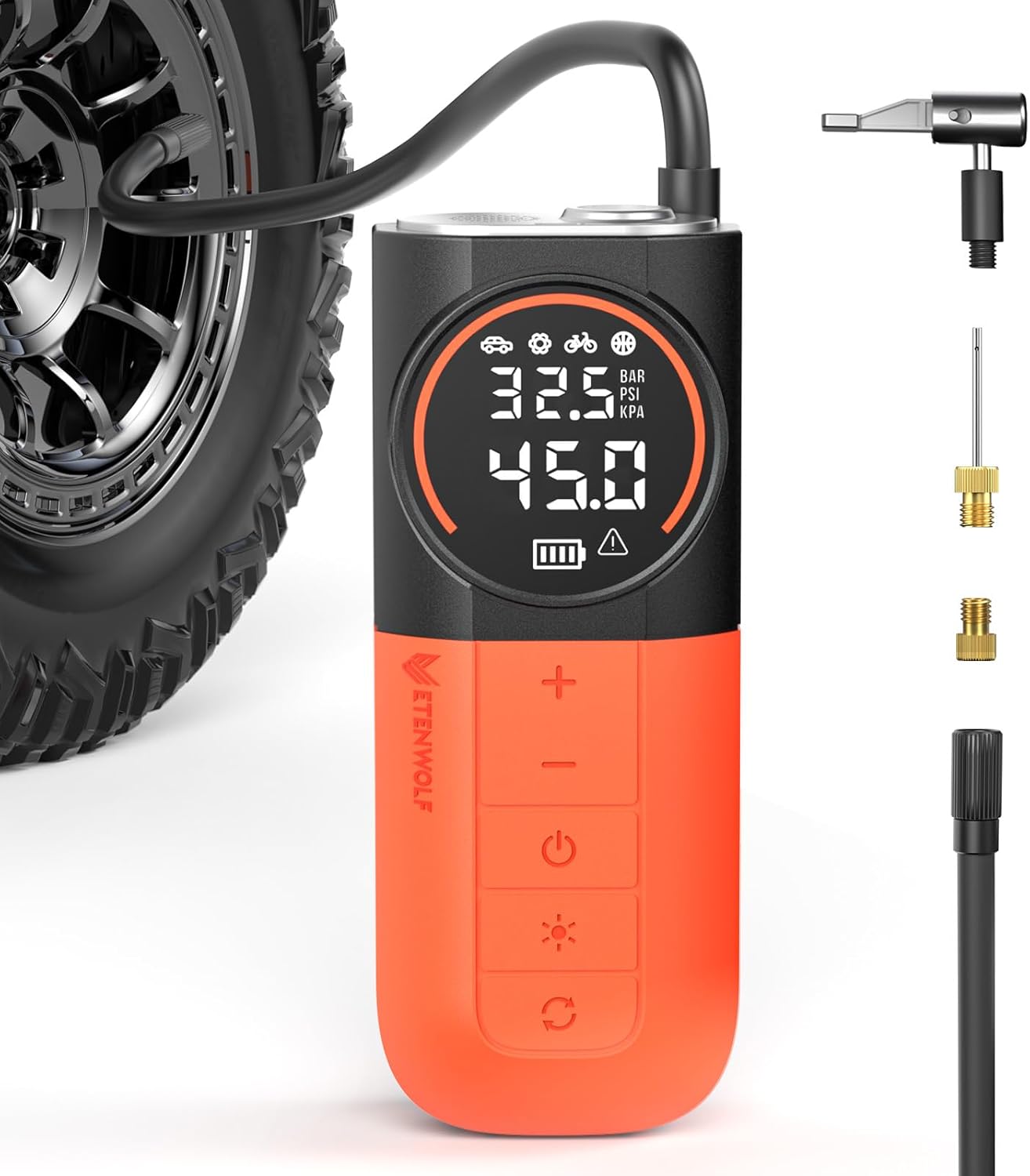
The ETENWOLF S1 cordless tire inflator delivers ultra-fast inflation with up to 160 PSI and a 20 L/min airflow for quicker tire top-offs. Its 5200mAh battery and cooling system support inflating many tires and sports balls on a single charge, while the digital pressure gauge and multi-unit display help you reach the right pressure accurately. With preset modes, pressure memory, an auto-stop feature, and an LED flashlight, it’s built for easy roadside and everyday use.

The JACO FlowPro Tire Inflator measures, inflates, and airs down tires up to 100 PSI with battery-free operation and ±2% accuracy after calibration. It features a glowing pressure dial for night visibility, a heavy-duty steel build with a hybrid hose, and a precision push-to-inflate thumb trigger. The patented Lightning Air Chuck locks on for a secure seal, and the kit includes quick-connect hardware for easy inline use with your air compressor.
Recommended PSI for Your Camry
So, what PSI should you run in a Toyota Camry? Start with the sticker inside the driver’s door. It lists the factory-recommended cold PSI for the original tire size and load rating. Your owner’s manual can also confirm the correct tire size, load rating, and pressure-check procedure.
If your Camry’s placard says 35 PSI, use 35 PSI when the tires are cold. If your placard says a different front or rear pressure, follow that instead. Some vehicles use different front and rear values, so check both lines on the placard before adjusting.
Hold pressure at the recommended setting to protect tread life, maintain predictable steering response, and support fuel efficiency. According to FuelEconomy.gov, properly inflated tires are safer, last longer, and can improve gas mileage by 0.6% on average, up to 3% in some cases.
How to Check Camry Tire Pressure
Checking your Camry’s tire pressure is simple. The most important rule is to measure when the tires are cold, because pressure rises as tires warm during driving.
- Park the Camry on level ground and let it sit for at least 3 hours, or check the tires before driving.
- Open the driver’s door and read the recommended PSI on the Tire Information placard.
- Remove the valve cap from one tire.
- Press a reliable tire pressure gauge firmly onto the valve stem.
- Read the PSI and compare it with the placard value.
- Add air if the tire is low, or release air slowly if it is above the recommended cold pressure.
- Recheck the same tire after adjusting.
- Replace the valve cap, then repeat the process for the other tires, including the spare if your Camry has one.
Locate Tire Placard
Open the driver’s door and look at the door edge or door jamb for the tire and loading label. This label lists the original tire size and recommended cold inflation pressure. If the label is damaged or missing, check the owner’s manual or Toyota’s owner resources for your exact model year.
Use Cold Tires
Cold tire pressure means the car has not been driven for at least 3 hours, or the tires have not warmed from normal driving. Toyota’s tire-pressure guidance recommends measuring before driving or after the vehicle has been parked for 3 hours so the reading is accurate.
A warm tire can show a higher PSI than its true cold pressure, so a hot reading can make an underinflated tire look closer to normal than it really is.
Check And Adjust
If a tire is below the placard PSI, add air in short bursts and recheck with your gauge. If the tire is above the recommended cold pressure, press the center pin in the valve stem briefly to release air, then recheck. Replace every valve cap when finished because valve caps help keep dirt and moisture out of the valve.
Pro Tip: Keep a small digital or pencil-style tire gauge in the glove box. Gas-station gauges can be worn or inaccurate, so your own gauge gives more consistent readings.
Find the Door Sticker PSI
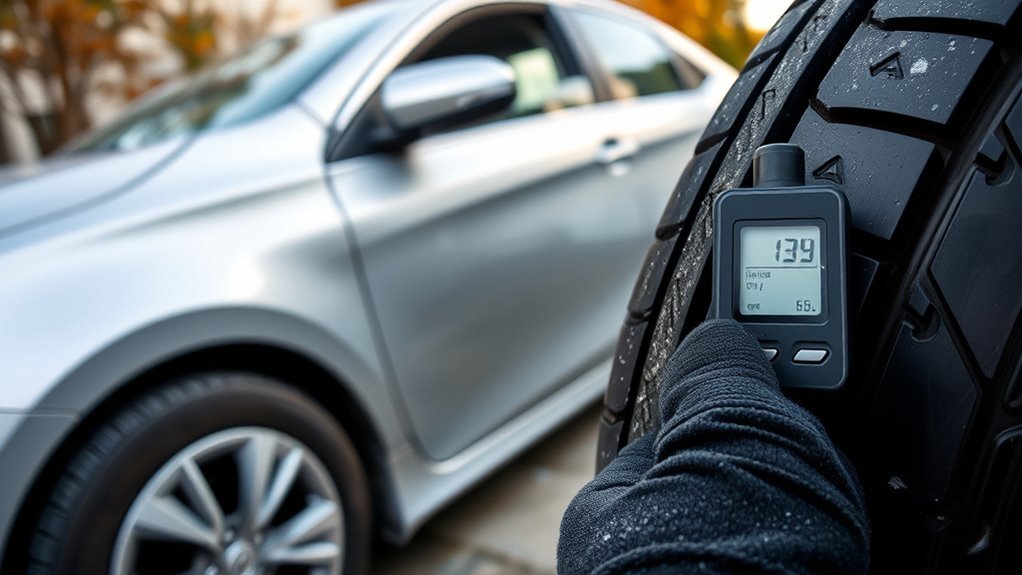
The door sticker is the fastest way to find the correct PSI for your Camry. It may list one pressure for all four tires or separate front and rear pressures. Read the sticker with the door fully open, match the PSI to your tire size, and write the number down before adding air.
Do not confuse the door sticker with the tire sidewall. The door sticker tells you the pressure Toyota selected for the vehicle. The sidewall shows information about the tire itself, including a maximum pressure rating. For normal driving, the placard wins.
Why Temperature Changes Tire Pressure
Tire pressure changes because air expands when it warms and contracts when it cools. A practical rule of thumb is that tire pressure changes about 1 PSI for every 10°F shift in outside temperature. That means a tire set correctly at 35 PSI in mild weather could read several PSI lower after a strong cold front.
Seasonal changes matter because underinflation can increase heat buildup and wear, while overinflation can reduce the tire’s contact patch and make the ride harsher. The fix is simple: recheck pressure when weather changes sharply, then return each tire to the cold PSI on the placard.
| Temperature Change | Likely Pressure Effect | What To Do |
| 30°F colder | About 3 PSI lower | Check cold and add air if below placard PSI |
| 30°F warmer | About 3 PSI higher | Check cold before releasing air |
| Long highway drive | Warm reading may be higher | Recheck after tires cool |
Check Pressure After Tires Warm Up
If you check tire pressure right after driving, the reading may be higher than the true cold pressure. Do not bleed a warm tire down to the door-placard number unless you know how to compensate for warm pressure. If you do, the tire may be underinflated once it cools.
- Park the Camry safely and let the tires cool for at least 3 hours.
- Measure each tire with a reliable gauge.
- Compare each reading with the door-jamb placard.
- Adjust only after you have a cold reading whenever possible.
If you are already on the road and a tire looks visibly low, add enough air to drive safely, then recheck and adjust when the tires are cold.
Keep Camry Tire Pressure Steady in Winter

When winter temperatures fall, your Camry’s tire pressure can drop quickly. A 40°F temperature drop may lower pressure by about 4 PSI. If your placard calls for 35 PSI, that same tire could read near 31 PSI after a strong cold snap.
Check cold pressure at least monthly, and check it more often during freezing weather or sharp temperature swings. Low pressure can hurt steering response, increase tire flex, and raise heat buildup during driving.
Note: A TPMS light that appears on a cold morning and turns off later still deserves attention. The warming tire may temporarily rise above the warning threshold, but the cold pressure may still be low.
Watch for Overinflation in Hot Weather
Hot weather can raise tire pressure because air expands as temperature rises. Warm driving conditions can also make a pressure reading higher than it will be after the tires cool. That does not mean you should automatically release air from a hot tire.
- Check pressure in the morning or after the car has rested.
- Compare each tire with the door placard.
- Release air only when a cold reading is above the recommended PSI.
- Recheck before long highway drives or heavy-load trips.
Keeping the pressure close to the placard value helps your Camry maintain stable braking, steering, and tire wear in summer heat.
[Products Worth Considering]

This portable cordless tire inflator delivers up to 160 PSI with fast 17 L/min airflow to help you quickly top up tires and get back on the road. It features dual power mode, running on a 21V rechargeable battery or a 12V DC adapter for convenient roadside use. An automatic shut-off with digital pressure gauge helps prevent overinflation, and a built-in LED light improves visibility in low-light conditions.

EVOULTES heavy duty tire inflator with an integrated gauge delivers accurate pressure readings from 10–120 PSI, helping you inflate, deflate, and check tires in one tool. The 16.5-inch extended dual-head air chuck with swivel base reaches hard-to-access dual wheel valves on trucks and RVs. A brass trigger core and side-mounted air release valve make operation smooth, with standard 1/4" NPT threading and quick-connect compatibility for easy setup.
TPMS Light and Tire Pressure
Your Camry’s Tire Pressure Monitoring System can warn you when one or more tires are significantly low, but it should not replace regular gauge checks. Toyota notes that drivers should check tire pressure regularly with a gauge and not rely solely on the monitor system.
If the TPMS light comes on, pull over when safe, inspect the tires visually, and check pressure with a gauge. Inflate low tires to the placard PSI. If the light flashes or stays on after pressure is corrected, the system may need inspection.
Risks of Low or High Tire Pressure
Both low and high tire pressure can affect safety, fuel economy, and tire life. A few PSI may not sound like much, but tires depend on correct pressure to support vehicle weight and keep the right contact patch on the road.
Low Pressure Wear
Underinflated tires flex more than they should. That extra flex creates heat, increases rolling resistance, and can wear the tire shoulders faster. FuelEconomy.gov reports that underinflated tires can lower gas mileage by about 0.2% for every 1 PSI drop in the average pressure of all tires.
High Pressure Braking
Overinflated tires can reduce the contact patch, which may reduce grip and make the ride harsher. They may also wear more quickly in the center of the tread. Keep pressure at the cold placard value so the tire keeps the shape Toyota intended.
Blowout Safety Risks
Low pressure, tire damage, overloading, and excessive heat can increase the risk of tire failure. If a tire blows out while driving, do not slam on the brakes. Hold the steering wheel firmly, ease off the accelerator, keep the vehicle stable, and pull off the road when it is safe.
Why One Tire Keeps Losing Pressure
If one Camry tire keeps dropping while the others stay steady, do not keep topping it off without checking for a cause. Common problems include:
- A nail, screw, or small puncture in the tread
- A leaking valve stem or missing valve cap
- Corrosion or damage around the wheel bead
- A cracked wheel or impact damage from a pothole
- Seasonal pressure loss made worse by an already-low tire
Have the tire inspected if it loses more than a small amount repeatedly, if the TPMS light returns after inflation, or if you see sidewall damage, bulges, cords, or uneven wear.
Before Long Trips or Heavy Loads
Check your Camry’s tire pressure before long road trips, highway driving, or carrying extra passengers and luggage. Use the placard and owner’s manual for load guidance. Also inspect tread, sidewalls, and valve caps while you are checking pressure.
If your Camry has a spare tire, check it too. Spare tires can lose air over time, and discovering a low spare after a flat tire can turn a minor delay into a bigger problem.
Get Tire Pressure Help at Toyota of Orlando
Need help keeping your Toyota Camry’s tire pressure at the right level? Toyota of Orlando can help with tire pressure checks, adjustments, tire rotation, alignment checks, tire inspection, and other Toyota service needs. The dealership lists its address as 3575 Vineland Road, Orlando, FL 32811-6435, near the Mall of Millenia.
For service-specific help, use Toyota of Orlando’s listed service number: (407) 298-0001. The dealership also lists (407) 298-4500 as a main sales/parts line and a general contact number. Confirm current hours before visiting.
Frequently Asked Questions
What is the recommended PSI for a Toyota Camry tire?
Use the PSI on your Camry’s driver-door Tire Information placard or in the owner’s manual. Many Camrys are commonly around 32–35 PSI, but the exact pressure can vary by model year, tire size, trim, and load.
Is 25 PSI too low in winter?
For most Toyota Camry placards, 25 PSI is too low. Confirm your exact placard value, then inflate the tires to that cold PSI. If one tire is at 25 PSI while the others are near spec, check for a puncture or leak.
Should I use the PSI on the tire sidewall?
No. The sidewall PSI is usually the tire’s maximum pressure rating, not the recommended pressure for your Camry. Use the vehicle placard or owner’s manual as your target.
How often should I check Toyota Camry tire pressure?
Check at least once a month, before long trips, before carrying heavy loads, and whenever temperatures change sharply. Always check when the tires are cold for the most accurate reading.
Can I rely on the TPMS light?
No. TPMS is helpful, but it is not a replacement for a tire pressure gauge. The light may not come on until a tire is significantly low, so regular manual checks are still important.
What is the weakness of the Toyota Camry?
For tire-related ownership, the main issue is not a Camry-specific weakness but routine maintenance. Incorrect tire pressure can make any Camry feel noisier, ride harsher, use more fuel, and wear tires unevenly. Keeping pressure at the placard PSI prevents many of those complaints.
Conclusion
Keeping your Toyota Camry’s tire pressure steady year-round helps you drive safer, save fuel, and protect your tires. Use the driver-door placard as the final authority, check pressure cold at least monthly, and recheck before long trips or major temperature swings. Cold weather lowers PSI, heat can raise readings, and TPMS is only a warning system, not a substitute for a gauge. When one tire keeps losing air or you see damage, get the tire inspected before it becomes a safety problem.
Sources
- Toyota Support: What tire pressure is recommended for my vehicle? — supports using the owner’s manual or Tire Information placard for the correct PSI.
- Toyota: How to Check Tire Pressure — supports cold-pressure checking, underinflation/overinflation risks, and seasonal guidance.
- NHTSA TireWise: Tire Safety Ratings and Awareness — supports cold tire pressure, placard use, TPMS information, and tire safety steps.
- FuelEconomy.gov: Keeping Your Vehicle in Shape — supports the fuel-economy impact of proper tire inflation.
- Toyota Support: How does the Tire Pressure Monitoring System work? — supports the warning not to rely solely on TPMS.
- Toyota of Orlando Contact Page — supports local service contact details and address.

Related Articles

Toyota Camry All-Season Tires Explained: What They Can and Can’t Do
In exploring Toyota Camry all-season tires, discover their benefits and limitations—are they really the right choice for your driving needs?
Read More
Toyota Camry Tire Traction in Ice and Snow: A Practical Winter Driving Guide
Learn essential tips for maximizing tire traction on ice and snow in your Toyota Camry, ensuring your winter driving is safe and confident. Discover more now!
Read More
Do Toyota Camry Tires Need Snow Chains? When They Help and When They Don’t
How do snow chains enhance your Toyota Camry's winter driving safety, and when should you avoid using them? Discover the essential details inside!
Read More