
How to Read Hyundai Sonata Tire Sidewall Numbers Step-by-Step

You can decode Hyundai Sonata tire specifications in a few minutes by checking two places: the tire sidewall and the driver-side door placard. The sidewall tells you the tire’s size, construction, load index, speed rating, DOT age code, UTQG rating, and special markings. The placard tells you what Hyundai specified for your exact Sonata, including the approved tire size and cold tire pressure.
Quick Answer
To read Sonata tire specs, start with the driver-door placard, then match it to the sidewall code. In P215/60R16, P means passenger tire, 215 is width in millimeters, 60 is aspect ratio, R is radial construction, and 16 is wheel diameter in inches.
Key Takeaways
- Use the placard or owner’s manual first because the tires currently on the car may not be the original or correct size.
- A size such as P215/60R16 tells you tire type, width, sidewall height ratio, construction, and wheel diameter.
- Match or exceed the factory load index and speed rating; do not downgrade without professional guidance.
- Check the DOT/TIN date code, tread depth, pressure, sidewall damage, and wear pattern during monthly maintenance.
At a Glance
| Time Required | 5–10 minutes |
| Difficulty | Easy |
| Tools Needed | Flashlight, tire pressure gauge, tread depth gauge or penny, owner’s manual or door placard |
| Cost | Free if you already have a gauge; usually low cost for a basic pressure or tread gauge |
Quick Decode for Sonata Tire Sidewall Numbers: P215/60R16
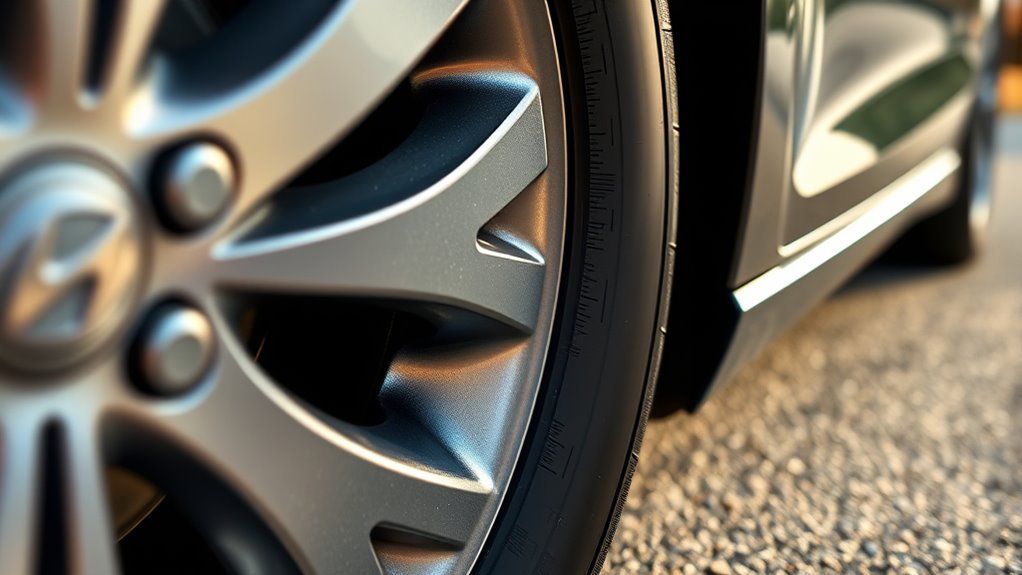
Read a tire size like P215/60R16 from left to right:
- P means the tire is intended for passenger vehicles.
- 215 is the tire’s nominal section width in millimeters.
- 60 is the aspect ratio, meaning the sidewall height is 60% of the tire width.
- R means radial construction, the common construction type for modern passenger tires.
- 16 means the tire fits a 16-inch wheel diameter.
That code is only the starting point. Many Sonata models use different wheel sizes depending on model year, trim, market, and wheel package, so always compare the sidewall to the Hyundai owner’s manual and the tire placard on your specific vehicle.
Warning: Do not assume the tire currently mounted on a used Sonata is correct. A previous owner may have changed the size, load rating, speed rating, or wheel package. Confirm the factory specification before ordering replacements.
[Products Worth Considering]

EVOULTES heavy duty tire inflator with an integrated gauge delivers accurate pressure readings from 10–120 PSI, helping you inflate, deflate, and check tires in one tool. The 16.5-inch extended dual-head air chuck with swivel base reaches hard-to-access dual wheel valves on trucks and RVs. A brass trigger core and side-mounted air release valve make operation smooth, with standard 1/4" NPT threading and quick-connect compatibility for easy setup.

The AstroAI 2 pack air chucks provide a heavy-duty, closed-flow locking design that helps keep air flowing during inflation while securely attaching to the valve stem. Built with 250 PSI rated brass components and compatible with Schrader valves, they feature 1/4" female NPT threads for a wide fit with common inflators. The straight tip and locking clip make filling tires and monitoring pressure more convenient.

The Fanttik X10 Pro is a cordless portable tire inflator that reaches up to 150 PSI and can inflate an R15 tire in about 35 seconds for quick roadside or home top-ups. With AccuInFlate auto-stop and smart start/stop controls, it helps maintain accurate pressure and frees your hands once the target is reached. A high-visibility digital display and preset modes make it easy to set and monitor inflation for cars, motorcycles, bikes, and balls.
Where to Find the Tire Code on Your Hyundai Sonata
Start with the driver-side door placard, usually on the door jamb or center pillar. This label gives the original tire size, recommended cold tire pressure, seating capacity, and vehicle capacity information for your Sonata. Then compare that label with the size molded into each tire’s sidewall.
Check all four tires, not just one. Look for differences in size, brand, load index, speed rating, tread pattern, or wear. If one tire does not match, treat it as a fitment issue until a tire professional confirms it is safe.
You can also use the owner’s manual for your Sonata’s official tire and wheel specifications. If your car has aftermarket wheels, a different trim wheel package, or a tire size that does not match the placard, ask a qualified tire technician before driving long distances or buying replacements.
Pro Tip: Take a clear photo of the door placard and one tire sidewall before shopping. That prevents mistakes with similar-looking sizes such as 215/60R16, 215/55R17, and 235/45R18.
Decode Width, Aspect Ratio, and Construction (P215/60R16)
In P215/60R16, the number 215 is the tire width in millimeters. Wider tires may change steering feel, rolling resistance, road noise, clearance, and wet-weather behavior, so do not change width unless the alternate size is approved for the vehicle.
The number 60 is the aspect ratio. It means the sidewall height is 60% of the tire’s width. A lower aspect ratio generally means a shorter sidewall, which may sharpen steering response but can reduce ride comfort and wheel-impact protection. A higher aspect ratio generally adds sidewall height, which can improve cushioning but may feel less responsive.
The letter R stands for radial construction. The final number, 16, is the wheel diameter in inches. A tire with a 16-inch rim diameter must be mounted on a 16-inch wheel; it cannot safely fit a 15-inch or 17-inch rim.
Wheel Diameter: Why It Must Match Your Rim
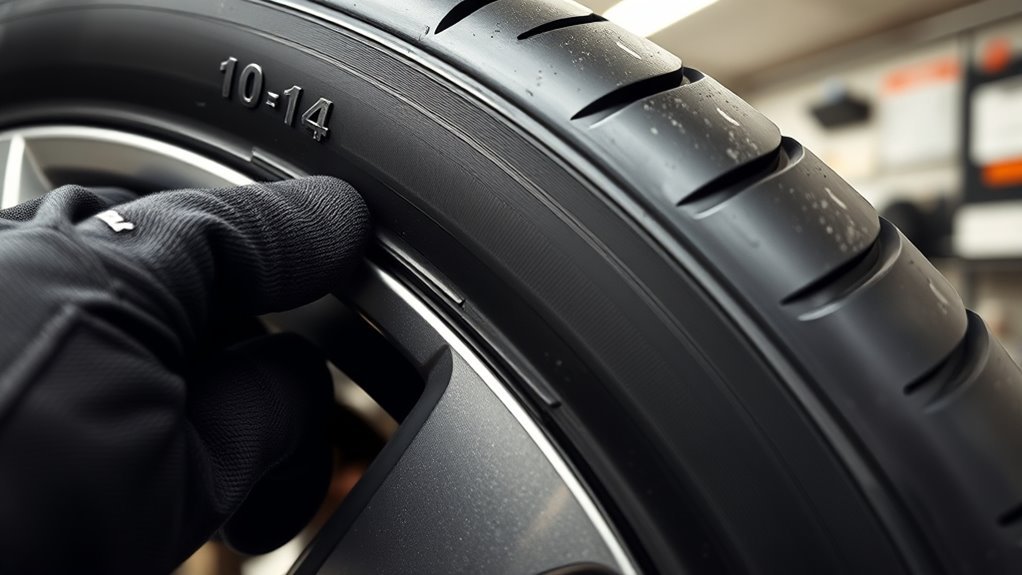
The wheel diameter is the last number in the tire size. For example, P215/65R15 fits a 15-inch wheel, while P215/60R16 fits a 16-inch wheel. The tire bead is designed for one rim diameter only.
Using the wrong wheel diameter is not a minor mismatch. It can prevent the tire from seating correctly, create air-loss risk, damage the tire or wheel, and make the vehicle unsafe. Even when the diameter matches, the full tire size still needs to be approved for the vehicle so that clearance, speedometer accuracy, braking, and handling remain within the intended range.
If you want to change from one Sonata wheel size to another, use an approved plus-size or minus-size fitment from the manufacturer or a reputable tire professional. Do not rely only on online size calculators; they cannot confirm brake clearance, suspension clearance, load rating, or wheel offset by themselves.
Match Load Index to Your Sonata’s Weight
The load index is the number after the tire size in the service description. In a code such as 215/60R16 95H, the load index is 95. It represents the maximum load one tire can carry when properly inflated, according to a standardized load-index chart.
For a Sonata, the safest rule is simple: choose replacement tires with a load index that meets or exceeds the value specified on the placard or in the owner’s manual. Do not downgrade the load index just because the tire physically fits the wheel.
How to Check the Load Index
- Find the full service description after the tire size, such as 95H or 94V.
- Read the number as the load index.
- Compare it with the vehicle placard, owner’s manual, or tire retailer fitment data for your exact year and trim.
- Choose a tire with the same or higher load index unless a qualified technician confirms an approved alternative.
Do not simply multiply one tire’s maximum load by four and assume the car is safe. Vehicle load capacity also depends on axle ratings, cargo distribution, inflation pressure, wheel rating, and manufacturer limits.
Check Vehicle Rating Before Buying
The door placard and certification label are the best places to confirm vehicle capacity, tire size, and cold tire pressure. If you carry heavy passengers, luggage, tools, or rideshare cargo, stay within the vehicle’s capacity weight and the Gross Axle Weight Ratings. Overloading can increase heat buildup, tire failure risk, stopping distance, and poor handling.
Speed Ratings: Choose the Right Performance Level
The speed rating is the letter after the load index. In 215/60R16 95H, the speed rating is H. It indicates the maximum speed capability of the tire under specified test conditions, not a recommendation to drive at that speed.
Choose a replacement tire with a speed rating that meets or exceeds the factory specification. A higher speed rating may come with different construction or handling characteristics, but it does not automatically mean better braking, longer tread life, better comfort, or better wet traction. Compare the full tire category, ratings, test results, warranty, and fitment—not the speed letter alone.
| Rating | Maximum Speed | Common Use |
|---|---|---|
| S | 112 mph | Some standard passenger tires |
| T | 118 mph | Touring and economy tires |
| H | 130 mph | Many sedan all-season tires |
| V | 149 mph | Performance-oriented tires |
[Products Worth Considering]

This portable cordless tire inflator delivers up to 160 PSI with fast 17 L/min airflow to help you quickly top up tires and get back on the road. It features dual power mode, running on a 21V rechargeable battery or a 12V DC adapter for convenient roadside use. An automatic shut-off with digital pressure gauge helps prevent overinflation, and a built-in LED light improves visibility in low-light conditions.

The JACO FlowPro Tire Inflator measures, inflates, and airs down tires up to 100 PSI with battery-free operation and ±2% accuracy after calibration. It features a glowing pressure dial for night visibility, a heavy-duty steel build with a hybrid hose, and a precision push-to-inflate thumb trigger. The patented Lightning Air Chuck locks on for a secure seal, and the kit includes quick-connect hardware for easy inline use with your air compressor.
Find and Decode the DOT Code to Determine Tire Age
The DOT code, also called the Tire Identification Number or TIN, is molded into the sidewall and usually begins with DOT. The final four digits show the tire’s manufacture week and year. For example, 3323 means the tire was made in the 33rd week of 2023.
Locate the DOT
Inspect both sidewalls because the complete DOT/TIN may appear on only one side of the tire. Clean the rubber if the code is hard to read, and use a flashlight for older or dirty tires. Record the full code before buying used tires or checking recall information.
Read Week and Year
Use the final four digits:
- First two digits: production week, from 01 to 52 or 53.
- Last two digits: production year.
- Example: 3323 = 33rd week of 2023.
Track tire age from the manufacture date, not the purchase date. A tire can be “new” to you but already several years old if it sat in storage or came on a used vehicle.
Interpret Age and Safety
Tire age guidance depends on the vehicle maker and tire manufacturer. Many tire and vehicle manufacturers recommend extra caution once tires reach the five- to six-year range, and some recommend replacement by 10 years regardless of tread depth. Heat, sunlight, storage, underinflation, overloading, and low annual mileage can all speed up aging.
Replace a tire immediately if you see cracking, bulges, exposed cords, puncture damage that cannot be repaired properly, severe uneven wear, or vibration that begins suddenly. When in doubt, have the tire inspected by a trained tire professional.
Decode UTQG and Special Markings (Run-Flat, M+S, XL)
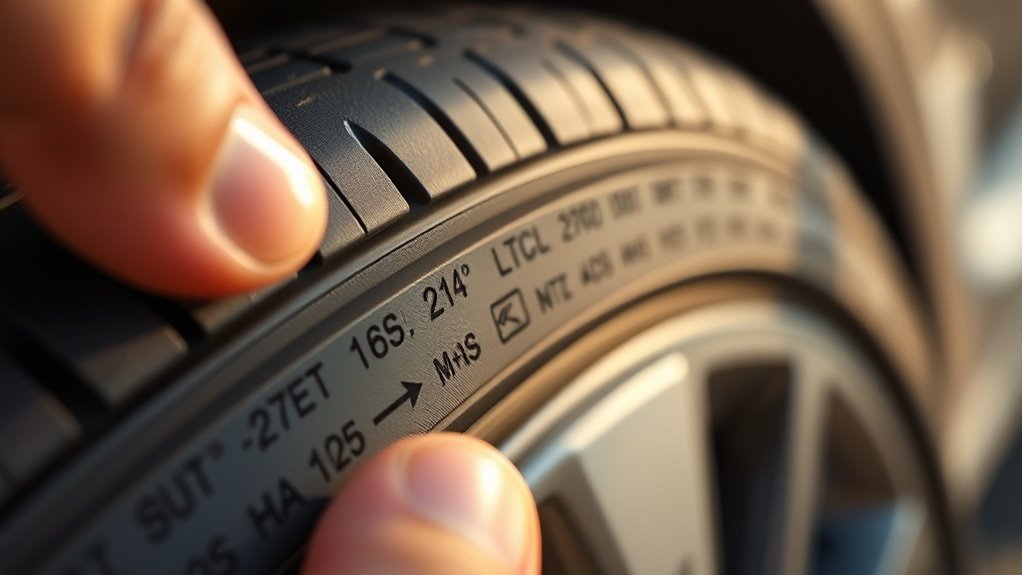
The UTQG rating appears as three values for treadwear, traction, and temperature. For example, a tire might show Treadwear 600 Traction A Temperature A. These grades help you compare tires, but they are not a guarantee of exact mileage or real-world stopping distance.
- Treadwear: a comparative wear rating, useful mainly when comparing tires from the same manufacturer or category.
- Traction: a wet-stopping traction grade such as AA, A, B, or C.
- Temperature: a heat-resistance grade such as A, B, or C.
You may also see special markings:
- XL, Reinforced, or HL: higher load-capacity construction for that tire size. Replace with an equivalent specification if your Sonata requires it.
- Run-Flat: designed to travel for a limited distance after pressure loss, but it requires compatible wheels, TPMS, and manufacturer-approved use.
- M+S: mud-and-snow marking based on manufacturer criteria. It is not the same as a dedicated winter tire.
- 3PMSF: Three-Peak Mountain Snowflake marking, which indicates the tire met a standardized severe-snow performance test.
Note: If your Sonata is driven in serious winter conditions, look for the 3PMSF symbol rather than relying on M+S alone.
Monthly Checks: Pressure, Rotation, Inspection, and When to Replace
Understanding the tire code helps you buy the right tire, but monthly maintenance keeps it safe. Check tire pressure, tread depth, sidewall condition, and wear pattern at least once a month and before long trips.
Warning: Use the cold PSI on the Sonata’s door placard or owner’s manual. Do not use the maximum pressure molded on the tire sidewall as your normal operating pressure.
- Check pressure cold. Measure pressure before driving or after the car has been parked for at least three hours. Adjust to the placard value.
- Measure tread depth. Replace tires at 2/32 inch at the latest. Plan earlier replacement for wet or winter driving if traction is declining.
- Inspect for damage. Look for cuts, cracks, bulges, exposed cords, nails, sidewall bubbles, or uneven wear.
- Rotate when recommended. Follow the Sonata owner’s manual. If the manufacturer recommends rotation, a common interval is about 5,000–8,000 miles or sooner if uneven wear appears.
- Do not rely only on TPMS. TPMS warns when pressure is significantly low; it does not replace a monthly gauge check.
Your tire placard is the source of truth for size and cold PSI; the sidewall tells you what the tire is, not necessarily what your Sonata requires.
Frequently Asked Questions
How do you read Hyundai Sonata tire sidewall numbers?
Read the size code from left to right. In P215/60R16, P means passenger tire, 215 is width in millimeters, 60 is the aspect ratio, R is radial construction, and 16 is the wheel diameter in inches. Then check the service description, such as 95H, for load index and speed rating.
What does 215 mean on a tire?
The number 215 means the tire’s nominal section width is 215 millimeters. It is not the tread depth, wheel diameter, or pressure. Use the width only as part of the full tire size, because 215/60R16 and 215/55R17 are different fitments.
Where is the correct tire size on a Hyundai Sonata?
The correct factory tire size is on the driver-side tire placard and in the owner’s manual. The sidewall shows the size currently mounted, which may or may not be the original size if the vehicle has used replacement tires or aftermarket wheels.
Can I use a different tire size on my Sonata?
Only use a different size if it is approved for your exact model year, trim, wheel size, and load requirements. A tire that physically fits may still cause clearance, speedometer, load, braking, or handling problems.
Should I inflate my Sonata tires to the PSI printed on the tire?
No. The tire sidewall usually shows a maximum pressure, not the recommended operating pressure for your Sonata. Use the cold PSI on the driver-door placard or in the owner’s manual.
How old is too old for Sonata tires?
Use the final four digits of the DOT/TIN code to find the manufacture week and year. Have older tires inspected by a professional, especially around the five- to six-year range, and follow the tire or vehicle manufacturer’s maximum-age guidance. Many manufacturers recommend replacement by 10 years regardless of tread depth.
Conclusion
Reading Sonata tire specs is mostly about matching the sidewall to the vehicle placard. Decode the size, load index, speed rating, DOT/TIN date, UTQG grades, and special markings, but let the placard and owner’s manual guide the final decision. Keep pressures at the recommended cold PSI, inspect tires monthly, replace worn or damaged tires promptly, and ask a tire professional before using any size or rating that differs from factory guidance.
Sources
- NHTSA TireWise — tire pressure, tread depth, rotation, tire size, TPMS, and tire-aging guidance.
- Hyundai Owner’s Manual — official Hyundai owner-manual access for model-specific tire and vehicle information.
- Tire Industry Association: Reading a Tire Sidewall — sidewall code, load index, speed symbol, DOT/TIN, and UTQG explanation.
- 49 CFR § 575.104 Uniform Tire Quality Grading Standards — federal UTQG treadwear, traction, and temperature grading framework.
- Michelin: Tire Markings Explained — tire size, load, speed, sidewall pressure, DOT date, M+S, and 3PMSF markings.
- Michelin: When to Replace Tires — tire-age inspection and 10-year replacement guidance.

Related Articles

Danger of Using Summer Tires in Winter on a Hyundai Sonata
Potentially perilous, using summer tires in winter on your Hyundai Sonata can compromise safety—discover the hidden dangers that await you on icy roads.
Read More
Can You Mix Nitrogen and Air in Hyundai Sonata Tires? Answered
Discover the implications of mixing nitrogen and air in your Hyundai Sonata tires—are the benefits worth the risks? Explore the answer inside!
Read More
How to Tell If Hyundai Sonata Tires Are Too Old to Use Safely
Understand how to assess the age of your Hyundai Sonata tires and discover crucial signs of deterioration that could compromise your safety on the road.
Read More