
Tire Aspect Ratio 65 vs. 60 Comparison for RAV4: Ride Quality Impact
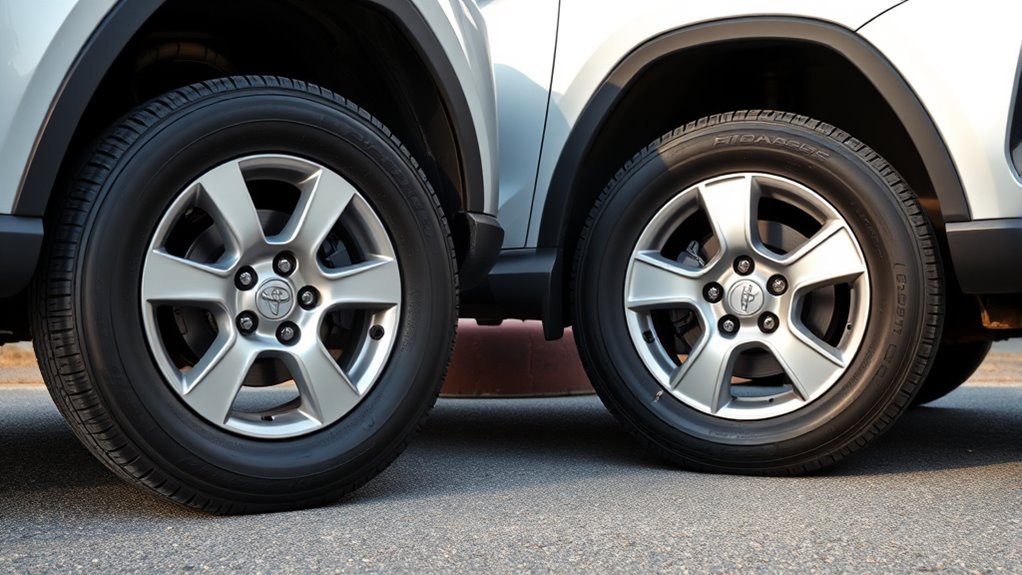
Choosing between a 65 and 60 aspect ratio for your Toyota RAV4 affects more than the way the tire looks. It changes sidewall height, ride feel, steering response, overall tire diameter, ground clearance, and speedometer accuracy. The safest answer is simple: start with the tire size printed on your driver-door tire placard, then compare alternatives only if the full size, load rating, speed rating, and clearance are correct.
Quick Answer
For most RAV4 owners, the better tire is the size Toyota lists on the driver-door placard, not simply the one with a 65 or 60 aspect ratio. A 65-series tire usually rides softer because it has more sidewall. A 60-series tire may feel sharper, but if the overall diameter is wrong, it can affect speedometer accuracy, clearance, and AWD driveline stress.
Key Takeaways
- A 65 aspect ratio has a taller sidewall than a 60 aspect ratio when the tire width and wheel size are the same.
- A 225/65R17 is about 0.89 inches taller overall than a 225/60R17, creating about a 3.2% speedometer difference.
- Do not mix 60-series and 65-series tires on the same RAV4, especially on AWD models.
- Fuel economy depends on the exact tire model, tread, inflation pressure, weight, and rolling resistance—not aspect ratio alone.
- Before buying, confirm the size, load index, speed rating, and pressure on the door placard or owner information.
At a Glance
| Time Required | 5–10 minutes to check the placard, compare sizes, and confirm ratings |
| Difficulty | Easy for checking; professional advice recommended before changing to a non-OE size |
| Tools Needed | Door placard, owner information, tire-size calculator, tire-pressure gauge |
| Cost | Free to verify; tire cost depends on size, brand, load rating, and installation |
What Tire Aspect Ratio Means on a RAV4
The aspect ratio is the sidewall height as a percentage of the tire width. In a size like 225/65R17, the tire is 225 mm wide, and the sidewall height is 65% of that width. In a 225/60R17, the width and wheel diameter are the same, but the sidewall is only 60% of 225 mm.
That means the 65-series tire has more rubber between the wheel and the road. The 60-series tire has a shorter sidewall, which can reduce sidewall flex and make steering feel quicker, depending on the tire model.
Note: Aspect ratio alone does not tell you whether a tire fits. You must compare the complete tire size, including width, wheel diameter, load index, speed rating, and overall diameter.
[Products Worth Considering]

This portable cordless tire inflator delivers up to 160 PSI with fast 17 L/min airflow to help you quickly top up tires and get back on the road. It features dual power mode, running on a 21V rechargeable battery or a 12V DC adapter for convenient roadside use. An automatic shut-off with digital pressure gauge helps prevent overinflation, and a built-in LED light improves visibility in low-light conditions.

EVOULTES heavy duty tire inflator with an integrated gauge delivers accurate pressure readings from 10–120 PSI, helping you inflate, deflate, and check tires in one tool. The 16.5-inch extended dual-head air chuck with swivel base reaches hard-to-access dual wheel valves on trucks and RVs. A brass trigger core and side-mounted air release valve make operation smooth, with standard 1/4" NPT threading and quick-connect compatibility for easy setup.

The JACO FlowPro Tire Inflator measures, inflates, and airs down tires up to 100 PSI with battery-free operation and ±2% accuracy after calibration. It features a glowing pressure dial for night visibility, a heavy-duty steel build with a hybrid hose, and a precision push-to-inflate thumb trigger. The patented Lightning Air Chuck locks on for a secure seal, and the kit includes quick-connect hardware for easy inline use with your air compressor.
225/65R17 vs 225/60R17 Size Comparison
If the comparison is specifically 225/65R17 versus 225/60R17, the difference is measurable. The 225/65R17 has a taller sidewall and a larger overall diameter. You can verify tire dimensions with a comparison tool such as TireSize.com’s tire size comparison calculator.
| Measurement | 225/65R17 | 225/60R17 | Difference |
| Sidewall height | About 146 mm | About 135 mm | About 11 mm more sidewall with 65 |
| Overall diameter | About 28.52 in. | About 27.63 in. | About 0.89 in. taller with 65 |
| Speedometer effect | Larger diameter | Smaller diameter | About 3.2% difference |
| Ride height effect | Raises vehicle slightly versus 60 | Lowers vehicle slightly versus 65 | About 0.45 in. ride-height change |
If your speedometer is calibrated for 225/60R17 and you install 225/65R17, your actual speed will be slightly higher than the indicated speed. If your RAV4 is calibrated for 225/65R17 and you install 225/60R17, the speedometer will read slightly faster than you are actually traveling.
A 225/65R17 and 225/60R17 are not just “comfort versus handling” choices. They are different-diameter tires, so the swap can affect speed readings, ground clearance, and AWD behavior.
Common Issues With Tire Size Discrepancies in RAV4
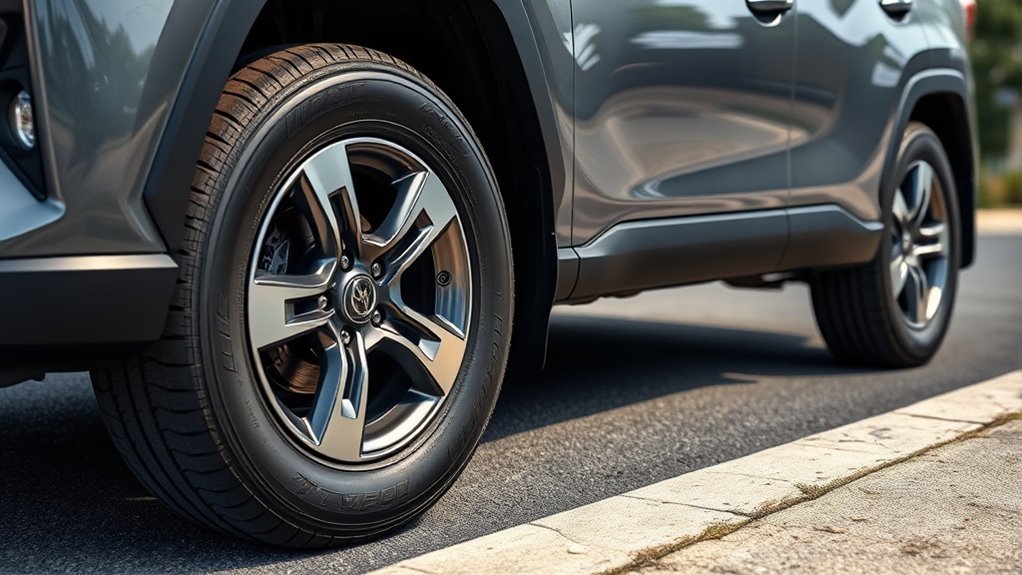
When you choose tires for your RAV4, mismatched sizes can create more than an appearance issue. Different outside diameters rotate at different speeds. On an AWD RAV4, that mismatch can force the driveline, traction-control system, and tires to fight each other.
Warning: Do not run one 225/65R17 tire with three 225/60R17 tires, or mix 60-series and 65-series tires across axles, unless Toyota specifically approves that setup for your exact vehicle. For AWD and 4WD vehicles, tire-industry guidance warns that even small outside-diameter differences can contribute to drivetrain damage or mechanical malfunction.
The most common problems from mismatched tire sizes include vibration, uneven tire wear, traction-control intervention, unstable handling, and unnecessary driveline strain. If your RAV4 has AWD, matching all four tires by size, type, and similar tread depth is especially important.
The safest first step is to check your Toyota owner information and the Tire and Loading Information Label on the driver-side door edge or door post. NHTSA also advises using the owner’s manual or tire placard to find the correct tire size before buying replacements: NHTSA TireWise tire safety guidance.
How Do 60 and 65 Aspect Ratios Affect Ride Comfort and Handling?
When the tire width, wheel diameter, and tire construction are otherwise similar, a 65 aspect ratio usually gives a softer ride because it has a taller sidewall. A 60 aspect ratio usually gives a firmer, quicker feel because the shorter sidewall flexes less.
Comfort Level Comparison
A 65 aspect ratio tire has more sidewall to absorb road imperfections. On a RAV4 used for commuting, rough pavement, gravel roads, or long trips, that extra sidewall can make the cabin feel calmer and reduce harsh impacts.
A 60 aspect ratio tire has less sidewall cushion. That can make expansion joints, potholes, and broken pavement feel sharper. Some drivers like the tighter feel, but it is not always better for daily comfort.
Handling Characteristics Overview
A shorter sidewall can improve steering response because the tire has less sidewall flex during cornering. That is why lower-profile tires often feel more direct. However, the actual handling difference also depends on the tire’s tread design, internal construction, compound, inflation pressure, and vehicle alignment.
- 65 aspect ratio: usually better bump absorption and comfort.
- 60 aspect ratio: usually sharper steering feel, but a firmer ride.
- Best choice: the size Toyota specifies for your exact RAV4, unless a qualified tire professional confirms a safe alternate size.
Pro Tip: If you want sharper handling without changing tire diameter, compare tire models in your OEM size first. A better tire in the correct size is often safer than switching to a non-OE size for feel alone.
Fuel Efficiency: Which Aspect Ratio Wins?
There is no automatic fuel-economy winner between 60 and 65 aspect ratios. A lower-profile 60-series tire may feel more responsive, but fuel efficiency depends on the tire’s rolling resistance, weight, tread pattern, air pressure, and overall diameter.
A larger tire can change effective gearing and speedometer readings. A heavier or more aggressive tire can reduce efficiency. An underinflated tire can also hurt fuel economy and safety. NHTSA notes that tire maintenance, including proper inflation, affects vehicle performance, safety, and fuel consumption: NHTSA tire safety brochure.
For a RAV4 owner, the practical answer is this: choose a tire in the correct size with a good rolling-resistance profile, keep it inflated to the cold pressure on the placard, rotate it on schedule, and maintain alignment.
Tire Discrepancies: Effects on RAV4 Vehicle Dynamics
Tire discrepancies affect how your RAV4 accelerates, brakes, steers, and distributes power. The larger the diameter mismatch, the more likely you are to notice changes.
Potential Drivetrain Issues
On AWD models, the system expects the tires to rotate at compatible speeds. If one tire is shorter or taller than the others, the vehicle may interpret that difference as wheel slip. Over time, that mismatch can increase strain on AWD components.
The U.S. Tire Manufacturers Association advises that replacement tires should match the OE size or approved options and recommends all four tires be the same size, speed rating, and construction unless the vehicle manufacturer specifies otherwise: USTMA Tire Care and Safety Guide.
Ride Comfort Differences
A taller 65-series tire can make a RAV4 feel more forgiving over potholes, gravel, and broken pavement. A shorter 60-series tire may make the vehicle feel firmer. That firmness can be useful for steering feel, but it may also increase impact harshness.
Handling and Stability Effects
Handling is not just about aspect ratio. The tread pattern, rubber compound, tire age, load index, pressure, and alignment all matter. A high-quality 65-series tire in the correct RAV4 size can handle better than a poor-quality 60-series tire in the wrong size.
Before changing sizes, check for fender clearance, suspension clearance, brake clearance, tire-chain compatibility, and whether the new tire’s load index and speed rating meet or exceed the original specification.
What Choosing the Right Tire Size Means for Your RAV4
Choosing the right tire size means matching the tire to the way Toyota designed your RAV4 to operate. The right size helps preserve predictable braking, steering, traction-control behavior, AWD operation, and speedometer accuracy.
Do not rely only on a forum post or a generic fitment list. RAV4 tire sizes vary by year, trim, wheel size, and market. The final authority is your vehicle’s tire placard and owner information. Toyota provides owner tire-information resources for checking tire symbols and tire-related specifications: Toyota RAV4 tire information.
When comparing a 65 and 60 aspect ratio, ask these questions before buying:
- Is the complete size listed on my RAV4 placard? If not, treat it as an alternate fitment, not a direct replacement.
- Does the tire fit my wheel diameter? A 17-inch tire only fits a 17-inch wheel; an 18-inch tire only fits an 18-inch wheel.
- Is the load index high enough? Never choose a tire with less load-carrying capacity than the OE requirement.
- Is the speed rating appropriate? Match or exceed the specified rating unless a tire professional confirms an acceptable seasonal exception.
- Will all four tires match? On AWD, matching size and similar tread depth matter.
- Will it rub? Larger tires may contact fenders, liners, mud flaps, or suspension parts.
[Products Worth Considering]
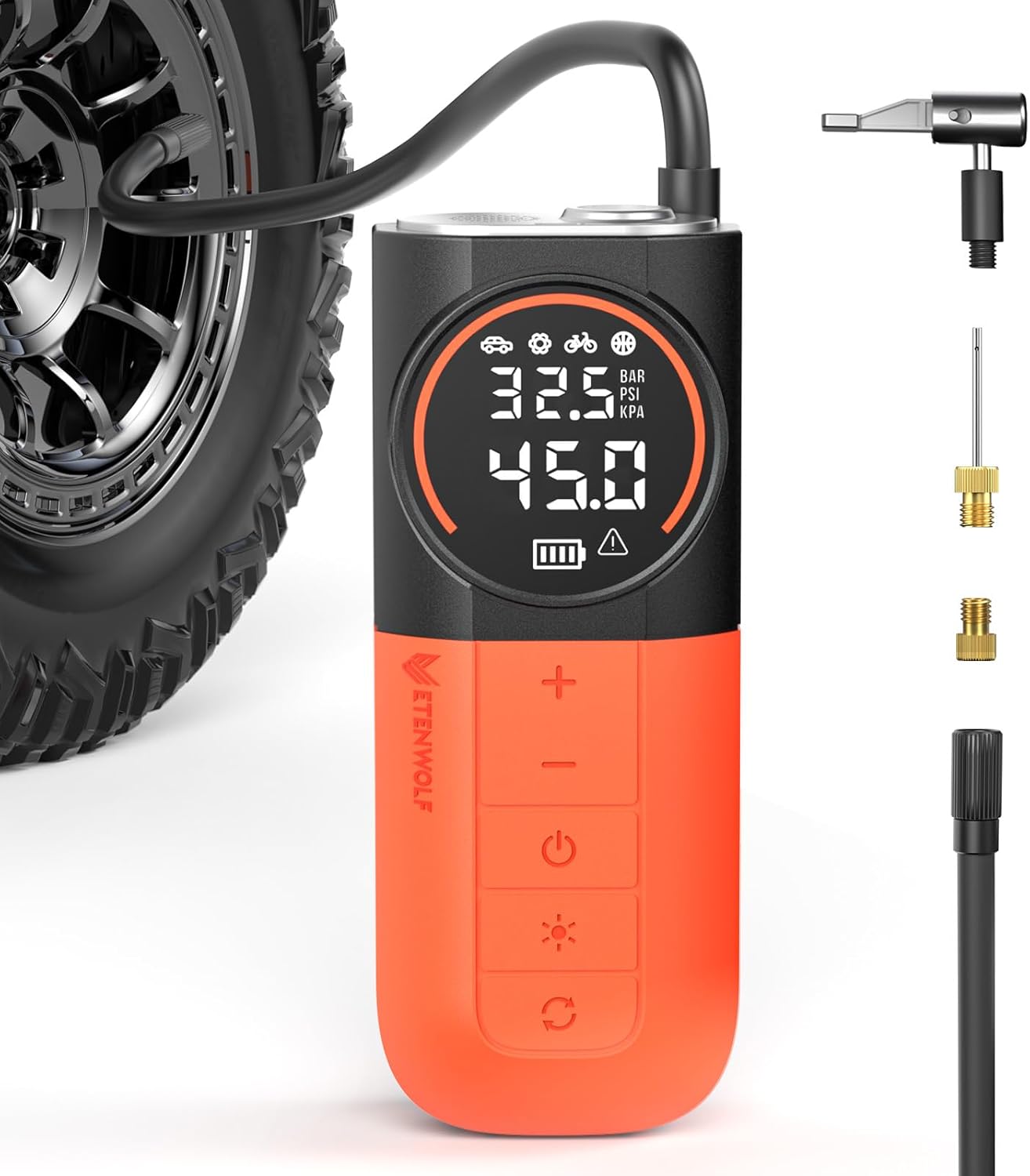
The ETENWOLF S1 cordless tire inflator delivers ultra-fast inflation with up to 160 PSI and a 20 L/min airflow for quicker tire top-offs. Its 5200mAh battery and cooling system support inflating many tires and sports balls on a single charge, while the digital pressure gauge and multi-unit display help you reach the right pressure accurately. With preset modes, pressure memory, an auto-stop feature, and an LED flashlight, it’s built for easy roadside and everyday use.

The AstroAI L7 Air Tire Inflator refills car tires quickly with up to 150PSI max pressure and a fast 1-minute inflation claim. It includes 5 preset modes for car, motorcycle, bicycle, balls, and manual use, along with an auto shutoff to help prevent overinflation. Designed for convenience, it features a digital gauge with unit switching, a top LED light with multiple modes, and USB-C/USB ports for backup power.
Safety Considerations When Choosing Tire Sizes for Your RAV4
Selecting the right tire size is a safety decision. Tires are the only part of your RAV4 that touches the road, so the wrong size or rating can affect braking, cornering, load capacity, and stability systems.
- Check the placard first: Use the Tire and Loading Information Label on the driver-side door edge or post.
- Replace in matched sets when possible: This is especially important for AWD models.
- Use the correct cold pressure: Set pressure when the tires are cold, using the placard value.
- Avoid smaller load capacity: Do not choose a tire with a lower load index than required.
- Watch tread depth: Large tread-depth differences can behave like size differences because worn tires are smaller in diameter.
Note: If you are buying winter tires, keep them the same size and construction type across the vehicle unless Toyota specifies a different approved setup. Do not mix winter tires with all-season tires on the same RAV4 for normal driving.
Essential Tire Selection Factors for RAV4 Owners
Aspect ratio is only one part of tire selection. RAV4 owners should also compare tire type, tread pattern, wet traction, snow capability, load rating, speed rating, noise, warranty, and expected road conditions.
If you drive mostly highways and city roads, a touring all-season tire in the correct size may be the best balance of comfort, quietness, and fuel economy. If you drive in snow, a dedicated winter tire in the correct size can be safer than trying to solve winter traction with a size change. If you drive gravel roads, look for a tire designed for light all-terrain use while staying within the correct fitment range.
A 225/65R17 can provide more sidewall cushion than a 225/60R17, but that does not automatically make it correct for every RAV4. A 225/60R17 may feel firmer and sharper, but it is smaller in overall diameter than a 225/65R17. If your vehicle was designed around the larger size, switching to the smaller one can reduce ground clearance and alter speedometer readings.
How to Monitor Your RAV4’s Performance After Tire Changes
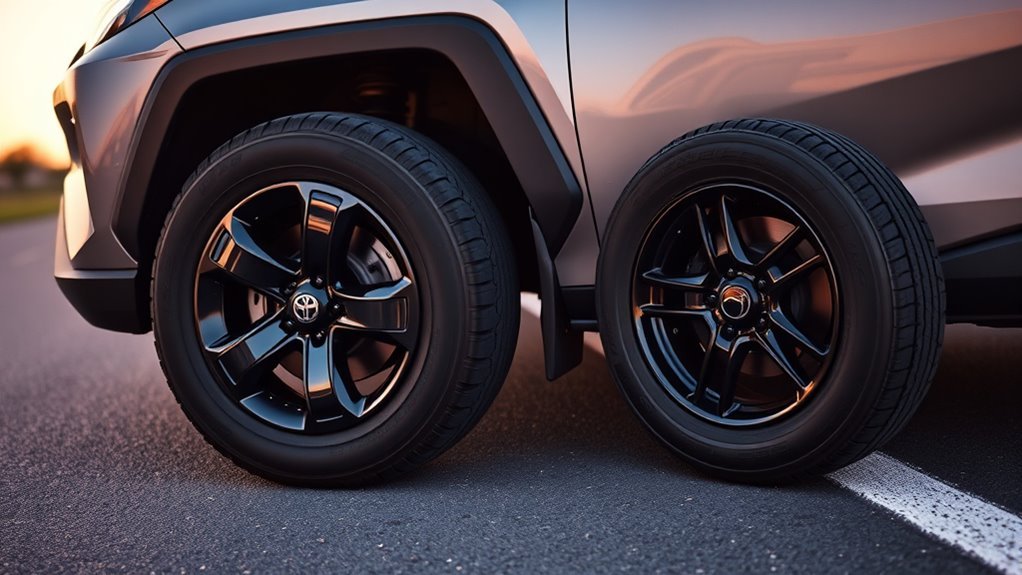
After installing new tires, pay attention to how your RAV4 behaves during the first few drives. A correct tire change should feel smooth, stable, and predictable.
- Listen for new noise: Humming, thumping, or vibration may point to balance, alignment, or fitment issues.
- Check steering feel: Pulling, wandering, or an off-center steering wheel can suggest alignment problems.
- Watch for rubbing: Turn the wheel fully left and right and listen for contact with liners or mud flaps.
- Verify pressure cold: Recheck all four tires with a gauge after the vehicle has been parked long enough for the tires to cool.
- Monitor tread wear: Uneven wear can indicate alignment, pressure, suspension, or rotation issues.
- Watch the speedometer: If you changed overall diameter, understand that indicated speed and actual speed may not match exactly.
If you notice vibration, rubbing, warning lights, or unstable handling after a size change, have the tires inspected by a qualified tire shop before continuing long-distance driving.
Frequently Asked Questions
Does tire aspect ratio affect ride?
Yes. A higher aspect ratio usually gives a softer ride because the tire has a taller sidewall to absorb bumps. A lower aspect ratio usually feels firmer and may improve steering response, but tire construction, pressure, and tread design also matter.
Which tires are best for a RAV4?
The best tires are the correct size and rating for your specific RAV4, matched to your climate and driving. Daily drivers often do well with quality touring all-season tires. Snowy areas benefit from dedicated winter tires. Gravel and light trail use may call for light all-terrain tires, but the size and load rating still need to match your vehicle requirements.
Can I replace 225/65R17 with 225/60R17 on a RAV4?
Do not make that swap unless the size is approved for your exact RAV4 and a tire professional confirms the fitment. A 225/60R17 is about 3.2% smaller in diameter than a 225/65R17, which can affect speedometer readings, ground clearance, and AWD operation.
Is a 65 aspect ratio better than a 60 for comfort?
Usually, yes, when width and wheel size are the same. A 65-series tire has more sidewall, so it can absorb impacts better. But the correct tire size for your RAV4 is still more important than choosing a taller sidewall just for comfort.
Can mismatched tire sizes damage an AWD RAV4?
Yes, mismatched outside diameters can create different wheel speeds and may strain AWD components. Use four matching tires in the correct size, type, and similar tread depth unless Toyota specifies another approved setup.
Conclusion
Choosing between a 65 and 60 aspect ratio for your RAV4 should start with fitment and safety, not appearance. A 65-series tire generally gives more sidewall comfort, while a 60-series tire can feel sharper. But if the full tire size changes overall diameter too much, it can affect speedometer accuracy, ride height, clearance, and AWD operation.
For most owners, the best choice is the tire size listed on the driver-door placard, with the correct load index, speed rating, and cold inflation pressure. If you want to change sizes, have a qualified tire professional confirm the fitment before buying.
Sources
- NHTSA TireWise — tire buying, maintenance, labeling, fuel efficiency, and tire-size safety guidance
- NHTSA Tire Safety Brochure — tire pressure, tire size, tread, rotation, and safety checklist guidance
- U.S. Tire Manufacturers Association Tire Care and Safety Guide — replacement tire, tire mixing, AWD/4WD, and load-rating guidance
- Toyota RAV4 Tire Information — Toyota owner tire information and tire-symbol reference
- TireSize.com Tire Size Comparison Calculator — tire diameter, circumference, sidewall, and speedometer comparison support

Related Articles

Toyota RAV4 TPMS Reset: Easy Steps That Work
Unlock the secrets to resetting your Toyota RAV4's TPMS effortlessly—discover the essential steps to ensure your tires are always safe.
Read More
Toyota RAV4 Tire Rotation: DIY Steps & Pattern
Take control of your Toyota RAV4's tire maintenance with our simple DIY rotation guide—discover the best steps for optimal performance and longevity!
Read More
Mix Tire Brands on a Toyota RAV4? Expert Guide
Keeping your RAV4 safe? Learn when mixing tire brands risks traction, ABS/TCS and AWD damage — and what exact matches you must insist on.
Read More