
Difference Between All-Season and Winter Tires for RAV4
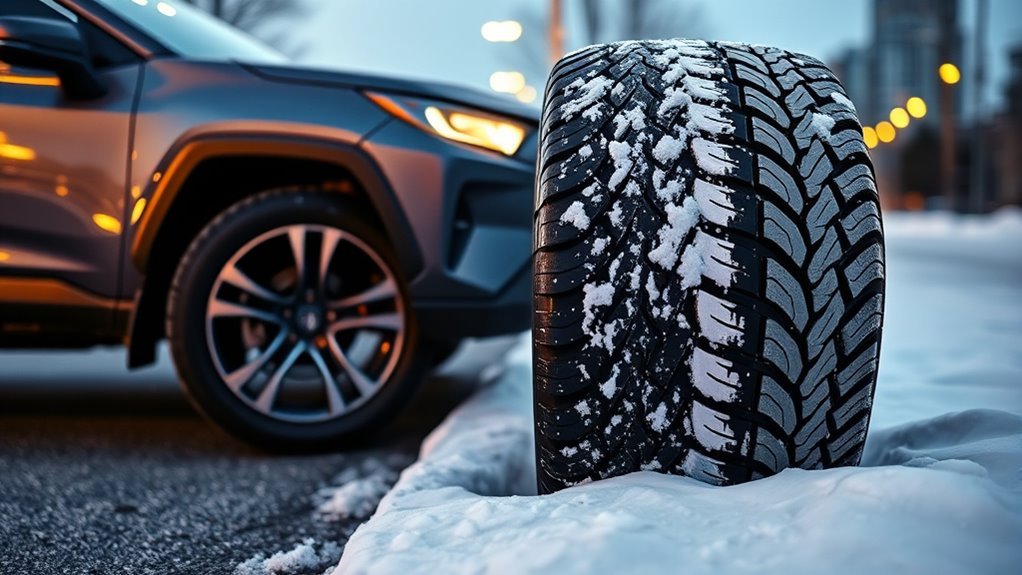
Choosing between all-season tires and winter tires for your Toyota RAV4 comes down to one simple question: how often do you drive in cold, snowy, slushy, or icy conditions? All-season tires are convenient for mild weather, but winter tires give a RAV4 much better cold-weather traction when roads become slick. The best choice depends on your climate, commute, tire size, and how much winter driving you actually do.
Quick Answer
For a RAV4, all-season tires are fine for mild winters, rain, and occasional light snow. Choose dedicated winter tires if temperatures often stay below 7°C/45°F or you regularly drive on snow, slush, or ice. If you want one year-round set for moderate winters, consider all-weather tires with the Three-Peak Mountain Snowflake symbol.
Key Takeaways
- All-season tires work best for dry roads, rain, and mild winter conditions.
- Winter tires are the safer choice when your RAV4 regularly sees snow, packed snow, slush, ice, or temperatures below 7°C/45°F.
- AWD does not replace winter tires. It can help your RAV4 move from a stop, but braking and cornering still depend on tire grip.
- All-weather tires can be a good compromise if they carry the Three-Peak Mountain Snowflake symbol and your winters are moderate.
- Before buying, match the tire size, load index, speed rating, and type recommended on your RAV4’s door placard and owner’s manual.
Understanding All-Season Tires for Your RAV4
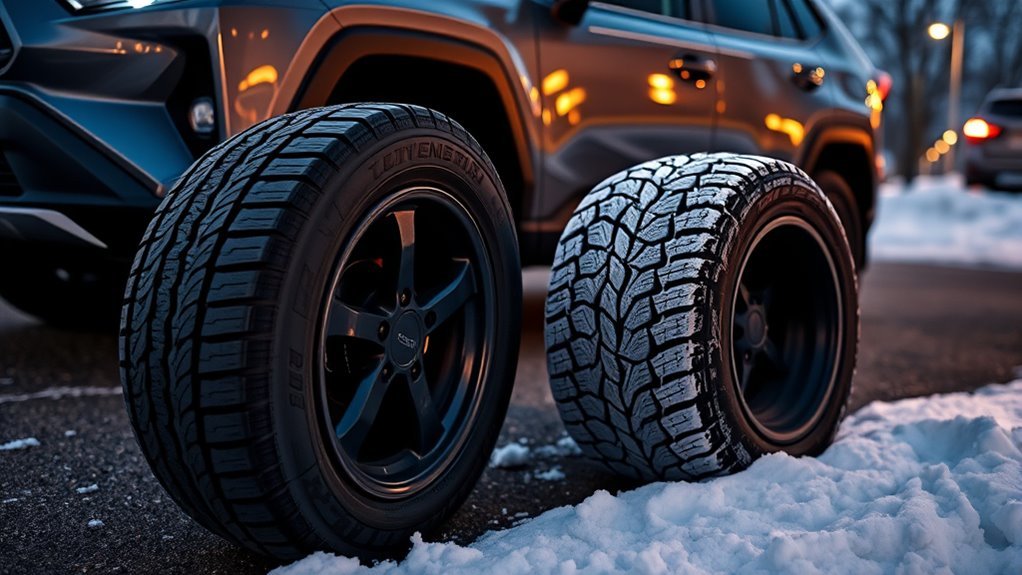
All-season tires are designed to handle a wide range of everyday driving conditions: dry pavement, rain, warm weather, cool weather, and occasional light snow. For many RAV4 owners in cities with mild winters, they are the easiest and most affordable setup because you can use one tire set all year.
Their main strength is balance. A good all-season tire usually offers a quiet ride, predictable handling, long tread life, and solid wet-road performance. That makes it a practical match for commuters, highway drivers, and families who rarely drive through heavy snow.
The tradeoff is winter grip. At temperatures below about 7°C/45°F, many all-season tire compounds begin to stiffen. That reduces the tire’s ability to conform to cold pavement, snow, and ice. An all-season tire may still get you through a light dusting, but it is not built for repeated braking, cornering, and climbing on frozen roads.
Note: “All-season” does not mean “best in every season.” It means the tire is built as a compromise for several conditions, not as a specialist for severe winter weather.
[Products Worth Considering]

Milton S-921 pencil tire pressure gauge helps you maintain optimal tire pressure for passenger cars with accurate readings in PSI and kPa. It features a built-in deflator valve for convenient pressure adjustments, plus a single chuck head and nylon indicator bar for easy use on the go. Built from durable plated brass and designed for reliable performance, it’s a practical road trip and cold-weather maintenance tool.

Measure tire tread depth quickly and accurately with this LUMITECO dial gauge that reads in 1/32" increments up to 14/32". The color-coded green/yellow/red zones make it easy to judge tire wear and know when replacement is needed. A rugged, compact design with a protective pouch helps keep the gauge ready for use on cars, trucks, motorcycles, and more.

Monitor tire tread wear with a smart, color-coded depth gauge that shows clear condition ranges at a glance. The bar is range marked for fast, easy readings, helping you maintain safer traction and performance. Each gauge is portable with a pocket clip, and the set includes 20 units for daily use and sharing.
Understanding Winter Tires for Your RAV4
Winter tires, also called snow tires, are built for cold pavement, snow, slush, and ice. They use rubber compounds that stay more flexible in low temperatures and tread patterns with more biting edges to grip loose or packed snow.
For a RAV4, winter tires are most useful if you:
- Drive in a region with regular snow or ice.
- Commute before roads are plowed or salted.
- Live near hills, rural roads, lake-effect snow, mountain roads, or shaded roads that stay icy.
- Need more control when braking or turning in winter conditions.
- Use your RAV4 for school runs, work commutes, ski trips, or winter travel.
Winter tires should be installed as a matched set of four. Mixing two winter tires with two all-season tires can make the RAV4 unstable because the front and rear axles will not have the same grip.
Warning: Do not rely on AWD alone in winter. AWD can help a RAV4 accelerate, but it does not shorten stopping distance by itself. Braking, steering, and cornering depend heavily on tire traction.
Key Differences Between All-Season and Winter Tires
The right tire depends on the conditions you drive in most often. Use this table as a quick comparison before you shop.
| Feature | All-Season Tires | Winter Tires |
|---|---|---|
| Best temperature range | Mild to warm weather; best when winter conditions are light | Cold weather, especially around or below 7°C/45°F |
| Snow performance | Acceptable in occasional light snow | Much better in frequent snow, packed snow, slush, and icy conditions |
| Tread design | Balanced tread for dry and wet roads | Deeper grooves, more sipes, and biting edges for winter grip |
| Ride and wear | Usually quieter and longer-wearing in warm weather | Can wear faster if used in warm weather |
| Best RAV4 owner | Driver in a mild climate with mostly rain and occasional light snow | Driver who regularly faces snow, ice, cold mornings, hills, or unplowed roads |
What About All-Weather Tires for a RAV4?
All-weather tires are different from standard all-season tires. They are built for year-round use but are also designed to meet stronger snow-traction requirements when they carry the Three-Peak Mountain Snowflake symbol. That symbol matters because it shows the tire has met a severe snow service traction standard.
For many RAV4 owners, all-weather tires can be the middle ground. They are worth considering if your winters are too cold or snowy for basic all-season tires, but not severe enough to justify storing and swapping a second set of dedicated winter tires.
Choose all-weather tires if you want one year-round tire and you see moderate snow. Choose dedicated winter tires if you regularly drive in deep snow, ice, mountain weather, or long stretches of below-freezing temperatures.
Performance of All-Season and Winter Tires in Various Weather Conditions
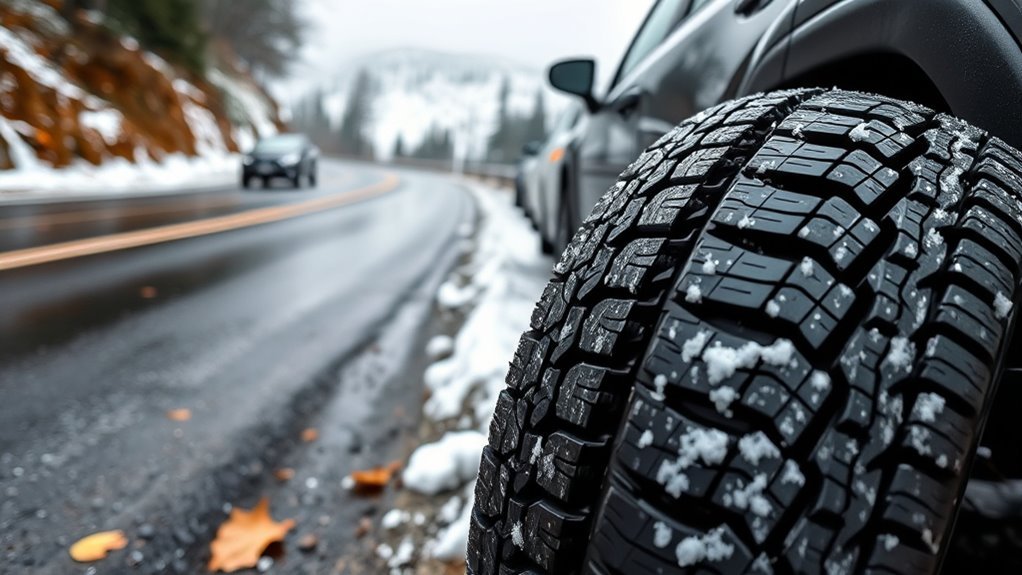
A RAV4’s tire performance changes with temperature, road surface, tread depth, and driving speed. Here is how the two tire types usually compare.
Dry and Wet Performance
In mild or warm weather, all-season tires are usually the better everyday choice. Their tread patterns are built for dry-road stability, rain evacuation, highway comfort, and long tread life. If your winter driving is mostly rain with rare light snow, a quality all-season tire can make sense.
Winter tires can handle dry and wet pavement in cold weather, but they are not ideal for warm months. Their softer rubber can wear faster on warm pavement, and handling may feel less crisp compared with a tire designed for warmer conditions.
Light Snow Performance
All-season tires can handle light snow when they have enough tread depth and the roads are mostly treated. This is where many RAV4 owners in mild climates are comfortable staying with all-seasons.
However, light snow can still become dangerous when it turns to packed snow, slush, or black ice. If your area often has freeze-thaw cycles, steep driveways, shaded roads, or early-morning ice, winter tires provide a larger safety margin.
Snow and Ice Handling
In real winter conditions, winter tires are the clear winner. Their rubber compound stays more flexible in cold temperatures, and the tread uses more biting edges to grip snow and slush. That helps your RAV4 brake, turn, and accelerate with more control.
In a Tire Rack snow-packed braking test from 30 mph, the winter-tire-equipped vehicle stopped at about 59 feet, while the all-season-equipped vehicle needed about 30 feet more.
That test does not mean every winter tire will stop the same way on every icy road, but it shows the kind of difference tire choice can make when traction is limited.
Why Tire Choice Matters for Safety

Your tires are the only parts of your RAV4 that touch the road. The engine, brakes, ABS, traction control, stability control, and AWD system all depend on the grip available at those four tire contact patches.
Tread Design Differences
All-season tires use tread patterns that balance wet grip, dry handling, comfort, and tread life. Winter tires use deeper grooves, more sipes, and blockier tread elements to help bite into snow and move slush away from the contact patch.
Look closely at tire markings. A basic M+S marking can indicate mud-and-snow capability, but it is not the same as the Three-Peak Mountain Snowflake symbol. For serious winter driving, prioritize the snowflake symbol.
Temperature Performance Impact
Temperature affects rubber flexibility. As conditions get colder, many all-season tires become less flexible, which reduces grip. Winter tires are designed to remain more pliable in cold weather, so they can better conform to the road surface.
This is why the 7°C/45°F guideline is useful. It is not a magic line where all-season tires suddenly become unsafe, but it is a good point to start planning the seasonal switch if cold weather is consistent in your area.
Stopping Distance Variations
Stopping distance depends on speed, road surface, tire condition, vehicle load, and driver reaction time. Still, winter tires can make a major difference on snow-covered roads because they provide more usable traction during braking.
All-season tires may feel fine on a cleared road but take much longer to stop when that road becomes packed snow or glazed ice. For winter safety, think beyond “Can my RAV4 move?” and ask, “Can it stop and turn when I need it to?”
RAV4-Specific Checks Before Buying Tires
Before you buy all-season, all-weather, or winter tires for your RAV4, check the details that apply to your exact vehicle. RAV4 trims and model years can use different wheel and tire sizes.
- Check the driver-door placard. This label lists the factory tire size and cold inflation pressure for your RAV4.
- Check the owner’s manual. Toyota’s manual is the right place to confirm winter-driving notes, tire-chain restrictions, and any model-specific warnings.
- Match the tire size. Common RAV4 sizes can vary by trim, wheel size, and model year, so do not assume another RAV4 uses the same tire.
- Match the load index and speed rating. The replacement tire must be suitable for the vehicle’s weight and intended use.
- Use four matching winter tires. A full set helps the RAV4 stay predictable when braking, turning, and using AWD or stability control.
- Plan for TPMS. If you buy a second wheel-and-tire set for winter, you may need compatible tire pressure sensors and possible relearn/programming.
- Be careful with chains and cables. Some RAV4 tire sizes may have restrictions. Always follow the owner’s manual instead of guessing.
Pro Tip: If you keep winter tires on a second set of wheels, seasonal swaps are faster and your all-season wheels are protected from road salt. Just make sure the wheel size, offset, lug pattern, and TPMS setup are correct for your RAV4.
Comparing Costs: All-Season vs. Winter Tires
All-season tires usually cost less upfront because you buy one set and use it all year. That makes them attractive if you live in a mild climate or rarely drive in snow.
Winter tires cost more at the start because you are adding a second set of tires. You may also pay for mounting, balancing, seasonal swaps, storage, TPMS sensors, or a second set of wheels. However, the cost is not as simple as “winter tires are more expensive.” When you use two sets seasonally, each set wears only part of the year.
Think about the total cost this way:
- All-season only: lower upfront cost, less storage hassle, best for mild winters.
- Winter + all-season: higher upfront cost, better winter traction, each set may last longer because usage is split.
- All-weather tires: one-set convenience with better snow capability than many standard all-season tires, but not as strong as dedicated winter tires in severe conditions.
If your RAV4 rarely sees snow, all-season tires may be the smarter value. If you regularly drive on snow or ice, the added safety margin of winter tires is usually worth the extra cost.
[Products Worth Considering]

These universal tire valve stem caps help protect valve cores from dust, debris, and moisture while helping maintain stable tire pressure. The corrosion-resistant metal construction and sealed design provide reliable protection in road grime, mud, and winter conditions. Twist-on installation makes them quick to fit on cars, SUVs, trucks, and motorcycles.

Black Magic Tire Wet delivers a deep wet-look shine that makes tires appear dark, rich, and freshly detailed. Its long-lasting formula helps resist rain, dust, and road grime for weeks of glossy protection, not days. Apply by spraying onto clean, dry tires—no buffing or wiping required—with a low-sling design to reduce splatter on paint and wheels.

Accurately measure tire tread depth with a calibrated gauge marked from 0 to 1 inch in 1/32 inch increments. The color-coded bar helps you quickly identify tread condition ranges, supporting safe driving for trucks, motorcycles, automobiles, and passenger vehicles.
How Driving Habits Affect Tire Choice
Your location matters, but your driving habits matter just as much. A RAV4 parked at home during storms does not need the same tire setup as one used every morning before the plows are out.
Frequency of Winter Driving
If you drive daily in winter, winter tires are easier to justify. Commuters who leave early, travel on side streets, or park outside often face the worst road conditions before maintenance crews have finished clearing snow and ice.
If you only drive after roads are clear, all-season or all-weather tires may be enough, depending on your climate.
Climate and Weather Conditions
For warm or mild climates, all-season tires usually make sense. For regions with frequent freezing temperatures, lake-effect snow, mountain roads, or icy mornings, winter tires are the safer choice.
If your area sits in the middle, all-weather tires can be a practical compromise. Look for the Three-Peak Mountain Snowflake symbol rather than relying on the name alone.
Vehicle Usage and Lifestyle
A RAV4 used for highway commuting, errands, and school drop-offs may prioritize comfort and tread life. A RAV4 used for ski trips, rural roads, steep driveways, or winter travel should prioritize snow and ice grip.
Also consider risk tolerance. If missing work, getting stuck, or sliding through an icy intersection would be a major problem, winter tires provide peace of mind that all-seasons cannot match in harsh conditions.
When to Switch Tires for Seasonal Conditions
Switch to winter tires when daily temperatures are consistently around or below 7°C/45°F, especially if snow or freezing rain is likely. Do not wait for the first major storm if tire shops in your area get busy during the seasonal rush.
Switch back to all-season or all-weather tires when temperatures are consistently above 7°C/45°F and the risk of snow and ice has passed. Keeping winter tires on warm pavement can wear them faster and reduce handling precision.
Local conditions matter. In a northern climate, the switch might happen in late fall and spring. In a mountain area, it may happen earlier and later. In a mild city, you may not need dedicated winter tires at all.
Maintenance Tips for All-Season and Winter Tires
The best tire choice will not help much if the tires are underinflated, worn out, mismatched, or damaged. Maintenance is part of winter safety.
- Check pressure monthly. Use a tire gauge when the tires are cold, before driving more than a short distance.
- Watch cold-weather pressure drops. Tire pressure can fall as temperatures drop, even if there is no leak.
- Inspect tread depth. In the U.S., 2/32 inch is a common minimum replacement threshold, but winter traction can become poor before that. For snow-covered roads, treat about 5/32 inch or 4 mm as a more cautious winter threshold.
- Rotate tires regularly. Follow your RAV4 maintenance schedule or your tire shop’s recommendation to promote even wear.
- Look for damage. Check for bulges, cracks, cuts, punctures, uneven wear, or vibration.
- Store off-season tires correctly. Keep them clean, dry, cool, and out of direct sunlight. Use tire bags if possible.
- Do not mix tire types. Avoid mixing winter and all-season tires, or tires with very different tread depths, on the same RAV4.
Consulting the Experts for the Right Tire Fit for Your RAV4
A tire shop, Toyota dealer, or trusted mechanic can help you match tires to your RAV4’s trim, wheel size, driving habits, and climate. This is especially useful if you are choosing a second winter wheel set, changing wheel sizes, replacing TPMS sensors, or deciding between all-weather and dedicated winter tires.
Bring three pieces of information before you shop:
- Your RAV4 model year and trim.
- The tire size from your driver-door placard.
- A clear description of your winter driving: city roads, highway commute, rural roads, hills, ice, snow depth, and average winter temperature.
For severe winter use, ask specifically for tires with the Three-Peak Mountain Snowflake symbol. For mild use, ask whether a quality all-season tire or all-weather tire is the better value for your driving.
Frequently Asked Questions
Can you put snow tires on a RAV4?
Yes. You can put snow tires or winter tires on a RAV4 as long as they match the correct size, load index, speed rating, and fitment requirements for your model. Install winter tires as a set of four for stable handling.
Is it better to get winter tires or all-season tires for a RAV4?
Winter tires are better if you frequently drive in freezing temperatures, snow, slush, or ice. All-season tires are better for mild climates where roads are usually dry or wet and snow is rare. All-weather tires can be a useful middle option for moderate winters.
Do AWD RAV4 models need winter tires?
AWD RAV4 models still benefit from winter tires. AWD helps send power to the wheels, but it does not create extra braking grip on ice or packed snow. Winter tires improve the traction your brakes, steering, stability control, and AWD system can use.
Are all-weather tires good enough for a RAV4 in winter?
All-weather tires can be good enough for moderate winter driving if they carry the Three-Peak Mountain Snowflake symbol. They are not the same as dedicated winter tires, though. Choose winter tires for frequent ice, heavy snow, mountain roads, or long periods below freezing.
When should I switch my RAV4 to winter tires?
Switch when temperatures are consistently around or below 7°C/45°F and winter weather is likely. Switch back when temperatures stay above that range and snow or ice is no longer expected.
How much tread should winter tires have?
For basic legal replacement in the U.S., 2/32 inch is a common minimum threshold. For winter traction, do not wait that long. Snow performance drops as tread wears, and about 5/32 inch or 4 mm is a more cautious minimum for snowy roads.
Conclusion
For a Toyota RAV4, all-season tires are a practical choice in mild climates, but winter tires are the safer choice when cold temperatures, snow, slush, or ice are part of normal driving. The RAV4’s AWD system can help you get moving, but it cannot replace the braking and cornering grip that winter tires provide.
If your winters are light, choose a quality all-season tire. If your winters are moderate and you want one set year-round, consider all-weather tires with the Three-Peak Mountain Snowflake symbol. If you face real winter roads, choose four dedicated winter tires and switch them seasonally. That choice gives your RAV4 the traction it needs when conditions are at their worst.
Sources
- Transport Canada — Using winter tires — supports the 7°C/45°F guidance, 3PMSF symbol, four-winter-tire recommendation, and winter tread-depth caution.
- NHTSA TireWise — supports tire buying, maintenance, pressure, tread, and winter tire safety basics.
- Tire Rack winter vs. all-season snow test — supports the snow-packed braking comparison.
- U.S. Tire Manufacturers Association Tire Care Essentials — supports pressure, tread, rotation, and alignment maintenance advice.
- Bridgestone tire replacement guidance — supports tread-depth checks, the penny test, and tire age inspection guidance.
- Toyota RAV4 owner winter-driving guidance — supports checking model-specific winter tire and chain/cable guidance.
[Products Worth Considering]

The SAFELIFE dial tire tread depth gauge measures tread depth in 1/32 inch increments with clear, easy-to-read 2-inch dial face. Color zones using a traffic light system help you quickly judge whether tread is low, marginal, or ample for safer driving. Built with a durable zinc cast body and a metal detect probe for precise, comfortable use across cars, motorcycles, trucks, and buses.

The Kurgo Seasonal Tire Tote helps protect your car interior, clothes, and garage from tire grime, brake dust, and residue during seasonal tire changes. Its universal design fits most passenger tires between 22" and 31" in diameter, making storage and transport simpler with less mess. Built for rugged, repeated use, it’s machine washable for easy care and comes with a lifetime warranty.

Replace worn or malfunctioning GM TPMS sensors with this 433MHz pre-programmed sensor set designed for compatibility with many Chevrolet, Buick, GMC, and Cadillac models. It includes guidance for proper OBDII relearning/pairing after installation and supports reliable long-term operation with a high-performance CR2032 battery. Quality tested for durability and performance to help restore accurate tire pressure monitoring.

Related Articles

Toyota RAV4 TPMS Reset: Easy Steps That Work
Unlock the secrets to resetting your Toyota RAV4's TPMS effortlessly—discover the essential steps to ensure your tires are always safe.
Read More
Toyota RAV4 Tire Rotation: DIY Steps & Pattern
Take control of your Toyota RAV4's tire maintenance with our simple DIY rotation guide—discover the best steps for optimal performance and longevity!
Read More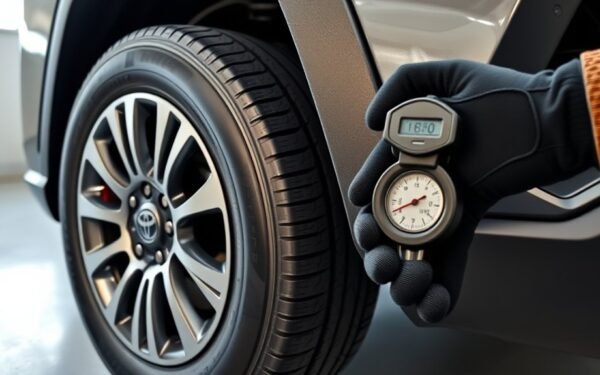
Mix Tire Brands on a Toyota RAV4? Expert Guide
Keeping your RAV4 safe? Learn when mixing tire brands risks traction, ABS/TCS and AWD damage — and what exact matches you must insist on.
Read More
One Comment