
What Is a 305 Tire Equivalent To? Size Conversion Chart
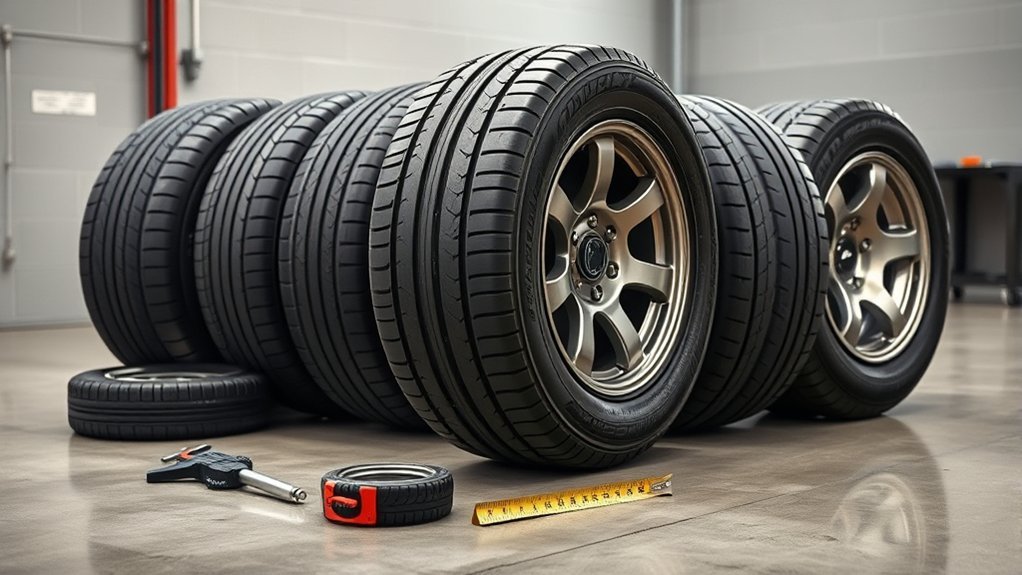
A 305 tire is about 305 millimeters wide, which converts to roughly 12.0 inches. That number tells you the tire’s nominal section width, not the full tire height. A 305/75R16 is about 34.0 inches tall, a 305/70R16 is about 32.8 inches tall, and a 305/30R20 is about 27.2 inches tall.
Quick Answer
A 305 tire is closest to 12.0 inches wide. Its height depends on the full size: 305/75R16 is about 34.0 inches tall, 305/70R16 is about 32.8 inches, and 305/30R20 is about 27.2 inches. Always compare the complete size, not just the 305 width.
Key Takeaways
- A 305 tire is about 12.01 inches wide because 305 mm divided by 25.4 equals 12.01 inches.
- The 305 number is nominal section width, not tread width or overall height.
- A 305/75R16 is about 34.0 inches tall, so it is closer to a 34-inch tire than a true 35-inch tire.
- A 305/70R16 is about 32.8 inches tall, so it fits the common 33-inch tire class.
- Check wheel width, offset, load index, speed rating, spare-tire size, and clearance before changing to a 305 tire.
What Is a 305 Tire Equivalent To?
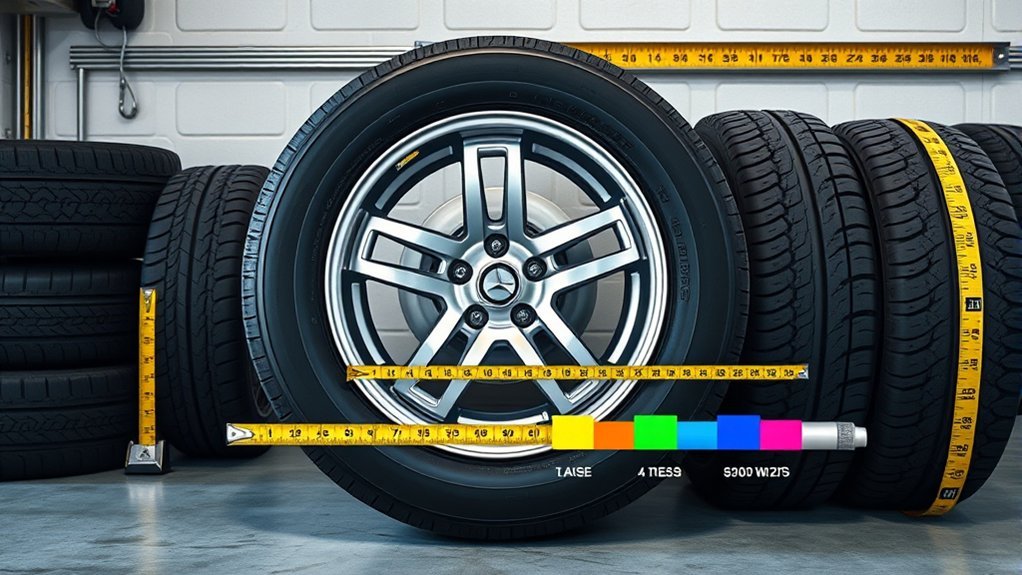
A 305 tire is equivalent to about 12.0 inches of nominal section width. In metric tire sizing, the first number shows the tire width in millimeters, measured from sidewall to sidewall. So a 305/70R16, 305/75R16, and 305/30R20 all share the same basic 305 mm width, even though their heights are very different.
The tire’s height comes from the second number, called the aspect ratio. A 305/75R16 has a sidewall that is 75% of 305 mm, while a 305/70R16 has a sidewall that is 70% of 305 mm. That change affects total diameter, ride feel, clearance, gearing, and speedometer reading.
Note: A 305 tire is closer to 12.0 inches wide than 12.50 inches. Many off-road shoppers compare 305 tires with 12.50-inch flotation sizes because they sit in the same wide-tire category, but they are not exact matches.
[Products Worth Considering]

Mount your spare tire directly to the inside wall of an enclosed trailer or garage to save space and keep your tire secure. This wall-mount spare tire carrier is designed for universal trailer tire fit and includes a fixed plate and chute for convenient screw replacement. Nylon insert hex lock nuts help prevent the tire from falling off, and wing hardware enables faster load and unload during maintenance.

Keep RV, trailer, or truck dual-axle tires protected with waterproof, UV-resistant covers that help guard against sunlight, snow, rust, and dirt. The dual tire covers are easy to install with a rope/bungee fastener for a stable fit that won’t easily slip. Designed for 27–30 inch diameter wheels, they help maintain tire condition through harsh weather.

Secure a full-size spare on your trailer with this powder-coated steel spare tire mount bracket. It fits most 4-, 5-, and 6-lug wheel bolt patterns and mounts to trailer tongues up to 4 in wide and 5 in tall. Built for reliable carry with a max 150 lb load rating and includes zinc-plated hardware for straightforward installation.
305 Tire Size in Inches and Millimeters
To convert 305 mm into inches, divide 305 by 25.4. That gives you 12.01 inches, usually rounded to 12.0 inches. This number is the tire’s nominal section width, not a promise that every mounted tire will measure exactly 12.01 inches on your wheel.
Actual mounted width can vary by tire model, tread design, air pressure, load, and wheel width. Tire Rack explains that section width is affected by the rim width used for measurement, so check the manufacturer’s specification sheet before buying.
Note: The 305 mm number is section width, not tread width. Tread width is the part of the tire that contacts the road, and it can be narrower than the labeled section width.
| Measurement | Value | What It Means |
|---|---|---|
| 305 mm | 12.01 inches | Nominal section width |
| 12.50 inches | 317.5 mm | Common flotation width, slightly wider by label |
| 315 mm | 12.40 inches | Often closer to a 12.50-inch labeled tire |
How to Calculate a 305 Tire Size
You can calculate a 305 tire’s approximate height with two simple formulas. These give you a close comparison size, but the tire maker’s published specs are still the final number for shopping and fitment.
Sidewall height = section width × aspect ratio. Overall diameter = wheel diameter + two sidewalls.
For a 305/75R16, the sidewall is 305 × 0.75 = 228.75 mm. Divide 228.75 by 25.4, and the sidewall is about 9.0 inches. Add two sidewalls to the 16-inch wheel, and the tire is about 34.0 inches tall.
For a 305/70R16, the sidewall is 305 × 0.70 = 213.5 mm. Divide 213.5 by 25.4, and the sidewall is about 8.4 inches. Add two sidewalls to the 16-inch wheel, and the tire is about 32.8 inches tall.
| Example | Sidewall Math | Diameter Math | Result |
|---|---|---|---|
| 305/75R16 | 305 × 0.75 ÷ 25.4 = 9.0 in | 16 + 9.0 + 9.0 | About 34.0 in tall |
| 305/70R16 | 305 × 0.70 ÷ 25.4 = 8.4 in | 16 + 8.4 + 8.4 | About 32.8 in tall |
| 305/30R20 | 305 × 0.30 ÷ 25.4 = 3.6 in | 20 + 3.6 + 3.6 | About 27.2 in tall |
305 Tire Equivalents by Aspect Ratio
The easiest way to understand a 305 tire is to separate width from height. The width stays about 12.0 inches, but the aspect ratio changes the sidewall height. A 75-series 305 tire is taller than a 70-series tire on the same wheel because the sidewall is a larger percentage of the same 305 mm width.
305 Width in Inches
A 305 tire is about 12.01 inches wide. That width is why 305 sizes appear on trucks, SUVs, performance cars, and off-road builds that need a wider contact patch. Still, width alone does not tell you whether the tire belongs in the 27-inch, 32-inch, 33-inch, 34-inch, or 35-inch class.
For example, a 305/30R20 is only about 27.2 inches tall because it has a short 30-series sidewall. A 305/75R16 is about 34.0 inches tall because it has a much taller 75-series sidewall. Both are 305 tires, but they are not interchangeable.
Aspect Ratio Impact
Aspect ratio tells you the sidewall height as a percentage of the tire width. Bridgestone explains that a 70 aspect ratio means the tire’s sidewall height is 70% of its width. Lower aspect ratios usually sharpen steering response, while taller sidewalls add more cushion and can improve off-road compliance.
| Size | Sidewall Height | Approx. Diameter | Practical Class |
|---|---|---|---|
| 305/75R16 | 9.0 in | 34.0 in | 34-inch class |
| 305/70R16 | 8.4 in | 32.8 in | 33-inch class |
| 305/60R18 | 7.2 in | 32.4 in | 32-inch class |
| 305/55R20 | 6.6 in | 33.2 in | 33-inch class |
| 305/30R20 | 3.6 in | 27.2 in | Low-profile performance class |
Common Tire Equivalents
Common equivalents depend on what you mean by “equivalent.” If you mean width, a 305 tire is a 12.0-inch tire. If you mean total height, you must compare the full metric size.
- 305/70R16 is roughly a 33×12.0R16 by calculation.
- 305/75R16 is roughly a 34×12.0R16 by calculation.
- 305/55R20 is roughly a 33×12.0R20 by calculation.
- 305/30R20 is roughly a 27×12.0R20 by calculation.
Pro Tip: When comparing replacement sizes, use about 3% diameter change as a conservative first checkpoint, not a universal approval rule. Your vehicle, drivetrain, gearing, calibration, and tire professional’s guidance matter more than one simple percentage.
305/75R16 vs 35×12.50R16
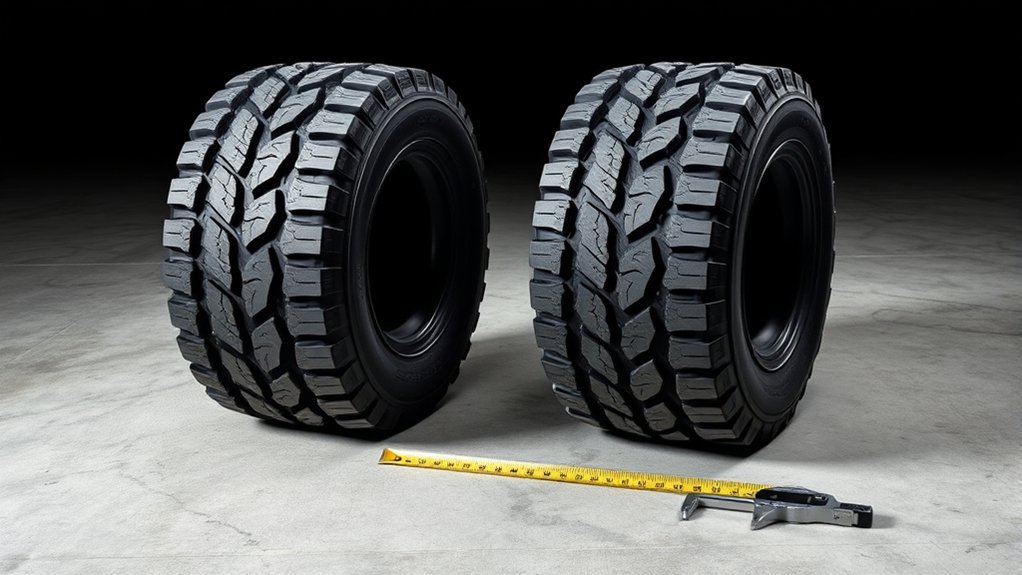
A 305/75R16 and a 35×12.50R16 are often discussed together, but they are not exact equals. A 305/75R16 calculates to about 34.0 inches tall and 12.0 inches wide. A 35×12.50R16 is labeled as 35 inches tall and 12.50 inches wide.
That means the 35×12.50R16 is usually taller and wider by label. Actual dimensions can still vary by tire brand, tread design, load range, and measuring rim, so compare the manufacturer’s published specs for the exact tire model.
305/75R16 Dimensions
The 305/75R16 tire uses a 305 mm section width, a 75% aspect ratio, and a 16-inch wheel diameter. Using the standard tire-size formula, the sidewall is about 229 mm, or 9.0 inches. Add two sidewalls to the 16-inch wheel, and the total diameter is about 34.0 inches.
- Width: 305 mm, or about 12.0 inches
- Sidewall: about 229 mm, or 9.0 inches
- Overall diameter: about 34.0 inches
- Wheel diameter: 16 inches
35×12.50R16 Comparison
A 35×12.50R16 uses flotation sizing. The first number is the approximate overall diameter, the second number is the approximate section width, and the final number is the wheel diameter. That format is easy to read, but it does not guarantee exact mounted dimensions.
| Size | Approx. Diameter | Approx. Width | Best Use |
|---|---|---|---|
| 305/75R16 | 34.0 in | 12.0 in | Metric truck/off-road fitment |
| 35×12.50R16 | 35.0 in by label | 12.50 in by label | Common flotation off-road size |
Fitment Differences
The small-looking difference between these sizes can matter. A taller tire can rub the fender liner or bumper at full steering lock. A wider tire can rub the control arm, sway bar, frame, or outer fender depending on wheel offset and backspacing.
Before switching from 305/75R16 to 35×12.50R16, check these items:
- Wheel width: Use the tire maker’s approved rim-width range.
- Offset and backspacing: These decide where the tire sits inside the wheel well.
- Suspension clearance: Check full steering lock and compression, not just parked clearance.
- Load index: Match or exceed the vehicle’s required load rating.
- Speed rating: Match or exceed the rating required by the vehicle manufacturer unless a qualified tire professional confirms an appropriate exception.
- Spare tire: Keep the spare close in diameter, especially on 4WD and AWD vehicles.
Best Wheel Sizes for a 305 Tire
The best wheel width for a 305 tire depends on the exact size. You should not use one wheel-width rule for every 305 tire. A tall truck tire and a low-profile performance tire can both use 305 mm width, but they may require different wheel ranges.
As a general pattern, many 305 truck sizes use wheels around 8.5 to 11 inches wide, while low-profile 305 performance sizes often need wider wheels around 10 to 12 inches. The tire manufacturer’s specification sheet is the final authority because approved rim width changes by tire model and construction.
| 305 Size | Typical Rim-Width Pattern | Fitment Note |
|---|---|---|
| 305/70R16 | Often around 8.0–9.5 in | Truck and off-road use |
| 305/60R18 | Often around 8.5–11 in | Truck/SUV street or all-terrain use |
| 305/55R20 | Often around 8.5–11 in | Common lifted-truck style size |
| 305/30R20 | Often around 10.5–11.5 in | Low-profile performance use |
Warning: Do not choose a 305 tire by width alone. Check your owner’s manual, tire placard, load index, speed rating, wheel width, and clearance before installation. Michelin recommends that replacement tires meet the vehicle manufacturer’s load and speed rating requirements.
[Products Worth Considering]

This side-mounted U-bolt spare tire bracket helps keep a trailer spare wheel secure and protected while you travel. It supports trailer frames up to 2–3 inches wide and fits up to 15-inch tires for 4- or 5-lug wheels. The galvanized steel threaded carrier is built for long-lasting corrosion resistance and installs easily with included lug nuts and U-bolt.

Mount your spare tire off the floor and onto your wall using an e-track spare tire carrier that helps you stay organized in trailers, garages, and warehouses. The upgraded double-fittings design improves stability versus single-fittings and supports greater load bearing. Install by snapping into e-track anchor points and securing the tire with a lug-nut style bolt setup for quick, secure storage.
Will a 305 Tire Fit Your Truck Without Rubbing?
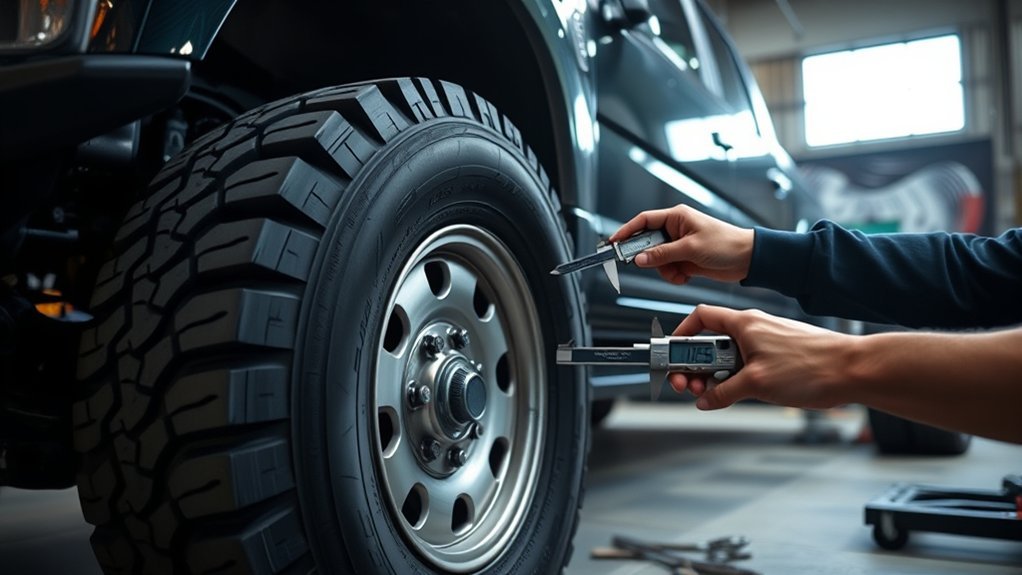
A 305 tire may fit your truck without rubbing, but it depends on the full size, wheel offset, suspension setup, and body clearance. A 305/70R16 is a different fitment challenge than a 305/75R16 because the 305/75R16 is taller.
Start with your current tire size. Compare the new tire’s diameter, width, circumference, and revolutions per mile. Discount Tire notes that size changes can affect speedometer readings, so a larger diameter may make your speedometer read lower than your real road speed.
A bigger tire can also affect gearing feel, odometer accuracy, shift behavior, ABS, traction control, and driver-assistance systems. On 4WD and AWD vehicles, avoid mixing tires with meaningfully different diameters because drivetrain binding and extra wear can become a concern.
Use this quick fitment checklist before installing a 305 tire:
- Check the tire placard: Confirm the original size, load rating, and inflation guidance.
- Measure wheel-well clearance: Check front, rear, inside, and outside clearance.
- Turn lock to lock: Look for contact near control arms, sway bars, liners, and mud flaps.
- Check compression clearance: A tire that clears while parked can rub when the suspension compresses.
- Confirm wheel width: Use the tire maker’s approved rim-width range.
- Verify load index: Match or exceed your vehicle’s required rating.
- Verify speed rating: Match the rating required by the vehicle manufacturer unless a qualified tire professional confirms a safe alternative.
- Plan calibration if needed: Larger diameter changes speedometer and odometer readings.
NHTSA TireWise recommends checking the owner’s manual or Tire and Loading Information Label for the correct tire size and consulting a tire dealer if you are unsure.
305 Tire Size Chart by Diameter
The chart below compares common 305 tire sizes using standard tire-size math. Treat these as calculated approximations. Always confirm the exact diameter, tread width, approved rim width, load index, and speed rating for the specific tire you plan to buy.
| Metric Size | Approx. Inch Equivalent | Sidewall | Diameter Class |
|---|---|---|---|
| 305/75R16 | 34.0×12.0R16 | 9.0 in | 34-inch |
| 305/70R16 | 32.8×12.0R16 | 8.4 in | 33-inch |
| 305/70R18 | 34.8×12.0R18 | 8.4 in | 35-inch class by height |
| 305/65R17 | 32.6×12.0R17 | 7.8 in | 33-inch |
| 305/60R18 | 32.4×12.0R18 | 7.2 in | 32-inch |
| 305/55R20 | 33.2×12.0R20 | 6.6 in | 33-inch |
| 305/50R20 | 32.0×12.0R20 | 6.0 in | 32-inch |
| 305/30R20 | 27.2×12.0R20 | 3.6 in | 27-inch |
Frequently Asked Questions
Is a 305 the same as a 35-inch tire?
No. A 305 tire is not automatically a 35-inch tire. The 305 number only gives the width in millimeters. A 305/75R16 is about 34.0 inches tall, while a 305/70R18 is about 34.8 inches tall. Always check the complete size.
Is a 305 tire wider than a 285?
Yes. A 305 tire is 20 mm wider than a 285 tire by label. That equals about 0.79 inches. The actual mounted width can still vary by tire model and rim width, so compare manufacturer specs before buying.
Which tire is bigger, 305 or 33?
You cannot compare them directly because 305 is width in millimeters, while 33 usually means overall diameter in inches. A 305/70R16 is about 32.8 inches tall, so it is close to a 33-inch tire. A 305/75R16 is about 34.0 inches tall.
How tall is a 305/30R20 tire?
A 305/30R20 tire is about 27.2 inches tall, or roughly 691 mm. Its sidewall is about 3.6 inches, or about 92 mm. This is a low-profile performance size, not a tall truck tire.
What is closest to a 305 tire in inches?
For width, a 305 tire is closest to 12.0 inches. For total size, the closest inch equivalent depends on the full tire size. A 305/70R16 is about 33×12.0R16, while a 305/75R16 is about 34×12.0R16.
Is 305 closer to 12.50 or 13 inches?
A 305 tire is closer to 12.0 inches than 12.50 or 13 inches. A 12.50-inch tire equals 317.5 mm by simple conversion, while a 13-inch tire equals 330.2 mm.
Can I replace a 305 tire with a 35×12.50?
Maybe, but do not assume it will fit. A 35×12.50 is usually taller and wider by label than many 305 sizes. Check diameter, section width, approved wheel width, offset, load index, speed rating, spare size, and full steering clearance before installing it.
Conclusion
A 305 tire is not one fixed inch size. It is about 12.0 inches wide, but the final height depends on the aspect ratio and wheel diameter. A 305/75R16 is about 34.0 inches tall, a 305/70R16 is about 32.8 inches tall, and a 305/30R20 is about 27.2 inches tall.
If you are replacing tires, compare the full size, not just the 305 width. Check clearance, wheel width, offset, load index, speed rating, spare-tire size, and your vehicle’s tire placard before installing a new size. That keeps the tire conversion accurate and helps you avoid rubbing, speedometer error, drivetrain stress, and unsafe fitment.
Sources
- Bridgestone: How to Read & Determine Tire Size — supports tire-width, aspect-ratio, rim-diameter, load-index, and tire-size definitions.
- Tire Rack: How To Determine The Section Width Of A Tire — supports section-width meaning and rim-width effects on measured tire width.
- NHTSA TireWise — supports checking the owner’s manual or Tire and Loading Information Label for correct tire size and inflation guidance.
- Discount Tire: Tire Size Calculator — supports comparing sidewall height, section width, diameter, circumference, revolutions per mile, and speedometer effects.
- Michelin: Tire Load Rating & Speed Rating Explained — supports load-index and speed-rating replacement guidance.

Related Articles
How Much Does Tire Retreading Cost?
Whether you’re pricing passenger or truck tires, tire retreading costs vary widely, and the real reasons behind the savings may surprise you.
Read More
Firestone Tire Installation Cost: Full Price Guide
Compare Firestone tire installation costs and discover what hidden fees could change your final bill.
Read More
Tire Rack vs Costco: Which Is Better for Tires?
Pick the better tire deal between Tire Rack and Costco before hidden differences change your choice.
Read More