
What Does a Plastic Bottle on Your Tire Mean? Explained
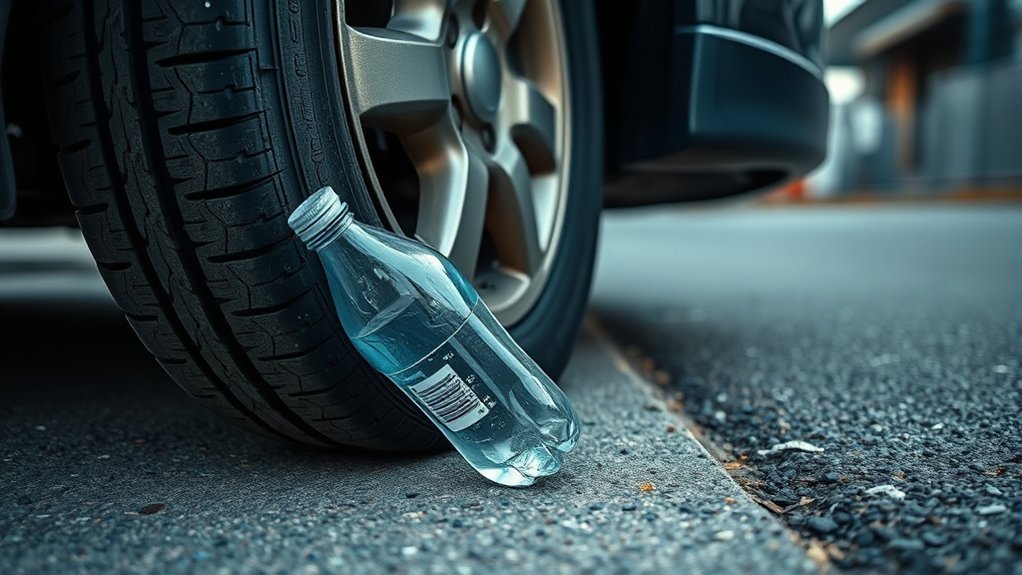
Finding a plastic bottle wedged against your tire or inside the wheel well can look suspicious. However, the bottle alone does not prove that someone is targeting your car. It may be litter, a prank, or an object placed there intentionally. Stay calm, secure your vehicle, check the area, and inspect the tire before driving.
Quick Answer
A plastic bottle on your tire has no recognized or standardized meaning. There is no reliable evidence that it is a common car-theft signal. Treat it as an unexpected object: lock your doors, look around, photograph it if needed, remove it only when safe, and inspect the tire and wheel well before driving.
Key Takeaways
- A bottle beside a tire is not proof of a theft attempt or a secret criminal signal.
- Do not drive until you have checked that the bottle is clear of the tire, brakes, steering parts, and wheel well.
- Remain inside the locked vehicle and contact security or police if someone is watching you, approaching aggressively, or blocking your exit.
- Check the tire for cuts, punctures, bulges, pressure loss, rubbing, or unusual noise.
- Use official theft-prevention and tire-safety advice instead of viral warnings or parking “hacks.”
At a Glance
| Time Required | About 2–5 minutes for a basic visual check |
| Difficulty | Easy, provided the vehicle is in a safe location |
| Tools Needed | Phone, flashlight, gloves, and an optional tire-pressure gauge |
| Cost | Usually free unless the tire or wheel needs professional service |
What Does a Plastic Bottle on Your Tire Mean?
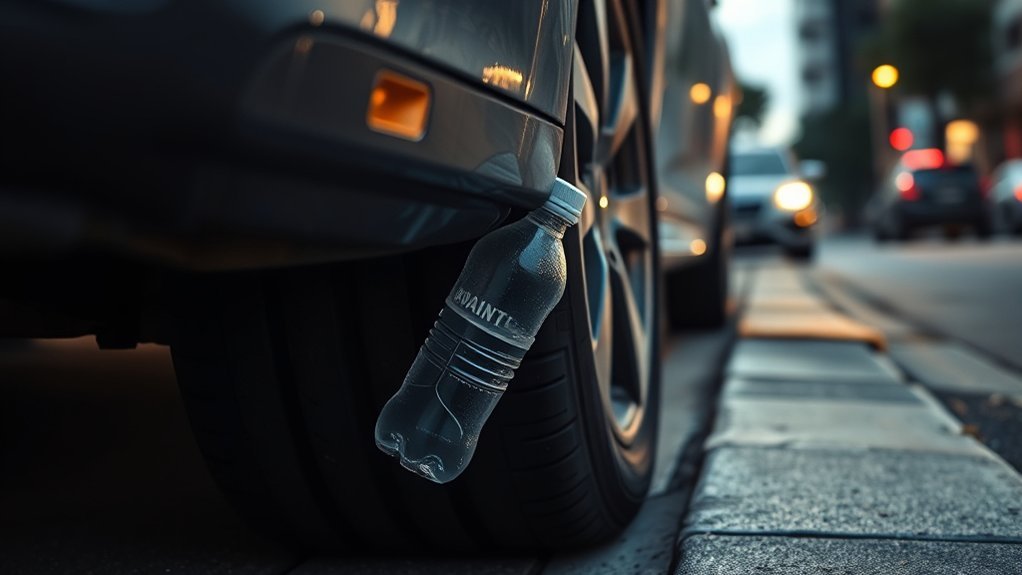
A plastic bottle on or near a tire does not have one fixed meaning. It may have blown under the car, been left as litter, become caught while the vehicle was moving, or been placed there as a prank. Someone also could have moved it deliberately, but the bottle itself cannot tell you why.
Online posts often claim that criminals wedge a bottle between the tire and wheel well. According to the story, the bottle makes a loud noise when the car moves, causing the driver to get out while the engine is running. The thief then supposedly takes the car or property inside it.
This scenario is possible in theory, but there is no reliable evidence that it is a common or established vehicle-theft method. Major theft-prevention guidance from the National Highway Traffic Safety Administration and the FBI does not identify a bottle on a tire as a recognized warning sign.
Note: “Not a proven theft signal” does not mean you should ignore an unexpected object. It means you should respond to what you can observe instead of assuming the viral story is true.
[Products Worth Considering]

Accurately measure tire tread depth with a calibrated gauge marked from 0 to 1 inch in 1/32 inch increments. The color-coded bar helps you quickly identify tread condition ranges, supporting safe driving for trucks, motorcycles, automobiles, and passenger vehicles.

Monitor tire tread wear with a smart, color-coded depth gauge that shows clear condition ranges at a glance. The bar is range marked for fast, easy readings, helping you maintain safer traction and performance. Each gauge is portable with a pocket clip, and the set includes 20 units for daily use and sharing.

Measure tire tread depth quickly and accurately with this LUMITECO dial gauge that reads in 1/32" increments up to 14/32". The color-coded green/yellow/red zones make it easy to judge tire wear and know when replacement is needed. A rugged, compact design with a protective pouch helps keep the gauge ready for use on cars, trucks, motorcycles, and more.
Is It Really a Theft Warning?
No authoritative source has established that a plastic bottle beside a tire is a dependable theft warning. A bottle does not identify who placed it, how long it has been there, or whether anyone intended harm.
What the Rumor Claims
The viral warning usually describes the following sequence:
- A person wedges an empty bottle between a tire and the wheel arch.
- The driver starts moving and hears the bottle crunch or rub.
- The driver gets out while leaving the key, phone, purse, or engine inside the vehicle.
- Someone uses the distraction to steal the car or an item from it.
The story sounds believable because distraction theft is possible in general. However, a believable explanation is not the same as documented evidence that this specific method is widespread.
What the Evidence Supports
Official theft-prevention guidance focuses on proven risk reduction: take the key, close and lock the windows and doors, hide valuables, avoid leaving a running vehicle unattended, and park in a visible area when possible.
Those precautions are useful whether the object near your tire is harmless or deliberate. They protect you without requiring you to guess what the bottle means.
How the Bottle-on-Tire Rumor Spread
The bottle story has appeared in social-media warnings, videos, recycled images, and clickbait advertisements for years. Some versions say the bottle helps thieves. Others claim that drivers should place a bottle on their own tire to deter theft, prevent flat spots, regulate temperature, or reveal tampering.
Those versions conflict because the image is used to attract attention rather than explain a verified mechanical or security practice. Repetition across many websites can make a claim appear established even when the sites are copying one another.
Watch for these warning signs when reading a viral vehicle claim:
- The post says “police warn” but does not name an agency or link to an official alert.
- The headline creates urgency but the article never provides a documented case.
- The same image appears with several different explanations.
- The page relies on anecdotes instead of government, manufacturer, or technical guidance.
- The advice asks you to share immediately before checking the source.
What to Do If You Find a Plastic Bottle on Your Tire
Your first goal is to confirm that you and the vehicle are safe. Do not panic, and do not begin driving until the object is clear of the wheel.
Before You Enter or Move the Car
- Look around first. Check for anyone watching the vehicle, standing unusually close, trying to get your attention, or blocking your path.
- Keep control of your keys and phone. Do not place them on the roof, seat, or ground while inspecting the car.
- Secure the vehicle. If you are already inside, keep the doors locked while you assess the situation.
- Photograph the object if it appears deliberately placed. A photo may help parking security, property management, or police understand what you found.
- Move to safety when necessary. If you feel threatened, remain inside, drive away only if the wheel can turn safely, or call for help.
Warning: Do not kneel beside a tire in moving traffic, crawl under the vehicle, or reach near hot brakes or moving components. If the car is beside a roadway or the object is tightly lodged, call roadside assistance.
Inspect the Bottle, Tire, and Wheel Well
When the area is safe, remove a loose bottle while wearing gloves if available. Then inspect the tire and nearby parts for:
- A visible puncture, nail, screw, cut, or torn rubber
- A sidewall bulge, bubble, crack, or exposed cord
- Low pressure or a visibly flattened tire
- Plastic caught around the brake, axle, suspension, or steering parts
- Damage to the valve stem
- Scraping, rubbing, clicking, or repeated thumping when the wheel turns
NHTSA advises drivers to inspect tire tread and sidewalls for cuts, punctures, bulges, scrapes, cracks, or bumps and to use the pressure listed on the vehicle placard or in the owner’s manual. The PSI molded into the tire sidewall is a maximum rating, not the normal pressure target. See the agency’s TireWise safety guidance.
If You Hear a Noise After Driving
Do not stop in an active traffic lane merely to check the sound. Slow down, avoid sudden steering or braking, and pull into a well-lit parking area, service station, or other safe location.
After stopping:
- Shift into Park and apply the parking brake.
- Turn on the hazard lights if other traffic is nearby.
- Check the tire-pressure warning light and look for handling changes.
- Inspect the wheel only from a safe position.
- Call roadside assistance if the tire is low, damaged, rubbing, or unsafe to drive.
Pro Tip: Keep a flashlight, disposable gloves, and an accurate tire-pressure gauge in the vehicle. These simple items make an unexpected wheel inspection faster and safer.
Who to Contact
- Call 911: Someone is threatening you, trying to enter the vehicle, following you, or preventing you from leaving.
- Contact parking security or property management: The object appears deliberately placed in a monitored parking lot, garage, workplace, or apartment complex.
- Use the police non-emergency number: You find signs of tampering, attempted entry, damaged locks, or repeated suspicious activity without an immediate threat.
- Call roadside assistance or a tire shop: The tire is losing pressure, damaged, rubbing, vibrating, or making a continuing noise.
How to Reduce the Real Risk of Vehicle Theft
Vehicle thieves do not need an elaborate bottle trick when a car is unlocked, running, displaying valuables, or holding an accessible key. Focus on the conditions that official safety agencies consistently identify.
Common Vehicle Vulnerabilities
- Doors or windows left open
- Keys left inside or near the vehicle
- An engine left running without the driver
- Phones, bags, laptops, wallets, or tools visible through a window
- Poorly secured keyless-entry fobs
- A vehicle parked for long periods without an alarm, immobilizer, or recovery system
Practical Theft Prevention
- Take the key or key fob every time you leave.
- Close and lock every door and window.
- Hide valuables before arriving at the parking location.
- Never leave an unattended vehicle running.
- Use the factory immobilizer, alarm, steering-wheel lock, or recovery system when available.
- Park in a visible, active area when you have a choice.
- Store the VIN, license-plate number, make, model, and color somewhere outside the vehicle.
NHTSA reports that more than 650,000 vehicles were stolen in the United States in 2025—about one every 48 seconds. Proven security habits matter more than viral bottle warnings.
Why the Plastic Bottle “Hack” Fails
Placing a bottle on your own tire does not lock the doors, stop the ignition, immobilize the steering, track the vehicle, or prevent someone from breaking a window. It also does not provide a dependable tamper indicator because wind, pedestrians, animals, traffic, or normal vehicle movement can displace it.
Similarly, finding a bottle does not prove criminal intent. The object carries no information about who placed it or why. Treating it as certain evidence can create unnecessary fear, while dismissing it without checking could leave debris near a moving wheel.
The balanced response is simple: secure the car, inspect the object and tire, leave an unsafe situation, and rely on actual signs of damage or suspicious behavior.
[Products Worth Considering]

The SAFELIFE dial tire tread depth gauge measures tread depth in 1/32 inch increments with clear, easy-to-read 2-inch dial face. Color zones using a traffic light system help you quickly judge whether tread is low, marginal, or ample for safer driving. Built with a durable zinc cast body and a metal detect probe for precise, comfortable use across cars, motorcycles, trucks, and buses.

The Trivd Frol 1/2" air impact wrench delivers high performance torque up to 1500 ft-lbs with a twin hammer impact mechanism for strong, balanced blows. It features an ergonomic grip, compact lightweight design, and quick-stop control with 3 forward speeds up to 8000 RPM plus a reverse speed. Built for demanding automotive repair and tire shop work, the rear exhaust helps keep debris away from the surface.

Steelman white tire marking crayons provide high-contrast, semi-permanent marks for repairing and inspecting tires and equipment. They write on wet or dry, smooth or coarse surfaces including rubber, metal, glass, and wood, making them ideal for puncture location and damage outlining. The lead- and zinc-free crayons resist weather and fading yet wipe away when you no longer need the marks.
Other Car Myths to Ignore
Myth: Nitrogen Means You Never Need to Check Tire Pressure
Nitrogen-filled tires can still lose pressure and develop punctures, valve leaks, or temperature-related changes. Check them regularly just as you would tires filled with ordinary compressed air.
Myth: The Sidewall PSI Is the Correct Pressure for Your Car
The sidewall number is the tire’s maximum permitted pressure under specified conditions. Use the cold inflation pressure on the driver-side door placard or in the owner’s manual.
Myth: All-Season Tires Handle Every Winter Condition
All-season tires are designed for a range of ordinary conditions, but they may not provide the same cold-weather, snow, or ice performance as dedicated winter tires. NHTSA recommends considering snow tires where conditions warrant them. Review its winter driving guidance and choose tires that match your climate.
Myth: Every AWD Puncture Automatically Requires Four New Tires
AWD and four-wheel-drive systems can be sensitive to differences in tire circumference, but the allowable difference varies by vehicle. Consult the owner’s manual before replacing one or two tires. The replacement may need to match the other tires in size, construction, model, and tread depth. Michelin’s tire-mixing guidance also recommends following the vehicle manufacturer’s requirements.
How to Judge Car Advice Online
Before following an unusual automotive warning or “hack,” check whether the information answers these questions:
- Who issued it? Look for a named police department, government safety agency, vehicle manufacturer, tire manufacturer, or qualified technical expert.
- Where is the original source? A screenshot saying “police warn” is not the same as an official police notice.
- What evidence is provided? Look for documented incidents, service information, testing, regulations, or technical explanations.
- Is the advice current? Vehicle security systems, recalls, tire recommendations, and theft methods change over time.
- Do independent sources agree? Check more than one source, especially when a page sells a product or earns money from sensational clicks.
- Could following it create a hazard? Do not copy a hack that places an object near brakes, wheels, steering parts, hot components, or moving traffic.
A confident tone, viral video, celebrity repost, or widely shared image does not verify a claim. When advice concerns safety, compare it with official vehicle, tire, law-enforcement, or transportation guidance.
Frequently Asked Questions
Why do people put plastic bottles on their tires?
There is no standard reason. Some people copy an online security or tire-care myth, use a bottle as a personal marker, or place one as a prank. None of those uses makes the bottle an approved theft-prevention or tire-maintenance device.
What does a water bottle left on your tire mean?
It does not prove anything by itself. It could be debris, litter, a prank, or an intentionally placed object. Check your surroundings, secure your keys and doors, photograph it if necessary, and inspect the tire before driving.
Why do truck drivers put plastic bottles on their wheels?
There is no universal commercial-trucking bottle signal. An individual driver may use a makeshift marker for a personal reason, but drivers should not rely on it to identify a defect. FMCSA guidance requires commercial drivers to inspect tires, wheels, rims, brakes, and other safety equipment before operation.
What if a plastic bottle is stuck inside the wheel well?
Do not continue driving while it is rubbing the tire or another moving part. Stop in a safe place, apply the parking brake, and remove it only if you can do so without reaching near traffic, hot brakes, or moving components. Call roadside assistance when it is tightly lodged or difficult to reach.
Can running over a plastic bottle damage a tire?
An empty plastic bottle usually collapses, but its cap, sharp debris, or another hidden object could damage the tread or become caught near the wheel. Inspect the tire if you hear a loud impact, feel vibration, notice pressure loss, or see a warning light.
Conclusion
A plastic bottle on your tire is not a proven theft signal and has no standard meaning. Do not let a viral warning cause panic, but do not drive over an unknown object without checking it. Secure your keys and doors, observe the area, remove the bottle only when safe, and inspect the tire for damage. Contact security, police, roadside assistance, or a tire professional when the situation gives you a specific reason to do so.
Sources
- National Highway Traffic Safety Administration — Vehicle Theft Prevention — current theft statistics and recommended vehicle-security practices
- Federal Bureau of Investigation — Motor Vehicle Theft — theft prevention and reporting guidance
- NHTSA TireWise — tire-pressure, inspection, tread, and damage guidance
- NHTSA Winter Weather Driving Tips — cold-weather tire inspection and snow-tire guidance
- Federal Motor Carrier Safety Administration — Equipment, Inspection, and Use — commercial-driver inspection responsibilities for tires, wheels, rims, and other equipment
- Michelin USA Tire FAQs — tire matching and replacement considerations for four-wheel-drive vehicles
[Products Worth Considering]

TireJect Off-Road Tire Sealant Kit provides 5-in-1 sealing to help fix tread punctures up to 3/8", sidewall punctures up to 3/8", bead leaks, slow leaks, and minor dry rot on low-speed tires. It permanently seals with liquid rubber, recycled tire particles, and Aramid fibers, making it ideal for flats caused by thorns, nails, and screws. The included dispensing cap attaches to the valve stem for a no-mess installation, along with a metal valve core remover tool and valve stem cap. This kit is for off-road use only.

Malco tire mounting and demounting lubricant is a ready-to-use tire lube formulated to reduce friction during tire installation for passenger cars, light trucks, farm tires, and heavy-duty equipment. It provides rust-inhibiting protection to help reduce corrosion on rims and wheels, and helps support proper tire bead seating during inflation to reduce air leakage. The silicone-free, soap-free formula is whitewall safe to help prevent discoloration on whitewall tires and sensitive sidewall markings.

This 62-inch extra-long car wash brush kit makes it easy to clean hard-to-reach areas on cars, trucks, SUVs, and RV roofs with lightweight, sturdy poles. It includes soft, non-scratch microfiber and bristles with protective bumpers to help prevent scratches while cleaning effectively. A rubber squeegee helps remove water stains quickly, plus a wheel/tire brush and absorbent towels for complete exterior detailing.

Related Articles
Slashed Tire or Blowout? How to Tell the Difference
A slashed tire or blowout? Spot the clues fast, but one subtle sign could change everything.
Read More
How to Break a Car Window in an Emergency Safely
After an emergency, a few simple moves can break a car window safely—but one crucial choice could change everything.
Read More
How to Buy Car Insurance: Coverage Guide for Beginners
Choose the right car insurance coverage and compare smarter to avoid costly gaps—discover the key details beginners often miss.
Read More