What Does 115 T Mean on a Tire? Load, Speed & Rating Guide
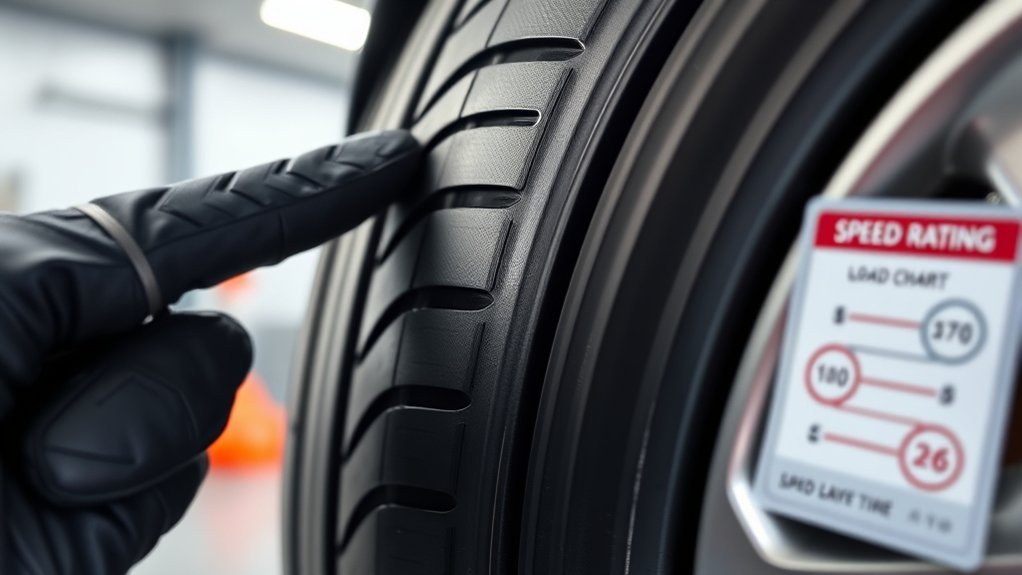
115 T on a tire tells you two things: 115 is the load index, meaning each tire can carry up to 2,641 pounds when properly inflated, and T is the speed rating, meaning it’s designed for speeds up to 118 mph under ideal conditions. You should match both ratings to your vehicle’s specs to protect handling, load capacity, and tire life. Keep going to see where this code appears and how to choose the right replacement.
Key Takeaways
- 115 is the tire’s load index, meaning it can carry 2,641 pounds when properly inflated.
- T is the speed rating, indicating a maximum safe speed of 118 mph.
- Load index shows how much weight each tire can support, while speed rating shows its speed capability.
- Matching both ratings to your vehicle’s manufacturer recommendations helps ensure safety and proper performance.
- Overloading the tire or exceeding its speed rating can cause heat buildup, wear, damage, or blowouts.
115 T on a Tire: What It Means
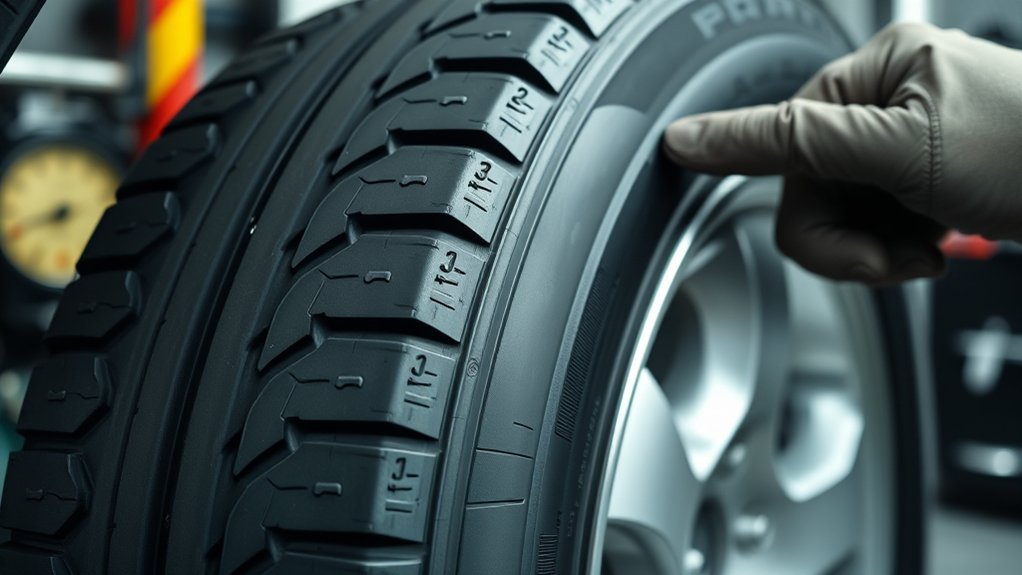
A tire marked 115 T combines two key ratings: 115 is the load index, meaning the tire can carry up to 2,641 pounds when properly inflated, and T is the speed rating, meaning it is approved for speeds up to 118 mph under ideal conditions. You should read 115 as a load index, not a brand code, because it tells you the tire’s maximum load carrying ability. T tells you the tire’s speed rating, so you can match it to your vehicle’s performance requirements. Keep your tire pressure at the specified level; underinflation can reduce capacity and safety. When you choose a proper tire, you align both ratings with the vehicle’s needs, not guesswork. Passenger tire load index values can range widely, so 115 sits near the upper end and signals strong carrying capacity. Use the tire’s sidewall data to verify fit, and choose components that support your driving demands and freedom on the road.
Tire Load Index Basics
The load index tells you how much weight each tire can safely carry when it’s properly inflated. Your tire load index is a numeric code, not a guess, and it maps to a specific maximum load carrying capacity. For example, a load index of 115 means one tire can support about 2,641 pounds at its maximum air pressure, but only when you use the proper load index for your vehicle. Load indexes for passenger vehicles usually run from 70 to 126, so a higher load rating means more carrying ability. You need to match the combined load index of all tires to your vehicle’s GVWR, because the weight on your tires must stay within safe limits. If you choose the wrong index, you risk premature wear, sidewall damage, or blowouts. Choose tires that free you from unnecessary failure and keep your setup aligned with the road ahead. Additionally, understanding the UTQG ratings can help you select tires that balance performance and durability.
What 115 Load Index Can Carry
A 115 load index means each properly inflated tire can carry up to 2,641 pounds. You’ll often see this rating on light trucks, SUVs, and other larger vehicles, where tire construction and size set the exact weight limit. To stay within safe limits, you need to match the tire’s load capacity to the vehicle’s total weight and avoid overloading. Additionally, selecting tires with a high UTQG rating can enhance durability and performance under load.
Load Capacity
For a tire marked 115, each tire can carry up to 2,641 pounds when properly inflated, so four tires with this load index provide a combined capacity of 10,564 pounds. Your load index sets the maximum load carrying limit, and your tire load rating should match your vehicle’s weight, cargo, and tire size.
- Check the load capacity on the sidewall.
- Compare it with your GVWR.
- Match replacement tires to the manual.
- Keep inflation exact for rated capacity.
When you stay within this capacity, you protect performance and reduce failure risk. If you exceed the load index, you invite premature wear, damage, or blowouts. Choosing the correct tire load rating isn’t bureaucracy; it’s control. You keep your machine responsive, compliant, and ready to carry what you choose.
Tire Weight Limits
When you look at a 115 load index, you’re seeing a tire weight limit of 2,601 pounds per tire when it’s properly inflated. Your tire load index sets the maximum load carrying capacity, so check the tire size and pressure before you trust the numbers.
| Tire Load Index | Per Tire Limit | Four-Tire Total |
|---|---|---|
| 115 | 2,601 lbs | 10,404 lbs |
| Lower than 115 | Less support | Reduced margin |
You need to match these tire weight limits to your vehicle’s requirements and GVWR. If you’re hauling more than the rating allows, you’re exceeding load capacity, which can cause heat buildup, premature wear, or blowouts. Speed ratings matter too, but they don’t raise load capacity. Choose tires that free you from risk while keeping handling stable.
What the T Speed Rating Means
The T speed rating means a tire is built to safely handle speeds up to 118 mph (190 km/h) when it’s properly inflated and in good condition. You get a practical balance of comfort, grip, and everyday performance for standard passenger vehicles, without chasing race-level extremes.
The T speed rating balances comfort, grip, and everyday performance up to 118 mph (190 km/h).
- T sits above S at 112 mph, so your tire has more maximum speed capacity.
- T sits below U at 124 mph, keeping the speed rating focused on daily use.
- Better grip and handling often come with T-rated designs.
- T isn’t a substitute for matching the tire to your vehicle’s specifications.
Use the speed rating as a technical limit, not a target. If you exceed it, you reduce safety and may stress the tire. Also, higher-rated tires can trade some tread life for performance. Choose a tire that matches your driving needs, and you’ll keep control, efficiency, and road freedom aligned with the fuel efficient tires your vehicle was built for.
Why Load Index and Speed Rating Matter
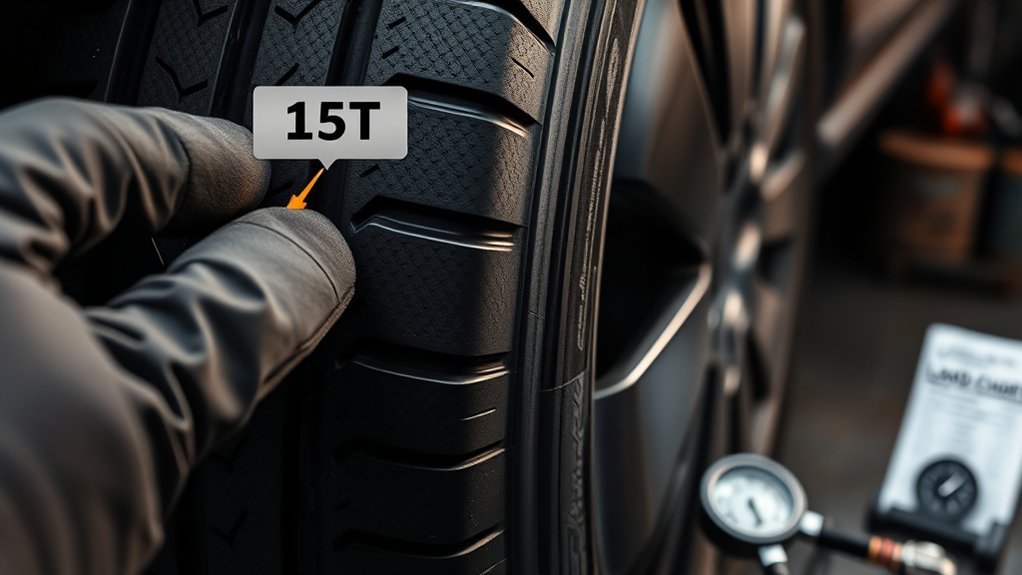
A load index of 115 tells you this tire can carry up to 2,541 pounds when it’s properly inflated, while the T speed rating means it’s designed for safe use at speeds up to 118 mph. You need both numbers to protect vehicle safety and keep the tire within its maximum load carrying limits. If you exceed the load index, you raise heat, stress, and the risk of tire damage or blowouts. If you ignore the speed rating, you can reduce control and stability at higher speeds. Matching the load index and speed rating across your tires helps preserve balanced handling, peak performance, and predictable braking. It also supports tire longevity because the tire works within its engineered range, not under constant strain. When you know these ratings, you make informed choices and keep your vehicle responsive, secure, and ready for the road. Additionally, understanding UTQG ratings can help you choose tires with the best tread life and performance for your needs.
Can You Use a Different Tire Rating?
Can you use a different tire rating? Yes, but you shouldn’t treat it as a free choice. Your vehicle’s tire specifications set the baseline for tire performance and vehicle safety. If you mix ratings, the whole set is only as capable as the lowest rated tire.
- Match the required load index so maximum load carrying stays within spec.
- Keep the speed rating consistent across all positions for stable handling.
- Avoid lower-rated tires on the front axle; they can increase oversteer risk.
- Don’t exceed the stated limits, or you may trigger tire damage, blowouts, or rapid wear.
A different rating can seem like flexibility, but it can narrow your control on the road. For liberation, use the freedom to choose wisely, not recklessly. Checking load rating is essential before making a decision. Check your manual or ask a tire expert before replacing tires, and confirm every replacement meets the required load index and speed rating.
Where to Find 115 T on the Sidewall
You’ll find the “115 T” marking on the tire’s outer sidewall, usually within the full tire code. Read the code from left to right to identify the size, construction, load index, and speed rating. The “115” shows load capacity, and the “T” shows the maximum speed rating. Understanding load index ratings can help ensure your tires are suitable for your vehicle’s needs.
Sidewall Marking Location
You can usually find “115 T” on the tire’s outer sidewall, printed in the standard specification line after the tire size and before the DOT code. Check the sidewall of your tire for clean, standardized markings that tell you the load index and speed rating. This code helps you confirm the maximum load carrying capacity the tire can support and the top speed it’s approved for.
- Look near the tire size.
- Find the load index number.
- Read the speed rating letter.
- Verify the full marking line.
You’re reading practical data, not decoration. If the markings are worn or obscured, clean the area and inspect again. Match what you see to your vehicle’s required specifications before you drive.
Read Tire Code
To read the tire code, inspect the sidewall and find the marking line after the tire size, where “115 T” usually appears alongside other specifications such as construction type and load range. You’re looking for a compact code on the tire sidewall that tells you the load index and speed rating without guesswork. Here, 115 means maximum load carrying of 2,527 pounds when the tire’s properly inflated, and T means a 118 mph speed rating under ideal conditions. Read it as part of your tire selection, not a decoration. This marking helps you verify safe performance and match the tire to your vehicle’s requirements. Check the full tire size first, then confirm the code so you can make informed, independent choices about fit, function, and use.
Find Load And Speed
On the tire’s sidewall, the load index and speed rating usually appear immediately after the tire size, where the code such as 115 T is stamped with the rest of the specifications. You’ll see it in a clear sequence that lets you verify fitment fast.
- Locate the tire size first.
- Read the load index: 115 means maximum load carrying of 2,541 pounds with proper inflation.
- Check the speed rating: T means 118 mph under ideal conditions.
- Match both values to your vehicle’s needs for safety and vehicle performance.
If you mix tires with different ratings, you can compromise handling, braking, and control. Choose the correct code on the sidewall, and you keep your ride capable, compliant, and free from avoidable risk.
How to Choose a Replacement Tire

When replacing a tire, match the original load index and speed rating so the new tire can safely carry the vehicle’s weight and perform at the intended speed; for example, a load index of 115 supports 2,543 pounds per tire when properly inflated. Choose a replacement tire with the same tire specifications, including the manufacturer’s recommended tire size, so you keep proper fitment and maximum load carrying capacity. Check your owner’s manual before you buy; it lists the exact requirements your vehicle needs. Then compare the replacement tire’s load index and speed rating against the original equipment, not just the tread pattern. You should also match the tire to your driving conditions and climate: all-season rubber works differently than winter designs. If you’re unsure, consult a tire professional to verify compatibility and safety. That way, you keep control, efficiency, and freedom on every mile without compromising performance. Additionally, consider tire evaluation criteria such as wet and dry braking performance to ensure optimal safety.
When 115 T Tires Are Not a Match
You shouldn’t use a 115-rated tire if your vehicle needs a different load index, because a lower-rated tire can become the weak link and overload under actual driving loads. You also need to match speed ratings, since a tire marked T is limited to 118 mph and a mismatch can reduce safety margins and tire durability. If the load index or speed rating doesn’t align across all tires, your handling and load capacity won’t stay balanced. Additionally, it’s crucial to consider tire evaluation criteria when selecting replacements to ensure optimal performance.
Load Index Mismatch
A tire marked 115 T can carry up to 2,611 pounds per tire, but that rating only applies when every tire on the vehicle meets the same load requirement. If you mix load index values, the lowest tire sets the limit.
- Your vehicle’s maximum load carrying drops.
- Mismatched tires can create a safety hazard.
- Overloading tires raises blowout and wear risk.
- Follow the manufacturer’s recommended load index for ideal handling.
When you install a lower-index tire beside a 115 tire, you don’t gain capacity—you lose margin. That mismatch can upset balance, reduce stability, and make braking and cornering less predictable. To stay liberated from preventable failures, match all four tires to the same load index unless your vehicle maker approves otherwise.
Speed Rating Tradeoffs
Even though a tire marked 115 T carries a load index of 115 and a maximum load of about 2,677 pounds per tire when properly inflated, its T speed rating only covers speeds up to 118 mph. If you drive faster, choose a higher speed rating for better performance and handling. Your tire selection should match vehicle specs, not guesswork.
| Rating | Limit | Effect |
|---|---|---|
| T | 118 mph | Safe, common |
| H | 130 mph | Better high-speed stability |
| V | 149 mph | More performance |
| Mixed | Lowest tire | Handling and safety drop |
Avoid mixing ratings; one weak tire limits the set. Lower ratings than OEM can reduce grip and lengthen braking distances. Match or exceed the required load index and speed rating to preserve maximum load carrying, safety, and liberated control.
When to Ask a Tire Expert
When should you ask a tire expert? You should do it whenever your load index, speed rating, or tire size doesn’t match your vehicle’s duty cycle. A tire expert can decode tire specifications, confirm maximum load carrying, and protect vehicle handling.
- You see “115 T” and need exact meaning: 115 = 2,643 lb, T = 118 mph.
- You’re considering mixing different speed-rated tires and want to avoid instability.
- You need help reading sidewall data, including load range and tire size.
- You want a precise fit before buying, installing, or replacing tires.
Don’t guess when safety, control, and performance are on the line. Schedule a local tire expert if you’re unsure about load index, speed rating, or compatibility. That way, you get a tire choice that supports your vehicle’s real demands and keeps you moving with confidence. Understanding tire specifications can greatly enhance your decision-making process.
Frequently Asked Questions
What Load Range Is a 115T Tire?
A 115T tire usually falls in load range C or D, depending on the manufacturer’s construction. You’re getting a load capacity of 2,642 pounds at proper inflation pressure, so check Vehicle compatibility before you buy. This supports balanced weight distribution, solid Tire performance, and the right Traction rating for your use. Match the spec to Safety standards, or you risk weak handling and reduced reliability.
Which Speed Rating Is Better, H or T?
H is better if you want stronger speed performance, sharper handling capabilities, and more confident wet traction. You’ll feel the tire settle into the road like a locked-in blade, especially in demanding driving conditions. T can offer good tire longevity, lower road noise, and slightly better fuel efficiency, but it’s a step down. Choose H when your vehicle calls for it; don’t compromise your freedom or safety with mismatched ratings.
Are 116T Tires 10 Ply?
No, 116T tires aren’t automatically 10-ply. You need to check tire specifications, because ply ratings no longer match the old physical ply count. The 116 load index tells you the tire’s load capacity, while T is a speed classification up to 118 mph. For real-world tire durability, compare performance metrics, tread patterns, and construction. Don’t assume strength from the number alone; verify the actual rating before you buy.
What Is the Difference Between 113T and 115T?
113T and 115T mainly differ in load capacity: 113 supports 1,102 pounds per tire, while 115 supports 1,190 pounds. Both have the same T speed rating, so you get identical speed ratings at 118 mph. In tire comparisons, 115T gives you more margin for heavier loads, better tire performance, and stronger tire safety. Check tire specifications, follow tire maintenance, and match your vehicle’s required load index.
Conclusion
In short, when you see 115 T on a tire, you’re looking at a load index of 115 and a speed rating of T. That means the tire can carry up to 2,679 pounds at its rated pressure and safely operate up to 118 mph. For example, if you replace a truck tire with a lower load index, you could overload it even if the size matches. Always match your vehicle’s required ratings before you buy.

Related Articles
What Does 101H Mean on a Tire? Load, Speed & Rating Guide
Learn what 101H means on a tire and why matching load and speed ratings could affect your safety and driving confidence.
Read More
What Causes a Tire to Separate? Risks & Prevention Tips
Tire separation can stem from heat, defects, or underinflation, but the warning signs and prevention tips could save your life.
Read More
What Are the Bolts on a Tire Called? Lug Bolts vs. Lug Nuts
Discover whether your tire uses lug bolts or lug nuts—and the key difference that could change how your wheel stays secure.
Read More