
What Does 114H Mean on a Tire? Load, Speed & Rating Guide
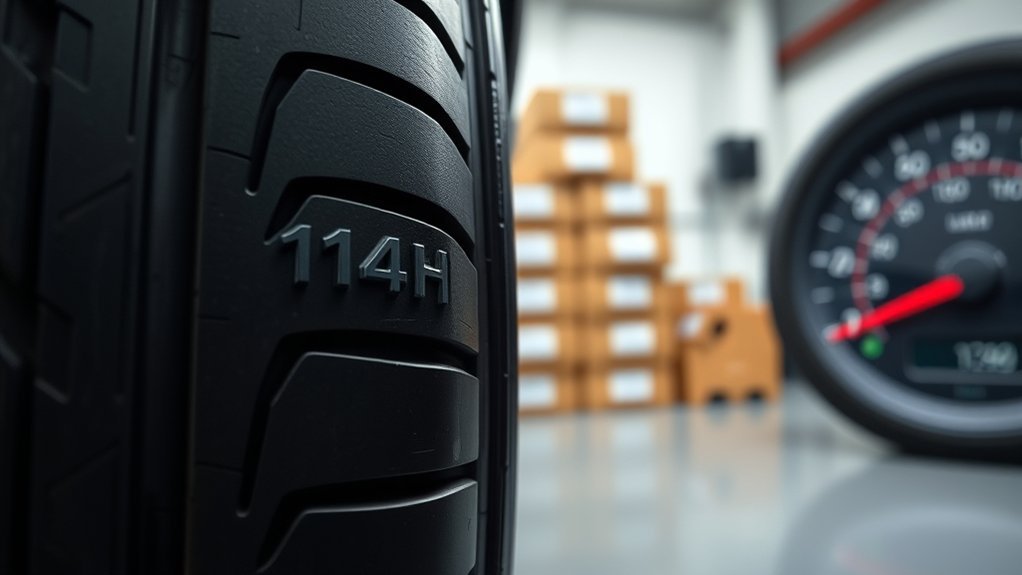
A tire marked 114H is showing its service description. The number 114 is the tire’s load index, and the letter H is its speed rating. Together, they tell you how much weight the tire can carry and the maximum speed category it is built to handle when the tire is the correct size, properly inflated, and in good condition.
Quick Answer
On a tire, 114H means the tire has a 114 load index, rated for 2,601 pounds (1,180 kg) per tire, and an H speed rating, rated up to 130 mph (210 km/h) under proper test conditions. Always match both ratings to your vehicle’s door placard and owner’s manual.
Key Takeaways
- 114 is the load index, which equals 2,601 pounds (1,180 kg) per tire when the tire is properly inflated.
- H is the speed rating, which equals 130 mph (210 km/h) under proper conditions.
- The rating is not a suggestion to drive at 130 mph. Road conditions, heat, tire pressure, tire age, and local speed laws still matter.
- The tire’s load index and speed rating should meet or exceed the vehicle manufacturer’s recommended rating unless the owner’s manual says otherwise.
- Do not confuse the H speed rating in 114H with Load Range H, which is a separate marking used mostly on some light-truck and trailer tires.
At a Glance
| Time Required | 1 to 3 minutes to check the sidewall, door placard, and owner’s manual |
| Difficulty | Easy |
| Tools Needed | Your tire sidewall, tire pressure gauge, driver-door tire label, and owner’s manual |
| Cost | $0 if you are only checking the rating |
What Does 114H Mean on a Tire?
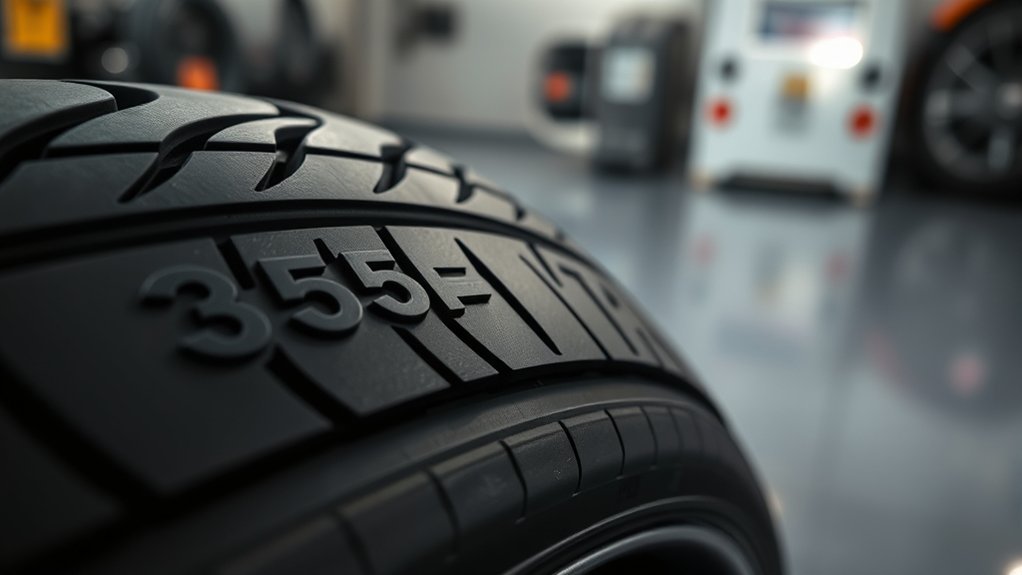
A tire marked 114H has two ratings. The 114 is the load index, which tells you the maximum weight one tire can carry at the correct inflation pressure. The H is the speed rating, which tells you the tire’s tested speed category.
For a 114H tire, the load index equals 2,601 pounds (1,180 kg) per tire, and the H speed rating equals 130 mph (210 km/h). These values are part of the tire’s service description, usually printed after the tire size. For example, in a code like P235/65R17 114H, the tire size comes first, and 114H comes at the end.
This marking helps you choose a tire that matches your vehicle’s weight, size, and performance needs. It does not replace your vehicle’s official tire information. Before buying or installing a tire, compare the sidewall rating with the Tire and Loading Information Label on the driver’s door area and the tire section of your owner’s manual.
Warning: Do not install a tire with a lower load index or speed rating than your vehicle requires unless the vehicle manufacturer allows it. A tire that cannot support the vehicle’s load can overheat, wear poorly, or fail under stress.
[Products Worth Considering]

The SAFELIFE dial tire tread depth gauge measures tread depth in 1/32 inch increments with clear, easy-to-read 2-inch dial face. Color zones using a traffic light system help you quickly judge whether tread is low, marginal, or ample for safer driving. Built with a durable zinc cast body and a metal detect probe for precise, comfortable use across cars, motorcycles, trucks, and buses.

Measure tire tread depth quickly and accurately with this LUMITECO dial gauge that reads in 1/32" increments up to 14/32". The color-coded green/yellow/red zones make it easy to judge tire wear and know when replacement is needed. A rugged, compact design with a protective pouch helps keep the gauge ready for use on cars, trucks, motorcycles, and more.
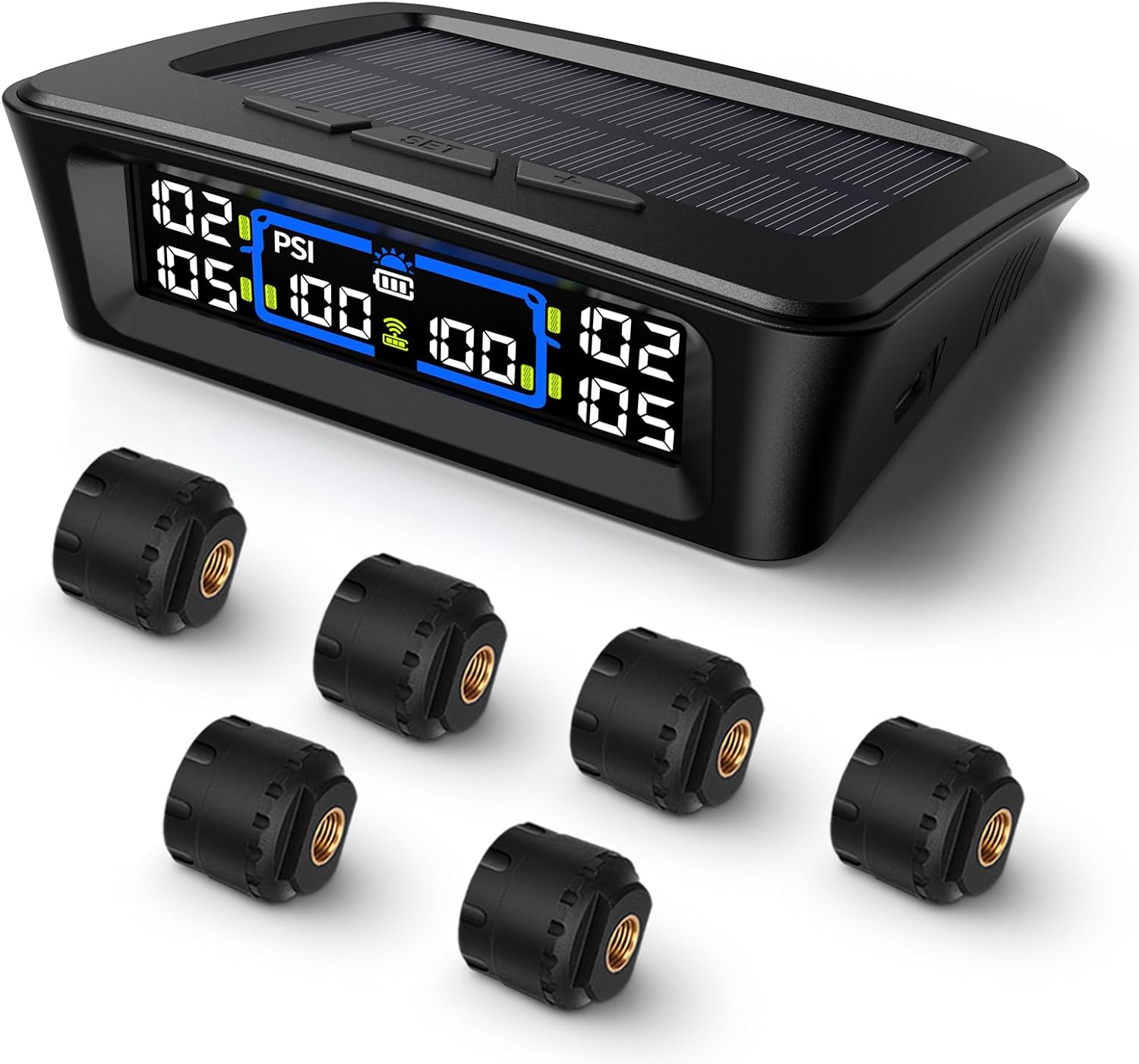
The Tymate TM12 RV TPMS delivers real-time tire pressure and temperature monitoring with a stable 433Hz display for safer long-distance driving. It supports simultaneous monitoring across vehicle and trailer zones, includes six alarm modes for pressure, temperature, leakage, battery, and signal loss, and features easy DIY installation with auto calibration. Power is supplied via USB-C charging or solar recharging, with a wide 0–144 PSI range and up to 50 ft signal coverage for RVs and towable trailers.
What the 114 Load Index Means
The 114 load index means one tire can carry up to 2,601 pounds (1,180 kg) when it is the correct tire for the vehicle and is inflated to the proper cold tire pressure. This is a per-tire rating, not the total weight your vehicle can carry.
A load index is a number from a standardized chart. A higher number usually means more load capacity. For example, load index 113 is rated for 2,535 pounds, while load index 114 is rated for 2,601 pounds. That is why using the exact number matters. You can check a complete load chart from Tire Rack’s load index guide.
Load capacity also depends on tire pressure. A tire does not automatically carry its full rated load if it is underinflated, damaged, overloaded, or used on the wrong vehicle. NHTSA recommends checking tire pressure when tires are cold and using the pressure listed on the vehicle’s tire label or in the owner’s manual, not the maximum pressure printed on the tire sidewall.
Pro Tip: Think of 114 as the tire’s weight capacity code. Then check whether your vehicle asks for 114, a lower number, or a higher number. The correct answer is on the door placard and in the owner’s manual.
What the H Speed Rating Means
The H speed rating means the tire is rated up to 130 mph (210 km/h) under proper test conditions. This rating assumes the tire is correctly sized, properly inflated, not overloaded, not damaged, and used within its intended design limits.
The speed rating is not a recommendation to drive at that speed. It is a performance category. Real-world safety still depends on traffic laws, weather, tread depth, road surface, temperature, tire age, load, and inflation pressure. A worn, underinflated, or overloaded H-rated tire should not be treated as capable of sustained high-speed driving.
H Speed Rating Meaning
In the service description 114H, the letter H is the tire’s speed symbol. It tells you the tire’s tested speed category. H-rated tires are common on many passenger cars, crossovers, minivans, and some SUVs because they balance comfort, handling, and highway performance.
If your vehicle came with H-rated tires from the factory, replacing them with a lower speed rating may change steering feel, braking response, handling, and heat resistance. Some vehicles may allow different ratings for winter tires or special use, but you should only do that if the owner’s manual or tire placard allows it.
130 Mph Maximum
The H rating is listed at 130 mph, but that number is a controlled rating, not a safe-road-speed promise. Local speed limits, road conditions, and tire condition always come first. If you tow, carry heavy cargo, drive in extreme heat, or run tires near their load limit, you should be more conservative.
Safe Driving Conditions
An H-rated tire performs as designed only when several conditions are met: correct tire size, correct cold inflation pressure, proper load, sound tread, no sidewall damage, and a vehicle that is aligned and maintained. If any of those conditions are wrong, the rating gives you less real-world margin.
NHTSA reported 511 traffic fatalities in tire-related crashes in 2024, which is why correct tire size, pressure, load rating, and maintenance are safety issues, not just technical details.
Why 114H Matters for Safety
The 114H tire rating matters because it helps confirm whether the tire can support your vehicle and perform within the required speed category. The load index protects against overloading. The speed rating helps make sure the tire’s heat and handling capacity match the vehicle’s design.
Federal tire-selection rules for many light-duty vehicles require tire load capacity to match the vehicle’s load demands. For trucks, multipurpose passenger vehicles, buses, and trailers, the combined maximum load ratings of the tires on an axle must be at least the axle’s gross axle weight rating, or GAWR, under the applicable rule in 49 CFR 571.110.
For everyday drivers, the practical step is simple: do not guess. Check the exact tire size and rating your vehicle manufacturer lists. The right tire should match the vehicle’s load needs, axle ratings, rim size, tire type, and intended use.
Where to Find 114H on the Sidewall
You’ll usually find 114H on the tire sidewall right after the tire size. It may appear in a full marking such as 235/60R18 114H or P235/65R17 114H. The number and letter are often close together because they form the tire’s service description.
Sidewall Placement
Look on the outer sidewall for the long size code. Read it from left to right:
- 235 means the tire is about 235 mm wide.
- 60 means the sidewall height is 60% of the tire width.
- R means radial construction.
- 18 means the tire fits an 18-inch wheel.
- 114 is the load index.
- H is the speed rating.
Some tires also show extra markings such as XL, LT, ST, M+S, 3PMSF, or a load range letter. Those markings can change how the tire should be used, especially on trucks, trailers, and winter tires.
Reading the Marking
When you read the marking, separate the tire size from the service description. In 235/60R18 114H, the tire size is 235/60R18. The service description is 114H. That service description means 2,601 pounds per tire and an H speed rating of 130 mph.
Do not read the load index alone. A tire can have the right load index but the wrong size, wrong speed rating, wrong construction, or wrong tire type. All of those details should match your vehicle’s requirements.
How to Choose the Right 114H Tire
To choose the right 114H tire, start with your vehicle’s required tire size and service description. The best source is the Tire and Loading Information Label on the driver’s side door area and the owner’s manual. NHTSA also advises using the vehicle label or owner’s manual to find the correct tire size and pressure.
- Check the vehicle placard. Find the required tire size, load information, and cold inflation pressure.
- Check the owner’s manual. Look for approved tire sizes, speed ratings, winter tire exceptions, towing guidance, and load limits.
- Read the tire sidewall. Confirm the tire actually says 114H and matches the required size.
- Compare axle and load needs. If you tow or haul, check GVWR, GAWR, and cargo limits before choosing a tire.
- Inspect condition. Do not rely on the rating if the tire is cracked, worn, underinflated, repaired poorly, or damaged.
- Ask a tire professional when changing sizes. A different size can change load capacity, speedometer accuracy, handling, and clearance.
Note: The tire’s maximum pressure on the sidewall is not the same as your vehicle’s recommended cold tire pressure. Use the pressure listed on the vehicle placard or owner’s manual unless a qualified tire professional gives vehicle-specific guidance.
[Products Worth Considering]

The ETENWOLF T600 digital tire pressure gauge delivers precise, manually calibrated readings to ANSI B40.7 Grade 2A standards with ±0.5% PSI accuracy. Its 360° rotating nozzle and display hold make it easy to check pressures from any angle, while a bleed button helps dial tires to the perfect level. With a 0–250 PSI range and support for PSI, BAR, and KPA, it’s a convenient tool for maintaining tire performance across many vehicles and seasons.

The Topeak SmartGauge D2 delivers precise digital tire pressure readings for bikes, motorcycles, and sports equipment up to 250 psi (17 bar). Its rotating SmartHead works with both Presta and Schrader valves, so you can check pressure quickly without adapters. The LCD display makes it easy to read results in psi, bar, or kg/cm² with an included CR2032 battery for immediate use.

Check tire pressure with the Milton S-925 pencil gauge built for trucks, RVs, and bicycles. It features a single-head chuck with a built-in deflator valve, and it displays readings in both PSI and kPa for convenient use. The gauge is designed for accurate, repeatable pressure checks within its working range.
114H vs Other Common Ratings
The load index and speed rating work together, but they are separate. A 114T tire and a 114H tire have the same load index, so they carry the same rated weight when properly used. The difference is the speed rating.
| Rating | Load Capacity | Speed Category | What It Means |
| 114S | 2,601 lb per tire | 112 mph | Same load index as 114H, lower speed rating. |
| 114T | 2,601 lb per tire | 118 mph | Common on many touring, SUV, and crossover tires when approved by the vehicle. |
| 114H | 2,601 lb per tire | 130 mph | Higher speed category than S or T while keeping the same 114 load index. |
| 114V | 2,601 lb per tire | 149 mph | Higher speed category, but only useful when approved for the vehicle and driving needs. |
When 114H May Not Be the Right Tire
A 114H tire is not automatically right for every vehicle. It may be wrong if the tire size does not match, the vehicle requires a higher load index, the vehicle requires a different speed rating, or the tire type does not match the application.
- Your vehicle requires a higher load index. Do not step down to 114 if the placard or manual requires more.
- Your vehicle requires a higher speed rating. Some performance vehicles need V, W, Y, or another higher rating.
- You tow or haul heavy loads. Check GVWR, GAWR, trailer rating, tongue weight, and tire type before choosing.
- You need LT or ST tires. Light-truck and special-trailer tires use additional markings that may not work the same way as passenger tires.
- You changed wheel size. Different wheel and tire sizes can change load capacity, clearance, speedometer accuracy, and handling.
- The tire is old or damaged. A correct sidewall rating does not make a damaged tire safe.
Load Index 114 vs Load Range H
Load index 114 and Load Range H are not the same thing. In 114H, the H is the speed rating. It does not mean Load Range H.
Load range is a separate marking used mostly on light-truck, trailer, and commercial-style tires. It relates to the tire’s construction and pressure/load category. Load Range H can carry more than Load Range G in some tire sizes, but that does not make it better for every vehicle. The right choice depends on the tire size, rim rating, axle rating, vehicle placard, and intended use.
Frequently Asked Questions
What is the difference between 114T and 114H?
114T and 114H have the same load index, so both are rated for 2,601 pounds per tire when used correctly. The difference is the speed rating. T is rated for 118 mph, while H is rated for 130 mph. Use the rating your vehicle manufacturer recommends.
Which is better, S or H speed rating?
H has a higher speed rating than S. S is rated for 112 mph, while H is rated for 130 mph. That does not always make H the better choice. The best rating is the one your vehicle requires, because the manufacturer matched that rating to the vehicle’s weight, handling, braking, and performance needs.
What does a load index of 114 mean?
A load index of 114 means the tire is rated to carry 2,601 pounds (1,180 kg) per tire when it is properly inflated and correctly used. It is not the total vehicle weight rating. Always compare the tire rating with the vehicle placard, owner’s manual, and axle ratings.
Is Load Range H better than G?
Load Range H can have a higher load and pressure capacity than Load Range G in some light-truck or trailer tire sizes, but it is not automatically better. It must match the vehicle, rim, axle rating, inflation pressure, and intended use. Also, the H in 114H is a speed rating, not Load Range H.
Can I use a 114H tire if my vehicle came with 114V tires?
Usually, you should not lower the speed rating unless your owner’s manual or tire placard allows it. A 114H tire has the same load index as a 114V tire, but the H speed rating is lower than V. Ask a qualified tire professional before stepping down from the original speed rating.
Does 114H mean the tire can carry 10,404 pounds on a four-tire vehicle?
Four tires rated at 2,601 pounds each add up to 10,404 pounds of tire load capacity on paper, but that does not mean your vehicle can carry that much. Your actual limit is controlled by the vehicle’s GVWR, GAWR, suspension, brakes, wheels, tire pressure, and manufacturer load limits.
Conclusion
When you see 114H on a tire, read it as two separate ratings. 114 is the load index, rated at 2,601 pounds (1,180 kg) per tire. H is the speed rating, rated at 130 mph (210 km/h) under proper conditions.
The safest choice is not simply the highest number or fastest letter. The safest choice is the tire that matches your vehicle’s required size, load index, speed rating, tire type, rim, axle rating, and cold inflation pressure. Check the sidewall, then confirm it against the door placard and owner’s manual before you buy.
Sources
- Tire Rack — What Is Load Index? — supports the 114 load index value of 2,601 lb / 1,180 kg.
- NHTSA TireWise — supports tire placard, owner’s manual, pressure, maintenance, and tire safety guidance.
- 49 CFR 571.110 — Tire selection and rims — supports tire load limit and vehicle placard requirements for many light-duty vehicles.
- Goodyear — Tire Speed Rating — supports tire speed-rating context and speed-symbol interpretation.
[Products Worth Considering]

Milton S-921 pencil tire pressure gauge helps you maintain optimal tire pressure for passenger cars with accurate readings in PSI and kPa. It features a built-in deflator valve for convenient pressure adjustments, plus a single chuck head and nylon indicator bar for easy use on the go. Built from durable plated brass and designed for reliable performance, it’s a practical road trip and cold-weather maintenance tool.

Monitor tire tread wear with a smart, color-coded depth gauge that shows clear condition ranges at a glance. The bar is range marked for fast, easy readings, helping you maintain safer traction and performance. Each gauge is portable with a pocket clip, and the set includes 20 units for daily use and sharing.
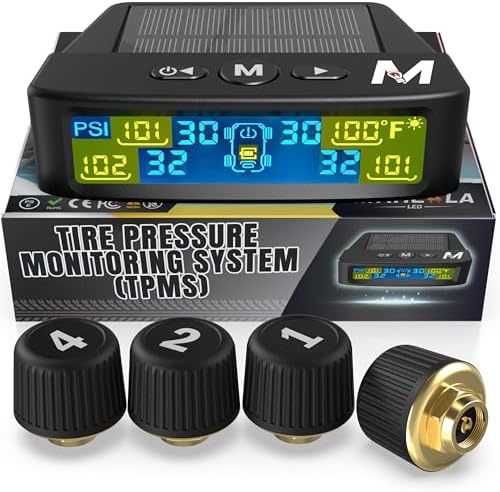
Marcala’s TPMS set of four sensors helps you monitor tire pressure and temperature in real time while driving, with updates every second. The bright color LCD uses auto-dimming for easy viewing, powered by dual solar and USB charging, and offers six alarm modes. Built for trailers, RVs, campers, trucks, and towing setups, the sensors support monitoring 1-4 wheels up to 98 PSI with IP67 waterproof protection.

Related Articles

Best Westlake Tires 2026: Affordable Tires for Daily Driving and All-Season Use
You spend a lot of time on the road, and the tires you choose affect safety, comfort, fuel economy, and long-term costs. Westlake offers…
Read More
Best Sailun Tires 2026: Affordable Tire Picks for Everyday Driving
You rely on tires for safety, fuel economy and ride comfort, so choosing the right Sailun model matters more than just price. This guide…
Read More
Best Snow Tires for Trucks 2026: Winter Truck Tires for Safe Cold-Weather Driving
Winter tires are one of the most effective upgrades you can make to keep your truck safe when temperatures drop and roads become snow-…
Read More