
What Do Tire Flips Work? Muscles & Fitness Benefits Explained
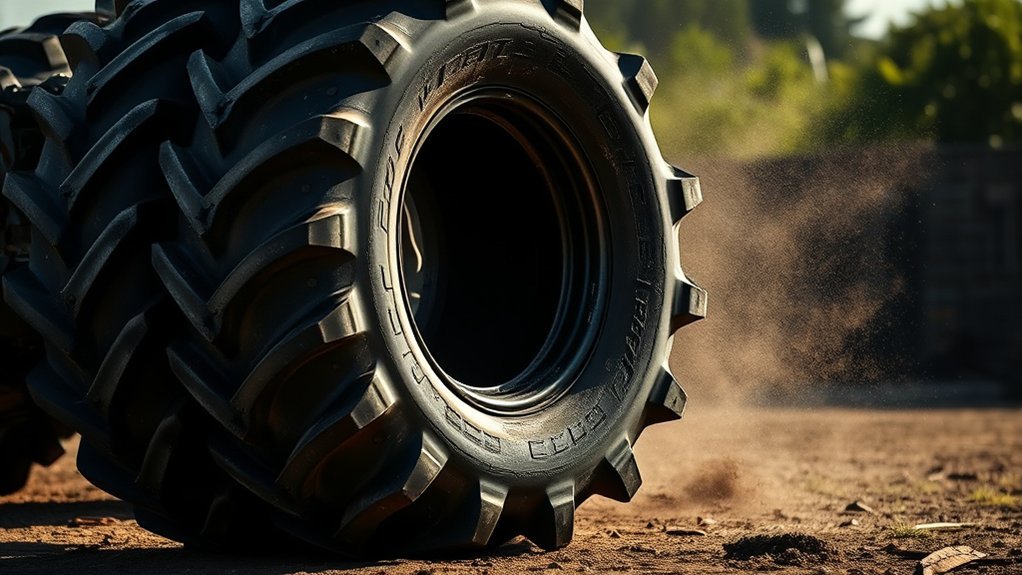
Tire flips work your posterior chain first, especially your glutes, hamstrings, and lower back, while your core braces to keep your spine stable. You also recruit your quads, shoulders, upper back, biceps, triceps, forearms, and grip muscles as you drive the tire up and push it over. Done with good form, tire flips can build total-body strength, explosive leg drive, conditioning, and grip endurance.
Quick Answer
Tire flips mainly work your glutes, hamstrings, quads, lower back, core, upper back, shoulders, arms, and grip. The first pull is mostly legs, hips, and back. The turnover adds shoulders, chest, triceps, biceps, and forearms. Because the tire is awkward, your core works hard through every phase.
Key Takeaways
- Tire flips are a full-body power exercise, not just a lower-body drill.
- The biggest movers are the glutes, hamstrings, quads, lower back, and core.
- Your shoulders, upper back, arms, forearms, and grip help finish and control each rep.
- Good form matters more than tire weight. Stop if your back rounds or the rep turns into an arm curl.
- Use low reps for power and strength, short timed sets for conditioning, and safer alternatives if you are not ready for tire flips.
At a Glance
| Time Required | 10 to 20 minutes for a focused tire-flip block |
| Difficulty | Intermediate, or beginner only with a light tire and coaching |
| Tools Needed | Training tire, flat non-slip surface, firm shoes, optional gloves or chalk |
| Cost | Free to low cost if you already have a safe tire and training space |
What Do Tire Flips Work?
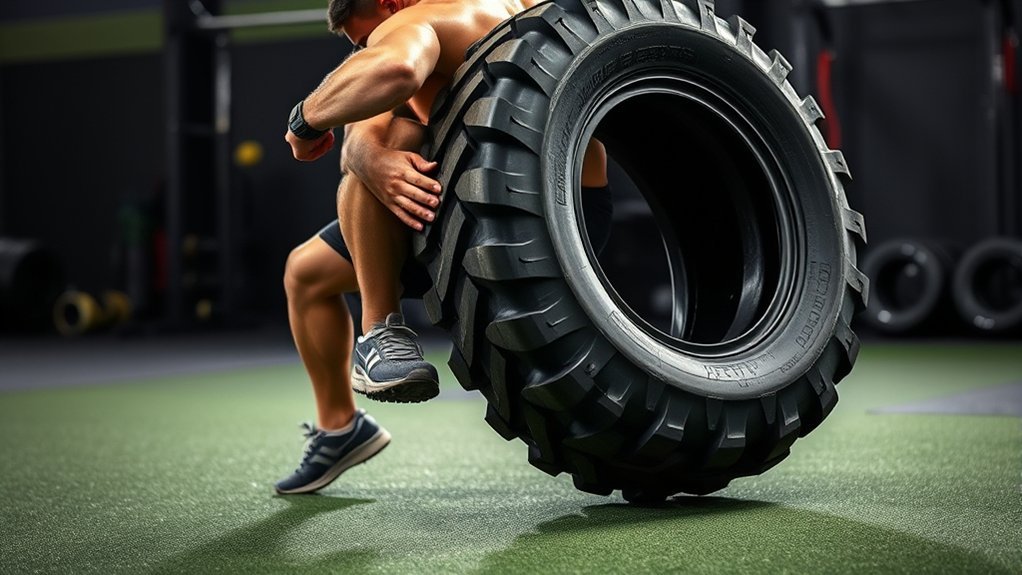
Tire flips primarily work your posterior chain, which includes your glutes, hamstrings, and spinal erectors. These muscles help you hinge, drive through the ground, and extend your hips as the tire starts to rise.
Your quads help you push the floor away and extend your knees. Your core braces hard to limit spinal movement while the tire shifts in front of you. Your upper back, shoulders, chest, biceps, triceps, forearms, and hands then help you guide and finish the flip.
That is why tire flips feel different from a machine exercise. You are not isolating one muscle. You are linking your legs, hips, trunk, and arms into one powerful pattern.
Warning: Tire flips are heavy, awkward, and explosive. Do not train through back pain, sharp shoulder pain, wrist pain, dizziness, or loss of control. If you have a current injury, heart condition, or are unsure about your form, get guidance from a qualified coach or health professional before using tire flips.
[Products Worth Considering]
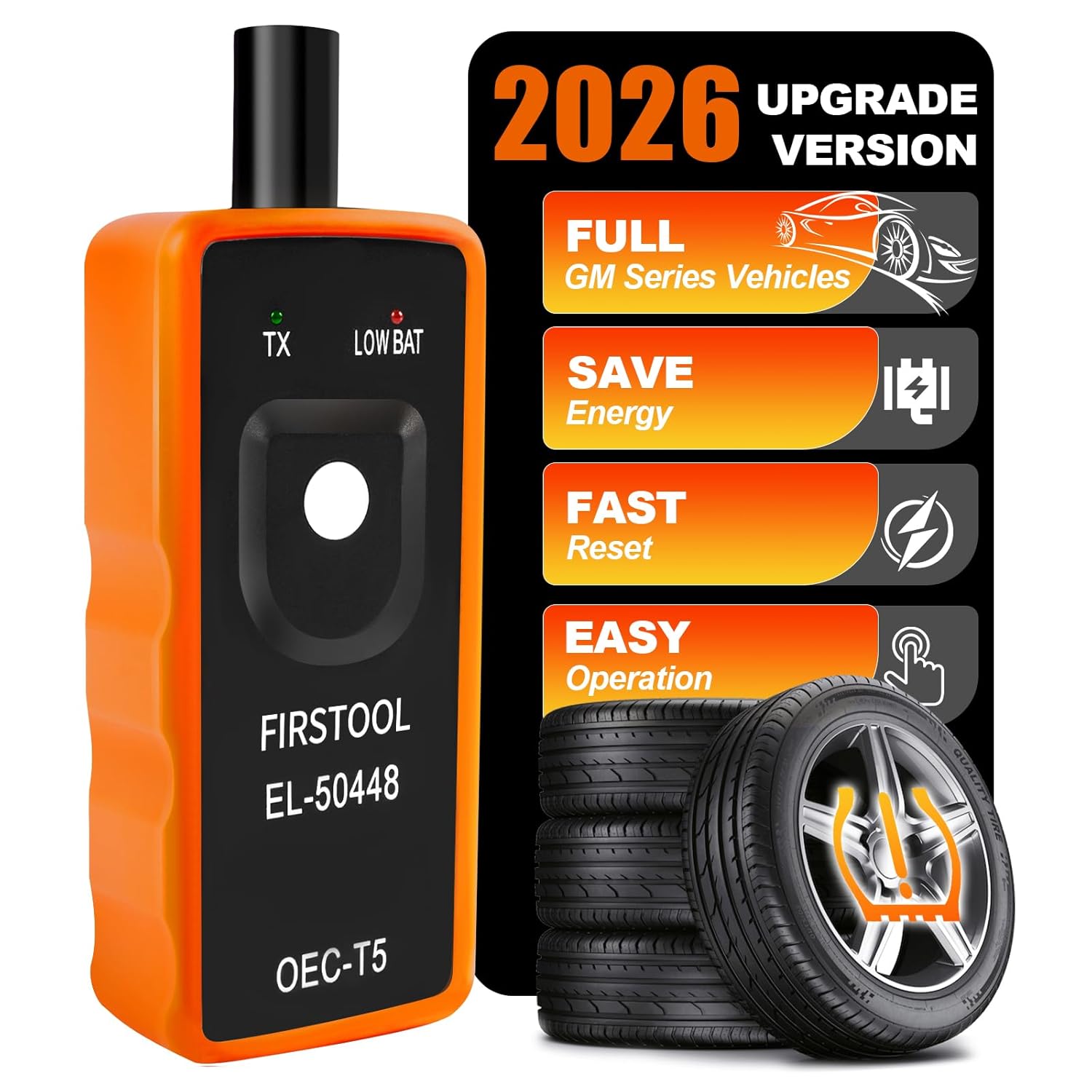
This TPMS relearn tool helps you quickly activate, match, and reset GM tire pressure sensors to keep the vehicle monitoring system working properly. It clears tire pressure alarms and dashboard warning lights after sensor replacement or tire rotation, and supports learning for common 315/433 MHz TPMS sensors. Designed for simple one-button operation, it can help you avoid unnecessary trips to repair shops.

Replace worn tires quickly with this universal 4.80/4.00-8 tire and inner tube set designed for wheelbarrows and outdoor utility carts. The ribbed tread helps reduce turf damage while the natural rubber construction supports longer service life. Compatible with 15.5-inch outer diameter, 4-inch width, and 8-inch rim diameter wheels, it uses a straight TR-13 valve stem for easy installation. For best results, inflate with a manual pump and do not exceed 25 PSI.
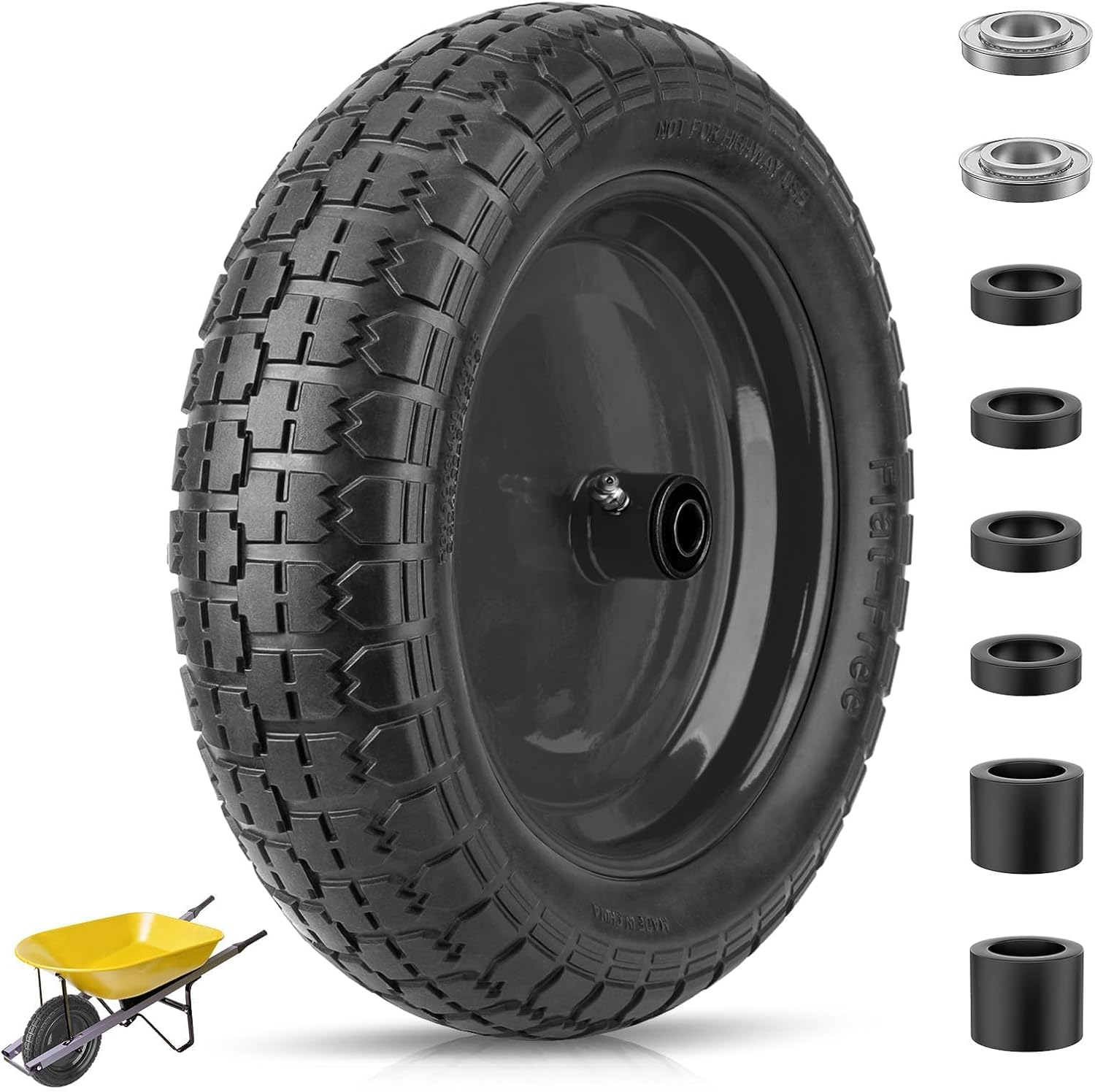
This flat-free TICONN wheelbarrow tire features durable polyurethane foam construction that never needs inflation, helping prevent punctures and reducing maintenance on rough outdoor terrain. With a 300 lb max load capacity and stable steel rim design, it supports safer transport for yard work and hauling tasks. An adapter kit with ball bearings and nylon spacers is included for easier fit and customization across common wheelbarrow and cart axle setups.
Tire Flip Muscles Worked From Head to Toe
When you flip a tire, each muscle group has a job. The legs and hips create most of the force. The trunk keeps your body organized. The upper body helps you steer, push, and complete the turnover.
| Muscle Area | Role During Tire Flips |
| Glutes | Drive hip extension and help finish the powerful push. |
| Hamstrings | Assist the hip hinge and help pull the tire off the ground. |
| Quads | Extend the knees and support the leg drive. |
| Core | Braces the torso and resists unwanted rotation or rounding. |
| Upper back and lats | Hold the tire close and help keep the shoulders controlled. |
| Shoulders, chest, and triceps | Push the tire over once it reaches chest height. |
| Biceps, forearms, and grip | Hold the tire edge and control the transition. |
Upper Body Activation
Although tire flips start with the legs and hips, they place real demand on the upper body. Your upper back and lats help keep the tire close. Your deltoids and traps stabilize the shoulders. Your chest and triceps help push the tire over during the finish.
Your biceps and forearms work hard too, but they should not be the main engine. If you feel like you are curling the tire, the tire is probably too heavy or your hips are not driving enough.
Core Stability Demands
Your core does not move the tire much by itself, but it keeps the rest of the lift safe and efficient. Your abs, obliques, transverse abdominis, and spinal erectors brace to resist rounding, twisting, and collapsing as the tire shifts.
Good bracing also helps transfer force from your legs into the tire. Think “ribs down, abs tight, chest proud” before each rep.
| Core Role | What It Helps You Do |
| Brace | Keep your spine from folding under load. |
| Resist rotation | Control the tire when one side rises faster. |
| Transfer force | Connect leg drive to upper-body push. |
| Fight fatigue | Maintain clean reps during repeated sets. |
Lower Body Power
Lower body power drives the tire flip. Your glutes and quads create the main push, while your hamstrings and lower back help hold the hinge position and start the lift. Your calves and feet help you stay planted so the force goes into the tire instead of leaking into the ground.
This is why tire flips can carry over to sprinting, jumping, tackling, pushing, and other explosive actions. The movement teaches you to apply force through your whole body while controlling an awkward object.
Tire Flip Benefits for Strength and Conditioning
Tire flips can build strength and conditioning because they use several large muscle groups at once. The movement blends a hip hinge, squat-like drive, upper-body push, core brace, and grip challenge in one rep.
Used correctly, tire flips can help you train:
- Explosive power: You must produce force quickly to move the tire from the ground.
- Functional strength: The tire is awkward, so you learn to control real-world-style resistance.
- Grip endurance: Your hands and forearms work through every rep.
- Work capacity: Repeated flips with short rest can raise heart rate and challenge muscular endurance.
- Mental toughness: Heavy, awkward reps demand focus, patience, and clean effort.
For general health, tire flips should be part of a balanced plan. The CDC recommends weekly aerobic activity plus muscle-strengthening work that trains the major muscle groups.
Tire flips are best used as a power and conditioning tool, not as a max-effort ego lift. A lighter tire moved fast with clean form is usually more useful than a heavy tire moved poorly.
Tire Flips for Power, Grip, and Endurance
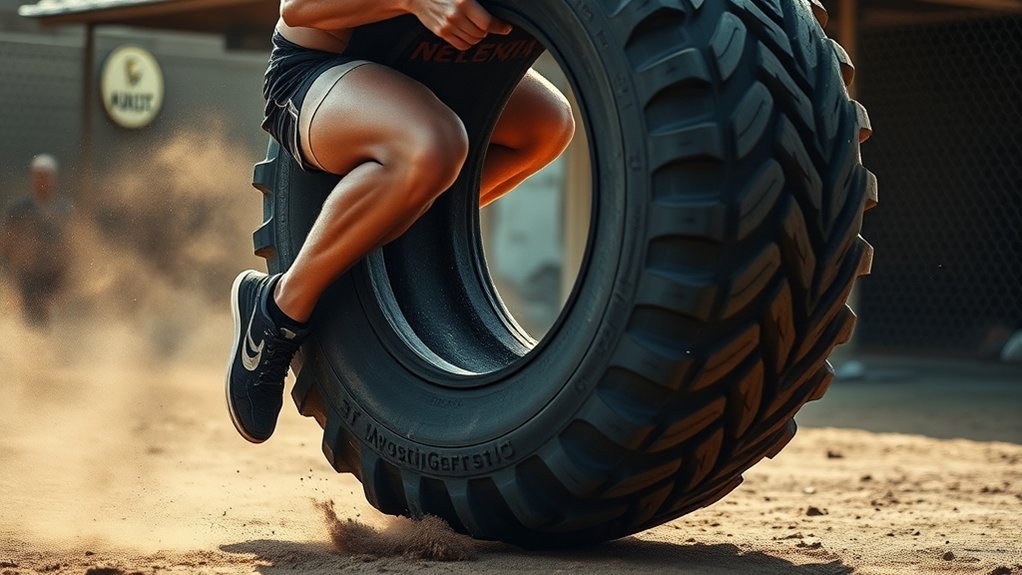
When you flip a tire, you create power from the floor up. Your legs and hips start the rep. Your trunk holds position. Your hands, arms, shoulders, and chest finish the flip. That sequence is what makes the exercise useful for power, grip, and endurance.
Explosive Power Development
Explosive power means producing force quickly. Tire flips train this because the tire will not move if you pull slowly with weak intent. You need a strong brace, a fast leg drive, and a coordinated push.
For power, keep reps low and crisp. Do 2 to 5 flips per set, rest long enough to move fast again, and stop before form slows down.
Grip Strength Gains
Your grip works hard because you have to hold the tire edge while the load moves and changes angle. That trains the forearms, hands, fingers, and wrists. It also teaches your hands to transfer force from the lower body into the tire.
If your grip fails early, use a lighter tire, dry the contact area, or use chalk. Gloves may protect your hands, but bulky gloves can make it harder to feel the tire.
Endurance and Conditioning
Tire flips can also work as conditioning when you repeat them with controlled rest. This does not mean every set should be sloppy or all-out. Conditioning improves when you can repeat quality reps under fatigue.
| Phase | Training Effect |
| Setup | Builds position, brace, and focus. |
| Drive | Trains leg power and hip extension. |
| Flip | Adds upper-body push and coordination. |
| Reset | Builds repeatability and work capacity. |
Tire Flip Form That Protects Your Back
Good tire-flip form starts before the tire moves. Warm up first, choose a tire you can control, and use a flat surface with enough room. Mayo Clinic advises using proper form, moving with control, and lowering the load or reps if you cannot keep good technique during weight training.
- Set your feet: Stand close to the tire with your feet about shoulder-width apart.
- Hinge and squat: Push your hips back, bend your knees, and keep your chest up.
- Brace your core: Tighten your abs as if you are about to take a light punch.
- Grip low: Put your fingers under the tire edge. Keep your arms long, but not locked.
- Drive with your legs: Push through the ground and extend your hips. Do not curl the tire with your arms.
- Step in as it rises: Bring one knee or foot forward as needed so you stay close to the tire.
- Push it over: Once the tire reaches chest height, switch from lifting to pushing.
- Reset every rep: Rebuild your stance, brace, and grip before the next flip.
Pro Tip: Think “push the ground away” instead of “pull the tire up.” This cue helps your glutes, quads, and hamstrings do the work instead of forcing your biceps and lower back to take over.
Common Tire Flip Mistakes
Most tire-flip problems come from using too much load, standing too far away, or trying to lift with the arms. Fix these mistakes before adding more reps.
- Rounding your back: Use a lighter tire, raise your chest, and brace before you pull.
- Curling the tire: Drive with your legs and hips. Your arms guide the tire, but they should not be the main engine.
- Starting too far away: Stay close so the tire does not pull you forward.
- Letting your hips shoot up: Keep your chest and hips rising together.
- Rushing reps: Reset between flips so each rep starts from a strong position.
- Training to failure: Stop the set when speed drops or your position breaks.
Best Tire Flip Workouts for Strength, Conditioning, and Fat Loss
For strength, conditioning, and fat-loss support, tire flips work best when you match the set style to your goal. Exact calorie burn varies, so do not treat tire flips as a magic fat-loss tool. Use them to raise training effort, build muscle, and support a plan that also includes smart nutrition, recovery, and weekly activity.
| Goal | How to Program Tire Flips |
| Power | 4 to 6 sets of 2 to 4 fast flips, resting 90 to 180 seconds. |
| Strength | 3 to 5 sets of 3 to 6 controlled flips with a challenging tire. |
| Conditioning | 8 to 12 rounds of 15 to 20 seconds work, then 45 to 75 seconds rest. |
| Fat-loss support | Pair 3 to 5 tire flips with sled pushes, farmer carries, or battle ropes for 3 to 5 rounds. |
Place tire flips early in your workout if the goal is power. Place them after your main lift or inside a short circuit if the goal is conditioning. Avoid doing heavy tire flips when your lower back is already tired from deadlifts or heavy rows.
[Products Worth Considering]

The VEHLIVE SU-50448 II TPMS relearn tool provides a fast activation reset to restore accurate tire pressure monitoring after sensor replacement or tire rotation. It supports 315 MHz and 433 MHz GM series sensors and helps clear dashboard pressure warnings. With simple two-button operation and horn-confirmed relearning order, you can reprogram sensors conveniently at home.

The AICEL TPMS relearn tool helps you quickly reset or relearn tire pressure sensors after replacement, tire rotation, or resolving tire pressure alarms. It provides an activation reset function so your vehicle’s TPMS can operate optimally, saving time and money on frequent visits to an auto shop. Designed for easy use on most vehicles, it works by placing the tool near the valve stem and using the learn button.

This TPMS sensor training and relearn reset tool is customized for Ford, Lincoln, and Mercury vehicles to help activate tire pressure programming after sensor replacement or tire rotation. It can activate individual tire pressure sensors with one-button operation, helping prevent TPMS warning light illumination. It is not a sensor programming tool and cannot program replacement sensors—use it to trigger/activate sensors only.
How to Choose a Safe Training Tire
The right tire should challenge you without forcing ugly reps. For most people, that means starting lighter than expected.
- Pick a tire you can move cleanly: You should be able to flip it without rounding your back or stalling halfway.
- Check the tread and sidewall: Avoid sharp wire, exposed metal, loose chunks, oil, or wet surfaces.
- Use a flat area: Grass, turf, rubber flooring, or a clean training yard works better than uneven pavement.
- Make space: Keep people, pets, and equipment away from the tire path.
- Start with singles: Practice one rep at a time before using circuits or timed sets.
Note: A tire that is too heavy often turns the movement into a rounded-back pull or awkward biceps curl. Choose the tire that lets you train the pattern, not the one that looks most impressive.
Tire Flip Alternatives
If you do not have a tire, or if tire flips are not right for your body yet, you can train similar qualities with other exercises.
- Sled push: Trains leg drive and conditioning with less grip demand.
- Sandbag clean to shoulder: Builds awkward-object strength and hip power.
- Trap-bar deadlift: Trains lower-body force with a more controlled implement.
- Kettlebell swing: Builds hip snap, posterior-chain power, and conditioning.
- Medicine-ball scoop toss: Trains explosive hip extension without a heavy tire.
- Farmer carry: Builds grip, trunk stiffness, and total-body work capacity.
Who Should Add Tire Flips to Training?
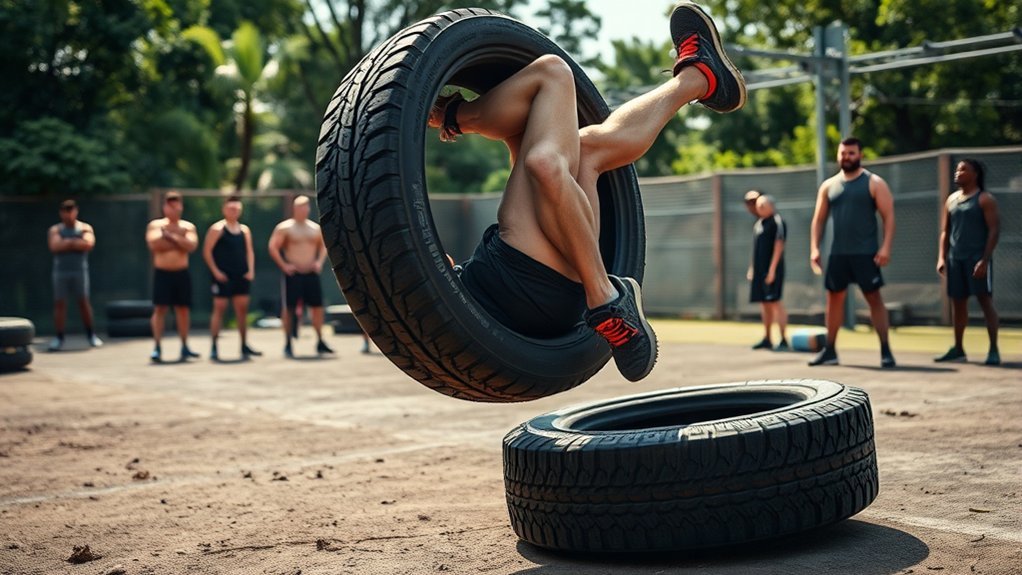
You should add tire flips if you want a full-body strength tool that also builds power, grip, and conditioning. They are especially useful for athletes who sprint, jump, tackle, grapple, carry, or push against resistance.
Tire flips can also fit general fitness if you enjoy outdoor training and have a safe setup. Start with a light tire, learn the movement slowly, and progress only when your reps stay clean.
You may need to avoid or modify tire flips if you have current back pain, shoulder pain, wrist pain, knee pain, uncontrolled blood pressure, dizziness with hard exercise, or no safe place to train. In those cases, use alternatives like sled pushes, trap-bar deadlifts, or carries until you are ready.
Frequently Asked Questions
What are the benefits of tire flips?
Tire flips build functional strength, explosive power, grip endurance, and conditioning. They train your glutes, quads, hamstrings, lower back, core, shoulders, arms, and upper back in one movement. They also teach you to create force from the ground and control an awkward object.
What muscles do tire flips work the most?
Tire flips work the glutes, hamstrings, quads, lower back, and core the most during the initial drive. The shoulders, chest, triceps, biceps, upper back, forearms, and grip become more involved as you guide and push the tire over.
How effective are tire flips?
Tire flips are effective when the tire weight matches your ability and your form stays clean. They can build strength, power, conditioning, and grip, but they are not required for fitness. If you cannot keep a neutral spine or control the tire, use a safer alternative first.
Are tire flips a good workout?
Yes, tire flips can be a good workout if you use proper technique and enough rest. They are best for power, strength, and conditioning. They are not ideal for everyone, especially if you have back or shoulder issues or no safe training space.
How many tire flips should beginners do?
Beginners should start with 1 to 3 flips per set for 3 to 5 sets, using a tire they can control. Rest long enough to repeat good form. Stop the set if your back rounds, your grip slips, or you need to curl the tire with your arms.
Can tire flips help with fat loss?
Tire flips can support fat loss by raising training intensity and helping you build muscle, but fat loss still depends on total activity, nutrition, sleep, and recovery. Use tire flips as one hard training tool, not as the whole plan.
Conclusion
Tire flips are more than a brute-force drill. They train your glutes, hamstrings, quads, lower back, core, upper back, shoulders, arms, and grip in one explosive pattern. Use them for power, strength, conditioning, and work capacity, but keep technique first. Choose a tire you can control, brace hard, drive with your legs and hips, and stop before your form breaks.
Sources
- CDC: Adult Activity, An Overview – supports weekly aerobic and muscle-strengthening guidance.
- Office of Disease Prevention and Health Promotion: Current Physical Activity Guidelines – supports evidence-based activity guidance.
- Mayo Clinic: Weight Training Do’s and Don’ts – supports proper form, warmup, progression, breathing, and rest guidance.
- CDC: Benefits of Physical Activity – supports physical activity, muscle-strengthening, and weight-management context.
- NHS: Exercise – supports general safe physical activity and fitness guidance.
[Products Worth Considering]

LiQuiTube Premium Heavy Duty Tire Sealant provides permanent flat tire protection to help maintain proper air pressure while sealing punctures and leaks. It seals bead, rim, and porosity weathering leaks and helps prevent flats in heavy ply industrial tires. Designed for versatile use on trailers and off-road equipment, it can be installed in tubeless tires and also inside tubes.

A fun climbing and balance swing for outdoor play, featuring a circular disc kids can stand or sit on, plus platforms to help them climb. The thick braided rope is easy to grip and supports skill-building through repeated swings and careful balance. It’s designed for quick installation and includes an adjustable rope length and a tree strap for a perfect fit.

The GOOLOO A3 3000A 12V jump starter delivers fast, reliable starts for dead vehicles while also providing a built-in 150 PSI cordless tire inflator. It supports gas and diesel engines up to 9.0L/6.5L and includes multiple inflation modes with smart shutoff and an LED display for convenient pressure control. A high-efficiency BMS provides 10 safety protections, and the unit also functions as a flashlight and device-charging power bank.

Related Articles
How to Stop Tires From Rubbing: 10 Clearance Fixes
Baffled by tire rub? Discover 10 proven clearance fixes that can save your setup—and find out which one actually works best.
Read More
How to Reduce Road Noise From Tires: 8 Proven Fixes
Muffle tire drone with 8 proven fixes that reveal the easiest ways to quiet your ride—and one overlooked step may surprise you.
Read More
Racing Tire Technology: How They’re Built for Speed
Ultimate racing tire technology blends grip, heat, and precision in ways that can shave seconds—discover what really makes them so fast.
Read More