
What Are Chicken Strips on a Motorcycle Tire? What They Reveal

Chicken strips are the smooth, unused outer edges of a motorcycle tire that have not been scuffed by cornering. They can show how much lean angle you normally use, but they do not prove whether you are a good or bad rider. Tire profile, pressure, suspension setup, road surface, load, riding style, and tire age all affect how much edge rubber gets used.
Quick Answer
Chicken strips are the untouched outer bands on motorcycle tires. Wider strips usually mean you ride with less lean angle, while narrow strips mean more of the tire shoulder has been used. They are useful wear clues, but they are not a reliable skill test because bike setup, tire type, road conditions, and riding choices all matter.
Key Takeaways
- Chicken strips are the unused tire-edge areas that stay smooth because they do not contact the road much during normal cornering.
- They can suggest how much lean angle you use, but they do not measure rider skill by themselves.
- New tires, wet roads, cold pavement, touring bikes, cautious street riding, suspension setup, and tire pressure can all leave wider strips.
- Rear tire strips usually tell you more than front tire strips, but even rear strips need context.
- The safe way to reduce them is better cornering technique, rider training, correct maintenance, and track practice, not sanding tires or forcing lean on public roads.
What Are Chicken Strips on Motorcycle Tires?
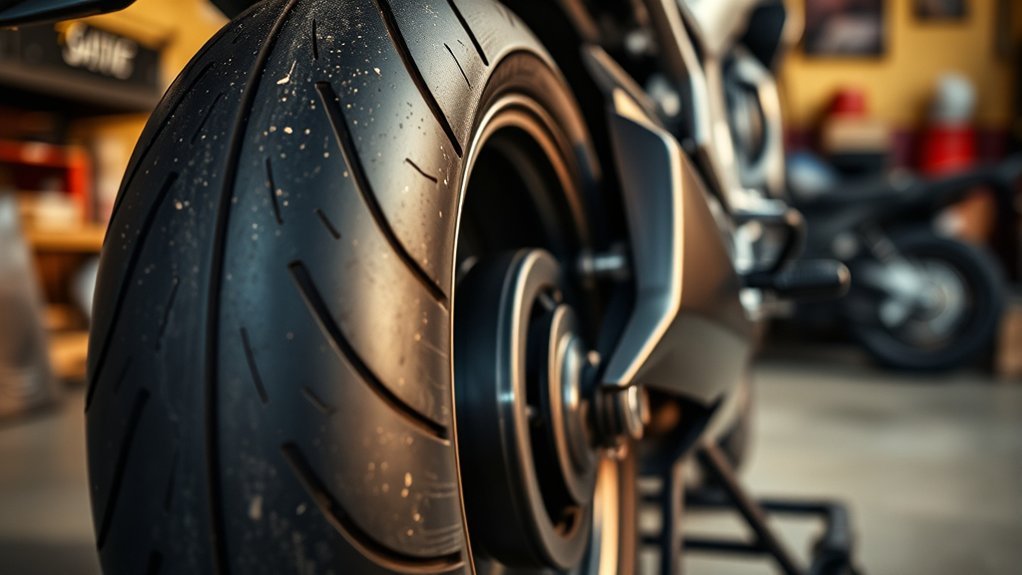
“Chicken strips” are the unused outer edges of a motorcycle tire. When you lean into a corner, the tire’s contact patch shifts toward the shoulder. The part of the shoulder that never touches the road stays smoother, shinier, or less scuffed than the center tread.
The name sounds insulting, but the wear pattern itself is neutral. It only shows how much of the tire has been used under your normal riding conditions. A commuter who rides straight roads, a touring rider carrying luggage, and a cautious rider on wet pavement may all have wider strips than a sport rider on a clean track.
Use chicken strips as a clue, not a scoreboard. They can help you understand your cornering angle, tire break-in state, suspension behavior, and riding habits, but they cannot tell the full story of your control, judgment, or safety margin.
Note: The tire patch that matters most is the one giving you grip right now. A fully scrubbed edge is not more important than correct pressure, good tread depth, smooth inputs, and riding within the available traction.
[Products Worth Considering]
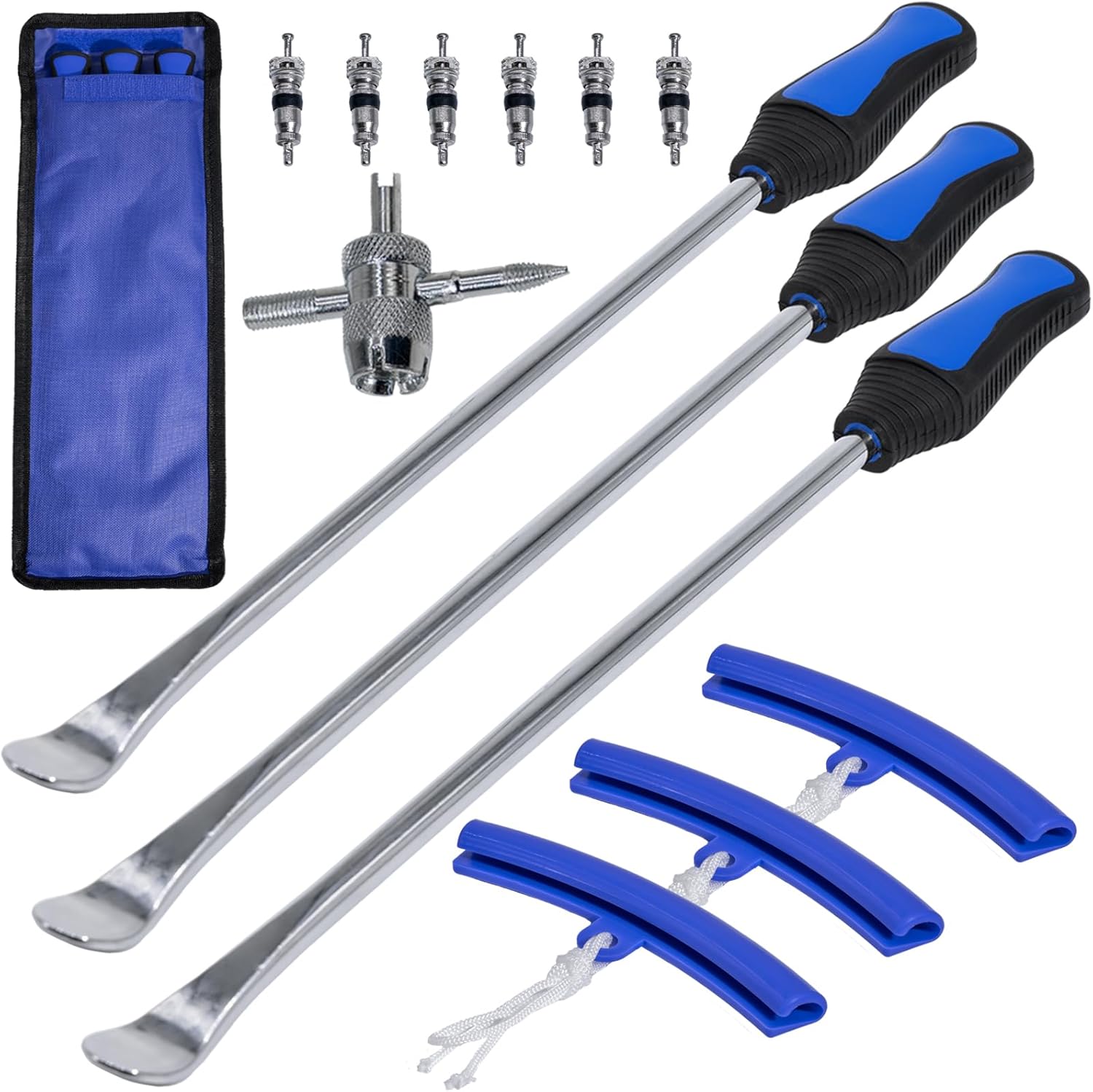
This tire spoon set helps you remove and install motorcycle, dirt bike, lawn tractor, and bicycle tires with extra leverage from a 14.5-inch spoon length. The kit includes tire removal tools, rim protectors, and a valve tool to simplify repairs and help protect rims during changing. Designed for quick, on-the-go service, it’s convenient for garage work, trails, and track-side fixes.

This solid brass tire inflation hose adapter screws into your inflator and uses a locking press clip to securely clamp onto the tire valve stem. It helps reduce air leakage for fast, efficient pumping and is designed for reliable performance with a wide range of vehicles and inflator setups.

Use this tire repair rubber screw kit for fast, self-service flat fixes on the road. Choose the matching short or long nail size and twist it into the puncture without removing the tire from the rim. Compact storage keeps the emergency set organized for cars, motorcycles, electric bikes, and bicycles, helping you seal tubeless leaks quickly and reliably.
Why Motorcycle Chicken Strips Appear
You see motorcycle chicken strips when the tire’s outer shoulder is not used much in turns. That usually happens because the bike is not leaned far enough to scuff that part of the tire, but the reason can be completely normal.
Fresh tires may show larger strips during the first few rides or during the tire maker’s recommended scrub-in period. New rubber can feel different until the surface has been gently worn in, so avoid sudden hard cornering, abrupt braking, and aggressive throttle until the tire feels consistent.
Road conditions also matter. Wet pavement, sand, gravel, potholes, painted lines, tar snakes, cold asphalt, and poor visibility can all make you hold the bike more upright. That is not a failure. It is often the right decision.
Riding Style and Lean
Your riding style has a big effect on strip width. If you ride calmly, brake early, keep extra margin, and take corners at moderate speed, your tires may keep wider untouched edges. Commuters and touring riders often show this pattern because their routes include long straight sections and less aggressive cornering.
Sport riders may show narrower strips because they lean more often and use more of the tire shoulder. Even then, strip width still depends on tire shape, body position, suspension setup, and road surface. A rider who hangs off the bike can sometimes corner quickly while using less bike lean than a rider who stays upright on the seat.
Tire Break-In Factors
New tires can show larger chicken strips because you should build up lean angle gradually. During the first few rides, focus on smooth acceleration, smooth braking, and gentle cornering so the tire surface gets evenly scuffed.
| Factor | How It Affects Chicken Strips |
|---|---|
| Fresh tire surface | Needs gentle scuffing before you trust full lean and hard inputs. |
| Tire profile | A rounder or taller profile may show edge use differently than a flatter touring tire. |
| Road surface | Clean, warm pavement allows more confident lean than wet, dirty, broken, or cold pavement. |
| Suspension and load | Incorrect sag, worn suspension, luggage, or a passenger can change how the tire loads in a turn. |
What Chicken Strips Really Tell You
Chicken strips tell you how much of the visible tire shoulder has been used under your usual riding conditions. Wider strips often mean more upright cornering. Narrower strips often mean more lean. That is the basic reading, but it is only the starting point.
Look at both tires, the shape of the wear, and the riding conditions. A rear tire with wide, even strips may simply show relaxed street riding. A rear tire with uneven strips from side to side may show route bias, confidence differences between left and right turns, or suspension setup issues. A tire that is squared off in the center can make edge use feel less smooth and may change how quickly the bike falls into a turn.
| What You See | Possible Meaning | What to Check |
|---|---|---|
| Wide, even rear strips | Calm pace, straight roads, touring use, or cautious cornering. | No concern if tire condition, pressure, and handling feel normal. |
| Very narrow rear strips | More lean angle or more spirited riding. | Make sure this comes from skill and conditions, not pressure from other riders. |
| Uneven left/right strips | Route bias, comfort difference, road camber, or setup issue. | Check suspension, tire pressure, and whether you favor one turn direction. |
| Large strips on new tires | Normal during the scrub-in period. | Ride gently and follow the tire maker’s break-in guidance. |
| Visible front strips | Common on street bikes and not a clean skill measure. | Focus on steering feel, pressure, tread, and braking stability. |
Why Chicken Strips Don’t Prove Skill
Chicken strips do not prove rider skill because tire wear is shaped by too many variables. A skilled rider may leave strips because the road is cold, wet, dirty, unfamiliar, or full of traffic. A less skilled rider may erase strips by taking risks that leave little safety margin.
Your motorcycle also changes the result. A sportbike, cruiser, touring bike, adventure bike, and scooter do not use their tire edges in the same way. Tire profile, suspension travel, footpeg clearance, body position, steering geometry, and load all influence how much tire reaches the road during a turn.
Good riding is not measured by the last few millimeters of rubber. Better signs include smooth throttle control, stable braking, clean lines, good vision through the turn, correct speed choice, and the discipline to slow down when traction is uncertain.
Warning: Do not try to remove chicken strips by sanding, scraping, burning out, or forcing extra lean on public roads. Those shortcuts can reduce tire safety, hide real wear patterns, and push you past available traction.
What Affects Chicken Strips and Lean
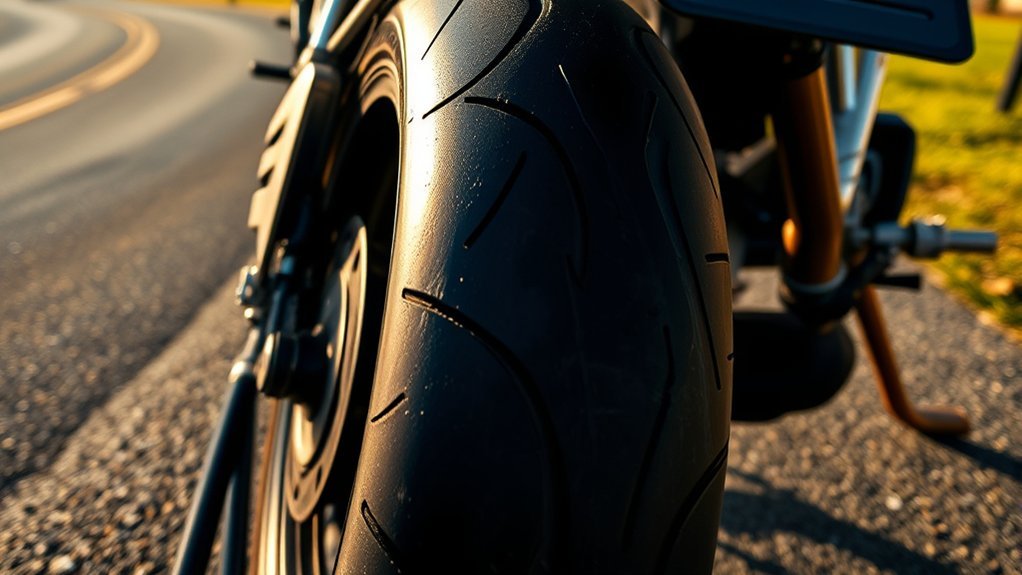
Chicken strips change because lean angle changes, and lean angle depends on speed, turn radius, tire grip, body position, and how the motorcycle is set up. The faster you travel through a given curve, or the tighter the curve is, the more lean the bike may need. That does not mean you should chase lean. It means you should match speed and line to the road you can see.
Tire pressure is a major factor. If pressure is too low or too high for your bike, load, and tire, the contact patch and handling can change. Tread depth matters too. The National Highway Traffic Safety Administration recommends checking motorcycle tire pressure and tread depth before every ride, along with brakes, lights, signals, and fluid levels.
Suspension setup also matters. Incorrect preload, worn shocks, poor damping, or a heavy load can make the bike squat, run wide, steer slowly, or feel vague mid-corner. If your chicken strips changed suddenly after adding luggage, carrying a passenger, changing tires, or adjusting suspension, treat that as a reason to inspect the bike rather than a reason to lean harder.
Why the Front Tire Matters Less
Front tire chicken strips are usually less useful as a street-riding judgment tool. The front tire handles steering, braking loads, and stability, while the rear tire often shows clearer drive and corner-exit wear. On the street, it is common for the front tire to keep visible edge strips even when the rider is smooth and competent.
Do not compare your front tire to a race tire. Track riders use different tires, temperatures, pressures, surfaces, body positions, and braking techniques. A street tire with front strips can still be working correctly. What matters more is whether the tire is properly inflated, not damaged, not aged out, and wearing evenly.
If the front tire feels vague, chatters, cups, follows grooves, or wears unevenly, inspect pressure, tread depth, wheel alignment, bearings, suspension, and braking components. Those symptoms matter more than whether the last edge of the tire is scuffed.
[Products Worth Considering]
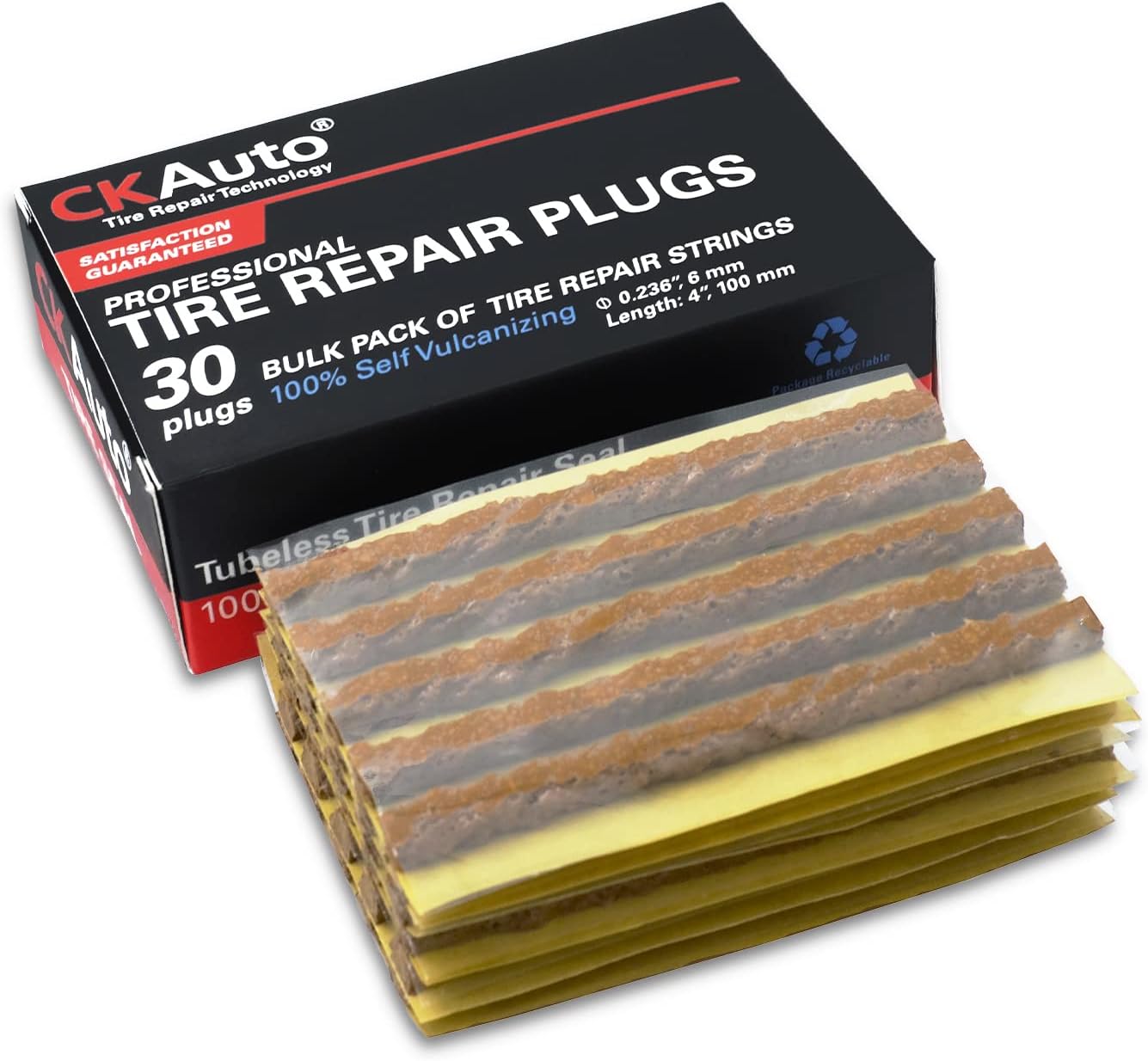
CKAuto tire repair strings provide a fast, reliable way to seal punctures in tubeless off-road tires without removing the tire from the rim. The rubber repair plugs are designed for quick roadside fixes and work across many vehicle types including cars, bikes, ATVs/UTVs, wheelbarrows, and mowers.

Wykodra tire plugs provide quick vulcanizing repairs for tubeless tires, helping you seal punctures and get back on the road. The industrial-strength rubber creates a long-lasting, leak-resistant bond and is designed for emergency fixes without removing the tire. Choose between two standard plug sizes with color-matched options for small to larger damage across many vehicles and off-road uses.
Safe Ways to Reduce Chicken Strips
The safe way to reduce chicken strips is to become smoother and more precise, not to chase the edge of the tire. Start with maintenance. Check pressure cold, inspect tread depth and sidewalls, confirm the tires are the right type for your motorcycle, and adjust suspension for your weight, passenger, and luggage.
Then work on technique. Look through the turn, set your entry speed early, keep your arms relaxed, steer with calm pressure at the bars, and roll on the throttle smoothly as the bike settles. Better technique may naturally use more of the tire over time, but that is a result, not the goal.
Pro Tip: If you want to explore lean angle, do it through a rider course or track day. A controlled area gives you space, coaching, consistent pavement, and fewer traffic surprises.
Track Days Build Skill
Track days can help you reduce chicken strips safely because they let you practice cornering in a controlled environment. You can work on vision, body position, braking, throttle timing, and line choice without blind driveways, gravel patches, oncoming traffic, or roadside hazards.
- You learn how your motorcycle feels at different lean angles.
- You get feedback from instructors or more experienced riders.
- You practice repeatable corners instead of unpredictable public roads.
- You build confidence without turning tire wear into an ego contest.
The goal is not to erase strips in one session. The goal is to ride with cleaner inputs and better judgment. If the strips shrink as your technique improves, that is a side effect of better control.
Smooth Cornering, Not Sanding
Smooth cornering reduces chicken strips more safely than any cosmetic shortcut. Keep your upper body relaxed, look where you want to go, avoid abrupt bar inputs, and add throttle progressively once the bike is pointed through the turn. Harsh inputs can overload the tire, especially when the pavement is cold, wet, dusty, or broken.
Never sand a motorcycle tire to fake edge use. Sanding removes useful evidence, can roughen the surface unevenly, and does nothing to improve your riding. Real progress comes from tire maintenance, suspension setup, training, and steady practice.
How to Inspect Chicken Strips Safely
Inspect your tires when the motorcycle is parked, stable, and cool. Look at both sides of the rear tire first, then compare the front. You are checking for patterns, not judging yourself.
- Check pressure first: Use the motorcycle maker’s recommended cold pressure, adjusted only when the manual or tire maker says to do so.
- Look for even wear: A smooth center with untouched edges may be normal for commuting, but cupping, flat spots, cracks, or exposed cords are not normal.
- Compare left and right: A small difference is common, but a major difference can point to route habits, comfort imbalance, or setup issues.
- Check tread depth and age: Do not focus on edge scuffing while ignoring worn tread, cracking, punctures, or old rubber.
- Think about recent changes: New tires, different pressure, a passenger, luggage, suspension changes, or colder weather can all change the pattern.
The NHTSA TireWise guide explains why tire maintenance matters for vehicle safety. For motorcycles, this is even more important because your tires are your only contact with the road.
When Chicken Strips Are Nothing to Worry About
Chicken strips are usually nothing to worry about when the tires are in good condition, the bike handles normally, and the strips match your riding environment. If you commute on straight roads, ride in traffic, tour with luggage, avoid bad pavement, or ride in cool and wet weather, wider strips can be completely normal.
- Fresh tires often show wider strips until they are gently scrubbed in.
- Touring and cruiser geometry can leave more unused edge than a sportbike.
- Road surface quality may limit safe lean long before the tire edge is used.
- Riding within your comfort and traction margin is good judgment, not weakness.
Measure progress by smoother inputs, better lines, safer speed choice, and stronger traction awareness. A rider who leaves a small margin and gets home safely is making a better choice than a rider who uses every millimeter of tire to impress someone else.
Frequently Asked Questions
How do you get rid of chicken strips on motorcycle tires?
Reduce them through better riding technique, not shortcuts. Check tire pressure and condition, set your entry speed early, look through the corner, stay relaxed, and use smooth throttle. For faster improvement, take an advanced rider course or track day. Do not sand the tire or force extra lean on public roads.
Are chicken strips bad?
No. Chicken strips are not automatically bad. They usually mean the tire edge has not been used much. That can happen because of cautious riding, straight roads, new tires, wet pavement, touring use, or bike setup. They only become a concern if they appear with poor handling, uneven wear, damage, or incorrect pressure.
Why are they called chicken strips on motorcycles?
The name comes from motorcycle slang. Riders jokingly called the unused tire edge a sign that someone was “chicken” about leaning the bike. The label is cultural, not technical. In reality, the strip can be caused by many things besides fear, including tire type, road surface, setup, and safe speed choice.
Why do front tire chicken strips matter less?
Front tire strips are harder to interpret because the front tire handles steering and braking loads differently from the rear tire. On normal street rides, visible front strips are common. Focus on pressure, tread depth, wear pattern, steering feel, and braking stability instead of trying to erase the front edge.
What does two fingers down mean to bikers?
Two fingers down is a common rider wave. It is usually a friendly salute that signals respect, shared road awareness, and “keep two wheels down.” The meaning can vary by region, but it is generally about camaraderie, not tire wear or riding skill.
What is the unwritten biker code?
The unwritten biker code is about respect, safety, and responsibility. Do not shame riders for their pace, do not pressure others to ride beyond their limits, help when someone needs it, and share knowledge without ego. Tire wear should never matter more than good judgment.
Conclusion
Chicken strips on motorcycle tires are a wear clue, not a rider report card. They can show how much tire edge you use, but they cannot judge your skill without context. Tire pressure, tread depth, tire profile, suspension, load, pavement, temperature, and route all shape the pattern.
Motorcycling carries real risk, so the better goal is not a fully scrubbed tire. The better goal is a well-maintained motorcycle, smooth cornering, good judgment, and enough safety margin for the road you are actually riding. If you want to explore more lean angle, do it through coaching, rider training, or a track day rather than public-road pressure.
Sources
- NHTSA Motorcycle Safety — supports rider safety, tire-pressure and tread-depth checks, licensing, training, and current motorcycle risk context.
- NHTSA TireWise — supports tire maintenance and the importance of tire condition for vehicle safety.
- The Physics of Motorcycles and Fast Bicycles — supports the relationship between lean, turning, and motorcycle dynamics.
- Extended Pacejka Tire Model for Enhanced Vehicle Stability Control — supports the point that inflation pressure, tire temperature, and tread condition affect tire forces.
- Learning a Curve Guardian for Motorcycles — supports the safety discussion around curve riding, speed choice, and lane position.

Related Articles
How to Stop Tires From Rubbing: 10 Clearance Fixes
Baffled by tire rub? Discover 10 proven clearance fixes that can save your setup—and find out which one actually works best.
Read More
How to Reduce Road Noise From Tires: 8 Proven Fixes
Muffle tire drone with 8 proven fixes that reveal the easiest ways to quiet your ride—and one overlooked step may surprise you.
Read More
Racing Tire Technology: How They’re Built for Speed
Ultimate racing tire technology blends grip, heat, and precision in ways that can shave seconds—discover what really makes them so fast.
Read More