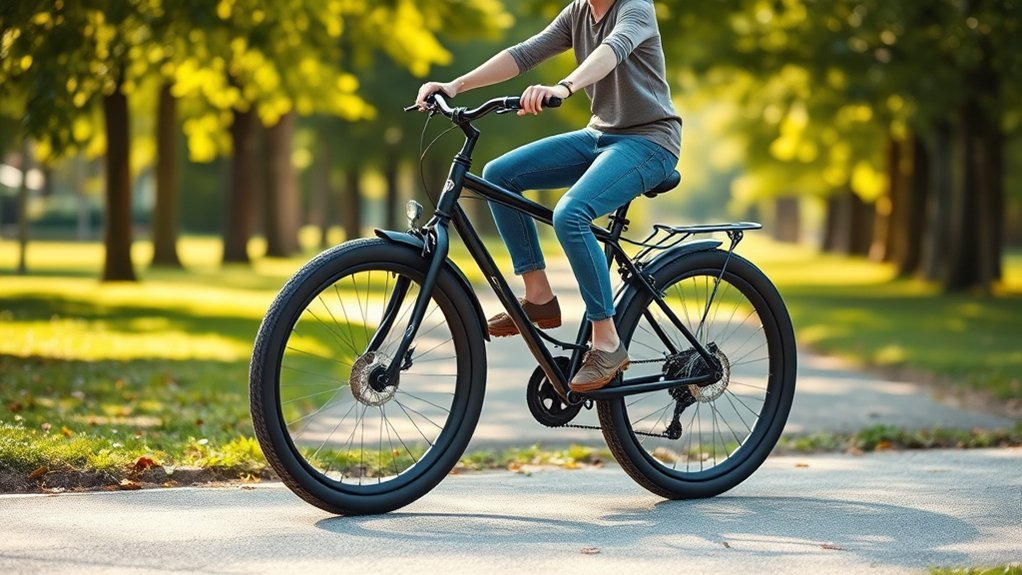
A balloon tire bike is a bicycle built around wide, high-volume tires that use air volume as simple comfort suspension. Instead of relying on moving suspension parts, the tire casing and air pressure absorb small bumps, cracked pavement, cobblestones, and rough cycle lanes. The result is a calmer, steadier ride for commuters, city riders, leisure cyclists, and anyone who values comfort over race-speed handling.
Quick Answer
A balloon tire bike uses wide bicycle tires, often around 50–60 mm or more, to create a larger air cushion between the bike and the ground. It is best for comfortable commuting, city riding, cobblestones, and rough pavement, as long as the frame, fork, brakes, rims, and fenders have enough clearance.
Key Takeaways
- A balloon tire bike gets its comfort from wide, high-volume tires rather than complicated suspension parts.
- Common balloon-style bicycle tires are about 50–60 mm wide, though some models are narrower or wider depending on the bike.
- Tire pressure is not one fixed number. Use the pressure range printed on the tire and respect the rim manufacturer’s limit.
- Frame, fork, brake, mudguard, rim, and toe clearance matter before converting a standard bike.
- Balloon tire bikes suit comfort-focused commuting, touring, city riding, and leisure rides better than racing or aggressive trail riding.
What Is a Balloon Tire Bike?
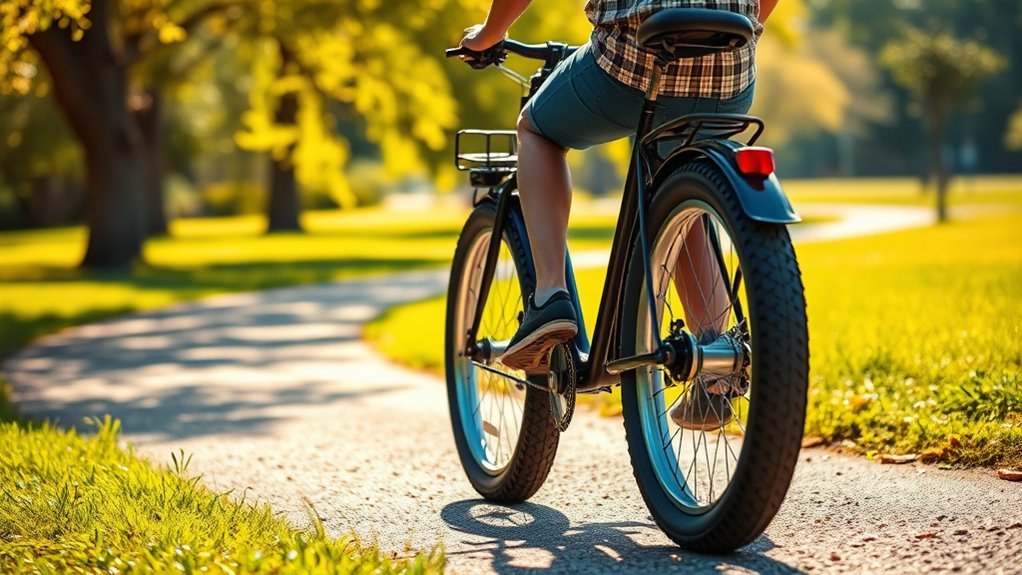
A balloon tire bike is a bike designed to run large-volume tires at moderate to low pressure for extra comfort. The tire acts like a small air spring. When the wheel hits a rough patch, the tire deforms slightly and absorbs some of the impact before it reaches your hands, back, and saddle.
Modern balloon-style tires are common on city bikes, trekking bikes, cruisers, cargo bikes, and comfort e-bikes. Schwalbe’s current Motion Big Apple, for example, is offered in wide ETRTO sizes such as 50, 55, 60, and 65 mm, depending on wheel size. That is the kind of tire size range most riders mean when they talk about a balloon tire bike.
The main goal is not maximum speed. The goal is comfort, stability, grip, and simple maintenance. You still need correct pressure, good tire condition, and compatible bike parts, but you avoid the cost and service needs of suspension forks or rear shocks.
How Balloon Tires Work
Balloon tires work because they hold more air than narrow tires. More air volume lets the tire carry the bike and rider at a lower pressure while still supporting the load. Schwalbe explains that lower air pressure can absorb road shocks better, while wide tires are generally used at lower inflation pressure without the same drawbacks as narrow tires.
That larger air cushion can reduce the sharp feeling of rough pavement. It also gives the tire a broader footprint, which can make the bike feel calmer on cobblestones, cracked asphalt, tramline edges, gravel paths, and uneven cycle lanes.
A balloon tire is not magic suspension. It smooths small and medium road chatter well, but it cannot replace a real suspension fork or rear shock on rough mountain-bike terrain.
Balloon Tire Bike Features to Look For
When choosing or converting a balloon tire bike, start with fit and safety. A tire that looks comfortable on paper can be unsafe if it rubs the frame, touches the fender, overloads the rim, or leaves too little brake clearance.
[Products Worth Considering]

Ultraverse 700c inner tubes are built for 700x28C to 32C tires and feature a 48mm Presta valve for accurate, secure inflation. The high-elasticity butyl rubber construction helps seal air tightly, resist pressure loss, and absorb road vibrations for a smoother ride. A reinforced valve base and thick walls add durability and puncture resistance for reliable everyday performance on road, gravel, and city routes.
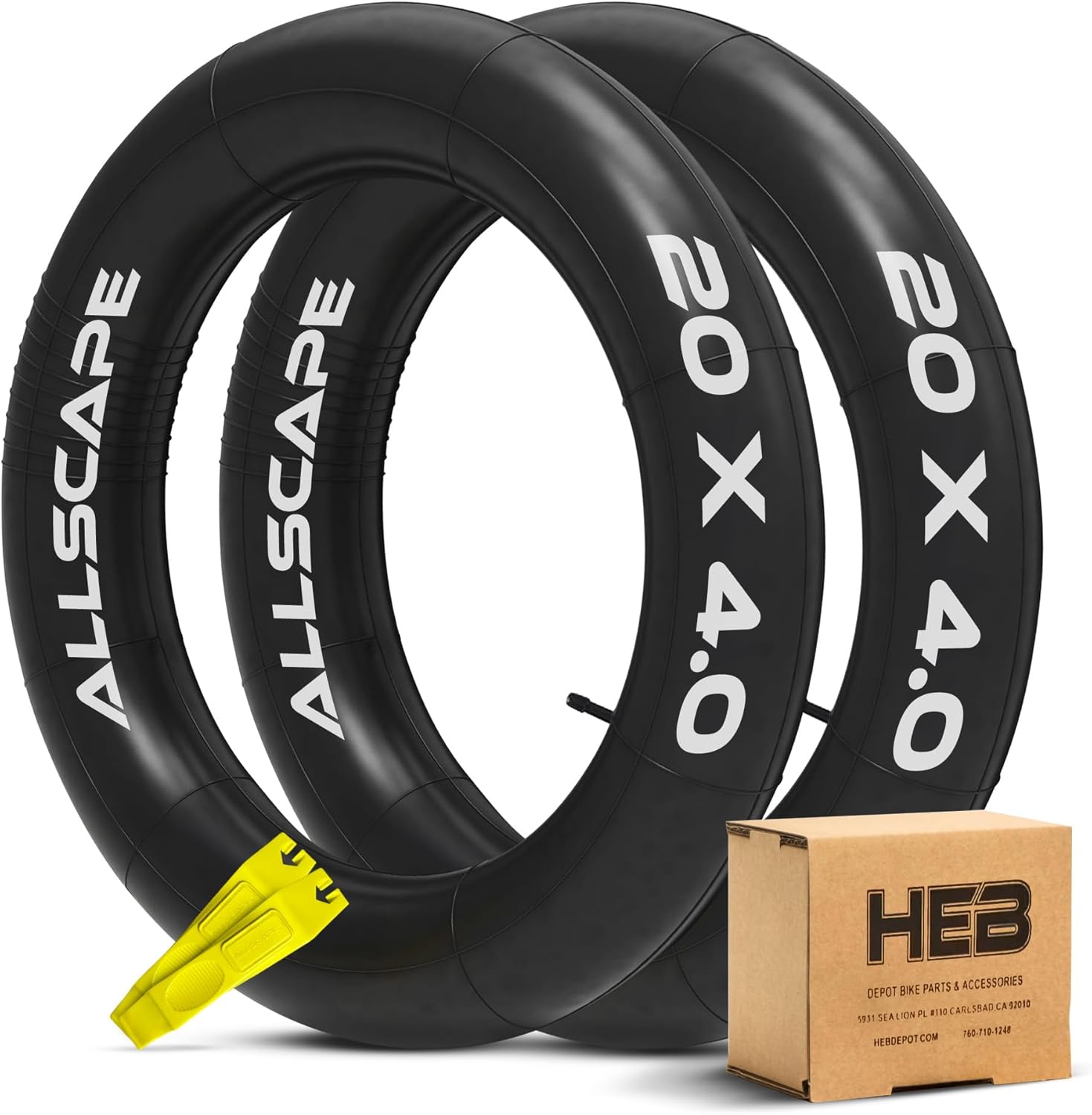
HEB heavy duty inner tubes deliver reliable puncture resistance for fat tire electric bikes and mountain bikes running 20x4 or 26x4 tires. Built for rugged backcountry trails, they help prevent flats from rocks and thorns while providing stability and traction. Choose a single tube or multi-packs for better value and keep your ride running smoothly in all seasons.

The Topeak SmartGauge D2 delivers precise digital tire pressure readings for bikes, motorcycles, and sports equipment up to 250 psi (17 bar). Its rotating SmartHead works with both Presta and Schrader valves, so you can check pressure quickly without adapters. The LCD display makes it easy to read results in psi, bar, or kg/cm² with an included CR2032 battery for immediate use.
Wide Tire Clearance
Check the frame and fork before buying wide tires. You need enough space above and beside the tire for real-world movement. Tires can measure slightly wider or narrower than the label depending on rim width, air pressure, casing design, and time after installation.
Use this checklist before fitting a balloon tire:
- Measure the narrowest space in the fork crown, fork blades, chainstays, seatstays, and brake bridge.
- Leave extra room for mud, wheel flex, and tire growth after inflation.
- Check fender or mudguard clearance if you ride in wet weather.
- Confirm toe clearance so your shoe does not hit the front tire during slow turns.
- Spin the wheel after installation and listen for rubbing before riding.
Frame and Brake Fit
Balloon tires need more room than standard city or road tires. Disc brakes usually create fewer tire-clearance problems than rim brakes, but the frame and fork still set the real limit. With rim brakes, the brake arms must clear both the tire and any fender. Some older V-brakes, calipers, or cantilever setups may not have enough space.
Warning: Do not ride a converted bike if the tire rubs the frame, fork, fender, brake, or front derailleur. Tire rub can damage the casing, stop the wheel, or cause loss of control.
Rim and Tire Match
The tire and rim must match in two ways. First, the tire’s inner diameter must match the rim’s bead-seat diameter. In ETRTO sizing, a tire marked 50-622 is about 50 mm wide and fits a 622 mm rim. Second, the tire width must suit the rim’s inner width. Schwalbe’s tire dimensions guidance recommends matching tire width and rim inner width according to ETRTO and manufacturer recommendations.
Do not guess from inch labels alone. Schwalbe notes that ETRTO sizing is clearer because it gives the tire width and inner diameter in millimeters. This matters because older inch labels can be imprecise, especially around 26, 27.5, 28, and 29 inch tires.
Tire Pressure Comfort
Pressure is where balloon tires come alive, but it is also where riders make mistakes. There is no single perfect pressure for every balloon tire bike. The right pressure depends on tire size, rider weight, cargo weight, riding surface, tube or tubeless setup, rim limits, and the pressure range printed on the tire sidewall.
Many wide city tires work well near the lower half of their allowed pressure range. For example, current Motion Big Apple sizes list different ranges depending on tire size, including ranges such as 1.8–3.7 bar, 2.0–4.0 bar, and 2.2–4.5 bar. Always follow the lower and upper limits printed on your tire and the maximum pressure allowed by your rim.
Pro Tip: Start in the middle of the tire’s printed pressure range, then adjust in small steps. If the ride feels harsh, reduce pressure slightly. If the bike squirms, bottoms out, or feels vague in corners, add pressure.
Why Balloon Tires Feel More Comfortable
Balloon tires feel more comfortable because the tire does more of the work before the bike frame and rider have to absorb the impact. On rough roads, vibration is not just annoying; it can also waste energy. Recent rough-road cycling modeling has highlighted how road irregularities create vibration and resistance, and how reducing vertical stiffness can help reduce those effects.
In everyday terms, that means a wide, supple tire at a sensible pressure can make poor pavement feel less sharp. You may notice:
- less buzz at the handlebar;
- less saddle harshness on cracked pavement;
- more stable steering on cobblestones or broken asphalt;
- better grip on loose or uneven urban surfaces;
- less fatigue during steady commuting and leisure rides.
The tradeoff is that very low pressure can feel slow, vague, or squirmy. It can also increase the risk of rim strikes, pinch flats on tubed setups, sidewall damage, and premature tire wear. Comfort should never come at the expense of safe pressure.
How Balloon Tire Bikes Compare to Full Suspension
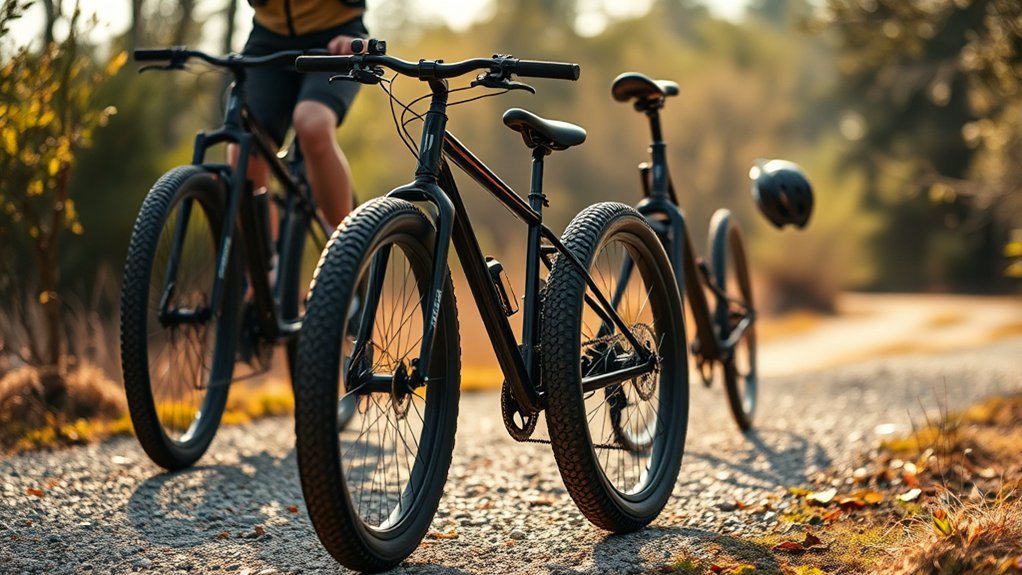
A balloon tire bike and a full-suspension bike solve different problems. Balloon tires are simple, light, quiet, and low maintenance. Full suspension uses moving parts to control larger impacts, repeated hits, drops, rocks, and roots.
| Feature | Balloon Tire Bike | Full-Suspension Bike |
|---|---|---|
| Best surface | City streets, cobblestones, rough paths, light gravel | Technical trails, rocks, roots, drops |
| Maintenance | Low; mainly pressure, tread, tubes, sealant if tubeless | Higher; pivots, seals, shock/fork service |
| Ride feel | Smooth and stable on small to medium bumps | Controlled on bigger repeated impacts |
| Speed focus | Comfort-first | Terrain-control-first |
Choose balloon tires if you want a smoother city or trekking bike. Choose suspension if your riding includes rough trails where the wheel must stay controlled over repeated hard impacts.
[Products Worth Considering]

The TOOLITIN floor bike pump delivers high pressure performance with an easy-to-read gauge so you can dial in the right tire pressure for safer rides. It is compatible with both Presta and Schrader valves and features a stable, durable design for efficient pumping. Suitable for road, MTB, and hybrid tires as well as inflating sports balls and other inflatables, it also includes ball and bladder needles and convenient accessory storage.

Upgrade your ride with a 2-pack set of 26x1.95 folding mountain bike tires built for dependable traction on mud, rocks, and trail surfaces. A reinforced puncture-resistant layer helps protect against sharp debris, while included butyl inner tubes provide strong sealing and shock absorption. Ready for fast swaps with included tire levers and universal sizing for most bikes.

Protect your inner tube with this universal bike tire liner designed to block thorns, glass, nails, and sharp trail debris. It installs easily by measuring and trimming to fit, creating a durable barrier between tire and tube. Lightweight polyurethane construction helps reduce sudden flats for more confident rides.
Can Any Bike Become a Balloon Tire Bike?
Not every bike can safely become a balloon tire bike. Some bikes have generous clearance and convert easily. Others are limited by frame shape, fork width, brake design, fender space, rim width, or front-wheel toe overlap.
Before converting, confirm these points:
- Tire diameter: The ETRTO bead-seat diameter must match your rim, such as 622 with 622.
- Tire width: The tire width must match the rim inner width and manufacturer guidance.
- Frame clearance: Check both side clearance and top clearance at the tightest points.
- Fork clearance: Check the fork crown and fork blades.
- Brake clearance: Make sure brake arms, pads, calipers, and hoses do not interfere.
- Fender clearance: Leave enough room for mudguards and debris.
- Pressure limits: Respect both tire and rim pressure limits.
- Handling: Test slowly before riding in traffic, especially if the new tire changes steering feel.
If any of these checks fail, choose a slightly narrower tire instead of forcing the biggest possible size. A well-fitted 47–50 mm tire is safer and usually more enjoyable than a 60 mm tire that barely clears the frame.
Where Balloon Tire Bikes Work Best
Balloon tire bikes are strongest where roads are imperfect but not truly technical. They are practical for daily riders who want fewer jolts and more confidence without adding suspension complexity.
| Surface | What the Tire Does | Main Benefit |
|---|---|---|
| Cobblestones | Softens repeated chatter | More comfort and control |
| Cracked asphalt | Reduces sharp impacts | Less hand and back fatigue |
| Poor cycle lanes | Improves stability over uneven lines | More confidence in traffic |
| Light gravel paths | Adds grip and float | Smoother mixed-surface riding |
They are less suitable for fast road racing, tight-clearance road frames, muddy mountain trails, and aggressive downhill terrain.
Who Should Ride a Balloon Tire Bike?

A balloon tire bike is best for riders who care more about comfort, stability, and everyday usefulness than maximum speed. It is a good match if you ride through rough city streets, commute on poor pavement, carry light cargo, cruise for leisure, or want a simpler alternative to suspension.
You may like a balloon tire bike if:
- your routes include broken asphalt, cobbles, pothole edges, or uneven cycle lanes;
- you want a calmer ride without adding a suspension fork;
- you ride upright city, trekking, cruiser, or comfort bikes;
- you value grip and stability more than sharp racing response;
- you want lower maintenance than a suspension bike.
You may not like one if you want the lightest possible bike, the fastest road-bike feel, very crisp cornering, or proper suspension for technical off-road riding.
Balloon Tires vs. Fat Bike Tires, Gravel Tires, and Standard City Tires
Balloon tires sit between standard city tires and true fat-bike tires. They are wider and more comfortable than typical narrow city tires, but far smaller and lighter than fat-bike tires.
- Standard city tires: often narrower, efficient, and easy to fit, but less cushioned on rough roads.
- Balloon tires: wide enough for comfort and stability, but still practical for daily city and trekking bikes.
- Gravel tires: often designed for mixed surfaces, speed, and tread grip; some overlap with balloon tire widths.
- Fat-bike tires: much wider, built for sand, snow, and soft terrain, but heavier and not ideal for most city bikes.
Note: “Balloon tire” describes the comfort concept more than one exact size. Always use the tire’s ETRTO size and manufacturer specifications when checking fit.
[Products Worth Considering]

The Continental Grand Prix 5000 is an allround road bike tire engineered for faster rolling, improved ride comfort, and enhanced puncture protection. It features a Vectran Breaker cut-protection layer, Lazer Grip micro-profile tread for confident cornering control, and Active Comfort Technology to damp vibration for smoother rides. BlackChili compound optimizes grip and speed for everyday performance and long-lasting confidence.
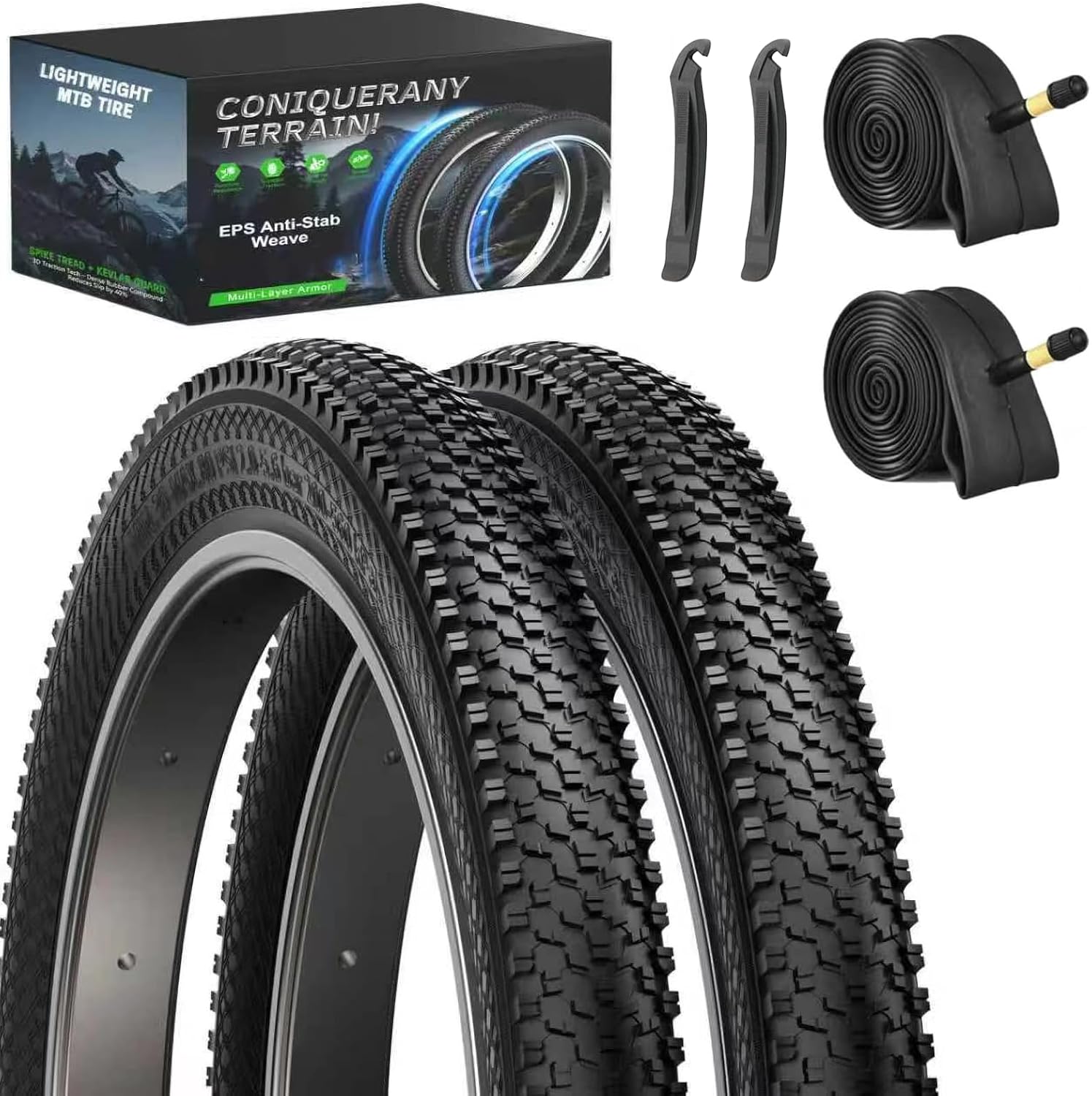
This 2-pack set includes two folding mountain bike tires, two inner tubes, and two tire levers for quick, budget-friendly replacements. The tires feature an anti-stab weave for added protection, plus strong grip and durable construction to help you stay stable across common trail and road conditions. Foldable design makes storage and travel convenient, while the included tubes provide a matched fit for smoother setup.

Upgrade your 20x4.0 fat tire ebike with these perfectly fitting inner tubes designed for 20-inch fat tires. The Schrader valve makes inflation easy and the premium butyl construction helps resist everyday wear. Each pack includes two tubes, making it simple to be ready for flats and keep your ride moving.
Balloon Tire Maintenance
Balloon tires are simple, but they still need regular care. Schwalbe recommends checking and correcting bicycle tire pressure at least once a month because tubes slowly lose air. Check more often if you ride daily, carry cargo, use latex tubes, or notice the bike feeling sluggish.
Basic maintenance is straightforward:
- Check pressure with a gauge, not just your thumb.
- Inspect tread for cuts, glass, embedded wire, or uneven wear.
- Look at the sidewalls for cracking or damage.
- Keep the tire within the printed minimum and maximum pressure range.
- Replace the tire if the casing is damaged or the tread is worn out.
If the bike starts to steer slowly, bounce, or squirm in turns, check pressure first. If the ride feels harsh and skittish, pressure may be too high for your load and surface.
Frequently Asked Questions
What are balloon bike tires?
Balloon bike tires are wide, high-volume bicycle tires designed to run at moderate or lower pressure for a smoother ride. They usually appear on city, trekking, cruiser, cargo, and comfort bikes. Their large air volume helps absorb road vibration without adding mechanical suspension.
What are balloon tires good for?
Balloon tires are good for rough city streets, cobblestones, broken asphalt, light gravel, relaxed touring, and comfort-focused commuting. They improve comfort and stability, but they are not the best choice for road racing or aggressive mountain biking.
What is a balloon tire?
A balloon tire is a wide tire with a large air chamber. On a bicycle, that extra air volume lets the tire cushion bumps and road buzz more effectively than a narrow high-pressure tire, provided the pressure is set safely for the rider, load, rim, and tire.
Can I put balloon tires on any bike?
No. You can only fit balloon tires if the frame, fork, brakes, fenders, and rims have enough clearance and compatibility. Check the ETRTO diameter, rim inner width, brake clearance, fender space, and pressure limits before buying.
What pressure should I use for balloon bike tires?
Use the pressure range printed on the tire and respect the rim manufacturer’s maximum pressure. Many balloon-style tires ride well near the lower half of their allowed range, but heavier riders, cargo, smaller tires, tubes, and rougher impacts may require more pressure.
How do I inflate a Presta valve?
Remove the cap, unscrew the small nut at the tip of the Presta valve, press it briefly to make sure it opens, attach a Presta-compatible pump head, and inflate to the target pressure. Remove the pump carefully, tighten the small nut, and replace the cap. Avoid bending the valve stem.
Conclusion
A balloon tire bike is a smart choice if you want a smoother, steadier ride without the cost or upkeep of suspension. Wide, high-volume tires can make rough pavement, cobblestones, and everyday city routes feel calmer and less tiring. The key is fit and pressure: choose a tire that safely clears your frame, fork, brakes, fenders, and rims, then set pressure within the tire and rim limits. Do that well, and a balloon tire bike becomes one of the simplest ways to make everyday cycling more comfortable.
Sources
- Schwalbe Motion Big Apple product page — supports current balloon-style tire sizes, pressure ranges, intended use, and large-volume comfort claims.
- Schwalbe Tire Pressure FAQ — supports pressure guidance, monthly pressure checks, comfort versus grip tradeoffs, and minimum/maximum pressure warnings.
- Schwalbe Tire Dimensions FAQ — supports frame clearance, tire/rim matching, and ETRTO-based compatibility guidance.
- Schwalbe Tire Sizes FAQ — supports ETRTO size explanation and why millimeter sizing is clearer than older inch labels.
- Cycling on rough roads: A model for resistance and vibration — supports the role of rough-road vibration and vertical stiffness in cycling comfort and resistance.