
How Tall Is a 255 Tire? Exact Height, Width & Dimensions
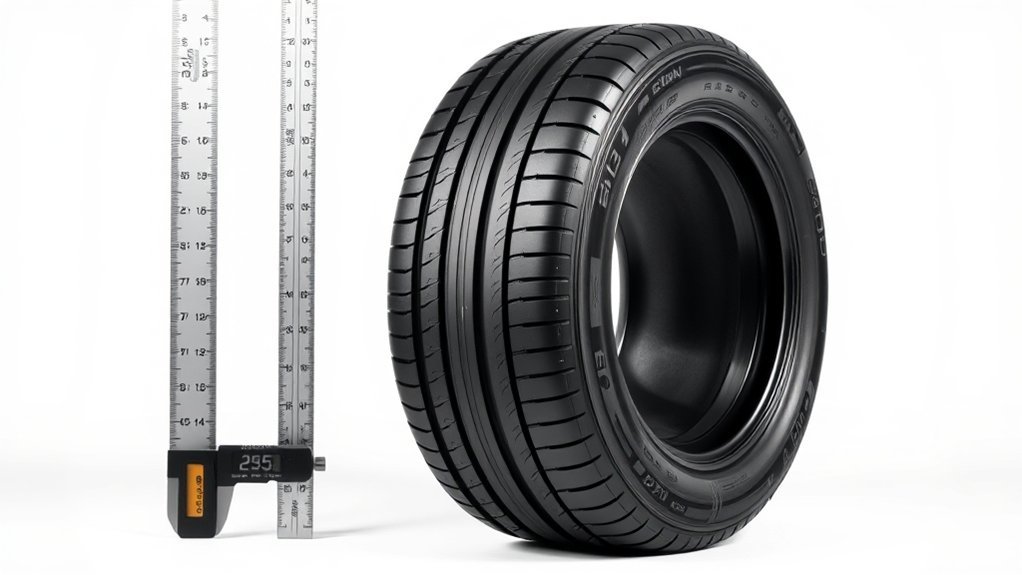
A 255 tire is about 255 mm wide, or roughly 10.0 inches wide, but that number does not tell you the tire’s height by itself. Tire height depends on the aspect ratio and rim diameter shown in the full tire size. For example, a 255/70R16 tire is about 30.1 inches tall, while a 255/55R18 is about 29.0 inches tall. Use the full size code before you compare clearance, speedometer change, load capacity, or handling.
Quick Answer
A 255 tire is about 10.0 inches wide. Its height depends on the full size, such as 255/55R18 or 255/70R16. To estimate height, multiply 255 by the aspect ratio, convert the sidewall to inches, double it, then add the rim diameter.
Key Takeaways
- A 255 tire is about 255 mm wide, which equals about 10.04 inches.
- The 255 number gives width only; aspect ratio and rim diameter decide total height.
- A 255/70R16 tire is about 30.1 inches tall.
- A 255/75R17 tire is about 32.1 inches tall, not a true 33-inch tire.
- Always match replacement tires to the vehicle maker’s approved size, load index, speed rating, and clearance.
At a Glance
| Time Required | 1 to 2 minutes once you know the full tire size |
| Difficulty | Easy |
| Tools Needed | Full tire size, calculator, and your vehicle tire placard or owner’s manual |
| Cost | Free |
What Is the Height of a 255 Tire?
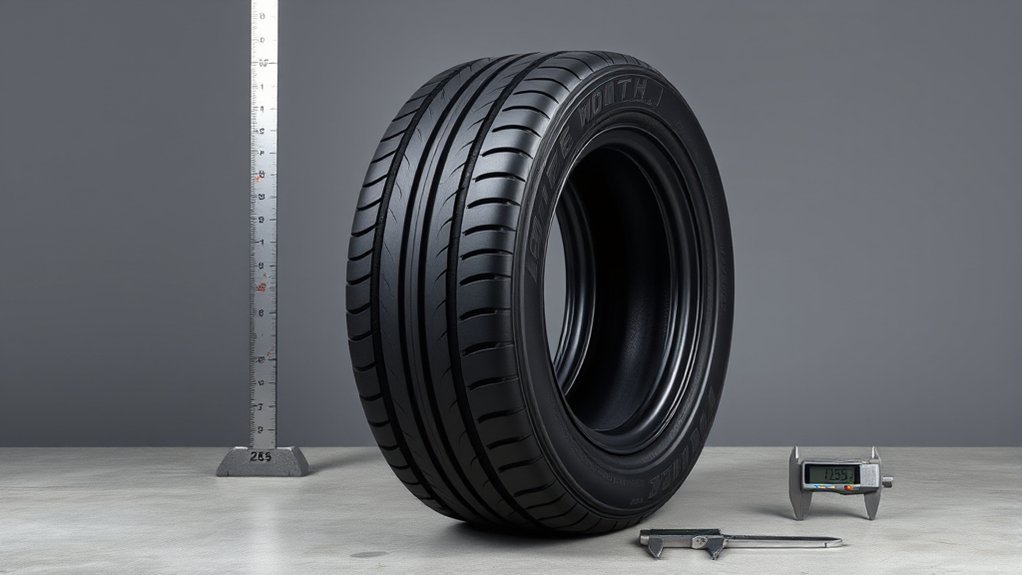
A 255 tire does not have one fixed height. The 255 tells you the tire’s section width in millimeters, measured from sidewall to sidewall. The tire’s height comes from the second number in the size code, called the aspect ratio, plus the wheel diameter after the R.
For example, a 255/70R16 tire is about 30.1 inches tall. A 255/55R18 tire is about 29.0 inches tall. Both tires share the same width, but they use different sidewall heights and rim diameters.
This difference matters because overall diameter can affect fender clearance, gearing feel, speedometer reading, braking behavior, and ride comfort. If you are replacing tires, compare the full tire size, not just the first number.
The 255 marking tells you width, not height. Two 255 tires can differ by several inches in overall diameter.
[Products Worth Considering]

This VEVOR tire bead breaker uses a slide-hammer impact and wedge tip to separate tire beads from rims quickly and efficiently without damaging hub surfaces. The long handle and sturdy steel construction help reduce user strain while providing reliable, portable tire changing for cars, trucks, and more. Ideal for home mechanics and repair shops handling multiple vehicle tire sizes.

This portable cordless tire inflator delivers up to 160 PSI with fast 17 L/min airflow to help you quickly top up tires and get back on the road. It features dual power mode, running on a 21V rechargeable battery or a 12V DC adapter for convenient roadside use. An automatic shut-off with digital pressure gauge helps prevent overinflation, and a built-in LED light improves visibility in low-light conditions.

This portable cordless tire inflator delivers fast, efficient inflation for cars, motorcycles, bikes, and sports balls with a digital pressure gauge. Use the one-click PSI preset with auto shut-off for accurate, hands-free topping to your target pressure up to 150 PSI. It’s compact and rechargeable with a built-in emergency LED light plus valve adapters and accessories for quick, ready-to-go use.
255 Tire Width and Sidewall Dimensions
A 255 tire is about 255 millimeters wide, or about 10.04 inches. In a tire size such as 255/70R16, the first number is the width, the second number is the aspect ratio, and the final number is the rim diameter. Goodyear’s tire-size guide explains that tire width is listed in millimeters and the aspect ratio shows sidewall height as a percentage of width on the tire sidewall.
Sidewall height changes when the aspect ratio changes. A 255/70R16 has a sidewall of about 7.0 inches. A 255/60R18 has a sidewall of about 6.0 inches. A 255/40R18 has a much shorter sidewall of about 4.0 inches.
A wider 255 tire may increase the contact patch compared with a narrower tire in the same tire family, but width alone does not guarantee more grip. Tread compound, tire pressure, tread pattern, wheel width, alignment, and road surface also affect traction.
Note: Real tire measurements can vary slightly by brand and model. Use calculated diameter for comparison, then check the tire maker’s published specs before buying.
How to Read a 255 Tire Size
To read a 255 tire size, look at the complete code on the sidewall. A common example is 255/70R16. Each part has a specific meaning:
- 255: Section width in millimeters.
- 70: Aspect ratio. The sidewall height is 70% of the tire width.
- R: Radial construction.
- 16: Wheel or rim diameter in inches.
The same logic applies to sizes like 255/55R18, 255/65R17, and 255/75R17. The first number stays the same, but the second and final numbers change the total height.
How to Calculate 255 Tire Height
You can calculate approximate tire height with this formula:
Overall diameter = rim diameter + 2 × sidewall height
Because tire width is listed in millimeters, convert the sidewall height to inches before adding it to the rim diameter. Tire Rack explains that overall diameter uses two sidewalls plus the wheel diameter when calculating tire dimensions.
Here is the calculation for a 255/70R16 tire:
- 255 × 70% = 178.5 mm sidewall height
- 178.5 ÷ 25.4 = 7.03 inches
- 7.03 × 2 = 14.06 inches
- 14.06 + 16 = 30.06 inches overall diameter
Rounded to one decimal place, a 255/70R16 tire is about 30.1 inches tall.
Pro Tip: When comparing two tire sizes, compare overall diameter and circumference. A small diameter change can still affect speedometer and odometer readings.
255 Tire Sizes by Rim Diameter
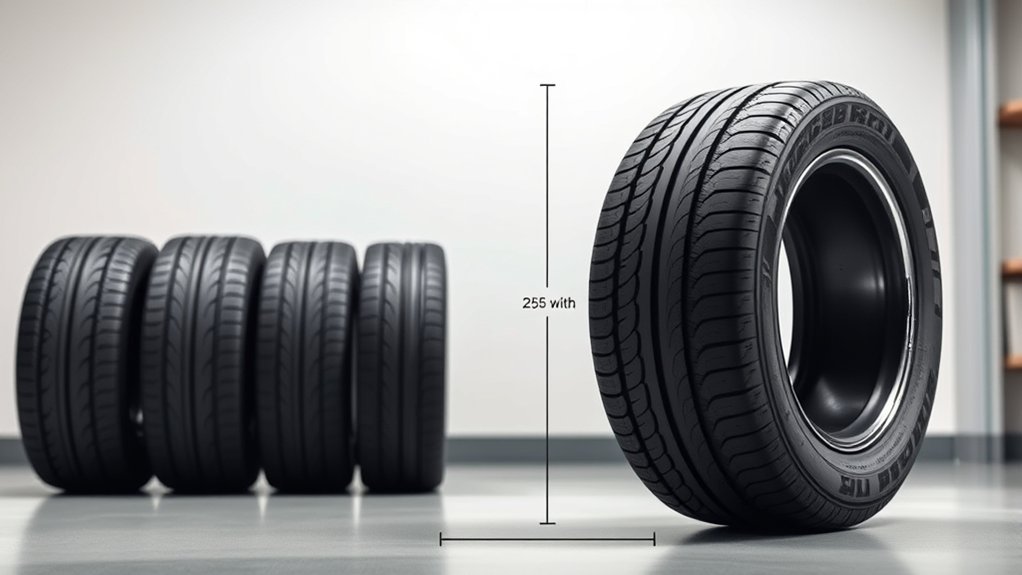
The tire’s overall height changes with aspect ratio and rim diameter, even when the width stays at 255 mm. A 255/75R17 is much taller than a 255/40R18 because it has more sidewall.
| 255 Tire Size | Approx. Sidewall Height | Approx. Overall Diameter | Best Use Context |
|---|---|---|---|
| 255/40R18 | 4.0 in | 26.0 in | Lower-profile street fitments |
| 255/45R18 | 4.5 in | 27.0 in | Sport sedans and coupes |
| 255/55R18 | 5.5 in | 29.0 in | Crossovers and SUVs |
| 255/60R18 | 6.0 in | 30.0 in | SUV comfort and load support |
| 255/70R16 | 7.0 in | 30.1 in | Trucks and SUVs |
| 255/70R17 | 7.0 in | 31.1 in | Taller SUV and light-truck setups |
| 255/75R17 | 7.5 in | 32.1 in | Off-road and light-truck fitments |
| 255/85R16 | 8.5 in | 33.1 in | Narrow, tall truck applications |
These numbers are calculated estimates. Actual measured diameter can be slightly different after inflation, load, tread depth, and manufacturer design.
[Products Worth Considering]

The JACO FlowPro Tire Inflator measures, inflates, and airs down tires up to 100 PSI with battery-free operation and ±2% accuracy after calibration. It features a glowing pressure dial for night visibility, a heavy-duty steel build with a hybrid hose, and a precision push-to-inflate thumb trigger. The patented Lightning Air Chuck locks on for a secure seal, and the kit includes quick-connect hardware for easy inline use with your air compressor.

The Fanttik X10 Pro is a cordless portable tire inflator that reaches up to 150 PSI and can inflate an R15 tire in about 35 seconds for quick roadside or home top-ups. With AccuInFlate auto-stop and smart start/stop controls, it helps maintain accurate pressure and frees your hands once the target is reached. A high-visibility digital display and preset modes make it easy to set and monitor inflation for cars, motorcycles, bikes, and balls.
How to Choose the Right 255 Tire
To choose the right 255 tire, start with the tire placard on your vehicle or the owner’s manual. Then match the tire size, load index, and speed rating to the vehicle maker’s approved specifications. The U.S. Tire Manufacturers Association says replacement tires should be the same size, load index, and speed rating designation as recommended by the vehicle or tire manufacturer when replacing tires.
| Check | Why It Matters | What to Confirm |
|---|---|---|
| Aspect ratio | Sets sidewall height and total diameter | Match the approved size or a verified alternate |
| Rim width | Supports the tire bead and sidewall shape | Use the tire maker’s approved rim-width range |
| Load index | Shows how much weight the tire can carry | Never go below the required rating |
| Speed rating | Matches the tire’s speed capability to the vehicle | Follow the vehicle or tire maker’s recommendation |
| Clearance | Prevents rubbing on suspension, fenders, and liners | Check at full steering lock and under compression |
Wider 255 tires can feel more planted, but they may also add weight, rolling resistance, road noise, or steering effort. The best 255 tire is the one that fits your wheel, load requirement, driving style, and vehicle clearance without creating new problems.
Warning: Do not choose a tire only because it looks close in height. A tire with the wrong load index, speed rating, rim fit, or clearance can create unsafe handling and premature wear.
How 255 Tire Height Affects Speedometer and Clearance
Tire height affects how far the vehicle travels with each wheel rotation. A taller tire has a larger circumference, so it travels farther per revolution. That can make your speedometer read lower than your actual road speed if the tire is much taller than the original size.
A shorter tire does the opposite. It can make the speedometer read higher than your actual speed, lower the vehicle slightly, and change engine rpm at highway speed. Small changes may be acceptable on some vehicles, but large changes can affect ABS, stability control, transmission shifting, and fender clearance.
Before changing from the original tire size, compare the new diameter to the factory size. Also check load index, speed rating, wheel width, offset, suspension clearance, and local inspection rules.
Frequently Asked Questions
What size is a 255 tire in inches?
A 255 tire is about 10.04 inches wide. Divide 255 by 25.4 to convert millimeters to inches. The height depends on the aspect ratio and rim diameter, so you need the full tire size to calculate total diameter.
How tall is a 255/75R17 tire?
A 255/75R17 tire is about 32.1 inches tall. Its sidewall is about 7.5 inches, and its circumference is about 100.7 inches. Actual mounted height may vary slightly by tire model, tread depth, and inflation pressure.
Is a 255 tire taller than a 265?
Not always. A 265 tire is wider, but width alone does not decide height. If the aspect ratio and rim diameter are the same, the 265 tire will usually be slightly taller. But a 255/75R17 is taller than a 265/65R17 because the 255 tire has a higher aspect ratio.
Is 255 a 33-inch tire?
No, 255 does not automatically mean 33 inches tall. Many 255 tires are between about 26 and 32 inches tall. A 255/75R17 is about 32.1 inches tall, while a 255/85R16 is closer to 33.1 inches tall.
Can I replace my current tires with 255 tires?
You can only use 255 tires if they match your vehicle’s approved fitment or a verified alternate fitment. Check the tire placard, owner’s manual, rim width, load index, speed rating, and clearance before switching sizes.
Conclusion
A 255 tire is about 10.0 inches wide, but its height depends on the full tire code. The aspect ratio sets sidewall height, and the rim diameter completes the overall diameter. That is why a 255/40R18 is about 26.0 inches tall, while a 255/75R17 is about 32.1 inches tall.
Use the formula, compare the common sizes, and check your vehicle’s approved fitment before buying. The right 255 tire should match your wheel, load rating, speed rating, clearance, and driving needs.
Sources
- Goodyear: How to Find Tire Size — supports tire width, aspect ratio, construction, rim diameter, load index, and speed rating definitions.
- Goodyear: How to Read Tire Sidewall Markings — supports aspect ratio as sidewall height relative to tire width.
- Tire Rack: How Do I Calculate Tire Dimensions? — supports the tire overall diameter formula.
- U.S. Tire Manufacturers Association: Replacing Tires — supports matching replacement tire size, load index, and speed rating to vehicle or tire maker recommendations.
- NHTSA TireWise — supports tire safety awareness and tire rating context.

Related Articles
305 Tire Size Explained: How Big Is It?
I explain how big a 305 tire really is—and why the exact fit can surprise you.
Read More
Tire Ply Rating Explained: What the Numbers Mean
Tire ply ratings reveal more than numbers, hinting at strength, load capacity, and hidden tradeoffs you’ll want to understand before choosing.
Read More
2 Ply Vs 4 Ply Tires: What’s the Real Difference?
I’ll explain the real difference between 2-ply and 4-ply tires, and the choice may surprise you depending on where you drive.
Read More