Can Hitting a Curb Pop Your Tire? Damage to Expect & What to Do
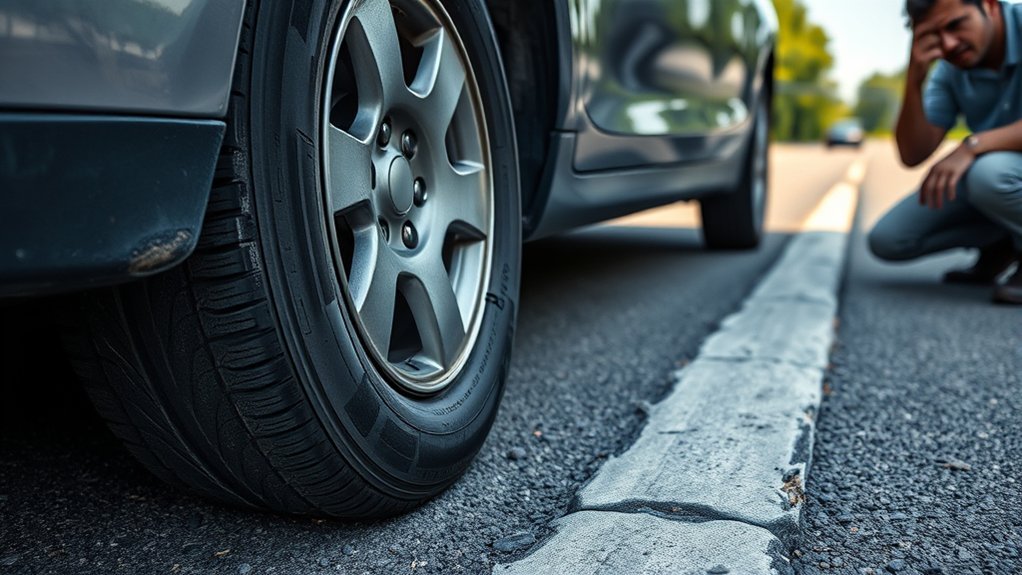
Yes, hitting a curb can pop your tire, but the damage may not show up right away. You should inspect the sidewall, tread, and wheel for bulges, cuts, cracks, bends, or scuffs, then watch for slow leaks, vibration, pulling, or uneven wear. A curb strike can also knock alignment out or stress suspension parts. If you want to know what to check first and when to stop driving, keep going.
Key Takeaways
- Yes, hitting a curb can pop a tire immediately or cause hidden damage that fails later under load or at speed.
- Inspect the tire right away for bulges, bubbles, cuts, cracks, scuffs, or unusual sidewall damage.
- Check tire pressure over the next few days for slow leaks or pressure loss after the impact.
- Curb strikes can also bend wheels and knock alignment or suspension out of spec, causing pulling or vibration.
- If you notice damage, leaks, vibrations, or crooked steering, stop driving and get a professional inspection.
Can Hitting a Curb Pop Your Tire?
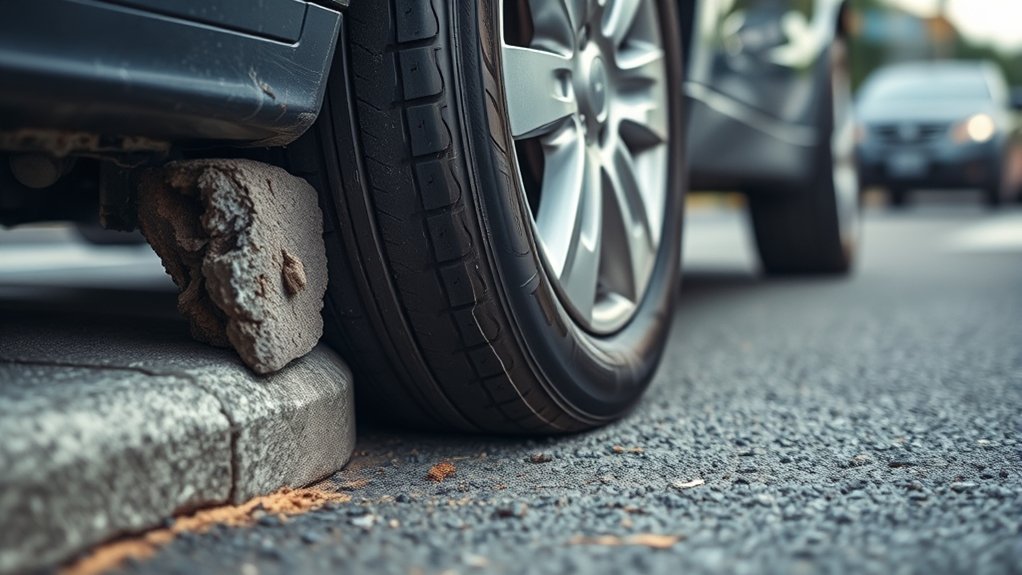
Yes—hitting a curb can absolutely pop a tire, but the failure may not happen right away. After a curb impact, you can get tire damage from hitting that weakens the sidewall even if air pressure looks normal. That hidden injury can later trigger tire blowouts, especially under load or at speed. Watch for signs of damage such as bulging, blistering, cuts, or a change in ride feel. You may also notice poor handling, which can point to alignment shift and uneven tire wear developing after the strike. Low-profile tires sometimes survive a minor contact, but they still need close monitoring because internal damage can hide beneath the surface. Make regular inspections part of your routine after any impact, because early detection keeps you in control and helps you avoid bigger failures. If the tire feels off, treat it as compromised and don’t keep driving. Additionally, using winter tires can provide better traction and handling, reducing the risk of such impacts in icy conditions.
Inspect Curb Damage on Tires and Wheels
After a curb strike, inspect the tire and wheel right away for bulges, cracks, cuts, or scraping, because even small visible damage can mean the structure has been compromised. You’re checking for tire damage from the impact, and that means examining the sidewall, tread edge, and rim lip for distortion. Track tire pressure over the next few days; a damaged tire may lose air faster than normal and can’t protect structural integrity as well. Watch for uneven tire wear after the curb hit, since misalignment or bent components can follow the impact. If the car starts pulling to one side, or you feel vibration, stop assuming it’s minor.
Check for bulges, cracks, or scrapes after a curb hit, and monitor pressure for hidden damage.
- A scuffed curb edge on the wheel can hide a bent rim.
- A sliced sidewall can shorten tire life fast.
- Uneven wear across one shoulder points to alignment trouble.
If anything looks off, get a professional inspection before you drive hard. Additionally, consider the importance of regular tire maintenance to help extend the lifespan of your tires and ensure safe driving conditions.
Check for Sidewall Bubbles and Slow Leaks
Check the tire sidewall for any raised bubble or localized bulge, since that usually means the internal structure has been compromised by the curb impact. Sidewall bubbles are a clear sign of tire damage, and you shouldn’t ignore them. Even if the tread looks fine, the casing may be weakened enough to fail later. Watch for a slow leak too: damaged sidewalls can bleed air gradually, so your tire pressure may drop between checks without an obvious puncture. Keep monitoring pressure after the hit, because stable readings help confirm the tire’s condition. If you spot a bubble, get a professional evaluation right away; the safest fix is often to replace the tire rather than gamble on a blowout. Regular inspections give you control, let you catch trouble early, and keep you moving with confidence. Additionally, opting for high-performance tires can enhance traction and improve safety, reducing the likelihood of damage during impacts.
Check Alignment and Suspension Damage
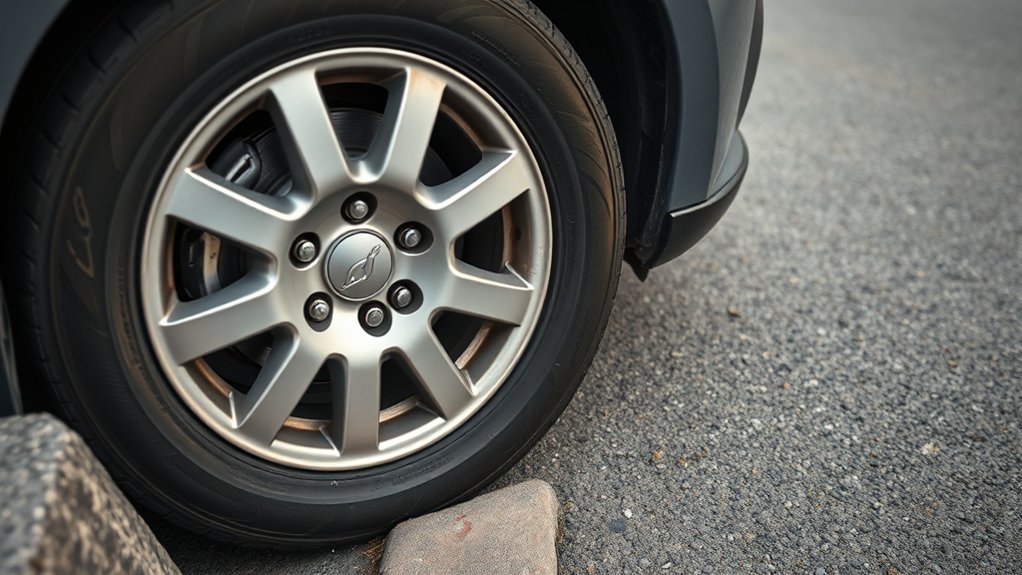
Even if the tire looks intact, a curb strike can knock your alignment out fast and stress the suspension. You might notice drift, pull, or a crooked steering wheel, and those signs mean your steering geometry needs inspection. Misalignment can start uneven tire wear in as little as 200 miles, so don’t ignore it. Check for damage at the control arms, tie rods, and sway bar links, because bent parts can cause excess bounce, vague response, and reduced control.
Even a minor curb strike can throw off alignment, stressing suspension and causing uneven tire wear fast.
- Vehicle pulling left or right on a flat road
- Steering wheel off-center after the impact
- Uneven tread wear or rapid feathering on one edge
If you feel new vibration, clunking, or instability, treat it as active suspension damage, not a minor annoyance. Early inspection keeps you in command, limits repair costs, and protects the freedom your vehicle gives you. Additionally, proper tire maintenance can help prevent further issues down the line.
What to Do After Hitting a Curb
A curb strike can damage more than the tire, so inspect it right away for bulges, cuts, or cracks that could mean the structure’s compromised. After hitting a curb, pull over safely and inspect your tires for tire damage, then document any visible damage with photos. If you feel unusual vibrations, hear clunking, or notice pulling, stop driving and treat it as a likely alignment or suspension fault. Check the wheel rim for bends and look for sidewall scuffs or leaks. Because hidden problems can escalate, schedule a professional inspection quickly; a technician can catch bent rims, loose components, or internal tire damage you can’t see. Request an alignment check, since misalignment can wear tires unevenly and degrade vehicle handling. Additionally, consider the impact on tire performance as certain damages can affect how well your tires grip the road. You’re not trapped by the impact—act fast, verify the damage, and make the repair plan before the issue spreads.
Frequently Asked Questions
Why Did My Tire Pop When I Hit a Curb?
You popped your tire because the impact force from the curb overloaded your tire structure, especially if curb height was high and air pressure was already low. You may’ve also damaged the sidewall, wheel alignment, or rim, causing a fast leak. Tread wear and harsh driving habits reduce margin for error, while rough road conditions magnify stress. Inspect for bulges, cuts, and pressure loss before you drive again.
How Hard Do You Have to Hit a Curb to Pop Your Tire?
You usually need a strong Curb impact with enough Impact force to pinch the Sidewall damage or cut the Tire tread. Low Tire pressure, sharp angles, and faster speeds raise the risk, while Wheel alignment and Suspension issues can worsen the outcome. Your Driving habits matter, too. A light scrape often won’t pop the tire, but a hard hit can cause a blowout, bulge, or delayed failure.
How to Tell if a Tire Is Ok After Hitting the Curb?
You can tell by doing a quick visual damage check: no bulges, cuts, or rim cracks means you’re likely okay. Think of your tire as a bruised fighter—check curb impact signs, then do tire inspection tips. Evaluate sidewall integrity, compare tread wear, and assess air pressure. Watch for pulling, vibration, or alignment issues. If anything feels off, drive slowly and get a pro inspection for driving safety precautions.
Is Hitting a Curb a Serious Fault?
Yes, a curb impact is a serious fault because it can compromise tire safety, vehicle alignment, and rim damage. You should inspect the tire sidewall, wheel, and steering feel right away. Your driving habits and local road conditions can turn a minor strike into hidden damage and higher repair costs. Use preventive measures: slow down, avoid sharp turns near curbs, and get professional evaluation if you notice vibration, pulling, or leaks.
Conclusion
Yes, hitting a curb can pop your tire, especially if the impact pinches the sidewall or dents the wheel. Even if it does not fail immediately, you can still get a slow leak, a sidewall bubble, or alignment damage that affects handling and tire wear. Don’t assume the tire is fine because it still holds air. Inspect it right away, and if you see any damage, have the wheel, tire, and suspension checked before driving farther.

Related Articles
Can Glass Pop a Car Tire? What Actually Punctures a Tire
When can glass pop a car tire, and what really punctures it? Discover the surprising factors that decide whether you’re safe or stranded.
Read More
Are Tire Caps Necessary? Why Every Tire Needs a Valve Cap
L**earn why a tiny tire cap could save you from hidden air loss and costly damage—what happens if you skip it?
Read More
Are Tire Air Caps Necessary? Valve Cap Function & Importance
Meta description: Missing tire air caps can seem minor, but they may protect your valve from hidden damage and costly leaks—find out why it matters.
Read More