
Can Glass Pop a Car Tire? What Actually Punctures a Tire
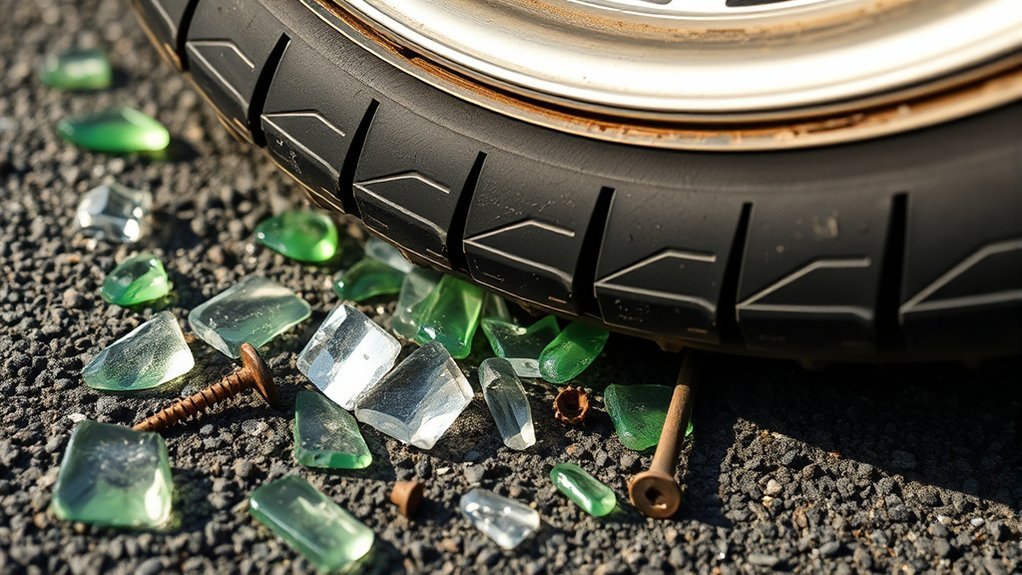
Glass can puncture a car tire, but it does not happen every time you drive over broken glass. The risk depends on the shard’s sharpness, angle, size, tire load, tread depth, air pressure, and where the glass contacts the tire. A sharp piece lodged in the tread may cause a slow leak, while damage near the shoulder or sidewall can make the tire unsafe.
Last updated: July 7, 2026.
Quick Answer
Yes, glass can pop or puncture a car tire if a sharp shard cuts deep enough into the tread or sidewall. Most small fragments bounce away or stay shallow, but embedded glass can cause a slow leak. Do not repair sidewall damage, large cuts, or tires driven while flat.
Key Takeaways
- Sharp glass can puncture the tread, especially if it stays embedded and works deeper as the tire rolls.
- No exact glass size guarantees a puncture; shard shape, contact angle, tire pressure, and tread condition all matter.
- A slow leak is more common than an instant blowout, so check pressure after driving through glass.
- A puncture may be repairable only if it is in the repairable tread area and no larger than 1/4 inch or 6 mm.
- Sidewall, shoulder, deep-cut, bulging, exposed-cord, or run-flat damage usually means the tire should be replaced.
At a Glance
| Time Required | 5 to 10 minutes for a roadside inspection; longer if a tire shop must remove and inspect the tire. |
| Difficulty | Easy for inspection; professional service recommended for repair decisions. |
| Tools Needed | Flashlight, gloves, tire pressure gauge, chalk or marker, and a spray bottle with soapy water. |
| Cost | Inspection may be free or low cost; repair or replacement depends on the tire, shop, and damage location. |
Can Glass Pop a Car Tire?
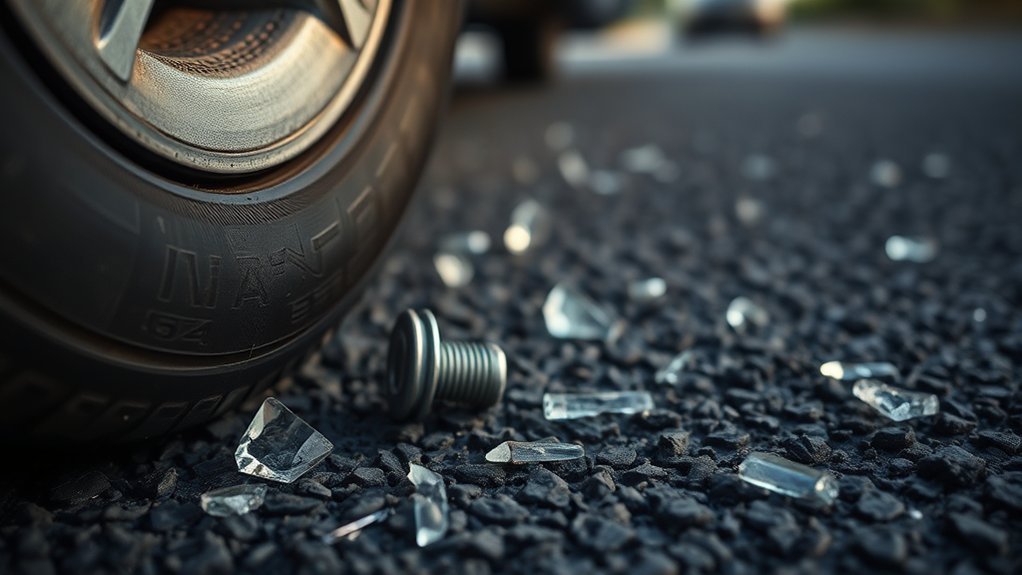
Yes, glass can pop a car tire, but the glass must cut deep enough to let air escape or weaken the tire structure. Most tiny glass chips do not instantly flatten a modern tire. The bigger concern is a sharp shard that lodges in the tread and keeps cutting as the tire flexes.
The tread area is the most common place for a puncture because it contacts the road with the full weight of the vehicle. Sidewall damage is different. The sidewall flexes constantly, carries load, and cannot be repaired the same way as the center tread area.
After you drive over broken glass, do not assume the tire is fine just because it still looks inflated. A small puncture can leak slowly over hours or days. The National Highway Traffic Safety Administration recommends checking tire pressure and tread at least once a month, and you should also check after road-debris contact.
Warning: Do not keep driving on a tire that is losing air, bulging, showing cords, or damaged on the sidewall. Install the spare if you can do so safely, or call roadside assistance.
[Products Worth Considering]

This tire repair kit provides fast emergency puncture repair without removing the tire from the rim, helping you get back on the road quickly. Its screw plug system is designed for punctures in both tread and sidewall and includes a complete patch plug tool set with essential accessories. A portable storage bag makes it easy to carry for cars, trucks, SUVs, motorcycles, and heavy-duty applications.

This tire repair patch tool kit helps you quickly seal small punctures using upgraded mushroom plugs and a built-in roller system that presses for even penetration. The tungsten buffing wheel and HSS twist drill bits prepare the damaged surface for stronger adhesion, while the crown-angle friendly plugs are designed to keep water and debris out. Ideal for puncture repairs on many vehicle types, from cars and trucks to bikes and scooters.
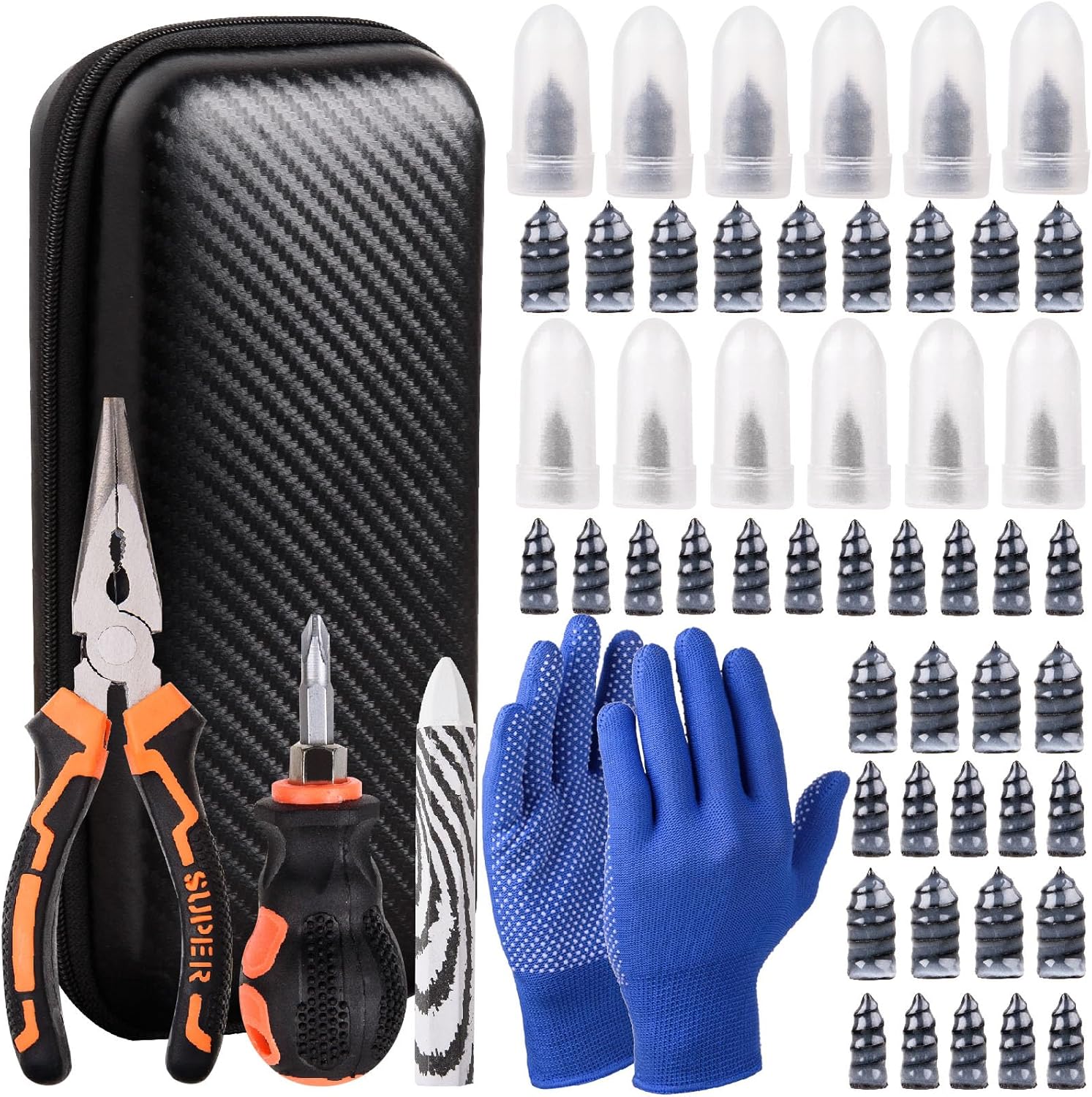
This tire sidewall puncture repair kit fixes flats fast without removing the tire, helping you get back on the road in minutes. It includes self-tapping repair nails, essential tools, gloves, and a portable storage bag for convenient roadside use. Designed for tubeless tires, it helps create a tight, leak-resistant seal for cars, motorcycles, trucks, SUVs, and ATVs.
How Glass Damages Tire Tread
Glass damages tire tread by acting like a small cutting edge. If the shard is sharp and angled correctly, vehicle weight can press it into the rubber. The shard may cut a groove, lodge between tread blocks, or pierce deep enough to reach the airtight inner liner.
A tire may react in three ways after glass contact:
- No damage: the glass breaks, bounces away, or stays too shallow to matter.
- Slow leak: a small shard reaches the inner liner and lets air escape gradually.
- Rapid air loss: a deep cut or large puncture opens the tire quickly.
Speed alone does not decide whether glass will puncture a tire. Shard shape, road angle, tire pressure, load, tread depth, and damage location matter more than a simple “slow versus fast” rule.
A repairable puncture size is not the same thing as a dangerous glass size. Industry repair guidance focuses on the final puncture injury, not the exact size of the glass shard.
What Kind of Glass Can Puncture a Tire?
The most dangerous glass is sharp, stiff, and shaped like a wedge or point. Broken bottle glass, mirror glass, tempered glass chunks, and jagged debris from a crash can all cut rubber if they contact the tire at the wrong angle.
- Jagged bottle glass: can wedge into tread grooves and cut deeper over time.
- Mirror or window fragments: may create long, sharp edges that slice rubber.
- Small chips: often do not puncture, but they can still lodge in worn tread.
- Glass mixed with metal: is more dangerous because screws, nails, and sharp metal penetrate tires more easily.
- Sidewall contact: is the biggest safety concern because sidewall damage is usually not repairable.
A tire with healthy tread has more rubber between the road and the inner liner. A badly worn tire gives glass and other debris a shorter path to the air chamber. Replace tires when they reach the legal wear limit or the treadwear indicators, and replace sooner if damage, age, or driving conditions make them unsafe.
What to Do After Driving Over Glass
If you drive over broken glass, stay calm and avoid hard braking unless traffic requires it. Move to a safe place, park on level ground, turn on your hazard lights, and inspect the tires before continuing.
- Listen and feel: watch for thumping, vibration, pulling, or a hissing sound.
- Check tire pressure: compare the reading with the pressure listed on the driver-door placard, not the number molded on the tire sidewall.
- Look for visible glass: inspect the tread, shoulder, and sidewall with a flashlight.
- Mark suspicious spots: use chalk or a marker so you can recheck the same area later.
- Watch the pressure: recheck after a short drive and again the next day.
Pro Tip: Keep a tire pressure gauge, gloves, and a small flashlight in the car. They make roadside checks safer and help you catch slow leaks before the tire runs flat.
How to Check for Glass in Tires
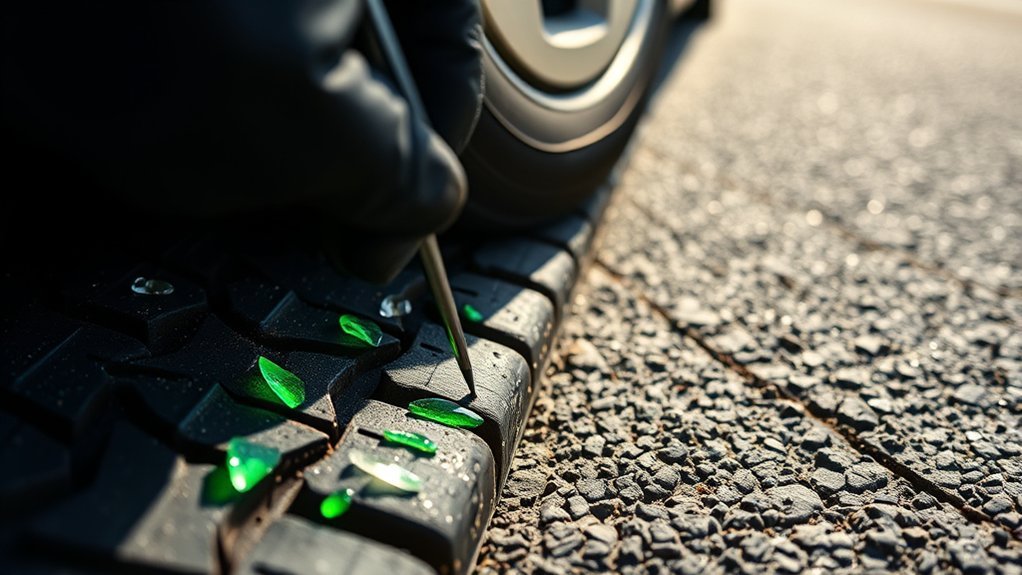
Start with a visual scan of the tire. Use a bright light and look across the tread blocks, grooves, shoulders, and sidewalls. If the tire is mounted on the vehicle, move the car slightly or turn the steering wheel so you can see more of the front tires.
Visual Tire Scan
Look for glass tips, fresh cuts, shiny fragments, rubber tears, bubbles, bulges, or a wet-looking spot. A fresh puncture may be hard to see, so check slowly and use the light from different angles.
Pay close attention to these areas:
- tread grooves
- tread block edges
- outer shoulder area
- sidewall cuts or scrapes
- fresh scuffs, nicks, or exposed cords
If you see a shard, do not pull it out on the roadside unless you are prepared for the tire to lose air. Mark the spot and have the tire checked, especially if the pressure has dropped.
Gloved Finger Check
Put on work gloves before touching the tire. Run your gloved fingers lightly over the tread to feel for raised glass, sharp edges, or cuts that are hard to see. Do not press hard, because you could push a shard deeper or cut your glove.
A tactile check works best after the visual scan. It helps you find glass hidden in grooves, but it should not replace a pressure check or shop inspection when the tire is losing air.
Soapy Water Leak Test
If you suspect a slow leak, spray soapy water over the marked area and valve stem. Bubbles that grow in one spot can point to an air leak. This test helps you locate the problem, but it does not prove the tire is safe to repair.
A tire shop still needs to remove the tire from the wheel and inspect the inside before making a permanent repair. Internal liner damage, run-flat damage, or hidden cord damage can make a tire unsafe even when the outside puncture looks small.
When Glass Damage Means Replacement
Glass damage means replacement when it affects the sidewall, shoulder, internal structure, or any area outside the repairable tread zone. A tire also needs replacement if it has exposed cords, a bulge, a long cut, repeated air loss, or damage caused by driving while flat.
[Products Worth Considering]

Wykodra tire plugs provide quick vulcanizing repairs for tubeless tires, helping you seal punctures and get back on the road. The industrial-strength rubber creates a long-lasting, leak-resistant bond and is designed for emergency fixes without removing the tire. Choose between two standard plug sizes with color-matched options for small to larger damage across many vehicles and off-road uses.

This compact capsule-style tire repair kit helps you quickly fix punctures and plug flats with minimal effort. The rugged stainless steel shell protects the contents for reliable roadside use, while the simple plug assembly makes repairs fast and tool-free. Suitable for motorcycles, cars, ATVs, UTVs, and even mountain bikes.
Cut Location Matters Most
Repairable punctures are generally limited to the tread area, not the shoulder or sidewall. The U.S. Tire Manufacturers Association says puncture injuries cannot be greater than 1/4 inch or 6 mm and repairs are limited to the tread area. If the injury extends into the shoulder or belt-edge area, the tire should be taken out of service.
Sidewall Damage Risks
Sidewall damage is serious because the sidewall flexes with every rotation and does not have the same repairable structure as the center tread. A small sidewall cut can spread under heat, load, and speed.
The Tire Industry Association says puncture repairs are limited to the center tread area and sidewall or shoulder damage is not repairable. If glass cuts the sidewall, replacing the tire is the safer choice.
Repair Or Replace
Use the table below as a safety guide. A trained technician should make the final call after inspecting the tire inside and outside.
| Damage type | Likely outcome | What to do |
|---|---|---|
| Small puncture in repairable tread area | May be repairable | Have the tire removed, inspected, and repaired with a proper patch-plug if it qualifies. |
| Puncture larger than 1/4 inch or 6 mm | Usually not repairable | Replace the tire. |
| Shoulder or sidewall cut | Not safely repairable | Replace the tire. |
| Bulge, exposed cords, or deep slice | Unsafe structure | Stop driving and replace the tire. |
| Tire driven while flat or very low | Possible hidden internal damage | Have it inspected internally; replacement may be required. |
How to Repair a Tire After Glass Damage
A permanent car-tire repair is not a glue job. Do not use Shoe Goo, cloth, household adhesive, or an outside-only plug as a final repair. The tire must be removed from the wheel so the inside can be inspected for liner damage, cord damage, moisture, and signs that the tire was driven while flat.
The USTMA tire repair guidance says a proper repair uses a rubber stem or plug to fill the puncture injury and a patch to seal the inner liner. It also says a plug alone is not an acceptable repair.
A qualified shop will usually follow these steps:
- Remove the tire from the wheel.
- Inspect the inside and outside of the tire.
- Confirm the puncture is in the repairable tread area.
- Confirm the puncture is not larger than 1/4 inch or 6 mm.
- Prepare the injury channel and inner liner correctly.
- Install a combined patch-plug or separate plug-and-patch repair that meets industry guidelines.
- Reinflate, balance if needed, and check for leaks.
Note: Emergency tire sealant or a temporary plug may help you reach a repair shop, but it should not be treated as a permanent repair. Follow your vehicle owner’s manual, especially if your car has TPMS sensors or run-flat tires.
Can You Drive After Glass Hits a Tire?
You can keep driving only if the tire holds pressure, the vehicle handles normally, and you do not see sidewall damage, bulges, exposed cords, or a visible leak. Even then, recheck the tire soon because a slow leak may not show immediately.
Stop driving and use the spare or call for help if:
- the tire pressure drops again after inflation
- you hear hissing
- the steering pulls to one side
- the tire looks low or hot
- you see glass in the sidewall or shoulder
- you see a bulge, deep cut, or exposed cord
If the tire goes flat, do not drive on it to “make it home.” Driving on a flat can destroy the sidewall and inner liner, turning a repairable tread puncture into a tire replacement.
How to Reduce Glass Puncture Risk
You cannot avoid every shard on the road, but you can lower your risk with basic tire care and better driving habits.
- Keep tires inflated correctly: underinflated tires flex more and can overheat.
- Replace worn tires: shallow tread gives debris less rubber to pass through.
- Avoid debris piles: broken glass often collects near curbs, parking lots, alleys, and crash scenes.
- Do not overload the vehicle: extra weight increases stress on tires.
- Inspect after impact: a one-minute check can catch a slow leak before it becomes a flat.
According to NHTSA TireWise guidance, tires are not safe once the tread wears to 2/32 inch, and monthly checks should include tread and pressure. Good maintenance will not make tires glass-proof, but it gives the tire its best chance to resist debris.
Frequently Asked Questions
What objects can pop a tire?
Nails, screws, sharp metal scraps, jagged glass, broken tools, pothole edges, and road debris can puncture or damage a tire. Sidewall cuts, exposed cords, bulges, and repeated air loss are more serious than a small object stuck shallowly in the tread.
How often does glass pop tires?
Glass does not pop tires as often as nails or screws, but it can still cause a puncture when a sharp shard lodges in the tread or cuts the sidewall. The risk rises when the tire is worn, underinflated, heavily loaded, or already damaged.
What will cause a tire to pop?
A tire can fail from sharp debris, impact damage, potholes, low pressure, overloading, heat buildup, severe wear, or structural damage. A sudden pop is less common than a slow leak, but any tire with a bulge, deep cut, exposed cords, or sidewall injury should be treated as unsafe.
Can a tire shop patch a glass puncture?
Yes, but only if the puncture meets repair rules. It must be in the repairable tread area, small enough, and free from hidden internal damage. The tire should be removed from the wheel and repaired with a proper patch-plug method, not just glue or an outside plug.
Should I pull glass out of my tire?
Do not pull embedded glass out on the roadside unless you are ready for the tire to lose air. Mark the spot, check the pressure, and have a technician inspect it. If the tire is already leaking or the glass is in the sidewall, use the spare or call roadside assistance.
Sources
- NHTSA TireWise — tire pressure, tread, and monthly inspection guidance.
- U.S. Tire Manufacturers Association: Tire Repair Basics — proper internal inspection and patch-plug repair guidance.
- USTMA Puncture Repair Procedures — repairable tread-area and 1/4-inch / 6 mm injury limits.
- Tire Industry Association: Tire Repair — sidewall, shoulder, and tread repair guidance.
- Michelin: Can My Tire Be Repaired? — repair criteria for tread punctures and replacement cases.
- Goodyear Tire Repair — repair eligibility basics for tread-area punctures.
Conclusion
Glass usually will not pop a car tire instantly, but a sharp shard can still puncture the tread or cut the sidewall. Check the tire after driving through broken glass, watch for pressure loss, and look for cuts, bulges, or embedded pieces.
A small tread puncture may be repairable when it meets industry limits and a technician inspects the tire from the inside. Sidewall damage, shoulder damage, deep cuts, large punctures, exposed cords, bulges, or run-flat damage call for replacement. A careful check now can prevent a flat, a blowout, or a risky roadside stop later.

Related Articles
How to Break a Car Window in an Emergency Safely
After an emergency, a few simple moves can break a car window safely—but one crucial choice could change everything.
Read More
How to Buy Car Insurance: Coverage Guide for Beginners
Choose the right car insurance coverage and compare smarter to avoid costly gaps—discover the key details beginners often miss.
Read More
How to Get Cheap Car Insurance: 10 Ways to Cut Costs
Maximize savings on cheap car insurance with 10 smart cost-cutting moves, and discover the one strategy most drivers overlook.
Read More